
The Concept of Time in Ancient Indian Astronomy: A Philosophical Insight

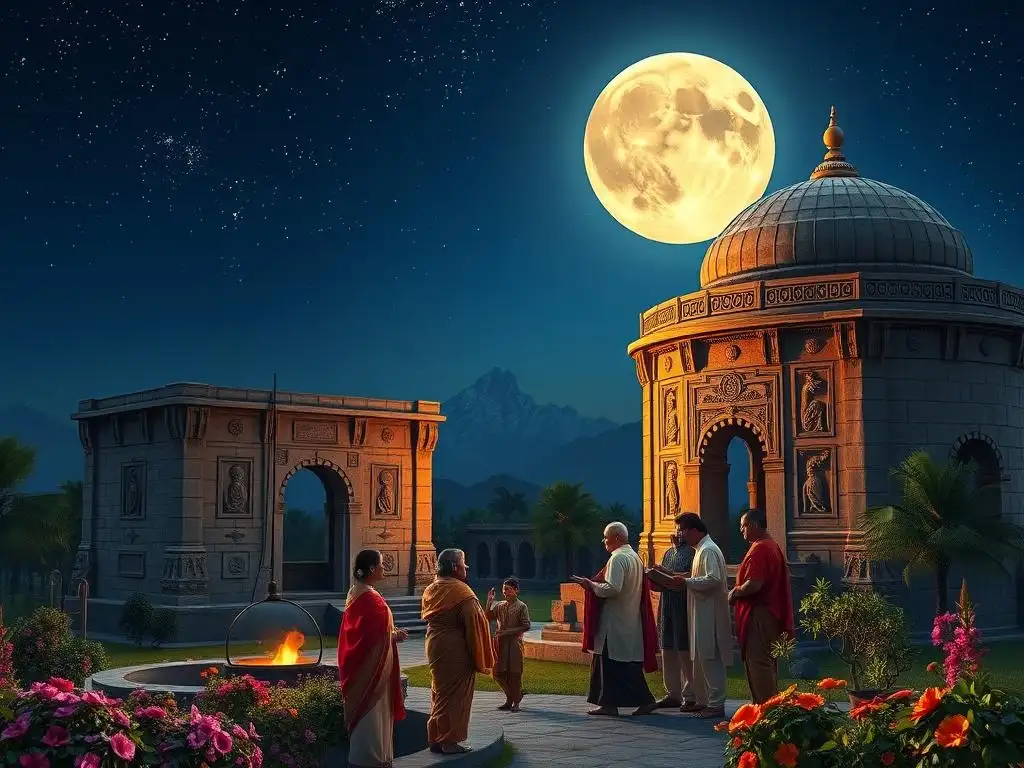
Welcome to Ancient India History, where we embark on an enriching journey through the captivating tapestry of ancient Indian civilizations. Today, we invite you to delve into the intriguing realm of ancient Indian astronomy concepts—a field that not only reflects the scientific prowess of our ancestors but also intertwines with profound philosophical insights. How did the ancients perceive time, and what cosmic wisdom did they uncover?
Prepare to unlock the mysteries of the universe as we explore these timeless ideas that shaped the very fabric of Indian thought. Join us in discovering more about this fascinating intersection of science and philosophy!
Introduction to Ancient Indian Astronomy Concepts
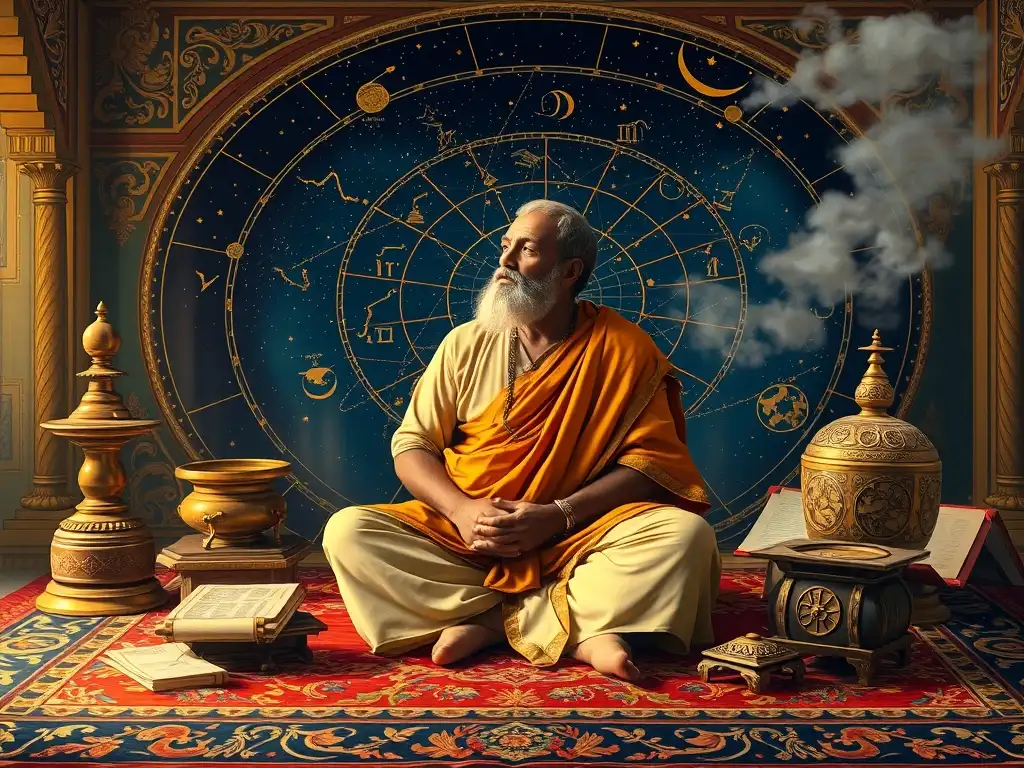
Ancient India boasts a profound and intricate understanding of astronomy, deeply intertwined with its philosophical and cultural narratives. The concept of time in this context is not merely a measure of hours and days, but a reflection of the cosmic order and the underlying rhythms of life. Ancient Indian astronomy concepts reveal a sophisticated approach to celestial observation, which served not only practical purposes such as agriculture and navigation but also spiritual and philosophical explorations. This article delves into how ancient Indian civilizations perceived and measured time, and how these concepts were influenced by their cultural and religious beliefs.
Overview of Ancient Indian Astronomy
The roots of ancient Indian astronomy can be traced back to the Vedic period, where celestial bodies were observed and documented in texts such as the "Rigveda" and later in the "Surya Siddhanta." These works laid the foundation for understanding celestial movements, planetary positions, and the cyclical nature of time. Ancient Indian astronomers were adept at calculating eclipses, planetary conjunctions, and the timing of seasonal changes, showcasing their advanced mathematical skills and observational techniques.
Notably, the use of instruments like the gnomon (a simple sundial) and more complex devices such as the astrolabe significantly enhanced their ability to measure time and celestial events. The integration of astronomy with astrology further emphasized the importance of celestial phenomena in daily life and decision-making processes in ancient Indian society.
Significance of Time in Ancient Indian Culture
In ancient Indian culture, time was seen as both cyclical and linear, with philosophical implications that influenced various aspects of life. The concept of "Kalachakra" (Wheel of Time) illustrates the belief that time is a continuous cycle of creation, preservation, and destruction. This cyclical view of time is reflected in festivals, rituals, and the agricultural calendar, where specific timings are considered auspicious for various activities.
Moreover, time was linked to the cosmic order, with the belief that understanding celestial rhythms allowed individuals to align themselves with the universe. This alignment was not only crucial for agricultural success but also for spiritual growth and harmony within the cosmos.
Historical Context of Time Measurement in Ancient India
Early Timekeeping Methods in Ancient Indian Civilizations
The early timekeeping methods in ancient India were primarily based on natural phenomena. Observations of the sun, moon, and stars formed the basis for dividing the day into smaller units. Ancient texts describe the use of shadow and water clocks, as well as the lunar calendar, which played a vital role in timekeeping.
The division of the day into "muhurta" (a period of 48 minutes) and "prahara" (a time unit corresponding to a quarter of the day) illustrates the sophistication of their time measurement systems. These methods not only facilitated daily activities but also held cultural significance, marking important events and rituals.
Influences of Vedic Texts on Astronomy and Time Concepts
The Vedic texts are pivotal in understanding the philosophical underpinnings of ancient Indian astronomy concepts. They provided a framework for celestial observations and time calculations, merging scientific inquiry with spiritual understanding. The "Vedanga Jyotisha," one of the earliest texts on astronomy, outlines methods for timekeeping and calendar systems, emphasizing the importance of aligning human activities with cosmic cycles.
The philosophical insights from these texts suggest that time was not just a physical dimension but a metaphysical concept, shaping the moral and ethical dimensions of life. This interplay between astronomy and philosophy underscores the rich tradition of ancient Indian thought, where the cosmos was viewed as an interconnected whole, influencing human existence profoundly.
Philosophical Foundations of Time in Ancient Indian Thought
In ancient Indian thought, time is perceived not merely as a sequence of events but as a profound philosophical concept that intertwines with the very fabric of existence. The understanding of time is deeply rooted in the spiritual and metaphysical traditions of India, where it is often viewed as both a physical and metaphysical entity. This duality allows for a rich exploration of time, distinguishing it from the mere quantitative measurement prevalent in many Western philosophies.
Ancient Indian philosophers, particularly within the Vedic and Upanishadic traditions, regarded time as an eternal cycle that influences the cosmic order. The notion of Kaal (time) is integral to various philosophical texts, where it is often associated with concepts of creation, preservation, and dissolution. This perspective extends into the realms of cosmology, where time is seen as a divine force that governs the universe, reflecting the interconnectedness of all beings and phenomena.
Furthermore, the philosophical inquiry into the nature of time led to discussions about Dharma (duty/righteousness) and Karma (action), emphasizing how one's actions are bound by the temporal framework of past, present, and future. This holistic view of time underscores its significance in human life, guiding ethical and moral considerations.
The Dual Nature of Time: Cyclical vs. Linear Perspectives
The concept of time in ancient Indian astronomy showcases a fascinating duality: cyclical and linear perspectives. The cyclical view, prevalent in many Indian philosophies, posits that time is an endless loop, characterized by the eternal cycles of creation (Srishti), preservation (Sthiti), and dissolution (Samsara). This perspective is deeply rooted in Hindu cosmology, where the universe undergoes vast cycles known as Yugas, each representing different ages of spiritual and moral development.
In contrast, the linear perspective, although less dominant, is also present in texts such as the Mahabharata, where time is depicted as a progression towards a specific end. This view aligns with the idea of historical development and the unfolding of events towards a predetermined conclusion, particularly in the context of cosmic events and human history.
The interplay between these two perspectives creates a complex understanding of time in ancient Indian thought, allowing for a philosophical discourse that accommodates both the eternal and the ephemeral. This duality not only reflects the intricate nature of existence but also influences various aspects of life, including rituals, astronomy, and daily practices.
Time as a Metaphysical Concept in Ancient Indian Philosophy
In ancient Indian philosophy, time transcends mere measurement and becomes a metaphysical concept integral to the understanding of reality. Philosophers such as Adi Shankaracharya and Buddhist scholars explored the essence of time, questioning its nature and relationship to the eternal self (Atman) and the material world (Maya).
This metaphysical perspective posits that while time appears to be linear and progressive in the physical realm, it is, in essence, an illusion. The Brahman, or the ultimate reality, is beyond time and space, suggesting that true knowledge involves transcending temporal constraints. This philosophical insight has profound implications for the practice of meditation and spirituality in ancient Indian traditions, emphasizing the importance of realizing one's timeless nature.
Additionally, the metaphysics of time in ancient Indian thought is intricately linked to cosmological theories. Time is often viewed as a manifestation of the cosmic order, influencing both the macrocosm (the universe) and microcosm (individual beings). The cyclical nature of time is reflected in various rituals and festivals, symbolizing the eternal return and the interconnectedness of all existence.
Key Figures and Texts Influencing Time Concepts
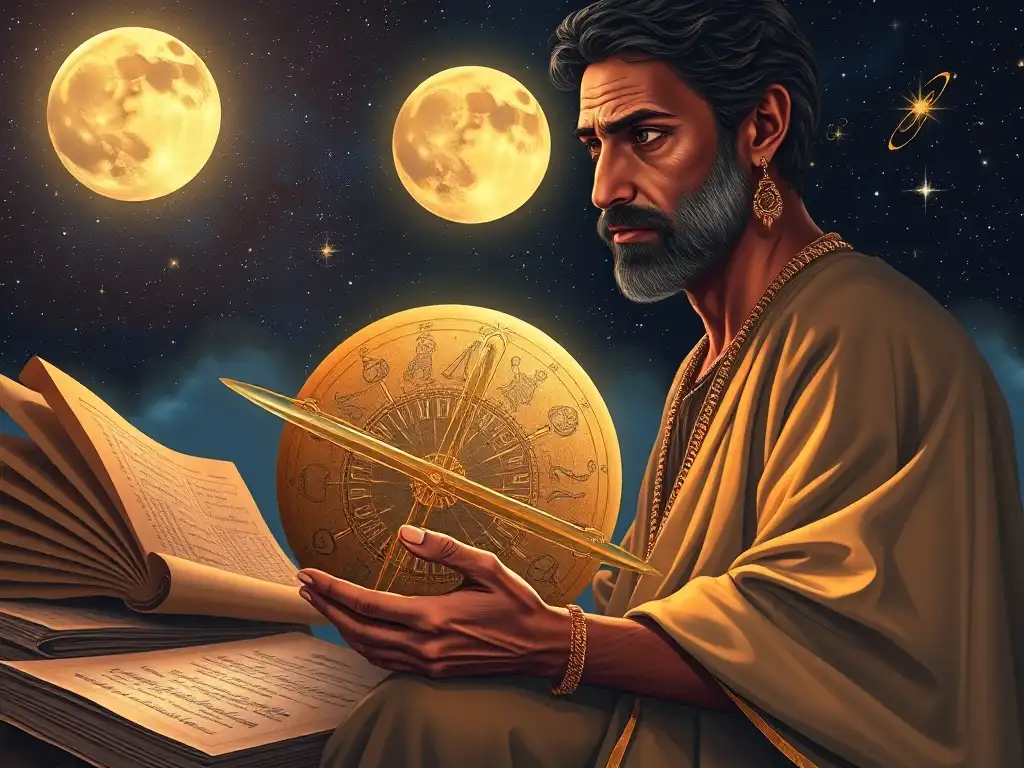
The exploration of time in ancient Indian astronomy is significantly influenced by several key figures and texts that contributed to the understanding and measurement of time. These contributions not only shaped astronomical practices but also enriched the philosophical discourse surrounding the concept of time.
Contributions of Aryabhata to Ancient Indian Astronomy
Aryabhata, one of the most renowned astronomers and mathematicians of ancient India, made groundbreaking contributions to the understanding of time. In his seminal work, the Aryabhatiya, composed in the 5th century CE, Aryabhata introduced the concept of the sidereal day, which is based on the rotation of the Earth relative to distant stars. This was a significant advancement over previous methods of measuring time and laid the foundation for future astronomical calculations.
Aryabhata’s calculations regarding the length of the year and the lunar month were remarkably accurate for his time. He proposed that the Earth rotates on its axis, which was a revolutionary idea that challenged prevailing cosmological models. His work emphasized the cyclical nature of time, aligning with the ancient Indian perspective of cosmic cycles.
Furthermore, Aryabhata's innovative approach to mathematics and astronomy enabled him to develop algorithms for calculating the positions of celestial bodies, which directly impacted the measurement of time in astronomical observations. His influence extended beyond India, inspiring subsequent generations of astronomers in the Islamic world and Europe.
The Role of Brahmagupta in Time Measurement and Calculation
Brahmagupta, a prominent mathematician and astronomer in the 7th century CE, further advanced the concepts of time measurement and calculation established by his predecessors, particularly Aryabhata. In his influential work, the Brahmasphutasiddhanta, Brahmagupta provided comprehensive methods for calculating the positions of celestial bodies, including the sun and moon, which were essential for accurate timekeeping.
Brahmagupta is particularly noted for his contributions to the understanding of the lunar month and the solar year. He introduced the concept of mean time, which allowed for the synchronization of various astronomical phenomena with human activities. His calculations established a framework that integrated both the solar and lunar calendars, reflecting the dual nature of time in ancient Indian society.
Moreover, Brahmagupta's work emphasized the importance of using zero and negative numbers, which facilitated complex calculations related to timekeeping. His insights into the relationship between time and celestial events contributed to the development of accurate calendars, essential for agricultural and religious activities.
In essence, Brahmagupta's contributions solidified the understanding of time in ancient Indian astronomy, bridging the gap between philosophical concepts and practical applications in everyday life. Through their combined efforts, figures like Aryabhata and Brahmagupta laid the groundwork for a rich tradition of astronomical inquiry that continues to resonate in contemporary discussions of time and space.
Ancient Indian Astronomical Instruments and Timekeeping
Ancient Indian astronomy is not only notable for its philosophical insights but also for the sophisticated instruments that were employed to observe celestial bodies and measure time. The instruments utilized by astronomers of the time were pivotal in developing an intricate understanding of timekeeping, which was deeply intertwined with the cultural and religious practices of ancient Indian society.
Overview of Instruments Used in Ancient Indian Astronomy
Ancient Indian astronomers developed a variety of instruments, each serving a specific purpose in the observation and understanding of celestial phenomena. Some of the most prominent instruments include:
- Gnomon (Shanku): A simple yet effective tool, the gnomon was used to measure the angle of the sun's shadow, thus determining the time of day and the seasons. This vertical stick or rod marked the sundial's shadow, and its measurement facilitated the understanding of solar movements.
- Astrolabe (Yantra): Although not originally from India, the astrolabe was adapted for local use and became instrumental in tracking the positions of stars and planets. This device allowed astronomers to calculate time by measuring angles and altitudes of celestial bodies.
- Jantar Mantar: A series of architectural astronomical observatories built in the 18th century, the Jantar Mantar in cities like Jaipur and Delhi showcased large-scale instruments such as the Samrat Yantra, which accurately measured time by observing the shadow cast by the sun.
- Kalpa Vriksha: This was not a physical instrument but a calendrical system that illustrated the cyclical nature of time, linking celestial observations to agricultural and social calendars.
These instruments reflect the advanced technical knowledge and ingenuity of ancient Indian scholars, highlighting their dedication to understanding the cosmos.
The Influence of Instruments on Understanding Time
The development and use of these astronomical instruments had a profound impact on how time was understood in ancient India. They facilitated precise measurements, allowing astronomers to establish a more accurate calendar. This accuracy was crucial for agricultural societies that relied on seasonal changes for sowing and harvesting crops.
Moreover, the ability to predict celestial events, such as eclipses and solstices, reinforced the connection between cosmic cycles and terrestrial timekeeping. The integration of these measurements into daily life led to the establishment of rituals and festivals that were timed according to celestial phenomena, effectively blending science with spirituality.
The Relationship Between Astronomy and Time in Ancient India
In ancient India, astronomy and the concept of time were inextricably linked. The movements of celestial bodies not only provided a means to measure time but also shaped the philosophical outlook of society. The cyclical nature of time, as observed in celestial patterns, influenced various aspects of life, including religion, culture, and agriculture.
How Celestial Events Shaped the Concept of Time
Celestial events, such as the movement of the sun and moon, played a crucial role in shaping the Indian calendar and the understanding of time. Ancient texts, such as the "Surya Siddhanta," describe how the motions of celestial bodies dictated the passage of days, months, and years.
- Lunar and Solar Cycles: The lunar cycle was particularly significant, as it influenced the timing of festivals and religious observances. The full moon (Purnima) and new moon (Amavasya) were critical markers in the calendar and were often associated with various rituals.
- Equinoxes and Solstices: The changing seasons, marked by equinoxes and solstices, were celebrated in various festivals, reflecting the close relationship between astronomy and the agrarian calendar.
This understanding of time as a cyclical phenomenon, governed by celestial movements, contributed to a philosophical view that emphasized the connection between the cosmos and human existence.
Rituals and Festivals Based on Astronomical Events
The relationship between astronomy and time in ancient India was further exemplified through the rituals and festivals that were intricately linked to astronomical events. These celebrations not only marked the passage of time but also reinforced cultural identity and spirituality.
- Makar Sankranti: Celebrated on the winter solstice, this festival marks the transition of the sun into the zodiac sign of Capricorn (Makar). It is a time for harvest and is celebrated with various rituals and festivities.
- Diwali: The festival of lights, Diwali, often coincides with the new moon night in autumn. The timing of this celebration is based on lunar phases, symbolizing the victory of light over darkness.
- Holi: The festival of colors, Holi, is celebrated during the full moon in the month of Phalguna. Its timing reflects the lunar calendar, connecting it to the cycle of seasons and agricultural cycles.
These rituals and festivals highlight the deep-rooted connection between astronomy and time in ancient Indian culture, showcasing how celestial events influenced societal norms, agricultural practices, and spiritual beliefs. The legacy of these practices continues to resonate in contemporary Indian society, underscoring the enduring impact of ancient Indian astronomy concepts.
Comparison of Ancient Indian Time Concepts with Other Cultures
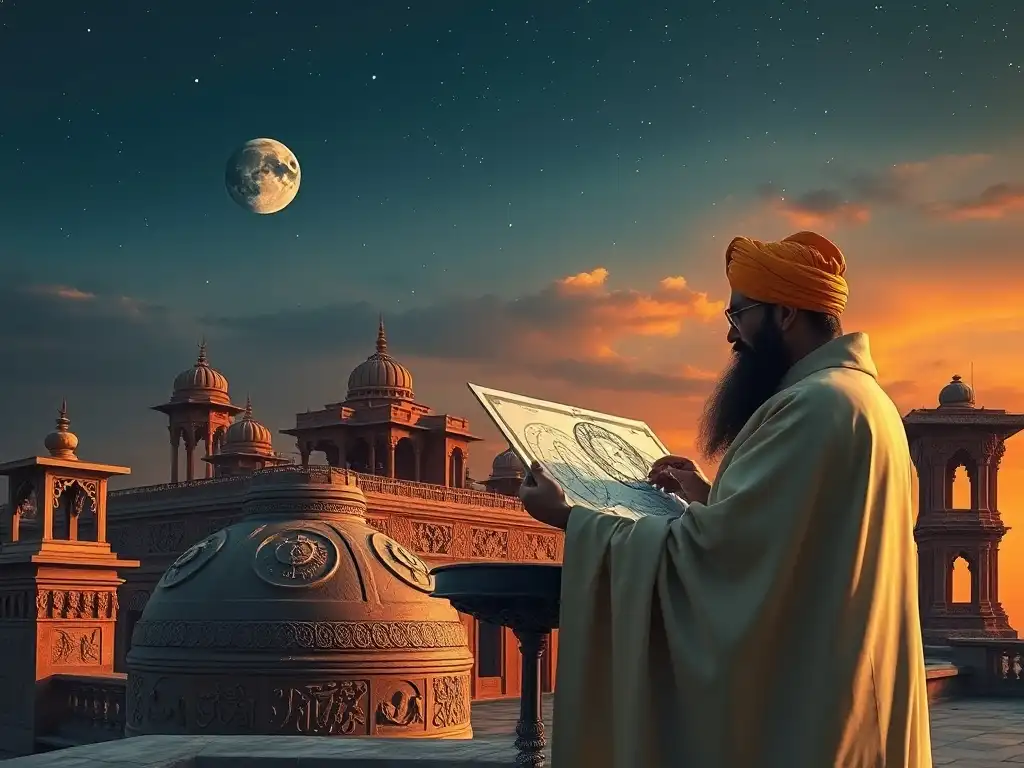
The concept of time in ancient Indian astronomy is a complex tapestry interwoven with philosophical, spiritual, and scientific threads. When compared with other ancient cultures, it becomes evident that the Indian approach to time was both unique and deeply reflective. Ancient Indian scholars viewed time not merely as a linear progression but as a cyclical phenomenon, influenced by cosmic rhythms and the eternal laws of nature. This perspective stands in contrast to the more linear time concepts found in many other civilizations.
For instance, while the Greeks largely focused on a linear progression of time, viewing it as a series of moments leading to the present, ancient Indian philosophies embraced the cyclical nature of time, encapsulated in the concept of Kalachakra (wheel of time). This philosophical framework allowed ancient Indians to comprehend the universe's rhythms, seasons, and life cycles, influencing their calendars, rituals, and agricultural practices.
Furthermore, while cultures like the Egyptians employed a solar calendar based on the annual flooding of the Nile, Indians integrated both lunar and solar cycles, exemplified in the Vedic calendars, which account for the complexities of lunar months and solar years. This multifaceted understanding of time not only highlights the sophistication of ancient Indian astronomy concepts but also reflects the cultural and philosophical diversities that shaped human understanding of time across civilizations.
Contrasting Ancient Indian Concepts of Time with Greek Astronomy
When contrasting ancient Indian concepts of time with those of Greek astronomy, several key differences emerge. The Greeks, particularly philosophers like Aristotle and Ptolemy, conceptualized time in a more rigidly linear fashion, associating it with the movement of celestial bodies in a predictable manner. Their models were based on observations of the heavens, leading to a systematic approach to understanding planetary motions, eclipses, and the passage of seasons.
In contrast, ancient Indian astronomers, such as Aryabhata and Brahmagupta, integrated their astronomical observations with philosophical and spiritual beliefs. They viewed time as a cyclical entity, embodying the idea of Yugas (ages) that repeat indefinitely. This framework allowed for a more holistic understanding of time, where past, present, and future are interwoven and influence one another.
Moreover, the Indian approach often emphasized the subjective experience of time, with the concept of Maya (illusion) suggesting that human perception of time is fundamentally different from the cosmic reality. This philosophical depth contrasts with Greek notions, which often relegated time to a mere measurement of motion and change, lacking a profound metaphysical exploration.
Influence of Mesopotamian Timekeeping on Ancient Indian Practices
The influence of Mesopotamian timekeeping on ancient Indian practices is an intriguing aspect of historical astronomy. Mesopotamian civilizations, known for their advancements in mathematics and astronomy, developed a base-60 system for measuring time, which significantly impacted surrounding cultures, including India.
Ancient Indian astronomers adopted and adapted several elements from Mesopotamian timekeeping, particularly in the measurement of astronomical phenomena. The division of the day into 24 hours, as well as the concept of dividing the hour into 60 minutes, can be traced back to Mesopotamian systems. Additionally, the Indian practice of using a lunar calendar for agricultural and religious purposes shows similarities with the lunar observations made by Mesopotamian astronomers.
However, while ancient Indian astronomy concepts incorporated these influences, they expanded upon them with unique philosophical interpretations and a broader understanding of celestial cycles. This synthesis led to the development of sophisticated astronomical texts, such as the Surya Siddhanta, which integrated both indigenous and borrowed concepts of time, showcasing the dynamic exchange of knowledge across cultures.
Conclusion: The Legacy of Ancient Indian Astronomy Concepts on Modern Time Measurement
The legacy of ancient Indian astronomy concepts profoundly influences modern understandings of time measurement. The integration of lunar and solar calendars in ancient practices laid the groundwork for contemporary calendar systems used today, particularly in regions influenced by Indian culture. The philosophical insights regarding the cyclical nature of time continue to resonate in various spiritual and scientific discussions, emphasizing a more holistic view of temporal existence.
Lasting Impact on Contemporary Understanding of Time
The lasting impact of ancient Indian astronomy concepts on contemporary understanding of time is evident in various fields, including physics, philosophy, and cultural studies. Modern physics, particularly in the context of relativity, echoes some ancient Indian notions of time being relative rather than absolute. The philosophical inquiries into the nature of time, influenced by texts like the Upanishads, continue to inspire contemporary thinkers and scientists.
In practical terms, the Indian lunar calendar still holds significance in many cultural practices, festivals, and agricultural cycles, demonstrating the relevance of ancient concepts in today's society. This continuation of ancient wisdom illustrates how historical perspectives can inform and enrich contemporary life.
Reflections on the Philosophical Insights Gained from Ancient Indian Astronomy
The philosophical insights gained from ancient Indian astronomy offer profound reflections on the nature of time and existence. The cyclical view of time encourages an understanding of life as a series of interconnected experiences, where each moment is part of a larger cosmic pattern. This perspective fosters a sense of harmony with nature, urging individuals to consider their place within the universe.
Moreover, the emphasis on the subjective experience of time invites deeper introspection and mindfulness, reminding us that our perception of time can shape our reality. The ancient Indian approach encourages a balance between the empirical measurements of time and the metaphysical explorations that enrich human experience, ultimately guiding contemporary society towards a more integrated understanding of time as both a scientific and philosophical concept.
References
Key Texts and Resources for Further Reading on Ancient Indian Astronomy Concepts
-
"Aryabhatiya" by Aryabhata
This foundational text, composed in the 5th century CE, is essential for understanding ancient Indian mathematical and astronomical concepts. Aryabhata's work introduces key ideas about the rotation of the Earth and the calculation of time, emphasizing the significance of a systematic approach to astronomy.
-
"Surya Siddhanta"
Considered one of the most important texts in ancient Indian astronomy, the Surya Siddhanta provides detailed methods for calculating celestial phenomena, including eclipses, planetary positions, and time cycles. Its insights into the mathematical principles of astronomy have greatly influenced both Indian and Islamic astronomical traditions.
-
"Brahmasphutasiddhanta" by Brahmagupta
Written in the 7th century CE, this treatise expands on Aryabhata’s ideas and provides significant advancements in the understanding of planetary motions and algebra. Brahmagupta’s work is notable for its discussions on zero and negative numbers, which were revolutionary for mathematical calculations in astronomy.
-
"Tantrasangraha" by Bhaskara I
This work is pivotal in the study of planetary movements and timekeeping in ancient Indian astronomy. Bhaskara I’s text includes both theoretical explanations and practical calculations, making it a valuable resource for understanding the integration of astronomy and mathematics.
-
"Brāhmaṇas"
These ancient texts, part of the Vedic literature, delve into the ritualistic aspects of astronomy in ancient India. They offer insights into how celestial events were interpreted within the context of religious and philosophical beliefs, linking timekeeping with cosmology.
-
"Indian Mathematics and Astronomy: Some Landmarks" by Kim Plofker
An insightful resource that provides a comprehensive overview of the development of mathematics and astronomy in ancient India. Plofker discusses the historical context, key figures, and the evolution of concepts, making it an excellent starting point for anyone interested in ancient Indian astronomy.
-
"The History of Indian Astronomy" by C. V. V. Sarma
This book explores the evolution of astronomical ideas and practices in India from ancient times through the medieval period. It covers various texts and provides a chronological perspective, helping readers understand the progression of astronomical thought in the Indian context.
-
"Astronomy in India: A Historical Perspective" by J. V. Narlikar
Narlikar offers a thorough examination of the contributions of Indian astronomers and the philosophical implications of their work. This resource is particularly valuable for understanding how ancient Indian astronomical concepts relate to broader philosophical themes.
These texts and resources provide a robust foundation for exploring the rich and diverse concepts of time and astronomy in ancient India. They illustrate how philosophical insights were woven into the scientific practices of the time, enriching our understanding of ancient Indian civilization’s intellectual legacy.
- Introduction to Ancient Indian Astronomy Concepts
- Historical Context of Time Measurement in Ancient India
- Philosophical Foundations of Time in Ancient Indian Thought
- Key Figures and Texts Influencing Time Concepts
- Ancient Indian Astronomical Instruments and Timekeeping
- The Relationship Between Astronomy and Time in Ancient India
- Comparison of Ancient Indian Time Concepts with Other Cultures
- Conclusion: The Legacy of Ancient Indian Astronomy Concepts on Modern Time Measurement
- References
- What are the key astronomical concepts in ancient Indian astronomy?
- How did ancient Indian astronomers measure time?
- What role did philosophy play in ancient Indian astronomy?
- Can you explain the significance of the lunar-solar calendar in ancient India?
- How did the Gupta Empire contribute to the field of astronomy?
Frequently Asked Questions
What are the key astronomical concepts in ancient Indian astronomy?
Ancient Indian astronomy introduced several concepts, including the measurement of time, planetary movements, and the lunar-solar calendar, which were vital for agricultural and religious practices.
How did ancient Indian astronomers measure time?
Ancient Indian astronomers used sundials, water clocks, and constellations to measure time, emphasizing the cycles of nature and the importance of precise timing in their philosophical and cultural practices.
What role did philosophy play in ancient Indian astronomy?
Philosophy deeply influenced ancient Indian astronomy, linking cosmological theories with spiritual beliefs. This integration helped to shape their understanding of the universe and human existence.
Can you explain the significance of the lunar-solar calendar in ancient India?
The lunar-solar calendar was significant as it helped in determining festivals, agricultural cycles, and important rituals, reflecting the harmony between celestial movements and earthly events.
How did the Gupta Empire contribute to the field of astronomy?
The Gupta Empire was a golden age for astronomy, with scholars like Aryabhata making significant advancements in mathematics and astronomy, including the concept of zero and the rotation of the Earth.
Final Reflection: The Timeless Wisdom of Ancient Indian Astronomy
The exploration of time in ancient Indian astronomy reveals profound insights that resonate deeply with our contemporary understanding of the universe. As we navigate the complexities of modern life, the ancient perspectives on time challenge us to reconsider our relationship with this elusive dimension. The intricate concepts developed by ancient Indian astronomers not only laid the groundwork for astronomical studies but also provided a philosophical framework that remains relevant today. Time is not merely a measurement; it is a continuum that shapes our existence.
The influence of ancient Indian astronomy extends beyond the realm of science, permeating cultural and spiritual practices that continue to thrive in modern society. The cyclical nature of time, as understood by these scholars, invites us to reflect on our own lives and the patterns that govern them. As we embrace this wisdom, we can find solace in the words of the ancient sage: Time is the essence of existence, a river that flows through the cosmos, connecting all beings.
This perspective encourages us to honor the past while remaining mindful of the present and future.
As we conclude this exploration of ancient Indian astronomy concepts, I invite you to reflect on how these timeless teachings can enrich your own understanding of time. Consider how you can integrate this wisdom into your daily life, fostering a deeper connection with the rhythms of nature and the universe. Let us carry forward the legacy of these ancient thinkers, allowing their insights to illuminate our paths as we navigate the ever-flowing river of time.
Embrace the Wisdom of Time – Take Action Today!
Thank you for joining us on this enlightening journey through the concept of time in ancient Indian astronomy! We hope you've gained valuable insights that broaden your understanding of philosophical thought and its connection to celestial phenomena. Now, it’s time to put that knowledge into action!
- Dive Deeper: Explore ancient texts and resources related to Indian astronomy to expand your understanding. Numerous books, documentaries, and online materials are rich in information waiting to be uncovered!
- Share Your Insights: Discuss your thoughts with friends or family. Starting a conversation about how ancient philosophies can influence our modern understanding of time can be enlightening.
- Get Involved: Join online communities or forums focused on ancient history and philosophy. Engaging with others who share your interests can lead to exciting new discoveries!
What aspect of ancient Indian astronomy resonates most with you, and how do you see it influencing our understanding of time today?