
Beyond Numbers: The Philosophical Approach of Ancient Indian Mathematicians to Technology


Welcome to Ancient India History, where we embark on a fascinating journey through the rich tapestry of ancient Indian civilizations. From the meticulous precision of the Indus Valley to the intellectual brilliance of the Gupta Empire, every corner reveals a story waiting to be uncovered.
In our featured article, Beyond Numbers: The Philosophical Approach of Ancient Indian Mathematicians to Technology, we delve into the profound interplay between ancient Indian mathematics and philosophy, shedding light on how these thinkers not only shaped technology but also influenced the very way we perceive the world around us. Prepare to be intrigued as we unravel the remarkable legacy that continues to inspire innovation today!
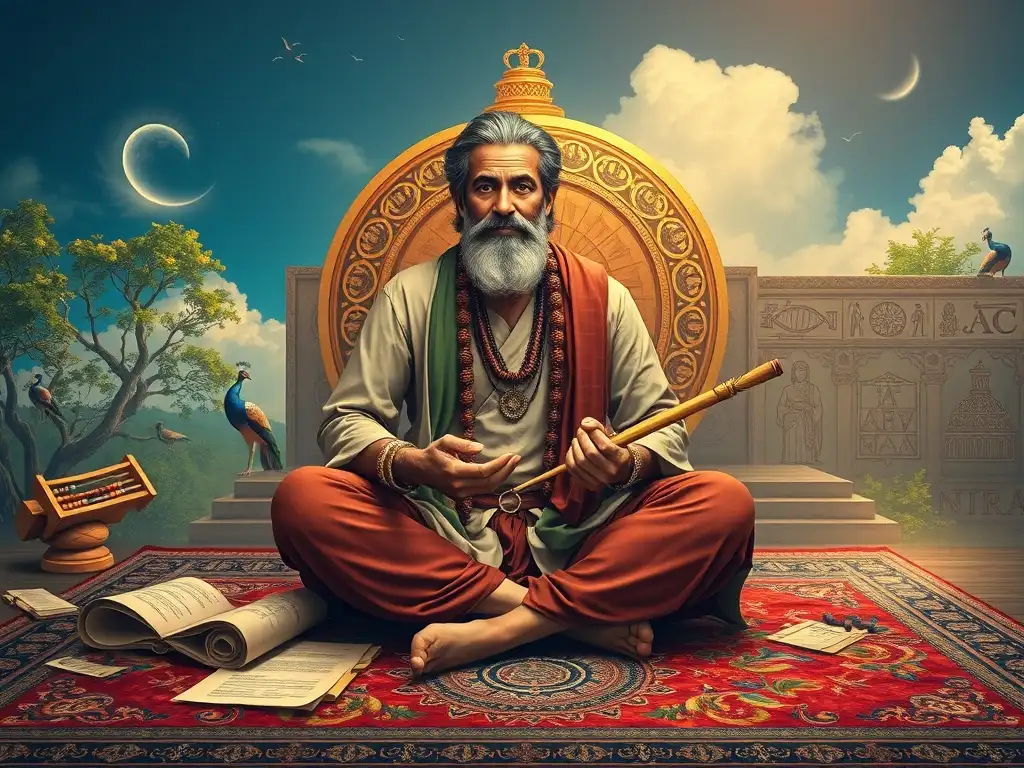
Introduction to Ancient Indian Mathematics and Philosophy
The realm of ancient Indian mathematics and philosophy presents a fascinating intersection where numerical precision meets profound philosophical inquiry. This rich tapestry of thought emerged from a civilization that not only excelled in mathematical concepts but also deeply pondered the implications of these concepts on life, existence, and the universe.
From the intricate calculations of the Indus Valley civilization to the profound treatises of the Gupta Empire, ancient Indian mathematicians viewed numbers not merely as abstract entities but as vital elements interwoven with the fabric of reality. Their philosophical approach laid the groundwork for future innovations, reflecting a unique synthesis of logic, spirituality, and empirical observation that continues to influence modern thought.
The Historical Context of Ancient Indian Mathematics
Understanding the historical context of ancient Indian mathematics requires a journey through several key periods and milestones. The Indus Valley Civilization (circa 3300–1300 BCE) showcased early signs of arithmetic and geometry, as evidenced by their sophisticated urban planning and standardized weights.
- Vedic Period (circa 1500–500 BCE):
- The Vedas, sacred texts of Hinduism, introduced mathematical concepts such as the Shulba Sutras, which provided rules for constructing altars and geometrical figures.
- Mathematics was intertwined with rituals, revealing a society where numerical accuracy held spiritual significance.
- Classical Period (circa 400–1200 CE):
- Aryabhata, one of the most prominent mathematicians, introduced the concept of zero and positional notation, revolutionizing numerical systems.
- Brahmagupta expanded on these ideas, formulating rules for arithmetic and algebra that profoundly influenced mathematics.
- Influence on Global Mathematics:
- Ancient Indian mathematics had a ripple effect, reaching the Arab world and later Europe, where concepts like the numeral system and algebra were adopted and adapted.
The Philosophical Foundations of Ancient Indian Mathematics
The philosophical underpinnings of ancient Indian mathematics are deeply rooted in the cultural and spiritual beliefs of the time. Mathematicians such as Aryabhata and Brahmagupta approached mathematics not only as a practical tool but as a means to explore the deeper truths of existence.
-
Unity of Knowledge:
Ancient Indian thinkers believed in the unity of knowledge, where mathematics, philosophy, and spirituality converged. This holistic view encouraged a profound exploration of the universe, mathematics serving as a bridge between the tangible and the metaphysical.
-
Concept of Infinity:
The notion of infinity, or ananta, was a significant philosophical concept in ancient Indian thought, influencing mathematical discourse. This abstract notion allowed mathematicians to explore complex calculations and understand the cosmos's boundless nature.
-
Ethical Dimensions:
The ethical implications of mathematics were also considered. The application of mathematical principles in architecture, astronomy, and commerce reflected a commitment to societal well-being, indicating that numbers were not mere tools but carriers of responsibility.
The interplay between ancient Indian mathematics and philosophy is a testament to a civilization that not only advanced numerical understanding but also enriched the philosophical landscape of human thought. This exploration of mathematics as both a tool and a philosophy offers invaluable insights into the enduring legacy of ancient Indian civilization.
Key Contributions of Ancient Indian Mathematicians
Ancient Indian mathematicians made significant contributions that laid the groundwork for various mathematical concepts still in use today. Among the most notable figures are Aryabhata, Brahmagupta, and Bhaskara II, who each advanced mathematical knowledge through their philosophical insights.
- Aryabhata (476–550 CE): He introduced the concept of zero as a placeholder and developed a place-value system, which revolutionized arithmetic. His work, the Aryabhatiya, contains rules for arithmetic operations and algorithms for solving indeterminate equations. Aryabhata also made early contributions to trigonometry, providing sine tables and methods for calculating the area of a triangle.
- Brahmagupta (598–668 CE): Brahmagupta's Brahmasphutasiddhanta is a landmark text that outlines rules for arithmetic operations with positive and negative numbers. He was one of the first to treat zero as a number and explored solutions to quadratic equations, establishing rules that are foundational in mathematics today.
- Bhaskara II (1114–1185 CE): Known as Bhaskara the Younger, he expanded on his predecessors’ work in his text Lilavati, which includes practical problems related to everyday life. He is credited with advancing the concept of calculus, particularly in his work on the derivative and the mean value theorem.
These mathematicians not only advanced numerical techniques but also integrated philosophical perspectives into their work, emphasizing the interconnectedness of mathematics, astronomy, and spirituality.
The Intersection of Technology and Ancient Indian Mathematics
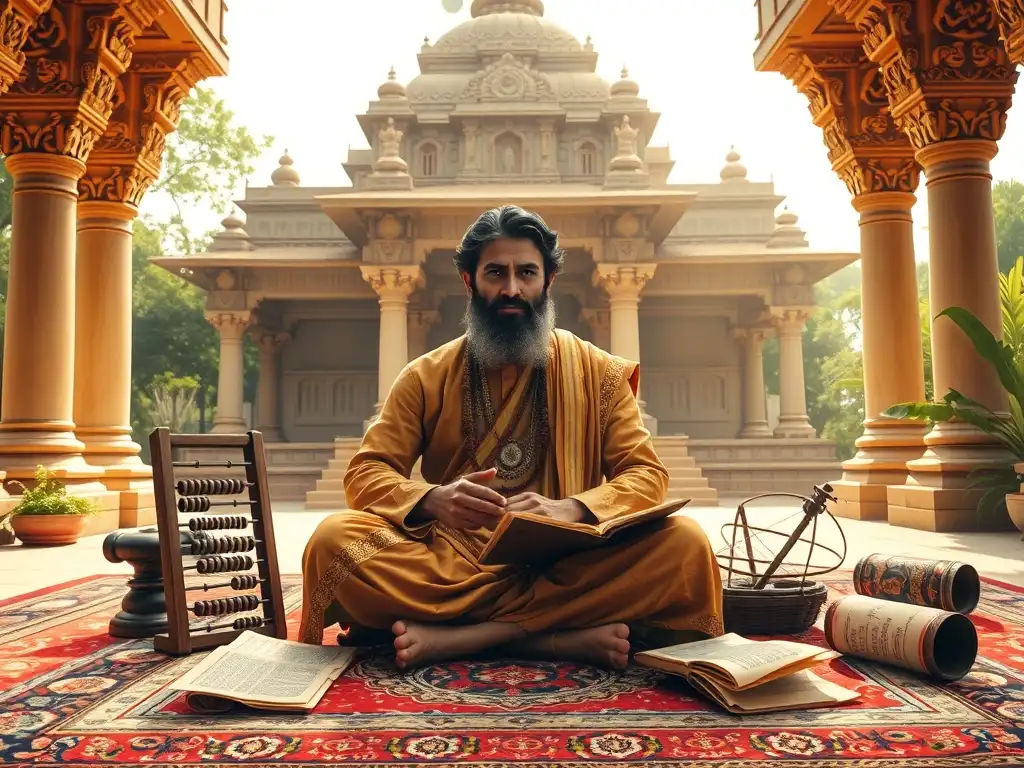
The interplay between ancient Indian mathematics and technology is evident in various fields, including astronomy, architecture, and engineering. Ancient Indian mathematicians understood mathematics as a tool for understanding the cosmos and improving daily life.
- Astronomy: The mathematical principles developed by Indian scholars were crucial for astronomical calculations. Aryabhata's calculations of the Earth's circumference and the length of a year illustrate how mathematical precision informed technological advancements in astronomy. His methods enabled accurate predictions of eclipses and planetary positions, which were essential for navigation and timekeeping.
- Architecture: The precision of ancient Indian mathematics is reflected in the architectural marvels of the time, such as the temples of Khajuraho and the intricate designs of the Brihadeeswarar Temple. These structures demonstrate advanced geometric principles and calculations, showcasing the application of mathematical concepts in creating enduring monuments.
- Engineering: Techniques derived from mathematics were applied in irrigation systems and other engineering projects, which were essential for agricultural development. The construction of stepwells, for instance, exemplifies the fusion of mathematical knowledge with engineering skills to solve practical problems related to water management.
In essence, ancient Indian mathematicians viewed mathematics not just as a theoretical pursuit but as a means to enhance technology and improve quality of life.
Comparisons with Other Mathematical Traditions
When examining ancient Indian mathematics and philosophy, it is insightful to compare it with other mathematical traditions, such as those from Greece, China, and the Islamic Golden Age.
- Greek Mathematics: Greek mathematicians, like Euclid and Pythagoras, emphasized geometry and theoretical proofs. In contrast, ancient Indian mathematicians focused on practical applications, often intertwining mathematics with astronomy and engineering. This difference in approach highlights the philosophical underpinnings of mathematics in India, where it was seen as a means to understand the universe rather than solely an abstract discipline.
- Chinese Mathematics: Chinese mathematicians, such as Liu Hui, developed mathematical techniques that were applied in surveying and agriculture. While both Chinese and Indian traditions valued practical applications, the Indian approach incorporated a stronger philosophical discourse, particularly regarding concepts like infinity and the void, which were less prevalent in Chinese texts.
- Islamic Mathematics: The Islamic Golden Age saw the preservation and expansion of earlier mathematical concepts, including those from India. Scholars like Al-Khwarizmi built upon Indian numeral systems and algebraic ideas, thus highlighting a significant exchange of knowledge. However, the philosophical context in which Indian mathematicians operated often emphasized a spiritual understanding of numbers, a perspective that was less pronounced in Islamic mathematics.
Overall, the rich tapestry of ancient Indian mathematics reveals a unique philosophical approach that not only advanced mathematical techniques but also contributed to a broader understanding of technology and its role in society. This distinct perspective continues to influence modern discussions around the interplay of mathematics and philosophy.
The Legacy of Ancient Indian Mathematics and Philosophy in Modern Technology
The legacy of ancient Indian mathematics and philosophy is profoundly embedded in the foundations of modern technology. Concepts devised by ancient Indian mathematicians like Aryabhata, Brahmagupta, and Bhaskara have not only influenced mathematical thought but also technological advancements across various fields. Their philosophical approach emphasized the interconnection between mathematics and the natural world, fostering a mindset that remains relevant today.
For instance, the numeral system developed in ancient India, which introduced the concept of zero and the decimal system, is crucial to modern computing and digital technology. The use of algorithms in ancient texts can also be seen as precursors to contemporary computer programming. Ancient Indian mathematicians viewed mathematics not merely as a tool for calculations but as a means to understand the universe, leading to innovations in astronomy, architecture, and engineering.
Moreover, the philosophical underpinnings of ancient Indian mathematics promote a holistic approach to technology, advocating for ethical considerations in technological advancements. This perspective is increasingly significant in today's discussions about artificial intelligence, data privacy, and sustainable development. The ancient emphasis on dharma (righteousness) and the interconnectedness of all beings serves as a guiding principle for modern technologists seeking to innovate responsibly.
Conclusion: The Enduring Importance of Ancient Indian Mathematics and Philosophy
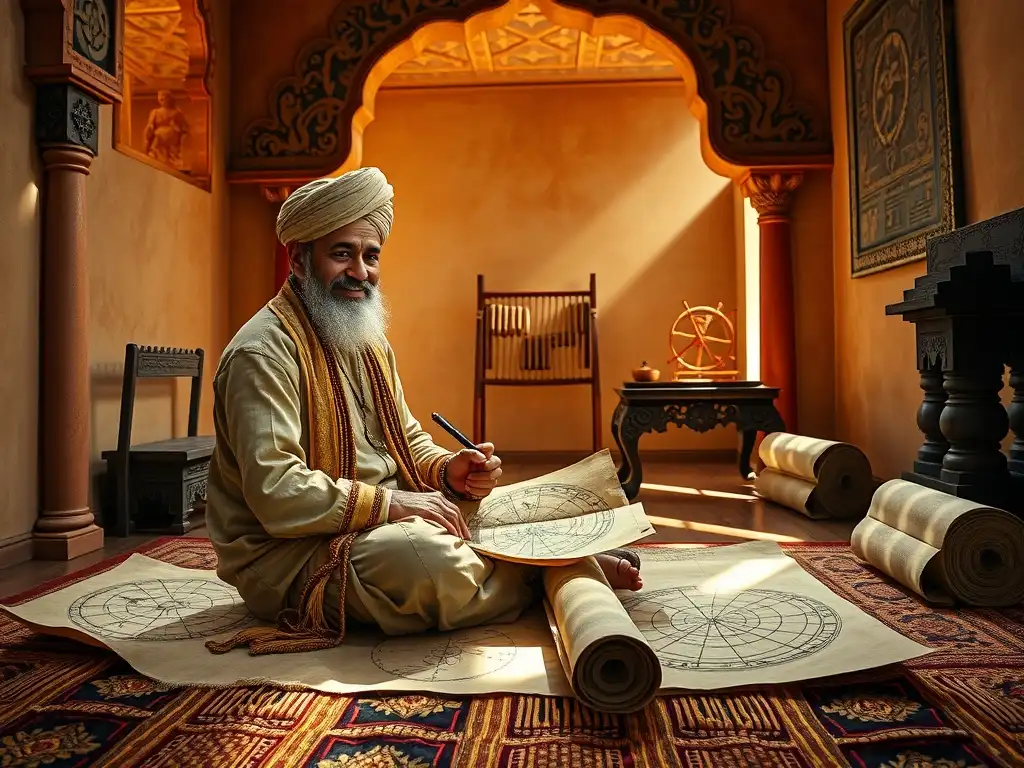
The enduring importance of ancient Indian mathematics and philosophy cannot be overstated. As we navigate an ever-evolving technological landscape, the principles established by ancient mathematicians continue to influence not only mathematical theory but also the ethical frameworks within which technology operates. Their holistic approach to knowledge, which integrates mathematics with philosophy, science, and spirituality, emphasizes a balanced view of technological progress.
Furthermore, the mathematical concepts originating from ancient India have laid the groundwork for many modern disciplines, including physics, engineering, and computer science. As educators, researchers, and technologists delve into these ancient texts, they find timeless wisdom that can inform and inspire contemporary practices.
This rich intellectual heritage encourages a contemplative approach to technology—one that values human experience and societal impact alongside innovation and efficiency. In doing so, it reminds us that the pursuit of knowledge is not merely a quest for numerical precision but an exploration of the deeper truths that bind humanity.
Further Reading and Resources
For those interested in delving deeper into the fascinating intersection of ancient Indian mathematics and philosophy with modern technology, the following resources are recommended:
- Books:
- "The History of Mathematics: A Brief Course" by Roger L. Cooke
- "Mathematics in India" by Kim Plofker
- "A History of Indian Philosophy" by Surendranath Dasgupta
- Articles:
- "Mathematics in Ancient India: The Role of the Decimal System"
- "Philosophy and Technology: Insights from Ancient Indian Texts"
- Online Resources:
- Digital archives of ancient Indian texts
- Educational websites dedicated to the history of mathematics
These resources provide a comprehensive overview of the contributions of ancient Indian mathematicians and the philosophical insights that continue to resonate in today's technological advancements. Engaging with these materials can enrich one's understanding of how the past shapes our present and future.
References
The exploration of ancient Indian mathematics and philosophy reveals an intricate relationship between numerical concepts and the broader philosophical frameworks of the time. Here are some key references that provide insights into this fascinating subject:
- Bhāskara II's "Lilavati" and "Bijaganita": These seminal works not only present mathematical techniques but also incorporate philosophical discussions on the nature of knowledge and reality. Bhāskara's emphasis on practical applications illustrates how mathematics served as a tool for understanding the universe.
- Aryabhata's "Aryabhatiya": This foundational text presents a synthesis of mathematics and astronomy. Aryabhata's philosophical inquiries into the nature of time and space reveal how ancient Indian mathematicians viewed mathematics as a means of explaining cosmic phenomena.
- The "Sulbasutras": These ancient texts outline geometrical principles used for constructing altars and rituals. They reflect a deep connection between mathematics and spirituality, showcasing the philosophical underpinnings of mathematical practice in Vedic culture.
- "The History of Mathematics: A Brief Course" by Roger L. Cooke: This book provides a comprehensive overview of mathematical developments across cultures, including ancient India. It highlights how Indian mathematicians integrated philosophical thought into their mathematical explorations.
- "Mathematics in India" by Kim Plofker: This text offers an in-depth analysis of the evolution of mathematics in India, emphasizing the philosophical perspectives that shaped its development. Plofker discusses the contributions of various mathematicians and their impact on both mathematics and technology.
- "Indian Philosophy: A Very Short Introduction" by Sue Hamilton: This work explores the broader philosophical landscape of ancient India, providing context for understanding how philosophical ideas influenced mathematical thought and practice.
- Research Articles and Journals: Various scholarly articles in journals such as the "Indian Journal of History of Science" and "Historical Mathematics" delve into specific aspects of ancient Indian mathematics and philosophy. These articles often analyze the philosophical implications of mathematical concepts and their applications in technology.
- "The Mathematics of Ancient India" by C. K. Raju: This book discusses the contributions of Indian mathematicians and their philosophical approaches to mathematical problems, linking them to technological advancements in ancient India.
By studying these references, one can gain a deeper understanding of how ancient Indian mathematicians not only contributed to the field of mathematics but also embedded philosophical thought within their work, ultimately influencing technology and innovation in their time.
- Introduction to Ancient Indian Mathematics and Philosophy
- The Historical Context of Ancient Indian Mathematics
- The Philosophical Foundations of Ancient Indian Mathematics
- Key Contributions of Ancient Indian Mathematicians
- The Intersection of Technology and Ancient Indian Mathematics
- Comparisons with Other Mathematical Traditions
- The Legacy of Ancient Indian Mathematics and Philosophy in Modern Technology
- Conclusion: The Enduring Importance of Ancient Indian Mathematics and Philosophy
- Further Reading and Resources
- References
- What is the significance of ancient Indian mathematics in history?
- How did philosophy intersect with mathematics in ancient India?
- What contributions did the Indus Valley Civilization make to mathematics?
- How did the Gupta Empire influence mathematical thought?
- What role did technology play in ancient Indian mathematics?
Frequently Asked Questions
What is the significance of ancient Indian mathematics in history?
Ancient Indian mathematics laid the foundation for numerical systems, including the introduction of the concept of zero and decimal notation, which greatly influenced global mathematical practices.
How did philosophy intersect with mathematics in ancient India?
Ancient Indian mathematicians viewed mathematics as a philosophical discipline, emphasizing the spiritual and practical applications of numbers in understanding the cosmos and human existence.
What contributions did the Indus Valley Civilization make to mathematics?
The Indus Valley Civilization is known for its sophisticated measuring systems and architectural planning, which indicate an advanced understanding of geometry and quantitative analysis.
How did the Gupta Empire influence mathematical thought?
During the Gupta Empire, there was a significant flourishing of sciences, with mathematicians like Aryabhata making key advances in algebra and trigonometry, integrating mathematical concepts with philosophical ideas.
What role did technology play in ancient Indian mathematics?
Ancient Indian mathematicians utilized technology in practical applications such as astronomy and architecture, showcasing a blend of theoretical knowledge and practical skills in their work.
Final Reflection: The Timeless Wisdom of Ancient Indian Mathematics and Philosophy
The intricate relationship between mathematics and philosophy in ancient India remains profoundly relevant today. As we navigate an increasingly technology-driven world, the insights of ancient Indian mathematicians remind us that numbers are not merely tools for calculation but gateways to deeper understanding and wisdom. The philosophical underpinnings of their work challenge us to consider the ethical implications of technology and the importance of a holistic approach to knowledge.
Cultural and social landscapes are continually shaped by the legacies of thinkers who dared to intertwine logic with philosophy. The teachings of ancient Indian mathematicians encourage us to appreciate the interconnectedness of disciplines, fostering a more comprehensive view of knowledge. As the mathematician and philosopher Bhaskara II once said, > “Mathematics is the language in which God has written the universe.” This quote encapsulates the essence of how mathematics transcends mere computation, inviting us to explore the spiritual and philosophical dimensions of our existence.
As we reflect on the lessons from ancient Indian mathematics and philosophy, let us embrace the call to integrate these timeless principles into our modern lives. Consider how you can apply this holistic perspective in your own journey—whether in your studies, career, or personal growth. By doing so, we not only honor the wisdom of our ancestors but also pave the way for a future where technology and philosophy coexist harmoniously, enriching our understanding of the world and ourselves.
Unveil the Wisdom of Ancient Mathematicians!
Thank you for journeying through the rich philosophical landscape of ancient Indian mathematicians with us. You've uncovered insights that not only challenge conventional views on technology but also inspire a deeper appreciation for how history informs our modern world. Now, it’s time to put this wisdom into action!
Here are some steps you can take to explore and share this fascinating approach further:
- Dive Deeper: Read more about the lives and works of renowned ancient mathematicians, such as Aryabhata and Brahmagupta. Their contributions extend beyond mathematics and can serve as inspiration in various fields.
- Start a Discussion: Engage with your friends or online communities by sharing what you've learned. Consider hosting a small book club that focuses on ancient philosophies and their relevance today.
- Connect with Nature: Reflect on the balance these scholars had with the natural world. Create a project, such as calculating the area of your garden bed using traditional techniques or mapping the stars as they did.
What insights from ancient Indian mathematics do you believe could be beneficial in today’s technological landscape?