
Bridging Cultures: The Exchange of Mathematical Ideas Between Ancient India and the World


Welcome to Ancient India History, where we invite you to embark on a journey through the fascinating tapestry of ancient Indian civilizations. Discover the profound mathematical contributions that not only shaped the subcontinent but also influenced cultures across the globe. In our featured article, "Bridging Cultures: The Exchange of Mathematical Ideas Between Ancient India and the World," we delve into the remarkable innovations and ideas that emerged from the vibrant intellect of ancient India.
Prepare to be captivated as we unveil the stories and discoveries that continue to inspire and resonate today. Join us in exploring the legacy of a civilization that has left an indelible mark on the world of tech and innovation!

The exploration of ancient Indian mathematical contributions reveals a profound and intricate tapestry of ideas that have influenced not only the subcontinent but also the broader world. From the advanced numerical systems that facilitated trade and astronomy to the groundbreaking concepts of zero and infinity, ancient Indian mathematicians laid the foundations for many mathematical principles still in use today.
This article delves into how these mathematical ideas transcended geographical and cultural boundaries, fostering an exchange of knowledge that enriched civilizations across the globe. By examining the intersections of ancient Indian mathematics with other cultures, we can appreciate the collaborative spirit of innovation that has shaped the development of technology and science throughout history.
Introduction to Ancient Indian Mathematical Contributions
Ancient India was a cradle of remarkable intellectual achievements, particularly in the field of mathematics. The contributions made by Indian mathematicians not only advanced mathematical thought but also significantly impacted various domains, including astronomy, engineering, and commerce. The emergence of the decimal system, the concept of zero as a numeral, and sophisticated methods for solving equations are just a few examples of the rich mathematical heritage that originated in this ancient civilization.
The mathematical advancements of ancient India were documented in several key texts, such as the Sulba Sutras and the works of renowned scholars like Aryabhata, Brahmagupta, and Bhaskara. These texts not only highlight theoretical concepts but also provide practical applications that influenced subsequent generations of mathematicians and scientists worldwide.
Key Contributions:
- The Concept of Zero: Revolutionized numerical systems and calculations.
- Decimal System: Established the foundation for modern mathematics.
- Algebra and Geometry: Advanced techniques that were critical for engineering and architecture.
The significance of these contributions extends beyond mere numbers; they represent a rich dialogue between cultures, illustrating how knowledge can transcend boundaries and evolve through shared intellectual pursuits. Exploring this legacy offers valuable insights into the interconnectedness of human thought and the enduring impact of ancient Indian mathematics on the world.
- What were some key mathematical contributions from ancient India?
- How did ancient Indian mathematicians influence the world?
- What role did the decimal system play in mathematics?
- How did cultural exchange impact mathematical ideas in ancient times?
- Why is the study of ancient Indian mathematics important today?
Historical Context of Ancient Indian Mathematics
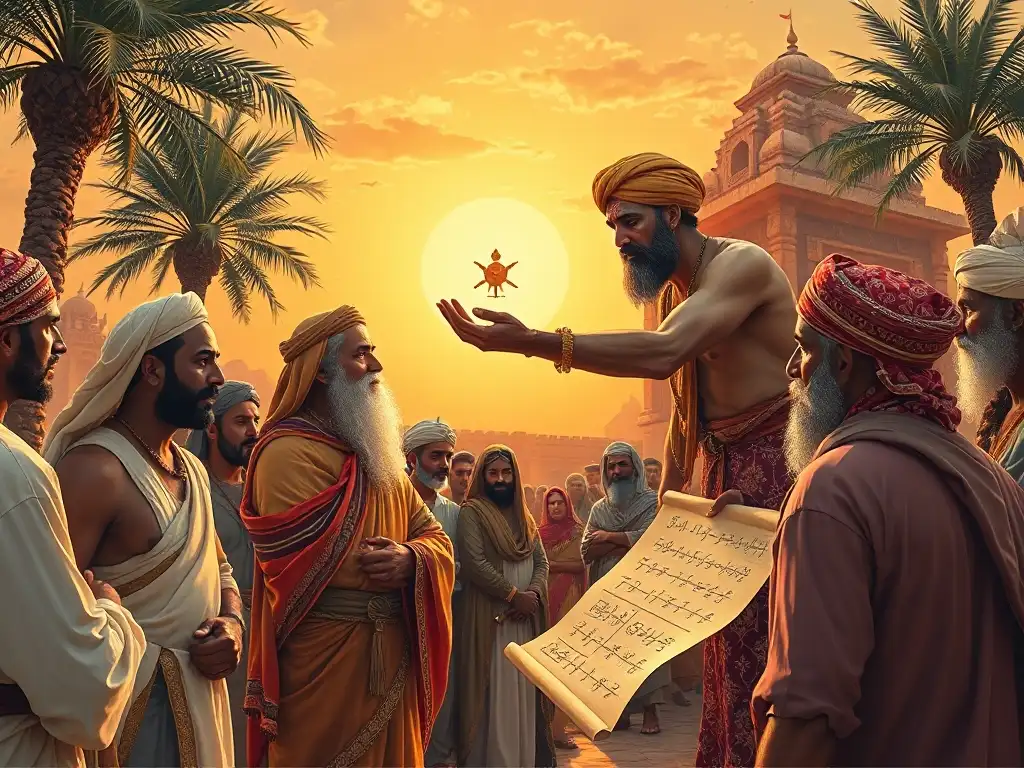
Ancient Indian mathematics is a fascinating tapestry woven from the threads of various cultures, philosophies, and innovations. This mathematical heritage dates back thousands of years, with its roots deeply embedded in the daily lives of the civilizations that flourished in the Indian subcontinent. The transition from practical arithmetic used in trade and agriculture to more abstract concepts laid the groundwork for significant mathematical advancements.
The earliest records of mathematical thought in India can be traced to the Indus Valley Civilization (c. 2600–1900 BCE), where evidence such as the use of weights and measures indicates a sophisticated understanding of mathematics. However, the formalization of mathematical ideas truly began in the subsequent Vedic period, during which mathematical concepts were intertwined with religious rituals and astronomy.
The Early Beginnings of Mathematics in Ancient India
The Vedic texts, particularly the Sulbasutras (c. 800–500 BCE), are among the earliest sources documenting mathematical principles in ancient India. These texts provided rules for constructing altars and included geometric principles, demonstrating an advanced understanding of shapes and measurements. The famous Pythagorean theorem, for instance, is found in these texts long before Pythagoras himself.
Key Concepts Introduced
- Geometry: The Sulbasutras outlined methods for constructing squares, rectangles, and circles, which were essential for altar construction.
- Arithmetic: Basic operations such as addition, subtraction, multiplication, and division were documented, laying the groundwork for further mathematical exploration.
- Place Value System: Ancient Indian mathematicians introduced a decimal place value system, which was revolutionary for bookkeeping and calculations.
The Aryabhata period (c. 476–550 CE) marked a significant turning point in ancient Indian mathematics. Aryabhata's seminal work, the Aryabhatiya, encapsulated a wealth of knowledge, including methods for solving linear equations and a clear understanding of the concept of zero. This mathematical innovation allowed for more complex calculations and is regarded as one of the greatest contributions of ancient Indian mathematics.
Key Figures in Ancient Indian Mathematics
Several prominent mathematicians emerged from ancient India, each contributing invaluable insights that shaped the trajectory of mathematics not just in India, but across the globe.
Aryabhata (c. 476–550 CE)
Aryabhata is perhaps the most renowned ancient Indian mathematician. His work laid the foundations for trigonometry and algebra. Key contributions include:
- Introduction of Zero: Aryabhata recognized zero as a number, which was crucial for mathematical computations.
- Approximation of Pi: He approximated π (pi) as 3.1416, which showcased an advanced understanding of geometry.
Brahmagupta (c. 598–668 CE)
Brahmagupta was instrumental in expanding on Aryabhata's work. His treatise, the Brahmasphutasiddhanta, introduced:
- Rules for Arithmetic Operations: He detailed operations with negative numbers and provided algorithms for solving quadratic equations.
- Practical Applications: Brahmagupta emphasized the practical uses of mathematics in commerce and astronomy.
Bhaskara I (c. 600–680 CE) and Bhaskara II (c. 1114–1185 CE)
Both Bhaskara I and II made significant contributions that advanced the field of mathematics:
- Bhaskara I: He translated Aryabhata's works into Sanskrit and made contributions to trigonometry.
- Bhaskara II: Known for his work Lilavati, he simplified complex mathematical problems and explored concepts in calculus, paving the way for future mathematicians.
Conclusion
The rich history of ancient Indian mathematics is marked by groundbreaking contributions that have profoundly influenced modern mathematics and technology. From the early beginnings in the Indus Valley to the innovations of Aryabhata and his successors, ancient Indian mathematicians laid the groundwork for a mathematical tradition that continues to inspire and inform contemporary mathematical thought. The exchange of ideas across cultures further highlights the importance of these contributions, illustrating how ancient Indian mathematical knowledge has been instrumental in bridging cultural gaps throughout history.
Ancient Indian Mathematical Contributions to the World
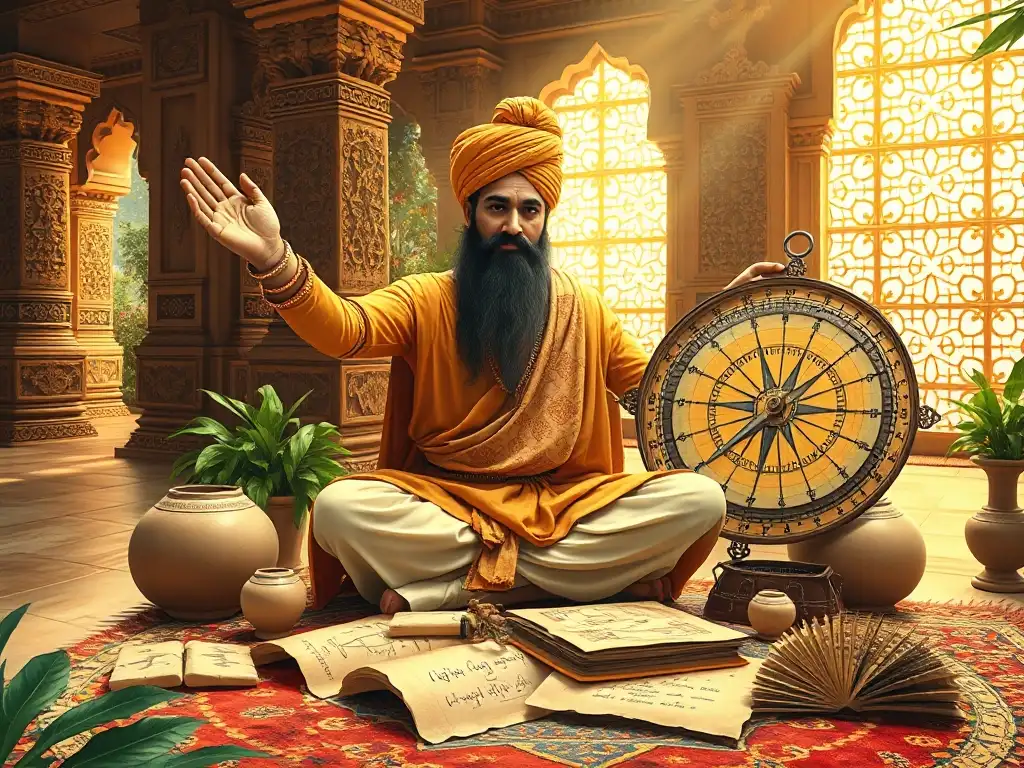
Ancient India has made remarkable contributions to mathematics, shaping not only its own civilization but also influencing various cultures around the globe. The mathematical innovations from this region, particularly during the classical period, have laid foundational principles that are still relevant today. This section will delve into two pivotal contributions that underscore the significance of ancient Indian mathematics: the concept of zero and the Indian number system.
The Concept of Zero and Its Global Influence
The concept of zero, represented as a numeral and a placeholder, is one of the most profound contributions of ancient Indian mathematics. This innovation is attributed to the mathematicians of the Gupta period, notably Brahmagupta, who first defined zero as a number and described its operations in the 7th century CE.
- Origins and Definition: The earliest recorded use of zero can be traced back to the Bakhshali Manuscript, believed to date from the 3rd or 4th century CE. Here, zero is represented by a dot, indicating the absence of a quantity. This fundamental concept allowed for the development of a positional number system, enhancing the efficiency of arithmetic calculations and record-keeping.
- Mathematical Operations: Brahmagupta's rules for arithmetic involving zero included operations such as addition, subtraction, multiplication, and division. He famously stated that subtracting a number from itself yields zero, and that any number multiplied by zero results in zero. These principles laid the groundwork for future mathematical theories.
- Impact on Global Mathematics: The transmission of the concept of zero from India to the Islamic world and subsequently to Europe marked a significant turning point in mathematics. By the 12th century, the work of Indian mathematicians had reached Europe through translations and commentaries, fundamentally changing mathematical practices. The introduction of zero allowed for more complex calculations and the development of algebra.
The invention of zero has allowed for the development of mathematics as we know it today, enabling advancements in science, technology, and engineering.
– Mathematician's Insight
The Indian Number System: A Revolutionary Contribution
The Indian numeral system, also known as the Hindu-Arabic numeral system, represents another monumental contribution from ancient Indian mathematicians. This system introduced a decimal place value system, which is the foundation of modern mathematics.
- Structure of the System: The Indian number system is based on ten symbols (0-9), each representing different values depending on their position. This positional notation is revolutionary because it simplifies calculations and allows for the representation of large numbers with fewer digits.
- Spread and Adaptation: The numeral system was adopted by Arab mathematicians during the 8th century. The Arabs translated and expanded upon the works of Indian mathematicians, promoting the system across Europe. By the 15th century, this numeral system had become widespread in Europe, replacing the cumbersome Roman numeral system.
- Significance in Mathematics: The efficiency of the Indian number system has paved the way for significant mathematical advancements, including the development of calculus, advanced algebra, and complex mathematical modeling. Its widespread acceptance has made it the standard numeral system used in mathematics worldwide today.
| Contribution | Description | Global Impact |
|---|---|---|
| Concept of Zero | Defined as a number and a placeholder | Revolutionized arithmetic and algebra |
| Number System | Positional decimal system using 0-9 symbols | Standardized numeral use globally |
The ancient Indian mathematical contributions, particularly the concept of zero and the Indian number system, have profoundly influenced mathematics and technology around the world. These innovations not only showcase the intellectual achievements of ancient Indian civilizations but also highlight their enduring legacy in the realm of mathematics that continues to shape modern society.
Cultural Exchange: The Spread of Mathematical Ideas

The exchange of mathematical ideas in ancient times was profoundly influenced by cultural interactions across various civilizations. Ancient India, with its rich tapestry of knowledge and innovation, played a pivotal role in this exchange, particularly through its advancements in mathematics. The mathematical contributions from ancient India not only shaped the local intellectual landscape but also reached far beyond its borders, influencing cultures worldwide.
Trade Routes and the Dissemination of Knowledge
The Indian subcontinent was interconnected through an extensive network of trade routes, both overland and maritime. These routes served as conduits for not just goods but also ideas, including mathematical concepts. Key trade routes such as the Silk Road and maritime paths to Southeast Asia and the Middle East facilitated the movement of scholars and merchants, who carried with them knowledge of mathematical practices.
- Silk Road: This ancient trade route connected India to Central Asia and beyond, where Indian mathematicians exchanged knowledge regarding the decimal system, zero, and algebraic concepts.
- Maritime Trade: Indian traders sailed to ports in Africa and the Arabian Peninsula, bringing with them innovations in mathematics, particularly in navigation and astronomy.
Through these interactions, ancient Indian mathematical contributions such as the numeral system and techniques for solving equations spread to other cultures. For example, the Indian numeral system, which included the concept of zero as a number, greatly influenced the development of mathematics in the Islamic Golden Age, and later in Europe.
Influence of Ancient Indian Mathematics on Other Civilizations
Ancient Indian mathematics significantly impacted various civilizations, leading to profound advancements in mathematical thought and practice. The contributions from this region can be observed in several key areas:
- Numerals and Place Value System:
- The introduction of the base-10 numeral system and the concept of zero revolutionized mathematics. This system was adopted by the Arabs and later transmitted to Europe, where it became the foundation of modern arithmetic.
- Algebra:
- Indian mathematicians like Brahmagupta and Bhaskara made groundbreaking contributions to algebra. Their work on quadratic equations and rules for solving indeterminate equations laid the groundwork for future mathematicians, including those in the Islamic world.
- Astronomy and Trigonometry:
- Ancient Indian scholars developed methods for calculating the positions of celestial bodies and timekeeping. The sine and cosine functions, foundational to trigonometry, were refined in Indian texts such as the Surya Siddhanta, influencing Islamic astronomers and later European scientists.
- Mathematical Texts:
- Key texts such as Aryabhatiya by Aryabhata and Lilavati by Bhaskara II not only provided mathematical insights but also served as textbooks for generations of mathematicians across cultures.
The dissemination of these mathematical ideas exemplifies the rich cultural exchange that occurred between ancient India and other civilizations. The legacy of ancient Indian mathematical contributions is a testament to the interconnectedness of human knowledge and the collaborative nature of intellectual progress.
Through this exploration of cultural exchange and trade routes, it is evident that ancient Indian mathematics was not an isolated development but a vital part of a global tapestry of knowledge that transcended borders and continues to influence modern mathematics and technology.
Case Studies of Mathematical Exchange
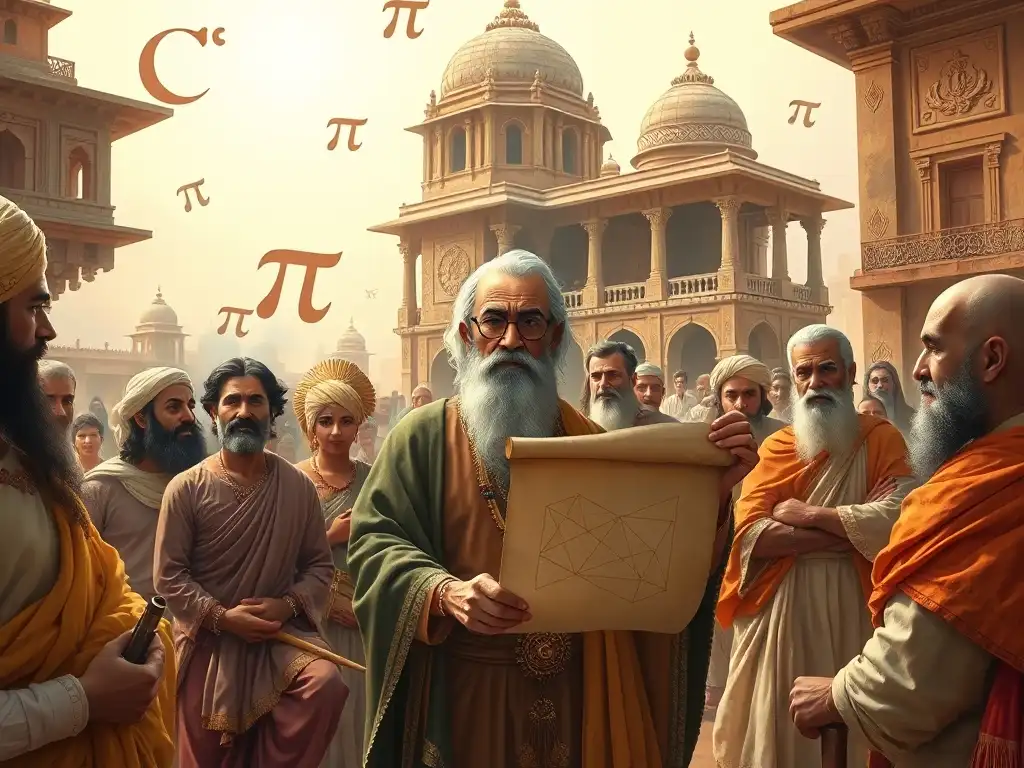
The Adoption of Indian Astronomical Calculations
The influence of ancient Indian mathematical contributions extends significantly into the realm of astronomy. One of the most notable examples is the adoption of Indian astronomical calculations by scholars in the Islamic Golden Age. Indian mathematicians, particularly during the Gupta period, developed sophisticated methods to calculate celestial phenomena, which were later translated and disseminated across the Islamic world.
Key Contributions
- Surya Siddhanta: This ancient Indian text, attributed to Aryabhata and later contributors, provided comprehensive methods for calculating the positions of celestial bodies. It introduced concepts such as sine functions and the calculation of planetary positions, which were revolutionary at the time.
- Trigonometry: Indian mathematicians were pioneers in trigonometry, specifically the use of sine and cosine functions. Their work laid the groundwork for future developments in this field, influencing Islamic astronomers who adopted these techniques to refine their own astronomical models.
- Decimal System: The introduction of the decimal system, including the concept of zero, was another significant contribution from ancient India. This system facilitated more accurate calculations in astronomy and was crucial in the development of advanced mathematical ideas.
The impact of these astronomical calculations was profound, as they not only enhanced the precision of astronomical observations but also influenced navigation and timekeeping practices across different cultures.
The Translation of Mathematical Works
The translation of mathematical works from Sanskrit to Arabic played a pivotal role in the dissemination of ancient Indian mathematical contributions. This exchange of knowledge was largely facilitated by scholars who recognized the value of Indian texts and sought to integrate this information into their own mathematical frameworks.
Notable Translations
- Bakhshali Manuscript: This ancient Indian text, notable for its early use of the concept of zero and its application in solving linear equations, was translated into Arabic. Its translation helped bridge the gap between Indian and Islamic mathematical traditions.
- Aryabhata's Works: The astronomical and mathematical treatises of Aryabhata were translated into Arabic, significantly influencing later mathematicians like Al-Khwarizmi. His work on algorithms and algebra drew heavily from Aryabhata's methods, showcasing the enduring legacy of Indian mathematics.
- Impact on European Mathematics: The translations of Indian mathematical texts into Arabic eventually made their way to Europe, where they played a crucial role in the Renaissance. The reintroduction of concepts like the decimal system and algorithms transformed European mathematical practices, leading to innovations in various fields.
The translation of mathematical works was a critical factor in the global dissemination of ancient Indian mathematical contributions. This process not only enriched the mathematical landscape of the Islamic world but also laid the groundwork for future advancements in Europe, illustrating the interconnectedness of cultures through the exchange of knowledge.
Conclusion: The Lasting Legacy of Ancient Indian Mathematical Contributions
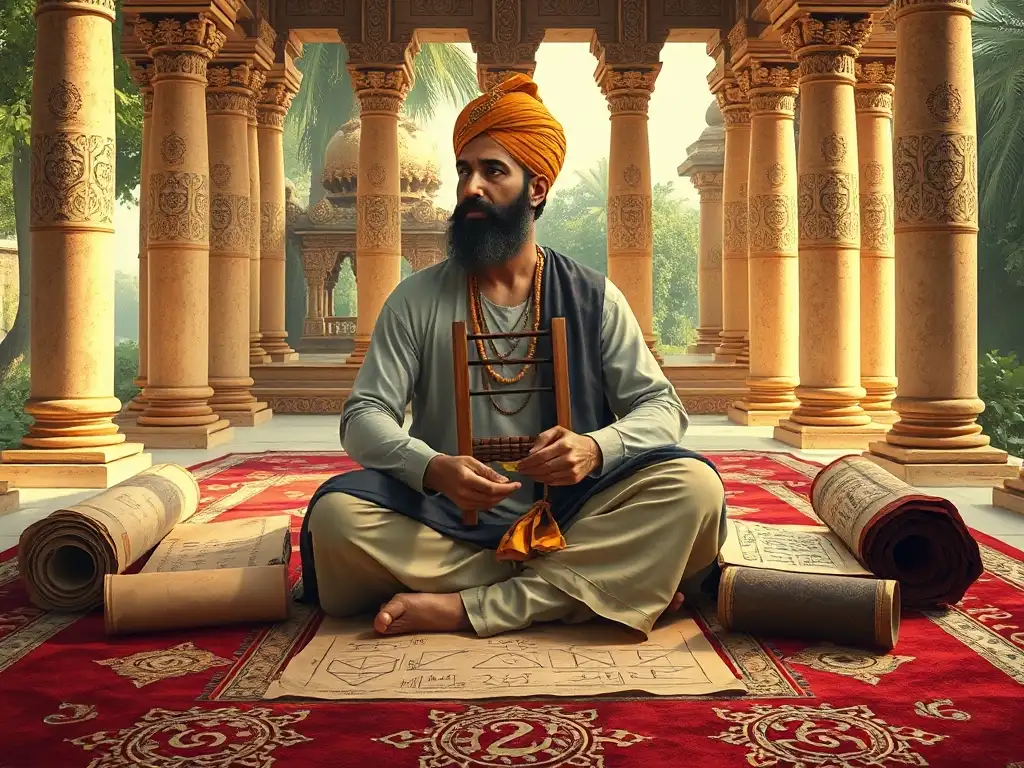
The mathematical contributions of ancient India have left an indelible mark on the world, shaping not only the development of mathematics itself but also influencing various fields such as astronomy, navigation, and architecture. The innovative concepts introduced by Indian mathematicians, such as the decimal system and the concept of zero, have been fundamental in bridging cultural and intellectual divides across civilizations.
The Bakhshali manuscript, an ancient text from the 7th century, exemplifies the sophistication of Indian mathematics. It demonstrated advanced arithmetic techniques, including the use of negative numbers and the application of algebraic methods. Such texts laid the groundwork for future mathematical developments and fostered a culture of inquiry and intellectual exchange.
Moreover, the work of mathematicians like Aryabhata and Brahmagupta not only advanced mathematical thought but also facilitated cross-cultural exchanges, particularly along trade routes. Their ideas traveled westward, influencing Islamic mathematicians and, subsequently, European scholars during the Renaissance. This exchange underscores the importance of ancient Indian mathematical contributions in the larger narrative of global intellectual history.
As we reflect on the legacy of ancient Indian mathematics, it is essential to recognize its role in the evolution of modern technology and innovation. The principles derived from these early contributions continue to underpin contemporary mathematical applications, algorithms, and computational methods, demonstrating that the impact of ancient Indian scholars transcends time and geography.
References and Further Reading
- Books and Articles
- "Mathematics in Ancient India" by Kim Plofker – A comprehensive exploration of the mathematical achievements of ancient Indian civilizations.
- "The History of Mathematics: A Brief Course" by Roger L. Cooke – Includes references to the influence of Indian mathematics on global practices.
- Research Papers
- "The Influence of Indian Mathematics on the Development of Mathematics in the Islamic World" – A detailed examination of the transmission of mathematical ideas from India to the Islamic empire.
- "Zero: The Biography of a Dangerous Idea" by Charles Seife – Discusses the origins and significance of the concept of zero, tracing its roots back to ancient Indian mathematics.
- Online Resources
- The Indian Mathematical Society – Offers resources and publications related to the history and development of mathematics in India.
- The History of Mathematics Archive – Provides access to historical texts and documents pertaining to ancient Indian mathematics.
Frequently Asked Questions
What were some key mathematical contributions from ancient India?
Ancient India made significant contributions such as the concept of zero, the decimal system, and advancements in geometry and algebra, which profoundly influenced mathematics globally.
How did ancient Indian mathematicians influence the world?
Ancient Indian mathematicians like Aryabhata and Brahmagupta developed theories and algorithms that were later transmitted to the Islamic world and Europe, paving the way for modern mathematical methods.
What role did the decimal system play in mathematics?
The decimal system, developed in ancient India, introduced a place-value notation that enabled more complex calculations and laid the foundation for modern numerical representations.
How did cultural exchange impact mathematical ideas in ancient times?
Cultural exchange facilitated the sharing of mathematical knowledge between ancient India and other civilizations, leading to a rich tapestry of innovations that shaped global mathematics.
Why is the study of ancient Indian mathematics important today?
Studying ancient Indian mathematics helps us understand its historical context, the evolution of mathematical concepts, and their enduring influence on contemporary mathematical thought.
Final Reflection: Celebrating the Legacy of Ancient Indian Mathematical Contributions
The exchange of mathematical ideas between ancient India and the world is not merely a historical account; it is a testament to the enduring power of collaboration and innovation. Today, as we navigate a globalized society that thrives on interconnectedness, the contributions of ancient Indian mathematicians serve as a reminder of how knowledge transcends borders and time. Their work laid the groundwork for modern mathematics, and understanding this legacy is crucial in appreciating the diverse tapestry of intellectual heritage that shapes our world.
The influence of ancient Indian mathematical contributions continues to resonate in contemporary culture, inspiring new generations of thinkers and innovators. From the concept of zero to the sophisticated use of algorithms, these ideas have permeated various fields, including science, technology, and even art. As we reflect on this rich history, we are reminded of the words of the mathematician Bhaskara II: Mathematics is the language of the universe.
This sentiment underscores the universal nature of mathematical ideas and their ability to connect us across cultures and epochs.
As we move forward, let us embrace the lessons of collaboration and curiosity that ancient Indian mathematicians exemplified. I invite you to reflect on how you can contribute to the ongoing exchange of ideas in your own life. Whether through learning, teaching, or simply sharing knowledge, each of us has the power to bridge cultures and foster understanding. By honoring the legacy of ancient Indian mathematical contributions, we not only celebrate the past but also pave the way for a more interconnected and enlightened future.
Unveil the Wonders of Cultural Exchange!
Thank you for taking the time to explore how ancient India shaped the world of mathematics. Your interest not only enriches your understanding but also pays homage to the profound contributions of Indian scholars. Now, let’s keep the momentum going!
Here are some actionable steps you can take to deepen your journey into this cultural marvel:
- Dive deeper into mathematical texts: Seek out translations of ancient Indian manuscripts, such as the *Aryabhatiya* or *Brahmasphutasiddhanta*, and discover firsthand the brilliance of early Indian mathematicians.
- Join a discussion group: Connect with individuals who share your passion for history and mathematics. Share your insights and learn from one another!
- Explore modern implications: Investigate how these ancient ideas influence contemporary mathematics and technology. Consider writing a blog post or article to share your findings!
What aspect of this remarkable cultural exchange fascinates you the most, and how do you think it influences our world today?