
Ancient Indian Mathematics: The Pillar of Technological Advancements in the Gupta Empire


Welcome to Ancient India History, where we embark on a fascinating journey through the rich tapestry of India's past. Here, we delve into the remarkable contributions of ancient Indian mathematics, a cornerstone of technological advancements that shaped the Gupta Empire and beyond. Have you ever wondered how the mathematical brilliance of ancient India influenced the modern world?
Join us as we uncover the profound innovations and ideas that laid the groundwork for future generations, inviting you to explore the legacy that continues to inspire today’s thinkers and innovators. Dive in and discover the secrets of a civilization that was centuries ahead of its time!
-
Ancient Indian Mathematics Contributions: An Overview of Historical Significance
- The Roots of Ancient Indian Mathematics
- Major Contributions of Ancient Indian Mathematics
- Mathematical Texts from the Gupta Empire
- Influence of Ancient Indian Mathematics on Technology
- The Legacy of Ancient Indian Mathematics in Modern Technology
- Conclusion: The Enduring Impact of Ancient Indian Mathematics Contributions
-
Frequently Asked Questions
- What are the key contributions of ancient Indian mathematics during the Gupta Empire?
- How did ancient Indian mathematicians influence modern mathematics?
- What is the significance of the decimal system in ancient Indian mathematics?
- Who were some notable mathematicians from ancient India?
- How did ancient Indian mathematics contribute to technological advancements?
- Final Reflection: The Enduring Legacy of Ancient Indian Mathematics
- Unveil the Secrets of Ancient Indian Mathematics!
Ancient Indian Mathematics Contributions: An Overview of Historical Significance
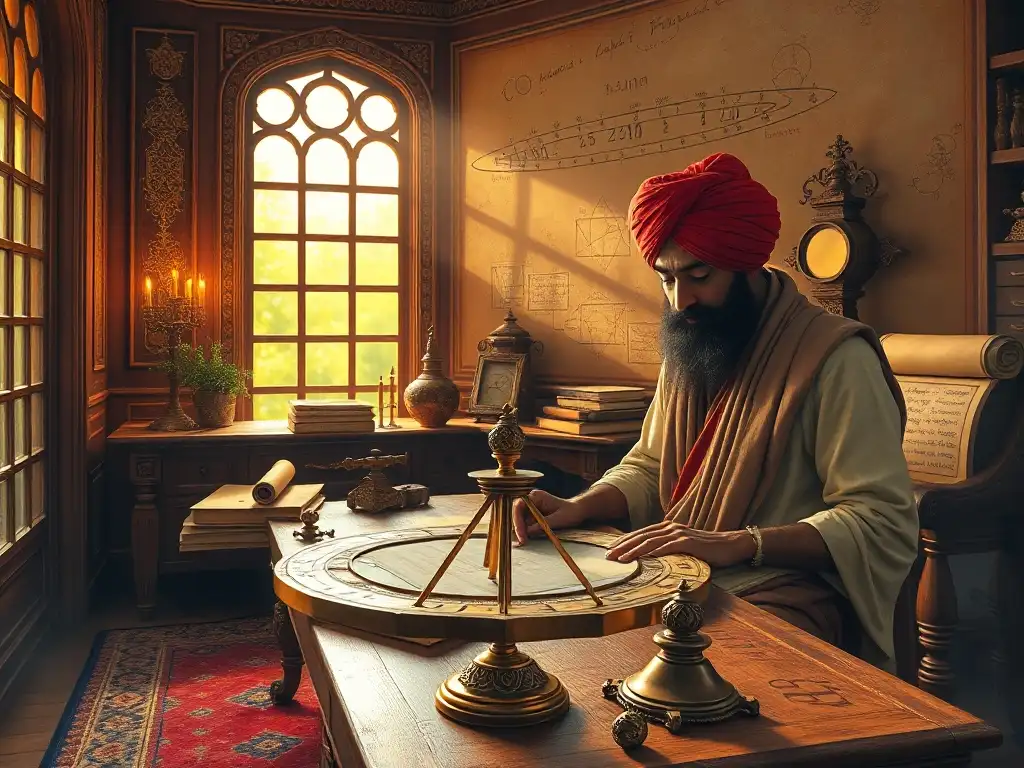
Ancient Indian mathematics is a remarkable tapestry woven into the fabric of history, representing a confluence of intellectual pursuits that have significantly influenced technological advancements. From the sophisticated calculations of the Indus Valley civilization to the intricate theories developed during the Gupta Empire, ancient Indian mathematicians laid the groundwork for numerous mathematical concepts that are still relevant today.
This exploration not only highlights their contributions but also emphasizes the profound impact these advancements had on various fields, including astronomy, architecture, and commerce. By delving into the roots, major contributions, and significant texts of ancient Indian mathematics, we uncover a legacy that continues to inspire modern scientific inquiry and innovation.
The Roots of Ancient Indian Mathematics
The origins of ancient Indian mathematics can be traced back to the early civilizations that flourished along the Indus River around 2500 BCE. The people of this time exhibited an impressive understanding of measurement and geometry, evident in their urban planning and construction techniques. Archaeological findings, such as standardized weights and measures, suggest a sophisticated approach to trade and commerce, which required precise calculations.
As centuries progressed, ancient Indian mathematicians began to develop more abstract concepts. By the time of the Vedic texts (1500-500 BCE), mathematical ideas were intertwined with religious and philosophical thought. The Sulbasutras, for example, are among the earliest texts that outline geometric principles for constructing altars, demonstrating an early application of mathematics in ritual practices.
Major Contributions of Ancient Indian Mathematics
Ancient Indian mathematicians made numerous contributions that laid the foundation for modern mathematics. Some of the most significant include:
- The Concept of Zero: Perhaps the most revolutionary contribution, the invention of zero as a numeral was a pivotal development. It allowed for the representation of large numbers and the execution of complex calculations, fundamentally transforming mathematics.
- Decimal System: The use of a base-10 numeral system, which included the place value system, greatly enhanced numerical representation and computation.
- Trigonometry and Astronomy: Mathematicians like Aryabhata and Brahmagupta made significant advancements in trigonometry, providing methods for calculating sine and cosine functions, which were essential for astronomical observations and predictions.
- Algebraic Innovations: Ancient Indian mathematicians introduced several algebraic concepts, including quadratic equations and arithmetic operations, which were documented in texts such as the Brahmasphutasiddhanta.
Mathematical Texts from the Gupta Empire
The Gupta Empire (approximately 320 to 550 CE) is often referred to as the Golden Age of India, particularly in the realm of mathematics. This period saw the flourishing of mathematical texts that encapsulated the knowledge and innovations of the time. Notable works include:
- Aryabhatiya: Authored by Aryabhata, this seminal text encompasses topics ranging from arithmetic and algebra to geometry and astronomy. Aryabhata's methods for solving quadratic equations and his approximation of π (pi) were groundbreaking.
- Brahmasphutasiddhanta: Written by Brahmagupta, this text expanded upon Aryabhata's work and introduced rules for arithmetic with negative numbers and the calculation of areas and volumes.
- Lilavati: A treatise on arithmetic by Bhaskara I, this work is notable for its poetic form and practical applications of mathematics, making it accessible to a broader audience.
These texts not only preserved ancient knowledge but also served as a bridge to the future, influencing mathematicians across the globe for centuries to come. The contributions of ancient Indian mathematics during the Gupta Empire represent a crucial chapter in the history of technological advancements, underscoring the enduring legacy of this remarkable civilization.
Influence of Ancient Indian Mathematics on Technology

Ancient Indian mathematics significantly influenced technological advancements, particularly during the Gupta Empire, which is often referred to as the "Golden Age" of Indian science and mathematics. The intellectual environment fostered by this period enabled mathematicians and scholars to develop and refine concepts that would later be instrumental in technological applications.
One of the most notable contributions was the development of the decimal system, which included the concept of zero as a numeral. This revolutionary idea simplified calculations and paved the way for advancements in various fields, including astronomy, architecture, and engineering. The use of positional notation allowed for more complex mathematical operations, leading to improved accuracy in astronomical observations and calculations.
Moreover, ancient Indian mathematicians such as Aryabhata and Brahmagupta made significant strides in algebra and geometry. Aryabhata's work on trigonometry and the approximation of pi (π) directly influenced navigation and architecture. Brahmagupta's formulation of rules for arithmetic operations, including the treatment of negative numbers, provided a framework that enhanced the efficiency of trade and commerce, facilitating the growth of economic activities.
The mathematical principles developed during ancient times were not merely theoretical; they had practical applications that contributed to various technological innovations, shaping the infrastructure and societal progress during the Gupta Empire and beyond.
The Legacy of Ancient Indian Mathematics in Modern Technology
The legacy of ancient Indian mathematics is profoundly evident in modern technological advancements. The foundational principles established by ancient scholars have transcended time, influencing various branches of science and technology. For instance, the decimal system and the concept of zero are pivotal in computer science and digital technologies.
In engineering, ancient Indian texts that detail geometric principles continue to inform design and construction methodologies. The understanding of mathematical concepts such as fractals, which can be traced back to ancient Indian architectural designs, plays a crucial role in modern engineering, particularly in fields that require intricate design and precision.
Furthermore, the mathematical techniques developed by ancient Indians in astronomy have laid the groundwork for contemporary astronomical calculations. Techniques for predicting celestial events and understanding planetary movements can be traced back to the works of astronomers like Aryabhata, whose methods are still relevant in modern astronomy.
The influence of ancient Indian mathematics extends to fields such as cryptography, where algebraic concepts are critical for secure communication. The principles of logic and problem-solving that originated from ancient texts continue to resonate in computer algorithms and data analysis, showcasing the enduring impact of these contributions.
Conclusion: The Enduring Impact of Ancient Indian Mathematics Contributions
The contributions of ancient Indian mathematics to technology are both profound and enduring, shaping the course of scientific development throughout history. The innovations that emerged during the Gupta Empire not only advanced the mathematical understanding of the time but also established a foundation for future generations to build upon.
These contributions have transcended their historical context, finding relevance in various modern technological applications. From the digital revolution to advancements in engineering and astronomy, the principles and concepts developed by ancient Indian mathematicians remain integral to contemporary innovations.
As we continue to explore and understand the depth of ancient Indian mathematics, it is clear that its legacy is not confined to the past. It serves as a reminder of the rich intellectual heritage of ancient civilizations and the significant role they played in shaping the technological landscape we navigate today. The enduring impact of ancient Indian mathematics contributions is a testament to the brilliance of its thinkers and the timelessness of their discoveries.
Frequently Asked Questions
What are the key contributions of ancient Indian mathematics during the Gupta Empire?
Ancient Indian mathematics saw significant advancements during the Gupta Empire, including the development of the decimal system, the concept of zero, and advancements in algebra and geometry.
How did ancient Indian mathematicians influence modern mathematics?
The work of ancient Indian mathematicians laid the groundwork for modern mathematics, particularly through the introduction of the decimal place-value system and the concept of zero, which are fundamental in today's mathematical practices.
What is the significance of the decimal system in ancient Indian mathematics?
The decimal system is one of the most important contributions from ancient Indian mathematics, as it allows for the efficient representation and calculation of numbers, influencing mathematical practices worldwide.
Who were some notable mathematicians from ancient India?
Notable mathematicians from ancient India include Aryabhata, who made groundbreaking work in astronomy and mathematics, and Brahmagupta, known for his rules on arithmetic and algebra.
How did ancient Indian mathematics contribute to technological advancements?
Ancient Indian mathematics provided essential tools for technological advancements in various fields, including astronomy, engineering, and architecture, significantly influencing the development of scientific thought in the region.
Final Reflection: The Enduring Legacy of Ancient Indian Mathematics
The contributions of ancient Indian mathematics are not just relics of the past; they are foundational pillars that continue to shape our modern technological landscape. The innovations and discoveries made during the Gupta Empire laid the groundwork for various fields, from astronomy to engineering, demonstrating that the brilliance of ancient scholars transcends time and remains relevant in today's world. The intricate systems of numbers and calculations developed during this era remind us that the pursuit of knowledge knows no boundaries, and the echoes of these advancements resonate in our daily lives.
The influence of ancient Indian mathematics extends far beyond historical significance; it has woven itself into the very fabric of our cultural and intellectual heritage. The principles established by mathematicians like Aryabhata and Brahmagupta not only advanced mathematical thought but also inspired generations of thinkers across the globe. As we reflect on this legacy, we are reminded of the words of the great mathematician Carl Friedrich Gauss: Mathematics is the queen of the sciences.
This reverence for mathematics underscores its vital role in the progression of civilization, highlighting the importance of recognizing and celebrating the contributions of ancient cultures.
As we stand on the shoulders of these giants, let us take a moment to reflect on how we can apply the lessons of ancient Indian mathematics in our own lives. Consider how the spirit of inquiry and innovation that fueled these early mathematicians can inspire you to explore, question, and create in your own field. Embrace the idea that knowledge is a continuum, and each of us has the potential to contribute to this legacy. By fostering a mindset of curiosity and collaboration, we can honor the past while paving the way for future advancements.
Unveil the Secrets of Ancient Indian Mathematics!
Thank you for exploring the fascinating world of Ancient Indian Mathematics with us! Your curiosity has uncovered the extraordinary impact this knowledge had during the Gupta Empire's technological advancements. Now, it's time to take that inspiration and put it into action.
Here are some ways you can engage further with this captivating topic:
- Dive deeper into the writings of ancient mathematicians by exploring online resources or visiting your local library. You might discover insights that can transform your understanding!
- Share this article with friends or engage in discussions about how these ancient concepts continue to influence modern mathematics.
- Join a community event focused on historical innovations in mathematics, such as workshops or webinars, and be part of an enriching conversation!
In what ways do you believe ancient mathematical principles can be applied to address contemporary challenges?