
Unraveling the Mysteries: The Role of Ancient Indian Mathematics in Modern Computing

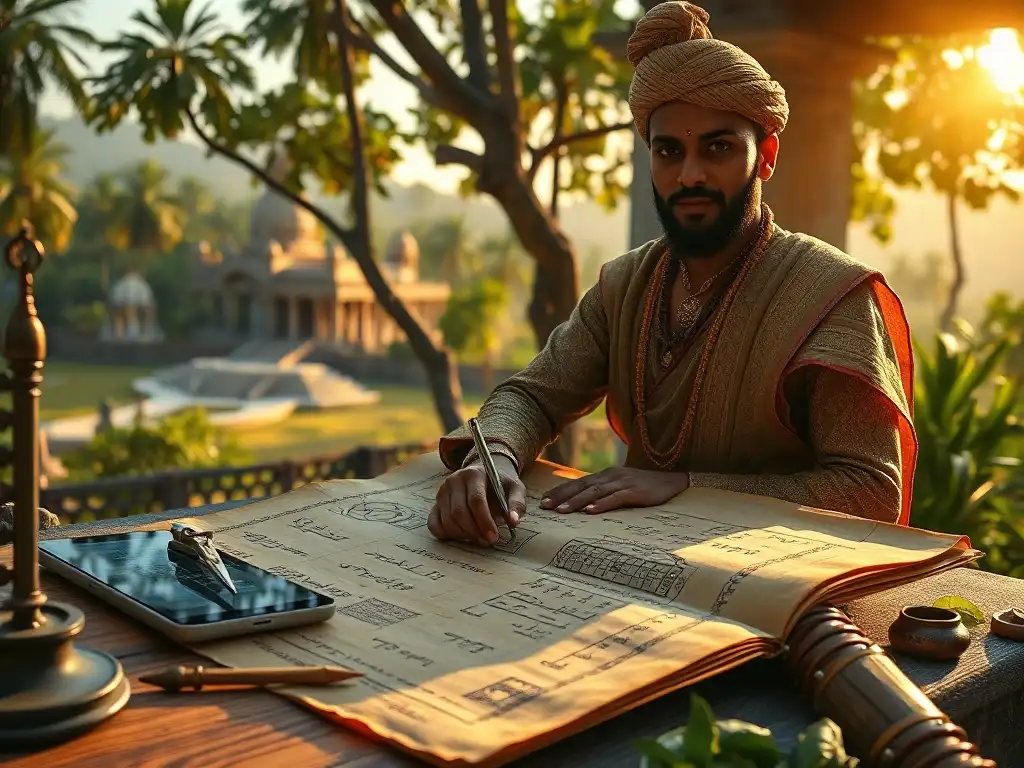
Welcome to Ancient India History, where we invite you to embark on a captivating journey through the rich tapestry of ancient Indian civilizations. Here, you’ll discover the profound contributions of ancient Indian mathematics, a field that not only shaped the past but also laid the groundwork for modern computing.
As you delve into our featured article, "Unraveling the Mysteries: The Role of Ancient Indian Mathematics in Modern Computing," prepare to uncover the secrets that intertwine ancient wisdom with contemporary innovation. Join us as we explore how these remarkable achievements continue to influence the world today, sparking curiosity and inspiring future generations.
Introduction to Ancient Indian Mathematics Contributions
The contributions of ancient Indian mathematics are not just historical curiosities; they form the bedrock of numerous modern computational methods and technologies. From the intricate calculations of the Indus Valley Civilization to the revolutionary concepts introduced during the Gupta Empire, ancient Indian mathematicians laid down principles that resonate in today’s technological advancements.
This article aims to unravel the profound impact of these early mathematical innovations on contemporary computing, highlighting key concepts, influential mathematicians, and their legacy in the realm of technology. By understanding the historical context and contributions of ancient Indian mathematics, we can appreciate how these foundational ideas continue to shape our modern world.
Historical Context of Ancient Indian Mathematics
The evolution of mathematics in ancient India is a testament to the civilization's intellectual prowess and its quest for knowledge. The timeline spans several millennia, showcasing a rich tapestry of ideas and innovations that contributed significantly to the field.
The Origins of Mathematical Concepts in Ancient India
Mathematical concepts in ancient India can be traced back to the Vedic period (circa 1500–500 BCE), where early texts like the Sulba Sutras introduced geometrical principles for the construction of altars. This period marked the beginning of formal mathematical thought, where practical applications drove theoretical advancements.
- Key Developments:
- Decimal System: Ancient Indians were among the first to develop a decimal place value system, which revolutionized numerical representation and calculations.
- Zero as a Number: The concept of zero, as both a placeholder and a number, originated in India. This pivotal idea is crucial for modern arithmetic and computing.
Key Mathematicians and Their Contributions
Several remarkable mathematicians emerged from ancient India, each contributing vital concepts that influenced both their contemporaries and future generations.
- Aryabhata (476–550 CE):
- Introduced the concept of place value and the approximation of π (pi).
- His work, Aryabhatiya, contains significant advancements in trigonometry and algebra.
- Brahmagupta (598–668 CE):
- Known for his work on rules for arithmetic operations, including the treatment of negative numbers.
- Authored Brahmasphutasiddhanta, which laid down an early framework for algebra.
- Bhaskara II (1114–1185 CE):
- Contributed extensively to calculus, particularly in his work Lilavati, which includes problems that resemble modern calculus concepts.
- His insights on the cyclic nature of time and astronomical calculations reveal a sophisticated understanding of mathematics.
Through these remarkable contributions, ancient Indian mathematicians not only advanced mathematical thought but also set the stage for the technological innovations that followed, influencing fields far beyond mathematics, including astronomy, engineering, and eventually modern computing.
The Influence of Ancient Indian Mathematics on Modern Computing
Ancient Indian mathematics has had a profound influence on the development of modern computing. The sophisticated mathematical concepts and techniques developed by ancient Indian scholars laid the groundwork for contemporary mathematics and computer science. Notably, the works of mathematicians like Aryabhata, Brahmagupta, and Bhaskara provided insights into various mathematical principles such as algebra, geometry, and number theory, which are integral to today’s computing technologies.
The contributions of ancient Indian mathematics can be seen in algorithms, computational methods, and data structures that form the essence of programming and software development. For instance, the use of positional notation and the decimal system, which originated in India, has streamlined numerical computations and is the foundation of modern coding and algorithm design. The legacy of these mathematical innovations continues to inspire computer scientists and engineers, demonstrating the timeless relevance of ancient Indian mathematics in shaping the technological landscape.
How Ancient Algorithms Shaped Contemporary Computing
Ancient Indian mathematicians devised algorithms that were remarkably advanced for their time, many of which still resonate in today’s computational practices. One key example is the method of calculating square roots and cube roots, detailed in texts like Aryabhata's "Aryabhatiya." This systematic approach to numerical calculations laid the foundations for modern algorithms used in computer programming.
Additionally, the “Brahmagupta’s algorithm” for solving quadratic equations is a testament to the early understanding of algorithmic processes. This method not only highlights the efficiency of ancient problem-solving techniques but also underscores the significance of developing step-by-step procedures that are fundamental to computer algorithms today. The clarity and precision in these ancient algorithms paved the way for the structured and logical thinking that is essential in modern computing environments.
The Concept of Zero and Its Impact on Technology
The introduction of the concept of zero by ancient Indian mathematicians was a groundbreaking development that transformed mathematics and technology profoundly. Zero, represented as a numeral and as a placeholder, enabled the development of a comprehensive number system. This innovation is crucial for the functioning of modern computing systems, which rely heavily on binary code – a system based on two digits, 0 and 1.
The ability to perform calculations with zero facilitated advancements in algebra and calculus, forming the backbone of computational theory. Moreover, the understanding of zero led to the development of algorithms in computer programming, allowing for the efficient processing of data. The impact of this singular yet revolutionary concept is evident in every aspect of technology today, from basic arithmetic operations to complex programming languages.
Practical Applications of Ancient Indian Mathematics in Today's Technology
The principles and techniques derived from ancient Indian mathematics have found practical applications across various fields of technology. From software engineering to data analytics, these ancient concepts continue to influence contemporary practices, enhancing efficiency and accuracy.
Incorporating Ancient Techniques in Modern Software Engineering
In modern software engineering, ancient Indian mathematical techniques are being integrated to optimize algorithm design and problem-solving strategies. Techniques like recursion and iteration, which have their roots in ancient computational methods, are now common practices in programming languages.
Moreover, the principles of geometry and spatial reasoning from ancient texts are employed in fields such as computer graphics and game development. Understanding these ancient mathematical concepts enables engineers to create more efficient algorithms, leading to improved performance in software applications. This blend of ancient wisdom and modern technology exemplifies how historical knowledge can drive innovation.
The Role of Ancient Indian Mathematics in Data Science and Machine Learning
Data science and machine learning are significantly influenced by the mathematical principles established by ancient Indian scholars. Concepts such as probability, statistics, and combinatorics, which have their origins in ancient Indian mathematics, play a crucial role in data analysis and predictive modeling.
For instance, the ancient method of analyzing patterns and trends can be seen in modern machine learning algorithms that rely on statistical inference. Additionally, ancient techniques in optimization are utilized in training machine learning models, enabling more accurate predictions and decisions based on data. The seamless integration of these ancient mathematical foundations into contemporary data science practices highlights the enduring legacy of ancient Indian mathematics in shaping the future of technology.
Common Misconceptions About Ancient Indian Mathematics Contributions
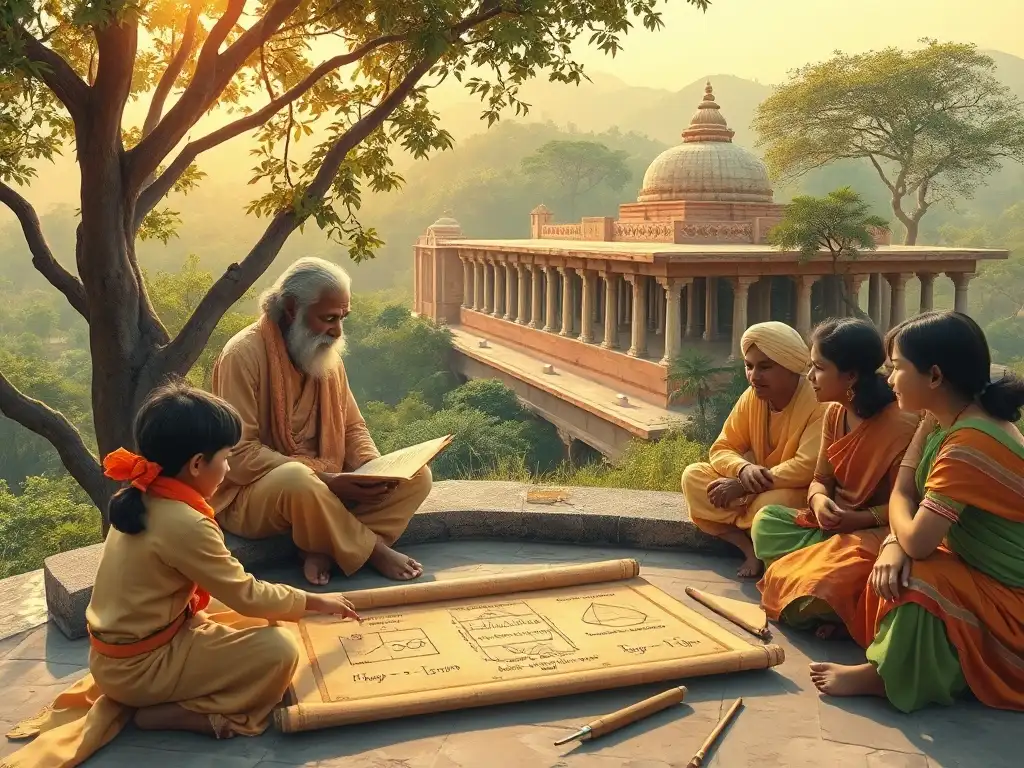
Ancient Indian mathematics is often overshadowed by other civilizations, leading to several misconceptions about its contributions and significance. One prevalent myth is that ancient Indian mathematicians merely adopted and adapted ideas from neighboring cultures without making original contributions. In reality, ancient Indian scholars developed unique mathematical concepts, particularly in the fields of arithmetic, geometry, and algebra, that laid the groundwork for future mathematical innovations.
Another misconception is that the achievements of ancient Indian mathematicians were limited to theoretical concepts and did not have practical applications. However, evidence suggests that mathematics was intricately linked with various aspects of daily life, including trade, astronomy, and architecture. The use of the decimal system and the concept of zero are prime examples of how theoretical advancements translated into practical tools that influenced economic and scientific practices.
Additionally, some believe that the contributions of ancient Indian mathematics were not recognized until recently. In truth, many of these concepts were acknowledged by various scholars throughout history, but their significance often remained underappreciated in the broader context of global mathematical advancements. Recognizing these misconceptions is essential to fully appreciate the depth and impact of ancient Indian mathematics on the world stage.
Debunking Myths Surrounding Ancient Indian Mathematics
To further debunk the myths surrounding ancient Indian mathematics, it’s crucial to highlight specific examples that showcase its originality and influence. For instance, the work of Aryabhata in the 5th century brought forth sophisticated methods of astronomical calculations, including the approximation of π (pi) and the formulation of algorithms for calculating square roots and cube roots. His approach was revolutionary and showcased an understanding of mathematics that was ahead of its time.
Another notable figure is Brahmagupta, whose work in the 7th century introduced rules for arithmetic involving zero as well as negative numbers. His text, "Brahmasphutasiddhanta," was instrumental in formalizing the use of zero and provided algorithms for solving quadratic equations, which remain fundamental in modern mathematics.
Moreover, the ancient Indian text "Sulbasutras" presents geometric principles used in constructing altars and fire pits for Vedic rituals. This text is an early example of applied geometry, demonstrating that ancient Indian mathematicians not only theorized about mathematical concepts but also put them into practice for practical purposes.
By uncovering these historical facts and contributions, we can appreciate the depth of knowledge possessed by ancient Indian mathematicians and their lasting impact on the development of mathematics as a whole.
Conclusion: The Lasting Legacy of Ancient Indian Mathematics
The legacy of ancient Indian mathematics is profound and continues to resonate in modern computing and technology. The foundational concepts developed by ancient Indian mathematicians, such as the decimal system, the concept of zero, and advanced algorithms, have shaped the way we approach problem-solving and computational methods today.
As we delve into contemporary mathematics and computer science, we find that many principles can be traced back to the innovations of ancient scholars. The ability to perform complex calculations and develop algorithms has its roots in the rigorous methodologies established by these early mathematicians.
Furthermore, the recognition of ancient Indian mathematics fosters a greater understanding of the interconnectedness of global cultures and their contributions to the sciences. By celebrating and acknowledging these historical achievements, we not only honor the mathematicians of the past but also inspire future generations to explore and innovate within the realm of mathematics and technology.
The contributions of ancient Indian mathematics are not merely historical footnotes but rather integral components of the mathematical framework that underpins modern computing. Their lasting legacy serves as a testament to the ingenuity and creativity that has shaped our understanding of mathematics throughout history.
Further Reading and Resources on Ancient Indian Mathematics
To deepen your understanding of ancient Indian mathematics and its contributions, several resources are available that provide valuable insights and historical context:
- Books:
- "The History of Mathematics: A Brief Course" by Roger L. Cooke - This book includes sections dedicated to ancient Indian contributions, offering a comprehensive overview.
- "Mathematics in India" by Kim Plofker - A detailed exploration of the development of mathematics in India, from Vedic times to the modern era.
- Online Articles and Journals:
- Articles from the Indian Journal of History of Science often feature research on ancient mathematical practices and their implications.
- Websites like Ancient History Encyclopedia provide summaries and articles on specific mathematicians such as Aryabhata and Brahmagupta.
- Documentaries and Lectures:
- Many educational platforms offer documentaries that delve into the lives of ancient Indian mathematicians and their groundbreaking work.
- Online lectures from institutions such as the Indian Institute of Technology (IIT) often cover historical mathematical texts and their relevance today.
- Academic Conferences:
- Attend conferences focusing on the history of science and mathematics, where topics related to ancient Indian mathematics are frequently discussed.
By engaging with these resources, readers can gain a deeper appreciation for the sophisticated mathematics of ancient India and its lasting impact on modern computing and technology.
Call to Action
Are you intrigued by the profound contributions of ancient Indian mathematics? Join us in exploring this fascinating journey through history!
- Subscribe to our newsletter to receive updates on articles, resources, and discussions centered around ancient Indian civilizations and their innovations.
- Engage with our community by sharing your thoughts in the comments below. What aspects of ancient Indian mathematics do you find most compelling?
- Explore our other articles in the Tech and Innovation section to uncover more about how ancient wisdom continues to influence modern technology.
Together, let's unravel the mysteries of the past to inspire the innovations of the future!
- Introduction to Ancient Indian Mathematics Contributions
- Historical Context of Ancient Indian Mathematics
- The Influence of Ancient Indian Mathematics on Modern Computing
- Practical Applications of Ancient Indian Mathematics in Today's Technology
- Common Misconceptions About Ancient Indian Mathematics Contributions
- Conclusion: The Lasting Legacy of Ancient Indian Mathematics
- Further Reading and Resources on Ancient Indian Mathematics
- Call to Action
- What are the key contributions of ancient Indian mathematics?
- How did ancient Indian mathematicians influence modern computing?
- Who were some of the most notable ancient Indian mathematicians?
- In what ways did the Indus Valley Civilization contribute to mathematics?
- How can we see the impact of ancient Indian mathematics in today's education system?
Frequently Asked Questions
What are the key contributions of ancient Indian mathematics?
Ancient Indian mathematics is known for its innovations such as the concept of zero, the development of decimal systems, and significant advancements in geometry and algebra.
How did ancient Indian mathematicians influence modern computing?
The work of ancient Indian mathematicians laid the groundwork for numerical systems and algorithms, which are foundational in modern computing technology and programming.
Who were some of the most notable ancient Indian mathematicians?
Prominent figures include Aryabhata, known for his work in trigonometry and place value, and Brahmagupta, who made significant contributions to algebra and the rules for dealing with zero.
In what ways did the Indus Valley Civilization contribute to mathematics?
The Indus Valley Civilization showcased advanced urban planning and architecture, indicating a strong understanding of geometry and measurement systems, which were crucial for their city layouts.
How can we see the impact of ancient Indian mathematics in today's education system?
Today’s education system continues to incorporate concepts developed by ancient Indian mathematicians, such as the decimal system and algebra, illustrating their lasting significance in mathematics education.
Final Reflection: Embracing the Legacy of Ancient Indian Mathematics
The contributions of ancient Indian mathematics are not just relics of the past; they are foundational pillars that continue to shape modern computing. As we navigate an increasingly digital world, the principles and innovations birthed from ancient Indian scholars remind us of the timeless nature of knowledge. The intricate algorithms, the concept of zero, and the sophisticated number systems developed centuries ago are not merely historical achievements; they are the very tools that empower our contemporary technological advancements.
Cultural appreciation for ancient Indian mathematics is essential in understanding its profound impact on our current social and technological landscape. The wisdom of mathematicians like Aryabhata and Brahmagupta transcends time, influencing not only the realm of mathematics but also the fields of science and engineering. As we reflect on their contributions, we recognize that “Mathematics is the language with which God has written the universe.” > Galileo Galilei. This quote encapsulates the essence of how ancient mathematical concepts continue to resonate in our quest for knowledge and innovation today.
As we move forward, I invite you to reflect on the lessons embedded in the legacy of ancient Indian mathematics. Consider how you can apply these timeless principles of logic, creativity, and problem-solving in your own life. Whether you are a student, a professional, or simply a curious mind, let the brilliance of these ancient scholars inspire you to embrace challenges with a mathematical mindset. By doing so, we not only honor their contributions but also pave the way for future innovations that can transform our world.
Unlock the Secrets of Ancient Math!
Thank you for diving into the fascinating connection between ancient Indian mathematics and modern computing! You've taken a significant step toward understanding how centuries-old knowledge shapes today's technology. Now, it’s time to take that knowledge further and put it into action.
Here’s how you can explore this rich history and its relevance today:
- Dive deeper: Research a specific ancient Indian mathematical concept, such as the invention of zero or the development of algorithms, and explore how it influences contemporary applications.
- Share your discoveries: Engage in discussions about your findings with friends or on social media. Start conversations about the importance of ancient knowledge in our technology-driven world.
- Join an online community: Connect with others who share your passion for mathematics and history. Participate in forums or groups that focus on how ancient practices inform modern industries.
What ancient mathematical concept do you believe could benefit today’s technology the most?