
The Role of Foreign Merchants in Ancient Indian Trade

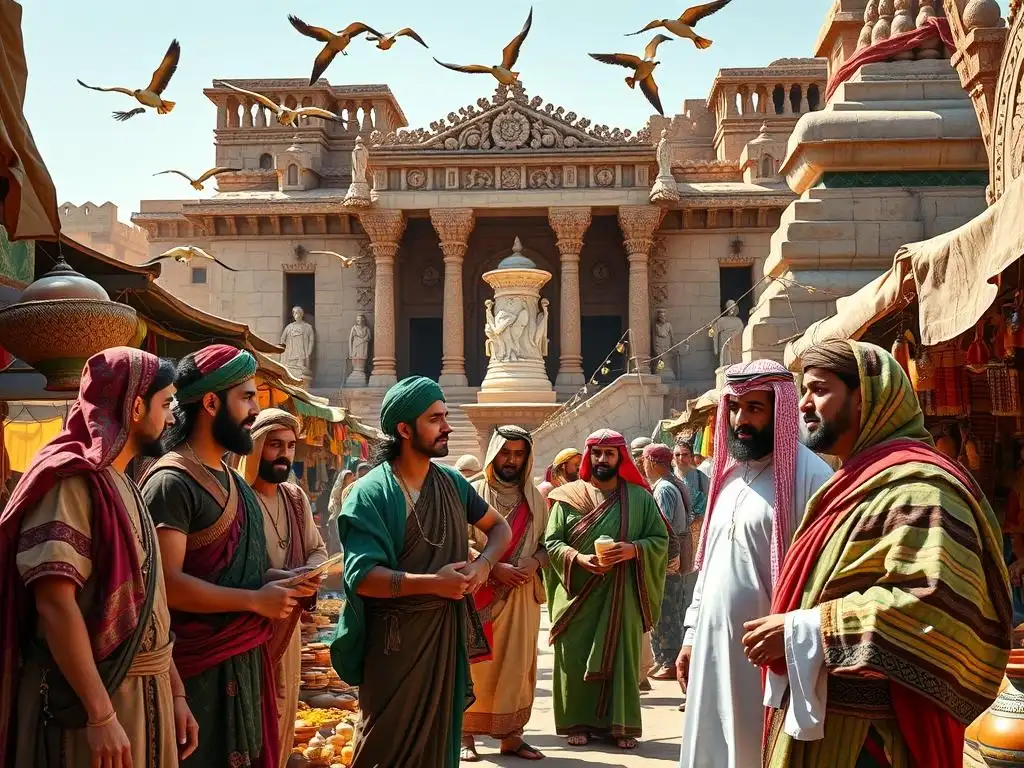
Welcome to Ancient India History, where we embark on a fascinating journey through the rich tapestry of India's past. In our feature article, “The Role of Foreign Merchants in Ancient Indian Trade,” we delve into the dynamic interactions between ancient Indian civilizations and the traders from distant lands. Discover how these foreign merchants not only influenced economic practices but also enriched the cultural landscape of India.
As you explore, you'll uncover the stories of bustling markets, exotic goods, and the vibrant exchanges that shaped a civilization. Join us as we unlock the secrets of trade and economy in ancient India—your adventure awaits!
Introduction to Foreign Merchants in Ancient India
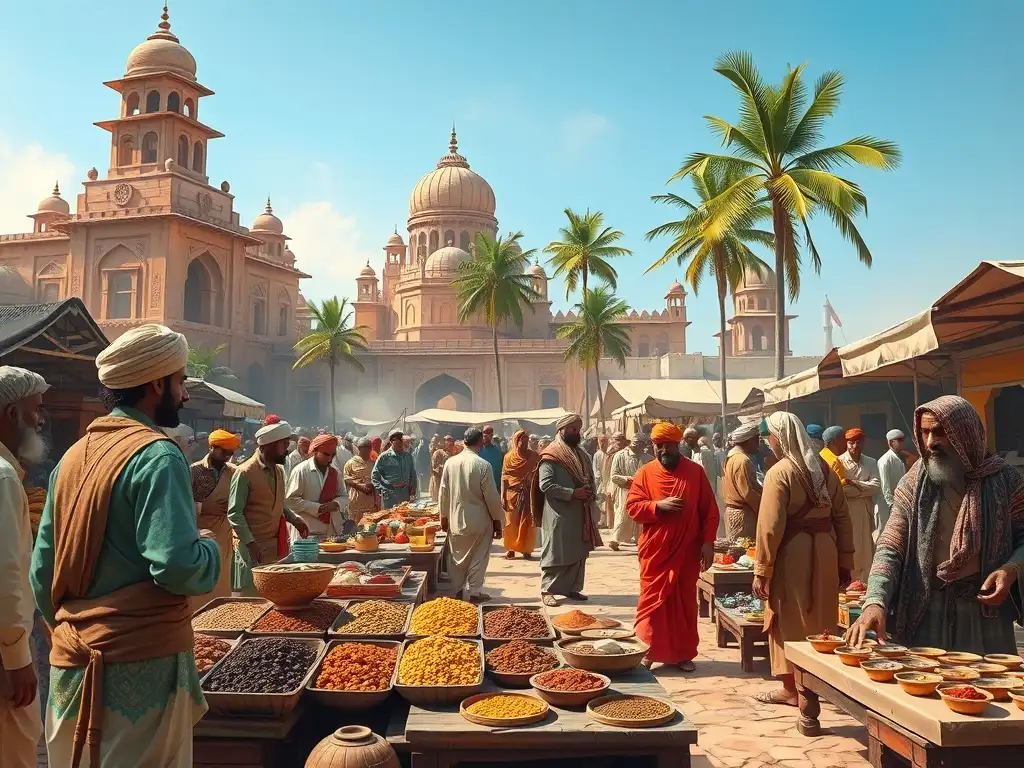
The role of foreign merchants in ancient India was pivotal in shaping the economic landscape of the subcontinent, facilitating the exchange of goods, ideas, and cultures across vast distances. These merchants, hailing from regions such as Persia, Arabia, and Southeast Asia, contributed significantly to the flourishing trade networks that connected India to the wider world.
Their involvement not only enriched the Indian economy but also brought about cultural exchanges that influenced various aspects of Indian society. As we delve into the intricate tapestry of ancient Indian trade, it becomes clear that foreign merchants were not mere participants; they were vital players in the evolution of India's economic practices and systems.
Definition and Importance of Foreign Merchants
Foreign merchants can be defined as traders from outside India who engaged in commerce with local populations, bringing with them a variety of goods, including spices, textiles, precious metals, and luxury items. Their importance lies in several key factors:
- Economic Exchange: These merchants introduced new products and technologies, stimulating local industries and enhancing economic diversity.
- Cultural Interaction: Beyond mere trade, they facilitated cultural exchanges that led to the spread of religions, languages, and customs.
- Trade Networks: They established extensive trade routes, which not only connected India to other civilizations but also integrated various regional economies.
In essence, foreign merchants served as conduits of economic and cultural interactions, making them integral to the development of ancient Indian civilization.
Overview of Ancient Indian Trade Dynamics
The dynamics of trade in ancient India were complex and multifaceted, characterized by a blend of local and international commerce. Key elements included:
- Diverse Goods: India's rich natural resources allowed for the production of commodities like silk, cotton, and spices, which were highly sought after in foreign markets.
- Marketplaces and Ports: Prominent trade centers such as Taxila, Ujjain, and the ports of Lothal and Arikamedu became vibrant hubs of commerce where foreign merchants congregated.
- Regulatory Framework: Various kingdoms and empires, including the Mauryas and Guptas, implemented policies that facilitated trade, including tax incentives and protection for merchants.
The interplay of these factors created a thriving trade environment that attracted foreign merchants and fostered economic growth.
Historical Context of Trade in Ancient India
To fully appreciate the role of foreign merchants, it is essential to understand the historical context of trade in ancient India. This includes examining major trade routes and the key periods of economic growth that marked the integration of foreign influences.
Major Trade Routes and Their Significance
Ancient India was crisscrossed by several major trade routes that facilitated commerce, both domestically and internationally. Notable routes included:
- Silk Road: This overland route connected India to China and Central Asia, allowing for the exchange of silk, spices, and other goods.
- Maritime Routes: The Indian Ocean trade routes linked India to the Middle East, Africa, and Southeast Asia, fostering maritime commerce that was crucial for the transport of bulk goods.
- Land Routes: Various overland trails connected Indian cities to neighboring regions, enabling the movement of traders and goods.
These routes were not only vital for trade but also served as conduits for cultural exchange, impacting the social fabric of ancient Indian society.
Key Periods of Economic Growth and Foreign Influence
Throughout its history, ancient India experienced several key periods of economic growth that were significantly influenced by foreign merchants:
- Indus Valley Civilization (c. 3300–1300 BCE): Early evidence of trade with Mesopotamia and Persia highlights the importance of merchants in establishing economic networks.
- Maurya Empire (c. 322–185 BCE): The expansive trade policies of the Mauryan rulers facilitated greater foreign engagement, particularly with Hellenistic cultures.
- Gupta Empire (c. 240–550 CE): This period saw a resurgence in trade, with foreign merchants playing a crucial role in connecting India to the wider world, particularly through maritime trade with Southeast Asia.
These periods underscore the dynamic interplay between foreign merchants and India's economic systems, showcasing the lasting impact of international trade on ancient Indian civilization.
Types of Foreign Merchants in Ancient India
The ancient Indian trade landscape was significantly influenced by various foreign merchants who arrived from different regions, each contributing uniquely to economic practices and cultural exchanges. Below are the notable types of foreign merchants who played crucial roles in ancient Indian trade:
Arab Traders and Their Contributions
Arab traders were among the most prominent foreign merchants in ancient India, especially from the 7th century onward. Their primary contributions were in maritime trade, utilizing the monsoon winds to facilitate sea routes between the Arabian Peninsula and the Indian subcontinent.
- Goods Traded: They introduced valuable goods such as silk, spices, and precious stones, which were highly sought after in the Middle Eastern markets.
- Commercial Centers: Cities like Calicut and Cochin became vital trade hubs where Arab merchants established their presence, leading to the growth of local economies and urbanization.
- Cultural Exchange: Arab traders also played a crucial role in the spread of Islam in India, establishing trade links that facilitated not just the exchange of goods but also ideas, culture, and technology.
Greek Merchants and Cultural Exchange
Greek merchants, notably during the Hellenistic period following Alexander the Great's conquests, significantly impacted the trade dynamics of ancient India.
- Goods and Commodities: They primarily traded in wine, olive oil, and Mediterranean goods, which were unfamiliar to Indian markets but became popular among the elite.
- Cultural Influence: The arrival of Greek merchants led to a rich cultural exchange, introducing elements of Greek art, philosophy, and governance. This exchange was pivotal, especially in regions like Gandhara, where Greco-Buddhist art emerged.
- Political Alliances: Trade relationships often fostered diplomatic ties, with Greek merchants acting as intermediaries between Indian kingdoms and the Mediterranean world.
Chinese Traders in the Indian Subcontinent
Chinese traders began arriving in India around the 1st century AD, bringing with them a variety of goods and cultural practices.
- Silk Trade: The most famous contribution was silk, which became a luxury commodity in India and helped lay the foundation for the Silk Road trade routes that connected the East and the West.
- Buddhism and Cultural Exchange: Many Chinese traders were also Buddhist monks traveling to India to learn from its spiritual traditions. This led to a significant cultural exchange, enriching both Indian and Chinese societies.
- Technological Exchanges: The introduction of papermaking techniques and advancements in metallurgy also marked the influence of Chinese traders on Indian craftsmanship.
Roman Merchants and Their Economic Impact
Roman merchants were integral to the trade networks that linked the Roman Empire with the Indian subcontinent, particularly from the 1st century AD.
- Trade of Spices and Textiles: They imported spices, textiles, and gemstones from India, which were in high demand in Rome. In return, Roman goods such as wine and glassware found their way into Indian markets.
- Impact on Local Economies: The influx of Roman currency and goods stimulated local economies, leading to increased production in Indian workshops and greater wealth for merchants.
- Cultural Interactions: Roman merchants also brought with them aspects of Roman culture, influencing local customs and practices, particularly in trade and commerce.
The Contributions of Foreign Merchants to Ancient Indian Trade
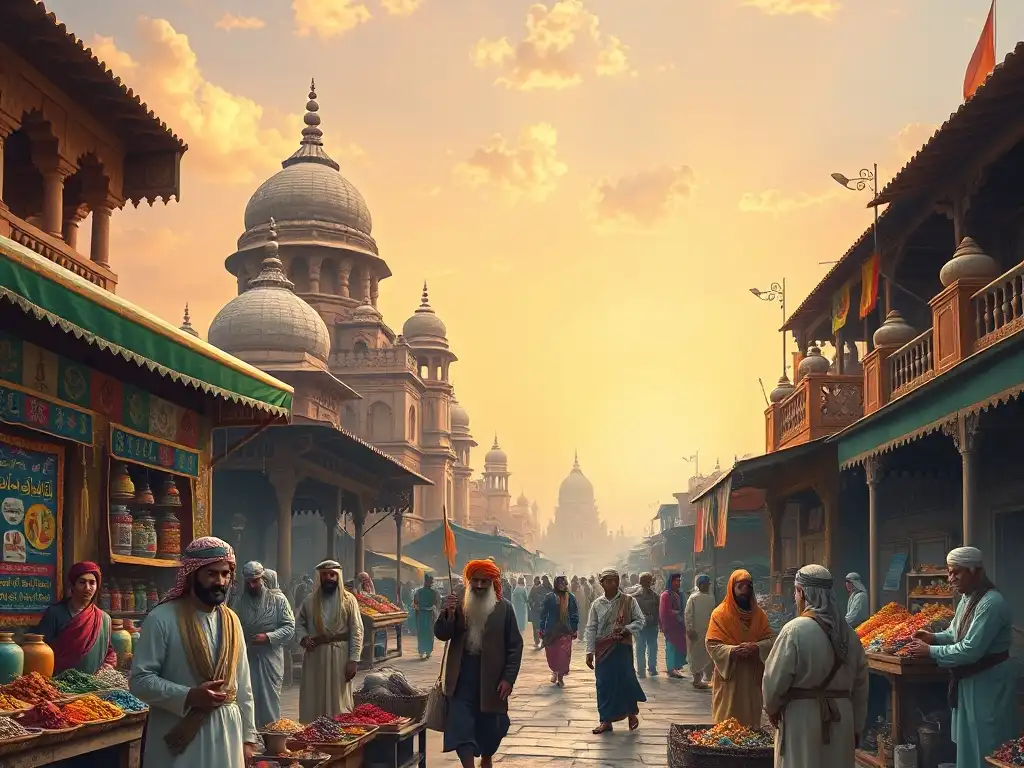
Foreign merchants made substantial contributions to ancient Indian trade, not only in terms of economic activity but also through cultural and technological exchanges.
Introduction of New Goods and Commodities
Foreign merchants were pivotal in introducing a variety of new goods to the Indian market, significantly enriching the local economy and consumer choices.
- Diverse Commodities: Items such as glassware from Rome, silk from China, and spices from the Arab world became integral to Indian trade.
- Market Expansion: The introduction of these goods expanded the market, leading to increased trade routes and connections with distant lands.
Influence on Local Markets and Economic Practices
The presence of foreign merchants reshaped local markets and economic practices in ancient India, altering traditional trading methods.
- Currency and Trade Systems: The influx of foreign currency led to more sophisticated trade systems, including the use of coins for transactions.
- Market Regulation: Foreign merchants often established trade guilds that regulated market practices, ensuring fair trade standards.
The Role of Foreign Merchants in Cultural Exchange
Beyond economic contributions, foreign merchants were instrumental in the cultural exchange that enriched the Indian subcontinent.
- Exchange of Ideas: They facilitated the exchange of philosophies, religious beliefs, and artistic styles, which contributed to the cultural tapestry of ancient India.
- Intermarriages and Alliances: Many foreign merchants settled in India, marrying local women and forming alliances that further deepened cultural ties.
Technological and Navigational Advancements
The interactions with foreign merchants also led to significant advancements in technology and navigation, which had lasting impacts on trade practices.
- Navigational Techniques: Arab traders, in particular, introduced advanced navigational techniques using the stars, which improved maritime trade routes.
- Craftsmanship: The blend of foreign craftsmanship and local skills led to innovations in textiles, metallurgy, and pottery, enhancing the quality and variety of goods produced in India.
Through their diverse contributions, foreign merchants played an essential role in the development of ancient Indian trade, facilitating not just economic prosperity but also cultural richness that shaped the subcontinent's history.
Case Studies of Notable Foreign Merchants
The engagement of foreign merchants in ancient Indian trade is exemplified through various historical case studies. These merchants not only contributed to the economic landscape of ancient India but also facilitated cultural exchanges that enriched both their home countries and India. Some notable foreign merchants include those from the Silk Road and the Roman Empire, whose activities had significant impacts on trade dynamics.
The Legacy of Merchants from the Silk Road
The Silk Road was a pivotal trade network that connected the East and West, significantly influencing the flow of goods, ideas, and cultures. Merchants traversing this route, such as the Sogdian traders, played a crucial role in bringing silk, spices, and precious stones to India. The Sogdians were particularly adept at navigating the diverse cultures and political landscapes of Central Asia and India.
Their legacy is evident in India's adoption of silk weaving techniques, which became a hallmark of Indian textile production. Additionally, the Sogdian influence led to the introduction of various cultural practices and artistic styles, which can still be observed in Indian art today. This exchange was not merely transactional; it laid the groundwork for enduring relationships between Indian kingdoms and Central Asian states.
Noteworthy Accounts of Roman Merchants in India
Roman merchants also left a significant mark on ancient Indian trade. Notable figures, such as the Roman trader Periplus of the Erythraean Sea, documented the vibrant trade between Rome and India. In his work, he detailed the commodities exchanged, including textiles, spices, and precious metals, highlighting the extensive trade networks that existed.
The arrival of Roman merchants in India facilitated a two-way flow of goods. Indian spices and textiles were highly sought after in Rome, leading to the establishment of trade routes that spanned the Mediterranean and Indian Oceans. The Roman influence is also reflected in the adoption of certain Roman goods and practices within Indian society, such as coinage and architectural styles, showcasing the integration of foreign elements into Indian culture.
Challenges Faced by Foreign Merchants in Ancient India
While the presence of foreign merchants in ancient India enriched trade and cultural exchanges, they also faced several challenges that could hinder their activities.
Political and Economic Barriers
Foreign merchants often encountered complex political landscapes within India. The existence of various kingdoms and empires, each with its own regulations and customs, could pose significant barriers to trade. For instance, merchants had to navigate tariffs and taxes imposed by local rulers, which varied greatly from one region to another.
Additionally, political instability could disrupt trade routes, making it precarious for merchants to transport goods. The rise and fall of empires, such as the Maurya and Gupta empires, influenced trade dynamics and often required merchants to adapt quickly to shifting political climates.
Cultural and Language Differences
Cultural and language barriers were another significant challenge for foreign merchants in ancient India. The diversity of languages and dialects spoken across different regions made communication difficult, often leading to misunderstandings. Merchants had to rely on intermediaries or learn local languages to effectively negotiate and conduct business.
Moreover, cultural differences could affect trade practices. For instance, foreign merchants had to familiarize themselves with local customs, religious beliefs, and societal norms to establish trust and rapport with Indian traders. This cultural adaptation was crucial for successful transactions and long-term business relationships, but it often required considerable effort and time.
The role of foreign merchants in ancient Indian trade was multifaceted, marked by significant contributions and notable challenges, all of which shaped the economic landscape of the time.
The Impact of Foreign Merchants on Ancient Indian Society
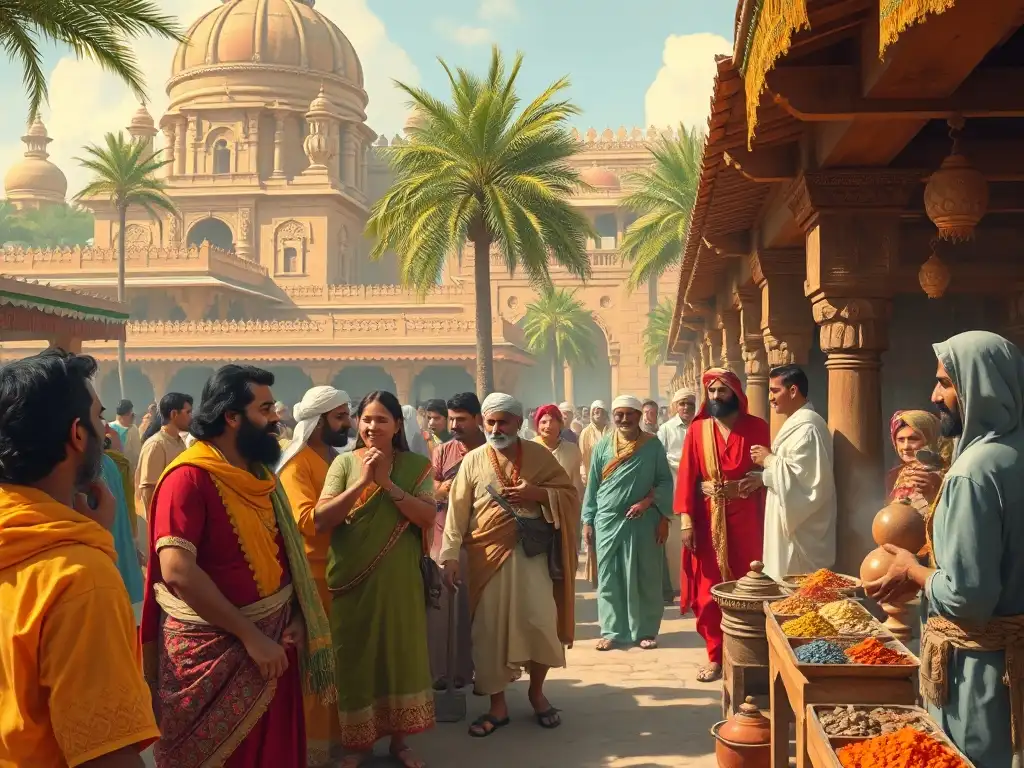
Foreign merchants played a pivotal role in shaping the economic landscape of ancient India, significantly influencing various aspects of society. Their presence facilitated not only the exchange of goods but also cultural and technological exchanges. This interaction led to a more cosmopolitan society, where ideas and practices from different cultures merged with local traditions. Through trade, foreign merchants introduced new commodities, which enhanced the variety of available products and enriched the daily lives of Indian people.
The arrival of foreign traders also spurred the growth of urban centers. Key ports and trading towns such as Alexandria, Barygaza (modern-day Bharuch), and Taxila became melting pots of diverse cultures. The influx of foreign merchants contributed to a vibrant marketplace, where local artisans and craftsmen thrived alongside foreign traders. This dynamic environment fostered competition, encouraging innovation and improvement in local craftsmanship, which, in turn, elevated the status of Indian goods on the global stage.
Moreover, the interactions with foreign merchants helped the Indian society evolve in terms of its socio-political structure. The wealth generated from trade allowed local rulers to expand their territories and influence, leading to the establishment of more organized governance systems. With the integration of foreign trade practices, the administrative systems also adapted, enhancing efficiency in tax collection and resource management.
Shifts in Trade Practices and Economic Policies
The influx of foreign merchants necessitated significant shifts in trade practices and economic policies in ancient India. Traditional barter systems gradually evolved into more sophisticated commercial practices, including the use of currency. The introduction of coins, influenced by foreign trade, standardized transactions and facilitated larger-scale commerce. This evolution allowed for a more structured economy, where merchants could engage in long-distance trade with greater ease.
Additionally, foreign merchants brought with them various trade practices and organizational methods that were adopted and adapted by Indian traders. The use of shipping routes, navigation techniques, and inventory management transformed how goods were transported and exchanged. This led to the establishment of comprehensive trade networks that not only connected different parts of India but also linked the subcontinent with distant regions such as Southeast Asia, the Middle East, and Africa.
Economic policies also evolved in response to the growing importance of trade. Rulers began to implement regulations that protected merchants and facilitated trade through tax incentives and the establishment of trade guilds. These guilds played a crucial role in maintaining standards and ensuring fair practices among traders, paving the way for a more structured and reliable trading environment. The collaboration between foreign and local merchants fostered a spirit of entrepreneurship that would define the economic practices of ancient India.
Contributions to Urban Development and Infrastructure
The activities of foreign merchants significantly contributed to urban development and infrastructure in ancient India. As trade flourished, urban centers emerged as critical hubs of commerce. Cities like Pataliputra and Ujjain became essential trading destinations, attracting merchants from various regions. The need for improved infrastructure to support trade led to advancements in urban planning, including the construction of roads, ports, and marketplaces.
The establishment of trade routes and transportation networks facilitated not only the movement of goods but also the mobility of people. This encouraged a diverse population to settle in urban areas, leading to the growth of multicultural societies. The influx of wealth from trade allowed for investments in public infrastructure, such as irrigation systems and sanitation facilities, which improved living conditions and spurred further economic activity.
Moreover, the architectural styles and urban designs in these trading cities often reflected the influences of various cultures due to the interactions between local and foreign merchants. Temples, markets, and public spaces showcased a blend of artistic traditions, enhancing the cultural richness of urban life.
Conclusion: The Lasting Legacy of Foreign Merchants in Ancient Indian Trade
Summary of Key Contributions and Influences
Foreign merchants left an indelible mark on ancient Indian trade, contributing to economic growth, urbanization, and cultural exchange. Their role in shifting trade practices, establishing new economic policies, and enhancing infrastructure laid the groundwork for a robust trading environment. The diverse interactions facilitated by these merchants enriched Indian society, leading to a more interconnected world where ideas, goods, and cultures thrived.
The legacy of foreign merchants extends beyond mere economic transactions; it encompasses a transformative impact on the social fabric of ancient India. Their contributions fostered a spirit of innovation, collaboration, and cultural exchange that resonated throughout the ages, influencing subsequent generations of traders and civilizations.
Reflection on the Importance of Trade in Ancient Civilizations
Trade in ancient civilizations, particularly in ancient India, was not merely a means of economic exchange but a vital conduit for cultural interaction and civilization advancement. The presence of foreign merchants exemplifies how trade can shape societies, influence policies, and drive innovation. Understanding the role of these merchants highlights the interconnectedness of ancient cultures and underscores the importance of trade as a catalyst for progress.
The experiences of foreign merchants in ancient India remind us of the enduring significance of trade in fostering relationships and building communities. As we explore the intricate web of connections formed through trade, it becomes evident that the exchanges of the past continue to resonate in our modern world, where trade remains a cornerstone of global interaction and development.
References and Further Reading on Foreign Merchants in Ancient India
To gain a deeper understanding of the role of foreign merchants in ancient India, a variety of scholarly works, books, and articles can provide valuable insights. Below is a curated list of references and further reading materials that explore the intricacies of trade, cultural exchanges, and economic practices involving foreign merchants in ancient Indian civilizations.
Books
- "The Ancient Indian Economy" by R. S. Sharma
- This book provides a comprehensive overview of the economic systems of ancient India, including the role of trade and foreign merchants. Sharma discusses various trade routes and the impact of foreign trade on Indian society.
- "Trade and Traders in Ancient India" by D. N. Jha
- Jha's work delves into the specifics of trade practices in ancient India, focusing on the interactions between local and foreign merchants. The book highlights the importance of trade in shaping cultural and economic landscapes.
- "India: A History" by John Keay
- Keay offers a sweeping narrative of Indian history, including sections that address the influence of foreign traders. His analysis includes insights into the various civilizations that interacted with Indian merchants.
Academic Journals
- "Journal of the Economic and Social History of the Orient"
- This journal features numerous articles that investigate the economic history of ancient India, including studies on foreign merchants, their trading practices, and their contributions to the economy.
- "Indian Economic and Social History Review"
- Articles published in this journal often focus on the socio-economic aspects of ancient Indian civilizations, providing a platform for discussions about the impact of foreign trade.
Online Resources
- Digital South Asia Library
- An extensive online resource that offers digital collections of primary and secondary sources related to South Asian studies, including trade and economic practices in ancient India.
- The Indian Council of Historical Research (ICHR)
- The ICHR website hosts a variety of research papers and publications that explore historical themes, including the role of foreign merchants in ancient Indian trade.
Documentaries and Lectures
- "The Spice Route: The Story of the World's Most Valuable Trade" (Documentary)
- This documentary explores the historical spice trade, detailing the interactions between Indian merchants and foreign traders, particularly during the ancient and medieval periods.
- Lectures by Eminent Historians
- Various university platforms, such as Coursera and edX, offer lectures by renowned historians discussing trade and economic systems in ancient India, which often include discussions about foreign merchants.
These references provide a solid foundation for anyone interested in exploring the multifaceted role of foreign merchants in ancient Indian trade. Engaging with these resources will enhance one’s understanding of the economic practices and systems that shaped ancient Indian civilization.
- Introduction to Foreign Merchants in Ancient India
- Historical Context of Trade in Ancient India
- Types of Foreign Merchants in Ancient India
- The Contributions of Foreign Merchants to Ancient Indian Trade
- Case Studies of Notable Foreign Merchants
- Challenges Faced by Foreign Merchants in Ancient India
- The Impact of Foreign Merchants on Ancient Indian Society
- Conclusion: The Lasting Legacy of Foreign Merchants in Ancient Indian Trade
- References and Further Reading on Foreign Merchants in Ancient India
- What was the significance of foreign merchants in ancient Indian trade?
- Which civilizations interacted with foreign merchants in ancient India?
- What types of goods were traded by foreign merchants in ancient India?
- How did foreign merchants influence Indian culture?
- What impact did foreign trade have on ancient Indian economies?
Frequently Asked Questions
What was the significance of foreign merchants in ancient Indian trade?
Foreign merchants played a crucial role in the development of trade networks, facilitating the exchange of goods, ideas, and cultures across regions.
Which civilizations interacted with foreign merchants in ancient India?
Ancient India had trade interactions with various civilizations, including the Greeks, Romans, Arabs, and Chinese, enhancing cultural and economic exchanges.
What types of goods were traded by foreign merchants in ancient India?
Foreign merchants traded a variety of goods, including spices, textiles, precious stones, and metals, which were highly sought after in international markets.
How did foreign merchants influence Indian culture?
The presence of foreign merchants led to the exchange of ideas, contributing to India's cultural diversity and the spread of religions such as Buddhism and Jainism.
What impact did foreign trade have on ancient Indian economies?
Foreign trade significantly boosted ancient Indian economies by increasing wealth, fostering urbanization, and promoting craftsmanship and industry in various regions.
Final Reflection: The Enduring Legacy of Foreign Merchants in Ancient India
The role of foreign merchants in ancient India was not merely a chapter in history; it was a dynamic force that shaped the economic and cultural landscape of the subcontinent. Today, as globalization continues to weave nations together, we can draw parallels between the ancient trade routes and modern economic exchanges. The interactions between diverse cultures fostered by these merchants laid the groundwork for the rich tapestry of Indian society, reminding us that trade is not just about goods, but about the exchange of ideas and values.
The influence of foreign merchants in ancient India is a testament to the power of cultural exchange and collaboration. Their presence not only enriched the local economy but also facilitated the spread of knowledge, religion, and art. As we navigate our increasingly interconnected world, we must recognize the importance of embracing diversity and fostering dialogue. Trade is a bridge that connects different cultures, allowing them to share their stories and wisdom.
This observation underscores the ongoing relevance of the ancient trade practices that continue to inspire contemporary interactions.
As we reflect on the lessons from the past, let us consider how we can apply these insights in our own lives. Embrace the spirit of collaboration and openness that characterized the ancient merchants. Take a moment to engage with someone from a different background, learn from their experiences, and share your own. In doing so, we honor the legacy of those who came before us and contribute to a more harmonious and understanding world.
Unveil the Secrets of Ancient Trade!
Thank you for diving into the fascinating world of foreign merchants in ancient Indian trade! You've gained valuable insights into how these traders shaped the economy and culture of their time. Now, it's time to take the knowledge you've acquired and apply it to your exploration of ancient history.
Here’s how you can continue your journey:
- Dive Deeper: Explore related articles on ancient trade routes and the impact of globalization throughout history. Expand your understanding!
- Share Your Insights: Discuss your favorite discoveries with friends or on social media. Start a conversation about the significance of trade in shaping civilizations!
- Join the Community: Subscribe to our newsletter for the latest content and insights about ancient India. Stay connected and enhance your learning experience!
What aspect of ancient trade surprised you the most, and how do you think it influences our understanding of modern commerce?