
The Silk Road: Unveiling Ancient India's Role in Global Trade Networks

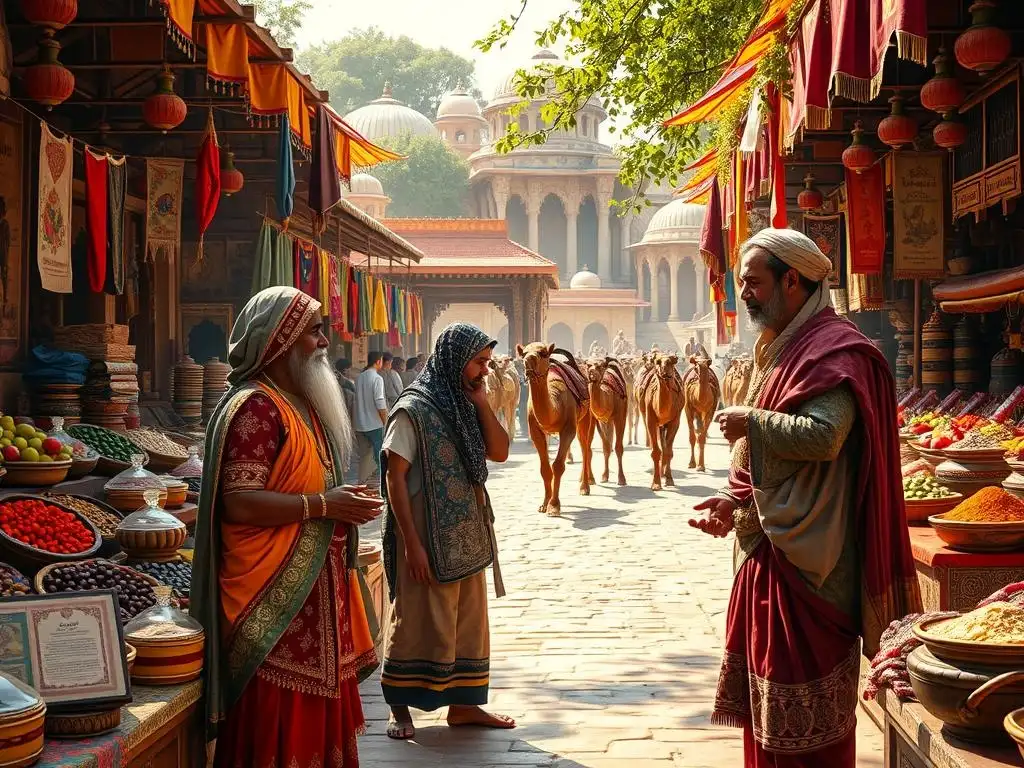
Welcome to Ancient India History, where we embark on a fascinating journey through the rich tapestry of ancient Indian civilizations. Here, we delve into the intricate webs of culture, trade, and innovation that shaped a vibrant past. In our featured article, “The Silk Road: Unveiling Ancient India's Role in Global Trade Networks,” we invite you to discover how Ancient India was not just a participant but a vital player in the thriving trade routes that connected diverse cultures across continents.
Prepare to be intrigued as we unravel the stories of trade, commerce, and the enduring legacy of this remarkable era. Dive in to explore the profound impact of the silk trade on ancient societies and beyond!
Introduction to the Ancient India Silk Road Trade
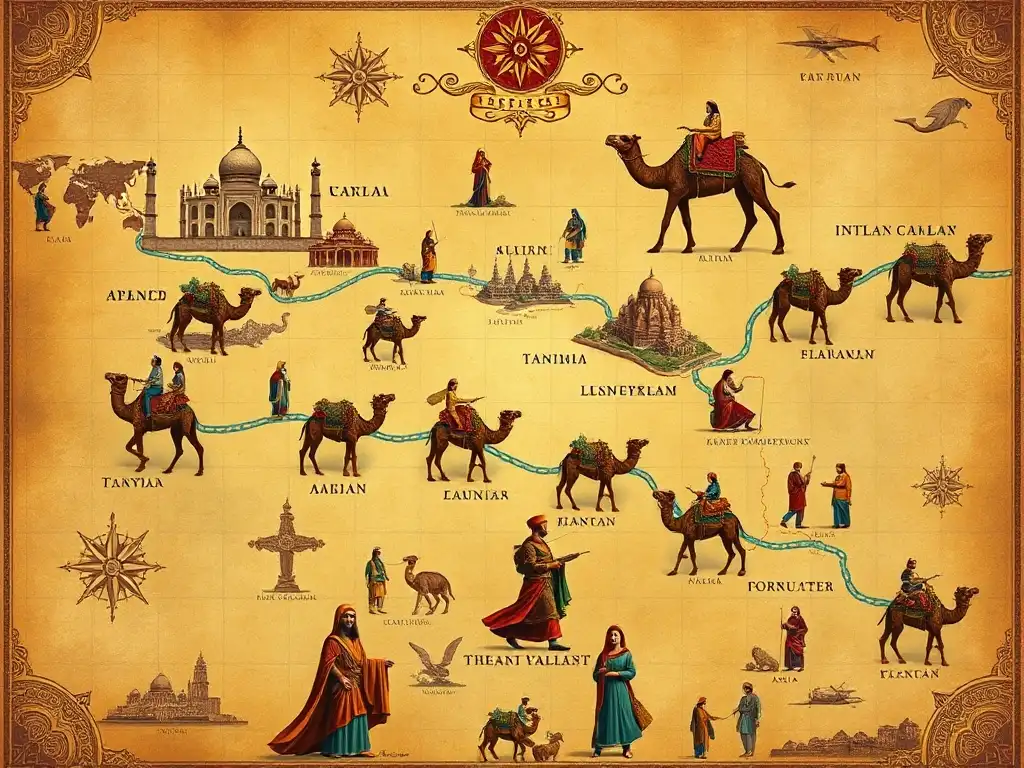
The Silk Road, a term that encompasses a network of trade routes connecting the East and West, played a pivotal role in shaping the economies, cultures, and interactions of civilizations throughout history. Among these civilizations, Ancient India stood out as a crucial hub, facilitating not only the exchange of goods but also the transmission of ideas, religions, and technologies. This article aims to delve into the intricate dynamics of Ancient India's involvement in Silk Road trade, highlighting its significance in the broader context of global commerce and cultural exchange.
Overview of the Silk Road and its Significance
The Silk Road emerged around the 2nd century BCE, designated primarily for the transport of silk from China to the Mediterranean regions. However, the trade network expanded to include a wide variety of goods such as spices, textiles, precious stones, and metals. The Silk Road was not merely a series of roads; it was a complex web of routes traversing mountains, deserts, and seas, linking diverse cultures and economies.
- Key Goods Traded:
- Silks and textiles
- Spices and herbs
- Precious metals and stones
- Ceramics and pottery
- Knowledge and cultural practices
This vibrant exchange fostered economic prosperity, cultural enrichment, and diplomatic relations among the regions connected by the Silk Road. The significance of the Silk Road extends beyond commerce; it facilitated the spread of religions such as Buddhism, Zoroastrianism, and later Islam, profoundly influencing the societies along its path.
Importance of Ancient India in Trade Networks
Ancient India was strategically positioned along the Silk Road, making it a vital player in trade activities. Indian merchants, traders, and diplomats actively engaged in the trade of luxury goods and everyday necessities, contributing significantly to the cultural and economic exchanges that occurred along the Silk Road.
- Contributions of Ancient India:
- Spices: India was renowned for its spices, which were highly sought after in both Eastern and Western markets.
- Textiles: Indian cotton and silk fabrics were prized commodities that enriched the wardrobes of elites across continents.
- Jewelcraft: Indian artisans produced exquisite jewelry, further enhancing the allure of trade with the region.
The wealth generated from Silk Road trade supported the flourishing of Indian city-states, enabling advancements in art, science, and architecture, which were reflective of the vibrant synergy between trade and culture.
Historical Context of the Silk Road
Understanding Ancient India's role in the Silk Road necessitates a look back at the historical context that led to the establishment and development of these trade routes.
Origins of the Silk Road Trade Routes
The origins of the Silk Road can be traced back to the Han Dynasty in China, which sought to expand its trade networks. The establishment of the Silk Road was driven by the desire for silk, a luxury fabric that was exclusive to China at the time. Over the centuries, as trade flourished, various routes emerged, connecting not only China and the West but also incorporating regions such as India, Persia, and the Mediterranean.
Major Civilizations Involved in Silk Road Trade
Several civilizations played pivotal roles in the Silk Road trade, each contributing unique goods and cultural influences:
- Chinese Civilizations: Producers of silk and ceramics, they were instrumental in initiating trade.
- Persian Empires: Facilitators of trade routes, providing protection and infrastructure.
- Greeks and Romans: Consumers of luxury goods, expanding the market for silk and spices.
- Indian Kingdoms: Key intermediaries, enhancing the diversity of goods exchanged and bridging Eastern and Western cultures.
Through this intricate interplay of civilizations, the Silk Road not only facilitated trade but also promoted an exchange of ideas, art, and technological innovations that shaped the ancient world.
Ancient India's Contribution to the Silk Road
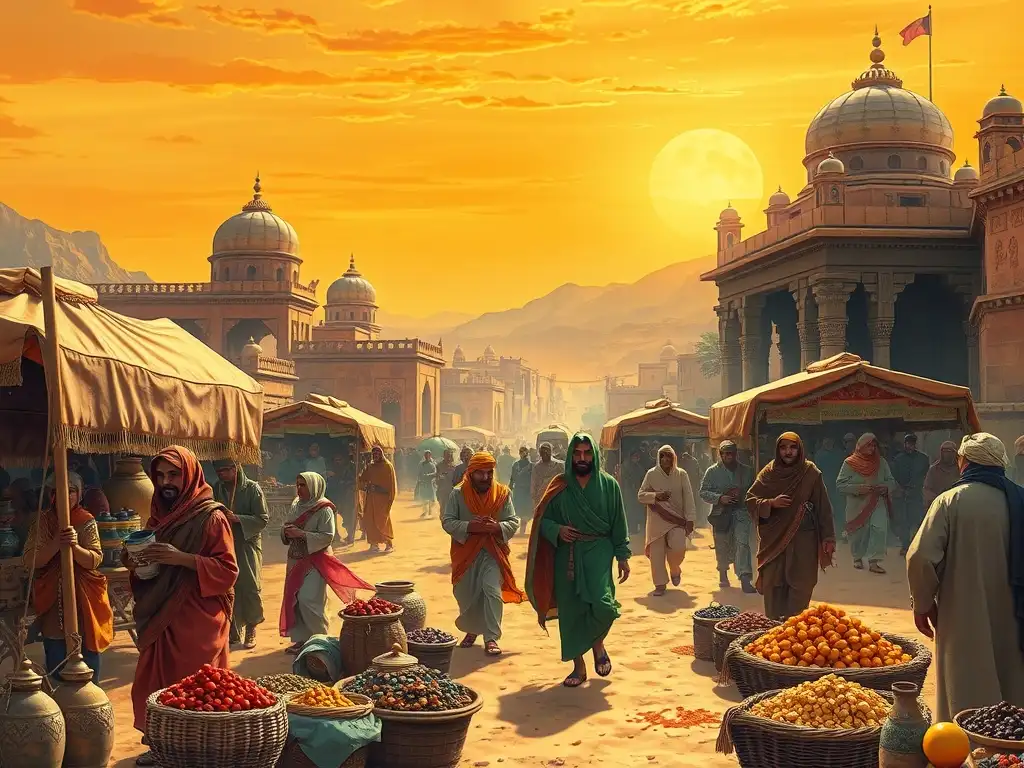
Ancient India played a pivotal role in the development and flourishing of the Silk Road, a vast network of trade routes connecting the East and West. As a bridge between diverse cultures, India contributed significantly to the exchange of goods, ideas, and innovations. The Indian subcontinent's rich resources and strategic location made it an essential partner in the Silk Road trade.
India's involvement began as early as the 2nd century BCE, with the establishment of trade links to regions such as Central Asia, Persia, and beyond. Indian merchants, traders, and caravans traversed these routes, facilitating commerce and cultural interactions. The flow of goods from India included not only luxury items but also everyday necessities, which were sought after by various civilizations along the route.
Moreover, India’s vibrant cities, such as Taxila and Pataliputra, emerged as thriving hubs of trade and learning, attracting merchants from far-flung regions. This interaction not only enhanced India's economic stature but also allowed it to influence and absorb elements from other cultures, fostering a rich tapestry of shared heritage.
Key Indian Goods Traded Along the Silk Road
India was renowned for its diverse array of goods traded along the Silk Road. The following items were particularly significant:
- Spices: Indian spices like black pepper, cardamom, and cinnamon were highly coveted commodities, prized for their flavor and preservative qualities.
- Textiles: Cotton and silk fabrics, especially the fine muslin and brocades, were staples in Indian trade. These textiles were known for their intricate designs and vibrant colors.
- Jewelry and Gemstones: India was a major source of precious stones, including diamonds, rubies, and emeralds. Artisans crafted exquisite jewelry that found markets across Asia and Europe.
- Medicinal Herbs: Ayurveda, the traditional Indian system of medicine, contributed numerous herbs and natural remedies that were traded along the Silk Road, influencing health practices in other cultures.
- Metals and Crafts: Skilled artisans produced metalwork and handicrafts, including pottery and sculptures, which were sought after for their craftsmanship.
The trade of these goods not only enriched Indian culture but also established lasting economic connections with other civilizations.
Cultural Exchange Along the Silk Road
The Silk Road was not merely a conduit for goods; it was also a vibrant channel for cultural exchange. As traders and travelers moved along these routes, they carried with them not just merchandise but also ideas, art forms, and technologies. This exchange profoundly impacted the civilizations involved, including ancient India.
Indian culture, philosophy, and art were disseminated through these interactions. Indian traders brought with them the language, literature, and traditions of their homeland, influencing local cultures across Asia. The exchange of artistic styles and motifs led to the development of unique hybrid forms in regions such as Central Asia and Southeast Asia, where Indian influence can still be seen today.
Spread of Ideas and Religions Through Trade
One of the most significant impacts of the Silk Road was the spread of ideas and religions, particularly Buddhism, which originated in India. As Buddhist monks traveled along the trade routes to share their teachings, they established monasteries and centers of learning that became focal points for cultural exchange.
The following aspects highlight the spread of ideas and religions through trade:
- Buddhism: The teachings of the Buddha reached Central Asia, China, and beyond, transforming spiritual practices in these regions. The Silk Road facilitated the establishment of Buddhist art and architecture, including stupas and monastic complexes.
- Hinduism: Alongside Buddhism, Hindu concepts and deities also traveled along the trade routes, influencing local beliefs and practices.
- Science and Technology: Indian advancements in mathematics (such as the concept of zero) and astronomy were shared through these exchanges, contributing to the development of sciences in other cultures.
- Culinary Practices: The introduction of Indian spices and cooking techniques enriched the culinary traditions of various regions, leading to a fusion of flavors and cuisines.
Through these exchanges, ancient India not only contributed its own rich heritage but also enriched the cultures of others, demonstrating the profound interconnectedness fostered by the Silk Road.
Economic Impact of the Silk Road on Ancient India
The Silk Road was not merely a series of trade routes; it was a complex network of economic interactions that profoundly shaped the prosperity of ancient India. Spanning thousands of miles, this route facilitated the exchange of goods, ideas, and cultures, inherently linking India to a broader global economy. The trade conducted along the Silk Road had a significant economic impact on ancient Indian societies, contributing to their wealth, cultural development, and political stability.
One of the primary economic benefits was the influx of luxury goods and raw materials. Indian merchants exported spices, textiles, and precious stones, which were highly sought after in markets as far away as Rome and Persia. In return, India imported silk, glassware, and other exotic items. This exchange not only enriched the Indian economy but also stimulated local craftsmanship and innovation, as artisans began to adapt foreign techniques and styles.
Additionally, the Silk Road contributed to the growth of urban centers in India. Cities like Taxila, Pataliputra, and Ujjain emerged as bustling trade hubs, attracting merchants and traders from various regions. These urban centers served as melting pots of cultures, facilitating not only economic exchange but also the cross-pollination of ideas and beliefs, further enhancing India's cultural fabric.
Growth of Indian Cities as Trade Hubs
The Silk Road catalyzed the emergence and growth of several Indian cities as prominent trade hubs. These urban centers acted as critical nodes where goods from various regions converged, allowing for both internal and external trade to flourish. Cities such as Taxila, located at the crossroads of major trade routes, became essential for the exchange of goods, ideas, and culture.
Taxila, in particular, was known for its strategic location and was a center for both trade and education. Merchants from Central Asia, the Middle East, and even the Mediterranean frequented its markets, establishing it as a melting pot of cultures. The wealth generated in these cities led to enhanced architectural developments, as evidenced by the construction of stupas, monasteries, and other significant structures.
Moreover, the growth of cities stimulated the local economy, creating jobs not only in trade but also in ancillary sectors such as agriculture, textiles, and crafts. This urban growth contributed to the overall socio-economic development of ancient India, paving the way for a more structured society with defined roles and professions.
The Role of Merchant Guilds in Trade Expansion
Merchant guilds played a pivotal role in facilitating trade along the Silk Road, significantly impacting the economic landscape of ancient India. These organizations were formed by traders who banded together for mutual benefit, providing a network of support that enhanced trade efficiency and security. Guilds established standards, regulated prices, and set rules for trade practices, which fostered trust among merchants.
In addition, merchant guilds often negotiated trade agreements and protected their members' interests, creating a sense of solidarity among traders. They also played a crucial role in the dissemination of knowledge regarding trade routes, market conditions, and innovative practices. This collective knowledge allowed for more strategic trading decisions, ultimately leading to increased profits.
Guilds also had significant social and political influence, often engaging with local rulers to secure favorable trade conditions. Their wealth and economic clout enabled them to contribute to local economies, making them integral to the overall prosperity of the regions they operated in. As a result, these organizations were not only essential for trade but also for the socio-political landscape of ancient India.
Challenges and Changes in the Ancient India Silk Road Trade
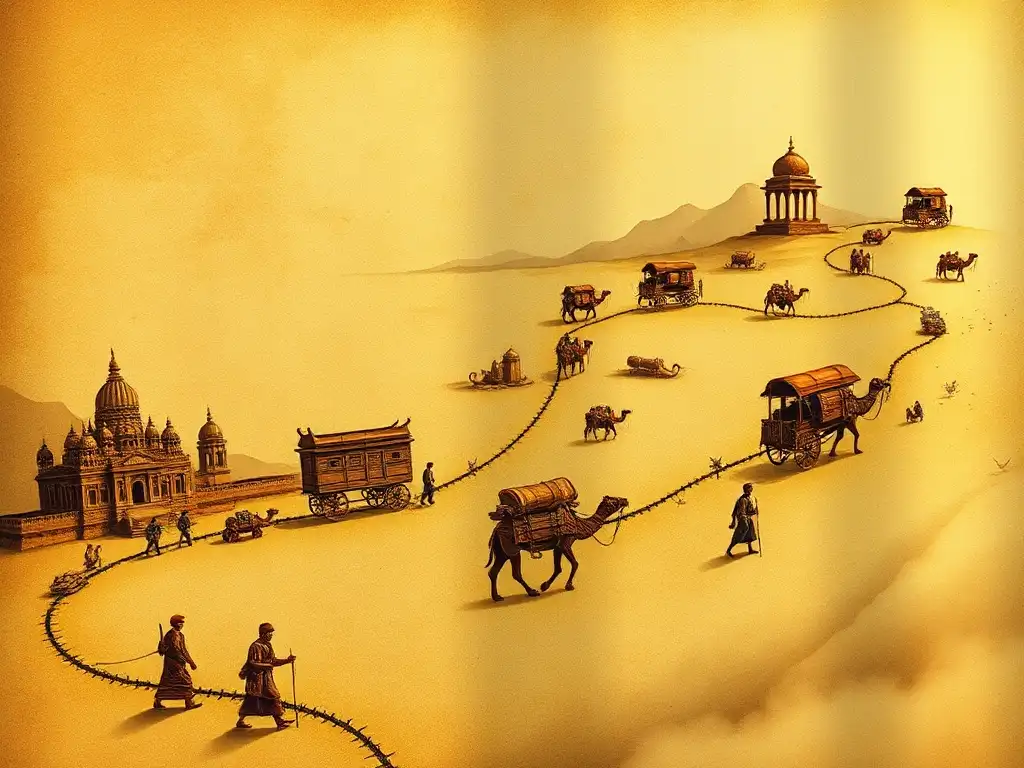
While the Silk Road facilitated extensive trade and cultural exchange, it also presented numerous challenges that impacted ancient India's engagement with this vast network. Understanding these challenges provides insight into the dynamics of trade and the resilience of ancient Indian civilizations.
Geopolitical Factors Affecting Trade Routes
Geopolitical factors significantly influenced the Silk Road trade routes, affecting the flow of goods and the relationships between different civilizations. Changing political landscapes, such as the rise and fall of empires, often led to shifts in trade routes. For instance, the emergence of the Kushan Empire in the 1st century CE established a period of stability that benefited trade between India and regions to the west, including Central Asia and the Roman Empire.
Conversely, periods of conflict or instability, such as invasions by nomadic tribes or internal strife within Indian kingdoms, could disrupt trade. The Huns' incursions in the 5th century CE exemplified how geopolitical tensions could lead to the decline of trade activities along the Silk Road, harming local economies reliant on trade.
Furthermore, the establishment of new trade routes, such as maritime pathways, began to shift the focus away from overland trade, leading to a gradual decline in the prominence of the Silk Road for Indian traders. These changes necessitated adaptability among merchants and cities that had thrived on Silk Road commerce.
Natural Disasters and Their Impact on Trade
Natural disasters posed another significant challenge to Silk Road trade, impacting both infrastructure and the safety of trade routes. Earthquakes, floods, and other calamities could damage critical trade pathways, making them impassable and disrupting the flow of goods. For example, the devastating earthquake in 518 CE led to the destruction of several key trading cities, which resulted in a significant loss of commerce.
Additionally, natural disasters could lead to crop failures, impacting agricultural production and increasing the prices of goods. Such economic strain would have ripple effects throughout the trading network, affecting both supply and demand. Natural disasters could also prompt migration, as communities abandoned damaged areas, leading to shifts in trade patterns as new populations sought alternative routes and resources.
The resilience of ancient Indian societies was evident in how they adapted to these challenges, often rebuilding and finding new ways to engage in trade, demonstrating their significant role in the complex web of the Silk Road.
This comprehensive examination of the economic impacts and challenges associated with the Silk Road highlights the intricate relationship between ancient India and global trade networks. The convergence of cultural influences, economic growth, and the resilience of trade practices underscores the importance of ancient India in the broader narrative of Silk Road trade.
Conclusion: The Lasting Legacy of Ancient India's Silk Road Trade
The Silk Road was a vital artery of commerce that connected vast territories, fostering not only the exchange of goods but also the sharing of ideas, cultures, and technologies. Ancient India's role in this intricate network was instrumental, as it facilitated the trade of valuable commodities such as spices, textiles, and precious stones. The legacies of these exchanges are still evident today, influencing modern trade practices and cultural exchanges.
The impact of ancient Indian merchants and traders on the Silk Road cannot be overstated. Their ability to navigate diverse terrains and engage with various cultures allowed for a rich tapestry of interactions. This dynamic exchange helped to establish India as a significant player in global trade, shaping not only its own economy but also that of other civilizations involved in the Silk Road.
Moreover, the cultural exchanges that occurred—through art, religion, and philosophy—have left an indelible mark on societies far beyond India’s borders. The diffusion of ideas, such as Buddhism, into Central Asia and beyond, showcases how trade can transcend mere economic transactions, fostering deeper connections among diverse peoples.
Reflection on the Impact of Silk Road Trade on Modern Global Trade
The legacy of the Silk Road is evident in today’s global trade landscape. Modern trade networks, while vastly different in structure and technology, echo the principles of interconnectivity and cultural exchange that defined the ancient Silk Road. The idea of a global marketplace has roots deeply embedded in the exchanges that occurred along these ancient routes.
Furthermore, the trade practices developed during the Silk Road era, such as barter and the establishment of trade agreements, continue to influence contemporary economic strategies. Countries today still engage in trade negotiations that reflect the spirit of cooperation and mutual benefit that characterized ancient trade routes.
Additionally, the routes and connections established during the Silk Road period serve as a historical reminder of the importance of diversity and collaboration in trade. As globalization continues to evolve, the lessons learned from ancient trade networks can guide modern societies in fostering sustainable and equitable trade practices.
The Importance of Preserving Ancient Trade Histories
Preserving the histories of ancient trade routes like the Silk Road is crucial for understanding the interconnectedness of human societies. These histories offer invaluable insights into how cultures interacted, adapted, and evolved through trade. They remind us that our modern world, with its complex supply chains and international relations, is built upon centuries of human endeavor and cooperation.
Moreover, the preservation of ancient trade histories contributes to cultural heritage and identity. By studying these historical narratives, we can appreciate the richness of cultural diversity and the contributions of various civilizations, including ancient India. This understanding fosters respect and appreciation for different cultures, which is essential in today’s increasingly globalized society.
Efforts to document and protect archaeological sites, artifacts, and historical records related to the Silk Road and ancient Indian trade networks are vital. Such initiatives not only safeguard our history but also promote educational opportunities for future generations to learn from the past.
Call to Action: Further Exploration of Ancient Indian Trade Networks
To truly appreciate the depth and significance of ancient India's role in the Silk Road trade, further exploration of its rich history is essential. Engaging with this fascinating subject can provide a broader understanding of how ancient civilizations operated and interacted with one another, laying the groundwork for contemporary trade dynamics.
Individuals interested in delving deeper into this topic can start by seeking out academic courses, lectures, and seminars focusing on ancient trade networks. Museums and cultural institutions often host exhibitions that highlight the connections between ancient civilizations, offering a hands-on experience of their rich legacies.
Moreover, participation in discussions, forums, and online communities dedicated to ancient history can foster a shared interest in preserving and celebrating these narratives. Engaging with experts and enthusiasts can enhance one’s knowledge and appreciation of ancient Indian trade and its lasting impact on the world.
Suggested Readings and Resources on Ancient India and Trade
For those eager to expand their understanding of ancient Indian trade networks and the Silk Road, the following resources are highly recommended:
- Books:
- "The Silk Roads: A New History of the World" by Peter Frankopan
- "Trade and Traders in the Early Indian Ocean World" by Ashwini Tambe
- "India: A History" by John Keay
- Academic Journals:
- Journal of World History
- Journal of Asian Studies
- Indian Economic and Social History Review
- Online Resources:
- The Silk Road Project: A multimedia exploration of the Silk Road's history and impact.
- The British Museum's online collection of artifacts from the Silk Road era.
- The Metropolitan Museum of Art's resources on ancient Indian art and trade.
These readings and resources will deepen your understanding of the complexities of ancient trade and the significant role played by ancient India in shaping global trade networks.
- Introduction to the Ancient India Silk Road Trade
- Overview of the Silk Road and its Significance
- Importance of Ancient India in Trade Networks
- Historical Context of the Silk Road
- Ancient India's Contribution to the Silk Road
- Cultural Exchange Along the Silk Road
- Economic Impact of the Silk Road on Ancient India
- Challenges and Changes in the Ancient India Silk Road Trade
- Conclusion: The Lasting Legacy of Ancient India's Silk Road Trade
- Call to Action: Further Exploration of Ancient Indian Trade Networks
- What was the significance of the Silk Road in ancient trade?
- How did Ancient India contribute to the Silk Road trade?
- What were some of the cultural exchanges that occurred along the Silk Road?
- Which ancient Indian civilizations were most involved in Silk Road trade?
- How did the Silk Road impact the economy of Ancient India?
Frequently Asked Questions
What was the significance of the Silk Road in ancient trade?
The Silk Road was crucial for connecting various civilizations, facilitating the exchange of goods, ideas, and cultures between the East and West.
How did Ancient India contribute to the Silk Road trade?
Ancient India played a pivotal role by exporting spices, textiles, and precious stones, which were highly sought after in international markets.
What were some of the cultural exchanges that occurred along the Silk Road?
The Silk Road enabled the spread of religions, languages, and art forms, significantly influencing both Eastern and Western cultures.
Which ancient Indian civilizations were most involved in Silk Road trade?
The Indus Valley Civilization and later the Maurya and Gupta Empires were key players in utilizing the Silk Road for trade and cultural exchange.
How did the Silk Road impact the economy of Ancient India?
The Silk Road boosted the economy of Ancient India by enhancing trade routes that generated wealth, increased commerce, and stimulated urban growth.
Final Reflection: The Enduring Legacy of Ancient India on the Silk Road
The intricate tapestry of trade that wove together cultures along the Silk Road is a testament to the profound impact of Ancient India on global trade networks. Today, as we navigate an increasingly interconnected world, the lessons from this historical exchange resonate more than ever. The Silk Road was not merely a route for goods; it was a conduit for ideas, cultures, and innovations that shaped civilizations.
Clearly, the legacy of Ancient India continues to influence our cultural and social landscapes. The exchange of spices, textiles, and knowledge along the Silk Road fostered a spirit of collaboration and curiosity that transcended borders. This historical narrative reminds us of the importance of trade in building relationships and understanding among diverse peoples. Trade is not just about goods; it is about relationships and the stories we share.
As we reflect on the lessons from the Silk Road, I invite you to consider how you can apply these insights in your own life. How can you foster connections and understanding in your community? Embrace the spirit of curiosity and collaboration that defined Ancient India's role in global trade. Let us carry forward this legacy by engaging with others, sharing knowledge, and building bridges that honor the rich history of our interconnected world.
Embark on Your Journey Through History!
Thank you for joining us in exploring the rich tapestry of Ancient India's contributions to global trade networks! You've unearthed fascinating insights into how this vibrant culture shaped economic exchanges across continents. Now, let’s take your newfound knowledge further and deepen your connection to this remarkable history.
Here are some meaningful steps you can take:
- Dive deeper into the Silk Road: Investigate the various goods and cultural exchanges that flourished along this ancient route. Reflect on how these interactions continue to influence today’s global trade.
- Share your findings: Engage in discussions with friends or share your insights on social media. Spark interest in Ancient India’s role in history by highlighting an intriguing fact you discovered!
- Join a community: Locate or establish a local or online group focused on the study of ancient civilizations. Connecting with others can enhance your exploration and offer new perspectives on the history you admire.
What surprising connections can you draw between Ancient India's trade practices and modern commerce?