
The Role of Women in Ancient Indian Science and Mathematics

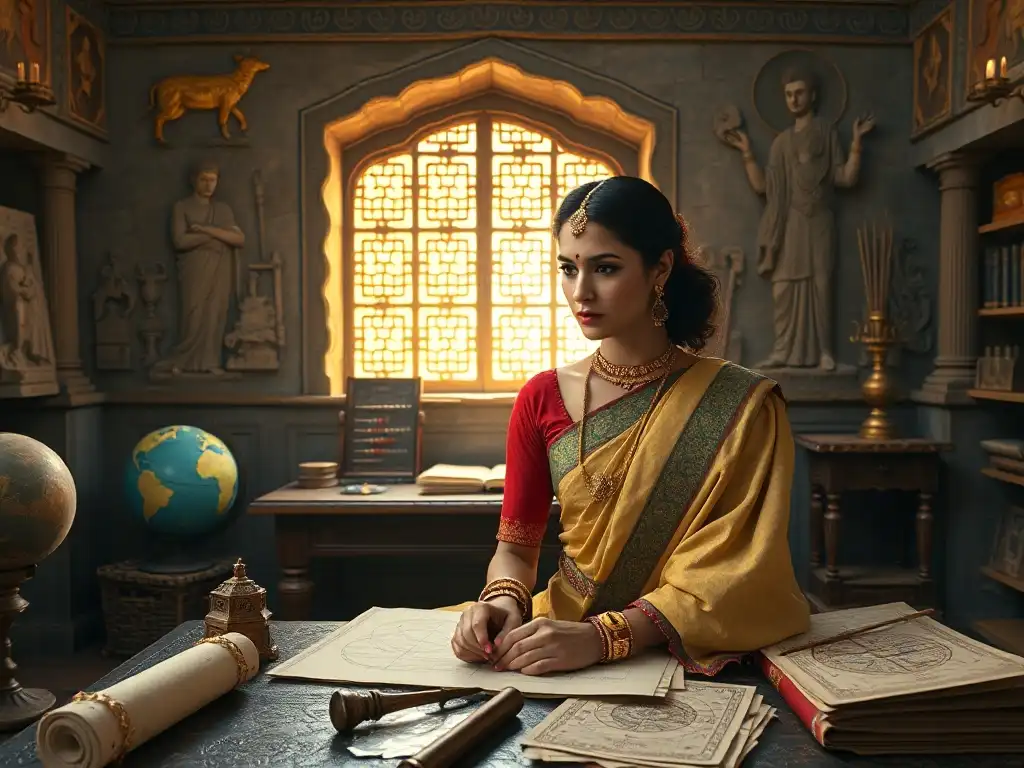
Welcome to Ancient India History, where we embark on an enlightening journey through the vibrant tapestry of ancient Indian civilizations. In this exploration, we shine a light on an often-overlooked yet vital aspect of history: the indispensable role of women in ancient Indian science and mathematics. Discover how these remarkable figures contributed to groundbreaking advancements and shaped the intellectual landscape of their time. Prepare to be inspired as we delve deeper into the stories, achievements, and legacy of these pioneering women, inviting you to explore the profound impact they had on our world.
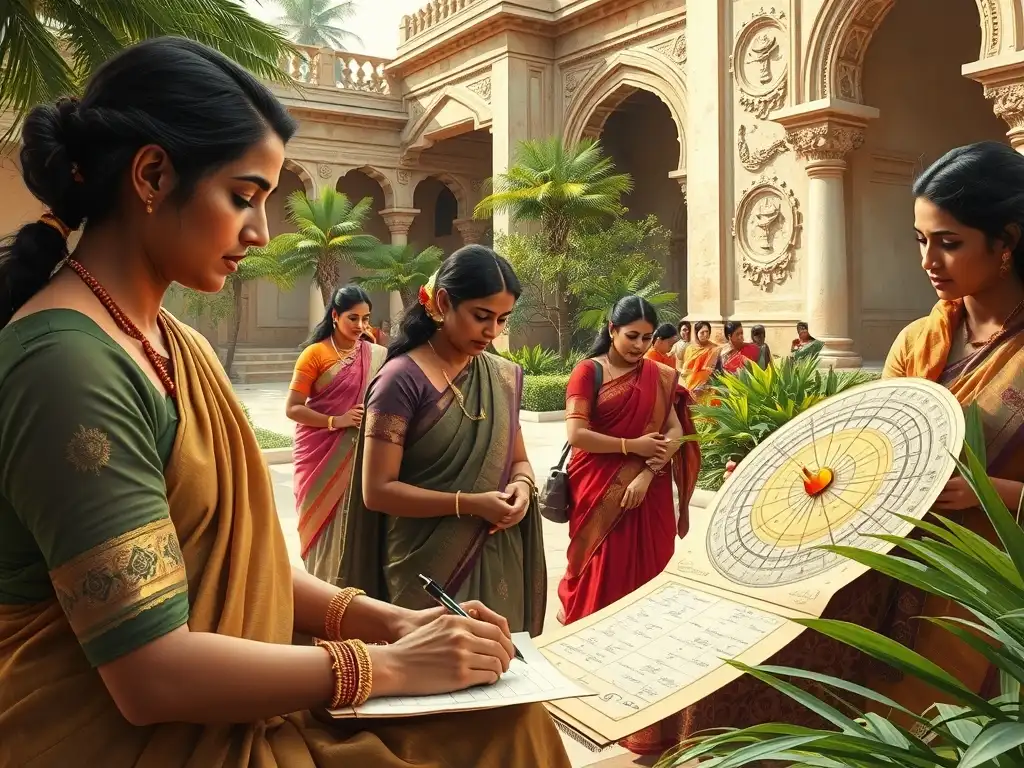
Introduction to Women in Ancient Indian Science
The exploration of women in ancient Indian science reveals a fascinating narrative woven into the rich tapestry of Indian history. While much of the historical discourse has traditionally centered on male figures, the contributions of women in the realms of science and mathematics during ancient times are significant and deserving of recognition.
From the early civilizations of the Indus Valley to the intellectual achievements of the Gupta Empire, women played crucial roles in shaping scientific thought, fostering innovation, and contributing to mathematical advancements. This article delves into the lives and legacies of these remarkable women, shedding light on their impact on ancient Indian science.
Overview of Ancient Indian Science and Mathematics
Ancient India was a cradle of scientific advancement, with contributions spanning various fields such as astronomy, mathematics, and medicine. The Vedic texts laid the groundwork for mathematical concepts, while scholars like Aryabhata and Brahmagupta made groundbreaking discoveries. Yet, the influence of women in these domains often remains obscured. Historical records, inscriptions, and texts occasionally mention women as mathematicians and scholars, indicating their active participation in scientific discourse. For instance, the works of Lilavati, attributed to the mathematician Bhaskara II, highlight the importance of women in mathematical education and problem-solving during this era.
Importance of Women's Contributions
The contributions of women to ancient Indian science and mathematics were not merely peripheral; they were integral to the intellectual landscape. Women engaged in various roles, from scholars and teachers to practitioners of medicine and astrology. Their involvement not only enriched the scientific community but also laid the foundation for future generations of thinkers. By recognizing these contributions, we can appreciate the diverse perspectives that women brought to innovation and inquiry, further emphasizing the need for inclusivity in historical narratives.
Historical Context of Women in Ancient Indian Society
To understand the role of women in ancient Indian science, it is essential to examine the historical context in which they lived. The status of women during ancient times was complex, often fluctuating based on factors such as region, class, and period.
Social Status of Women in Ancient India
The social status of women in ancient India varied widely. While some texts suggest that women enjoyed certain rights and privileges, including property ownership and education, others indicate a more restrictive environment. The presence of female figures in texts, such as Gargi and Maitreyi, showcases the intellectual capabilities of women, yet societal norms often limited their opportunities. Understanding this duality is crucial for recognizing the challenges these women faced in their pursuit of knowledge.
Educational Opportunities for Women in Ancient India
Education for women in ancient India was not uniformly accessible. While some families prioritized the education of daughters, particularly in higher classes, many women were denied formal schooling. However, there were notable exceptions, with women participating in informal learning and mentorship. Institutions like the Takshashila and Nalanda attracted scholars from diverse backgrounds, including women, who sought knowledge in various disciplines. The role of women in these educational spaces underscores their resilience and determination to contribute to the scientific discourse of their time.
The legacy of women in ancient Indian science and mathematics is a testament to their intellect and tenacity. By exploring their contributions, we gain a fuller understanding of the rich history of ancient India and the pivotal roles women played in shaping scientific thought.
Prominent Women in Ancient Indian Science and Mathematics
Throughout ancient Indian history, women played a pivotal role in the fields of science and mathematics, often contributing to the intellectual and cultural fabric of society. Their influence, though sometimes overshadowed by their male counterparts, was significant and laid the foundation for future advancements. Prominent figures such as Aryabhata and Gargi Vachaknavi exemplify the contributions made by women in these fields, showcasing their capabilities as mathematicians, astronomers, and philosophers.
The works and teachings of these women not only enhanced the understanding of mathematics and science but also inspired future generations of scholars. By delving into their contributions, we can appreciate the rich legacy of women in ancient Indian science.
Aryabhata: The Influence of Women Mathematicians
Aryabhata, one of the most celebrated mathematicians and astronomers of ancient India, had a profound impact on the development of mathematics. While he is primarily recognized for his own contributions, many historians believe that the mathematical foundations he built upon were influenced by the work of women mathematicians of his time. The tradition of mathematics in ancient India was not exclusively male-dominated; women participated in mathematical discourse and education, which shaped the environment in which Aryabhata thrived.
For instance, Aryabhata’s work on the approximation of pi and the place-value system reflects a cumulative knowledge that likely included insights from female scholars. While direct evidence of specific women mathematicians during Aryabhata's era is sparse, the oral tradition and familial knowledge passed down through generations included contributions from women who taught and engaged in mathematical practices. This highlights the collaborative nature of ancient Indian scholarship, where women’s influence, though often unrecognized, was integral to the development of mathematical thought.
Gargi Vachaknavi: Philosophy and Astronomy
Gargi Vachaknavi, an illustrious figure from ancient Indian history, is celebrated not only for her philosophical insights but also for her contributions to astronomy. She is mentioned in the Brahadaranyaka Upanishad, where she engages in profound discussions about the nature of the universe, the self, and the principles of cosmology. Gargi's intellect and ability to challenge male scholars of her time established her as a prominent philosopher and scientist.
Her inquiries into the nature of reality and the cosmos involved a deep understanding of astronomical phenomena, making her one of the earliest women to engage in scientific discourse in India. Gargi's legacy serves as an inspiration, demonstrating that women were not just passive recipients of knowledge but active participants in the intellectual pursuits of their time. Her influence can be seen as a precursor to the later advancements in astronomy, paving the way for future female scholars who would continue to build on her foundational work.
Binomial Theorem and Mathematical Contributions
The Binomial Theorem, which describes the algebraic expansion of powers of a binomial, is a significant mathematical achievement attributed to ancient Indian mathematicians. While the theorem itself is often associated with later scholars, some evidence suggests that women were involved in the mathematical processes that contributed to its development.
Women in ancient Indian society engaged in various mathematical practices, including calculations related to geometry, trade, and astronomy. Their practical applications of mathematics likely laid the groundwork for more formalized theories, including the Binomial Theorem. The presence of women in these mathematical spheres highlights their contributions to foundational concepts in mathematics, which were critical to the advancement of the field as a whole.
Women as Scholars and Educators in Ancient India
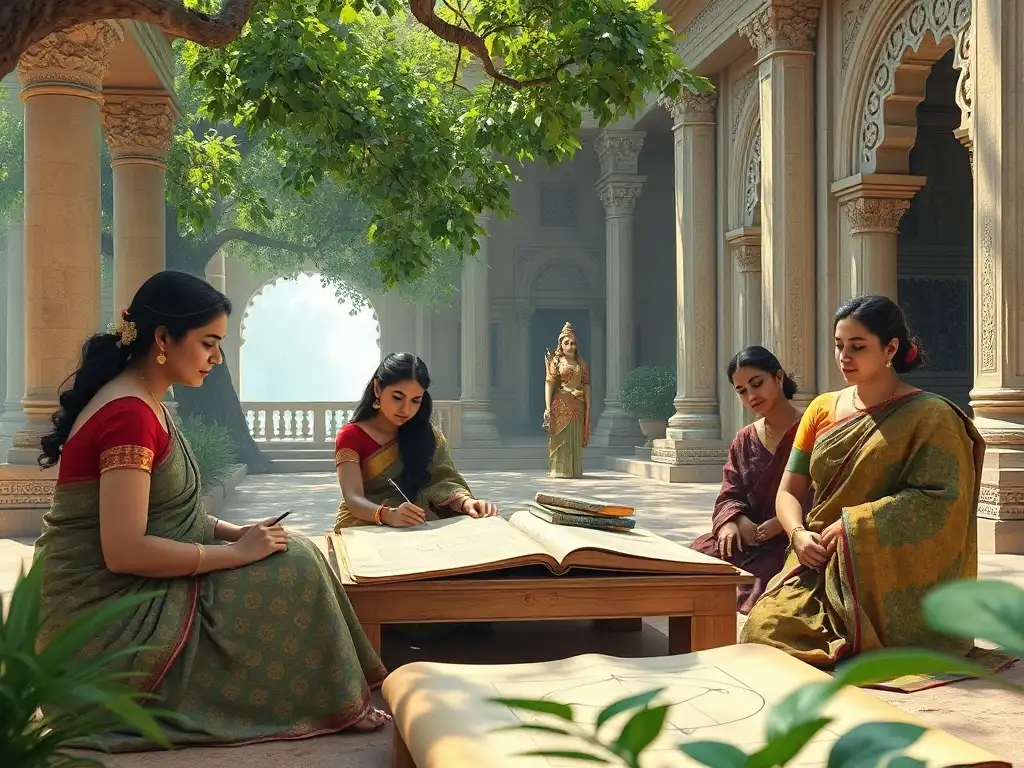
Women in ancient India were not merely passive observers; they were active scholars and educators who contributed significantly to the academic landscape. Their roles extended beyond household duties, as they engaged in various forms of education and scholarship, particularly in the fields of mathematics and science.
The existence of female scholars in ancient Indian universities, such as Takshashila and Nalanda, underscores the intellectual contributions of women. Many of these institutions welcomed women as students and teachers, allowing them to partake in rigorous academic discourse. This environment fostered the growth of knowledge and facilitated the exchange of ideas, positioning women as key figures in the advancement of science and mathematics in ancient India.
Role of Women in Ancient Indian Universities
Ancient Indian universities played a crucial role in the education of both men and women. Women scholars were not only students but also contributed as educators, sharing their knowledge in mathematics, philosophy, and science. Historical accounts suggest that women such as Sarada and others were influential figures in these institutions, imparting knowledge and nurturing the next generation of scholars.
The inclusion of women in higher education reflects a progressive aspect of ancient Indian society, where intellectual pursuits were valued regardless of gender. This collaborative educational environment allowed for a diverse exchange of ideas and the cultivation of talent among women, leading to significant advancements in various academic disciplines.
Contributions of Female Scholars to Mathematics and Astronomy
Female scholars made substantial contributions to mathematics and astronomy in ancient India, despite the societal constraints of their times. Their work often encompassed practical applications, such as calculations for agriculture, trade, and navigation, which were vital to the functioning of society.
Women mathematicians contributed to the development of numerical systems, geometry, and astronomical observations. Their ability to engage with complex mathematical concepts and their contributions to astronomical calculations reflect their deep understanding of these disciplines. The legacies of these female scholars, though not always documented in the same manner as their male counterparts, are evident in the foundational principles of mathematics and astronomy that influenced later developments in these fields. Their contributions remind us of the integral role women played in shaping the scientific landscape of ancient India.
The Impact of Women on Scientific Thought in Ancient India
Women in Ancient Indian science played a pivotal role in shaping scientific thought and methodologies. Their contributions extended across various fields, including astronomy, medicine, and mathematics. Notable figures like Gargi and Maitrayi are often cited for their intellectual prowess in philosophy and mathematics, challenging contemporary norms and expanding the boundaries of knowledge.
The presence of women in scientific discourse encouraged a more inclusive approach to learning and knowledge-sharing. They engaged in debates and discussions in scholarly assemblies, contributing to the advancement of scientific theories. Texts like the "Rigveda" and "Aryabhata's Aryabhatiya" reflect the influence of women, showcasing their involvement in mathematical calculations and astronomical observations, thereby embedding their impact into the fabric of ancient science.
Moreover, the teachings of women were often oral, passed down through generations, which underscores their role in nurturing scientific curiosity among younger scholars. This tradition helped preserve scientific knowledge, ensuring that women’s contributions were not entirely lost to history, despite the patriarchal constraints of the period.
Innovations Introduced by Women in Science
Women introduced several significant innovations in ancient Indian science. One of the most notable areas was in the field of medicine, where women like Dhanvantari's wife, who is often referred to in Ayurvedic texts, contributed to the understanding of herbal remedies and surgical techniques. These innovations laid the groundwork for various medical practices still in use today.
In mathematics, women such as Bhāskara II's mother, who is believed to have influenced his work, showcased advanced knowledge in arithmetic and geometry. They played a crucial role in imparting mathematical education to future generations, promoting the use of techniques such as zero and decimal systems long before they gained global recognition.
Women also contributed to astronomy, with evidence suggesting that they participated in the observation of celestial bodies and the development of early calendars. The knowledge of lunar cycles and seasonal changes was crucial for agrarian societies, and women’s roles in these observations were vital for agricultural planning and rituals.
The Legacy of Women in Ancient Indian Mathematics
The legacy of women in ancient Indian mathematics is profound, marked by their contributions to foundational concepts that shaped later mathematical thought. Women like Lilavati, often attributed to Bhāskara II’s famous work, have been celebrated for their influence on mathematical education through poetry and prose. This not only demystified complex mathematical concepts but also made them accessible to a broader audience.
Additionally, the practice of women's involvement in mathematics was often intertwined with religious and philosophical teachings. The mathematical precision found in ancient texts reflects the intellectual rigor women employed in their studies. Their contributions laid a foundation that would inspire future generations, contributing to India's rich mathematical heritage.
The preservation of mathematical techniques, formulas, and theorems attributed to women indicates their significant role in advancing the field. Their legacy continues to inspire modern scholars and mathematicians, emphasizing the importance of recognizing women in ancient Indian mathematics as key figures in the discipline.
Challenges Faced by Women in Pursuing Science and Mathematics
Despite their contributions, women in ancient India faced significant challenges in pursuing careers in science and mathematics. The societal norms of the time often restricted their access to education, limiting their ability to engage fully in academic pursuits.
Societal Barriers and Limitations
The societal barriers women encountered were rooted in a patriarchal structure that prioritized male education and intellectualism. Many women were expected to conform to traditional roles that centered around domestic duties, making it difficult for them to pursue studies in scientific fields. The lack of formal educational institutions for women further exacerbated this issue, as most learning occurred within the confines of the household.
Moreover, the recognition of women’s achievements was often overshadowed by their male counterparts, leading to a historical narrative that frequently omitted or minimized their contributions. This lack of visibility perpetuated a cycle where aspiring women scientists and mathematicians had fewer role models and mentors, hindering their potential impact on the field.
Historical Records and Recognition Issues
Historical records often fail to adequately document the contributions of women in ancient science and mathematics, leading to a significant gap in the recognition of their achievements. Much of what is known comes from fragmented texts or oral traditions that do not always acknowledge the names and efforts of female scholars.
Furthermore, the biases inherent in historical documentation often prioritize male figures, which means that even when women made substantial contributions, they might not receive their due credit. This recognition issue persists in modern scholarship, where the contributions of women in ancient India are still underrepresented in academic discussions and literature.
While women in ancient India made significant strides in science and mathematics, the barriers they faced and the lack of historical recognition have often obscured their contributions, warranting further exploration and acknowledgment in contemporary discussions of ancient science.
Conclusion: Celebrating the Contributions of Women in Ancient Indian Science
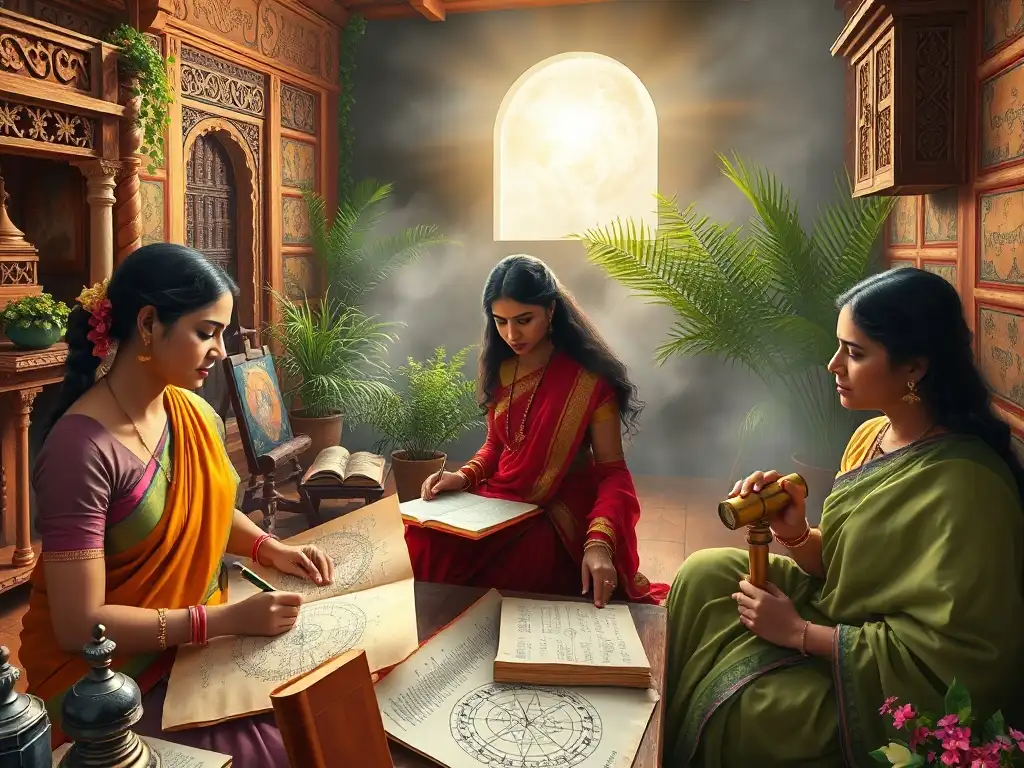
The contributions of women in ancient Indian science and mathematics are significant yet often underrepresented in mainstream historical narratives. From early scholars to practitioners in various fields, women played a crucial role in advancing knowledge and understanding. Celebrating their contributions not only honors their legacies but also serves to inspire future generations of women in science and technology.
Throughout history, figures like Gargi and Aryabhata’s contemporaries have demonstrated that women were not just passive participants but were actively engaged in the intellectual discourse of their time. Their work laid the groundwork for developments in mathematics, astronomy, and medicine, showcasing that their insights were instrumental in the progress of ancient Indian science. This recognition is essential for creating a more holistic understanding of the past, highlighting that the journey of knowledge was not solely a male endeavor.
The Lasting Influence of Women in Ancient Indian Scientific Traditions
Women in ancient India contributed profoundly to scientific traditions that have withstood the test of time. For instance, scholars such as Lilavati, known for her mathematical treatise, showcased the depth of women’s intellectual contributions. Her work, which addressed complex mathematical problems through poetry and prose, has influenced generations of mathematicians.
Moreover, women were often involved in the practical applications of scientific knowledge, particularly in fields such as Ayurveda. The involvement of women in medicinal practices ensured that their insights on herbal remedies and treatments were preserved and passed down through generations. This blend of theoretical and practical knowledge underscores the pivotal role women played in shaping ancient Indian scientific traditions, offering a unique perspective that continues to resonate today.
Reflections on the Role of Women in Shaping Ancient Indian Knowledge Systems
Reflecting on the role of women in ancient Indian knowledge systems reveals a tapestry of contributions that were both diverse and impactful. Women were not only scholars but also educators and practitioners who influenced societal norms and values regarding education and intellectual pursuit. Their involvement in teaching, particularly within families and communities, helped foster a culture that valued knowledge and inquiry.
Furthermore, the recognition of women as scholars in various fields challenges the traditional narratives that often overlook their contributions. By studying the roles women played in ancient Indian science, we can gain a clearer picture of the collaborative nature of knowledge production during this era. This understanding encourages a reevaluation of historical accounts and fosters a more inclusive perspective on the contributions of women in ancient Indian science, emphasizing that their legacy is foundational to the broader narrative of human advancement.
- Introduction to Women in Ancient Indian Science
- Historical Context of Women in Ancient Indian Society
- Prominent Women in Ancient Indian Science and Mathematics
- Women as Scholars and Educators in Ancient India
- The Impact of Women on Scientific Thought in Ancient India
- Challenges Faced by Women in Pursuing Science and Mathematics
- Conclusion: Celebrating the Contributions of Women in Ancient Indian Science
- The Lasting Influence of Women in Ancient Indian Scientific Traditions
- Reflections on the Role of Women in Shaping Ancient Indian Knowledge Systems
- What was the role of women in ancient Indian science?
- Were there any notable women scientists in ancient India?
- How did societal norms affect women in science during ancient times?
- What contributions did women make to mathematics in ancient India?
- How is the legacy of women in ancient Indian science recognized today?
Frequently Asked Questions
What was the role of women in ancient Indian science?
Women in ancient India played significant roles in science and mathematics, contributing to fields like astronomy, medicine, and mathematics through their intellectual pursuits and discoveries.
Were there any notable women scientists in ancient India?
Yes, ancient India had remarkable women such as Aryabhata's contemporaries and Brahmagupta's followers who made noteworthy contributions, although many of their names are lost in history.
How did societal norms affect women in science during ancient times?
Societal norms often limited women's participation in formal education, but many overcame these barriers through patronage from kings and scholars, enabling them to pursue scientific endeavors.
What contributions did women make to mathematics in ancient India?
Women contributed to ancient Indian mathematics by engaging in geometry, algebra, and even calculation methods, influencing the development of mathematical concepts used in later periods.
How is the legacy of women in ancient Indian science recognized today?
Today, the legacy of women in ancient Indian science is being rediscovered and celebrated through research, literature, and initiatives aimed at highlighting their contributions to the scientific community.
Final Reflection: Celebrating the Legacy of Women in Ancient Indian Science
The contributions of women in ancient Indian science and mathematics are not just historical footnotes; they are vital threads in the rich tapestry of human knowledge. Today, as we navigate a world still grappling with gender disparities in STEM fields, the stories of these pioneering women remind us of the enduring impact of their intellect and creativity. Their achievements challenge us to reconsider the narratives we hold about science and who gets to be a part of it.
The legacy of women in ancient Indian science continues to resonate in our cultural and social landscape, inspiring a new generation of thinkers and innovators. By reclaiming their stories, we not only honor their contributions but also empower ourselves to break the barriers that still exist. As the renowned mathematician and physicist Marie Curie once said, “I was taught that the way of progress was neither swift nor easy.” This sentiment echoes the struggles and triumphs of women throughout history, reminding us that progress is often a collective endeavor.
As we reflect on the invaluable lessons from the past, let us take action in the present. Consider how you can champion the voices of women in science and mathematics today. Whether through mentorship, advocacy, or simply sharing their stories, each of us has the power to contribute to a more inclusive future. Embrace the legacy of these remarkable women and let it inspire you to create a world where everyone, regardless of gender, can thrive in the pursuit of knowledge.
Unveil the Legacy of Women in Ancient Indian Science!
Thank you for diving into the remarkable contributions of women in ancient Indian science and mathematics. Your interest in this topic helps illuminate their invaluable roles and achievements. Now, it's time to take action and continue this journey of exploration!
- Share your thoughts: Engage with your community by discussing your favorite female scientist from ancient India.
- Discover more: Explore related articles on our website to gain a deeper understanding of the intersection of gender and science throughout history.
- Join our community: Sign up for our newsletter to receive regular insights and updates on the fascinating stories of ancient India’s pioneering figures!
What new perspectives have you gained about the significant impact women had in shaping the scientific achievements of ancient Indian civilization?