
Ancient Scripts and Their Role in Religion and Spirituality


Welcome to Ancient India History, where we embark on a captivating journey through the rich tapestry of ancient Indian civilizations. Today, we delve into the significance of ancient Indian scripts, exploring how these remarkable writings shaped the realms of religion and spirituality. From the sacred inscriptions of the Indus Valley to the profound epigraphs of the Gupta Empire, each script tells a story that resonates through time.
Join us as we uncover the mysteries and marvels of these ancient texts, and discover their enduring impact on culture and belief systems. Are you ready to unlock the secrets of the past?
- Introduction to Ancient Indian Scripts and Their Significance
- Historical Context of Ancient Indian Scripts
- Types of Ancient Indian Scripts
- The Significance of Ancient Indian Scripts in Religion
- The Role of Ancient Indian Scripts in Spiritual Practices
- Deciphering Ancient Indian Scripts
- Challenges in Understanding Ancient Indian Scripts
- Conclusion: The Lasting Impact of Ancient Indian Scripts on Religion and Spirituality
- Frequently Asked Questions
- Final Reflection: The Enduring Significance of Ancient Indian Scripts in Religion and Spirituality
- Unveil the Mysteries of Ancient Scripts!
Introduction to Ancient Indian Scripts and Their Significance
Ancient Indian scripts are not merely a means of communication; they are a profound reflection of the rich tapestry of culture, religion, and spirituality that has shaped the Indian subcontinent over millennia. The significance of ancient Indian scripts lies in their ability to encapsulate the philosophies, religious beliefs, and societal norms of their time.
From the early inscriptions of the Indus Valley civilization to the more sophisticated scripts developed during the Gupta Empire, each script provides valuable insights into the historical context and spiritual life of ancient India. In this article, we will explore the various ancient scripts, their roles, and how they have influenced religious practices and spiritual thought throughout Indian history.
Overview of Ancient Indian Scripts
Ancient India was home to a variety of scripts, each representing different languages and dialects, and serving distinct purposes. Some of the most notable scripts include:
- Brahmi: Often regarded as the mother of many Indian scripts, Brahmi was used from around the 3rd century BCE. It is characterized by its unique characters and was instrumental in the development of numerous writing systems across Asia.
- Kharosthi: This script, primarily used in the northwest regions of India, flourished around the same time as Brahmi. Kharosthi is notable for its right-to-left writing direction and was used extensively for administrative and religious texts.
- Siddham: Emerging later, Siddham became the script of choice for Buddhist texts. It demonstrated the spread of Buddhism and was widely used in religious manuscripts.
- Devanagari: Developed from Brahmi, this script has become one of the most widely used scripts in modern India for languages such as Hindi, Sanskrit, and Marathi.
These scripts were not only tools for communication but also carried deep linguistic and cultural significance, often associated with religious texts, rituals, and philosophies.
Importance in Religion and Spirituality
The role of ancient Indian scripts in religion and spirituality cannot be overstated. These scripts served as the vehicles through which sacred texts and philosophies were conveyed. Here are some key aspects of their importance:
- Preservation of Sacred Texts: Ancient scripts were essential for documenting spiritual teachings, rituals, and philosophical discourses. Texts such as the Vedas, Upanishads, and various Sutras were transcribed in scripts like Brahmi and Devanagari, ensuring that spiritual knowledge was preserved for future generations.
- Inscriptions and Rituals: Many ancient inscriptions found in temples and sacred sites were created in these scripts, serving to reinforce religious beliefs and practices. These inscriptions often conveyed messages of devotion, historical events, or instructions for rituals, thus integrating spirituality into public life.
- Cultural Identity: The scripts also played a crucial role in establishing cultural and religious identity. For instance, the use of Devanagari in Hindu texts helped shape the spiritual landscape of Hinduism, while Buddhist texts in Siddham were pivotal in spreading Buddhist teachings across Asia.
- Philosophical Discourse: The emergence of philosophical texts in various scripts facilitated dialogue among different schools of thought, contributing to a rich intellectual tradition that explored the nature of existence, ethics, and spirituality.
The significance of ancient Indian scripts transcends their functional utility; they are deeply intertwined with the spiritual and religious life of the civilization. Understanding these scripts provides crucial insights into the beliefs and practices that have shaped ancient and modern India alike.
Historical Context of Ancient Indian Scripts
The historical context of ancient Indian scripts is essential to understanding their significance in religion and spirituality. Ancient India bore witness to a remarkable evolution of writing systems that mirrored the cultural, economic, and social dynamics of its civilizations. The earliest scripts can be traced back to the Indus Valley Civilization (circa 3300–1300 BCE), where symbols on seals and pottery suggest a complex system of communication, though they remain undeciphered.
As we move forward in time, the emergence of the Brahmi and Kharosthi scripts during the Mauryan Empire (circa 322–185 BCE) revolutionized written communication. These scripts were pivotal in inscribing religious texts, edicts, and literature, allowing for the dissemination of spiritual beliefs far beyond local boundaries. The scripts themselves were not merely tools of communication; they played a crucial role in shaping the religious landscape of the time, as they enabled the preservation and propagation of sacred texts, philosophies, and rituals.
Evolution of Scripts in Ancient India
The evolution of scripts in ancient India can be categorized into several distinct phases, each contributing to the richness of the written word and its spiritual significance.
- Indus Valley Script:
- Composed of approximately 400 symbols, the Indus script remains a mystery, with no definitive understanding of its linguistic structure. However, its existence indicates an early form of writing that may have conveyed religious or administrative messages.
- Brahmi and Kharosthi:
- Brahmi: Considered one of the earliest scripts, Brahmi evolved into various regional scripts and was used to write many languages, including Sanskrit and Pali. Its inscriptions often contained Buddhist texts and royal edicts, reflecting the spiritual and political ideologies of the time.
- Kharosthi: Predominantly used in the northwest regions, Kharosthi was instrumental in the spread of Buddhism. Its inscriptions on stupas and manuscripts highlight the significance of religious texts in ancient spiritual life.
- Gupta Script:
- Emerging around the 4th century CE, the Gupta script was a derivative of Brahmi and served as a precursor to many modern Indian scripts. It was widely used in religious texts, including the Vedas and Puranas, signifying a flourishing of Hindu spirituality and literature.
- Regional Variations:
- As time progressed, numerous regional scripts developed, such as Tamil, Telugu, and Devanagari. Each script encapsulated the unique linguistic and cultural elements of its region while continuing to serve as a medium for religious expression, including poetry, philosophy, and sacred texts.
Major Civilizations and Their Contributions to Writing
The contributions of major ancient Indian civilizations to the development of writing are profound and enduring. Each civilization not only advanced the technical aspects of script but also enriched the spiritual and philosophical traditions of the time.
- Indus Valley Civilization:
- The early forms of writing can be linked to trade and administrative activities, suggesting that spiritual practices were likely tied to commercial exchanges, although the specifics remain elusive.
- Mauryan Empire:
- Under Emperor Ashoka, the proliferation of edicts inscribed in Brahmi script emphasized moral and ethical teachings, often derived from Buddhist philosophy. This marked a significant integration of writing with spiritual governance, influencing generations.
- Gupta Empire:
- The Gupta period is often termed the "Golden Age" of ancient India, characterized by a flourishing of arts and literature. The use of the Gupta script for writing Sanskrit texts facilitated the preservation of Hindu philosophy, including key texts like the Bhagavad Gita and the Upanishads.
- Regional Kingdoms:
- Various regional kingdoms contributed to the diversity of scripts, with local languages and dialects being documented in writing. The Tamil Sangam literature, for instance, not only showcases the literary excellence of the Tamil people but also indicates a rich tradition of spiritual poetry and devotion.
The significance of ancient Indian scripts extends beyond mere communication; they are a testament to the interplay between language, culture, and spirituality. The evolution and contributions of these scripts have shaped the religious landscape of India, influencing how spiritual beliefs were recorded, shared, and preserved through the ages.
Types of Ancient Indian Scripts
The ancient Indian subcontinent was home to a rich tapestry of scripts that served as a medium for communication, literature, and religious expression. These scripts not only reflect the linguistic diversity of the region but also illustrate the evolution of writing systems that played a crucial role in preserving the cultural and spiritual heritage of ancient Indian civilizations. In this section, we will explore some of the most significant ancient Indian scripts, their characteristics, and their impact on religion and spirituality.
Brahmi Script: The Foundation of Indian Writing
Brahmi script is often regarded as the most foundational script in the history of Indian writing. Dating back to the 3rd century BCE, it is believed to have originated during the reign of Emperor Ashoka. The significance of Brahmi script lies in its role as the precursor to many modern scripts in India, including Devanagari, Tamil, and Bengali.
- Characteristics:
- Phonetic Nature: Brahmi is an abugida, meaning that each character represents a consonant with an inherent vowel sound. Modifications to the base character allow for the representation of different vowels.
- Directional Writing: It was written from left to right, which became a standard practice in many subsequent scripts.
- Cultural Impact: The inscriptions in Brahmi were primarily used for religious purposes, including edicts, prayers, and hymns. They have been found on pillars, caves, and stones across the Indian subcontinent.
Brahmi's influence extends beyond literature; it played an essential role in the dissemination of Buddhist texts and ideas, thereby shaping the spiritual landscape of ancient India. Its inscriptions often conveyed moral and ethical teachings, reinforcing the significance of Dharma in society.
Kharosthi Script: Usage and Characteristics
Kharosthi script, contemporaneous with Brahmi, was primarily used in the northwestern regions of ancient India, particularly in Gandhara. It is unique as it was written from right to left, contrasting with many other scripts of the time.
- Characteristics:
- Use of Ligatures: Kharosthi featured a variety of ligatures, where letters are combined into a single glyph, making it visually distinct from Brahmi.
- Limited Corpus: While there are fewer surviving texts in Kharosthi compared to Brahmi, its significance lies in its use for administrative and commercial purposes, as well as for Buddhist scriptures.
- Religious Significance: Many Kharosthi inscriptions are found in stupas and monasteries, indicating its association with Buddhism. The script was used to write texts such as the Dharmapada and other important Buddhist scriptures.
The decline of Kharosthi coincided with the rise of Brahmi and the spread of Buddhism, illustrating the dynamic nature of linguistic evolution in ancient Indian history.
Other Notable Scripts: Tamil Brahmi, Gupta Script, and More
Beyond Brahmi and Kharosthi, several other scripts emerged that contributed to the rich tapestry of ancient Indian writing:
- Tamil Brahmi:
- Overview: An adaptation of Brahmi, Tamil Brahmi was used primarily in the Tamil region. It is significant in understanding the early Tamil literature and inscriptions.
- Religious Context: Tamil Brahmi inscriptions often contain references to local deities and inscriptions related to Jain and Buddhist traditions, showcasing the intersection of language and spirituality.
- Gupta Script:
- Overview: Developed during the Gupta Empire (circa 4th to 6th century CE), this script is a direct descendant of Brahmi and is notable for its elegance and clarity.
- Literary and Religious Role: The Gupta script was used extensively in literature, religious texts, and inscriptions, including those related to Hinduism and Buddhism. Its refined nature allowed for the production of beautiful manuscripts, which facilitated the preservation of spiritual texts.
- Other Scripts:
- Akhara Scripts: Used for specific regional languages, these scripts further illustrate the diversity and adaptability of writing systems in ancient India.
- Nagari Script: Emerging later, Nagari is another significant script derived from Brahmi, used for writing Sanskrit and other languages.
The development of these scripts not only highlights the linguistic advancements of ancient Indian civilizations but also emphasizes their significance in religious and spiritual contexts. By facilitating the transcription of sacred texts and inscriptions, ancient Indian scripts played a pivotal role in the preservation and propagation of cultural and spiritual knowledge throughout the ages.
The Significance of Ancient Indian Scripts in Religion

Ancient Indian scripts hold immense significance in the context of religion and spirituality, serving as crucial vehicles for the dissemination of religious texts, rituals, and philosophical teachings. These scripts, such as Brahmi, Kharosthi, and Devanagari, not only facilitated communication but also played a pivotal role in preserving the spiritual heritage of ancient Indian civilizations. The ability to record and transmit sacred knowledge has allowed subsequent generations to understand and appreciate the profound depths of ancient Indian spirituality.
Sacred Texts and Scriptures
Ancient Indian scripts were instrumental in the creation and preservation of sacred texts, which form the backbone of Hindu, Buddhist, and Jain traditions.
- Vedas and Upanishads: Written primarily in Sanskrit using Brahmi script, the Vedas are among the oldest sacred texts, encompassing hymns, rituals, and philosophical discourses. The Upanishads, which explore the nature of reality and the self, also utilized these scripts to ensure their teachings were documented for posterity.
- Buddhist Scriptures: The Pali Canon, a collection of texts that form the doctrinal foundation of Theravada Buddhism, was inscribed in Brahmi script. The use of scripts enabled monks to preserve the teachings of the Buddha, ensuring that they were transmitted accurately across generations.
- Jain Texts: Jain scriptures, such as the Agamas, were also recorded in various ancient Indian scripts, including Ardhamagadhi. These texts elaborate on Jain philosophy and ethics, emphasizing non-violence and truth.
The preservation of these scriptures is crucial because they provide insight into the spiritual practices and beliefs of ancient Indian societies. The scripts allowed for the codification of rituals and philosophies, making it possible for followers to engage with their faith in a structured manner.
Inscriptions in Temples and Religious Sites
Inscriptions found in temples and other religious sites serve as vital evidence of the spiritual landscape of ancient India. These inscriptions provide not only religious but also socio-political context to the practices and beliefs of the time.
- Temple Inscriptions: Many temples across India, such as those at Khajuraho and Hampi, feature inscriptions that document the patronage of rulers, the construction details, and religious dedications. These inscriptions often utilize scripts like Devanagari and Grantha, offering a glimpse into the historical significance of these sites.
- Pilgrimage and Dedications: Inscriptions often commemorate the acts of devotion by individuals and communities, detailing the contributions made towards building temples or funding rituals. These records reflect the intertwining of religious life and community identity, showcasing how spirituality was embedded in the fabric of everyday life.
- Philosophical Teachings: Inscriptions may also include philosophical discourses or excerpts from sacred texts, illustrating how religion informed ethical and moral frameworks within society. The presence of such texts in public spaces underscores the importance of spirituality in daily life.
The significance of ancient Indian scripts in religion extends beyond mere documentation; they are integral to understanding the spiritual evolution of ancient Indian civilizations. By preserving sacred texts and inscribing religious dedications, these scripts have allowed the rich tapestry of spirituality to thrive across centuries, influencing countless generations.
The Role of Ancient Indian Scripts in Spiritual Practices
Ancient Indian scripts play a pivotal role in the spiritual landscape of India, contributing to the richness and depth of religious practices. These scripts, including Brahmi, Devanagari, and others, serve not only as a medium of communication but also as a vessel of divine knowledge and spiritual wisdom. The significance of ancient Indian scripts is particularly pronounced in the context of religious texts, mantras, and the rituals that are integral to various spiritual practices.
Mantras and Chants: Written Verses and Their Importance
Mantras, often composed in ancient Indian scripts, are sacred sounds or phrases believed to hold spiritual power. These written verses serve multiple purposes in spiritual practices:
- Invocation of Deities: Mantras are used to invoke divine energies, facilitating a connection between practitioners and the spiritual realm. For instance, the "Gayatri Mantra," one of the oldest and most revered mantras in Hinduism, is inscribed in Sanskrit, showcasing the significance of ancient scripts in invoking divine presence.
- Meditation and Focus: The repetition of mantras aids in concentration during meditation. Written scripts provide a tangible form of these sounds, allowing practitioners to visually engage with the sacred words. This practice enhances the meditative experience, as the written mantra becomes a focal point for spiritual contemplation.
- Preservation of Knowledge: Ancient texts like the Vedas and Upanishads, often written in scripts such as Brahmi or Devanagari, contain profound philosophical insights and teachings. The preservation of these texts in ancient scripts ensures the continuity of spiritual knowledge across generations, emphasizing the scripts' significance in maintaining cultural heritage.
- Healing and Protection: Many mantras are believed to possess healing properties or protective qualities. Written verses, such as the "Mahamrityunjaya Mantra," are often inscribed on talismans or used in rituals to invoke health and ward off negativity. This highlights the practical applications of ancient scripts in spiritual healing practices.
Rituals and Ceremonies: Scripted Guidelines and Their Impact
Rituals and ceremonies in ancient Indian spirituality often rely on scripted guidelines that dictate the procedures and offerings involved. The role of ancient Indian scripts in these practices is profound:
- Structured Worship: Ritual texts provide a structured framework for worship, detailing the steps to be followed during various ceremonies. For example, the "Puja Vidhi" (worship procedure) is often documented in ancient scripts, ensuring that the rituals are performed correctly and with the appropriate reverence.
- Symbolism and Meaning: The language used in ritual scripts is rich with symbolism, conveying deeper meanings and spiritual truths. Understanding the verses inscribed in these scripts allows practitioners to grasp the underlying significance of the rituals, enhancing their spiritual experience.
- Community and Tradition: Written guidelines help maintain consistency in rituals across different communities and regions. This uniformity fosters a sense of belonging and shared identity among practitioners, reinforcing the cultural significance of ancient scripts in spiritual practices.
- Transmission of Tradition: The act of writing and reciting ancient texts during rituals ensures the transmission of spiritual knowledge and practices from one generation to the next. This continuity underscores the enduring significance of ancient Indian scripts in preserving cultural and religious traditions.
Ancient Indian scripts hold immense significance in spiritual practices, serving as the foundation for mantras, rituals, and the transmission of sacred knowledge. Their role extends beyond mere communication, embodying the essence of spirituality and cultural identity in ancient India. By understanding the importance of these scripts, we can appreciate the profound impact they have had on religious practices and the spiritual lives of individuals throughout history.
Deciphering Ancient Indian Scripts
The study of ancient Indian scripts is a fascinating journey into the heart of India's rich cultural and spiritual heritage. These scripts, which include the Brahmi, Kharosthi, and various regional variants, are not just tools of communication; they encapsulate the thoughts, beliefs, and practices of ancient civilizations. Understanding these scripts offers insights into the socio-political dynamics and religious philosophies that shaped ancient Indian society.
The significance of ancient Indian scripts lies in their ability to convey profound philosophical ideas, religious doctrines, and historical narratives. By decoding these scripts, scholars can unravel the complexities of ancient Indian religions, such as Hinduism, Buddhism, and Jainism, and their interrelations. The preservation and interpretation of these texts are crucial for a comprehensive understanding of ancient Indian civilization and its contributions to world history.
Techniques and Approaches in Epigraphy
Epigraphy, the study of inscriptions, employs a variety of techniques and methodologies to decipher ancient scripts. These approaches include:
- Paleographic Analysis:
- This technique involves studying the evolution of letter forms and styles over time. By comparing inscriptions from different eras, epigraphists can trace the development of scripts and identify regional variations.
- Example: The transition from Brahmi to its later forms showcases significant stylistic changes that reflect cultural shifts.
- Philological Methods:
- This approach focuses on understanding the language and context in which the script was used. Linguistic analysis helps scholars comprehend the meanings of words and phrases within their historical context.
- Example: The analysis of Sanskrit texts inscribed in Brahmi has shed light on the linguistic influences and the spread of Buddhism.
- Material Analysis:
- Examining the medium on which inscriptions are made—whether stone, metal, or clay—provides insights into the technological advancements and resources available to ancient civilizations.
- Example: The use of iron tools for engraving inscriptions indicates advances in metallurgy during the Mauryan period.
- Contextual Research:
- Understanding the archaeological context of inscriptions is crucial. This includes studying the location, associated artifacts, and historical records to better interpret the significance of each inscription.
- Example: Inscriptions found in temples often reveal the religious practices and patronage of the ruling class.
Case Studies: Key Discoveries and Their Implications
Several key discoveries in ancient Indian epigraphy have significantly advanced our understanding of the region's history and culture. Here are notable examples:
- The Edicts of Ashoka:
- Discovered throughout the Indian subcontinent, these inscriptions are pivotal in understanding the spread of Buddhism and the principles of dharma advocated by Emperor Ashoka.
- Implications: They provide evidence of Ashoka’s efforts to promote non-violence, tolerance, and ethical governance, influencing subsequent Indian rulers and cultures.
- The Hathigumpha Inscription:
- Found in Odisha, this inscription is attributed to King Kharavela of the Kalinga dynasty. It details his achievements and the revival of Jainism in the region.
- Implications: This inscription illustrates the political and religious dynamics of ancient India, highlighting the coexistence of different faiths.
- The Junagadh Rock Edicts:
- These inscriptions, dating back to the 2nd century BCE, reveal the administrative and cultural aspects of the Western Indian territories during the Mauryan Empire.
- Implications: They shed light on trade networks, governance, and the cultural integration of diverse communities in ancient India.
- The Gupta Era Inscriptions:
- Inscriptions from the Gupta period, including those found in temples, reflect the flourishing of arts and literature during this golden age of Indian civilization.
- Implications: They provide insights into the socio-economic conditions and patronage of the arts, contributing to the understanding of India's cultural legacy.
By investigating these ancient Indian scripts and their significance, we can appreciate the intricate tapestry of beliefs, practices, and historical events that have shaped the Indian subcontinent. The continued study of these inscriptions not only enriches our understanding of ancient civilizations but also highlights their enduring influence on contemporary culture and spirituality.
Challenges in Understanding Ancient Indian Scripts
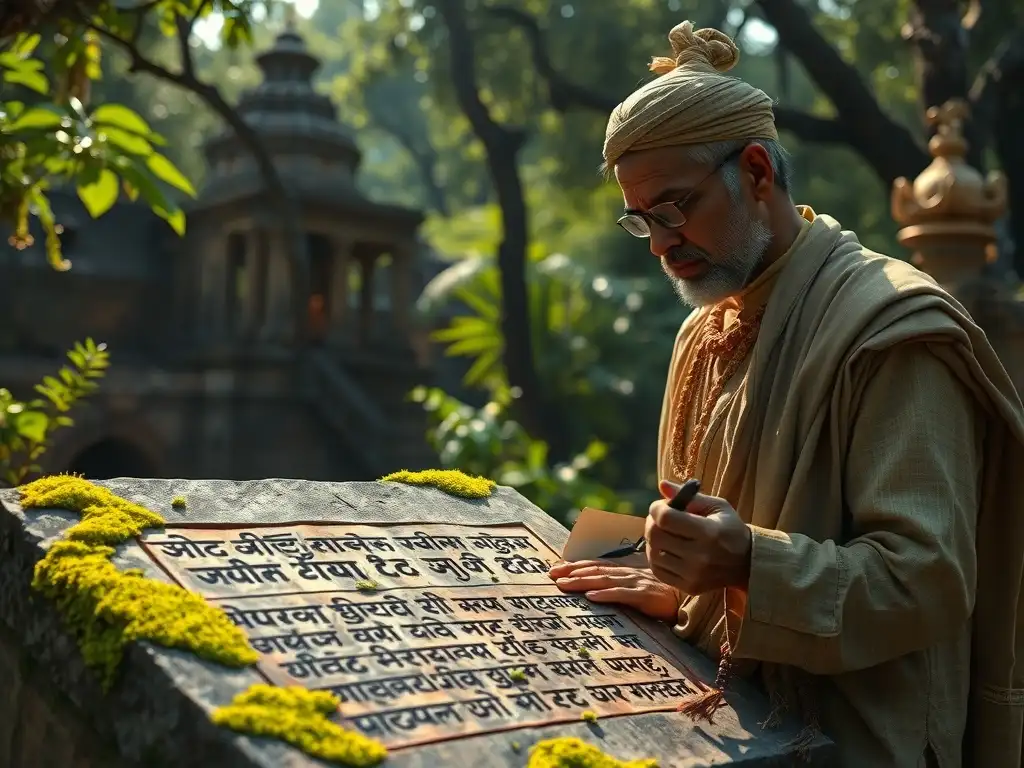
The study of ancient Indian scripts presents a multitude of challenges that scholars and archaeologists must navigate to unlock the rich history and cultural significance of these writings. The complexity of language, the condition of artifacts, and the context in which these scripts were used all contribute to the difficulties encountered in this field of research. Below, we delve into two primary challenges: linguistic barriers and translation issues, as well as preservation and archaeological concerns.
Linguistic Barriers and Translation Issues
One of the most significant challenges in understanding ancient Indian scripts is the linguistic barrier that arises from the diversity of languages and dialects present in India’s historical context.
- Variety of Scripts: Ancient India was home to numerous scripts, such as Brahmi, Kharosthi, and Devanagari, each representing different languages and regional dialects. This diversity complicates the task of creating a comprehensive understanding of the texts.
- Linguistic Evolution: Many ancient languages, like Sanskrit and Prakrit, have evolved considerably over time. This evolution can lead to difficulties in translating texts accurately, as certain words or phrases may have shifted in meaning or usage across centuries.
- Lack of Context: The absence of contextual knowledge surrounding a script—such as the specific cultural or religious practices of the time—can create significant hurdles. Scholars often struggle to interpret inscriptions without understanding the socio-political landscape that influenced their creation.
To illustrate these challenges, consider the Brahmi script, which is one of the earliest writing systems in India. While it has been deciphered to some extent, the meanings of numerous inscriptions remain elusive due to the factors mentioned above.
Preservation and Archaeological Concerns
The preservation of ancient scripts is another critical challenge that researchers face in their quest to understand ancient Indian history.
- Material Degradation: Many inscriptions are found on perishable materials like wood, clay, or metal, which can deteriorate over time due to environmental factors such as humidity, temperature fluctuations, and exposure to the elements. This degradation can lead to the loss of crucial information.
- Site Accessibility: Many ancient sites where these scripts are found may be located in remote or difficult-to-access areas. This can hinder archaeological efforts and limit the availability of artifacts for study. Additionally, political instability in certain regions can further complicate excavation efforts.
- Inconsistencies in Excavation Practices: The methods used in excavating and preserving artifacts can vary significantly. Inconsistent practices may lead to incomplete records and loss of context, making it tougher to interpret the significance of discovered scripts accurately.
The challenges posed by linguistic barriers, translation issues, and preservation concerns create a complex landscape for those studying ancient Indian scripts. As researchers continue to uncover and analyze these inscriptions, they must develop innovative approaches to overcome these obstacles, ensuring that the rich history embedded in these texts is not lost to time.
Conclusion: The Lasting Impact of Ancient Indian Scripts on Religion and Spirituality
Ancient Indian scripts have played a pivotal role in shaping the religious and spiritual landscape of the subcontinent. From the earliest forms of writing found in the Indus Valley civilization to the sophisticated scripts of the Gupta Empire, these inscriptions provide not only a window into the past but also a critical understanding of how spirituality was expressed and documented in ancient times.
The significance of these scripts goes beyond mere communication; they encapsulate the thoughts, beliefs, and practices of various communities. Texts inscribed on temple walls, manuscripts, and other artifacts reveal insights into sacred rituals, philosophical discourses, and theological debates that have influenced generations. This rich tapestry of written heritage illustrates how ancient Indian scripts have contributed to the development and transmission of religious values and spiritual ideals across time.
Reflection on the Cultural Legacy
The cultural legacy of ancient Indian scripts is profound and multifaceted. These scripts, including Brahmi, Kharosthi, and Devanagari, served as vehicles for religious texts, philosophical treatises, and poetry, thus preserving the spiritual wisdom of the ages. Each script presents a unique narrative that reflects the cultural ethos of its time:
- Brahmi: Often regarded as the ancestor of many Indian scripts, Brahmi was instrumental in documenting the early Buddhist and Jain texts, which laid the groundwork for the region’s spiritual traditions.
- Kharosthi: Predominantly used in the northwestern regions, Kharosthi inscriptions reveal insights into the spread of Buddhism and the influence of trade routes in disseminating spiritual ideas.
- Devanagari: Emerging later, this script became integral in composing sacred texts such as the Vedas and Upanishads, embodying the essence of Hindu spirituality.
The continuous evolution of these scripts also signifies the dynamic nature of spirituality in India, as they adapted to cultural changes and regional variations. The inscriptions not only served religious purposes but also reflected societal values, thereby contributing to a collective cultural identity that resonates to this day.
Future Research Directions in Ancient Indian Epigraphy
The field of ancient Indian epigraphy is ripe for further exploration and research. Several avenues can be pursued to deepen our understanding of the ancient Indian scripts' significance:
- Interdisciplinary Studies: Collaborations between historians, linguists, and archaeologists could yield new insights into the contextual meanings of inscriptions. This could involve analyzing the interplay between language, culture, and spirituality.
- Technological Advancements: Utilizing modern technologies such as digital imaging and machine learning can aid in the deciphering of damaged or unclear inscriptions. This can help recover lost texts and enhance our understanding of their content.
- Comparative Analysis: Studying ancient Indian scripts alongside other contemporary scripts from different civilizations could reveal cross-cultural influences and exchanges. This comparative approach may provide a broader perspective on the role of writing in spirituality.
- Public Engagement: Increasing awareness through exhibitions, workshops, and educational programs can foster greater appreciation for ancient scripts and their relevance in today’s spiritual practices.
The study of ancient Indian scripts is not only about understanding the past but also about appreciating their lasting impact on religion and spirituality. By delving into these inscriptions, we can uncover the rich narratives that continue to shape the spiritual fabric of modern India.
Frequently Asked Questions
What are ancient Indian scripts?
Ancient Indian scripts refer to the various writing systems used in India throughout history, including Brahmi, Kharosthi, and Devanagari, which played a crucial role in documenting religious texts and cultural practices.
How did ancient Indian scripts influence religion?
These scripts were essential for the preservation and transmission of religious texts, such as the Vedas and Upanishads, helping to spread spiritual teachings across generations and regions.
Why is the significance of ancient Indian scripts important today?
Understanding the significance of these scripts helps us appreciate the cultural heritage of India, as they reflect the philosophical and spiritual advancements of ancient civilizations.
In what ways did ancient scripts contribute to literature and education?
Ancient Indian scripts facilitated the creation of literary works and educational materials, making knowledge accessible and fostering a rich tradition of scholarship and learning in various fields.
How do ancient Indian scripts relate to the Gupta Empire?
During the Gupta Empire, there was a notable flourishing of literature and arts, with ancient scripts being pivotal in documenting historical events and cultural innovations, showcasing the empire's intellectual advancements.
Final Reflection: The Enduring Significance of Ancient Indian Scripts in Religion and Spirituality
The exploration of ancient Indian scripts reveals their profound impact on contemporary spirituality and religious practices. These scripts are not merely relics of the past; they are living texts that continue to shape beliefs, rituals, and cultural identities today. The significance of these ancient writings transcends time, reminding us that the wisdom contained within them is as relevant now as it was centuries ago.
The influence of ancient Indian scripts on our cultural and spiritual landscape is undeniable. They serve as a bridge connecting us to our ancestors, offering insights into their thoughts, beliefs, and practices. The teachings inscribed in these scripts resonate with many, fostering a sense of continuity and belonging. As Mahatma Gandhi once said, "> A nation's greatness is measured by how it treats its weakest members." This sentiment echoes the teachings found in ancient texts, emphasizing compassion and the importance of community, values that remain critical in our modern society.
As we reflect on the lessons imparted by these ancient scripts, let us commit to integrating their wisdom into our daily lives. Consider how the principles of compassion, mindfulness, and interconnectedness can guide your actions and relationships. Embrace the opportunity to explore these texts further, allowing their teachings to inspire personal growth and a deeper understanding of the world around you. In doing so, we honor the legacy of our ancestors and contribute to a more harmonious future.
Unveil the Mysteries of Ancient Scripts!
Thank you for diving into the fascinating world of ancient scripts with us! By exploring their profound connections to religion and spirituality, you've unlocked a treasure trove of knowledge that can enrich your understanding of history. Now, it’s time to take action and deepen your engagement with this captivating theme.
Here are a few ways to continue your journey:
- Explore further: Dive into our collection of articles and resources on various ancient cultures and discover how their scripts shaped their spiritual landscapes.
- Share your insights: Discuss your favorite ancient script and its significance in your spiritual practices with others by sharing this article on social media.
- Join the community: Participate in our forum where you can connect with fellow enthusiasts, ask questions, and share your interpretations!
Which ancient script resonates most with your spiritual beliefs, and how will you delve deeper into its meaning?