
Ancient Indian Astronomers: Pioneers of the Celestial Sphere


Welcome to Ancient India History, where we embark on a captivating journey through the rich tapestry of India’s past. In this exploration, we delve into the remarkable contributions of ancient Indian astronomy, uncovering the brilliance of early astronomers who shaped our understanding of the cosmos. From the intricate observations of celestial bodies to the innovative theories that stood the test of time, the legacy of these pioneers invites you to discover how their insights continue to influence modern science.
Prepare to be intrigued as you uncover the secrets of the celestial sphere and the minds that dared to explore it. Dive deeper into this fascinating topic and let the stars guide your curiosity!
The contributions of ancient Indian astronomers to the field of astronomy are both profound and enduring, reflecting a rich intellectual tradition that spans centuries. From the meticulous observations of celestial bodies to the intricate mathematical calculations that defined their movements, these early scholars laid the groundwork for many modern astronomical principles. Ancient Indian astronomy, woven into the fabric of cultural and scientific progress, showcases the innovative spirit of civilizations such as those of the Indus Valley and the Gupta Empire.
In this article, we will explore the remarkable contributions of ancient Indian astronomers, focusing on their methodologies, discoveries, and the impact of their work on not only Indian culture but also on the broader scope of global scientific knowledge. By examining key figures and their groundbreaking achievements, we will uncover how these astronomers not only navigated the night sky but also established a legacy that continues to influence astronomical thought today.
The Historical Context of Ancient Indian Astronomy
The foundations of ancient Indian astronomy can be traced back to the Vedic period, where early texts began to document celestial phenomena. These observations were not merely academic; they played a crucial role in agriculture, religion, and the daily lives of the people.
- Vedic Texts and Early Observations
- The Rigveda and Yajurveda contain references to celestial bodies and their movements.
- Astronomical events were often tied to rituals and agricultural cycles.
- Mathematics and Astronomy
- The development of mathematical concepts such as zero and the decimal system significantly enhanced astronomical calculations.
- Indian astronomers like Aryabhata and Brahmagupta utilized these advancements in their work.
Key Figures in Ancient Indian Astronomy
Several prominent astronomers emerged throughout ancient Indian history, each contributing unique insights and knowledge to the field.
- Aryabhata (476–550 CE):
- Known for his seminal work, the Aryabhatiya, which includes calculations for the positions of planets and the timing of eclipses.
- Introduced the concept of spherical astronomy, crucial for understanding celestial mechanics.
- Brahmagupta (598–668 CE):
- Authored the Brahmasphutasiddhanta, where he expanded on Aryabhata's work and introduced rules for solving problems involving zero and negative numbers.
- Made significant contributions to the understanding of lunar and solar eclipses.
Methods and Instruments Used in Ancient Indian Astronomy
Ancient Indian astronomers employed various methods and instruments to observe and measure celestial phenomena.
- Observation Techniques:
- Emphasis on direct observation of celestial events, often recorded in astronomical treatises.
- Use of systematic methods to track the movement of stars and planets.
- Instruments:
- Development of tools like the gnomon, which helped in determining the position of the sun.
- Later innovations included the astrolabe and armillary sphere, which facilitated more precise measurements.
Legacy of Ancient Indian Astronomy
The contributions of ancient Indian astronomers are not merely historical footnotes; they have influenced various cultures and scientific practices.
- Cultural Impact:
- Astrology remained intertwined with astronomy, affecting societal beliefs and practices.
- Ancient Indian astronomical texts were translated and studied in other cultures, notably during the Islamic Golden Age.
- Modern Relevance:
- The principles and mathematical frameworks established by these astronomers continue to be foundational in contemporary astronomy and mathematics.
The exploration of ancient Indian astronomy reveals a tapestry of knowledge, innovation, and cultural significance that has shaped the understanding of the cosmos throughout history. As we delve deeper into the lives and works of these pioneers, we will uncover how their celestial pursuits have paved the way for future generations of astronomers around the world.
- The Historical Context of Ancient Indian Astronomy
- Key Figures in Ancient Indian Astronomy
- Methods and Instruments Used in Ancient Indian Astronomy
- Legacy of Ancient Indian Astronomy
- What are the major contributions of ancient Indian astronomers?
- How did ancient Indian astronomy influence other cultures?
- Which ancient texts are essential for understanding Indian astronomy?
- Who were some notable ancient Indian astronomers?
- What methods did ancient Indian astronomers use for observations?
Introduction to Ancient Indian Astronomy Contributions
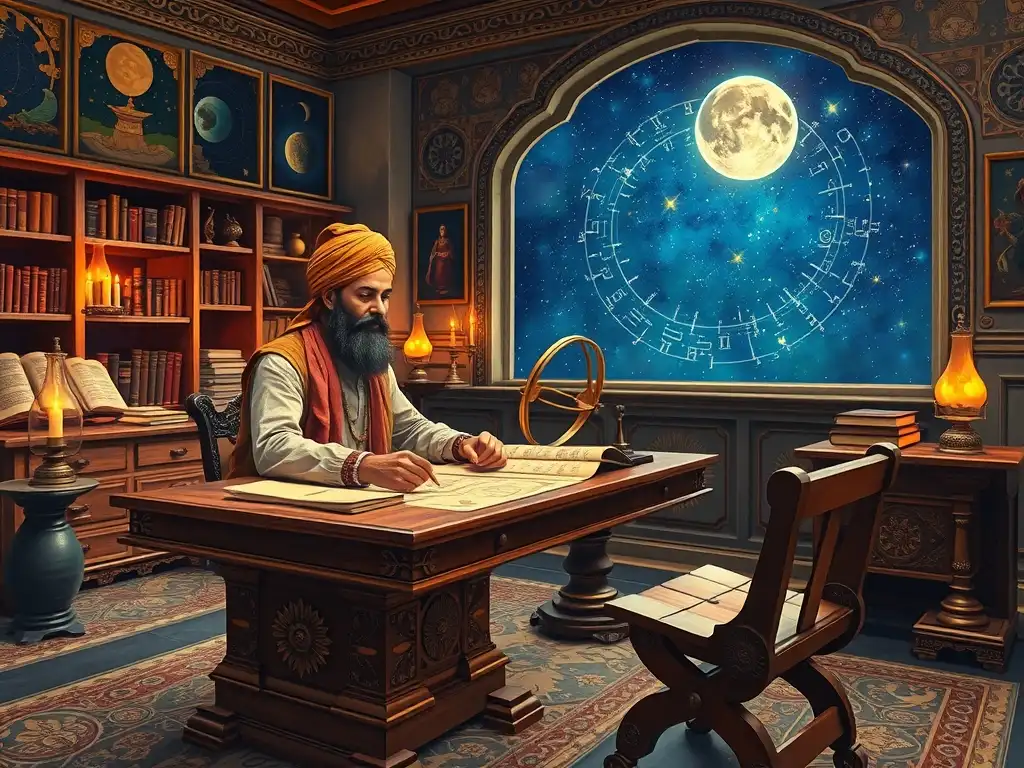
Ancient Indian astronomy is a remarkable field that reflects the profound understanding of celestial phenomena possessed by the scholars of ancient Indian civilizations. The contributions of ancient Indian astronomers are characterized by their systematic observations, mathematical precision, and philosophical insights. This section delves into the rich tapestry of knowledge that these astronomers imparted, shaping not only their own society but also influencing later astronomical thought across cultures.
Overview of Ancient Indian Astronomy
Ancient Indian astronomy can be traced back to the Vedic period (circa 1500-500 BCE), where celestial bodies were often associated with religious and agricultural practices. The Vedanga Jyotisha, one of the earliest texts on astronomy, outlines the principles of calculating the positions of celestial bodies and their significance for rituals.
Key contributions include:
- Mathematical Innovations:
- The introduction of concepts such as zero and the decimal system facilitated complex calculations.
- Siddhanta texts like the Aryabhatiya (by Aryabhata) and Surya Siddhanta provided comprehensive methodologies for astronomical calculations.
- Solar and Lunar Calendars:
- Ancient Indian astronomers developed sophisticated calendars that were pivotal for agriculture and religious observances. The lunar calendar, in particular, was crucial for determining auspicious dates for rituals.
- Planetary Motion:
- The works of Brahmagupta and Bhaskara I outlined principles of planetary motion, including the concept of retrograde motion, which was remarkably advanced for their time.
These foundational principles laid the groundwork for subsequent advancements in astronomy, not only within India but also in the broader context of global scientific development.
Importance of Astronomy in Ancient Indian Culture
The significance of astronomy in ancient Indian culture transcended mere observation; it was deeply intertwined with various aspects of life, including religion, agriculture, and philosophy.
- Religious Significance:
- Celestial phenomena were often seen as manifestations of divine will. Astronomers played a crucial role in determining the timing of religious festivals and rituals, which were often aligned with astronomical events such as solstices and equinoxes.
- Agricultural Practices:
- Accurate astronomical calculations allowed for the development of calendars that guided agricultural activities. The timing of sowing and harvesting was heavily dependent on celestial events, making astronomy vital for sustenance.
- Philosophical Inquiry:
- Ancient Indian texts frequently explored the relationship between the cosmos and human existence. The philosophical discourse surrounding astronomy influenced various schools of thought, promoting a holistic understanding of the universe.
- Cultural Artifacts:
- The legacy of ancient Indian astronomy can also be seen in architectural marvels like the Jantar Mantar observatories, which served as practical applications of astronomical principles.
The contributions of ancient Indian astronomy were not only scientific but also cultural, shaping the intellectual landscape of the time and leaving an enduring impact on future generations. These contributions continue to be a point of pride in the rich history of ancient Indian civilization.
Key Figures in Ancient Indian Astronomy
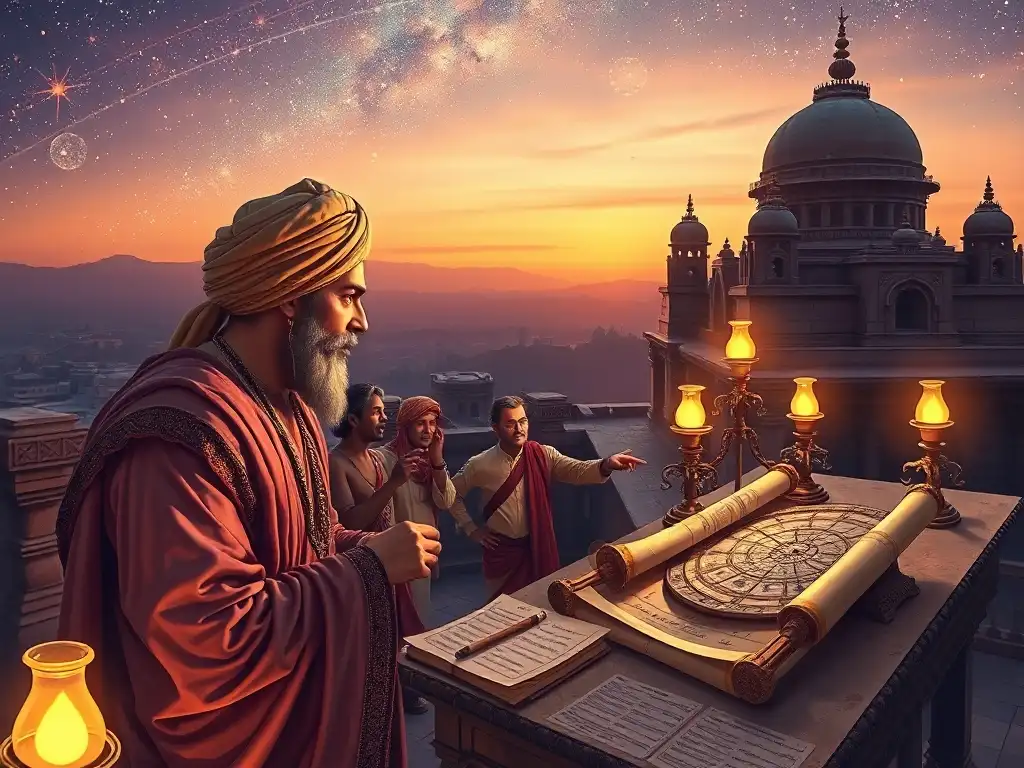
The field of astronomy in ancient India was significantly shaped by the contributions of remarkable scholars whose works laid the foundation for various scientific principles. Among these figures, Aryabhata and Varahamihira stand out as pioneers whose ideas and writings influenced not only Indian astronomy but also the broader scientific world.
Aryabhata: The Father of Indian Astronomy
Contributions to Mathematics and Astronomy
Aryabhata, born in 476 CE, is often revered as the father of Indian astronomy. His contributions were pivotal in the development of mathematical astronomy. He introduced the concept of zero and the place value system, which facilitated complex calculations and astronomical observations.
In his seminal work, the Aryabhatiya, Aryabhata tackled various astronomical phenomena, including:
- The rotation of the earth: He proposed that the earth rotates on its axis, which explained the apparent movement of the stars.
- The calculation of eclipses: He developed methods to predict solar and lunar eclipses with remarkable accuracy.
- The length of the year: Aryabhata calculated the solar year to be approximately 365.358 days, a figure close to modern measurements.
Notable Works and Theories
The Aryabhatiya is Aryabhata's most significant contribution, consisting of 118 verses divided into four sections:
- Gitikapada: Covers the mathematics of time and the calculation of planetary positions.
- Grahaganita: Discusses planetary movements and their implications.
- Kalayavana: Focuses on the calculation of eclipses.
- Golapada: Explores spherical astronomy.
Aryabhata's innovative approach to mathematics and astronomy laid the groundwork for future scholars and demonstrated the interconnectedness of these fields in ancient Indian thought.
Varahamihira: The Polymath Astronomer
Influence on Astrology and Scientific Thought
Varahamihira, a contemporary of Aryabhata, flourished in the 6th century CE and is best known for his comprehensive work that bridged the gap between astronomy and astrology. His contributions were instrumental in integrating scientific inquiry with astrological practices prevalent in ancient India.
Varahamihira's influence can be seen in his emphasis on observational astronomy, which contradicted the purely theoretical approaches of his predecessors. He advocated for the meticulous observation of celestial bodies, leading to more accurate astronomical predictions. His works demonstrated a sophisticated understanding of the cosmos and laid a foundation for future astronomers.
Key Texts and Their Impact
One of Varahamihira’s most important texts is the Brihat Samhita, a compendium of astrology, astronomy, meteorology, and architecture. This work includes:
- Astrological predictions: Covering various aspects of life and natural phenomena.
- Astronomical calculations: Including methods for determining planetary positions and eclipses.
- Natural history: Insights into the environment, such as rainfall patterns and agricultural practices.
The Brihat Samhita not only influenced subsequent Indian astronomers but also had a lasting impact on the development of astronomy in other cultures, showcasing the rich tapestry of ancient Indian astronomy contributions.
Through the works of Aryabhata and Varahamihira, ancient Indian astronomy established a legacy of scientific rigor and inquiry that continues to inspire astronomers and mathematicians to this day. Their innovations in the understanding of celestial movements and the integration of mathematics into astronomy were remarkable achievements that shaped the course of scientific thought in ancient India and beyond.
Brahmagupta: Revolutionizing Astronomy
Brahmagupta, a prominent Indian mathematician and astronomer of the 7th century CE, made substantial contributions that fundamentally transformed the field of astronomy. His seminal work, the Brahmasphutasiddhanta, served as a comprehensive astronomical treatise that not only detailed his observations but also synthesized the knowledge of his predecessors. Brahmagupta's approach was marked by his emphasis on mathematical rigor and systematic methods, which laid the groundwork for future astronomers in India and beyond.
Brahmagupta's theories challenged existing paradigms, particularly regarding planetary motions and the calculation of eclipses. He introduced methods for calculating the positions of celestial bodies with remarkable accuracy, integrating both geometrical and algebraic techniques. His work is notable for its early recognition of zero as a number, which played a crucial role in arithmetic calculations and astronomical computations.
Innovations in Astronomy and Mathematics
Brahmagupta's innovations in astronomy were groundbreaking, particularly in his treatment of planetary periods and positions. He posited significant theories about the motion of planets, including concepts related to retrograde motion and the elliptical orbits of celestial bodies. His calculations for the length of the solar year, which he estimated at approximately 365.2588 days, were impressively accurate for his time.
In the realm of mathematics, Brahmagupta introduced algebraic methods that were revolutionary. He formulated rules for solving quadratic equations and developed algorithms for computations involving fractions. His work on the properties of numbers, particularly negative numbers, was also ahead of its time. Brahmagupta's systematic approach to mathematics and astronomy allowed him to develop formulas that would influence not only Indian scholars but also Islamic astronomers and mathematicians who later translated his work.
Legacy and Historical Significance
The legacy of Brahmagupta is profound, as he is often regarded as one of the key figures in ancient Indian astronomy. His contributions laid the foundation for subsequent astronomers, such as Bhaskara I and Bhaskara II, who built upon his methodologies. Brahmagupta's influence extended beyond India; his texts were translated into Arabic and Latin, significantly impacting the development of mathematics and astronomy in the Islamic Golden Age and medieval Europe.
Moreover, Brahmagupta's work exemplifies the rich scientific tradition of ancient India, showcasing how Indian scholars contributed to global knowledge. His insights into celestial phenomena and mathematical principles not only advanced the field of astronomy but also enhanced navigation and calendar-making practices in various cultures. The principles he established continue to resonate in modern mathematical and astronomical studies, marking him as a pivotal figure in the history of science.
Major Contributions of Ancient Indian Astronomy
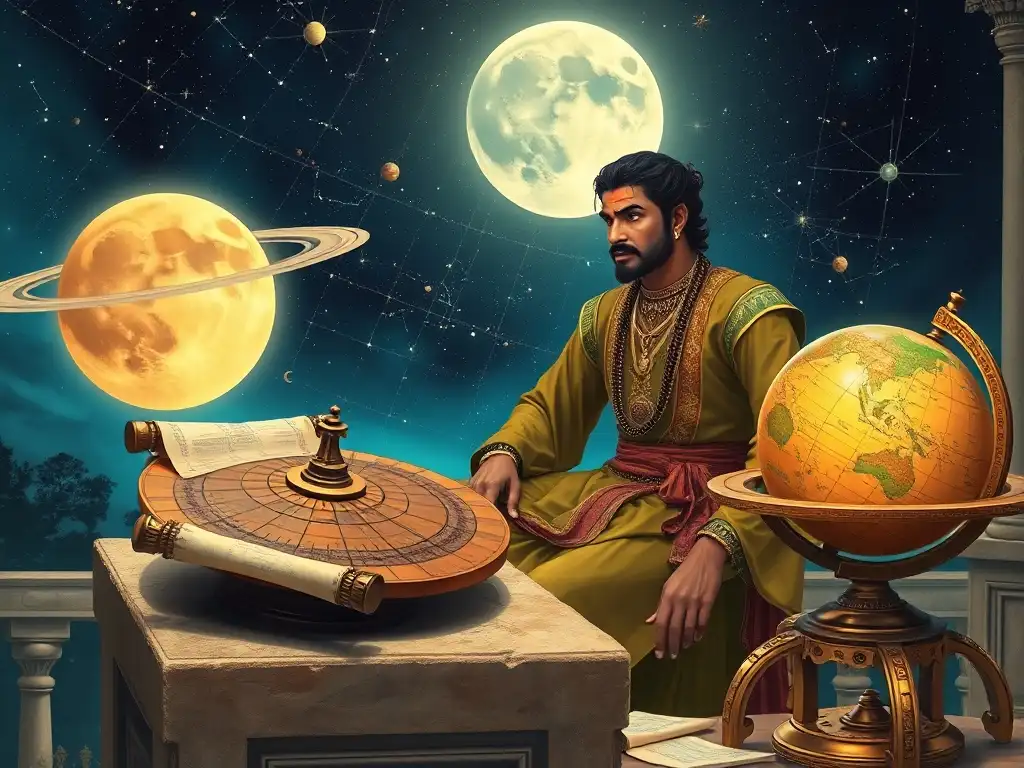
Ancient Indian astronomy was marked by remarkable achievements that not only influenced the scientific landscape of the time but also laid the groundwork for future astronomical studies worldwide. The contributions of ancient Indian astronomers encompassed various aspects, including the development of sophisticated instruments, the formulation of systematic calendar systems, and the integration of astronomical knowledge into daily life. These efforts reflect a deep understanding of celestial phenomena and their implications for society.
Development of Astronomical Instruments
The progression of ancient Indian astronomy was significantly enhanced by the invention and refinement of various astronomical instruments. These devices played a critical role in observing celestial bodies and measuring time accurately.
Types of Instruments Used
- Gnomon: A simple yet effective tool used to measure the position of the sun. This vertical stick cast a shadow, allowing astronomers to determine the time of day and seasonal changes.
- Astrolabe: An advanced instrument used to make astronomical measurements. It enabled astronomers to determine the altitude of stars and planets, helping them to chart celestial movements.
- Sundials: These were widely used for timekeeping during the day. By observing the sun's position, sundials provided accurate time readings and were essential for scheduling various activities.
- Quadrants: Employed for measuring angles, quadrants allowed astronomers to observe celestial bodies and calculate their positions in the sky.
- Armillary Spheres: A complex model representing celestial spheres, these instruments helped in understanding the movement of stars and planets through a three-dimensional perspective.
Significance of Observational Techniques
The observational techniques developed by ancient Indian astronomers were crucial for enhancing their understanding of the cosmos. By meticulously observing and recording celestial events, astronomers could:
- Predict celestial events: Such as eclipses and planetary alignments, which were important for both scientific and religious purposes.
- Refine mathematical models: The need for accurate calculations led to the development of sophisticated mathematical techniques, including trigonometry and arithmetic.
- Establish a systematic approach: Their rigorous methodologies laid the foundation for future astronomical studies, influencing both Indian and global scientific communities.
Calendar Systems and Timekeeping
Ancient Indian astronomers made significant contributions to timekeeping and calendar systems, reflecting their understanding of celestial cycles. These systems were not only vital for scientific purposes but also played a crucial role in societal organization.
The Sidereal and Solar Calendars
- Sidereal Calendar: This calendar was based on the position of stars and was used to track the lunar months. It involved 27 lunar mansions (Nakshatras), which were critical for astrological calculations.
- Solar Calendar: This calendar was aligned with the solar year and was used for agricultural purposes. It comprised twelve months, each corresponding to a specific season, facilitating agricultural planning and festivals.
Comparison of Calendar Systems:
| Calendar Type | Basis | Key Features |
|---|---|---|
| Sidereal | Stars | 27 lunar mansions; used in astrology |
| Solar | Sun | 12 months; aligned with agricultural cycles |
Role in Agriculture and Religious Practices
The calendar systems developed by ancient Indian astronomers played a pivotal role in agricultural practices and religious observances.
- Agricultural Planning: Knowledge of seasonal changes allowed farmers to optimize planting and harvesting times, ensuring better yields.
- Religious Festivals: Many festivals were scheduled according to celestial events, demonstrating the integration of astronomy with cultural traditions. For instance, the timing of festivals like Makar Sankranti was determined by solar movements.
The contributions of ancient Indian astronomers extended far beyond mere observations of the night sky. Their innovations in instruments, calendar systems, and observational techniques have had a lasting impact on both science and society, establishing a rich legacy that continues to be appreciated in modern astronomy.
The Concept of Celestial Bodies and Cosmology
Ancient Indian astronomy is deeply rooted in a profound understanding of celestial bodies and their movements, reflecting a sophisticated cosmological framework. Ancient Indian texts, such as the Vedas and the later Puranas, illustrate a rich tapestry of cosmological ideas, including the concept of the universe being cyclical in nature. This cyclical concept was pivotal, as it influenced not only scientific thought but also philosophical and spiritual beliefs.
The universe was perceived as a vast, interconnected entity, where celestial bodies were not merely physical objects but also carried significant symbolic meanings. The idea of Yugas, or epochs, outlined in texts like the Mahabharata, depicts a universe in constant flux, marked by cycles of creation and destruction, reflecting the importance of time in ancient Indian thought. Consequently, these cosmological views laid the groundwork for the development of observational astronomy and mathematical calculations that followed, serving as a vital link between spirituality and science.
Understanding of Planets and Stars
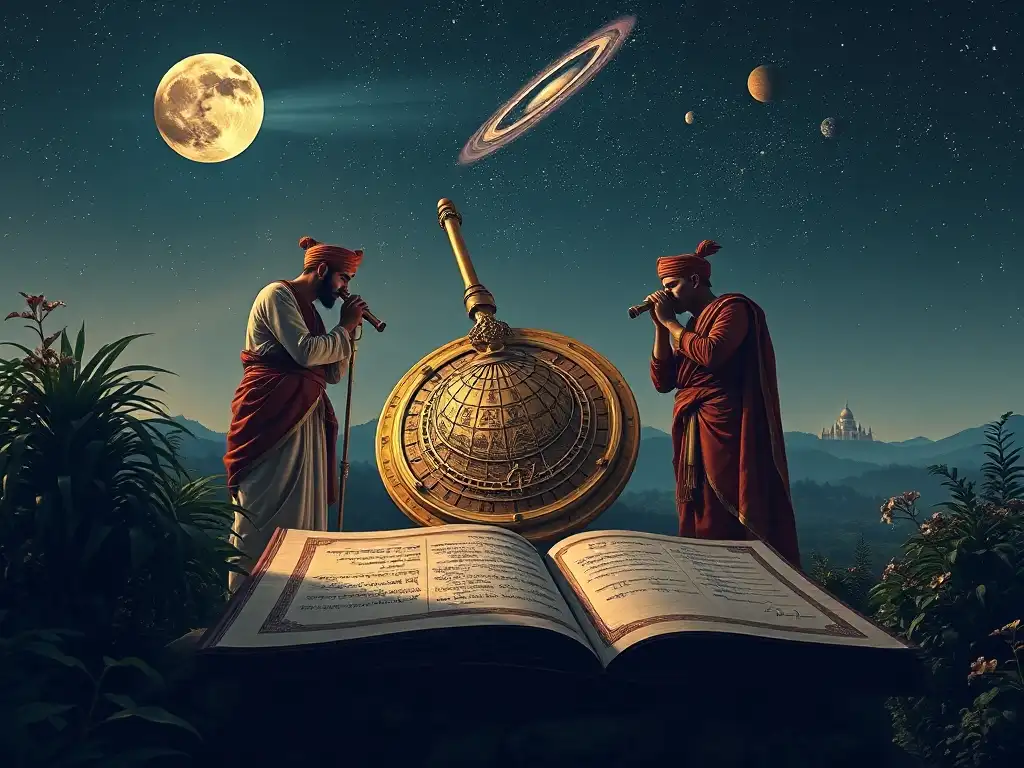
The ancient Indian scholars exhibited remarkable prowess in observing and categorizing celestial bodies, particularly planets and stars. Texts such as the Aryabhatiya by Aryabhata and Surya Siddhanta offer detailed accounts of the planets, their movements, and their implications for astrology and calendar-making. Aryabhata, one of the earliest astronomers, proposed that the Earth rotates on its axis and calculated the circumference of the Earth with impressive accuracy, estimated to be about 39,968 kilometers—close to modern measurements.
Moreover, the identification of planets with specific deities in Hindu mythology not only provided a cultural context but also facilitated the advancement of astronomical knowledge. The ancient Indian system classified planets into two categories: Saptagraha (the seven celestial bodies) and Dikgraha (the directional bodies), demonstrating an early understanding of planetary motion and its significance. The meticulous records of celestial events, including eclipses and planetary conjunctions, were essential for developing calendars, which were crucial for agrarian societies in planning agricultural activities.
Ancient Indian astronomy played a vital role in navigation and trade, particularly during the flourishing maritime trade routes that connected India with other civilizations, such as those in Southeast Asia, the Middle East, and beyond. The knowledge of celestial navigation enabled sailors to traverse vast oceans, relying on the positions of stars like Polaris (the North Star) and other constellations to guide their journeys.
The Yogic practices and astronomical calculations were not only instrumental in determining the best seasons for trade expeditions but also in establishing trade routes. Ancient texts often contained instructions on using celestial observations to calculate distances and directions, which were critical for successful navigation.
Moreover, the trading interactions fostered a rich exchange of knowledge, as Indian astronomical ideas influenced and were influenced by other cultures. This cross-pollination of ideas contributed to the global understanding of astronomy and navigation, solidifying ancient Indian contributions as a cornerstone in the history of science and commerce.
Ancient Indian Astronomical Texts and Their Influence
Surya Siddhanta: A Landmark in Astronomy
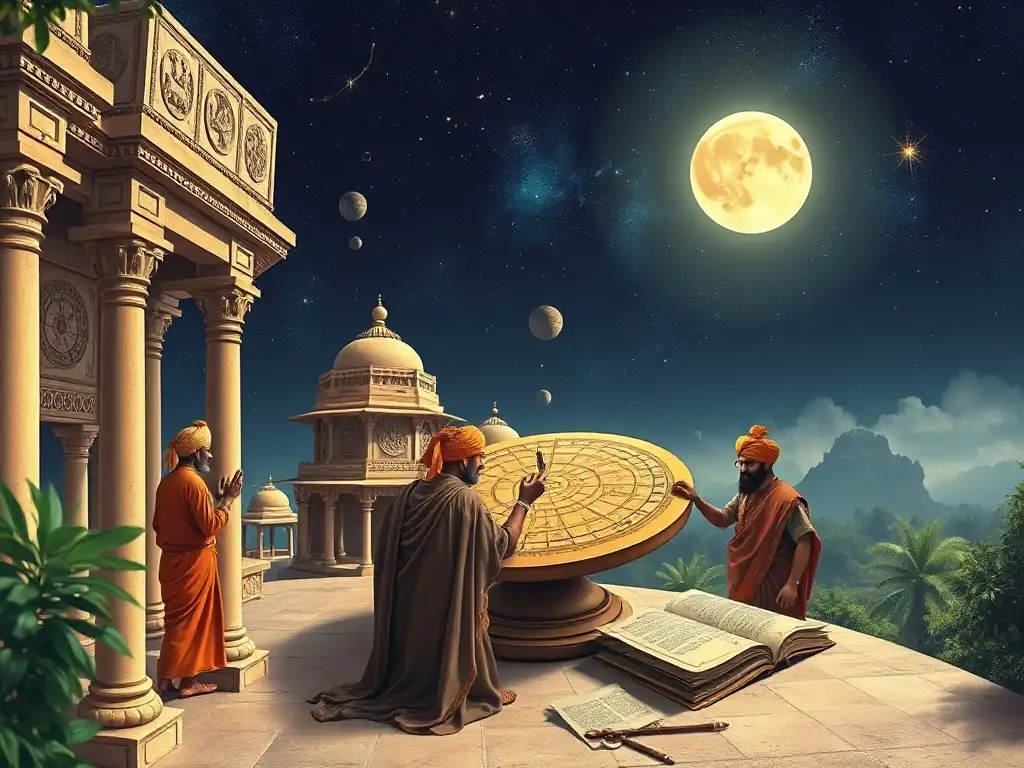
The Surya Siddhanta is one of the most influential astronomical texts in ancient India, dating back to around the 4th or 5th century CE. This seminal work, attributed to the sage Aryabhata, lays the foundation for various astronomical principles and calculations that have shaped the understanding of celestial phenomena for centuries.
Key Concepts and Theories
The Surya Siddhanta encompasses several pivotal concepts in astronomy, including:
- Celestial Mechanics: The text outlines the motion of celestial bodies, including the sun, moon, and planets, detailing their orbits and periodicity.
- Eclipses: It provides a comprehensive explanation of solar and lunar eclipses, including their timings and causes, based on geometrical calculations.
- Sidereal and Solar Time: The work differentiates between sidereal time (related to the stars) and solar time, emphasizing the importance of understanding both for accurate astronomical observations.
Moreover, it introduces mathematical formulas for calculating distances and sizes of celestial bodies, providing a framework that later astronomers would build upon.
Impact on Later Astronomical Studies
The impact of the Surya Siddhanta extends beyond its time, influencing subsequent scholars in India and around the world. Its principles were integrated into later texts such as the Aryabhatiya by Aryabhata and the Brahmasphutasiddhanta by Brahmagupta. The work laid the groundwork for astronomical tables that guided navigation and agricultural practices.
The text’s methods for calculating planetary positions and predicting eclipses were adopted by Islamic astronomers and later European scholars, showcasing its profound influence on global astronomy. It is often regarded as a bridge between ancient Indian astronomical practices and the broader scientific community.
Aryabhata's Aryabhatiya: A Mathematical Masterpiece
The Aryabhatiya, written by the renowned mathematician and astronomer Aryabhata in 499 CE, is a monumental work that showcases the depth of ancient Indian mathematics and astronomy. This text is not only pivotal for its astronomical content but also for its innovative mathematical approaches.
Mathematical Innovations and Their Applications
The Aryabhatiya introduces several groundbreaking mathematical concepts, including:
- Place Value System: Aryabhata utilized a place value system, which was crucial for simplifying calculations and advancing arithmetic.
- Zero and Its Usage: The text acknowledges the concept of zero, enhancing numeral representation and calculations.
- Trigonometric Functions: Aryabhata is credited with developing sine functions and providing tables for their values, which greatly advanced the study of trigonometry.
These innovations had practical applications in various fields, including navigation, land surveying, and even construction, demonstrating the integral role of mathematics in ancient Indian society.
Influence on Global Astronomy
The influence of the Aryabhatiya on global astronomy cannot be overstated. The text was translated into Arabic, leading to its widespread dissemination in the Islamic world during the medieval period. Scholars such as Al-Khwarizmi and Al-Battani were influenced by Aryabhata's methods, which contributed to the development of astronomy in the Islamic Golden Age.
Furthermore, the principles articulated in the Aryabhatiya laid the groundwork for later European astronomers during the Renaissance. The synthesis of Aryabhata's theories with those of Greek and Islamic scholars fostered a rich environment for astronomical discovery that continues to resonate in modern astronomy.
The contributions of ancient Indian astronomy, as exemplified by texts like the Surya Siddhanta and Aryabhatiya, underscore a rich intellectual tradition that has shaped not only Indian scientific thought but also the broader fabric of global astronomical knowledge.
The Legacy of Ancient Indian Astronomy
Influence on Islamic and Western Astronomy
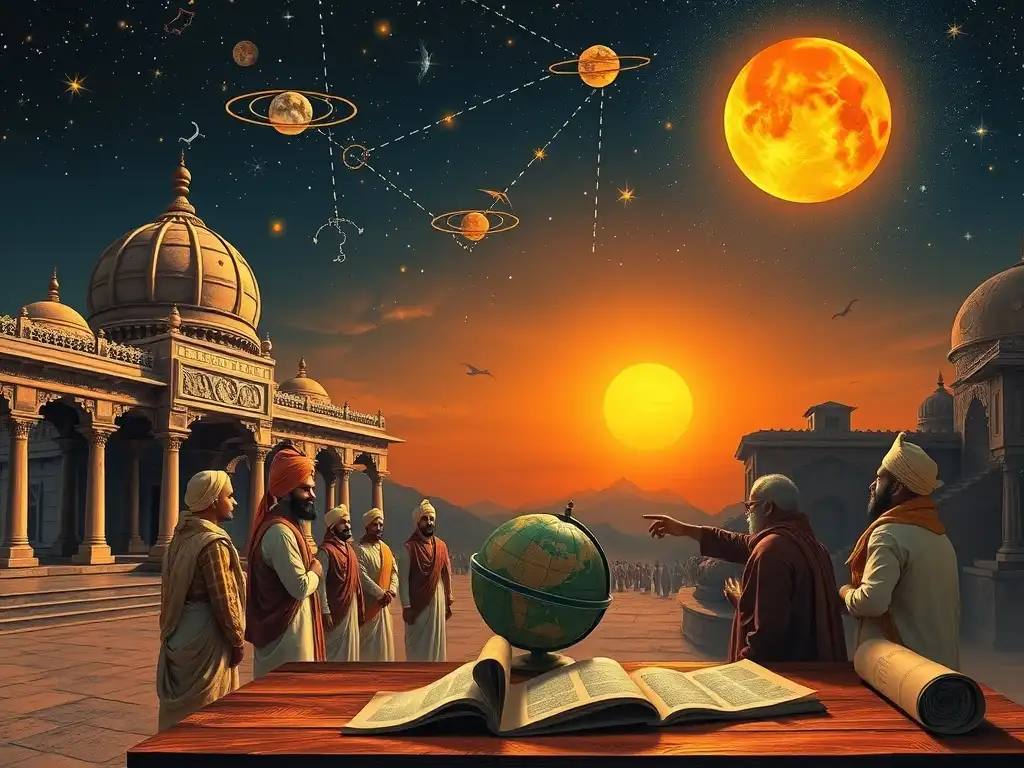
Ancient Indian astronomy has had a profound influence on both Islamic and Western astronomical traditions, laying the groundwork for significant advancements in celestial studies. The meticulous observations and calculations made by Indian astronomers, such as Aryabhata and Brahmagupta, were instrumental in shaping the understanding of celestial phenomena.
- Key Contributions:
- Aryabhata (476–550 CE) introduced concepts such as the rotation of the Earth on its axis and the approximation of π (pi) as 3.1416.
- Brahmagupta (598–668 CE) formulated rules for arithmetic operations involving zero, providing a foundation for mathematical calculations in astronomy.
The works of these astronomers were translated into Arabic during the 8th and 9th centuries, which subsequently influenced Islamic scholars. Notable figures such as Al-Khwarizmi and Al-Battani expanded upon these texts, further disseminating ancient Indian astronomical knowledge across Europe during the Renaissance.
Transmission of Knowledge through Translation
The transmission of knowledge from ancient India to the Islamic world primarily occurred through translations of important texts in the 8th century. Scholars in centers of learning, such as Baghdad's House of Wisdom, translated Sanskrit texts into Arabic. This process not only preserved ancient Indian astronomy but also integrated it into the broader framework of Islamic science.
- Significant Translations:
- Aryabhata's Aryabhatiya was translated into Arabic, leading to the popularization of his theories on planetary motion and eclipses.
- Brahmagupta's Brahmasphutasiddhanta served as a crucial resource for Islamic astronomers, particularly in the development of algorithms for calculating astronomical events.
This translation movement facilitated a two-way exchange of ideas, where Islamic scholars built upon Indian knowledge while also contributing to the evolution of astronomy.
Lasting Impact on Global Scientific Thought
The impact of ancient Indian astronomy on global scientific thought cannot be overstated. The mathematical innovations and conceptual frameworks introduced by Indian astronomers established foundational principles that influenced later developments in both astronomy and mathematics.
- Key Areas of Influence:
- Trigonometry: The sine and cosine functions, derived from Indian mathematical concepts, became essential tools in astronomy.
- Calendar Systems: The Indian lunar calendar informed the development of various calendar systems across cultures, emphasizing the importance of celestial cycles in agriculture and religious practices.
Overall, the contributions of ancient Indian astronomers provided a critical link in the evolution of scientific thought, bridging the gap between ancient wisdom and contemporary understanding.
Modern Recognition of Ancient Indian Contributions
In recent years, there has been a renewed interest in the contributions of ancient Indian astronomers to science and mathematics. Scholars and institutions have begun to recognize the significance of these contributions in the context of global scientific history.
Rediscovery of Ancient Texts and Their Importance
The rediscovery of ancient astronomical texts, often preserved in temple libraries and manuscripts, has shed light on the advanced methodologies employed by Indian astronomers. Researchers are now able to study these texts in their original languages, leading to a deeper understanding of their insights and innovations.
- Notable Discoveries:
- Manuscripts containing the works of Varahamihira, who made significant contributions to the understanding of planetary positions and horoscopes.
- Treatises on astronomy that detail observational techniques and calculations, providing invaluable data for modern studies.
These efforts highlight the importance of ancient Indian astronomy in shaping scientific discourse and demonstrate the need for further exploration of these rich historical resources.
Influence on Contemporary Astronomy and Mathematics
The principles established by ancient Indian astronomers continue to resonate in contemporary astronomy and mathematics. Modern astronomers and mathematicians often find inspiration in the methodologies and theories developed centuries ago.
- Current Applications:
- The algorithms for calculating planetary positions, derived from ancient texts, are still utilized in modern computational astronomy.
- Concepts such as zero and the decimal system, introduced by Indian mathematicians, are fundamental to today’s mathematical practices.
The legacy of ancient Indian astronomy is not just a historical curiosity; it remains a vital part of the scientific landscape, influencing ongoing research and innovation in astronomy and mathematics worldwide.
The study of ancient Indian astronomy contributions reveals a rich tapestry of intellectual achievement that has significantly shaped our understanding of the universe. The recognition of these contributions is essential for appreciating the interconnectedness of global scientific progress.
Conclusion: Celebrating Ancient Indian Astronomy Contributions
Summary of Key Points
Ancient Indian astronomy holds a vital place in the history of science, characterized by profound contributions that span centuries. The legacy of ancient Indian astronomers is not only a testament to their ingenuity but also a foundation for modern astronomical practices. Here are the key points reflecting their significant contributions:
- Systematic Observations: Ancient Indian astronomers, such as Aryabhata and Varahamihira, meticulously observed celestial bodies, leading to the development of accurate astronomical models. Their work included the identification of planetary movements and the calculation of eclipses.
- Mathematical Innovations: The use of advanced mathematical techniques, including the introduction of the concept of zero and positional numeral systems, played a crucial role in astronomical calculations. This mathematical prowess allowed for precise predictions of celestial events.
- Influence on Calendar Systems: The insights gained from astronomy were instrumental in the formulation of various calendar systems, like the Hindu lunar calendar, which is still in use today for religious and agricultural purposes.
- Textual Contributions: Important texts such as the "Aryabhatiya" and "Brahmasphutasiddhanta" compiled comprehensive astronomical knowledge, serving as references for subsequent scholars in both India and beyond.
- Integration with Astrology: The intertwining of astronomy with astrology in ancient Indian culture led to a unique perspective on the cosmos, influencing both scientific and spiritual dimensions of society.
This rich tapestry of knowledge laid the groundwork for later developments in science and continues to inspire contemporary studies in astronomy and mathematics.
The Enduring Influence of Ancient Indian Astronomers on Modern Science
The contributions of ancient Indian astronomers extend beyond their time, echoing through the annals of modern science. Their methodologies and discoveries have had a lasting impact, influencing various fields and inspiring generations of scientists. Here are some ways in which their work continues to resonate today:
- Foundational Principles: Many principles established by ancient Indian astronomers form the bedrock of modern astronomy. Their understanding of celestial mechanics has been validated and expanded upon in contemporary astrophysics.
- Cultural Integration of Science: The holistic approach to science, intertwining astronomy with philosophy and spirituality, promotes a broader understanding of the universe that is relevant even in today's scientific discourse.
- Global Influence: The texts and theories developed by ancient Indian scholars were translated and disseminated across cultures, impacting Islamic astronomy during the medieval period and laying the groundwork for the Renaissance in Europe.
- Sustainable Practices: The astronomical observations that informed agricultural practices reflect a deep understanding of nature, which is increasingly relevant in discussions about sustainable living and environmental awareness today.
- Educational Legacy: Modern educational curricula in astronomy and mathematics often reference the fundamental concepts pioneered by ancient Indian scholars, demonstrating the enduring legacy of their intellectual achievements.
The contributions of ancient Indian astronomers are profound and multifaceted, providing invaluable insights that continue to shape our understanding of the cosmos. Celebrating these achievements not only honors the past but also inspires future explorations of the universe.
Frequently Asked Questions
What are the major contributions of ancient Indian astronomers?
Ancient Indian astronomers made significant contributions in fields like mathematics, celestial observations, and calendar-making, laying the groundwork for modern astronomy.
How did ancient Indian astronomy influence other cultures?
The astronomical texts from ancient India were translated into Arabic and Latin, influencing Islamic scholars and later European astronomy during the Renaissance.
Which ancient texts are essential for understanding Indian astronomy?
Key texts include the Surya Siddhanta, the Aryabhatiya by Aryabhata, and the Brahmasphutasiddhanta by Brahmagupta, which detail mathematical principles and celestial phenomena.
Who were some notable ancient Indian astronomers?
Notable figures include Aryabhata, who introduced the concept of zero, and Brahmagupta, known for his work on planetary motions and lunar eclipses.
What methods did ancient Indian astronomers use for observations?
Ancient Indian astronomers utilized instruments like the gnomon and astrolabe for celestial observations, relying on careful calculations and observational techniques to track planetary movements.
Final Reflection: Celebrating the Legacy of Ancient Indian Astronomy
The contributions of ancient Indian astronomers resonate profoundly in today's scientific landscape, reminding us that the pursuit of knowledge transcends time and culture. Their meticulous observations and innovative methodologies laid the groundwork for modern astronomy, showcasing a remarkable blend of intellect and curiosity. As we navigate the complexities of our universe today, it's essential to recognize that the seeds of our current understanding were sown by these early pioneers, whose insights continue to inspire contemporary exploration.
The influence of ancient Indian astronomy is not merely historical; it is woven into the fabric of our cultural identity and scientific progress. The principles established by these astronomers have shaped not only our understanding of celestial mechanics but also our philosophical perspectives on the cosmos. As Carl Sagan once said, "> The cosmos is within us.
We are made of star-stuff. We are a way for the universe to know itself." This profound connection underscores the importance of acknowledging and celebrating the contributions of those who came before us, as they have paved the way for future generations to explore the mysteries of the universe.
As we reflect on the remarkable achievements of ancient Indian astronomers, I invite you to consider how their legacy can inspire your own journey of discovery. Embrace the curiosity that drove these early thinkers, and let it guide you in your quest for knowledge. Whether through studying the stars, engaging with scientific inquiry, or simply marveling at the night sky, remember that you are part of a continuum that stretches back thousands of years. Let their passion for the cosmos ignite your own, as we collectively strive to understand our place in the universe.
Embark on Your Cosmic Journey Today!
Thank you for taking the time to explore the fascinating world of ancient Indian astronomers! You've gained valuable insights into how these pioneers shaped our understanding of the universe. Now it’s your turn to dive deeper into this celestial realm and discover even more.
Here are a few ways you can continue your journey:
- Start your own stargazing adventure: Grab a telescope or use a stargazing app to identify celestial bodies and connect with the ancient wisdom behind them.
- Join a local astronomy club: Share your passion and learn from fellow enthusiasts who appreciate the beauty of the cosmos.
- Explore ancient texts: Delve into historical manuscripts or modern translations to uncover more about the astronomical knowledge of ancient civilizations.
What celestial mysteries are you most excited to explore next, and how will you apply the ancient wisdom of these astronomers to your discoveries?