
Vedic Mathematics: Unlocking the Secrets of Ancient Calculation Methods


Welcome to Ancient India History, where we embark on a fascinating journey through the intricate tapestry of India's past. Here, we delve deep into the rich legacy of ancient civilizations, from the enigmatic Indus Valley to the illustrious Gupta Empire. Today, we invite you to explore the captivating world of Vedic Mathematics—a remarkable system of ancient calculation methods that has the power to transform the way we understand numbers.
What secrets lie within these time-honored techniques? Join us as we unlock the mysteries of mathematics that have shaped not just a civilization, but the very foundations of modern science and medicine. Your exploration begins now!
- Introduction to Vedic Mathematics: Ancient Calculation Methods
- The Foundations of Vedic Mathematics
- Historical Context of Vedic Mathematics
- Techniques of Vedic Mathematics
- Benefits of Learning Vedic Mathematics
- Comparisons with Modern Calculation Methods
- Real-Life Applications of Vedic Mathematics
- Conclusion: The Legacy of Vedic Mathematics
- Frequently Asked Questions
- Final Reflection: Embracing the Wisdom of Vedic Mathematics for Modern Challenges
- Unlock the Power of Vedic Mathematics Today!
Introduction to Vedic Mathematics: Ancient Calculation Methods
Vedic Mathematics, an ancient system of calculation, represents a fascinating blend of culture, science, and intellect that has its roots in the Vedic texts of India. This system, believed to have been formulated around 1500 BCE, offers unique techniques and shortcuts for mathematical calculations that are both efficient and intuitive. As we delve into the intricacies of Vedic mathematics, we unlock insights into the advanced understanding of numbers and their applications in various fields including astronomy, architecture, and commerce during ancient times.
The relevance of Vedic mathematics extends beyond mere calculation; it reflects the philosophical and intellectual depth of ancient Indian civilization, showcasing how mathematics was intertwined with their worldview and practices. In this article, we will explore the origins of Vedic mathematics and its significance within the broader context of ancient Indian history.
Understanding the Origins of Vedic Mathematics
Vedic mathematics is derived from the ancient scriptures known as the Vedas, particularly the Atharva Veda, which contains a wealth of knowledge on various subjects including mathematics. The techniques of Vedic mathematics were systematically compiled by Jagadguru Swami Bharati Krishna Tirthaji in the early 20th century, but their essence can be traced back to the early thinkers and scholars of ancient India.
- Key Features of Vedic Mathematics:
- Sutras: The core of Vedic mathematics consists of 16 sutras (aphorisms) that provide strategies for solving mathematical problems.
- Techniques: Each sutra offers various techniques applicable to different types of calculations, including addition, subtraction, multiplication, division, and square roots.
- Flexibility: The methods allow for flexibility and creativity in problem-solving, promoting a deep understanding of numbers rather than rote memorization.
The revival of interest in Vedic mathematics has demonstrated its relevance in modern education, particularly in enhancing mental calculation abilities and fostering a positive attitude towards mathematics among students.
Importance of Ancient Calculation Methods in Indian History
The significance of ancient calculation methods in India cannot be overstated. They were pivotal in the development of various fields, including:
- Astronomy:
- Ancient Indian astronomers like Aryabhata and Brahmagupta utilized Vedic mathematics to develop complex astronomical models.
- Their calculations contributed significantly to understanding celestial movements, eclipses, and planetary positions.
- Architecture:
- The precision in measurements and calculations reflected in ancient Indian architecture, such as the construction of temples and palaces, can be attributed to the mastery of Vedic mathematics.
- Commerce:
- Trade and commerce flourished in ancient India, facilitated by efficient calculation methods that enabled accurate accounting and financial transactions.
- Education:
- The teaching of Vedic mathematics was integral to the educational system, emphasizing logical thinking and problem-solving skills.
Vedic mathematics serves as a testament to the intellectual achievements of ancient Indian civilization. Its techniques continue to inspire modern mathematical practices and provide a glimpse into the sophisticated understanding of mathematics that existed thousands of years ago.
The Foundations of Vedic Mathematics

Vedic Mathematics is an ancient system of calculation that originated from the Vedas, the foundational texts of Hindu philosophy and spirituality. This mathematical system is not merely a collection of techniques but rather a holistic approach that encompasses various methods to solve mathematical problems efficiently and intuitively. Vedic Mathematics is characterized by its simplicity, speed, and elegance, which allows practitioners to perform complex calculations in a matter of seconds.
The core philosophy of Vedic Mathematics rests on the idea that all mathematical operations can be derived from a set of 16 sutras (aphorisms) and 13 sub-sutras. These sutras provide a framework for problem-solving, enabling practitioners to approach mathematics with creativity and flexibility. This system not only emphasizes arithmetic but also extends to algebra, geometry, and calculus, making it a versatile tool for various mathematical applications.
One of the key aspects of Vedic Mathematics is its focus on mental calculation. The techniques encourage students to visualize numbers and manipulate them in their minds, enhancing cognitive skills and fostering a deeper understanding of numerical relationships. As a result, Vedic Mathematics serves both as an educational tool and a means to cultivate mental agility.
Key Principles of Vedic Mathematics
The principles of Vedic Mathematics are rooted in ancient Indian philosophy and exhibit a unique approach to problem-solving. Here are some of the key principles that underpin this fascinating mathematical system:
-
Simplicity and Efficiency:
Vedic Mathematics emphasizes simple methods that can be applied to solve complex problems quickly. For instance, techniques such as the "Nikhilam Sutra" allow for easy multiplication of numbers close to a base, simplifying calculations that would otherwise be cumbersome.
-
Flexibility in Approach:
The system encourages multiple methods for solving a single problem, allowing practitioners to choose the most convenient approach. This flexibility enhances creativity in mathematical problem-solving, as individuals can adapt techniques according to their preferences and strengths.
-
Mental Calculation:
Techniques in Vedic Mathematics often promote mental calculation, reducing reliance on paper and pen. This not only speeds up calculations but also improves memory and concentration. For example, the "Urdhva-Tiryagbhyam" sutra provides a way to multiply numbers vertically and crosswise, facilitating quicker computations.
-
Interconnectedness of Concepts:
Vedic Mathematics highlights the interconnected nature of various mathematical concepts. Understanding the relationships between numbers and operations allows for deeper insights and more effective problem-solving strategies.
-
Intuitive Understanding:
The methods encourage an intuitive grasp of mathematical concepts, fostering a natural affinity for numbers. Techniques often rely on visual patterns and logical reasoning, making mathematics accessible and enjoyable for learners.
By incorporating these key principles, Vedic Mathematics offers a unique lens through which to view and engage with mathematical concepts, setting it apart from conventional methods.
The Role of Sutras in Ancient Calculation Techniques
The sutras, or aphorisms, are central to the practice of Vedic Mathematics. Each sutra encapsulates a specific mathematical technique or principle, serving as a mnemonic device that aids in recall and application. Here are some of the most significant sutras and their roles in ancient calculation techniques:
-
Nikhilam Sutra (All from 9 and the last from 10):
This sutra is particularly useful for multiplication. It enables calculations involving numbers close to a base, simplifying the process significantly. For example, multiplying 98 by 97 can be quickly resolved using this sutra, promoting speed and accuracy.
-
Urdhva-Tiryagbhyam (Vertically and Crosswise):
This versatile sutra applies to multiplication and can be used for both small and large numbers. By arranging numbers in a grid and performing calculations vertically and crosswise, practitioners can arrive at answers more efficiently.
-
Paravartya Yojayet (Transpose and Apply):
This sutra is applicable in algebra for solving equations. It emphasizes the importance of rearranging terms and applying operations strategically, leading to simplified solutions.
-
Sankalana-Vyavakalanabhyam (Addition and Subtraction):
This sutra provides techniques for effective addition and subtraction, which are foundational operations in mathematics. It allows for quick mental calculations, enhancing overall numerical fluency.
-
Kha Gantam (The Empty Space):
This sutra introduces a unique approach to solving problems by focusing on the structure of numbers and the spaces between them. It fosters an understanding of how mathematical operations interact with one another.
The sutras of Vedic Mathematics not only serve as powerful tools for calculation but also encourage a deeper exploration of mathematical concepts. By utilizing these ancient techniques, practitioners can unlock the potential of their mathematical abilities, making Vedic Mathematics a valuable asset in both educational and practical contexts.
Historical Context of Vedic Mathematics

Vedic mathematics is a collection of ancient Indian mathematical techniques derived from the Vedas, the oldest sacred texts of Hinduism. This mathematical system, which encompasses a variety of calculation methods, serves as a testament to the advanced mathematical understanding and practices of ancient Indian civilization. The origins of Vedic mathematics can be traced back to the Vedic period, which is traditionally dated from around 1500 BCE to 500 BCE, an era marked by significant developments in philosophy, astronomy, and mathematics.
The term "Vedic" itself refers to the Vedas, specifically the Atharva Veda, which contains numerous mathematical concepts and techniques. The principles of Vedic mathematics were not merely theoretical; they were applied to practical calculations in various fields, including trade, astronomy, and architecture. By examining the historical context of Vedic mathematics, we can appreciate its role in shaping the mathematical landscape of ancient India and its lasting influence on future generations.
Vedic Mathematics in the Vedic Period
During the Vedic period, mathematics was primarily oral and closely intertwined with religious rituals and practices. The Vedas include hymns and mantras that often required precise calculations, such as determining the timing of ceremonies or the dimensions of sacrificial altars. This necessity for accuracy led to the development of various mathematical techniques that would later be codified as Vedic mathematics.
Key features of Vedic mathematics from this period include:
- Mental Calculation: Techniques that facilitate quick mental arithmetic, enabling practitioners to solve complex problems without the need for written computation.
- Sutras and Sub-Sutras: The core principles of Vedic mathematics are encapsulated in short aphorisms (sutras) and elaborated through sub-sutras. These rules provide systematic methods for performing operations such as addition, subtraction, multiplication, and division.
- Geometric Concepts: The Vedic texts also reflect an understanding of geometry, as seen in the construction of altars and the application of geometric shapes in rituals.
The relevance of Vedic mathematics during the Vedic period highlights its essential role in the daily lives of ancient Indians, blending spirituality with practical necessity.
Influence of Vedic Mathematics on Ancient Indian Scholars
The influence of Vedic mathematics extended beyond the Vedic period and significantly shaped the intellectual landscape of ancient India. Scholars and mathematicians, such as Aryabhata and Brahmagupta, drew upon the principles of Vedic mathematics to advance their own work in mathematics and astronomy.
Some notable impacts include:
- Development of Algorithms: The methods outlined in Vedic mathematics laid the groundwork for various algorithms that are still in use today. The efficiency of these techniques allowed ancient scholars to perform calculations with remarkable speed and accuracy.
- Astronomy and Timekeeping: Vedic mathematics played a crucial role in astronomical calculations, including the prediction of eclipses and the tracking of celestial bodies. This knowledge was vital for agricultural planning and ritualistic events.
- Influence on Later Texts: The principles of Vedic mathematics influenced subsequent mathematical treatises, such as the “Brahmasphutasiddhanta” by Brahmagupta and the “Aryabhatiya” by Aryabhata. These works incorporated Vedic methods and further developed mathematical theories, contributing to a rich tradition of mathematical scholarship in India.
The legacy of Vedic mathematics is reflected in its enduring principles, which continue to inspire modern mathematicians and educators. By unlocking the secrets of these ancient calculation methods, we gain insight into the sophisticated mathematical capabilities of ancient Indian civilization and their contributions to the global understanding of mathematics.
Techniques of Vedic Mathematics
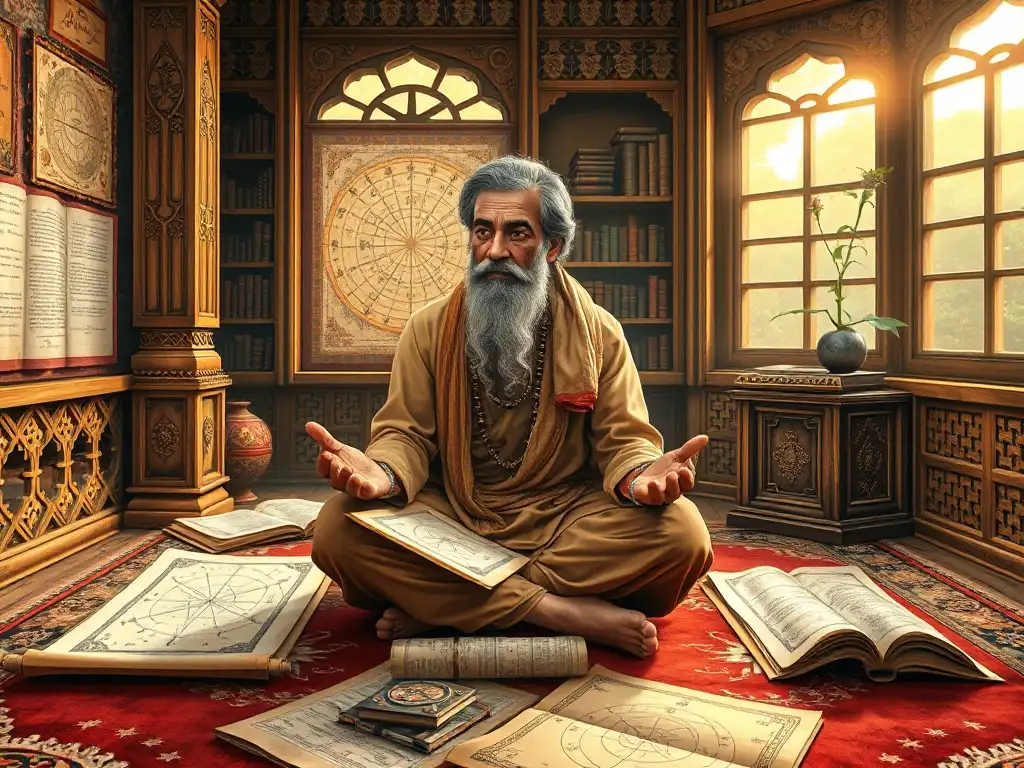
Major Techniques Used in Vedic Mathematics
Vedic Mathematics, derived from ancient Indian texts known as the Vedas, consists of a collection of techniques and principles that simplify mathematical calculations. These techniques are not only efficient but also highly intuitive, allowing practitioners to perform calculations mentally with remarkable speed. The primary advantage of Vedic Mathematics lies in its flexibility; users can select from various methods depending on the problem at hand. Below are some of the most significant techniques employed in Vedic Mathematics:
- Nikhilam Sutra: This technique, meaning "all from 9 and the last from 10," is particularly useful for multiplication. It allows for quick calculations by simplifying numbers to their nearest base.
- Urdhva-Tiryagbhyam Sutra: This is a vertical and crosswise technique for multiplication that enables the multiplication of multi-digit numbers with ease.
- Paravartya Sutra: This method, translating to "transposition," is helpful for division calculations, specifically for simplifying fractions.
These foundational techniques form the backbone of Vedic Mathematics, facilitating rapid and efficient problem-solving.
Multiplication Techniques
Multiplication in Vedic Mathematics can be executed using various strategies, making it a versatile tool. One of the most prominent methods is the Urdhva-Tiryagbhyam Sutra, which involves arranging numbers vertically and cross-multiplying to derive the product.
For example, to multiply 32 by 21:
   32
×  21
______
   32  (2×32)
+ 64   (1×32, shifted left)
______
= 672
This technique drastically reduces the steps involved in conventional multiplication.
Another effective multiplication strategy is Nikhilam Sutra, which works exceptionally well with numbers close to base values (like 10, 100, etc.). For instance, multiplying 98 by 97 can be simplified:
- Subtract each from 100: 2 and 3 respectively.
- Subtract one from the other and deduct from the base: 100 - (2 + 3) = 95.
- The product is 9506 (combine 95 and 6).
Division Techniques
Division in Vedic Mathematics can also be approached through various methods, with Paravartya Sutra being particularly noteworthy. This technique involves transposing numbers and allows for quicker mental calculations.
For example, when dividing 144 by 12:
- Rewrite it as 144 = 120 + 24.
- Recognize that 120 is easy to divide, yielding 10.
- For 24 divided by 12, that yields 2.
- The total result is 12.
This method significantly reduces the cognitive load compared to traditional long division.
Squaring and Square Roots
Squaring numbers and finding square roots are also streamlined in Vedic Mathematics. The Nikhilam Sutra can be adapted for squaring a number, especially when it's close to a base number.
For instance, squaring 49:
- Since 49 is 1 less than 50 (which is 50² = 2500).
- Subtract 1 from 50 to get 49, and apply the formula:
- 2500 - 1 = 2401.
To find square roots, the Anurupyena Sutra can be applied, which allows for effective estimation and precision in calculations, making it easier to arrive at accurate results.
Application of Vedic Techniques in Modern Mathematics
The techniques of Vedic Mathematics are not just relics of the past; they have significant implications for modern mathematics. By integrating these ancient calculation methods into contemporary education, students can develop a deeper understanding of numerical concepts while enhancing their cognitive abilities.
Benefits in Education
- Faster Computation: Students can perform calculations more quickly, reducing the time spent on arithmetic, which is particularly beneficial in competitive exams.
- Enhanced Mental Agility: The techniques encourage mental math, improving memory and cognitive skills.
- Flexible Problem Solving: With multiple techniques available, students can choose the method that suits them best, fostering creativity in problem-solving.
Real-World Applications
- Engineering and Architecture: Professionals in these fields can utilize Vedic techniques for rapid calculations, enhancing productivity and accuracy.
- Financial Analysis: Quick mental calculations allow for efficient data handling and financial modeling.
- Everyday Use: Vedic Mathematics can simplify everyday problems, from budgeting to cooking measurements.
The application of Vedic Mathematics in modern contexts highlights its relevance, showcasing how these ancient calculation methods can enrich contemporary mathematical understanding and practices.
Benefits of Learning Vedic Mathematics

Vedic Mathematics offers a unique and powerful approach to mathematics that can significantly benefit learners across various ages and skill levels. By understanding and applying the ancient calculation methods, individuals can unlock potential that may not be realized through conventional arithmetic techniques. Here are some key benefits of learning Vedic Mathematics.
Enhancing Mental Calculation Skills
One of the most significant advantages of Vedic Mathematics is its ability to enhance mental calculation skills. The techniques taught in Vedic Mathematics are designed to simplify complex mathematical operations, allowing practitioners to perform calculations quickly and efficiently in their minds.
- Techniques for Quick Calculations: Vedic Mathematics includes various sutras (aphorisms) that provide shortcuts for arithmetic operations. For example, the "Nikhilam Sutra" helps with multiplication by simplifying the numbers involved, making it easier to calculate the product mentally.
- Increased Cognitive Abilities: Regular practice of Vedic Mathematics enhances overall cognitive functions, such as memory, focus, and analytical skills. This is particularly beneficial for students, as it can lead to improved performance in academic assessments.
- Fun and Engaging Learning: The methods often incorporate playful elements, making the learning process enjoyable. This helps in keeping students engaged and encourages them to explore mathematics without the fear of failure.
Improving Speed and Accuracy in Mathematics
Vedic Mathematics not only boosts mental skills but also significantly improves speed and accuracy in mathematical calculations.
- Rapid Calculation Techniques: By mastering techniques like "Urdhva-Tiryagbhyam" for multiplication, learners can execute calculations in a fraction of the time it would take using traditional methods. This is particularly advantageous during time-constrained situations such as exams.
- Error Reduction: The structured approach of Vedic Mathematics minimizes the chances of errors in calculations. With a focus on understanding the underlying principles rather than rote memorization, learners are more likely to arrive at correct answers consistently.
- Versatility in Application: The principles of Vedic Mathematics can be applied across various mathematical disciplines, including algebra, geometry, and calculus. This versatility means that learners can not only improve their current skills but also prepare for advanced studies in mathematics.
The benefits of learning Vedic Mathematics extend beyond mere calculation. They encompass cognitive development, enjoyment in learning, and practical application across different areas of mathematics, making it a valuable tool for students and enthusiasts alike.
Comparisons with Modern Calculation Methods

Vedic Mathematics vs. Traditional Arithmetic
Vedic mathematics, derived from ancient Indian texts known as the Vedas, presents a unique approach to calculation that contrasts sharply with traditional arithmetic methods. While traditional arithmetic often relies on step-by-step processes and formulas, Vedic mathematics emphasizes mental calculations and the use of specific sutras (aphorisms) to simplify complex problems.
-
Speed and Efficiency:
Vedic mathematics promotes speed. For instance, the sutra "Nikhilam Navatashcaramam Dashatah" (All from 9 and the last from 10) allows for quicker subtraction and can be applied to large numbers, reducing the time spent on calculations significantly compared to traditional methods.
-
Flexibility in Methods:
In traditional arithmetic, a fixed method must be followed for each type of problem. Vedic mathematics offers multiple techniques for solving the same problem, allowing students to choose the method that feels most intuitive to them. This flexibility not only enhances understanding but also fosters creativity in mathematical thinking.
-
Mental Calculation:
While traditional arithmetic often involves written calculations, Vedic mathematics encourages mental computation. Techniques such as the "Vertically and Crosswise" sutra allow for rapid multiplication and addition without paper, which can significantly improve cognitive skills and memory.
-
Focus on Patterns and Relationships:
Vedic mathematics encourages learners to recognize patterns and relationships between numbers rather than just memorizing procedures. This analytical approach cultivates a deeper understanding of mathematical concepts and can lead to innovative problem-solving strategies.
Advantages of Vedic Calculation Methods in Education
Integrating Vedic mathematics into educational curricula offers numerous benefits that enhance the learning experience for students:
-
Enhanced Cognitive Development:
Vedic methods stimulate both hemispheres of the brain, promoting holistic cognitive development. This dual engagement leads to improved problem-solving skills and critical thinking.
-
Increased Confidence and Interest:
Students often find Vedic techniques engaging and enjoyable, which can increase their confidence in mathematics. The ability to perform calculations mentally can foster a positive attitude towards the subject, reducing math anxiety.
-
Improved Academic Performance:
Research has indicated that students who learn Vedic mathematics tend to perform better in mathematics compared to their peers who only study traditional methods. The speed and accuracy gained from Vedic techniques can lead to higher achievement in exams and assessments.
-
Facilitation of Advanced Topics:
By mastering foundational skills through Vedic mathematics, students are better prepared to tackle advanced mathematical concepts. The flexibility and problem-solving skills developed through Vedic techniques can make subjects like algebra and geometry more approachable.
Vedic mathematics not only stands as a remarkable collection of ancient calculation methods but also offers substantial advantages in modern education, making it a valuable tool in teaching mathematics today.
Real-Life Applications of Vedic Mathematics
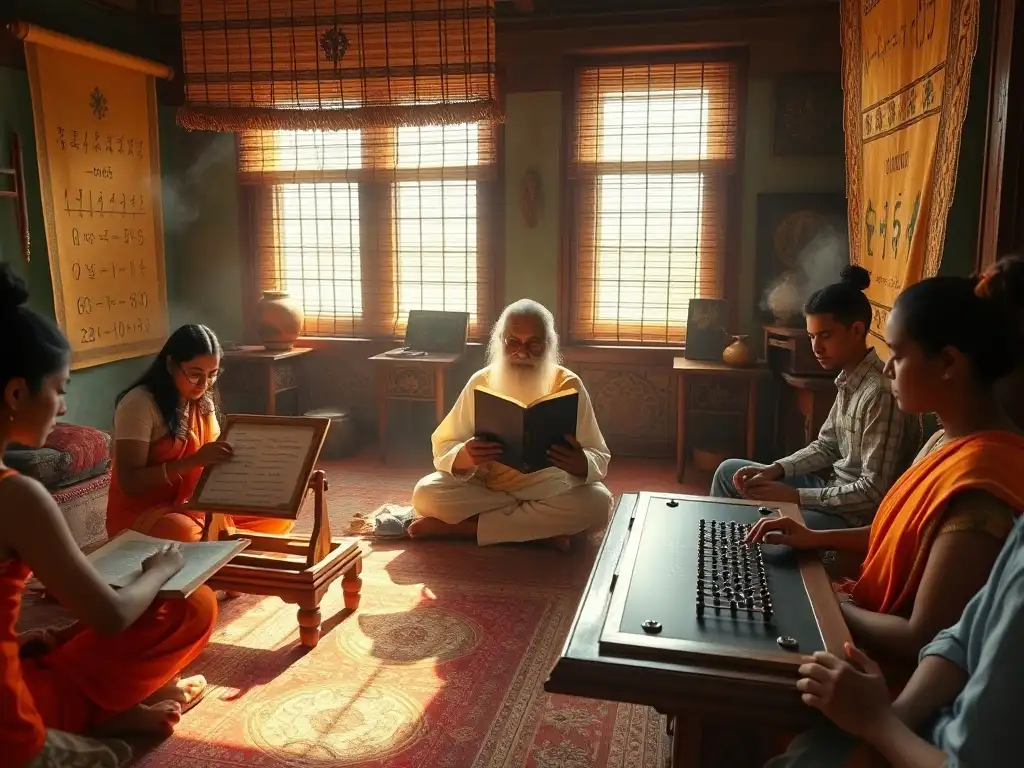
Vedic Mathematics in Competitive Exams
Vedic Mathematics has gained immense popularity in the context of competitive exams, where speed and accuracy are paramount. The techniques derived from ancient calculation methods enable students to solve complex mathematical problems in a fraction of the time compared to conventional methods. This is particularly beneficial in competitive scenarios such as:
- Entrance Exams: Many students preparing for entrance exams like JEE, NEET, and others have adopted Vedic Mathematics techniques to enhance their problem-solving speed.
- Banking and SSC Exams: Competitive exams for banking and Staff Selection Commission (SSC) also see a rise in the use of Vedic techniques, helping candidates manage time effectively during quantitative aptitude sections.
Key Techniques
Here are some notable Vedic Mathematics techniques that have proven useful in competitive exams:
- Nikhilam Sutra: Useful for multiplication and division, this technique simplifies the process by focusing on the nearest base.
- Urdhva-Tiryagbhyam: A vertical and crosswise multiplication method that allows for faster calculations.
- Sankalana-Vyavakalanabhyam: This technique is effective for addition and subtraction, streamlining complex operations.
By mastering these techniques, aspirants can not only improve their scores but also gain confidence in their mathematical abilities.
Usage in Everyday Problem Solving
Beyond competitive exams, Vedic Mathematics offers practical solutions for everyday problem solving. The techniques can be applied in various daily situations, making calculations easier and faster. Some examples include:
- Shopping and Budgeting: Vedic techniques help individuals quickly calculate discounts, total costs, and manage budgets effectively without relying on calculators.
- Time Management: When planning events or schedules, Vedic Mathematics can assist in calculating durations and time allocations swiftly.
- Mental Math in Social Settings: Mastering these methods allows for impressive mental calculations, which can be a valuable skill in social gatherings where quick arithmetic might be needed.
Everyday Techniques
Here are some everyday applications of Vedic Mathematics techniques:
- Doubling and Halving: This simple technique can be used for quick multiplication and division, making it easier to manage calculations during meal preparations or shopping.
- Base Method: Utilizing the nearest base for calculations can simplify everyday math, such as figuring out tips at restaurants or splitting bills.
Incorporating Vedic Mathematics into daily life not only enhances numerical skills but also fosters a deeper understanding of numbers, promoting a more mathematically literate society.
Conclusion: The Legacy of Vedic Mathematics
Vedic mathematics, a remarkable system of ancient calculation methods, offers profound insights into the mathematical prowess of ancient Indian civilizations. Rooted in the Vedas, this mathematical framework not only emphasizes speed and efficiency but also provides a unique approach to problem-solving that is distinct from contemporary methods. The legacy of Vedic mathematics is multifaceted, encompassing educational, cultural, and intellectual dimensions that continue to resonate in today’s world.
Preserving Ancient Calculation Methods for Future Generations
Efforts to preserve Vedic mathematics are crucial for ensuring that these ancient calculation methods survive in the modern era. Educational institutions and scholars are increasingly recognizing the value of integrating Vedic mathematics into curricula to foster a deeper appreciation for mathematical concepts.
- Curriculum Development: Many schools are incorporating Vedic mathematics into their mathematics programs, teaching students techniques that allow for rapid calculations and mental math.
- Workshops and Seminars: Various organizations are conducting workshops aimed at both educators and students to promote techniques such as sutras (aphorisms) and sub-sutras that simplify complex calculations.
- Online Resources: The rise of digital platforms has enabled the dissemination of Vedic mathematics through online courses, videos, and interactive tools, making these ancient techniques accessible to a global audience.
These initiatives not only help preserve the techniques but also adapt them to contemporary learning environments, ensuring that future generations can benefit from ancient wisdom.
The Continued Relevance of Vedic Mathematics in Modern Times
Vedic mathematics is not merely a relic of the past; it has significant relevance today, particularly in fields that require quick calculations and innovative problem-solving strategies.
- Competitive Exams: Many students preparing for competitive examinations are adopting Vedic mathematical techniques to enhance their speed and accuracy. Techniques such as vertically and crosswise multiplication and Nikhilam sutra for division significantly reduce computation time.
- Real-World Applications: In financial sectors, Vedic mathematics can aid in faster calculations for budgeting, investment analysis, and risk assessment. The principles of Vedic mathematics can streamline operations in industries that rely on large-scale numerical data processing.
- Cognitive Development: Engaging with Vedic mathematics promotes mental agility and enhances cognitive skills. It encourages logical thinking and fosters creativity, skills that are invaluable in various professional fields.
The legacy of Vedic mathematics is a treasure trove of ancient calculation methods that not only enrich our historical understanding but also provide practical benefits in the modern world. By preserving these techniques and recognizing their contemporary significance, we ensure that the brilliance of ancient Indian civilizations continues to illuminate the path of knowledge and innovation.
Frequently Asked Questions
What is Vedic Mathematics?
Vedic Mathematics is a collection of ancient calculation methods derived from the Vedas, which are ancient Indian scriptures. It emphasizes mental mathematics and simplifies complex calculations through unique techniques.
How does Vedic Mathematics differ from modern math?
Vedic Mathematics offers faster and more efficient calculation methods compared to traditional arithmetic. It focuses on mental calculations that reduce the reliance on pen and paper, making it suitable for quick problem-solving.
Can Vedic Mathematics be used in everyday life?
Absolutely! Vedic Mathematics provides practical techniques that can enhance everyday calculations, such as multiplication, division, and squaring numbers, making it useful for students and professionals alike.
What are the key benefits of learning Vedic Mathematics?
Learning Vedic Mathematics can improve mental agility, boost confidence in math, and enhance problem-solving skills. It also helps in reducing calculation time significantly, which is beneficial for competitive exams.
Where can I learn Vedic Mathematics?
Various resources are available to learn Vedic Mathematics, including online courses, books, and workshops. Many educators and institutions offer specialized programs to help individuals master these ancient calculation methods.
Final Reflection: Embracing the Wisdom of Vedic Mathematics for Modern Challenges
In an age dominated by rapid technological advancements and complex problem-solving, the principles of Vedic mathematics offer a refreshing perspective on ancient calculation methods that remain relevant today. As we navigate a world filled with data and numbers, the simplicity and elegance of Vedic techniques remind us that sometimes, the most profound solutions lie in the wisdom of the past. This ancient system not only enhances mathematical skills but also fosters a deeper understanding of numbers, encouraging a more intuitive approach to calculations.
The influence of Vedic mathematics extends far beyond the classroom; it permeates our cultural and social landscapes, inspiring educators and learners alike. By integrating these ancient calculation methods into modern curricula, we cultivate a generation that values both tradition and innovation. As the renowned mathematician Srinivasa Ramanujan once said, An equation for me has no meaning unless it expresses a thought of God.
This sentiment encapsulates the spiritual and intellectual depth of Vedic mathematics, urging us to appreciate the interconnectedness of knowledge across time and space.
As we reflect on the lessons gleaned from Vedic mathematics, I invite you to consider how these ancient calculation methods can enhance your own life. Embrace the challenge of integrating these techniques into your daily problem-solving, whether in academics, professional endeavors, or personal projects. Let the wisdom of the ancients guide you toward a more intuitive and holistic understanding of mathematics, inspiring you to unlock your own potential and perhaps even discover new pathways to knowledge and creativity.
Unlock the Power of Vedic Mathematics Today!
Thank you for exploring the fascinating world of Vedic Mathematics with us! You've uncovered the secrets behind ancient calculation methods that can simplify and enhance your mathematical skills. Now, it’s time to put your newfound knowledge into action!
Here’s how you can get started:
- Dive into practice: Begin working on Vedic Math worksheets or engaging puzzles to sharpen your skills and experience the joy of rapid calculations!
- Join a Vedic Math community: Connect with others who are passionate about these ancient math techniques and share tips and experiences.
- Share your knowledge: Teach a friend or family member about Vedic Mathematics and inspire them to discover the efficiency of these age-old methods.
How do you plan to incorporate Vedic Mathematics into your daily calculations? We would love to hear your thoughts below!