
Exploring the Ramayana's Geography: Key Locations and Their Significance

Welcome to Ancient India History, where we embark on a captivating journey through the rich tapestry of ancient Indian civilizations. Here, we delve into the profound cultural heritage that has shaped our world, from the iconic Indus Valley to the illustrious Gupta Empire. In our featured article, “ Exploring the Ramayana's Geography: Key Locations and Their Significance,” we uncover the deep-rooted meaning behind the epic's most pivotal sites. What secrets do these ancient landscapes hold? Join us as we explore the remarkable connections between geography and storytelling—your adventure through time begins now!
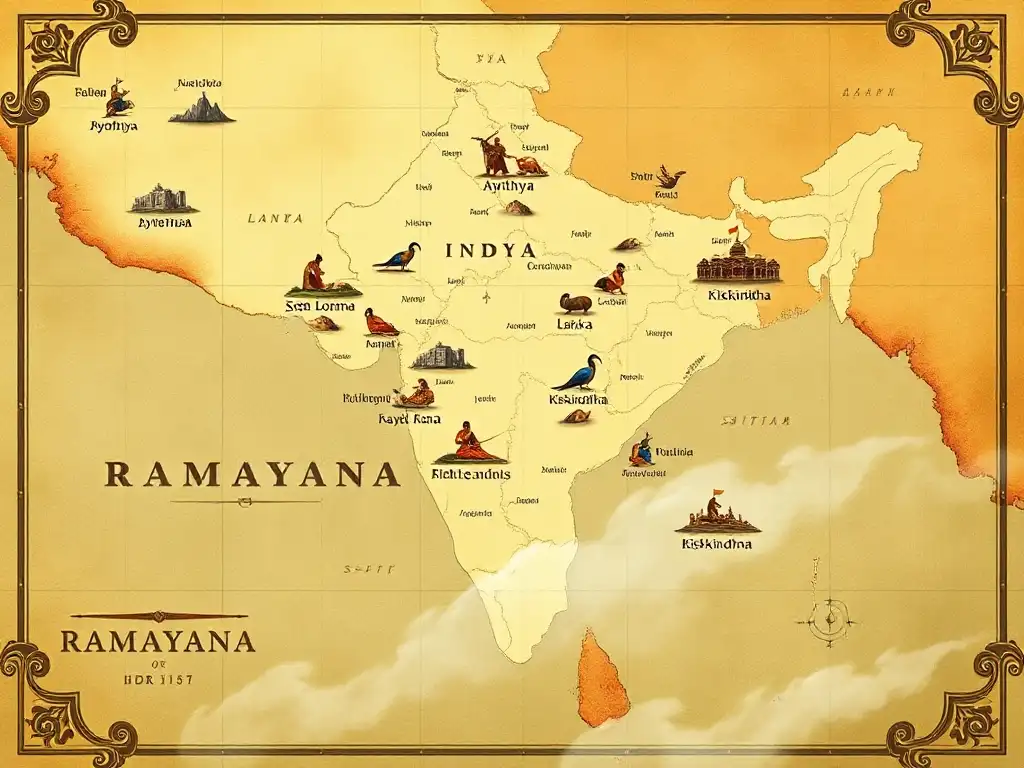
Introduction to the Ramayana
The Ramayana, one of the two major Sanskrit epics of ancient Indian literature, is not only a narrative of the life and adventures of Lord Rama but also a rich tapestry of geography that shapes its storyline. This epic, attributed to the sage Valmiki, intricately weaves together themes of duty, righteousness, and devotion, set against a backdrop of significant locations that hold deep cultural and spiritual meaning.
Understanding the geographical elements of the Ramayana enhances our appreciation of the text's narrative and its cultural significance. This exploration delves into the key locations mentioned in the Ramayana, highlighting their historical and symbolic importance within the epic.
Overview of the Ramayana as an Epic
The Ramayana comprises 24,000 verses and is divided into seven Kandas (books), detailing the life of Lord Rama, his wife Sita, and his loyal companion Hanuman. It encompasses various themes such as the struggle between good and evil, the ideals of dharma (righteousness), and the complexities of human relationships. The epic has transcended time, influencing countless generations through its moral lessons and vivid storytelling.
Importance of Geography in the Ramayana
Geography plays a crucial role in the Ramayana, as each location is imbued with meaning and significance. The physical journey of the characters reflects their spiritual quests, and the landscapes mentioned in the epic connect the narrative to the cultural heritage of India. By examining these locations, we gain insights into how the environment shapes the characters' journeys and the lessons derived from their experiences.
Major Locations in the Ramayana
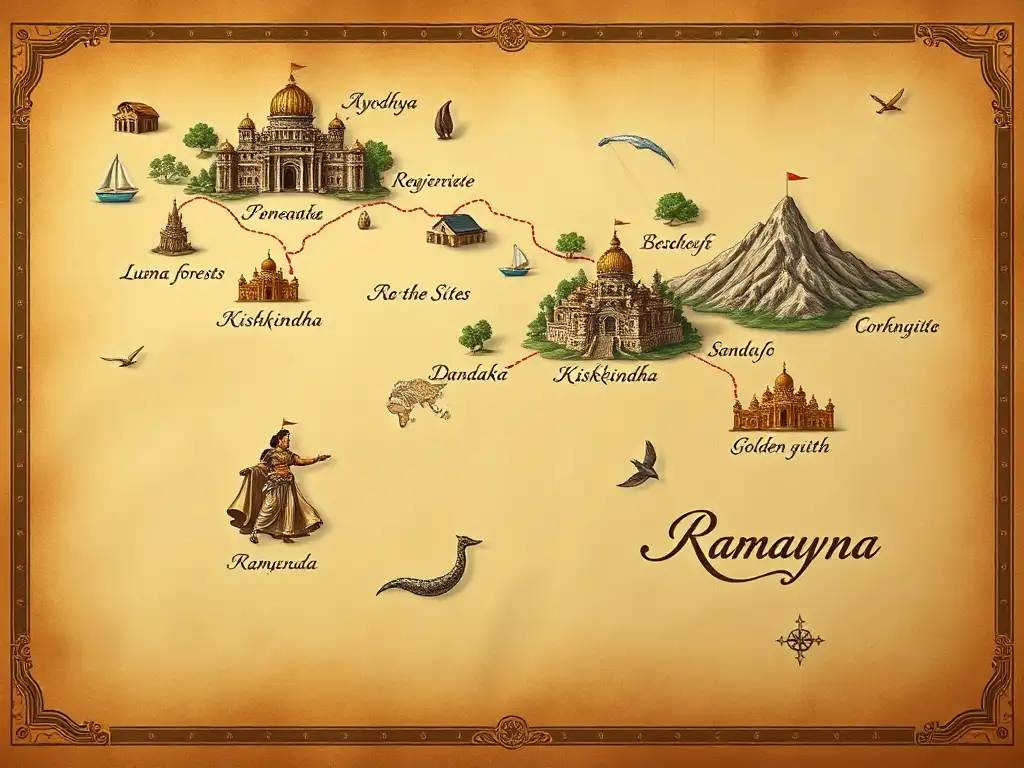
Ayodhya: The Birthplace of Lord Rama
- Significance: Ayodhya is revered as the birthplace of Lord Rama and the setting for his early life. It symbolizes the ideal city, embodying virtue and justice.
- Cultural Impact: The city has become a pilgrimage site, drawing devotees who seek to connect with the legacy of Rama and the teachings of the Ramayana.
Mithila: The Kingdom of Janaka
- Significance: Mithila is known as the kingdom of King Janaka, Sita's father, and is celebrated for its rich culture and intellectual prowess.
- Cultural Impact: The marriage of Rama and Sita at Mithila signifies the union of two noble lineages and is a pivotal moment in the epic, highlighting themes of love and duty.
Panchavati: The Forest Abode of Rama
- Significance: Panchavati is a lush forest area where Rama, Sita, and Lakshmana spend part of their exile. It serves as a backdrop for important events, including the abduction of Sita by Ravana.
- Cultural Impact: This location represents the ideal of simplicity and tranquility, contrasting with the chaos that follows Sita's kidnapping.
Lanka: The Capital of Ravana's Empire
- Significance: Lanka, ruled by the demon king Ravana, is depicted as a magnificent city filled with wealth and splendor, yet it symbolizes moral corruption and tyranny.
- Cultural Impact: The siege of Lanka by Rama and his allies signifies the triumph of good over evil, reinforcing the epic's moral teachings and the importance of righteousness.
In exploring these key locations, we uncover the profound significance they hold within the narrative of the Ramayana, illustrating how geography intertwines with the themes and teachings of this timeless epic.
Significance of Ramayana Key Locations
The Ramayana, one of the two great epics of ancient Indian literature, is not only a tale of adventure and morality but also a rich tapestry woven with geographical significance. Each key location in the Ramayana serves as a backdrop for pivotal events, shaping the narrative and influencing the characters’ journeys. Understanding these locations helps us appreciate the cultural, historical, and spiritual dimensions embedded in the text. The geography of the Ramayana reflects the values and beliefs of ancient Indian society, offering insights into how these places shaped the epic’s themes of duty, honor, and devotion.
Cultural and Historical Importance of Ayodhya
Ayodhya, the birthplace of Lord Rama, stands as a cornerstone in the Ramayana. This ancient city, often associated with divine heritage, is believed to be a model of ideal governance and righteousness. Historically, Ayodhya represents the ideal of dharma (righteousness) in Indian culture. The significance of Ayodhya goes beyond the narrative; it symbolizes the intersection of history and spirituality, becoming a pilgrimage site for devotees over centuries. The city's cultural heritage is enriched by the numerous temples and festivals dedicated to Lord Rama, affirming its role as a living testament to the epic's enduring legacy.
The Role of Mithila in Ramayana Narratives
Mithila, the kingdom of Sita and her father, King Janaka, plays a crucial role in the Ramayana. This region is often depicted as a center of wisdom and virtue, where Sita's character is shaped by her upbringing in a kingdom that values knowledge and strength. Mithila is significant not only as the location of Sita's birth but also as a symbol of women's empowerment and resilience.
The narrative of Ramayana highlights Sita's unwavering strength and loyalty, which are rooted in her Mithila heritage. The region's emphasis on education and moral values reinforces the cultural ideals of the time, making it an essential part of the Ramayana's narrative landscape.
Symbolism of Panchavati in Rama's Journey
Panchavati, a sacred grove located near Nashik, is where Rama, Sita, and Lakshmana sought refuge during their exile. This location is rich in symbolism, representing the transition from a life of princely comfort to one filled with trials and tribulations. The peaceful environment of Panchavati contrasts sharply with the chaos that ensues after the abduction of Sita by Ravana.
The grove serves as a reminder of the fragility of happiness and the inevitability of challenges in life. Furthermore, it is in Panchavati that significant events unfold, such as the encounter with the demoness Surpanakha, which catalyzes the unfolding drama of the epic.
Lanka: A Study of Power and Temptation
Lanka, the magnificent kingdom ruled by Ravana, is depicted as both a marvel and a menace in the Ramayana. Its grandeur symbolizes the allure of power and the temptations that come with it. The city is described as a paradise of wealth and beauty, yet it is also a place of moral corruption and tyranny.
Lanka’s significance lies in its dual representation; it is a battleground for the clash between good and evil, where Rama's dharma is tested against Ravana's adharma (unrighteousness). The geography of Lanka, with its strategic location and fortified walls, highlights the themes of conquest and the struggle for righteousness, making it a pivotal site in the epic's narrative.
Mapping the Journey: Ramayana's Geography
The geography of the Ramayana is not merely a backdrop but a vital element that enhances the epic's storytelling. It provides a framework for understanding the characters’ journeys and the moral dilemmas they face. Examining the locations within the Ramayana reveals the intricate relationship between geography and narrative, inviting readers to explore the physical and symbolic landscapes that shape the epic's events.
Route of Rama: From Ayodhya to Lanka
Rama's journey from Ayodhya to Lanka is a significant pilgrimage that reflects the trials he endures on his quest to rescue Sita. This route traverses various landscapes, each with its own significance. Starting from the serene banks of the Sarayu River in Ayodhya, Rama's path leads through dense forests, mountains, and rivers, symbolizing the challenges of life. Key stops along this route, such as Chitrakoot and Panchavati, are not only geographical markers but also sites of personal growth and moral reflection for Rama and his companions.
Key Locations and Their Narrative Context
The Ramayana features several key locations that serve as critical narrative anchors. Each place is interwoven with events that define the characters and advance the plot. For instance:
- Ayodhya: The setting of Rama's birth and early life, symbolizing ideal kingship.
- Chitrakoot: A place of exile, where Rama contemplates his responsibilities.
- Panchavati: The site of peace and later turmoil, where the abduction of Sita takes place.
- Lanka: The final battleground representing the culmination of Rama's struggles against evil.
These locations are not just geographical points; they hold deep meanings and relay the epic's core messages about duty, sacrifice, and the eternal struggle between good and evil.
Geographic Features and Their Impact on the Story
The geographic features of the Ramayana, such as rivers, mountains, and forests, significantly influence the narrative. These natural elements are often characterized by their beauty and peril, reflecting the duality of life. For example:
- Forests: Represent the wilderness of life's challenges, where Rama faces numerous adversaries and tests.
- Rivers: Often symbolize the flow of time and the necessity of crossing emotional and moral barriers.
- Mountains: Serve as obstacles that must be overcome, mirroring the internal struggles of the characters.
These geographic features not only shape the physical journey of the characters but also enhance the thematic depth of the Ramayana, reminding readers of the interconnectedness of nature and human experience.
Thematic Significance of Locations in the Ramayana
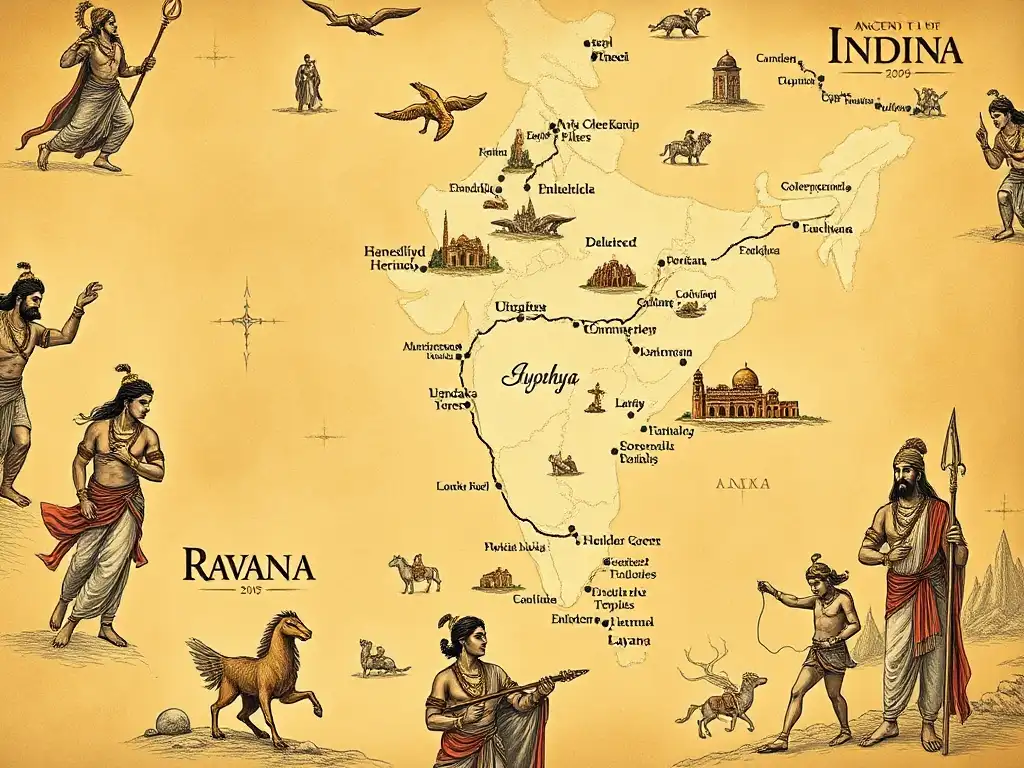
The geography of the Ramayana is not merely a backdrop for the unfolding narrative; it plays a crucial role in shaping the themes and moral lessons embedded in the epic. Each significant location within the Ramayana serves as a symbol, illustrating deeper philosophical concepts and cultural values.
For instance, the forests where Rama and Sita spend their exile symbolize the trials and tribulations of life, reflecting the transient nature of human existence. The cities, such as Ayodhya and Lanka, represent contrasting ideals of governance and morality—Ayodhya as the epitome of righteousness and justice, and Lanka as a manifestation of temptation and tyranny.
Furthermore, locations in the Ramayana often embody the concepts of dharma (righteousness) and adharma (unrighteousness), illustrating the moral dilemmas faced by the characters. The journey through these various landscapes emphasizes the spiritual and ethical journey of the protagonists, reinforcing the idea that one's environment can influence and mirror their inner struggles. Thus, the thematic significance of these locations extends beyond mere geography; they become integral to the narrative's moral fabric.
The Role of Nature and Landscape in Ramayana
Nature and landscape in the Ramayana are portrayed as both adversaries and allies to the characters. The dense forests, such as Dandaka, provide a setting for trials that test the resolve and virtues of Rama and Sita. The wilderness is a place of danger where demons lurk, yet it is also where the protagonists forge stronger bonds and deepen their understanding of duty and sacrifice.
The diverse landscapes—from the serene banks of the Ganges to the mountainous terrains of the Himalayas—reflect the emotional states of characters and the epic's broader themes. For instance, the lushness of the forests often contrasts with the starkness of the battlefields, illustrating the conflict between nature and human ambition. The portrayal of nature in the Ramayana emphasizes the interconnection between humanity and the environment, urging readers to recognize the sanctity of both.
Locations as Symbols of Dharma and Adharma
In the Ramayana, specific locations are emblematic of the ongoing struggle between dharma and adharma. Ayodhya, the birthplace of Rama, is a symbol of righteousness and ideal governance, representing the principles of dharma that the hero upholds. In contrast, Lanka, ruled by the demon king Ravana, epitomizes adharma, showcasing tyranny, deception, and moral decay.
The significance of these locations extends to the characters’ journeys; for example, Rama's return to Ayodhya marks the restoration of dharma after the defeat of Ravana. This juxtaposition serves as a powerful reminder of the eternal conflict between good and evil in human society, reinforcing the moral imperative of adhering to righteousness in the face of challenges.
The Interplay of Human and Divine in Ramayana Geography
The geography of the Ramayana intricately weaves together the human experiences of the characters with divine interventions. Sacred sites, such as the banks of the Sarayu River, are depicted as places where the divine and mortal realms intersect. This interplay is crucial to understanding the epic's narrative, where divine beings, like Hanuman and Vishnu, intervene to guide and support the protagonists.
Locations often serve as stages for these divine actions, highlighting the belief that the physical world is imbued with spiritual significance. The mountains, rivers, and forests are not just settings but are integral to the characters' quests for truth and justice. This relationship between the human and divine emphasizes the notion that the sacred is present in the everyday, encouraging readers to see their own lives as part of a larger, interconnected spiritual journey.
Conclusion: The Enduring Legacy of Ramayana's Geography
The geography of the Ramayana holds a lasting legacy that transcends its narrative, offering profound insights into the cultural and moral ethos of ancient India. Each location serves as a rich tapestry of symbolism that reflects the complexities of human experience, emphasizing the intertwined nature of geography, spirituality, and morality. The lessons learned from these landscapes continue to resonate with audiences, reinforcing the timeless nature of the epic.
Reflection on the Significance of Geography in Epic Literature
In epic literature, geography often serves as a narrative device that enriches the storytelling experience. The Ramayana exemplifies this, where its diverse locations not only enhance the plot but also deepen the thematic elements. The landscapes shape the characters’ journeys, influencing their decisions and moral choices, thereby illustrating that the setting is as much a character in the story as the protagonists themselves.
The significance of geography in the Ramayana highlights the importance of place in understanding cultural narratives. It invites readers to reflect on how our environments shape our identities, values, and beliefs, a theme that resonates across various cultures and epochs.
Influence of Ramayana Locations on Modern Culture and Literature
The key locations of the Ramayana continue to influence modern culture and literature, permeating various artistic expressions, from literature to film. Sites such as Ayodhya and Lanka are not only historical references but also cultural symbols that evoke a sense of identity and heritage among contemporary audiences.
Moreover, the geographical aspects of the Ramayana inspire adaptations and reinterpretations, further embedding the epic in the collective consciousness. The moral dilemmas and conflicts represented through these locations resonate with modern societal issues, showcasing the enduring relevance of the Ramayana's geography in contemporary discourse. As a result, the landscapes of the Ramayana remain vital in shaping cultural narratives and moral reflections in today's world.
Further Reading and Resources on Ramayana Key Locations
The Ramayana is not only a literary masterpiece but also a rich tapestry of geography that reflects the cultural and spiritual landscape of ancient India. For those interested in delving deeper into the key locations mentioned in this epic and understanding their significance, there are numerous resources available. Below is a collection of recommended books, articles, and online platforms that provide valuable insights into the geography of the Ramayana.
Recommended Books and Articles
-
"The Ramayana: A New Translation" by R.K. Narayan
This acclaimed version of the Ramayana offers a contemporary retelling, presenting the key locations with clarity and depth. Narayan's narrative style brings to life the landscapes traversed by Rama and his companions.
-
"Ramayana: The Game of Life" series by Shubha Vilas
This series provides not only the original stories but also explores the significance of various locations in detail, helping readers understand their cultural and spiritual importance.
-
"The Ramayana: A Comparative Study" by K. R. Srinivasa Iyengar
This scholarly work analyzes various interpretations of the Ramayana across different cultures and highlights the geographical contexts that shape its narratives.
-
"The Geography of the Ramayana" by Dr. K.K. Sharma
This article delves into the geographical references made in the Ramayana, mapping the journey of Rama and emphasizing the significance of each location in the epic.
-
"Sacred Geography of the Ramayana: A Historical Perspective" by V. B. Desai
This book examines how the physical geography influenced the cultural and spiritual aspects of the Ramayana, making it a vital resource for understanding the significance of its locations.
Online Resources for Exploring Ramayana's Geography
-
The Digital Ramayana Project
This online platform offers a wealth of information about the Ramayana, including interactive maps that show key locations mentioned in the epic, along with their historical and cultural significance.
-
Indian Mythology and Geography: The Ramayana
A detailed web resource that provides articles and essays exploring the geographical contexts of the Ramayana, including discussions on how these locations relate to modern-day India.
-
YouTube Channels and Documentaries
Channels such as "Epic India" and "Cultural Heritage of India" feature documentaries that explore the Ramayana's geography, providing visual representations and expert commentary on key locations.
-
Social Media Groups and Forums
Engaging with communities on platforms like Facebook or Reddit can provide valuable insights and discussions about the Ramayana's geography, where enthusiasts share resources and interpretations.
By exploring these recommended readings and online resources, readers can gain a deeper understanding of the Ramayana's key locations and their profound significance within the epic's narrative and Indian culture.
- Introduction to the Ramayana
- Overview of the Ramayana as an Epic
- Importance of Geography in the Ramayana
- Major Locations in the Ramayana
- Significance of Ramayana Key Locations
- Mapping the Journey: Ramayana's Geography
- Thematic Significance of Locations in the Ramayana
- Conclusion: The Enduring Legacy of Ramayana's Geography
- Further Reading and Resources on Ramayana Key Locations
Frequently Asked Questions
What are the key locations mentioned in the Ramayana?
The key locations in the Ramayana include Ayodhya, Lanka, and Chitrakoot. Each of these places has a significant role in the narrative, representing important events and characters in the epic.
Why is Ayodhya significant in the Ramayana?
Ayodhya is the birthplace of Lord Rama and serves as the starting point of his journey. It symbolizes dharma and the ideals of kingship, making it a pivotal location in the epic's moral framework.
What role does Lanka play in the Ramayana?
Lanka, ruled by Ravana, is where Sita is abducted, setting off the central conflict of the Ramayana. It represents opposition to dharma and serves as a backdrop for Rama's quest to rescue Sita.
How does Chitrakoot contribute to the Ramayana's narrative?
Chitrakoot is where Rama, Sita, and Lakshmana spend part of their exile. It symbolizes simplicity and devotion, highlighting the themes of sacrifice and the importance of companionship in the face of challenges.
What is the overall significance of the geography in the Ramayana?
The geography of the Ramayana enhances the epic's themes by connecting physical locations to moral lessons and cultural values. It serves as a backdrop for the characters' journeys, illustrating the interplay between place and purpose in their lives.
Final Reflection: The Enduring Significance of the Ramayana's Geography
In an age where cultural narratives shape our understanding of identity and history, the exploration of the Ramayana's geography offers profound insights into the interconnectedness of place and story. The key locations within this epic are not merely backdrops; they are vibrant characters that enrich the narrative and provide a framework for moral and spiritual lessons. As we navigate our modern landscapes, the significance of these ancient sites resonates deeply, reminding us that geography is not just about physical space but also about the stories that define us.
The Ramayana has left an indelible mark on the cultural and social fabric of societies across the globe. The geographical locations mentioned in the epic serve as touchstones for cultural identity, spiritual pilgrimage, and collective memory. They invite us to reflect on our own journeys and the places that shape our lives. As noted by scholar R. K. Narayan, The Ramayana is not just a story; it is a way of life.
This perspective underscores the ongoing influence of the Ramayana, as it continues to inspire countless individuals to seek meaning and connection through the landscapes they inhabit.
As we conclude this exploration, I invite you to reflect on the significance of your own geographical narratives. Consider how the places you hold dear inform your identity and values. Whether through pilgrimage, storytelling, or personal reflection, let the lessons of the Ramayana guide you in recognizing the profound connections between geography and the human experience. Embrace the opportunity to explore your own key locations and their significance, and allow these reflections to enrich your journey forward.
Thank you for joining us on this fascinating journey through the geography of the Ramayana! By uncovering key locations and their significance, you’re now equipped with insights that deepen your appreciation of this ancient epic.
Now, let’s take the next step together and bring the Ramayana to life:
- Dive deeper: Explore local museums or cultural centers that host exhibitions on the Ramayana. You might discover unique artifacts and captivating stories!
- Share your knowledge: Discuss the intriguing sites you’ve learned about with friends or family. Consider organizing a discussion group to exchange further insights and interpretations.
- Join the conversation: Participate in online forums or social media groups dedicated to the Ramayana, and share your perspectives on its geographical influences.
Which location from the Ramayana captivates your imagination the most, and in what ways do you believe its geography influences the story?