
How the Ramayana Engages with Themes of Exile and Homecoming


Welcome to Ancient India History, where we embark on a captivating journey through the rich tapestry of India’s diverse past. Today, we delve into the profound Ramayana themes of exile, exploring how this epic not only narrates the trials of its characters but also reflects the universal struggles of identity and belonging. As you navigate through the layers of this ancient text, prepare to uncover insights that resonate with our modern experiences of homecoming and loss. Join us in this exploration and discover what the Ramayana reveals about the human spirit.
- Introduction to the Ramayana and Its Themes of Exile
- Defining Exile in the Context of the Ramayana
- The Journey of Exile: Key Events and Their Impact
- Homecoming: The Resolution of Exile in the Ramayana
- Comparative Analysis: Exile and Homecoming in Other Indian Epics
- Conclusion: The Enduring Legacy of the Ramayana's Themes of Exile and Homecoming
-
Frequently Asked Questions
- What are the main themes of exile in the Ramayana?
- How does the theme of homecoming manifest in the Ramayana?
- What role do relationships play in the exile narrative of the Ramayana?
- How does the Ramayana address the psychological aspects of exile?
- What can we learn about cultural values from the Ramayana's portrayal of exile?
- Final Reflection: Embracing the Journey of Exile and Homecoming in the Ramayana
- Embrace Your Journey: Explore the Depths of Homecoming!
Introduction to the Ramayana and Its Themes of Exile

The Ramayana, one of the two major Sanskrit epics of ancient Indian literature, intricately weaves a narrative that not only captivates its readers but also explores profound themes that resonate through time. Among these themes, exile and homecoming stand out as compelling motifs that reflect the human experience of loss, longing, and the quest for belonging.
This epic, attributed to the sage Valmiki, tells the story of Lord Rama, whose journey through hardship and adversity ultimately leads him back to his rightful place as a king and a symbol of dharma (righteousness). As we delve deeper into the Ramayana, we will uncover how these themes of exile and homecoming shape the characters' destinies and convey moral lessons that are still relevant today.
In this article, we aim to explore the significance of these themes within the context of the Ramayana, examining how the narrative not only serves as a historical account of ancient Indian civilization but also as a timeless reflection on the complexities of human relationships and societal values.
Overview of the Ramayana as an Epic Literature
The Ramayana is more than just a tale of heroism and adventure; it is a rich tapestry of emotions, ethics, and philosophical inquiries. Composed in Sanskrit, it consists of approximately 24,000 verses, divided into seven books, or Kandas. The epic centers around the life of Rama, the seventh avatar of the god Vishnu, who is exiled to the forest for fourteen years due to a palace intrigue orchestrated by his stepmother, Kaikeyi.
Throughout his exile, Rama is accompanied by his devoted wife, Sita, and his loyal brother, Lakshmana. The narrative follows their struggles against the demon king Ravana, who abducts Sita, leading to a climactic battle that ultimately restores order and righteousness.
This epic not only provides insight into the societal norms and values of ancient India but also serves as a guide for ethical conduct, duty, and devotion. The portrayal of characters such as Rama, Sita, and Hanuman exemplifies ideal virtues, making the Ramayana a moral compass for generations.
Significance of Themes in Ancient Indian Texts
Themes of exile and homecoming in the Ramayana are emblematic of broader concepts found throughout ancient Indian literature. These narratives often reflect the struggles of individuals against societal expectations and the search for identity in times of upheaval.
- Exile: In the Ramayana, exile represents more than physical displacement; it signifies a journey of self-discovery and resilience. Rama's time in the forest is marked by trials that test his character and fortitude, providing a platform for spiritual growth.
- Homecoming: The theme of homecoming encapsulates the restoration of order and reunion with one's true self and family. Rama's return to Ayodhya symbolizes the triumph of good over evil and the fulfillment of one's dharma.
The exploration of these themes not only enriches the narrative of the Ramayana but also mirrors the struggles and aspirations of humanity, making it a timeless work that continues to inspire and resonate with readers across cultures.
Through this article, we will further investigate how the Ramayana engages with these profound themes, illustrating their importance in both historical context and modern interpretations.
Defining Exile in the Context of the Ramayana

The theme of exile in the Ramayana is a profound exploration of separation, loss, and the longing for home. Exile not only serves as a backdrop for the narrative but also acts as a catalyst for character development and the unfolding of the epic's moral and philosophical dilemmas. In the Ramayana, exile is intricately linked to the concepts of duty (dharma), honor, and the complexities of familial relationships, illustrating how these themes resonate deeply within the fabric of ancient Indian culture.
The Concept of Exile in Ancient Indian Culture
Exile, in the context of ancient Indian culture, is often perceived as both a physical and psychological state. It represents not just the act of being banished from one's homeland but also encompasses the emotional turmoil and identity crisis that accompany such a separation. In the Ramayana, exile is a multifaceted experience that reflects the broader cultural understanding of duty and the consequences of one's actions.
- Dharma and Exile: The characters in the Ramayana frequently grapple with their dharma, or moral duty, which influences their experiences of exile. For instance, Rama’s adherence to his father's wishes leads him into exile, portraying the concept of duty over personal desire.
- Symbolism of Home: In ancient Indian culture, home symbolizes safety, belonging, and identity. When characters are exiled, they not only lose their physical home but also confront the emotional void left by their separation from family and community.
- Rituals and Practices: Exile often invoked specific rituals and practices aimed at maintaining spiritual and cultural identity. Characters in the Ramayana engage in prayer and reflection during their time away from home, highlighting the importance of spirituality in coping with loss.
By examining these elements, we can appreciate how exile serves as a critical lens through which the narrative of the Ramayana unfolds, prompting readers to consider the implications of separation and the quest for belonging.
Key Characters Experiencing Exile in the Ramayana
The Ramayana features several prominent characters whose experiences of exile shape the narrative. Their journeys reflect various aspects of the theme and further develop the epic's moral lessons.
- Rama: As the central character, Rama’s exile is both a personal sacrifice and a demonstration of his commitment to dharma. Banished to the forest for fourteen years, his journey embodies the struggle between duty and personal desires. His exile serves as a rite of passage that ultimately leads to his growth and understanding of what it means to be a king and a husband.
- Sita: Sita’s experience of exile is particularly poignant. Not only is she exiled alongside Rama, but she also faces a second exile when she is separated from him. Her trials highlight themes of loyalty, purity, and the challenges faced by women in patriarchal societies. Sita's resilience in the face of adversity emphasizes her strength and exemplifies the sacrifices made for love and duty.
- Lakshmana: Rama’s devoted brother, Lakshmana, chooses to accompany him into exile, showcasing the theme of loyalty and brotherhood. His unwavering support during their time in the forest illustrates the significance of familial bonds and the responsibilities that come with them.
- Bharata: Bharata's reaction to Rama's exile reveals the complexities of familial relationships. Feeling the weight of his mother Kaikeyi's manipulations, Bharata refuses to accept the throne and instead seeks to bring Rama back, demonstrating his love and respect for his brother. His actions reflect the internal conflict between ambition and familial duty.
- Hanuman: Although not exiled in the traditional sense, Hanuman's journey to find Sita and assist Rama can be seen as an exploration of loyalty and service. His unwavering commitment to Rama and Sita reinforces the idea that exile can also invoke a sense of purpose and a quest for justice.
Through these characters, the Ramayana intricately weaves the theme of exile, exploring its various dimensions and highlighting the moral complexities that arise from separation and the longing for home. Each character's journey not only contributes to the epic's narrative but also serves as a reflection of the enduring human experiences of loss and redemption.
The Journey of Exile: Key Events and Their Impact

Rama’s Banishment: Causes and Consequences
Rama's exile is one of the most pivotal events in the Ramayana, setting in motion a series of actions and consequences that resonate throughout the epic. The reasons behind Rama's banishment are multifaceted, rooted deeply in the themes of duty (dharma), honor, and familial loyalty.
- Dharma and the Role of Kingship:
- King Dasharatha, Rama's father, faces a moral dilemma when Queen Kaikeyi demands that Rama be exiled. She invokes an earlier promise made by Dasharatha, prioritizing her son Bharata's claim to the throne. This moment encapsulates the struggle between personal desire and royal duty, highlighting the theme of dharma where the king must uphold his promises, even at great personal cost.
- Personal Sacrifice:
- Rama’s acceptance of his exile reflects his deep commitment to dharma. He willingly relinquishes his claim to the throne to honor his father's word, showcasing an ideal of selflessness that is central to the narrative. This decision not only transforms Rama's life but also alters the fate of the entire kingdom.
- Consequences of Exile:
- The aftermath of Rama's banishment leads to a series of critical developments, including the eventual abduction of Sita by Ravana. This event underscores the fragility of human relationships and the unforeseen consequences of adhering too rigidly to one's duties. The theme of exile thus emerges not only as a physical journey but also as a catalyst for growth and transformation.
Sita’s Exile: A Woman’s Perspective in the Ramayana
Sita’s experience of exile provides a unique lens through which to examine the Ramayana's themes of exile and homecoming. As a central female figure, Sita's narrative is marked by resilience, strength, and profound emotional depth.
- Sita’s Agency and Loyalty:
- Despite being a victim of circumstances, Sita exhibits remarkable fortitude. Her decision to accompany Rama into exile reflects her unwavering loyalty and commitment to their bond. This act challenges the traditional portrayal of women in ancient texts, presenting Sita as an active participant in her destiny rather than a passive character.
- Isolation and Resilience:
- During her time in the forest, Sita faces numerous challenges, including the threat of Ravana's advances. Her solitude underscores the emotional and psychological toll of exile, highlighting themes of isolation and the struggle for survival. Sita’s resolve to maintain her dignity in the face of adversity resonates with readers, portraying her as a symbol of strength.
- Reclamation of Identity:
- Sita's return to Ayodhya after her abduction marks a critical juncture in her journey. However, it also raises questions about societal acceptance and the cost of exile. Her trial by fire (Agni Pariksha) serves as a poignant commentary on the expectations placed upon women and the struggle for identity amidst societal norms. This aspect of Sita’s narrative adds depth to the theme of exile, emphasizing the complexities of personal and communal identity.
Lakshmana’s Role: Loyalty and the Theme of Exile
Lakshmana, Rama's devoted brother, plays a crucial role in shaping the narrative of exile within the Ramayana. His loyalty and actions underscore the themes of brotherhood, sacrifice, and the emotional landscape of exile.
- The Bond of Brotherhood:
- Lakshmana’s decision to accompany Rama into exile exemplifies the strength of familial bonds. His unwavering support not only reinforces the theme of loyalty but also illustrates the sacrifices that come with such devotion. This brotherly love is a powerful counterbalance to the isolation that exile can bring.
- Protective Instincts:
- Throughout their time in the forest, Lakshmana's protective nature towards Rama and Sita highlights the dynamics of their relationships. His role as a guardian provides a sense of security amid the uncertainties of exile, emphasizing the importance of companionship during challenging times.
- Emotional Depth of Exile:
- Lakshmana's internal struggles, particularly his distress over Rama's misfortunes and Sita's suffering, reveal the emotional toll of exile on those who accompany the exiled. His character embodies the pain and loyalty that accompany such journeys, enriching the narrative with an exploration of emotional resilience amidst hardship.
The Ramayana intricately weaves the themes of exile and homecoming through the experiences of its characters, each contributing to a deeper understanding of duty, loyalty, and the complexities of human relationships.
Homecoming: The Resolution of Exile in the Ramayana

The theme of homecoming in the Ramayana is intricately woven into the narrative, offering profound insights into the complexities of exile and the quest for belonging. Exile serves not only as a backdrop for the characters' journeys but also as a pivotal mechanism through which the themes of duty, honor, and love are explored. The resolution of exile is ultimately realized through the homecoming of Rama, Sita, and Lakshmana, encapsulating the emotional and spiritual dimensions of their experiences.
The Return to Ayodhya: Symbolism and Significance
The return of Rama to Ayodhya is the culmination of his exile and represents a powerful symbol of restoration and renewal. After fourteen years of hardship and trials, Rama’s homecoming is not merely a physical journey but a profound metaphor for the reconciliation of the self with one’s duties and responsibilities.
- Symbolism of the Journey:
- The journey back to Ayodhya is laden with symbolic significance, representing the transition from chaos to order. The path Rama traverses is fraught with obstacles, each signifying the struggles one must endure in the quest for justice and righteousness.
- The joyous reception upon his return signifies the restoration of dharma, as the people of Ayodhya celebrate the return of their rightful king.
- Cultural Significance:
- Ayodhya itself is more than just a city; it embodies the ideals of a kingdom that flourishes under the rule of a just and virtuous king. The homecoming reinforces the values of loyalty, faith, and the collective memory of the community that aligns with Rama’s journey.
- The celebrations that accompany Rama’s return highlight the communal aspect of homecoming, where individual triumph is intertwined with collective joy.
The Role of Dharma in Rama’s Homecoming
Dharma, or righteousness, plays a crucial role in shaping Rama’s homecoming narrative. It is through the lens of dharma that the events of exile are understood and justified.
- Rama as the Ideal Man:
- Rama exemplifies the ideal of dharma, adhering to his responsibilities despite the personal costs. His acceptance of exile, prompted by his father Dasharatha’s promise to Kaikeyi, showcases his commitment to familial duty over personal desire.
- Throughout his exile, Rama’s actions are guided by dharma, reinforcing the idea that true heroism lies in self-sacrifice and moral integrity.
- Restoration of Order:
- Rama's return to Ayodhya symbolizes the restoration of dharma in the kingdom. His ascension to the throne is depicted as a necessary step to re-establish balance in society, portraying the belief that a righteous ruler is essential for the well-being of the state.
- The Ramayana emphasizes that the homecoming is not solely about personal fulfillment but is crucial for the larger community’s harmony and stability.
Sita’s Reintegration: Challenges and Triumphs
Sita's journey back to Ayodhya alongside Rama is fraught with challenges that test her resilience and dignity. Her reintegration into society post-exile speaks volumes about gender roles and societal expectations in ancient India.
- The Challenge of Public Perception:
- Upon returning to Ayodhya, Sita faces scrutiny regarding her purity and loyalty after her captivity in Lanka. This reflects the societal pressures placed on women, where their worth is often tied to perceived honor and virtue.
- Rama’s decision to subject Sita to a trial by fire (Agni Pariksha) underscores the complex interplay of love, duty, and societal norms, showcasing the harsh realities faced by women in a patriarchal society.
- Triumph of Character:
- Despite the challenges, Sita emerges as a symbol of strength and resilience. Her unwavering faith in Rama and her own virtues allow her to navigate the trials of reintegration with dignity.
- Ultimately, Sita’s acceptance back into Ayodhya, despite the trials she endures, symbolizes the triumph of truth and loyalty, reinforcing her status as an embodiment of feminine strength within the epic.
The themes of exile and homecoming in the Ramayana illuminate the complexities of human experience, reflecting on the notions of duty, identity, and societal expectations. Through these narratives, the epic not only engages with the personal journeys of its characters but also offers universal truths about the human condition, making it a timeless piece of literature.
Comparative Analysis: Exile and Homecoming in Other Indian Epics
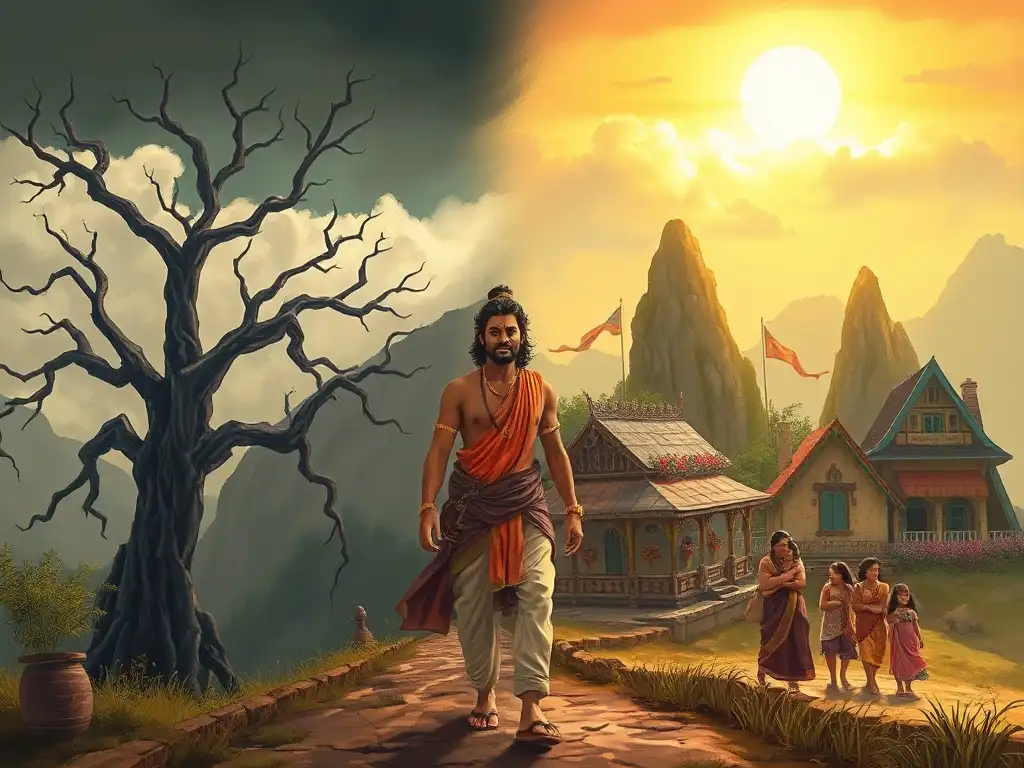
The themes of exile and homecoming, as depicted in the Ramayana, are not unique to this epic. Other Indian epics, such as the Mahabharata, also explore these profound human experiences. A comparative analysis reveals how these narratives address similar themes, albeit in different contexts and through distinct characters.
Similar Themes in the Mahabharata
The Mahabharata, often regarded as one of the greatest epics of Indian literature, presents exile as a pivotal element in its narrative. The most notable instance is the exile of the Pandavas, who are forced to leave their kingdom after losing a game of dice to their cousins, the Kauravas. This exile lasts for thirteen years, during which the Pandavas undergo significant trials, learning valuable lessons about duty, righteousness, and the complexities of human relationships.
- Dharma and Exile: The concept of dharma (duty/righteousness) plays a crucial role in both epics. For the Pandavas, their exile serves as a period of reflection and growth. They grapple with their responsibilities and the moral dilemmas of reclaiming their rightful throne.
- Homecoming as a Central Theme: After their exile, the Pandavas return to reclaim their kingdom, mirroring Rama’s journey home after his exile in the Ramayana. Both narratives emphasize the struggles faced during exile and the eventual triumph of good over evil upon their return.
Additionally, the Mahabharata delves into the emotional dimensions of exile, showcasing how separation impacts relationships. For instance, the bond between Draupadi and the Pandavas highlights the personal stakes involved in their journey, depicting exile not just as a political strategy but as an emotional crucible.
Cross-Cultural Perspectives on Exile in Literature
Exile is a theme that transcends Indian literature, resonating across various cultures and epochs. In many literary traditions, exile serves as a powerful narrative device that explores the human condition, identity, and belonging.
- Exile in Western Literature: Works such as Homer’s Odyssey encapsulate the journey of the hero, Odysseus, who faces challenges during his long return home after being exiled from Ithaca. Similar to Rama and the Pandavas, Odysseus’s experiences highlight the trials of separation and the yearning for home.
- Themes of Alienation and Belonging: In modern literature, authors often explore exile as a metaphor for alienation and the search for identity. For instance, in The Namesake by Jhumpa Lahiri, the protagonist grapples with the duality of his Indian heritage and American upbringing, reflecting the complexities of belonging in a globalized world.
The theme of exile also finds resonance in various cultural narratives, where characters often embark on journeys that lead to self-discovery and transformation. These narratives underscore the universal nature of the themes of exile and homecoming, revealing a shared human experience that transcends geographical and temporal boundaries.
The exploration of exile and homecoming in the Ramayana is enriched by comparative analyses with other epics like the Mahabharata and through cross-cultural perspectives in global literature. These themes resonate deeply, reflecting the enduring human quest for belonging and the trials encountered along the way.
Conclusion: The Enduring Legacy of the Ramayana's Themes of Exile and Homecoming

The Ramayana, as an epic, weaves a rich tapestry of human experience, predominantly exploring the themes of exile and homecoming. These themes not only shape the narrative but also resonate deeply within the cultural and spiritual fabric of society. The enduring legacy of the Ramayana's themes of exile reflects a universal journey that transcends time and geography, offering profound insights into human emotions and ethical dilemmas.
The exile of Lord Rama, alongside his wife Sita and brother Lakshmana, serves as a poignant reminder of the trials and tribulations faced in the pursuit of righteousness (dharma). This journey, fraught with challenges, illustrates the resilience of the human spirit. The eventual homecoming, marked by Rama's return to Ayodhya, symbolizes the restoration of order and harmony after chaos. Such narratives echo in various cultural contexts, emphasizing that the journey of life often involves navigating through periods of separation and loss before achieving reconciliation and belonging.
Reflections on How These Themes Resonate Today
Today, the themes of exile and homecoming in the Ramayana continue to resonate with individuals facing various forms of displacement—be it physical, emotional, or cultural. Modern society grapples with issues such as migration, refugee crises, and the quest for identity. The story of Rama's exile and eventual return serves as a metaphor for these contemporary struggles.
In many ways, people find solace in the Ramayana's portrayal of perseverance amid adversity. The narrative encourages reflection on the importance of family ties, loyalty, and the pursuit of one's duties. These themes foster a sense of connection, prompting individuals to explore their roots and the significance of home, no matter how far they may wander.
The Ramayana's Influence on Modern Literature and Culture
The Ramayana has profoundly influenced not only ancient literature but also modern narratives across various art forms. From adaptations in literature to theatrical productions and films, the epic's themes of exile and homecoming have inspired countless creators.
- Literature: Many contemporary authors draw upon the archetypes and moral dilemmas presented in the Ramayana. Works of fiction often mirror Rama's journey, employing characters who navigate through their own exiles, seeking redemption and belonging.
- Films and Television: Numerous adaptations have brought the Ramayana to life on screen, allowing audiences to engage with its themes visually. These adaptations often emphasize the emotional weight of exile and the joy of homecoming, making the story accessible to new generations.
- Art and Performance: Traditional dance forms and theater continue to portray the Ramayana, highlighting its relevance in cultural celebrations and festivals. These performances encapsulate the essence of the epic, reinforcing its messages and inviting reflection on personal and societal challenges.
The Ramayana's themes of exile and homecoming remain timeless, resonating deeply within both historical and modern contexts. As society continues to evolve, the lessons embedded in this epic will undoubtedly inspire future generations to navigate their own journeys with courage and hope.
Frequently Asked Questions
What are the main themes of exile in the Ramayana?
The Ramayana explores themes of exile through the character of Rama, who is banished to the forest. This journey highlights sacrifice, duty, and the struggle between personal desire and social responsibility.
How does the theme of homecoming manifest in the Ramayana?
The theme of homecoming is prominently featured when Rama returns to Ayodhya after defeating Ravana. This return symbolizes the restoration of order and justice, reinforcing the importance of family and community.
What role do relationships play in the exile narrative of the Ramayana?
Relationships are crucial in the exile narrative, as they define the characters' actions and motivations. The bonds between Rama, Sita, and Lakshmana illustrate the strength of loyalty and support during difficult times.
How does the Ramayana address the psychological aspects of exile?
The Ramayana delves into the psychological aspects of exile by portraying Rama's internal conflicts and feelings of longing and loss. This exploration adds depth to the narrative, reflecting the emotional toll of being separated from one's home.
What can we learn about cultural values from the Ramayana's portrayal of exile?
The portrayal of exile in the Ramayana reveals significant cultural values, such as dharma (duty) and the importance of honor and loyalty. These values continue to resonate in contemporary Indian society, influencing modern interpretations of exile and homecoming.
Final Reflection: Embracing the Journey of Exile and Homecoming in the Ramayana
The themes of exile and homecoming in the Ramayana resonate profoundly with our contemporary experiences, reminding us that the journey of self-discovery often involves leaving behind the familiar. In a world where displacement and longing for belonging are increasingly common, the Ramayana serves as a timeless narrative that speaks to the heart of human experience. The trials faced by Rama and Sita not only reflect their personal struggles but also mirror our own quests for identity and acceptance in an ever-changing landscape.
The cultural and social impact of the Ramayana is undeniable; it continues to shape our understanding of resilience and the importance of returning to one’s roots. As we navigate our own exiles—whether physical, emotional, or spiritual—we find solace in the lessons of the Ramayana. The epic teaches us that home is not merely a place, but a state of being, forged through love, sacrifice, and the bonds we create. Home is where the heart is,
and the Ramayana beautifully illustrates this sentiment through its rich tapestry of relationships and moral dilemmas.
As you reflect on the themes of exile and homecoming, I invite you to consider your own journey. What does home mean to you, and how have your experiences shaped your understanding of belonging? Let the lessons of the Ramayana inspire you to embrace your own path, recognizing that every exile can lead to a deeper appreciation of home, and every return can be a celebration of growth and transformation. In this way, may you find strength in your journey and a sense of peace in your eventual homecoming.
Embrace Your Journey: Explore the Depths of Homecoming!
Thank you for taking the time to delve into the profound themes of exile and homecoming within the Ramayana. Your engagement with this timeless epic not only enriches your understanding but also connects you to the universal struggles and triumphs of the human experience. Now, let’s turn that knowledge into action!
- Reflect on your own journey of homecoming. Consider writing a personal story or journal entry about a time when you felt lost and how you ultimately found your way back. Sharing these experiences can empower both yourself and those around you.
- Join a community discussion! Engage with friends, family, or online groups to explore how the Ramayana resonates with your own experiences. Exchanging insights can deepen your understanding and foster meaningful connections.
- Explore further: Investigate other cultural narratives surrounding exile and homecoming. Discover the similarities and differences that connect humanity across various cultures.
What does home mean to you, and how has your journey shaped that understanding?