
The Vedas as a Source of Inspiration for Contemporary Literature and Arts

Welcome to Ancient India History, where we invite you to embark on a captivating journey through the rich tapestry of ancient Indian civilizations. From the enigmatic Indus Valley to the illustrious Gupta Empire, our exploration unveils the profound contributions that have shaped not only India but the world. In this article, we delve into “The Vedas Influence on Literature,” uncovering how these ancient texts continue to inspire contemporary literature and the arts.
Prepare to ignite your curiosity as we reveal the timeless echoes of the Vedas and their enduring impact on modern creativity. Join us as we turn the pages of history together!
- The Vedas Influence on Literature and Arts
-
Frequently Asked Questions
- What are the Vedas and their significance in ancient India?
- How have the Vedas influenced contemporary literature?
- In what ways do the Vedas impact the arts today?
- Can you provide examples of contemporary works influenced by the Vedas?
- Why is it important to study the Vedas in the context of literature and arts?
- Final Reflection: The Enduring Influence of the Vedas on Contemporary Creativity
- Unleash Your Creativity Inspired by the Vedas!
The Vedas Influence on Literature and Arts
The Vedas, ancient scriptures of India, hold immense significance not only as religious texts but also as profound sources of inspiration for contemporary literature and arts. These texts, composed between 1500 and 500 BCE, encapsulate various aspects of life, philosophy, and spirituality that have shaped the cultural landscape of India.
Their influence extends beyond the confines of religion, resonating within the realms of literature, poetry, and the arts. In this article, we will delve into the multifaceted impact of the Vedas on modern creative expressions, particularly focusing on how these ancient texts continue to inspire writers, poets, and artists today.
Introduction to the Vedas
Overview of the Vedas as Ancient Texts
The Vedas consist of four primary collections: the Rigveda, Samaveda, Yajurveda, and Atharvaveda. Each of these texts serves a unique purpose, ranging from hymns and prayers to rituals and philosophical discourses. The Vedas are often regarded as the foundation of Hindu philosophy and spirituality, containing timeless wisdom that has influenced countless generations.
- Rigveda: The oldest of the Vedas, primarily a collection of hymns praising deities.
- Samaveda: Focuses on melodies and chants, often used in rituals.
- Yajurveda: Contains prose mantras and instructions for rituals.
- Atharvaveda: A compilation of hymns, spells, and incantations, addressing daily life and philosophy.
Historical Context of the Vedas in Ancient India
The Vedas emerged during a period of significant cultural and social development in ancient India, coinciding with the early Vedic period (approximately 1500-1000 BCE). This era saw the establishment of the Indo-Aryan civilization, characterized by a transition from nomadic lifestyles to settled agricultural communities. The Vedas reflect the beliefs, values, and practices of the time, providing insight into the spiritual and social frameworks that shaped early Indian society.
- Cultural Significance: The Vedas played a pivotal role in the formation of Hindu identity and religious practices.
- Philosophical Foundations: They laid the groundwork for various philosophical schools, influencing thinkers across centuries.
The Vedas Influence on Literature
Literary Themes Derived from the Vedas
The Vedas explore a plethora of themes that resonate with contemporary literary works. Concepts such as creation, the nature of existence, morality, and the cosmos are intricately woven into the fabric of Vedic literature, providing a rich tapestry for modern writers to draw from.
- Creation Myths: The Vedic narratives about the origins of the universe inspire countless literary adaptations and reinterpretations.
- Moral Dichotomies: Themes of good versus evil, dharma (duty), and karma (action and consequence) continue to permeate literature, guiding moral narratives.
The Vedas and Their Impact on Poetry
The poetic structure and stylistic elements found in the Vedas have profoundly influenced Indian poetry. The rhythmic patterns, metaphors, and literary devices employed in Vedic hymns serve as a foundation for various poetic forms that emerged later.
- Metaphor and Symbolism: Vedic poetry is rich in metaphor, which contemporary poets adopt to express complex emotions and ideas.
- Rhyme and Rhythm: The use of meter in Vedic verses has laid the groundwork for classical Indian poetry, influencing forms like the ghazal and sher.
Narrative Techniques Borrowed from Vedic Texts
Many narrative techniques found in Vedic literature have transcended time and genre, enriching storytelling in modern literature. The use of dialogues, parables, and allegorical tales can be traced back to the Vedas, showcasing a sophisticated understanding of narrative structure.
- Dialogue and Discourse: The dialogues within the Vedas provide a framework for character development in contemporary narratives.
- Allegorical Storytelling: Vedic narratives often convey deeper meanings through allegories, a technique employed by modern writers to explore complex themes.
Through this exploration of the Vedas' influence on literature and arts, we can appreciate the enduring legacy of these ancient texts, which continue to inspire and shape creative expressions across the globe. The interplay between the Vedas and contemporary literature illustrates the timeless relevance of these ancient teachings, inviting ongoing exploration and reinterpretation.
The Vedas in Contemporary Arts
The Vedas, as the foundational texts of ancient Indian philosophy and spirituality, continue to resonate deeply within contemporary arts. Their themes of cosmology, ethics, and metaphysical inquiry have provided rich material for artists seeking to explore the human condition through various forms of expression. This section delves into how Vedic concepts have permeated modern artistic practices, ranging from visual arts to performing arts, showcasing their enduring legacy.
The Role of Vedic Philosophy in Modern Art
Vedic philosophy emphasizes the interconnectedness of all existence, which has inspired numerous modern artists to explore themes of unity and harmony in their work. Artists like Anish Kapoor and Subodh Gupta have incorporated Vedic concepts such as Brahman (the ultimate reality) and Maya (illusion) into their installations. These themes invite viewers to reflect on the nature of reality and the self, encouraging a meditative engagement with the art.
Moreover, the idea of Dharma (duty/righteousness) has influenced modern storytelling in visual arts, prompting artists to address societal issues and moral dilemmas through their work. By integrating these philosophical tenets, contemporary art has become a medium for exploring deeper questions about existence, ethics, and the individual's role within the larger cosmos.
Music and Dance Inspired by the Vedas
The influence of the Vedas on music and dance is profound and multifaceted. Traditional Indian classical music, particularly Hindustani and Carnatic, is deeply rooted in Vedic texts. The Samaveda, one of the four Vedas, serves as a foundational source for musical compositions. Contemporary musicians often draw from these ancient melodies, infusing them with modern rhythms and styles to create a fusion that resonates with today’s audience.
Dance forms such as Bharatanatyam and Kathak also reflect Vedic influences, particularly in their themes and narratives. Choreographers often portray stories from the Vedas, using intricate footwork and expressive gestures to convey the spiritual and philosophical depth of the texts. The revival of these dance forms in contemporary performances reaffirms the Vedas' relevance, bridging the past with the present.
Visual Arts: Representations of Vedic Themes
Visual arts have similarly embraced Vedic themes, with artists creating works that reflect the symbolic richness found in the texts. For example, the concept of Yajna (sacrifice) is often depicted in paintings and sculptures, symbolizing the interconnectedness of life and the universe. Artists like Nandalal Bose have illustrated scenes from the Vedas, capturing the vibrancy of ancient rituals and philosophies.
Additionally, contemporary artists utilize modern mediums—such as digital art and installations—to reinterpret Vedic themes for a global audience. These representations not only preserve cultural heritage but also invite dialogue on universal human experiences, making the Vedas accessible and relevant in today’s artistic landscape.
Vedic Influence on Modern Literary Movements
The literary landscape has also been significantly shaped by the teachings and narratives of the Vedas. Contemporary writers and poets often draw inspiration from these ancient scriptures, integrating their philosophical insights and narratives into modern storytelling. This influence can be observed across various literary movements, reflecting the Vedas' lasting impact on literature.
The Vedas and Romanticism: A Comparative Analysis
Romanticism, with its emphasis on emotion, nature, and individualism, shares several thematic parallels with Vedic literature. Poets like William Wordsworth and John Keats, known for their celebration of nature and the sublime, echo sentiments found in the Vedas regarding the sanctity of nature and the pursuit of inner truth.
Furthermore, the Vedic emphasis on the individual’s spiritual journey resonates with the Romantic ideal of self-exploration and personal experience. Both movements encourage a deep connection with the natural world, suggesting that such interactions can lead to profound insights about life and existence. This comparative analysis reveals how Vedic philosophies have enriched Romantic literature, encouraging a deeper appreciation of nature and the self.
Postcolonial Literature and Vedic Elements
Postcolonial literature has often sought to reclaim cultural identity and heritage, with many authors turning to the Vedas as a source of inspiration. Writers like Arundhati Roy and Salman Rushdie incorporate Vedic themes to critique colonial narratives and explore identity in a globalized world. The use of Vedic motifs enables these authors to challenge Western paradigms and affirm the richness of Indian culture.
The Vedic concept of Rta (cosmic order) serves as a framework for many postcolonial texts, where authors grapple with the chaos of modernity while seeking to restore balance and harmony through their narratives. By infusing their works with Vedic elements, these writers create a dialogue between the past and present, emphasizing the need for cultural introspection and reclamation.
Contemporary Authors Drawing from Vedic Wisdom
Numerous contemporary authors are increasingly looking to the Vedas for inspiration, weaving their teachings into modern narratives. Writers such as Vikram Seth and Kiran Nagarkar explore themes of love, duty, and spirituality, often referencing Vedic literature to add depth to their storytelling.
These authors not only engage with the philosophical aspects of the Vedas but also reinterpret their narratives for a contemporary audience. By bridging ancient wisdom with modern issues, they create literature that resonates on multiple levels, inviting readers to explore timeless questions about life, purpose, and existence.
The influence of the Vedas on contemporary literature and arts is both profound and diverse, reflecting their enduring relevance in today’s cultural landscape. As modern creators continue to draw from these ancient texts, they not only preserve but also reinterpret Vedic wisdom, ensuring that its teachings remain vibrant and impactful for future generations.
Case Studies of Vedic Influence in Literature and Arts
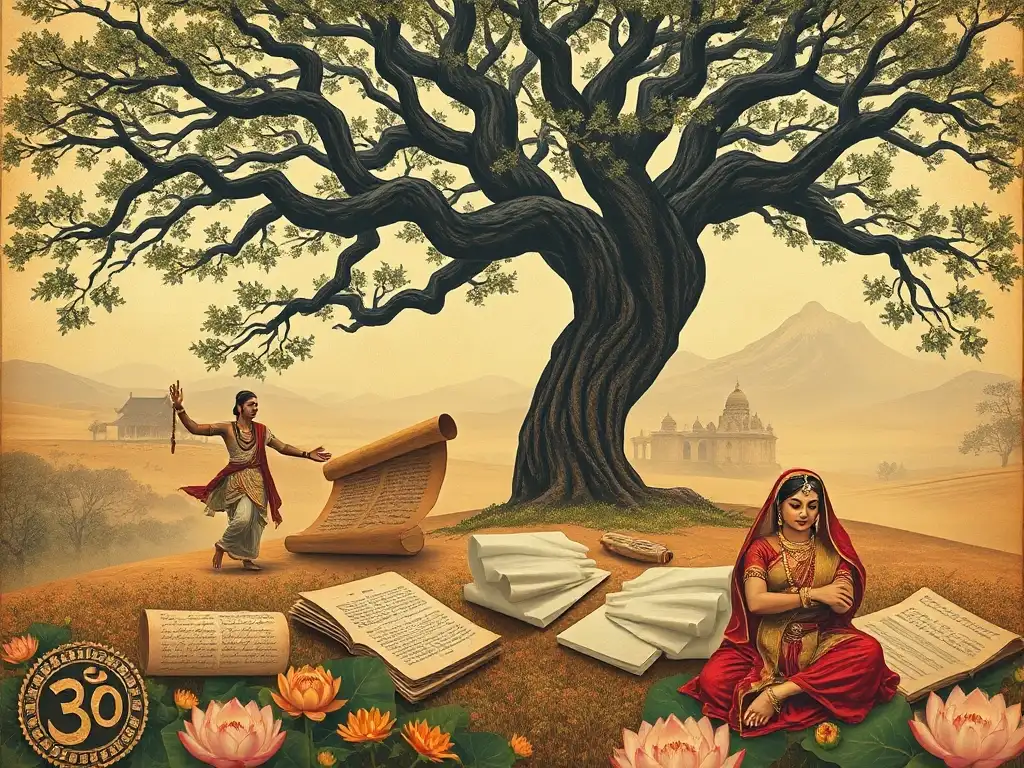
The Vedas, as ancient texts, have profoundly shaped various forms of literature and arts, influencing countless authors, poets, and artists over centuries. Their themes of spirituality, ethics, and the cosmos resonate deeply with the human experience, providing inspiration for contemporary works. This section explores notable case studies that illustrate the enduring impact of the Vedas on literary and artistic endeavors.
Analysis of Rabindranath Tagore and Their Vedic Connections
Rabindranath Tagore, the first non-European Nobel laureate in Literature, was significantly influenced by Vedic philosophy. His poetry and prose often reflect the spiritual principles found within the Vedas. Tagore's works encapsulate the essence of universalism and humanism, drawing parallels with the Vedic concept of "Vasudhaiva Kutumbakam," or the world as one family.
In his poetry, Tagore employs Vedic imagery and metaphors to express deep philosophical insights. For instance, his famous poem "Gitanjali" echoes the devotional fervor present in the Vedas, emphasizing the connection between the divine and the individual soul. Moreover, Tagore's plays and songs frequently incorporate themes of nature and the cosmos, resonating with the Vedic appreciation for the interconnectedness of all existence. His engagement with Vedic texts not only enriched his literary output but also helped to popularize these ancient philosophies in modern contexts.
The Novel "The God of Small Things" Inspired by Vedic Texts
Arundhati Roy's acclaimed novel "The God of Small Things" showcases the influence of Vedic texts through its intricate narrative structure and thematic depth. The novel intertwines personal and political histories, mirroring the Vedic emphasis on the interplay between individual experiences and broader societal issues.
Roy draws from the Vedic concept of "dharma" (duty) and "karma" (action) to explore the consequences of personal choices on familial and societal dynamics. The non-linear storytelling echoes the cyclical nature of time and existence found in Vedic philosophy, allowing readers to perceive events from multiple perspectives. Additionally, the rich imagery and lyrical prose reflect the poetic tradition rooted in Vedic literature, creating a tapestry of meaning that resonates with both contemporary and ancient audiences.
Challenges and Critiques of Vedic Influence in Contemporary Works
Despite the profound impact of the Vedas on literature and arts, their interpretation and representation in contemporary works come with challenges and critiques. Misunderstandings and cultural sensitivities often complicate the relationship between ancient texts and modern expressions.
Misinterpretations of Vedic Texts in Modern Literature
One of the primary challenges in contemporary literature is the potential misinterpretation of Vedic texts. Many authors may inadvertently simplify or distort complex Vedic concepts, leading to a diluted understanding of their significance. For instance, the portrayal of Vedic deities and rituals in popular novels or films can sometimes lean toward sensationalism rather than accuracy, which may contribute to misconceptions about Hindu philosophy and traditions.
Moreover, the lack of comprehensive understanding of the Vedas among writers can lead to the appropriation of themes without proper context, risking cultural insensitivity. This misrepresentation can obscure the rich philosophical frameworks that the Vedas offer, ultimately detracting from their intended messages.
The Debate Over Cultural Appropriation in Artistic Representations
The influence of Vedic texts in contemporary arts also raises the question of cultural appropriation. As artists and writers draw inspiration from these ancient scriptures, discussions emerge regarding the ownership and representation of cultural symbols. Critics argue that when non-Hindu creators incorporate Vedic themes into their works, it can lead to commercialization that strips away the cultural and spiritual significance of these texts.
This debate highlights the importance of respectful engagement with Vedic traditions. Advocates for responsible representation emphasize the need for creators to understand the historical and cultural contexts of the Vedas to avoid reinforcing stereotypes or perpetuating inaccuracies. As contemporary literature and arts continue to evolve, navigating these challenges will be crucial in honoring the profound legacy of the Vedas while fostering genuine appreciation and understanding.
Conclusion
The Vedas, as ancient texts, serve as a profound reservoir of knowledge and inspiration that has significantly influenced various forms of literature and arts throughout history. Their teachings, philosophical insights, and poetic expressions have transcended time, establishing a lasting impact on contemporary creative expressions. From poetry to theatre, and from visual arts to modern literature, the thematic richness of the Vedas continues to resonate with artists and writers, encouraging them to explore complex human experiences and spiritual quests.
As we reflect on the Vedic influence, it is essential to recognize that this connection is not merely historical but alive and evolving. The principles enshrined in these sacred texts provide a framework for exploring identity, morality, and the human condition, making them relevant to modern audiences. Thus, the Vedas are not just relics of the past; they are living texts that continue to inspire and challenge contemporary creators.
The Enduring Legacy of the Vedas in Literature and Arts
The enduring legacy of the Vedas in literature and arts can be seen in various cultural expressions that draw directly from their themes.
- Poetry: Many modern poets invoke the lyrical styles and spiritual themes found in Vedic hymns. The use of metaphors, imagery, and rhythmic patterns in contemporary poetry often mirrors Vedic compositions, creating a bridge between ancient and modern literary forms.
- Drama and Theatre: The narrative structures and moral dilemmas presented in the Vedas have influenced playwrights and screenwriters. For instance, themes of dharma (duty) and karma (action) are prevalent in many modern plays, reflecting Vedic philosophies and their implications in human society.
- Visual Arts: Artists continue to draw inspiration from Vedic iconography and symbolism. The intricate depictions of deities and mythological stories within Vedic texts are reflected in paintings, sculptures, and digital art, showcasing a vibrant connection between ancient spirituality and contemporary artistic expression.
This enduring legacy highlights the Vedas' role as a timeless source of inspiration, allowing creators to explore the depths of human experience while honoring their roots in ancient wisdom.
Future Directions for Vedic Influence in Contemporary Creativity
Looking ahead, the Vedas can continue to play a pivotal role in shaping contemporary creativity through various innovative approaches:
- Interdisciplinary Collaborations: Encouraging collaborations between scholars, artists, and creators can lead to new interpretations of Vedic texts. Workshops, seminars, and joint creative projects can foster a deeper understanding of Vedic philosophies and their application in modern contexts.
- Digital Platforms: The rise of digital media offers a unique opportunity to reinterpret and present Vedic teachings. Through interactive storytelling, virtual reality experiences, and multimedia art, contemporary creators can engage new audiences and breathe fresh life into ancient narratives.
- Educational Initiatives: Integrating Vedic literature into educational curricula can inspire a new generation of writers and artists. By exposing students to the depth and richness of Vedic knowledge, they can draw upon these themes in their creative endeavors, ensuring that the influence of the Vedas persists.
The Vedas remain a profound source of inspiration for contemporary literature and arts, encouraging ongoing exploration and reinterpretation of their teachings. As we navigate the complexities of modern life, the insights derived from these ancient texts will continue to provide valuable guidance and inspiration for future generations.
Frequently Asked Questions
What are the Vedas and their significance in ancient India?
The Vedas are a collection of ancient sacred texts that form the foundation of Hindu philosophy and spirituality. They are crucial for understanding cultural practices and beliefs in ancient Indian civilization.
How have the Vedas influenced contemporary literature?
The Vedas influence on literature is profound, providing themes, narratives, and philosophies that are echoed in modern storytelling. Many authors draw inspiration from Vedic wisdom to explore spiritual and moral dilemmas.
In what ways do the Vedas impact the arts today?
The Vedas continue to inspire various forms of art, including music, dance, and visual arts. Artists often incorporate mythological themes and symbolism from Vedic texts into their works.
Can you provide examples of contemporary works influenced by the Vedas?
Several novels, poems, and plays reference Vedic concepts, such as spirituality, dharma, and the cycle of life. Notable authors often weave these elements into their narratives, enhancing the depth of their characters and plots.
Why is it important to study the Vedas in the context of literature and arts?
Studying the Vedas helps us understand the cultural heritage and foundational ideas that shape modern literature and arts. It highlights the continuity of human thought and creativity across centuries.
Final Reflection: The Enduring Influence of the Vedas on Contemporary Creativity
The Vedas, as ancient texts, continue to resonate profoundly with modern literature and arts, illustrating that their wisdom transcends time and culture. In a world increasingly driven by rapid change and technological advancement, the teachings and narratives found within the Vedas offer a rich tapestry of inspiration that encourages introspection and creativity. Their themes of unity, spirituality, and the human experience serve as a guiding light, reminding us that the essence of storytelling and artistic expression is rooted in our shared humanity.
Culturally, the Vedas have shaped not only literary works but also the broader social landscape, influencing writers, poets, and artists across generations. The echoes of their profound insights can be seen in contemporary narratives that explore the depths of human emotion and the quest for meaning. As the poet Rainer Maria Rilke once said, The only journey is the one within.
This sentiment captures the essence of how the Vedas inspire creators to delve into the inner workings of the self, fostering a deeper connection with their audience and enriching the cultural dialogue.
As we reflect on the Vedas' influence on literature, let us embrace the invitation to explore our own creative paths. Consider how the timeless wisdom of these texts can inform your artistic endeavors or writing. Whether through poetry, prose, or visual arts, take a moment to connect with the profound teachings of the Vedas and allow them to inspire your voice. In doing so, you not only honor the legacy of these ancient texts but also contribute to a vibrant and evolving cultural narrative that celebrates the beauty of human expression.
Unleash Your Creativity Inspired by the Vedas!
Thank you for diving into the timeless wisdom of the Vedas and exploring their profound impact on contemporary literature and arts. You've uncovered the rich connection between ancient texts and modern creativity, enhancing your understanding of cultural inspiration. Now, it’s time to put that knowledge into action!
- Transform your insights into art: Start a project that embodies the themes and stories of the Vedas—whether through writing, painting, or digital design. Let these ancient narratives bring your creativity to life!
- Share your journey: Connect with fellow artists and writers by showcasing your work inspired by the Vedas on social media or relevant community platforms. Your unique perspective can inspire others!
- Join a discussion group: Seek out or create a local or online community focused on the influence of ancient texts on modern creativity. Exchange ideas, share inspirations, and receive valuable feedback!
How will you uniquely express the wisdom of the Vedas in your artistic journey?