
The Legacy of Ashoka: How His Inscriptions Changed the Course of History


Welcome to Ancient India History, where we embark on a journey through time to uncover the rich tapestry of India's past. In this intriguing exploration, we delve into the Ashoka inscriptions and their historical impact, revealing how these remarkable edicts not only shaped the Mauryan Empire but also left an indelible mark on the course of history. Prepare to be captivated by the stories of a civilization that thrived in innovation, culture, and philosophy.
Join us as we unravel the legacy of Ashoka and discover how his words continue to resonate through the ages. Your adventure into the depths of ancient wisdom starts here!
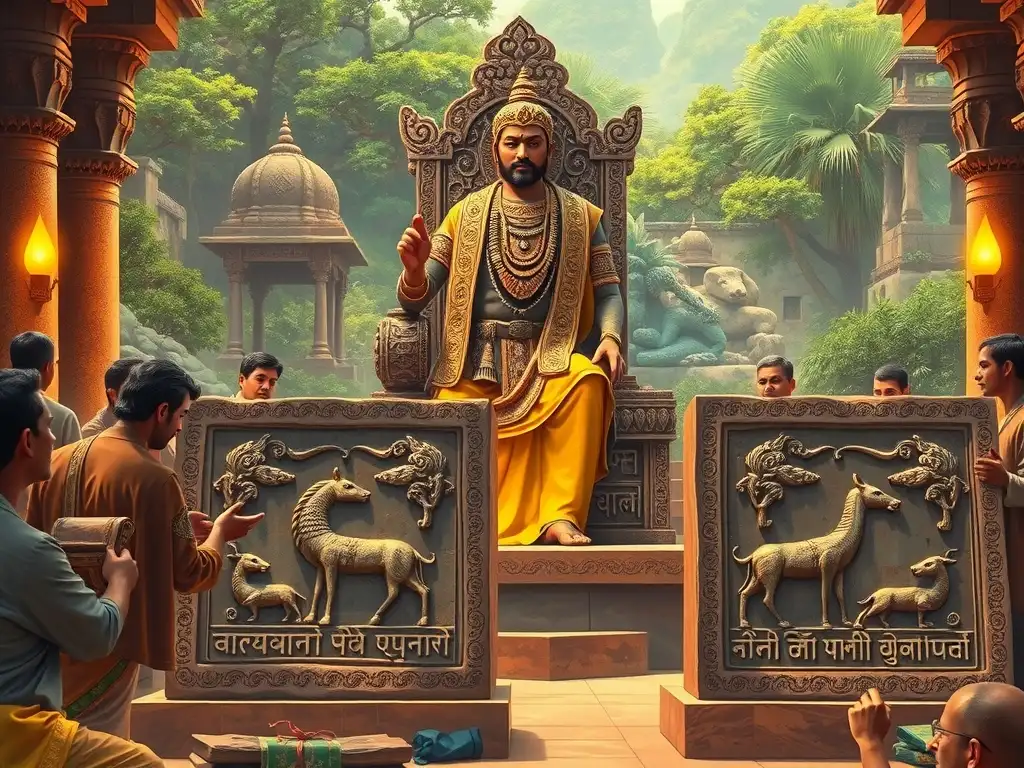
Introduction to Ashoka and His Reign
The legacy of Ashoka, the third Mauryan emperor, is one of profound significance in the annals of Indian history. His reign, which lasted from approximately 268 BCE to 232 BCE, marked a transformative period that not only shaped the political landscape of ancient India but also left an indelible impact on its cultural and moral fabric. Ashoka is revered not only for his conquests and governance but also for his remarkable shift towards promoting non-violence, compassion, and Buddhist principles following the devastating Kalinga War.
Central to this legacy are his inscriptions, which serve as powerful historical documents that communicate his thoughts, policies, and ethical directives. These inscriptions illuminate Ashoka's commitment to dharma (moral law) and his innovative methods of governance, providing invaluable insights into the Maurya Empire and its societal values.
Overview of Ashoka's Life and Legacy
Ashoka's life is a tapestry woven with threads of ambition, introspection, and transformation. Born into the Mauryan dynasty as the son of Emperor Bindusara, Ashoka initially followed the path of warfare, demonstrating remarkable military prowess. However, the brutalities of the Kalinga War, which resulted in immense loss of life, prompted a profound personal and ideological shift. Embracing Buddhism, Ashoka became a proponent of peace and social welfare, focusing on the well-being of his subjects rather than mere territorial expansion.
His legacy is encapsulated in his edicts, which are inscribed on pillars and rocks across the Indian subcontinent. These inscriptions are not merely records but rather a reflection of his vision for a just society grounded in ethical governance. Ashoka's commitment to spreading the principles of Buddhism and his emphasis on moral conduct resonate through time, influencing not only contemporary society but also future generations.
Historical Context of the Maurya Empire
The Maurya Empire (c. 322–185 BCE) stands as one of the largest and most powerful empires in ancient India. Founded by Chandragupta Maurya, it reached its zenith under Ashoka, encompassing a vast territory that included significant parts of present-day India, Pakistan, and Afghanistan. The Mauryan administration was characterized by a centralized bureaucracy and a sophisticated system of governance that facilitated trade, agriculture, and cultural exchange.
During Ashoka's reign, the empire experienced a remarkable cultural flourishing, with advancements in art, architecture, and philosophy. The spread of Buddhism during this period was particularly noteworthy, as Ashoka actively promoted the teachings of the Buddha, sending missionaries to various regions to disseminate Buddhist principles. This historical backdrop sets the stage for understanding the significance of Ashoka's inscriptions, as they are deeply rooted in the socio-political and cultural dynamics of the Maurya Empire.
Understanding Ashoka's Inscriptions
Ashoka's inscriptions are among the most significant contributions to ancient Indian epigraphy and serve as vital historical documents. They provide insights into his governance, ethical stance, and the socio-political environment of his time.
Definition and Importance of Inscriptions in Ancient India
Inscriptions in ancient India were crucial for recording historical events, royal decrees, and cultural practices. They acted as a medium for communication between rulers and subjects, ensuring that important messages and policies were disseminated widely. Inscriptions were typically carved on durable materials such as stone and metal, which allowed them to withstand the ravages of time, ensuring that the legacies of their creators endured.
The importance of inscriptions extends beyond mere record-keeping; they are key to understanding the socio-political and cultural contexts of ancient societies. In the case of Ashoka, his inscriptions not only convey administrative directives but also reflect his philosophical and ethical beliefs, making them invaluable for historians and scholars alike.
Types of Ashoka Inscriptions
Ashoka's inscriptions can be categorized into several types, each serving distinct purposes and reflecting various aspects of his reign:
- Rock Edicts: These inscriptions, carved on rock surfaces, communicate Ashoka's policies regarding governance, ethics, and moral conduct. They are often framed as edicts or proclamations directed towards his subjects.
- Pillar Edicts: Found on majestic stone pillars, these inscriptions are more elaborate and often serve to promote Buddhism and its principles. They include messages of tolerance, compassion, and non-violence.
- Minor Edicts: These inscriptions, located in various regions, focus on specific local issues and directives, showcasing Ashoka's attention to the needs of diverse communities within his empire.
- Brahmi and Kharosthi Scripts: Ashoka's inscriptions were primarily written in the Brahmi script, with some in Kharosthi, reflecting the linguistic diversity of his empire and ensuring accessibility to a broad audience.
Through these inscriptions, Ashoka not only documented his reign but also laid down a moral and ethical framework that would influence future rulers and societies. Their historical impact continues to resonate, making them a pivotal aspect of ancient Indian history.
The Historical Impact of Ashoka's Inscriptions

The inscriptions of Emperor Ashoka, carved on rocks and pillars across his vast empire, profoundly influenced the course of Indian history and beyond. These edicts not only served as a means of communication but also as a tool for disseminating his ideals and policies. Ashoka's inscriptions marked a significant departure from previous forms of royal proclamations, emphasizing moral governance and ethical conduct over mere political power. Scholars regard these inscriptions as pivotal in shaping the sociopolitical landscape of ancient India, fostering a sense of unity among diverse populations and laying the groundwork for future governance models.
Promotion of Dhamma and Its Philosophical Implications
At the heart of Ashoka's inscriptions is the promotion of "Dhamma," a term encompassing a wide range of ethical and moral principles. Ashoka articulated his vision of Dhamma as a guide for personal conduct and social responsibility, urging his subjects to practice compassion, non-violence, and tolerance. The philosophical implications of these teachings resonated deeply within the Indian subcontinent, influencing not only individual behavior but also societal norms. By promoting Dhamma through his inscriptions, Ashoka sought to cultivate a harmonious society, advocating for the welfare of all living beings as a paramount concern of governance.
Influence on Governance and Administration
Ashoka's inscriptions served as a blueprint for enlightened governance, emphasizing the responsibilities of rulers toward their subjects. His edicts addressed issues such as justice, public welfare, and the importance of moral authority in leadership. The implementation of Dhamma as a guiding principle in administration marked a transformative approach to governance, prioritizing ethical conduct over authoritarian rule. This legacy influenced subsequent rulers, who recognized the effectiveness of using moral principles as a tool for maintaining order and legitimacy within their realms.
Role in Spreading Buddhism Across Asia
The dissemination of Buddhism was significantly advanced by Ashoka's inscriptions, which acted as a catalyst for the faith’s spread beyond the Indian subcontinent. His edicts often encouraged the promotion of Buddhist values and teachings, furthering the religion's reach through missionary activities and trade routes. Ashoka’s commitment to Buddhism, as reflected in his inscriptions, established a strong foundation for the religion’s expansion into Central Asia, Southeast Asia, and beyond. This historical impact underscores the role of inscriptions not just as records of edicts but as instruments for cultural exchange and religious propagation.
Ashoka's Inscriptions as a Tool for Cultural Integration
Ashoka's inscriptions functioned as a means of cultural integration within his diverse empire. By addressing various ethnic groups in their local languages and dialects, he fostered a sense of belonging and unity among his subjects. The inscriptions promoted a common identity rooted in shared values, transcending linguistic and cultural barriers. This strategic use of inscriptions helped solidify Ashoka’s authority and facilitated the peaceful coexistence of different communities within his empire, marking an essential aspect of his legacy.
The Language and Style of Ashoka's Inscriptions
The language and style of Ashoka’s inscriptions played a critical role in their effectiveness and reach. Utilizing a straightforward and accessible approach, Ashoka ensured that his messages resonated with a wide audience, transcending the elite circles of power.
Linguistic Features of Ashoka's Edicts
The linguistic features of Ashoka’s edicts are characterized by their clarity and directness. The use of imperative and declarative sentences creates a sense of urgency and authority, compelling the audience to heed his words. Additionally, Ashoka employed rhetorical devices such as repetition and parallelism to reinforce his messages, making them more memorable and impactful. This linguistic strategy not only facilitated understanding but also encouraged the public to internalize the principles of Dhamma and ethical governance.
Use of Prakrit and Brahmi Script
Ashoka’s choice of the Prakrit language and the Brahmi script in his inscriptions was significant for their accessibility. Prakrit was widely spoken across various regions of his empire, allowing for a broader audience to engage with the content of the edicts. The Brahmi script, being one of the earliest writing systems in India, further ensured that the messages reached diverse communities. This decision reflects Ashoka’s commitment to inclusivity and his desire to communicate effectively with all strata of society.
Accessibility and Understanding of the Inscriptions
The accessibility and understanding of Ashoka's inscriptions were paramount to their historical impact. By inscribing edicts in locations frequented by the public—such as marketplaces and pilgrimage sites—Ashoka ensured that his messages were visible to a large number of people. The straightforward language and the use of illustrations in some inscriptions enhanced comprehension, making complex ideas about governance and moral conduct more relatable. This emphasis on public visibility and understanding contributed to the longevity of Ashoka's influence, as the values he espoused continued to resonate through subsequent generations.
Archaeological Discoveries and Their Significance
The archaeological discoveries related to Ashoka's inscriptions have had a profound impact on our understanding of ancient Indian history. These inscriptions, primarily carved on rock edicts and pillars, provide invaluable insights into the socio-political and religious landscape of Ashoka's time. They serve as primary sources that illuminate the principles of governance, moral values, and the spread of Buddhism during the Mauryan Empire.
The significance of these archaeological finds is manifold. Firstly, they confirm the existence of a centralized authority under Ashoka, reflecting his efforts to promote dharma (righteousness) across his vast empire. The inscriptions detail various edicts concerning animal welfare, social justice, and ethical governance, showcasing his commitment to non-violence and compassion. Furthermore, the geographical distribution of these inscriptions—from the northwestern regions of India to the Deccan Plateau—demonstrates the extensive reach of his rule and the uniformity of his policies.
Additionally, these discoveries have enhanced our understanding of ancient Indian scripts and languages. The inscriptions are primarily in Brahmi and Kharosthi scripts, and their decipherment has opened new avenues for linguistic and historical research. Thus, the archaeological findings related to Ashoka's inscriptions are not merely historical artifacts; they are vital keys to unlocking the complexities of ancient Indian civilization.
Key Sites of Ashoka's Inscriptions
Several key sites across the Indian subcontinent house Ashoka's inscriptions, each providing unique insights into his reign and philosophies.
- Sarnath: This site is particularly significant as it marks the location where Buddha delivered his first sermon. Here, Ashoka's inscriptions emphasize the promotion of Buddhism and moral conduct.
- Lumbini: Known as the birthplace of Buddha, Ashoka's presence in Lumbini is marked by inscriptions that reflect his dedication to Buddhism and the establishment of stupas.
- Girnar: Located in Gujarat, Girnar features a series of rock edicts that articulate Ashoka's commitment to governance based on dharma. These inscriptions highlight his administrative reforms and social welfare initiatives.
- Kalinga: The Kalinga Rock Edicts, inscribed after his famous conversion to Buddhism post-war, detail his remorse over the violence of conflict and his subsequent dedication to peace.
- Bhabru: Near modern-day Rajasthan, the Bhabru edicts are crucial as they reflect Ashoka’s promotion of moral and ethical conduct among his subjects.
These sites serve as enduring testaments to Ashoka's legacy, offering a glimpse into the political ideologies and cultural narratives of the Mauryan Empire.
Impact of Archaeological Findings on Historical Understanding
The archaeological findings related to Ashoka's inscriptions have significantly reshaped our understanding of ancient Indian history. Prior to these discoveries, much of what was known about Ashoka and his reign was derived from later texts and oral traditions. The inscriptions provide concrete evidence that corroborates and enriches this historical narrative.
By studying these inscriptions, historians have gained insights into Ashoka's dual role as a conqueror and a proponent of peace. The Kalinga War, for instance, serves as a pivotal moment in his life, marking a transformation from military expansion to a governance style rooted in compassion and non-violence. The inscriptions articulate his reflections on the consequences of war and his commitment to the welfare of his subjects.
Moreover, the geographical spread of Ashoka's edicts has facilitated a deeper understanding of the cultural and political integration of diverse regions under the Mauryan Empire. They highlight not only the administrative prowess of Ashoka but also the importance of Buddhist philosophy in fostering a cohesive societal framework. Overall, these archaeological findings have provided a more nuanced and comprehensive narrative of ancient India's historical landscape.
Legacy and Influence on Later Civilizations
Ashoka's legacy extends far beyond his reign, influencing various civilizations and philosophical movements that followed. His emphasis on moral governance and social welfare became foundational principles for future rulers and empires.
Ashoka's Inscriptions and Their Role in Subsequent Indian History
Ashoka's inscriptions played a crucial role in shaping subsequent Indian history by establishing a model of governance centered around ethical principles. His edicts inspired future rulers to adopt policies that prioritized the welfare of their citizens. The notion of dharma, as articulated in these inscriptions, became a guiding philosophy for later dynasties, including the Gupta Empire, renowned for its cultural and scientific advancements.
Furthermore, Ashoka's promotion of Buddhism through his inscriptions contributed to the religion's spread across Asia, impacting neighboring civilizations. The emphasis on compassion and tolerance resonated with various cultures, fostering interconnections that would shape the region's historical trajectory.
Influence on Later Rulers and Dynasties
The influence of Ashoka's inscriptions can be seen in various subsequent rulers and dynasties that sought to emulate his governance style. For instance, the Mauryan successors and later dynasties like the Guptas incorporated elements of Ashoka's ethical principles into their rule. The inscriptions became a benchmark for rulers aspiring to establish a just and benevolent governance.
Moreover, historical figures such as Emperor Kanishka, known for his patronage of Buddhism, were influenced by Ashoka's legacy. The edicts served as a moral compass, guiding rulers to consider the welfare of their subjects while promoting cultural and religious harmony.
Comparison with Other Historical Inscriptions Worldwide
When comparing Ashoka's inscriptions to other historical inscriptions worldwide, several similarities and differences emerge. Like the Roman Emperor Constantine's Edict of Milan, which promoted religious tolerance, Ashoka's inscriptions reflect a commitment to ethical governance and societal welfare. Both sets of inscriptions have had lasting impacts on their respective cultures and beyond.
However, Ashoka's inscriptions are unique in their explicit focus on non-violence and compassion, which sets them apart from many other historical texts that often emphasize military conquest or political power. Additionally, the multilingual and multi-script nature of Ashoka's inscriptions highlights the diversity of the Mauryan Empire, paralleling the multilingual inscriptions found in the Hellenistic world.
Ashoka's inscriptions not only serve as vital historical documents but also as enduring legacies that continue to influence governance and ethical thought across cultures and centuries.
Conclusion: The Enduring Legacy of Ashoka's Inscriptions

The legacy of Ashoka's inscriptions extends far beyond his reign as the Mauryan Emperor; they have become a vital part of our understanding of ancient history and governance. Through his rock edicts and pillar inscriptions, Ashoka articulated a vision of ethical governance rooted in Dharma—a principle emphasizing morality, compassion, and social responsibility.
These inscriptions not only served as a means of communication to his subjects but also as a guide for future rulers. The emphasis on non-violence, respect for all beings, and the importance of welfare initiatives laid the groundwork for a governance model that prioritizes the well-being of its citizens.
The inscriptions also played a significant role in spreading Buddhism across Asia. They helped propagate the Buddhist principles of peace and coexistence, influencing countless generations and cultures. Ashoka's commitment to these ideals, as expressed through his inscriptions, continues to resonate in contemporary discussions about leadership, ethics, and governance.
Reflection on the Historical Impact of Ashoka's Inscriptions
Ashoka's inscriptions mark a pivotal moment in the evolution of written communication in governance. They represent one of the earliest examples of a ruler using public inscriptions to communicate his policies, values, and vision to a diverse populace. This marked a shift towards transparency and accountability, establishing a precedent for future leaders.
The inscriptions also provide invaluable insights into the socio-political landscape of ancient India. They reflect the cultural diversity of the time, addressing different communities in various languages and dialects. Ashoka's thoughtful approach to inclusion and respect for different traditions demonstrates a sophisticated understanding of governance that is still admired today. Moreover, the historical impact of these inscriptions extends to the field of epigraphy, as they laid the foundation for the study of ancient scripts and languages, enhancing our knowledge of India's cultural heritage.
Importance of Preserving Ancient Inscriptions for Future Generations
The preservation of Ashoka's inscriptions is crucial for both historical scholarship and cultural heritage. As primary sources of information, these inscriptions offer a direct connection to the thoughts and values of an ancient civilization. The careful study and preservation of such artifacts enable historians and archaeologists to reconstruct the past and understand the complexities of ancient societies.
Moreover, safeguarding these inscriptions serves to inspire future generations. They embody a legacy of ethical governance and social responsibility that can inform contemporary society. By maintaining access to such historical treasures, we ensure that the lessons of the past continue to guide our future decisions. Additionally, the preservation efforts can foster a renewed interest in history and culture, encouraging educational initiatives that promote awareness and appreciation of ancient civilizations.
The importance of Ashoka's inscriptions transcends their historical context, serving as a beacon of moral governance and a reminder of our shared human values. As custodians of history, it is our responsibility to protect these inscriptions for posterity, ensuring that their enduring legacy continues to illuminate the path forward.
- Introduction to Ashoka and His Reign
- Overview of Ashoka's Life and Legacy
- Historical Context of the Maurya Empire
- Understanding Ashoka's Inscriptions
- The Historical Impact of Ashoka's Inscriptions
- The Language and Style of Ashoka's Inscriptions
- Archaeological Discoveries and Their Significance
- Legacy and Influence on Later Civilizations
- Conclusion: The Enduring Legacy of Ashoka's Inscriptions
- Reflection on the Historical Impact of Ashoka's Inscriptions
- Importance of Preserving Ancient Inscriptions for Future Generations
Frequently Asked Questions
What are the Ashoka inscriptions?
The Ashoka inscriptions are a series of edicts and messages carved on rocks and pillars by Emperor Ashoka during the 3rd century BCE, promoting Buddhist values and moral principles.
How did Ashoka's inscriptions influence society?
Ashoka's inscriptions served as a tool for governance and public communication, promoting tolerance, non-violence, and ethical behavior, which helped shape the moral fabric of ancient Indian society.
What was the historical impact of Ashoka's reign?
Ashoka's reign marked a significant shift towards Buddhism as a state religion, and his inscriptions played a key role in the dissemination of Buddhist teachings across Asia, influencing cultures beyond India.
Are there any notable locations of Ashoka's inscriptions?
Yes, some of the most notable locations include the Lion Capital of Ashoka in Sarnath, and the Rock Edicts found in places like Lumbini and Kalinga, which are significant for their historical and cultural value.
How do historians view the legacy of Ashoka today?
Historians regard Ashoka as a pivotal figure whose inscriptions not only reflected his philosophical beliefs but also laid foundational principles for justice, law, and human rights, making a lasting impact on Indian history and beyond.
Final Reflection: The Enduring Legacy of Ashoka's Inscriptions
The historical impact of Ashoka's inscriptions resonates profoundly in today's world, as they serve as a testament to the power of communication in shaping societies. In an era where messages can spread instantaneously, Ashoka's commitment to disseminating ethical governance and moral values through his edicts reminds us that words can indeed change the course of history. His inscriptions not only laid the groundwork for a more humane society but also highlighted the importance of empathy and justice, themes that remain crucial in our current global landscape.
The influence of Ashoka's inscriptions extends far beyond their immediate historical context; they have become a cultural touchstone that continues to inspire movements for peace and social justice. The principles embedded in his edicts resonate with contemporary ideals of non-violence and tolerance, encouraging us to reflect on our own responsibilities as global citizens. In the end, we will remember not the words of our enemies, but the silence of our friends.
– Martin Luther King Jr. This quote encapsulates the essence of Ashoka's message: the importance of speaking out for what is right and just, a lesson that remains ever relevant.
As we contemplate the lessons from Ashoka's legacy, I invite you to reflect on how you can incorporate his values into your own life. Consider the impact of your words and actions on those around you. Whether through advocacy, education, or simple acts of kindness, each of us has the power to contribute to a more compassionate world. Let Ashoka's inscriptions inspire you to be a voice for change, ensuring that the echoes of his wisdom continue to shape our future.
Unveil the Impact of Ashoka’s Inscriptions!
Thank you for exploring the profound legacy of Ashoka and his transformative inscriptions. You have uncovered invaluable lessons from history that continue to shape our understanding today. Now, let’s harness that knowledge and take impactful steps forward!
- Explore Ashoka's Edicts: Visit ancientindiahistory.com to read and interpret the key inscriptions. Reflect on how these messages can guide our current values.
- Share Your Insights: Discuss the relevance of Ashoka’s principles in today’s world with friends or on social media. Use the hashtag #AshokaInscriptions to join a broader conversation!
- Engage with Your Community: Organize or participate in local discussions or workshops focused on historical influences. Invite others to explore how ancient wisdom can inform modern life.
What contemporary challenge do you believe Ashoka’s teachings could help address? Take a moment to reflect and share your thoughts!