
The Spiritual Dimension of Learning in Ancient Indian Education

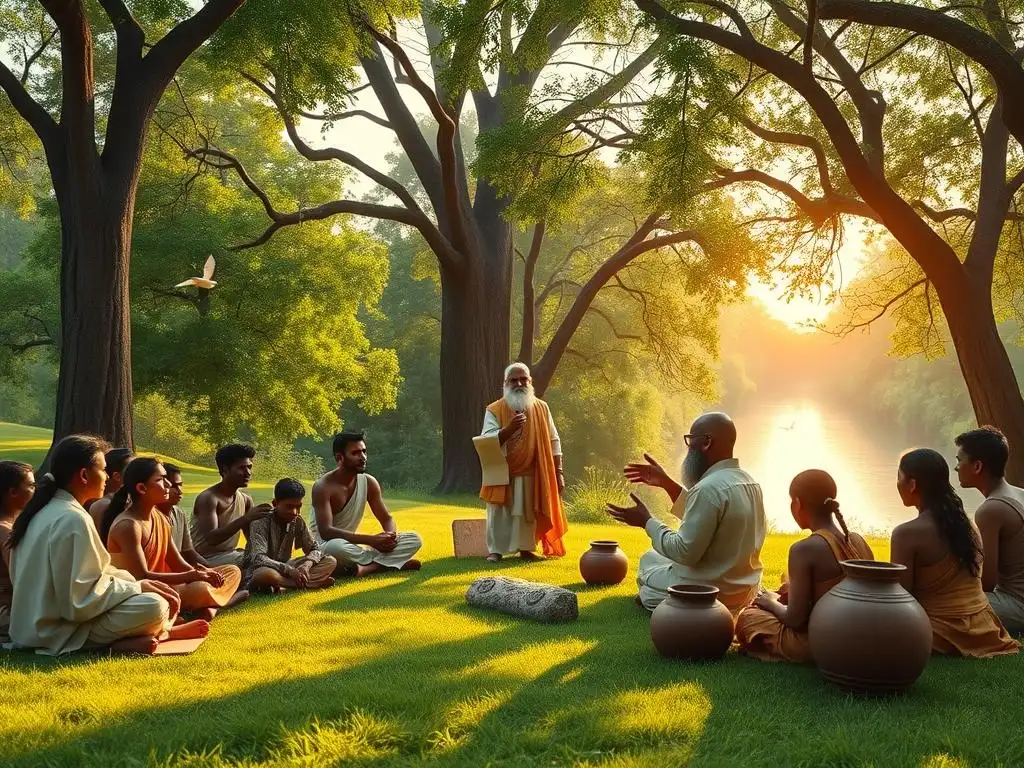
Welcome to Ancient India History, where we embark on a journey through the rich tapestry of India's past! As you delve into our latest article, "The Spiritual Dimension of Learning in Ancient Indian Education," you’ll uncover the profound philosophies that shaped the ancient Indian education system. What were the foundational principles that guided scholars and sages? How did spirituality intertwine with learning? Join us as we explore these captivating questions and more, igniting your curiosity about the remarkable contributions of ancient Indian civilizations. Get ready to discover a world where knowledge and wisdom flourished beyond the classroom!
- Introduction to Ancient Indian Education System
- Historical Context of Ancient Indian Education
- Spiritual Philosophy in Ancient Indian Education
- Practices and Curriculum in Ancient Indian Education
- The Influence of Religion on Learning
- Case Studies of Prominent Ancient Indian Educational Institutions
- The Legacy of Spiritual Learning in Modern Education
- Conclusion: The Lasting Impact of Spirituality in Ancient Indian Education
- Frequently Asked Questions
- Final Reflection: Embracing the Spiritual Legacy of Ancient Indian Education
- Unveil the Spiritual Wisdom of Ancient Education Today!
Introduction to Ancient Indian Education System
The ancient Indian education system is a fascinating tapestry woven with threads of spirituality, philosophy, and practical knowledge. From the early days of the Indus Valley Civilization to the flourishing intellectual pursuits during the Gupta Empire, education in ancient India was not merely a means to acquire knowledge; it was a holistic approach to learning that intertwined the mind, body, and spirit.
The emphasis on spiritual development alongside intellectual growth shaped a unique educational framework that has influenced modern pedagogical practices. This article explores the spiritual dimension of learning in ancient Indian education, shedding light on how these practices contributed to the cultivation of knowledge, moral values, and a sense of community.
Overview of Ancient Indian Education
The ancient Indian education system was characterized by its innovative methodologies and diverse institutions, primarily the Gurukuls and later, the Buddhist Monasteries and universities such as Nalanda and Takshashila. Education was predominantly oral, with a strong focus on imparting knowledge through direct interaction between the teacher (guru) and the student (shishya).
Key features of this system included:
- Guru-Shishya Tradition: The relationship between the teacher and student was central, emphasizing personal attention and mentorship.
- Curriculum Diversity: Subjects ranged from philosophy and mathematics to astronomy and medicine, showcasing a well-rounded approach to learning.
- Inclusivity: While initially limited to the elite, the later period saw an expansion of educational opportunities to various strata of society, particularly in Buddhist centers.
The ancient Indian education system was not just about academic learning; it was deeply embedded in the cultural and spiritual ethos of the time.
Importance of Spirituality in Learning
Spirituality played a pivotal role in the ancient Indian education system, influencing not only the curriculum but also the overall approach to teaching and learning. The intertwining of spiritual concepts with educational practices fostered a deeper understanding of life and existence among students.
Key aspects of spirituality in learning included:
- Holistic Development: The aim was to nurture the whole individual—intellectually, emotionally, and spiritually. Students were encouraged to explore their inner selves and understand their place in the universe.
- Moral and Ethical Values: Education was seen as a means to cultivate virtues such as compassion, honesty, and humility, which were deemed essential for personal and societal harmony.
- Meditative Practices: Techniques such as meditation and yoga were integrated into the learning process, promoting mental clarity and focus.
The spiritual dimension of learning not only enriched the educational experience but also laid the foundation for a society where knowledge was revered as a path to enlightenment and self-realization. As we delve deeper into specific practices and curricula, it becomes evident that the ancient Indian education system was a profound blend of the material and the spiritual, shaping the lives of countless individuals throughout history.
Historical Context of Ancient Indian Education
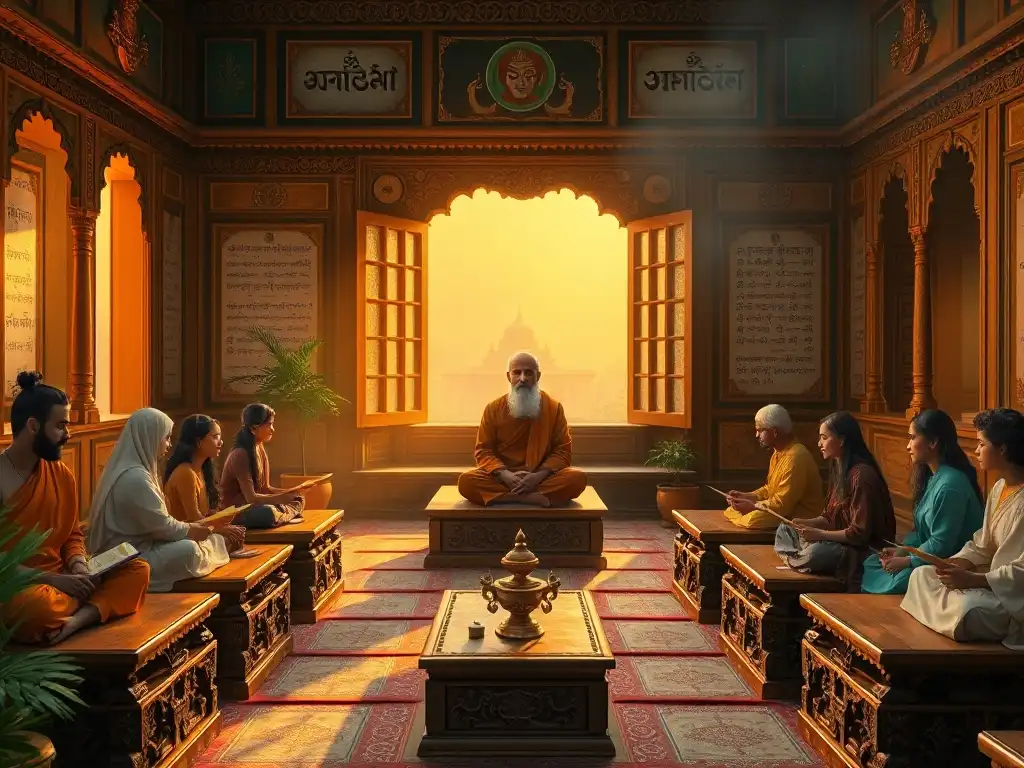
The educational practices in ancient India were deeply intertwined with the spiritual and cultural fabric of society. The roots of the ancient Indian education system can be traced back to the Vedic period (c. 1500 – 500 BCE), where learning was primarily oral. Education was seen as a means of spiritual and moral development, emphasizing not only the acquisition of knowledge but also the cultivation of character and virtue.
Development of Educational Institutions in Ancient India
The evolution of educational institutions in ancient India marked a significant phase in the history of the ancient Indian education system.
- Gurukul System:
- The Gurukul was the most prominent educational institution during ancient times. It was a residential school where students lived with their teacher (guru) and learned a variety of subjects, including scriptures, philosophy, mathematics, and arts.
- The focus was on holistic development, with students engaging in physical activities, arts, and philosophy alongside their academic studies.
- Admission to a Gurukul often required the student to undergo initiation rites, highlighting the spiritual dimension of learning.
- Nalanda and Takshashila:
- By the 5th century CE, centers like Nalanda and Takshashila emerged as major hubs of higher education. These universities attracted students from across Asia, offering advanced studies in various disciplines, including medicine, astronomy, and theology.
- Nalanda, in particular, was renowned for its vast library and a structured curriculum, which included debates and discussions, promoting critical thinking and philosophical inquiry.
- Role of Temples:
- Temples also played an essential role in the education system by serving as centers of learning. Many temples housed schools where students were taught religious texts and philosophy.
- The intertwining of education and spirituality in these settings reinforced the belief that learning was a sacred pursuit.
Key Texts Influencing Ancient Indian Education
The framework of the ancient Indian education system was significantly shaped by several key texts that outlined both educational philosophies and curricula.
- Vedas:
- The Vedas, which include the Rigveda, Samaveda, Yajurveda, and Atharvaveda, form the foundation of ancient Indian knowledge. They encompass hymns, rituals, and philosophical discussions that were integral to spiritual education.
- Upanishads:
- These philosophical texts delve into metaphysical concepts and the nature of reality, emphasizing the importance of self-realization and moral integrity in education. They served as guiding principles for both teachers and students in their pursuit of knowledge.
- Arthashastra:
- Written by Kautilya (Chanakya), the Arthashastra provided insights into governance, economics, and military strategy. It highlighted the importance of practical knowledge and its application in statecraft, reflecting the holistic approach of the ancient Indian education system.
- Brahmanas and Sutras:
- These texts provided detailed instructions on rituals and moral conduct, further shaping the ethical dimensions of education. They emphasized the importance of discipline and respect towards teachers, which was a fundamental aspect of the Gurukul system.
The ancient Indian education system was not just about the transmission of knowledge; it was a comprehensive approach to personal and spiritual development, deeply rooted in the cultural and philosophical ethos of the time.
Spiritual Philosophy in Ancient Indian Education
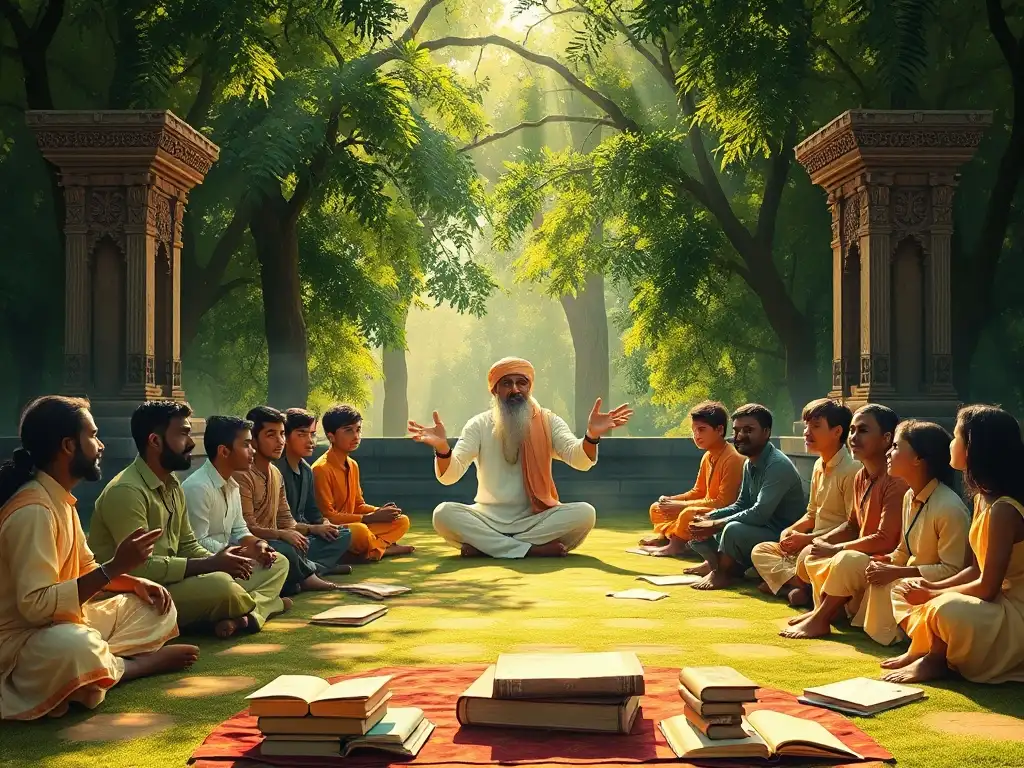
The spiritual dimension of the ancient Indian education system is deeply intertwined with its philosophical underpinnings. Education was not merely a transfer of knowledge but a holistic process aimed at nurturing the mind, body, and spirit. This multidimensional approach fostered an environment where learners were encouraged to explore their inner selves while acquiring knowledge. Central to this philosophy are the concepts of Dharma and the pivotal role of the Guru.
Concepts of Dharma and Knowledge
The term Dharma encompasses a wide range of meanings, including duty, righteousness, and moral order. In the context of ancient Indian education, Dharma was essential in guiding the educational process. It was believed that true knowledge could only be attained when learners understood their responsibilities towards themselves and society.
- Integration of Dharma in Education:
- Moral Framework: Dharma provided a moral framework that influenced the curriculum and educational practices. Students were taught not only academic subjects but also ethical principles, which were seen as essential for personal development.
- Holistic Understanding: Knowledge was viewed as a means to achieve not just intellectual growth but also spiritual enlightenment. The pursuit of knowledge was, therefore, closely linked to understanding one's role in the universe and fulfilling one's duties.
- Application of Knowledge: The application of knowledge in accordance with Dharma was emphasized. Students learned to use their skills and wisdom for the betterment of society, reinforcing the idea that education must serve a higher purpose.
The ancient Indian education system, particularly through the lens of Dharma, sought to cultivate a sense of responsibility and ethical awareness in students. This approach ensured that education was not limited to rote learning but was a transformative experience that shaped the character of individuals.
The Role of Guru in Spiritual Learning
In the ancient Indian education system, the Guru held a revered position as a mentor and spiritual guide. The relationship between a Guru and a student (shishya) was foundational to the learning process, emphasizing the spiritual dimension of education.
- Guidance and Wisdom:
- Personalized Instruction: Gurus provided personalized instruction, tailoring their teachings to the individual's needs and spiritual inclinations. This one-on-one mentorship allowed for deep engagement with both knowledge and personal development.
- Spiritual Awakening: Beyond academic subjects, Gurus played a crucial role in awakening the spiritual consciousness of their students. They imparted wisdom that transcended conventional knowledge, fostering a deeper connection with the self and the cosmos.
- Cultural Transmission:
- Oral Tradition: The Guru-disciple relationship facilitated the transmission of knowledge through oral traditions, including hymns, stories, and philosophical discourses. This method ensured that spiritual and cultural teachings were preserved and passed down through generations.
- Community and Rituals: Education was often embedded within community rituals and practices, further enhancing the spiritual aspect of learning. Gurus would conduct ceremonies that reinforced the values imparted during the educational process.
- Emphasis on Self-Discovery:
- Encouraging Inquiry: Gurus encouraged students to question and explore rather than accept knowledge passively. This emphasis on inquiry fostered self-discovery, enabling students to find their own paths in both knowledge and spirituality.
- Transformational Learning: The ultimate goal of the Guru was to guide the student towards self-realization and enlightenment, making the learning process transformative rather than merely informational.
The spiritual philosophy of the ancient Indian education system was characterized by the integration of Dharma and the profound influence of the Guru. This holistic approach ensured that education was a transformative journey, enriching the mind and spirit of learners while instilling a sense of responsibility and purpose.
Practices and Curriculum in Ancient Indian Education
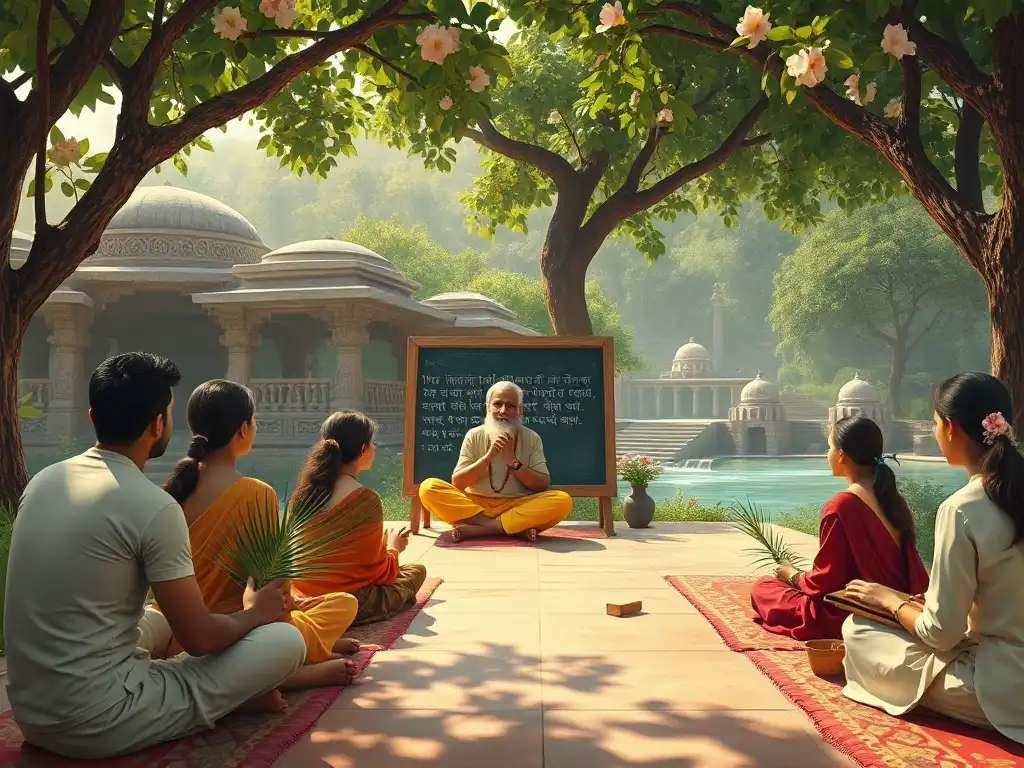
The ancient Indian education system was deeply intertwined with the spiritual practices and philosophical teachings of the time. Education was not merely about imparting knowledge but also about cultivating character, ethics, and a profound understanding of the universe. The curriculum was designed to promote holistic development, where the spiritual dimension was as crucial as the academic one.
Integration of Spiritual Practices in the Curriculum
In ancient India, education was often conducted in Gurukuls, where students lived and learned under the guidance of a guru. The integration of spiritual practices into the curriculum was fundamental. Students were not only taught academic subjects but were also engaged in various spiritual practices, including:
- Meditation and Mindfulness: Daily meditation sessions helped students achieve mental clarity and emotional balance. This practice fostered a sense of inner peace and self-awareness, crucial for personal development.
- Rituals and Prayers: Regular participation in rituals and prayers was an essential part of the daily routine. These practices instilled a sense of discipline and connection to the divine, promoting spiritual growth alongside intellectual pursuits.
- Philosophical Discussions: The curriculum included discussions on texts such as the Vedas, Upanishads, and various philosophical doctrines. These texts provided students with insights into the nature of existence, ethics, and the pursuit of truth.
- Service and Charity: Engaging in acts of service (Seva) was encouraged as a means to cultivate compassion and humility. This practice reinforced the idea that knowledge should be used for the betterment of society.
The spiritual practices integrated into the educational framework of ancient India aimed to develop not only knowledgeable individuals but also responsible and ethical citizens.
Subjects Taught with a Focus on Spiritual Development
The subjects taught within the ancient Indian education system were diverse, each contributing to both intellectual and spiritual growth. Key subjects included:
- Philosophy: Students explored various philosophical schools, such as Vedanta and Jainism. This subject emphasized critical thinking and the search for ultimate truths.
- Literature and Poetry: Ancient Indian literature, including epics like the Mahabharata and Ramayana, was taught to instill moral values and cultural identity. These texts often contained deep spiritual lessons and ethical dilemmas, allowing students to reflect on their own lives.
- Mathematics and Astronomy: While these subjects may appear purely academic, they were often linked to the greater understanding of the cosmos and the divine order of the universe. The study of mathematics, especially in relation to astrology, was viewed as a means to comprehend the spiritual significance of celestial movements.
- Arts and Music: The arts were not merely for entertainment; they were seen as a form of worship and a pathway to spiritual expression. Music, dance, and visual arts were integrated into the curriculum to nurture creativity and connect students with higher realms of consciousness.
- Yoga and Physical Education: Yoga was a vital component of the education system, promoting physical health and spiritual well-being. Students practiced various postures (asanas) and breathing techniques (pranayama) to harmonize body and mind.
The subjects taught in ancient Indian education were intricately linked to the spiritual journey of the students, ensuring that the knowledge acquired was not only for personal advancement but also contributed to the collective consciousness of society.
Through this multifaceted approach, the ancient Indian education system succeeded in creating well-rounded individuals who were equipped to lead lives of purpose, integrity, and spiritual fulfillment.
The Influence of Religion on Learning

Hinduism and Its Impact on Educational Practices
Hinduism, as one of the oldest religions in the world, has profoundly shaped the ancient Indian education system. The integration of spiritual beliefs and educational practices can be traced back to the Vedas, which not only served as religious texts but also as educational resources. The Vedic texts emphasized the importance of knowledge (jnana) and learning as a means to achieve both material and spiritual goals.
Core Principles of Hindu Educational Philosophy:
- Dharma: The concept of duty and righteousness, which guided the moral education of students.
- Samskara: The series of rites of passage that marked the educational journey, emphasizing character development alongside academic learning.
- Guru-Shishya Tradition: The teacher-student relationship was considered sacred, where the guru imparted wisdom to the shishya (student) through personalized instruction, fostering not just knowledge but also ethical values.
In addition to textual studies, education was often conducted in Ashrams—hermitages where students lived in close proximity to their teachers. This immersive environment allowed for learning through experience, meditation, and participation in rituals, further intertwining spiritual practices with education.
Buddhism's Contribution to Educational Philosophies
Buddhism emerged as a significant force in the evolution of the ancient Indian education system, particularly through its emphasis on inquiry and experiential learning. The teachings of Buddha encouraged questioning and critical thinking, moving away from rote memorization that was prevalent in some Hindu educational practices.
Key Features of Buddhist Educational Contributions:
- Monastic Education: Buddhist monasteries became centers of learning, where monks studied texts, engaged in discussions, and practiced meditation. This created an environment conducive to both intellectual and spiritual growth.
- Emphasis on Practical Wisdom: Buddhist education focused on the Four Noble Truths and the Eightfold Path, guiding students toward moral and ethical living. This practical application of teachings allowed learners to integrate philosophy into daily life.
- Inclusivity and Accessibility: Unlike some traditions that were exclusive to certain classes, Buddhist teachings encouraged the participation of all individuals, regardless of caste or background, fostering a more inclusive educational system.
The synthesis of these elements from both Hindu and Buddhist traditions laid the groundwork for a rich and diverse educational landscape in ancient India, one that valued spiritual development alongside intellectual achievement.
With the foundational influence of these religious philosophies, the ancient Indian education system not only aimed at academic excellence but also sought to cultivate moral character, fostering a harmonious balance between the mind and spirit.
Case Studies of Prominent Ancient Indian Educational Institutions
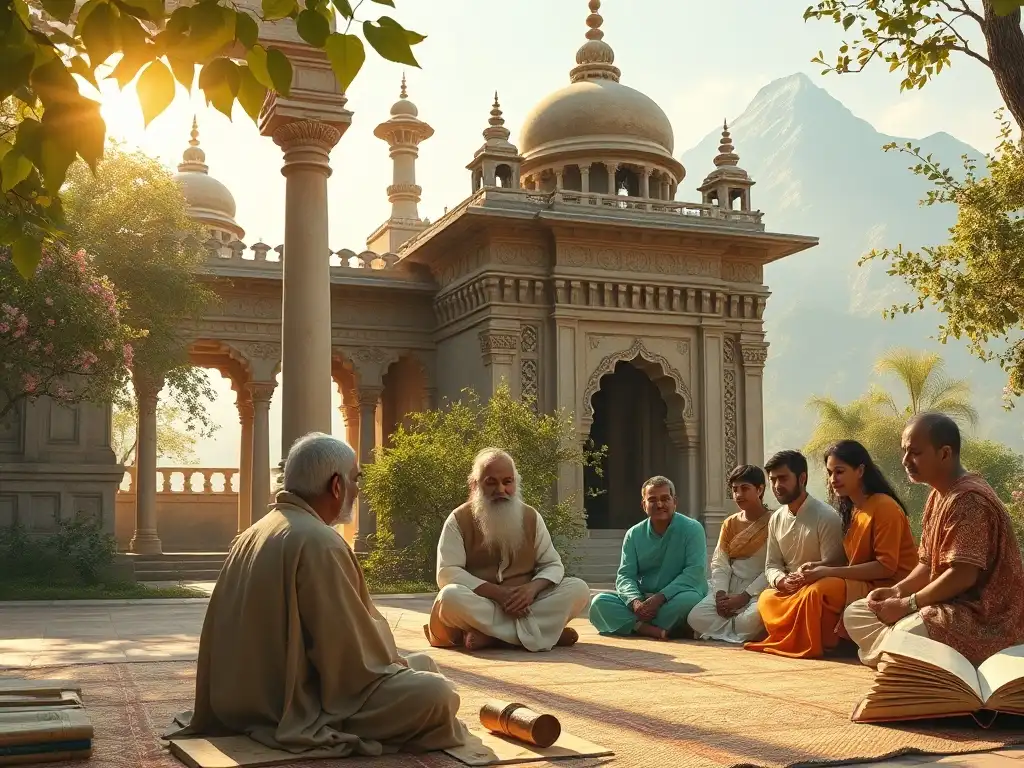
Nalanda University: A Center for Spiritual and Intellectual Learning
Nalanda University, established in the 5th century CE, is often celebrated as one of the most significant centers of learning in ancient India. Located in present-day Bihar, it attracted scholars from various regions, including China, Korea, Japan, Tibet, Mongolia, and Sri Lanka. This diverse influx of students turned Nalanda into a melting pot of cultures and ideas, facilitating a unique blend of knowledge and spirituality.
Curriculum and Spiritual Integration
The curriculum at Nalanda was not merely academic; it intricately wove spiritual teachings into the educational framework. Subjects ranged from philosophy, astronomy, and medicine to logic and grammar. However, the underlying philosophy was deeply rooted in spiritual development. Students were encouraged to engage in meditative practices and self-reflection, fostering an environment conducive to both intellectual and spiritual growth.
- Philosophical Disciplines: The teachings were heavily influenced by Buddhist philosophy, with a strong emphasis on ethics and morality.
- Meditative Practices: Students participated in daily meditative sessions aimed at enhancing concentration and facilitating a deeper understanding of the material studied.
Influential Figures
Prominent scholars such as Vasubandhu, Dharmakirti, and Buddhaghosa contributed significantly to the intellectual legacy of Nalanda. Their teachings often emphasized the importance of introspection and ethical living, which they integrated into their lessons, making the educational experience holistic.
“Education is not merely the accumulation of knowledge; it is the cultivation of the mind and spirit.” - An ancient scholar from Nalanda.
Takshashila: The Fusion of Knowledge and Spirituality
Takshashila, another renowned ancient Indian educational institution, is believed to have existed from around the 6th century BCE to the 5th century CE. Located in what is now Pakistan, Takshashila is noted for being one of the earliest universities in the world, attracting students from across the subcontinent and beyond.
A Diverse Curriculum
The educational system at Takshashila was remarkably diverse, encompassing a wide range of subjects, including:
- Medicine: Students learned about herbal treatments and surgical procedures.
- Astronomy: The study of celestial bodies and their influence on earthly affairs was a significant part of the curriculum.
- Military Science: Training in warfare strategies and tactics was essential for many students, particularly those from royal families.
What set Takshashila apart was its unique approach to integrating spirituality with academic learning. The teachings were often intertwined with the philosophical tenets of Hinduism and Buddhism, encouraging students to seek a deeper understanding of life beyond mere intellectual pursuits.
Spiritual Practices and Learning Environment
The educational environment at Takshashila promoted spiritual practices alongside academic study. Students engaged in:
- Rituals and Offerings: Daily rituals were conducted to honor the deities, fostering a connection between the spiritual and the mundane.
- Group Discussions: These sessions often revolved around ethical dilemmas and philosophical questions, encouraging students to apply their learning to real-life scenarios.
This holistic approach contributed to the development of well-rounded individuals who not only excelled in their fields but also held a profound respect for spiritual traditions.
“True knowledge is that which leads to the liberation of the mind and spirit.” - An aphorism attributed to Takshashila scholars.
Both Nalanda and Takshashila exemplify the rich tapestry of the ancient Indian education system, where intellectual growth was harmoniously blended with spiritual development. These institutions laid the groundwork for future educational practices, emphasizing the importance of nurturing both the mind and the spirit.
The Legacy of Spiritual Learning in Modern Education
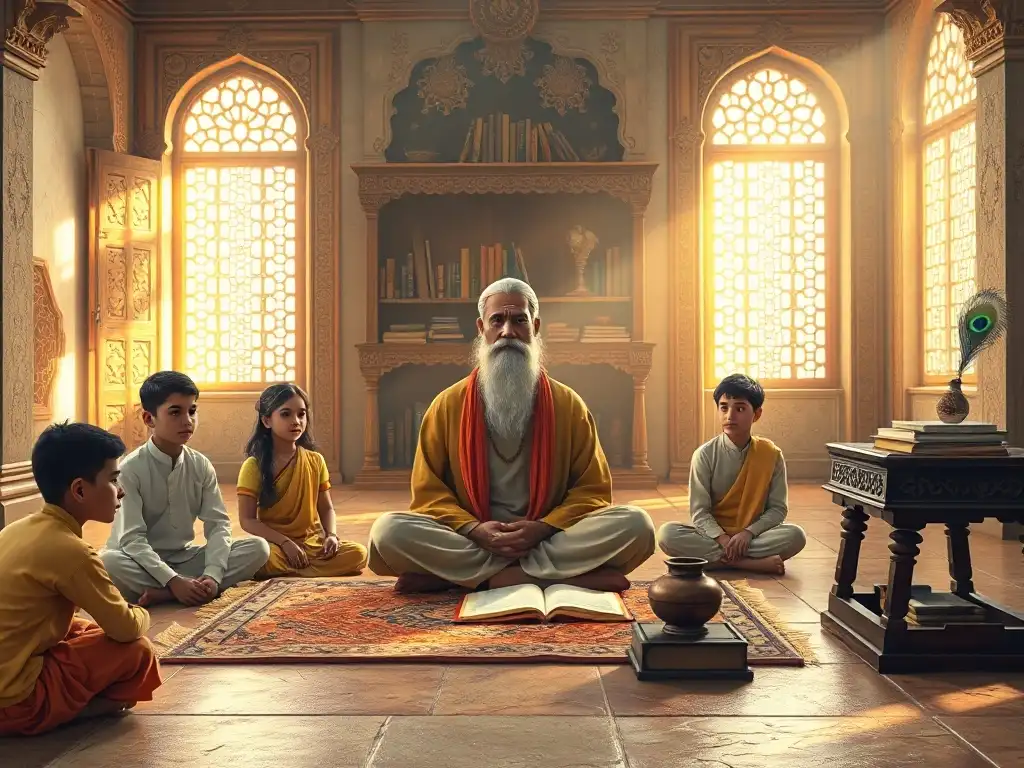
The ancient Indian education system was deeply intertwined with spirituality, emphasizing holistic development. This legacy has significantly influenced modern educational practices, particularly in India. The spiritual dimension of learning in ancient India not only fostered intellectual growth but also encouraged moral and ethical development among students.
Influence on Contemporary Educational Systems in India
The principles of the ancient Indian education system, particularly its focus on spirituality, continue to permeate contemporary educational frameworks in India. Current educational institutions often incorporate elements that draw from the spiritual practices of the past, aiming for a more balanced education. Here are some key influences:
- Holistic Development: Modern schools emphasize the importance of nurturing not just academic skills but also emotional and spiritual intelligence. This holistic approach mirrors the ancient belief that education should cultivate the mind, body, and spirit.
- Moral Education: Many contemporary curricula include ethical teachings and values inspired by ancient texts such as the Bhagavad Gita and the Upanishads. This inclusion aims to instill a sense of responsibility and ethical behavior in students.
- Meditation and Mindfulness: Practices like yoga and meditation, rooted in ancient education, have gained popularity in modern schools. These practices help students manage stress and enhance their concentration, aligning with the ancient focus on self-awareness and inner peace.
- Traditional Knowledge Systems: There is a growing recognition of the importance of traditional Indian knowledge systems, such as Ayurveda and Vedic mathematics, in contemporary education. This revival reflects a desire to integrate spiritual wisdom with modern scientific understanding.
The influence of the ancient Indian education system on contemporary practices can be summarized in the following table:
| Aspect | Ancient Education System | Modern Educational Systems |
|---|---|---|
| Focus | Holistic development (mind, body, spirit) | Emphasis on holistic education |
| Moral Education | Ethical teachings from texts like the Bhagavad Gita | Inclusion of values and ethics in curricula |
| Mindfulness Practices | Meditation and yoga practices | Adoption of mindfulness in schools |
| Traditional Knowledge | Vedic sciences and arts | Revival of Ayurveda and Vedic mathematics |
Reviving Ancient Practices in Modern Curricula
Reviving ancient practices within modern curricula is essential for creating a well-rounded educational experience that honors the spiritual dimensions of learning. Several initiatives and approaches are being undertaken to achieve this revival:
- Curriculum Redesign: Educational boards are increasingly recognizing the need to incorporate spiritual teachings into the curriculum. This includes integrating concepts of dharma (duty), karma (action), and moksha (liberation) into various subjects.
- Workshops and Training: Institutions are organizing workshops for educators to train them in ancient pedagogical methods. These workshops focus on storytelling, experiential learning, and inquiry-based approaches that were hallmarks of the ancient education system.
- Cultural Programs: Schools are hosting cultural events that celebrate ancient Indian traditions, including classical music, dance, and art forms. These programs aim to connect students with their cultural heritage and reinforce the spiritual aspects of their education.
- Collaborative Learning: Inspired by the ancient tradition of group learning, modern educational models are encouraging collaborative projects and discussions, fostering a sense of community and shared learning experiences.
By embracing these ancient practices, the modern education system not only enriches the learning experience but also cultivates a deeper understanding of oneself and one’s place in the world. This revival serves as a bridge connecting the wisdom of the past with the needs of contemporary society, ultimately contributing to a more meaningful educational journey.
Conclusion: The Lasting Impact of Spirituality in Ancient Indian Education
The spiritual dimension of learning in ancient Indian education systems has left an indelible mark on the philosophical and educational landscape of the region. Rooted in a belief that knowledge transcends mere academic achievement, ancient Indian education emphasized the development of the whole person—body, mind, and spirit. This holistic approach fostered moral values, self-discipline, and a sense of community among learners, shaping not only their intellectual capacities but also their ethical frameworks.
The legacy of this spiritual learning approach can be seen in contemporary educational philosophies that prioritize character formation alongside academic excellence. The integration of spirituality into education has influenced various modern educational practices, advocating for a balance between intellect and inner growth. As such, the ancient Indian education system serves as a poignant reminder of the importance of nurturing the spirit in the pursuit of knowledge.
Reflections on the Spiritual Dimension of Learning
The spiritual aspect of ancient Indian education was not merely an auxiliary feature but a core principle guiding the pedagogical methods and curriculum. At institutions such as the Gurukul system, education was imparted in an environment steeped in cultural and spiritual traditions. Here are some key reflections on this spiritual dimension:
- Interconnectedness of Knowledge: Ancient Indian thinkers like Adi Shankaracharya articulated that all forms of knowledge are interconnected, stemming from a singular source. This perspective encouraged students to explore various disciplines, from the sciences to the arts, fostering a comprehensive understanding of life.
- Moral and Ethical Instruction: Education was infused with teachings from texts like the Bhagavad Gita, which emphasized dharma (righteousness) and personal duty. This moral education shaped character and decision-making processes for students, preparing them for responsible citizenship.
- Meditative Practices: Techniques such as meditation and yoga were integral to learning, promoting mental clarity, focus, and emotional stability. These practices allowed students to cultivate self-awareness and inner peace, essential for effective learning.
The enduring influence of these principles is evident in modern educational discourse, where there is a growing recognition of the need for spirituality in education to foster well-rounded individuals.
Future Directions for Research in Ancient Indian Education Systems
As we delve deeper into the nuances of the ancient Indian education system, several areas merit further exploration:
- Comparative Studies: Research comparing the spiritual dimensions of ancient Indian education with other global educational practices could yield valuable insights into universal themes of learning and growth. Such studies could highlight commonalities and divergences in educational philosophies worldwide.
- Impact on Modern Pedagogy: Investigating how ancient spiritual principles can be integrated into contemporary educational frameworks may provide innovative approaches to curriculum design. This could include the incorporation of mindfulness practices and ethical discussions in classrooms.
- Cultural Transmission: Understanding how the spiritual aspects of ancient education were transmitted across generations can shed light on the resilience of cultural values and their relevance in today's rapidly changing society.
- Interdisciplinary Approaches: Research that combines insights from philosophy, history, and psychology could enrich our understanding of the holistic nature of ancient Indian education, revealing its complexities and implications for modern learning environments.
By pursuing these directions, scholars can contribute to a more profound appreciation of the ancient Indian education system and its spiritual dimensions, ultimately enhancing educational practices and curricula in a modern context. The wisdom of the past continues to inspire new generations, reminding us of the significance of nurturing both the mind and spirit in the quest for knowledge.
Frequently Asked Questions
What was the ancient Indian education system like?
The ancient Indian education system was characterized by gurukuls, where students lived with their teachers to learn various subjects, including spirituality, philosophy, and the arts.
How did spirituality influence the ancient Indian education system?
Spirituality played a crucial role, as education was often intertwined with religious teachings and philosophical discussions, fostering a holistic development of the individual.
What subjects were taught in ancient Indian education?
Subjects included Vedic studies, grammar, mathematics, astronomy, and medicine, emphasizing both practical skills and spiritual wisdom.
Who were the primary educators in ancient India?
Gurus or teachers held a revered status, guiding students through personalized instruction and instilling values of discipline and respect.
What legacy did the ancient Indian education system leave behind?
The ancient Indian education system laid the foundation for modern educational practices, particularly in areas like curriculum development and the importance of holistic education.
Final Reflection: Embracing the Spiritual Legacy of Ancient Indian Education
The exploration of the spiritual dimension in ancient Indian education reveals its profound relevance in today's world, where the quest for holistic learning is more critical than ever. In a time marked by rapid technological advancement and often superficial educational practices, the ancient Indian education system stands as a beacon of wisdom, emphasizing not just intellectual growth but also spiritual and ethical development. This holistic approach serves as a reminder that education should nurture the mind, body, and spirit, fostering well-rounded individuals who contribute positively to society.
The influence of the ancient Indian education system continues to resonate in contemporary discussions about learning and personal development. The integration of spirituality into education encourages a deeper understanding of self and community, promoting values such as compassion, mindfulness, and interconnectedness. As Mahatma Gandhi once said, "> The true measure of any society can be found in how it treats its most vulnerable members." This perspective underscores the importance of nurturing not just academic excellence but also moral integrity, a lesson that remains crucial in our current educational landscape.
As we reflect on the teachings of ancient Indian education, let us invite ourselves to embrace a more holistic approach to learning in our own lives. Consider how you can integrate spiritual practices, such as mindfulness or ethical discussions, into your educational journey or daily routine. By doing so, you not only honor the rich legacy of ancient wisdom but also contribute to a more compassionate and enlightened society. The path to true knowledge is not just about acquiring information; it is about fostering a deeper connection with ourselves and the world around us.
Unveil the Spiritual Wisdom of Ancient Education Today!
Thank you for diving into the captivating world of Ancient Indian education with us! You’ve uncovered the profound connection between spirituality and learning that has influenced countless generations. Now, it’s time to take this knowledge beyond the page and transform your own educational journey.
Here’s how you can embrace and explore this spiritual dimension further:
- Integrate mindfulness practices into your daily learning routine to cultivate awareness and deepen your understanding.
- Explore ancient texts such as the Vedas or Upanishads to uncover timeless wisdom that can enrich modern education.
- Join a community group or forum dedicated to discussing and sharing insights about spiritual learning experiences—collaboration is the first step toward growth!
What unique ways will you incorporate spiritual learning into your life? We would love to hear your thoughts!