
The Impact of Ancient Indian Educational Practices on Neighboring Civilizations

Welcome to Ancient India History, where we embark on a fascinating journey through the rich and diverse tapestry of ancient Indian civilizations. From the remarkable achievements of the Indus Valley to the intellectual heights of the Gupta Empire, our exploration unveils the profound contributions that shaped not only India but also neighboring cultures. In our featured article, we delve into the Ancient Indian educational influence and its ripple effects across borders.
What transformative practices emerged from these ancient schools of thought, and how did they mold the educational frameworks of surrounding civilizations? Prepare to uncover the answers and ignite your curiosity as you navigate through the intriguing world of ancient Indian education!
Introduction to Ancient Indian Educational Influence
The legacy of ancient Indian educational practices has played a pivotal role in shaping the intellectual landscape of not only India but also neighboring civilizations. From the sophisticated learning environments of the Indus Valley civilization to the structured educational systems that flourished during the Gupta Empire, ancient India was a cradle of knowledge and scholarship.
The influence of these educational practices extended far beyond its borders, impacting cultures in Asia and even reaching the Mediterranean. This article delves into the various elements of ancient Indian educational influence, examining how these practices contributed to the development of educational systems in neighboring regions.
Overview of Ancient Indian Education
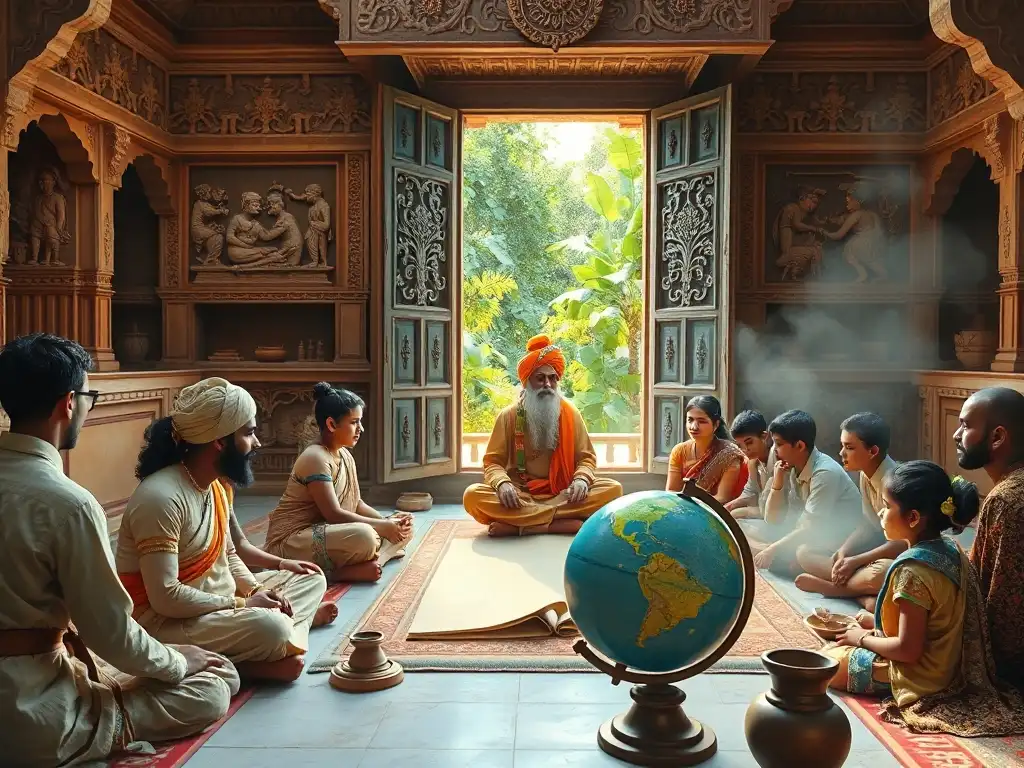
Ancient Indian education was characterized by a blend of spiritual, philosophical, and practical teachings. The education system primarily revolved around the Gurukul model, where students lived with their teacher (guru) and received instruction in various subjects.
- Key Features of Ancient Indian Education:
- Holistic Learning: Emphasis on moral and ethical education alongside academic subjects.
- Diverse Curriculum: Subjects ranged from mathematics and astronomy to philosophy and arts.
- Accessibility: While primarily focused on the Brahmin class, there were provisions for education among other social groups.
This comprehensive approach laid the groundwork for intellectual pursuits in various fields and set a standard for educational practices in surrounding regions.
Importance of Education in Ancient Indian Society
Education in ancient India was not merely a means to acquire knowledge; it was a fundamental aspect of social structure and cultural identity. The significance of education can be summarized in a few key points:
- Social Mobility: Education provided opportunities for individuals to rise in social status, particularly through the attainment of knowledge and skills.
- Cultural Preservation: Through education, ancient texts, philosophies, and traditions were preserved and transmitted across generations.
- Economic Development: Skilled individuals contributed to various sectors, enhancing trade and commerce, and fostering economic growth.
Thus, the educational practices of ancient India served as a cornerstone for societal development, influencing not only local communities but also neighboring civilizations.
Key Elements of Ancient Indian Educational Practices
Gurukul System: The Foundation of Learning
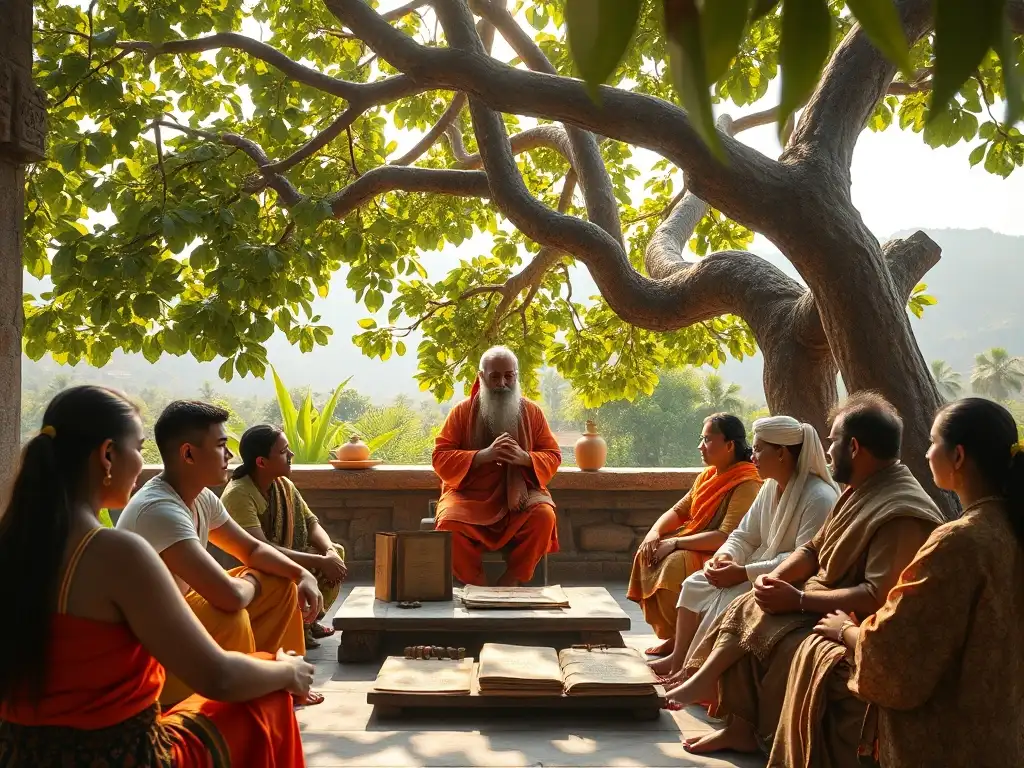
The Gurukul system was integral to ancient Indian education, characterized by a residential setup where students (shishyas) lived with their guru. This system fostered an environment of deep learning and personal growth.
- Characteristics of the Gurukul System:
- Personalized Attention: Small student groups allowed for focused mentorship.
- Life Skills: In addition to academic subjects, students learned practical life skills, including agriculture and crafts.
- Community Engagement: The learning process often involved community participation and service.
This system not only nurtured knowledge but also emphasized the importance of community and collaboration.
Role of Gurus in Ancient Indian Education
Gurus played a vital role in shaping the educational landscape of ancient India. They were not just teachers; they were mentors and spiritual guides who influenced their students profoundly.
- Responsibilities of Gurus:
- Intellectual Guidance: Gurus imparted knowledge and wisdom, fostering critical thinking and intellectual growth.
- Moral Development: They were responsible for instilling ethical values, shaping the character of their students.
- Cultural Transmission: Gurus ensured the transmission of cultural and spiritual teachings through storytelling and oral traditions.
The guru-shishya relationship was foundational to the educational experience, emphasizing respect, devotion, and the quest for knowledge.
Curriculum and Subjects Taught in Ancient India
The curriculum of ancient Indian education was diverse and multifaceted, encompassing a wide range of subjects that catered to various aspects of life.
- Subjects Included:
- Literature and Philosophy: Study of sacred texts, poetry, and philosophical discourses.
- Mathematics and Astronomy: Advanced mathematical concepts and astronomical observations.
- Arts and Music: Training in various forms of art, dance, and music, reflecting cultural richness.
The breadth of subjects taught in ancient Indian educational institutions not only provided a comprehensive learning experience but also laid the foundation for future intellectual endeavors in neighboring civilizations.
Through this exploration of ancient Indian educational influence, we can appreciate the profound impact that these practices had on the development of educational systems across the region, fostering a legacy that continues to inspire modern education today.
The Spread of Ancient Indian Educational Practices
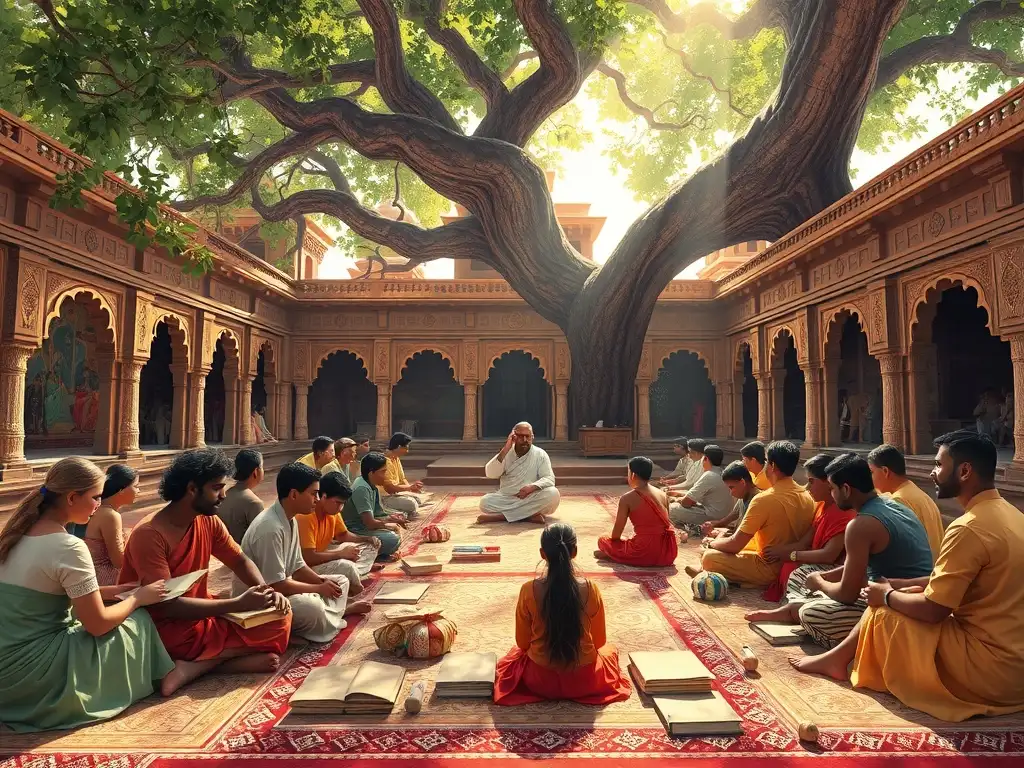
The educational practices of ancient India were characterized by a unique blend of philosophical inquiry, experiential learning, and structured curricula. These methods significantly influenced neighboring civilizations as they evolved through various trade routes and cultural exchanges. The spread of these educational practices can be traced back to ancient institutions like the famous Nalanda and Takshashila, which attracted scholars from distant lands, including those in Central Asia, the Middle East, and Southeast Asia.
These centers of learning not only focused on religious and philosophical texts but also included subjects such as mathematics, astronomy, medicine, and logic. The curriculum was comprehensive and aimed at nurturing well-rounded individuals who could contribute to society. As scholars traveled to and from these institutions, they carried with them not just knowledge but also the pedagogical approaches of ancient Indian education, which emphasized critical thinking, dialogue, and debate.
Influence on Neighboring Civilizations
The influence of ancient Indian educational practices on neighboring civilizations is evident in several historical contexts. For instance, in Southeast Asia, particularly in regions like present-day Thailand and Indonesia, Indian traders and scholars introduced concepts of governance, literature, and ethics through educational exchanges. These ideas were often intertwined with local customs, leading to the emergence of hybrid educational systems that reflected both Indian and indigenous practices.
Moreover, the spread of Buddhism, which was rooted in Indian philosophy, played a crucial role in disseminating educational ideals across Asia. Monasteries became centers of learning that not only propagated religious teachings but also incorporated various aspects of Indian science and philosophy, thus influencing educational systems in countries like Japan, Korea, and China.
Trade Routes and Knowledge Transfer
Trade routes were instrumental in the transfer of knowledge and educational practices from ancient India to other civilizations. The Silk Road, for example, facilitated the movement of scholars, traders, and artisans, creating a melting pot of cultures and ideas. As merchants exchanged goods, they also shared knowledge, including mathematics, medicine, and literary forms originating from Indian educational traditions.
The maritime trade routes linking India to the Arabian Peninsula and beyond also contributed to this knowledge transfer. As Indian scholars traveled across these routes, they established institutions and informal learning environments that allowed for the blending of educational practices. This exchange not only enriched local cultures but also laid the foundation for a more interconnected world where ideas flowed freely across borders.
Comparative Analysis: Ancient Indian Education vs. Other Civilizations
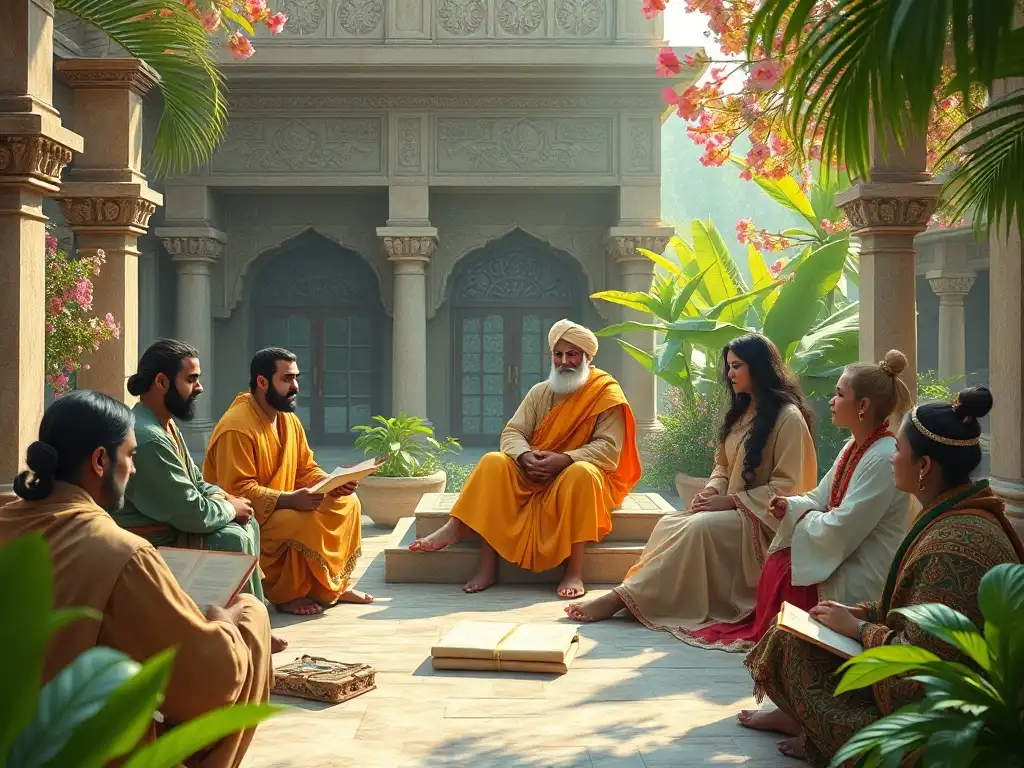
A comparative analysis of ancient Indian educational practices with those of other civilizations reveals both unique features and commonalities. While many ancient cultures valued education, the methodologies and subjects of study often differed significantly.
Educational Practices in Ancient Greece vs. Ancient India
In ancient Greece, education was heavily influenced by the philosophical teachings of figures like Socrates, Plato, and Aristotle. The Greek approach emphasized rhetoric, logic, and the arts, often focusing on the individual’s role within the state. The educational system was more formalized, with schools dedicated to specific philosophical doctrines.
In contrast, ancient Indian education was more holistic, incorporating a diverse range of subjects that included not just philosophical inquiry but also practical sciences and arts. The Gurukul system, wherein students lived with their teachers, fostered a strong mentor-student relationship that encouraged experiential learning and personal development. While both civilizations valued education highly, their approaches reflect their distinct cultural priorities: Greece’s focus on civic duty versus India’s emphasis on spiritual and practical knowledge.
The Role of Education in Ancient China and its Influence from India
Ancient China also had a sophisticated educational system, heavily influenced by Confucianism, which emphasized moral integrity, social responsibility, and respect for authority. The examination system introduced during the Han Dynasty focused on rigorous testing of knowledge and moral character, serving as a pathway to government service.
India’s educational practices influenced Chinese thought, particularly through the introduction of Buddhist texts and philosophies. The dissemination of Indian teachings in China, coupled with the establishment of Buddhist monasteries, allowed for an exchange of educational practices. Chinese scholars adopted various Indian concepts, including meditation and philosophical inquiry, enriching their own educational systems.
Ancient Indian educational influence extended far beyond its borders, shaping the intellectual landscapes of neighboring civilizations through trade, cultural exchange, and the establishment of learning centers that emphasized a comprehensive approach to education. This legacy of educational practices continues to resonate in various forms in contemporary educational systems across the globe.
Lasting Legacy of Ancient Indian Educational Practices
The educational practices of ancient India have left a profound and enduring legacy that transcends geographical boundaries. One of the most significant aspects of this legacy is the emphasis on holistic education, which integrated various fields such as philosophy, mathematics, astronomy, and the arts. This comprehensive approach not only cultivated intellectual prowess but also fostered moral and ethical values among students.
Institutions like Takshashila and Nalanda became centers of learning, attracting scholars from diverse regions, including China, Tibet, and Southeast Asia. These institutions exemplified the concept of free inquiry and debate, promoting an environment where knowledge was not merely transmitted but actively created. The innovative pedagogical methods, such as the Socratic dialogue, encouraged students to think critically and independently, setting a foundation for educational practices that would resonate through time.
Moreover, the influence of ancient Indian education extended to the curricula itself, which often included subjects like grammar, logic, and rhetoric. These subjects laid the groundwork for various educational systems globally, influencing not just neighboring civilizations but also contributing to the evolution of educational philosophies in the West.
Modern Educational Systems Inspired by Ancient Indian Methods
Today, many modern educational systems around the world draw inspiration from the ancient Indian methods of teaching and learning. The concept of Gurukula, where students lived with their teacher and learned through direct interaction and mentorship, has parallels in contemporary systems that emphasize experiential learning and teacher-student relationships.
In countries like Japan and South Korea, there is a noticeable appreciation for the holistic approach to education that ancient India championed. Schools implementing well-rounded curricula that promote academic excellence alongside character development mirror this ancient philosophy. Furthermore, the emphasis on critical thinking and dialogue in ancient Indian education can be seen in modern pedagogical frameworks that encourage collaborative learning and inquiry-based education.
Additionally, the integration of diverse subjects in curricula, much like the ancient Indian model, is gaining traction in educational systems focused on STEM (science, technology, engineering, and mathematics) alongside the humanities. This interdisciplinary approach reflects the ancient Indian understanding of the interconnectedness of knowledge.
Contributions to Global Educational Philosophies
The contributions of ancient Indian educational practices extend beyond immediate influence; they have significantly shaped global educational philosophies. The core tenets of Dharma (duty), Karma (action), and Moksha (liberation) provided a philosophical framework that not only guided personal conduct but also influenced educational objectives worldwide.
Philosophers such as Confucius and Aristotle were contemporaries of Indian scholars and were likely inspired by the educational principles that originated in ancient India. The emphasis on ethics and morality in education can be traced back to these ancient teachings, which have resonated through various cultures, encouraging a sense of responsibility and social consciousness among learners.
Furthermore, the ancient Indian emphasis on debate and dialogue as tools for learning has found resonance in contemporary educational practices that prioritize critical thinking. This legacy of debate is evident in the Socratic method, which encourages questioning and dialogue, a fundamental aspect of modern educational philosophy that aims to develop independent thinkers.
Conclusion
Summary of Ancient Indian Educational Influence
The ancient Indian educational influence has profoundly affected the development of educational practices and philosophies across the globe. From the establishment of renowned institutions to the introduction of holistic and interdisciplinary curricula, the legacy of ancient India continues to inspire modern education. The principles of ethical conduct, critical thinking, and the pursuit of knowledge remain vital in shaping educational systems today.
Reflection on the Importance of Historical Educational Practices
Reflecting on the importance of historical educational practices, it is evident that they provide valuable insights into the evolution of learning. Understanding how ancient Indian methodologies influenced neighboring civilizations enriches our appreciation for the diverse tapestry of educational thought. As we navigate the challenges of contemporary education, revisiting these historical practices can offer guidance and inspiration, ensuring that the quest for knowledge remains a holistic and inclusive journey for future generations.
References
The influence of ancient Indian educational practices on neighboring civilizations is well-documented in various academic texts and historical analyses. Researchers and historians have explored the ways in which these educational systems shaped learning, philosophy, and cultural exchanges across regions. Below are some key references that provide insight into this topic:
- Cultural Interactions: "The Cultural History of Ancient India" by R. C. Majumdar highlights the interactions between Indian and neighboring cultures, detailing the spread of educational ideas.
- Philosophical Texts: "Indian Philosophy: A Very Short Introduction" by Sue Hamilton delves into the philosophical underpinnings of ancient Indian education and its impact beyond Indian borders.
- Historical Context: "A History of Ancient India" by Romila Thapar offers a comprehensive overview of educational practices and their influence on contemporary societies.
Suggested Reading on Ancient Indian Education
For those interested in a deeper exploration of the educational practices of ancient India and their broader implications, the following readings are recommended:
- "The Gurukul System of Education" by V. R. K. Murthy - This book examines the traditional Gurukul system, its methodologies, and its impact on student learning and character building.
- "Education in Ancient India" by Dr. K. S. Shukla - A detailed study of various educational institutions in ancient India, including their curricula and pedagogical approaches.
- "The Role of Education in Ancient Indian Society" by R. N. Sharma - This work discusses the societal aspects of education and how it contributed to the overall development of civilization.
Academic Sources for Further Research
For further academic inquiry into ancient Indian educational influence, consider the following sources:
- Journal Articles: Articles published in the "Indian Journal of History of Science" provide empirical studies on various aspects of ancient education and its cross-cultural exchanges.
- Theses and Dissertations: Many universities maintain digital repositories of theses that focus on ancient Indian education. Searching for keywords like "ancient Indian educational practices" can yield valuable research.
- Conferences and Proceedings: Attending conferences on South Asian history can uncover new research and discussions regarding the educational systems of ancient India and their impacts on neighboring civilizations.
These sources collectively underscore the significance of ancient Indian educational practices and their lasting legacy in shaping educational frameworks across cultures.
- Introduction to Ancient Indian Educational Influence
- Key Elements of Ancient Indian Educational Practices
- The Spread of Ancient Indian Educational Practices
- Comparative Analysis: Ancient Indian Education vs. Other Civilizations
- Lasting Legacy of Ancient Indian Educational Practices
- Modern Educational Systems Inspired by Ancient Indian Methods
- Contributions to Global Educational Philosophies
- Conclusion
- References
- What were the key features of ancient Indian educational practices?
- How did ancient Indian education influence neighboring civilizations?
- What subjects were taught in ancient Indian educational institutions?
- How did the caste system affect education in ancient India?
- What is the legacy of ancient Indian educational influence today?
Frequently Asked Questions
What were the key features of ancient Indian educational practices?
Ancient Indian educational practices emphasized holistic learning, including spiritual, moral, and practical knowledge. Institutions like Gurukuls and Nalanda University played a vital role in this educational framework.
How did ancient Indian education influence neighboring civilizations?
The educational practices of ancient India significantly impacted neighboring civilizations, particularly through the dissemination of knowledge in mathematics, astronomy, and philosophy. This influence can be seen in Southeast Asia and parts of the Middle East.
What subjects were taught in ancient Indian educational institutions?
Subjects such as grammar, philosophy, mathematics, astronomy, and the Vedas were central to the curriculum. The emphasis was on critical thinking and debate, fostering a rich intellectual environment.
How did the caste system affect education in ancient India?
The caste system influenced access to education, as traditionally, only the Brahmins and select Kshatriyas received formal education. However, some Shudras and women could still gain knowledge through oral traditions and informal settings.
What is the legacy of ancient Indian educational influence today?
The legacy of ancient Indian educational practices continues to shape modern education systems, particularly in the emphasis on holistic development and the integration of spiritual and intellectual growth in learning.
Final Reflection: The Enduring Legacy of Ancient Indian Educational Influence
The profound impact of ancient Indian educational practices on neighboring civilizations continues to resonate in today's world. As we explore the intricate web of knowledge that has woven through cultures, it becomes evident that these ancient systems not only shaped the intellectual landscapes of their time but also laid the groundwork for modern educational philosophies. The legacy of these practices serves as a reminder of the power of knowledge and its ability to transcend borders and epochs.
The influence of ancient Indian education is not merely a historical footnote; it is a living testament to the interconnectedness of human thought and culture. From the establishment of universities like Nalanda and Takshashila to the emphasis on holistic learning, these practices have inspired countless generations. As Mahatma Gandhi once said, “Live as if you were to die tomorrow. Learn as if you were to live forever.” This quote encapsulates the essence of lifelong learning, a principle deeply rooted in ancient Indian educational traditions that continues to shape our approach to education today.
As we reflect on the lessons of ancient Indian educational influence, let us embrace the call to cultivate a lifelong love for learning in our own lives. Consider how you can integrate these timeless principles into your daily routine, fostering curiosity and a quest for knowledge. Whether through formal education or personal exploration, the spirit of inquiry and wisdom from ancient practices can guide us toward a more enlightened future. Take a moment to reflect on your own educational journey and envision how you can contribute to the ongoing legacy of knowledge that transcends time and space.
Unveil the Wisdom of Ancient Indian Education!
Thank you for diving into the fascinating world of ancient Indian educational practices! You've uncovered insights that not only highlight their significance but also their profound impact on neighboring civilizations. Now, it’s time to take that knowledge a step further.
Here are some actionable steps you can take to deepen your understanding and share this wisdom with others:
- Explore ancient texts or resources about the Gurukul system and its philosophy in depth—visit your local library or an online archive to discover more.
- Engage with others by discussing your insights—share this article on your favorite social media platform and spark a conversation about the relevance of these practices in today's educational landscape.
- Join a community or forum focused on ancient education—connect with like-minded individuals who are passionate about history and culture.
What aspect of ancient Indian education do you find most inspiring, and how do you think it could influence contemporary teaching methods?