
From Nalanda to Takshashila: A Journey Through Ancient Indian Education


Welcome to Ancient India History, where we embark on a fascinating journey through time to uncover the profound legacies of ancient Indian civilizations. In this exploration, we delve into the intriguing realm of the ancient Indian education system, tracing its roots from the illustrious institutions of Nalanda and Takshashila to its far-reaching influence on modern education. What made these centers of learning so revolutionary?
How did they shape the minds of scholars and thinkers? As you navigate through our content, prepare to unlock the secrets of a vibrant educational heritage that continues to inspire today. Join us as we unravel the stories that have shaped human thought and culture!
- Introduction to Ancient Indian Education System
- Nalanda University: A Beacon of Learning
- Takshashila: The Cradle of Knowledge
- Comparative Analysis of Nalanda and Takshashila
- The Role of Gurukuls in Ancient Indian Education
- The Legacy of Ancient Indian Education
- Conclusion: The Enduring Impact of Ancient Indian Education
-
Frequently Asked Questions
- What was the significance of Nalanda in ancient Indian education?
- How did Takshashila contribute to the ancient Indian education system?
- What subjects were commonly taught in ancient Indian universities?
- How did the ancient Indian education system differ from modern systems?
- What were the key features of the ancient Indian education system?
- Final Reflection: The Enduring Legacy of Ancient Indian Education
- Embark on Your Own Educational Odyssey!
Introduction to Ancient Indian Education System
The ancient Indian education system is a remarkable aspect of the country's historical legacy, showcasing a complex and rich framework that significantly contributed to the intellectual and cultural heritage of India. From the revered halls of Nalanda to the esteemed institution of Takshashila, these ancient universities not only served as centers of learning but also as beacons of knowledge that attracted scholars from across the globe.
The education system of ancient India was multifaceted, integrating various disciplines such as philosophy, mathematics, astronomy, medicine, and the arts, thereby laying the groundwork for future educational systems worldwide. Understanding this system provides valuable insights into how ancient Indian civilizations prioritized knowledge and intellectual development, shaping their societies and influencing future generations.
Overview of the Ancient Indian Education System
The ancient Indian education system was characterized by a unique approach that emphasized holistic development and practical knowledge. Education was primarily conducted in Gurukuls, where students lived with their teachers (gurus) and received personalized instruction. This system fostered close relationships between students and teachers, allowing for an immersive learning environment.
Key aspects of the ancient Indian education system included:
- Subjects of Study: Students engaged with a wide array of subjects, including:
- Vedic texts
- Philosophy (e.g., Nyaya, Vaisheshika)
- Mathematics and astronomy
- Medicine (Ayurveda)
- Arts and crafts
- Pedagogical Methods: The teaching methods were interactive, relying on discussions, debates, and practical applications rather than rote memorization. This encouraged critical thinking and problem-solving skills among students.
- Inclusivity and Accessibility: While education was primarily available to the higher castes, certain institutions like Takshashila were more inclusive, welcoming students from diverse backgrounds, including foreign scholars.
Importance of Education in Ancient India
Education held immense significance in ancient Indian society, often regarded as a means of personal and spiritual development. It was believed that knowledge could lead to liberation ( moksha) and a deeper understanding of life and existence.
Several factors underscored the importance of education during this period:
- Cultural Preservation: Education played a crucial role in preserving and transmitting cultural values, traditions, and religious texts, ensuring continuity across generations.
- Social Mobility: Knowledge and skills acquired through education allowed individuals to improve their social standing and contribute significantly to society, fostering a sense of personal achievement and societal contribution.
- Economic Growth: By equipping individuals with practical skills, the education system contributed to advancements in various fields such as agriculture, trade, and craftsmanship, boosting the economy.
Key Features of Ancient Indian Universities
Ancient Indian universities, particularly Nalanda and Takshashila, were distinguished by several key features that set them apart from contemporary educational institutions:
- Comprehensive Curriculum: These universities offered a diverse curriculum that encompassed both secular and spiritual knowledge, allowing students to choose their areas of interest.
- Global Exchange of Ideas: Nalanda and Takshashila were renowned for attracting international scholars, facilitating a rich exchange of ideas and philosophies, which contributed to a vibrant intellectual atmosphere.
- Formal Structure: These institutions had well-defined administrative frameworks, with various faculties and departments dedicated to different fields of study, ensuring a systematic approach to education.
- Research and Scholarship: Ancient Indian universities emphasized research and scholarship, encouraging students to engage in original research and contribute to the existing body of knowledge.
Through the exploration of these universities and their educational practices, we gain a deeper appreciation for the profound impact of the ancient Indian education system on the world.
Nalanda University: A Beacon of Learning

Historical Background of Nalanda University
Nalanda University, established in the 5th century CE, stands as one of the first residential universities in the world and a cornerstone of the ancient Indian education system. Located in Bihar, India, it attracted scholars not only from India but also from various parts of the world, including China, Korea, Japan, Tibet, Mongolia, Sri Lanka, and Southeast Asia. This institution was not just a place for scholarly pursuit; it was a vibrant center of learning that flourished for several centuries until its decline in the 12th century CE.
The university was built under the patronage of various Indian emperors, most notably the Gupta Empire, which recognized the significance of education in governance and societal development. Nalanda's architecture reflected the grandeur of ancient Indian civilization, featuring elaborate temples, monasteries, and extensive libraries. The institution's rich historical backdrop highlights its role as a beacon of enlightenment, fostering an environment conducive to intellectual growth and cross-cultural exchange.
Curriculum and Subjects Offered at Nalanda
The curriculum at Nalanda University was comprehensive and diverse, catering to a wide range of academic disciplines. The ancient Indian education system at Nalanda emphasized not only religious studies but also secular subjects that were critical to societal development.
Core Subjects:
- Buddhism and Philosophy: The university was particularly renowned for its teachings in Buddhism, attracting students who sought to understand Buddhist texts and practices.
- Mathematics: Scholars engaged in advanced studies of arithmetic, geometry, and astronomy, contributing significantly to the field.
- Medicine: Ayurveda was a prominent subject, with students learning about herbal remedies and surgical techniques.
- Logic and Grammar: The study of logic and linguistics was essential, enabling students to engage in philosophical debates and discussions.
- Politics and Governance: Courses in political science prepared students for roles in administration and leadership.
The instructional methods were interactive, with a focus on dialogue and debate, encouraging students to think critically and engage deeply with the material. This holistic approach to education not only shaped knowledgeable individuals but also instilled a sense of ethical responsibility in future leaders.
Notable Scholars and Contributions from Nalanda
Nalanda University produced an array of notable scholars who made significant contributions to various fields of knowledge. The impact of their work extended far beyond Indian borders, influencing cultures and educational practices worldwide.
- Dharmakirti: A prominent logician and philosopher, Dharmakirti's works on Buddhist philosophy and epistemology laid the groundwork for later developments in these fields.
- Nagarjuna: Known for his foundational role in Mahayana Buddhism, Nagarjuna’s writings on emptiness and the nature of reality shaped Buddhist thought profoundly.
- Vasubandhu: A scholar of both Buddhism and Abhidharma, Vasubandhu's intellectual contributions were critical in shaping Buddhist philosophy and practice.
- Harsha: A polymath who contributed to literature, philosophy, and politics, Harsha's influence spread beyond academia into the broader cultural sphere.
The contributions of these scholars and many others from Nalanda highlight the university's role in fostering a rich intellectual environment that encouraged groundbreaking research and discourse. Their legacies continue to inspire modern scholars and educators, underscoring the importance of the ancient Indian education system in shaping global knowledge and thought.
Influence of Nalanda on Modern Education

Nalanda University, one of the most prestigious centers of learning in ancient India, has had a profound influence on the development of modern educational systems worldwide. Established in the 5th century CE, Nalanda attracted scholars from various parts of the world, including China, Korea, Japan, Tibet, Mongolia, Sri Lanka, and Southeast Asia. Its legacy continues to resonate in contemporary education, demonstrating the timeless nature of its pedagogical principles.
Curriculum and Multidisciplinary Approach
One of the key aspects of Nalanda's influence is its multidisciplinary curriculum. Scholars at Nalanda were not confined to a single field of study; instead, they explored a variety of subjects, including philosophy, medicine, mathematics, astronomy, and languages. This holistic approach to education has inspired modern universities to adopt similar curricula.
- Integration of Subjects: The interdisciplinary nature of Nalanda's education reflects in today's universities that encourage students to pursue multiple disciplines (e.g., liberal arts education).
- Critical Thinking: The emphasis on discussion and debate at Nalanda fostered critical thinking skills, which are now recognized as essential components of modern education.
Teacher-Student Relationship
The teacher-student relationship at Nalanda set a standard for contemporary educational practices. Renowned scholars, such as Nagarjuna and Dharmakirti, not only imparted knowledge but also mentored students, creating a supportive learning environment. This approach is mirrored in modern educational philosophies that prioritize mentorship and personalized learning.
- Role of Mentorship: The concept of mentorship is increasingly valued in today's educational frameworks, where educators strive to guide students beyond mere academic instruction.
- Interactive Learning: Nalanda’s focus on interactive learning environments is reflected in modern pedagogical strategies that promote collaborative and engaging classroom experiences.
Global Education and Cultural Exchange
Nalanda served as a melting pot of cultures, facilitating global education and cultural exchange. This aspect of its legacy is evident in the growing emphasis on international collaboration among educational institutions today.
- Exchange Programs: Modern universities often establish exchange programs to foster cultural understanding, similarly to how Nalanda welcomed international students.
- Global Research Initiatives: Collaborative research projects across borders echo Nalanda’s tradition of knowledge-sharing, which enriched the educational experience and contributed to global scholarship.
Educational Infrastructure and Resources
The educational infrastructure of Nalanda, including libraries, lecture halls, and residential facilities, has also influenced modern educational institutions. The emphasis on providing adequate resources for learning and research has been adopted by contemporary universities seeking to create conducive learning environments.
- Library Systems: Nalanda's extensive library, which housed numerous manuscripts and texts, highlights the significance of well-resourced libraries in education, a practice that is now standard in universities worldwide.
- Residential Learning: The residential system at Nalanda, which fostered community living and learning, is mirrored in modern campus designs that emphasize student interaction and engagement.
Conclusion
Nalanda University’s impact on modern education is undeniable. Its innovative teaching methods, interdisciplinary curriculum, and commitment to fostering a global community of learners have left an indelible mark on contemporary educational practices. As we continue to evolve our educational systems, the principles established at Nalanda remain relevant, serving as a guiding beacon for future generations of scholars and educators.
Takshashila: The Cradle of Knowledge

Historical Significance of Takshashila
Takshashila, often regarded as the first ancient university in India, played a pivotal role in the development of the ancient Indian education system. Established around the 6th century BCE, it became a hub for scholars and students from various regions, including Central Asia and beyond. This institution was not merely a center for learning; it symbolized the intellectual vigor and cultural diversity of ancient India.
The historical significance of Takshashila lies in its comprehensive approach to education. It offered a wide range of subjects, including philosophy, medicine, mathematics, astronomy, and political science. The university attracted notable scholars such as Chanakya, who authored the Arthashastra, and Jivaka, a renowned physician. The city of Takshashila itself was strategically located along trade routes, facilitating the exchange of ideas and knowledge between different cultures.
Moreover, Takshashila's influence extended beyond its geographical boundaries. The education system implemented here laid the groundwork for subsequent institutions, including the more famous Nalanda University. The legacy of Takshashila is evident in the methodologies used in education today, emphasizing critical thinking, debate, and practical knowledge.
Educational Structure and Curriculum at Takshashila
The educational structure of Takshashila was designed to provide a holistic learning experience that catered to the intellectual and practical needs of its students. The university operated on a system of Gurukula, where students resided with their teachers and engaged in a rigorous learning regimen.
Curriculum Overview:
- Philosophy and Logic: Essential for developing critical thinking and reasoning skills.
- Medicine and Surgery: Practical knowledge taught by experienced physicians, including herbal remedies and surgical techniques.
- Mathematics and Astronomy: These subjects were crucial for understanding the cosmos, navigation, and trade.
- Political Science and Diplomacy: Preparing students for leadership roles, with a focus on governance and statecraft.
- Languages and Literature: Emphasis on Sanskrit and other regional languages, fostering literary skills and cultural appreciation.
Takshashila’s curriculum was dynamic, allowing students to tailor their education according to their interests and career aspirations. Instruction was not limited to theoretical knowledge; practical applications were emphasized, ensuring that students were well-prepared for real-world challenges.
Prominent Figures Associated with Takshashila
Several prominent figures emerged from Takshashila, contributing significantly to various fields of knowledge and governance.
- Chanakya (Kautilya): A philosopher and strategist, he is best known for his work, the Arthashastra, which provides insights into statecraft and economic policy.
- Jivaka: Renowned as a physician, he made notable contributions to medicine and is often referred to as the personal physician of Gautama Buddha.
- Panini: A grammarian whose work on Sanskrit grammar laid the foundation for linguistic studies in India and beyond.
These individuals exemplify the caliber of scholars that Takshashila produced, highlighting the university's role in nurturing talent and fostering innovation. The teachings and legacies of these figures continue to resonate in contemporary discussions about ethics, governance, and healthcare, underscoring the enduring impact of the ancient Indian education system.
Takshashila was not just an educational institution but a vibrant center of learning that shaped the intellectual landscape of ancient India and influenced generations to come. Its contributions to the ancient Indian education system remain a testament to the rich heritage of knowledge that India has to offer.
Legacy of Takshashila in Ancient Indian Education
The legacy of Takshashila, often referred to as Taxila, is monumental in the history of ancient Indian education. Established around the 5th century BCE, this ancient university is considered one of the earliest centers of learning in the world. Its influence on education, culture, and scholarship continues to resonate through the ages.
Pioneering Educational Structure
Takshashila was characterized by its unique educational structure, where students were taught under the guidance of esteemed scholars known as Gurus. The curriculum was diverse, encompassing subjects such as:
- Philosophy
- Medicine
- Mathematics
- Astronomy
- Architecture
- Political Science
- Military Science
This comprehensive approach allowed students to gain a well-rounded education, fostering critical thinking and intellectual development. The emphasis on both practical and theoretical knowledge was revolutionary, setting a precedent for future educational institutions in India and beyond.
Cultural Exchange and Influence
As a hub of learning, Takshashila attracted students and scholars from various regions, including Central Asia, Persia, and Greece. This multicultural environment facilitated a rich exchange of ideas, philosophies, and knowledge. Notable figures, such as the famous physician Charaka and the philosopher Panini, emerged from this venerable institution, contributing significantly to their respective fields.
The blending of diverse cultures and ideas at Takshashila played a crucial role in shaping the educational landscape of ancient India. It laid the groundwork for future centers of learning, such as Nalanda, which would build upon the principles established at Takshashila.
Influence on Subsequent Educational Institutions
The legacy of Takshashila can be seen in the establishment of other ancient Indian universities, particularly Nalanda, which flourished between the 5th and 12th centuries CE. Nalanda adopted many of the educational practices pioneered at Takshashila, including its rigorous curriculum and the role of the Guru. This continuity ensured that the fundamental principles of ancient Indian education persisted throughout the centuries.
Moreover, the emphasis on debate and discussion, a hallmark of the Takshashila educational experience, was mirrored in Nalanda, where students engaged in lively intellectual exchanges, honing their critical thinking skills.
Lasting Impact on Modern Education
The principles and practices of the ancient Indian education system, as exemplified by Takshashila, have left an indelible mark on modern educational philosophies. The focus on holistic development, interdisciplinary learning, and the importance of mentorship are still relevant today.
In contemporary contexts, educational reforms inspired by the Takshashila model advocate for a more integrative approach to learning, emphasizing the need for students to engage with various disciplines and develop a well-rounded perspective. The legacy of this ancient institution continues to inspire educators and learners alike, reminding us of the enduring power of knowledge and the pursuit of learning.
Comparative Analysis of Nalanda and Takshashila
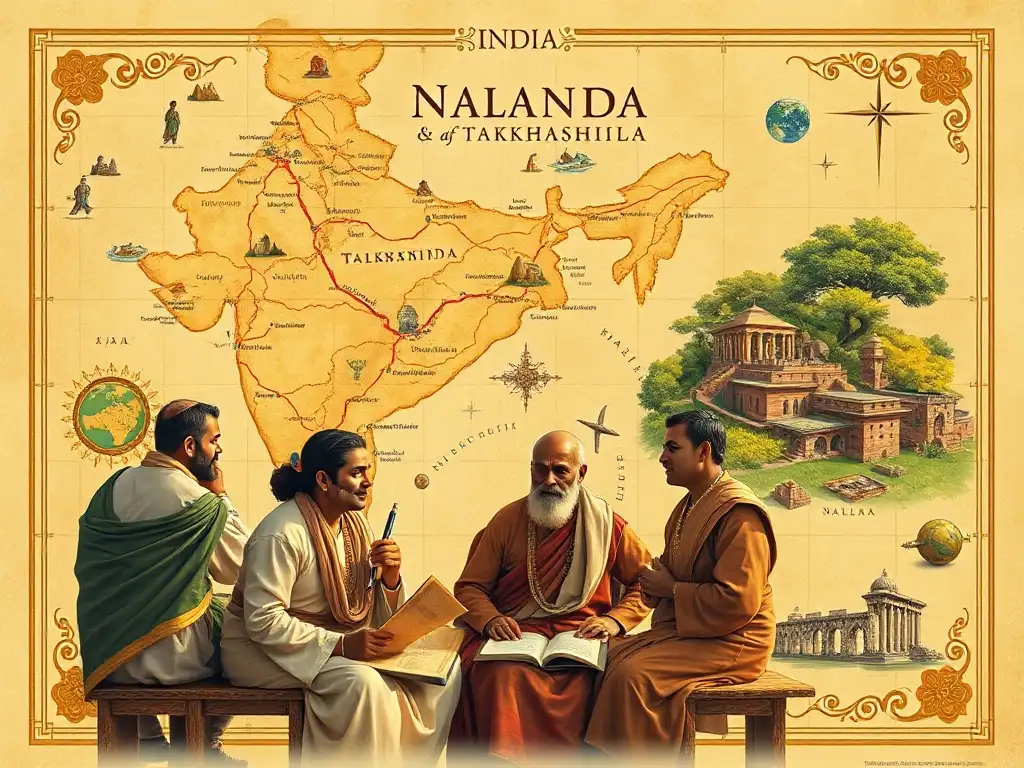
Nalanda and Takshashila represent two of the most significant ancient educational institutions in India, each contributing uniquely to the ancient Indian education system. Both universities attracted scholars from various regions and offered a range of subjects, but they differed in their structures, teaching methodologies, and the impact they had on society. This comparative analysis aims to highlight the similarities and differences between these two illustrious centers of learning.
Similarities Between Nalanda and Takshashila
Both Nalanda and Takshashila were monumental in shaping the ancient Indian education system and shared several key characteristics:
- Diverse Curriculum:
- Subjects Offered: Both institutions offered a broad spectrum of subjects, including philosophy, medicine, grammar, logic, and astronomy.
- Interdisciplinary Learning: Students were encouraged to explore various fields of study, fostering a holistic approach to education.
- International Student Body:
- Cultural Exchange: Scholars from different regions, including China, Korea, Tibet, and Southeast Asia, came to study at Nalanda and Takshashila, promoting cultural and intellectual exchange.
- Language Proficiency: Students often learned multiple languages, which facilitated communication and collaboration among diverse groups.
- Emphasis on Debate and Discussion:
- Critical Thinking: Both institutions fostered an environment of discussion, encouraging students to engage in debates and critical analysis of texts and ideas.
- Mentorship: Experienced teachers guided students in their intellectual pursuits, creating a mentorship culture that is still valued in contemporary education.
Differences in Educational Approaches and Curricula
While both universities shared commonalities, their educational approaches and curricula exhibited notable differences:
- Institutional Structure:
- Nalanda: Operated as a large, structured university with multiple buildings, libraries, and dormitories accommodating thousands of students.
- Takshashila: Functioned more like a collection of schools or a community of scholars, lacking the formal infrastructure of Nalanda, which made it less centralized.
- Curriculum Focus:
- Nalanda: Focused heavily on Buddhist philosophy and the logic associated with it, alongside subjects like medicine and mathematics.
- Takshashila: Offered a broader array of subjects including Vedic studies, but was particularly renowned for its teachings in military sciences and administration.
- Duration of Study:
- Nalanda: Typically, students would engage in long-term studies, often spending years mastering subjects.
- Takshashila: Education could be more varied in duration, often depending on the student’s chosen field and personal commitment.
Impact on Contemporary Education Systems
The legacies of Nalanda and Takshashila continue to influence contemporary education systems in several ways:
- Modular Learning: The interdisciplinary approach of both institutions has paved the way for modern modular education systems, where students can select courses from diverse fields.
- Global Learning Environments: The emphasis on international student bodies at Nalanda and Takshashila foreshadows today's global classrooms, promoting diversity and cross-cultural understanding.
- Critical Pedagogy: The value placed on debate and discussion in ancient Indian education has influenced modern educational pedagogies that prioritize student engagement, critical thinking, and collaborative learning.
- Holistic Education: The ancient focus on well-rounded education can be seen in contemporary holistic educational approaches that consider emotional, social, and cognitive development.
Both Nalanda and Takshashila were key players in the evolution of the ancient Indian education system, each leaving a distinct mark that resonates in today’s educational practices. Their contributions to curriculum diversity, student engagement, and global learning continue to inspire educators and institutions worldwide.
The Role of Gurukuls in Ancient Indian Education
Definition and Function of Gurukuls
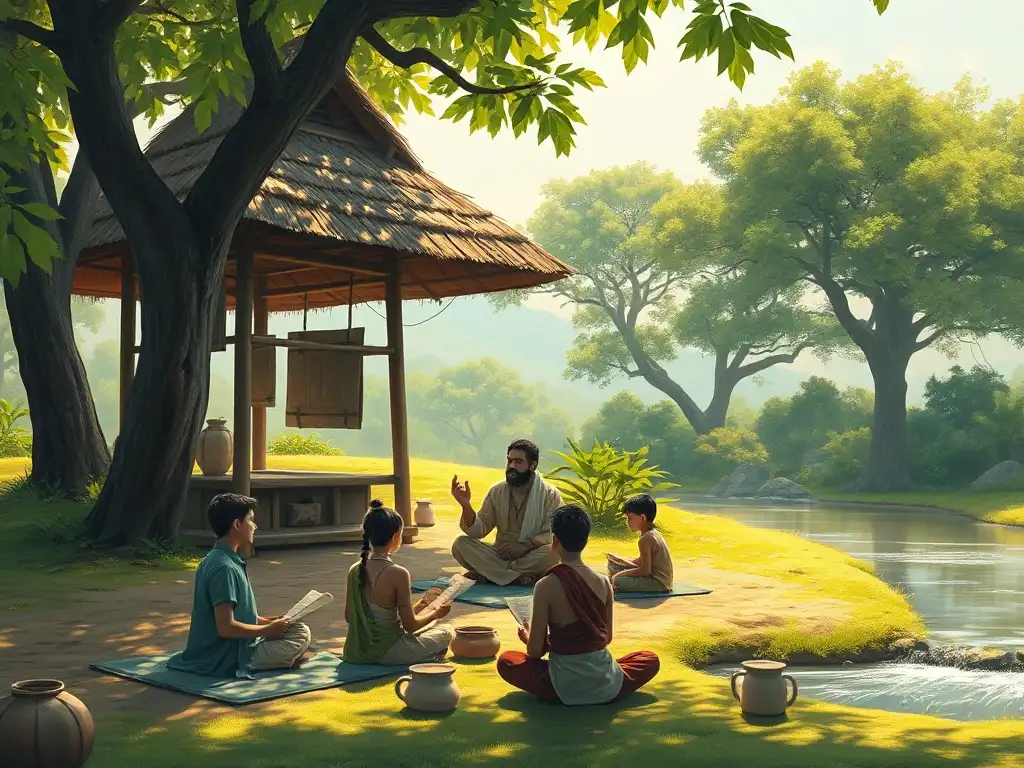
Gurukuls were traditional residential schools in ancient India where students, known as shishyas, lived and studied under the guidance of a guru (teacher). The word "Gurukul" itself is derived from "guru" and "kul," which means family or home, signifying a familial bond between the teacher and the students. These institutions were integral to the ancient Indian education system, focusing on holistic development, encompassing spiritual, moral, and intellectual growth.
The primary function of a Gurukul was to impart knowledge in various disciplines such as:
- Philosophy
- Mathematics
- Astronomy
- Medicine
- Arts and Literature
Gurukuls emphasized experiential learning, where students engaged in practical activities, discussions, and debates, fostering a deep understanding of the subject matter. The relationship between the guru and shishya was central, characterized by respect, devotion, and mutual learning.
Comparison with Formal Universities like Nalanda and Takshashila
While Gurukuls provided localized and personalized education, formal universities like Nalanda and Takshashila represented a more structured and expansive educational system. Here’s a comparative analysis:
| Aspect | Gurukuls | Nalanda/Takshashila |
|---|---|---|
| Structure | Informal, family-like environment | Formal, institution-based |
| Curriculum | Flexible, tailored to individual needs | Standardized courses across disciplines |
| Admission | Open to students from various backgrounds | Rigorous selection process |
| Duration | Varies with student’s learning pace | Fixed duration (typically years) |
| Geographical Reach | Localized communities | National and international recognition |
Gurukuls typically catered to a smaller number of students, allowing for personalized attention, while universities like Nalanda and Takshashila attracted scholars from across the Indian subcontinent and beyond, facilitating a rich exchange of ideas.
Contribution of Gurukuls to the Ancient Indian Education System
Gurukuls played a vital role in the development of the ancient Indian education system by:
- Preserving Knowledge: They were instrumental in the transmission of oral traditions, ensuring that valuable knowledge was passed down through generations.
- Nurturing Values: Gurukuls instilled moral and ethical values in students, preparing them to be responsible members of society. The emphasis on character development was as crucial as academic learning.
- Fostering Innovation: The informal nature of Gurukuls encouraged creativity and critical thinking, leading to significant advancements in various fields, including mathematics and medicine.
- Community Engagement: Gurukuls often served as centers of learning within their communities, promoting a culture of education and encouraging local participation in knowledge dissemination.
Gurukuls were foundational to the ancient Indian education system, complementing the formal structures established by later universities like Nalanda and Takshashila. Together, these educational forms contributed to the rich tapestry of knowledge, culture, and intellectual achievement that characterized ancient India.
The Legacy of Ancient Indian Education
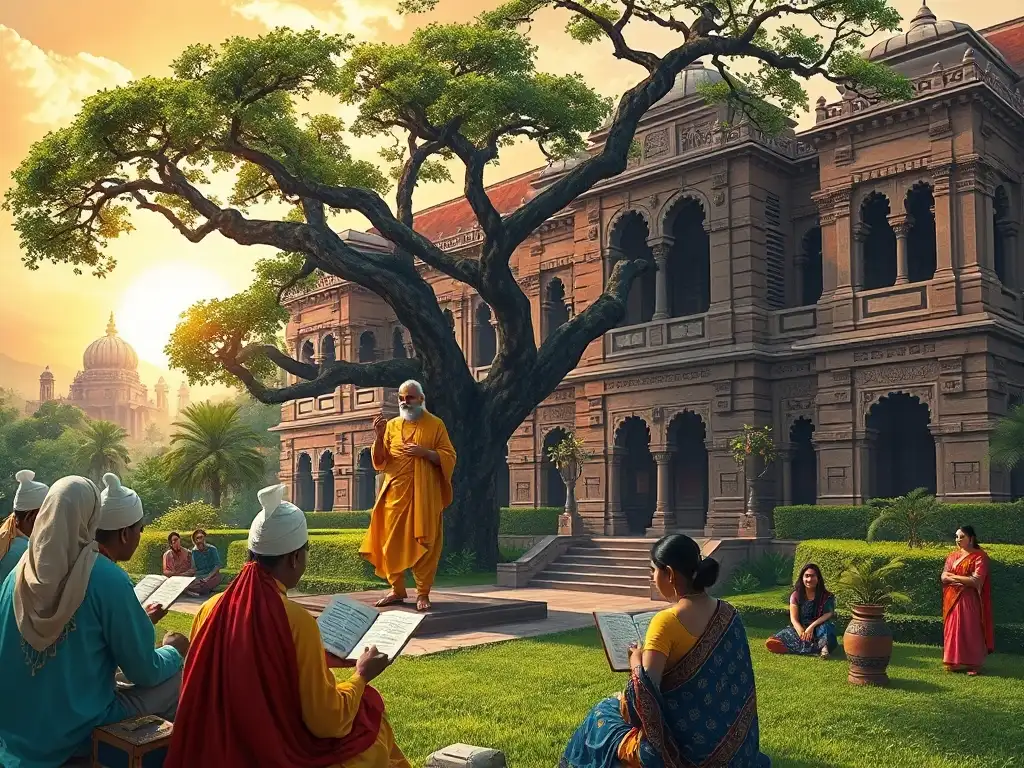
The legacy of ancient Indian education is profound and multifaceted, deeply influencing various aspects of learning, philosophy, and cultural transmission throughout history. Ancient Indian universities, such as Nalanda and Takshashila, were not just centers of academic excellence; they served as melting pots of diverse ideologies, attracting scholars from across the globe.
The educational framework of ancient India was characterized by its holistic approach, fostering not only intellectual growth but also moral and ethical development. This system emphasized the importance of a guru-shishya (teacher-student) relationship, where knowledge was imparted through personal guidance and mentorship. This traditional model of education also facilitated a deep understanding of subjects, as students engaged in discourse and dialogue, promoting critical thinking and analytical skills.
Influence on Global Education Systems
The ancient Indian education system significantly influenced the development of educational practices in various cultures. The concept of universities can be traced back to these ancient institutions, which operated on principles that are still echoed in modern educational frameworks.
-
Establishment of Universities:
- Nalanda: Founded in the 5th century CE, it is considered one of the earliest residential universities in the world, attracting students from as far as China, Korea, Japan, Tibet, Mongolia, and Sri Lanka.
- Takshashila: Established even earlier, around the 6th century BCE, it was a crucial center for learning various disciplines, including medicine, mathematics, and philosophy.
-
Curricular Diversity: The curriculum of these universities was comprehensive, encompassing subjects such as:
- Philosophy
- Mathematics
- Astronomy
- Medicine
- Grammar and Linguistics
This diverse approach to education laid the groundwork for specialized studies, akin to modern university systems that offer a variety of disciplines.
-
Global Exchange of Knowledge: Scholars from ancient India traveled extensively, sharing their insights and methodologies with other civilizations. This exchange contributed not just to the spread of Indian philosophies and sciences but also enriched other cultures, leading to a more interconnected global intellectual heritage.
Preservation of Knowledge and Cultural Heritage
The ancient Indian education system played a crucial role in the preservation of knowledge and cultural heritage. Manuscripts, texts, and oral traditions were meticulously maintained and transmitted through generations, ensuring the continuity of learning.
- Literature and Texts: Texts such as the Vedas, Upanishads, and various commentaries on philosophy and sciences were preserved with great care. The oral tradition was vital, as scholars would memorize these texts, ensuring their survival even in the absence of written documentation.
- Libraries and Archives: Institutions like Nalanda housed vast libraries that were repositories of knowledge. The preservation techniques employed, along with the reverence for scholarship, ensured that critical works were safeguarded against the ravages of time and conflict.
- Cultural Practices: The educational institutions were also centers for the arts, where music, dance, and drama flourished. This integration of culture and education helped cement the values and traditions of ancient Indian society, passing them down through generations.
Relevance of Ancient Indian Educational Principles Today
The principles of the ancient Indian education system remain relevant in contemporary discussions about education. Several key aspects can be observed in modern educational philosophies:
- Holistic Education: Emphasizing the development of the mind, body, and spirit aligns with various modern educational theories advocating for a well-rounded approach to learning.
- Mentorship and Guidance: The guru-shishya model underscores the importance of mentorship, which is increasingly recognized in modern education as crucial for personal and intellectual growth.
- Interdisciplinary Studies: The ancient emphasis on diverse subjects has led to a contemporary understanding of the importance of interdisciplinary studies, encouraging students to engage with multiple fields of knowledge.
- Cultural Sensitivity: The respect for cultural heritage and knowledge preservation is echoed in today's educational institutions, which strive to maintain inclusivity and celebrate diversity.
The ancient Indian education system's legacy continues to inspire and inform modern educational practices, emphasizing the value of a holistic, integrated approach to learning that transcends time and geography. The principles established in ancient India provide a rich foundation for contemporary education, encouraging ongoing exploration, dialogue, and innovation.
Conclusion: The Enduring Impact of Ancient Indian Education
Summary of Key Points
The ancient Indian education system, characterized by its unique methodologies and comprehensive curriculum, played a pivotal role in shaping the intellectual landscape of the subcontinent. Key points to consider include:
- Diverse Institutions: Prominent universities like Nalanda and Takshashila were not merely centers of learning but hubs of cultural exchange, drawing students from various regions, including China, Korea, and Tibet.
- Curriculum and Pedagogy: The education system emphasized a holistic approach, integrating subjects such as philosophy, mathematics, astronomy, and medicine. The use of dialogue and debate was a hallmark of the teaching method, encouraging critical thinking and intellectual rigor.
- Accessibility and Inclusivity: Education was not restricted to the elite; various texts indicate that students from different castes and communities were welcomed, fostering a sense of inclusivity that was progressive for its time.
- Contributions to Knowledge: The impact of ancient Indian scholars was profound, with contributions to mathematics (e.g., the concept of zero), astronomy (e.g., Aryabhata's theories), and medicine (e.g., Ayurveda) that resonate even today.
- Cultural Legacy: The values and methodologies established in ancient Indian educational institutions laid the groundwork for future educational systems, influencing regional and global approaches to learning.
Future Perspectives on Ancient Indian Education System
The legacy of the ancient Indian education system continues to inspire contemporary educational reforms. As we look to the future, several perspectives emerge:
- Revival of Traditional Knowledge: There is a growing interest in reviving the principles of ancient Indian education, such as experiential learning and interdisciplinary studies, which can enhance modern curricula.
- Integration with Modern Pedagogy: By incorporating ancient methodologies with modern educational technologies, educators can create a more engaging and effective learning environment that respects traditional knowledge while embracing innovation.
- Global Recognition: The ancient Indian education system's contributions should be recognized and integrated into global educational discourses, promoting cross-cultural understanding and appreciation of India's rich intellectual heritage.
- Research and Documentation: Continued research into ancient texts and practices can reveal additional insights and methods beneficial for modern education, fostering a deeper understanding of how ancient wisdom can address contemporary challenges.
- Sustainability and Ethics: The emphasis on ethical learning and sustainable practices found in ancient educational philosophies can guide today's educational systems towards more responsible and socially-conscious approaches.
The ancient Indian education system not only laid the foundations for scholarly pursuits in its time but also continues to influence and inspire the educational practices of the future. As we embrace the lessons of the past, we can ensure that the spirit of inquiry and knowledge-sharing thrives in the modern educational landscape.
Frequently Asked Questions
What was the significance of Nalanda in ancient Indian education?
Nalanda was one of the world's first residential universities, attracting scholars from across Asia. It emphasized a holistic approach to education, covering various subjects including philosophy, medicine, and mathematics.
How did Takshashila contribute to the ancient Indian education system?
Takshashila, another prominent ancient university, was known for its diverse curriculum and focus on practical knowledge. It played a crucial role in shaping early scholarly traditions and fostering intellectual growth.
What subjects were commonly taught in ancient Indian universities?
Ancient Indian universities like Nalanda and Takshashila offered education in subjects such as mathematics, astronomy, medicine, and philosophy, promoting a comprehensive understanding of the sciences and humanities.
How did the ancient Indian education system differ from modern systems?
The ancient Indian education system was primarily oral and experiential, focusing on guru-shishya (teacher-student) relationships. Unlike modern systems, it emphasized self-discovery and practical learning over rote memorization.
What were the key features of the ancient Indian education system?
Key features included diversity in subjects, a focus on practical skills, and the establishment of residential universities. Education was accessible to various social classes, promoting a rich culture of learning and knowledge exchange.
Final Reflection: The Enduring Legacy of Ancient Indian Education
The ancient Indian education system laid the foundation for intellectual pursuit and holistic learning that resonates profoundly in today's world. As we navigate the complexities of modern education, it is crucial to recognize how the principles established in institutions like Nalanda and Takshashila continue to influence our educational frameworks. The emphasis on critical thinking, dialogue, and interdisciplinary studies from these ancient centers of learning is more relevant than ever, reminding us that education is not merely about rote memorization but about fostering a love for knowledge and inquiry.
The impact of the ancient Indian education system extends beyond historical significance; it has shaped cultural narratives and social structures that persist in contemporary society. The values of inclusivity, respect for diverse perspectives, and the pursuit of wisdom are embedded in our educational ethos today. As Mahatma Gandhi once said, Live as if you were to die tomorrow. Learn as if you were to live forever.
This quote encapsulates the spirit of lifelong learning that was championed by ancient scholars and continues to inspire generations.
As we reflect on the rich legacy of ancient Indian education, let us embrace the lessons it offers for our personal and collective journeys. I invite you to explore how you can integrate these timeless principles into your own life—whether through fostering curiosity, engaging in meaningful discussions, or pursuing knowledge with passion. The journey of learning is never-ending, and by honoring the wisdom of the past, we can create a brighter, more enlightened future for ourselves and those around us.
Embark on Your Own Educational Odyssey!
Thank you for taking the time to explore the fascinating world of ancient Indian education with us! Your journey through the rich history of institutions like Nalanda and Takshashila has just begun to unveil the profound impact they had on learning and culture. Now, it’s your turn to carry this inspiration forward!
Consider taking these steps to deepen your exploration:
- Dive into More Research: Choose a specific topic or philosopher from ancient Indian education and write a short essay or blog post. Share your insights with your friends or on social media!
- Visit a Local Museum: Look for an exhibit related to ancient education or cultures. Immerse yourself in materials and artifacts that resonate with this rich heritage.
- Join a Discussion Group: Connect with others who share your interest in ancient studies. Whether online or in person, exchange thoughts and expand your understanding.
What aspect of ancient Indian education inspires you the most, and how will you integrate those lessons into your own learning journey?