
The Spiritual Insights of Vasubandhu: A Key Figure in Buddhist Philosophy


Welcome to Ancient India History, where we embark on a journey through the vast tapestry of time that shapes our understanding of ancient Indian civilizations. Today, we delve into the profound spiritual insights of Vasubandhu, a key figure in Buddhist philosophy whose teachings continue to resonate through the ages. Discover how his contributions not only illuminate the path of Buddhist thought but also reflect the rich cultural and religious landscape of ancient India. Are you ready to uncover the wisdom of Vasubandhu and explore its significance in the broader context of ancient Indian religions? Let’s dive in!
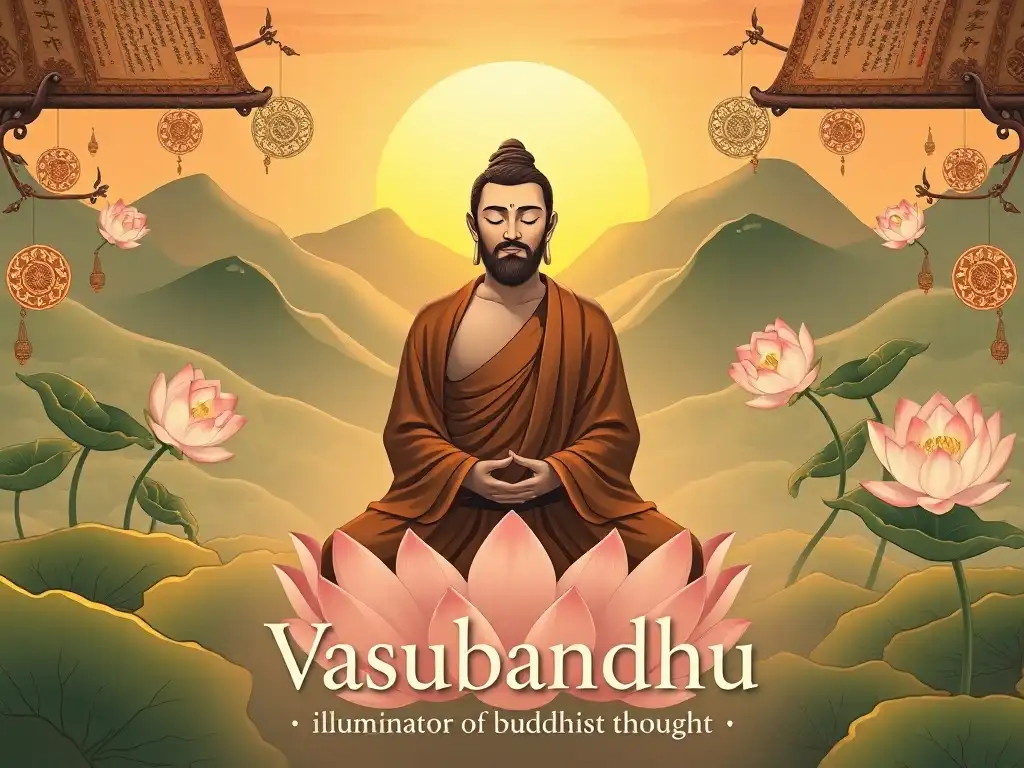
Introduction to Vasubandhu and His Influence on Buddhist Philosophy
Vasubandhu stands as a monumental figure in the realm of Buddhist philosophy, whose insights have profoundly shaped the understanding and practice of Buddhism across centuries. Born in the 4th to 5th century CE, Vasubandhu was a philosopher and scholar associated with the Yogācāra school of thought, which emphasizes the role of consciousness in the perception of reality.
His contributions extend beyond mere philosophical discourse; they encapsulate a rich tapestry of spiritual insights that continue to resonate with practitioners and scholars alike. As we delve into the life and teachings of Vasubandhu, we not only uncover the intricacies of his thought but also appreciate the broader implications of his work within the framework of ancient Indian religions, particularly Buddhism.
Overview of Vasubandhu's Life and Era
Vasubandhu was born in Gandhara, an area that is part of modern-day Pakistan, during a time when Buddhism was flourishing in India. He is often regarded as a contemporary of the renowned philosopher Nagarjuna, with whom he is sometimes juxtaposed due to their contrasting yet complementary approaches to Buddhist thought. Vasubandhu initially followed the Sautrāntika school but later transitioned to the Yogācāra school, where he developed a unique perspective on the nature of reality and perception.
His era was marked by significant intellectual activity, with various schools of thought emerging and competing for prominence. This environment of philosophical inquiry allowed Vasubandhu to refine his ideas, culminating in works that would influence not only Indian Buddhism but also the development of Buddhist thought in East Asia. His life was characterized by rigorous study, debate, and a commitment to understanding the nature of suffering and the path to enlightenment.
Significance of Vasubandhu in Ancient Indian Buddhism
Vasubandhu's significance in ancient Indian Buddhism cannot be overstated. He is often credited with systematizing the principles of the Yogācāra school, which posits that our experiences are heavily influenced by our mental states. His insights into the nature of consciousness and perception revolutionized Buddhist thought, offering a nuanced understanding of the mind's role in shaping reality.
Moreover, Vasubandhu's teachings laid the groundwork for later developments in Mahayana Buddhism, particularly in the areas of epistemology and metaphysics. His work has been pivotal in discussing the nature of the self, the concept of emptiness, and the mechanisms of perception—all essential themes in Buddhist philosophy. As a result, his ideas have transcended geographical boundaries, influencing various Buddhist traditions in Tibet, China, and beyond.
The Core Teachings of Vasubandhu's Buddhist Philosophy
Vasubandhu's philosophical contributions are vast and multifaceted, but several core teachings stand out as particularly influential in the study of Buddhist philosophy. These insights not only illuminate the complexities of the mind but also offer practical guidance for individuals seeking a deeper understanding of their own consciousness and reality.
Understanding the Concept of Yogācāra
At the heart of Vasubandhu's teachings is the concept of Yogācāra, or "yoga practice," which emphasizes the importance of mental discipline and the cultivation of awareness. This school of thought posits that what we perceive as external reality is, in fact, a projection of our minds. Vasubandhu elaborates on this idea through the notion of "store consciousness" (ālaya-vijñāna), which serves as a repository for all experiences and impressions.
- Key Elements of Yogācāra:
- Store Consciousness (Ālaya-Vijñāna): A foundational aspect where all seeds of consciousness are stored.
- Cognition and Perception: How our mental processes shape our understanding of the world.
- Transformation through Practice: The potential for individuals to reshape their consciousness through meditation and mindfulness.
The Role of Mind in Vasubandhu’s Philosophy
In Vasubandhu's view, the mind plays a crucial role in the manifestation of reality. He argues that understanding the mind's operations is essential for overcoming ignorance and achieving enlightenment. By cultivating a clear and focused mind, practitioners can begin to see beyond the illusions created by their perceptions.
- Key Points:
- Mind as Creator: The mind creates the experiences that shape our reality.
- Overcoming Delusion: Recognizing the mind's role can lead to liberation from suffering.
- Meditative Practices: Essential for developing insight into the nature of mind and reality.
Key Texts Authored by Vasubandhu
Vasubandhu's philosophical insights are encapsulated in several key texts that serve as foundational works for the study of Buddhist philosophy. Among these, the "Abhidharma-kosa" (Treasury of Abhidharma) and "Vimsatika" (Twenty Verses) are particularly notable.
- Notable Works:
- Abhidharma-kosa: A comprehensive analysis of Buddhist teachings and practices.
- Vimsatika: A succinct presentation of the principles of Yogācāra philosophy.
- Trisvabhavanirdesa: Discusses the nature of reality from three perspectives.
These texts not only reflect Vasubandhu's profound understanding of Buddhist philosophy but also continue to be studied and revered in contemporary Buddhist scholarship. Through his writings, Vasubandhu has left an indelible mark on the landscape of Buddhist thought, ensuring that his insights remain relevant for generations to come.
Vasubandhu's Insights on Perception and Reality
Vasubandhu, a prominent figure in Buddhist philosophy, is best known for his contributions to the Yogācāra school, which emphasizes the role of consciousness in shaping our experiences of reality. His insights into perception and reality have profound implications not only for Buddhist thought but also for various philosophical discussions surrounding the nature of existence. In Vasubandhu's view, perception is not merely a passive reception of external stimuli; rather, it is an active construction of reality shaped by consciousness. This perspective invites a deeper inquiry into how we understand the world around us and our place within it.
The Nature of Perception in Yogācāra Philosophy
In Yogācāra philosophy, perception is understood as a complex interplay between the perceiver and the perceived. Vasubandhu articulates that perceptions are not direct reflections of external objects but are mediated through mental constructs. This notion challenges the traditional realist view that assumes a straightforward correspondence between perception and reality. According to Vasubandhu, our senses engage with the world, but it is the mind that categorizes and interprets these sensory experiences, thus shaping our understanding of reality.
This leads to the concept of "vijñapti-mātra," or "only consciousness," which posits that what we consider to be external reality is fundamentally a product of mental processes. The implications of this view suggest that our experiences are inherently subjective, influenced by our perceptions, thoughts, and cultural backgrounds. By emphasizing the role of consciousness, Vasubandhu encourages a more nuanced exploration of how reality is constructed and understood.
How Vasubandhu Addresses the Concept of Reality
Vasubandhu's exploration of reality extends beyond mere perception, delving into the ontological questions of existence and non-existence. He argues that phenomena arise from the interplay of consciousness and its objects, leading to a constructed reality that is contingent rather than absolute. In his seminal work, the "Trisvabhavanirdesa" (Treatise on the Three Natures), he outlines three natures of existence: the imagined (parikalpita), the dependent (paratantra), and the absolute (parinishpanna).
- Imagined Nature: Refers to our subjective interpretations of reality, which are often distorted by attachment and delusion.
- Dependent Nature: Represents the interdependent nature of phenomena, emphasizing that things exist only in relation to other factors.
- Absolute Nature: Refers to the ultimate reality, which transcends conceptual thought and is beyond dualistic distinctions.
By articulating these three natures, Vasubandhu provides a framework for understanding the complexity of reality, highlighting the distinction between how we perceive the world and its ultimate nature. This dual approach fosters a deeper comprehension of existence, encouraging practitioners to engage with reality in a transformative manner.
The Relationship Between Consciousness and Objects
Vasubandhu posits that the relationship between consciousness and objects is dynamic and reciprocal. Instead of viewing consciousness as a mere passive observer, he emphasizes that consciousness actively shapes the way objects are perceived. This interplay is critical in understanding the nature of reality and contributes to the notion that our experiences are not fixed but rather fluid and subject to change.
Vasubandhu introduces the concept of "alaya-vijñana," or "store consciousness," which serves as a foundational aspect of our cognitive processes. This storehouse of experiences influences how we perceive objects, leading to the manifestation of different realities based on our past actions and mental conditioning. Consequently, the relationship between consciousness and objects becomes a vital focal point in Yogācāra philosophy, underscoring that the way we perceive the world is deeply intertwined with our internal mental states.
The Impact of Vasubandhu's Insights on Later Buddhist Thought
Vasubandhu's philosophical insights have had a lasting impact on the trajectory of Buddhist thought, particularly in the development of Mahayana Buddhism and its associated schools. His emphasis on the nature of consciousness and perception has provided a rich foundation for subsequent philosophical inquiry, influencing a wide array of texts and teachings within the Buddhist tradition.
Influence on Mahayana Buddhism
Vasubandhu's insights significantly shaped the contours of Mahayana Buddhism, particularly in its understanding of emptiness (śūnyatā) and the nature of reality. His teachings on the constructed nature of perception have been instrumental in advancing the notion that phenomena lack inherent existence, a view that resonates deeply with Mahayana doctrines. This understanding has fostered a more profound engagement with the practices of compassion and wisdom, as practitioners begin to recognize the illusory nature of their attachments and perceptions.
Moreover, Vasubandhu's works laid the groundwork for the integration of Yogācāra ideas into later Mahayana texts, including those attributed to figures like Nāgārjuna. His emphasis on subjective experience has been pivotal in developing the philosophical discourse surrounding the nature of enlightenment and the path toward liberation.
Contributions to Buddhist Epistemology
In the realm of Buddhist epistemology, Vasubandhu's contributions are particularly noteworthy. His exploration of how knowledge is acquired and processed through perception has influenced discussions on the validity of experience and the criteria for understanding truth. By examining the role of consciousness in determining what we come to know, he challenges practitioners to critically assess their own perceptions and the filters through which they interpret reality.
Vasubandhu's insights also lead to the formulation of various epistemological frameworks within Buddhism, emphasizing the importance of both direct experience and rational inquiry. This approach encourages a balanced understanding of knowledge that integrates both philosophical reasoning and experiential practice.
Vasubandhu's Legacy in Tibetan Buddhism
Vasubandhu's legacy extends beyond Indian Buddhism, permeating the teachings and practices of Tibetan Buddhism. His works, particularly the "Abhidharma Kosha," have been integral to the formation of Tibetan philosophical thought, influencing key figures such as Tsongkhapa and the formulation of the Gelug school. His discussions on perception, consciousness, and the nature of reality have been pivotal in shaping the Tibetan understanding of Buddhist philosophy.
In Tibetan traditions, Vasubandhu's insights have been interpreted and adapted, leading to a rich tapestry of teachings that incorporate his ideas into practices such as meditation and the cultivation of wisdom. His emphasis on the transformative potential of understanding perception and reality continues to resonate with Tibetan practitioners, solidifying his status as a foundational figure in the broader landscape of Buddhist thought.
Comparative Analysis: Vasubandhu and Other Key Buddhist Philosophers

Vasubandhu is often positioned as a pivotal figure in the evolution of Buddhist philosophy, especially concerning the nature of consciousness and reality. His insights provide a counterpoint to the ideas of other significant philosophers, notably Nāgārjuna and Dignāga. By examining these relationships, we can appreciate the nuances in their respective philosophical frameworks and how they contribute to the broader discourse of Buddhism.
Vasubandhu vs. Nāgārjuna: Different Approaches to Emptiness
The philosophical approaches of Vasubandhu and Nāgārjuna represent two critical lenses through which Buddhist thought can be understood. Nāgārjuna, particularly known for his concept of "śūnyatā" or emptiness, emphasizes the absence of inherent existence in all phenomena. His dialectical method aims to demonstrate that all things are interdependent and lack a permanent essence, leading to the realization that clinging to any notion of self or other is a source of suffering.
In contrast, Vasubandhu introduces a more psychological perspective through his work on the "Yogācāra" or "Mind-Only" school. He posits that the external world is a projection of consciousness and that understanding this relationship is crucial for achieving enlightenment. While Nāgārjuna's philosophy can be seen as more abstract and metaphysical, Vasubandhu provides a practical framework that encourages practitioners to examine their mental processes and the nature of perception itself.
This divergence reflects a broader philosophical discourse within Buddhism, where both thinkers offer invaluable insights—Nāgārjuna challenges the foundational concepts of existence, while Vasubandhu deepens the exploration of consciousness and its implications for spiritual practice.
The Divergence of Thought: Vasubandhu and Dignāga
The philosophical dialogue between Vasubandhu and Dignāga highlights another dimension of Buddhist epistemology. Dignāga is renowned for his contributions to the field of logic and epistemology, particularly through his work "Pramāṇasamuccaya," where he delineates the nature of valid knowledge (pramāṇa). His systematic approach to understanding perception and inference contrasts with Vasubandhu's focus on consciousness as the primary lens for interpreting reality.
While both philosophers agree on the significance of perception in acquiring knowledge, their methodologies diverge. Dignāga emphasizes the role of logical reasoning and empirical evidence, advocating for a rigorous analysis of sensory experiences. Vasubandhu, however, underscores the subjective nature of experience, arguing that our perceptions are influenced by mental constructions and biases.
This philosophical tension between Dignāga's empirical approach and Vasubandhu's introspective analysis enriches the landscape of Buddhist thought, prompting future scholars to reconcile these perspectives in their quest for understanding the mind and reality.
Conclusion: The Lasting Spiritual Insights of Vasubandhu
Vasubandhu's contributions to Buddhist philosophy extend beyond the confines of his historical context; they continue to resonate within contemporary discussions on consciousness, perception, and the nature of reality. His insights challenge practitioners to engage with their minds critically and cultivate awareness of how thoughts shape their experiences.
Reflections on the Relevance of Vasubandhu's Philosophy Today
In today's world, where mental health and self-awareness are increasingly recognized as vital components of well-being, Vasubandhu's teachings offer a profound framework for understanding the interplay between mind and experience. His emphasis on the nature of consciousness encourages individuals to reflect on their mental habits and cultivate mindfulness, aligning closely with modern psychological practices.
Furthermore, the relevance of Vasubandhu's philosophy can be seen in various mindfulness and meditation practices that draw from Yogācāra principles. By integrating these insights, individuals can navigate the complexities of contemporary life while fostering a deeper connection to their inner selves.
The Importance of Studying Vasubandhu in Understanding Buddhist Thought
Studying Vasubandhu is crucial for anyone seeking a comprehensive understanding of Buddhist philosophy. His works not only illuminate the intricacies of consciousness but also bridge the gap between theoretical and practical aspects of Buddhism. By exploring Vasubandhu's insights, scholars and practitioners alike can engage with core Buddhist concepts in a manner that is both intellectually rigorous and spiritually enriching.
Vasubandhu stands as a key figure whose philosophical insights remain essential for grasping the evolution of Buddhist thought and its relevance in contemporary discourse. His work invites continuous exploration, ensuring that his legacy endures in the study and practice of Buddhism.
Further Reading on Vasubandhu and Buddhist Philosophy
For those interested in delving deeper into the spiritual insights of Vasubandhu and the broader context of Buddhist philosophy, a variety of resources are available. These texts and materials not only illuminate Vasubandhu's contributions but also explore the rich tapestry of Buddhist thought that he helped shape. Below is a curated list of recommended readings and resources that provide valuable perspectives on Vasubandhu's work and its implications in the realm of Buddhist philosophy.
Recommended Texts and Resources
-
Vasubandhu's "Thirty Verses" (Triṃśikā)
This foundational text outlines the key concepts of Yogācāra philosophy and is essential for understanding Vasubandhu's thought. It provides insights into the nature of perception, consciousness, and reality.
-
"The Yogācārabhūmi"
This comprehensive work attributed to Vasubandhu and his followers serves as a critical resource for understanding the practical applications of Yogācāra principles. It covers topics such as meditation, ethical conduct, and the stages of spiritual development.
-
"The Buddhist Philosophy of Vasubandhu" by David J. Kalupahana
This book offers a detailed analysis of Vasubandhu's philosophical ideas, contextualizing them within the broader development of Buddhist thought. Kalupahana's work is particularly valuable for those seeking to understand the historical and intellectual milieu of Vasubandhu's era.
-
"Yogācāra Buddhism: A New Approach to the Study of the Mind" by Jonathan Gold
This text provides a contemporary interpretation of Yogācāra philosophy, drawing connections between Vasubandhu's insights and modern psychological theories. It is an excellent resource for those interested in the intersection of Buddhism and cognitive science.
-
"Vasubandhu and the Yogācāra School" by Richard P. Hayes
In this comprehensive overview, Hayes discusses the evolution of the Yogācāra school and Vasubandhu's pivotal role within it. This book is a great starting point for anyone looking to grasp the essentials of Yogācāra thought.
Online Lectures and Courses on Yogācāra Philosophy
In addition to texts, numerous online resources offer lectures and courses that explore the teachings of Vasubandhu and Yogācāra philosophy:
-
Coursera and edX Platforms
Both of these educational platforms often feature courses on Buddhist philosophy, including topics related to Vasubandhu's contributions. Look for courses that focus on Yogācāra or Mahayana Buddhism for relevant content.
-
YouTube Lectures by Renowned Scholars
Many scholars in Buddhist studies share their insights through lectures available on YouTube. Notable figures such as Dr. John Powers and Dr. Jan Nattier have given talks specifically addressing the contributions of Vasubandhu and the implications of his work in modern contexts.
-
Buddhist Studies Resources
Websites dedicated to Buddhist studies often host webinars and online discussions featuring experts on Vasubandhu and Yogācāra. Resources from institutions like the University of Virginia or the University of California, Berkeley, can provide valuable lectures and seminar recordings.
-
Podcasts on Buddhist Philosophy
Several podcasts, such as "Buddhist Geeks" and "The Secular Buddhism Podcast," frequently discuss themes related to Yogācāra and Vasubandhu’s insights. Listening to these can provide fresh perspectives and contemporary applications of ancient teachings.
By engaging with these texts and resources, individuals can gain a deeper understanding of Vasubandhu's insights and their significance in the broader context of Buddhist philosophy.
- Introduction to Vasubandhu and His Influence on Buddhist Philosophy
- The Core Teachings of Vasubandhu's Buddhist Philosophy
- Vasubandhu's Insights on Perception and Reality
- The Impact of Vasubandhu's Insights on Later Buddhist Thought
- Comparative Analysis: Vasubandhu and Other Key Buddhist Philosophers
- Conclusion: The Lasting Spiritual Insights of Vasubandhu
- Further Reading on Vasubandhu and Buddhist Philosophy
- What are the main contributions of Vasubandhu to Buddhist philosophy?
- How did Vasubandhu influence the development of Buddhist thought?
- What is the significance of the Yogācāra school in Buddhist philosophy?
- How does Vasubandhu’s work relate to contemporary Buddhist practice?
- What are some key texts authored by Vasubandhu?
Frequently Asked Questions
What are the main contributions of Vasubandhu to Buddhist philosophy?
Vasubandhu is renowned for his insights into Buddhist philosophy, particularly in the areas of Abhidharma and Yogācāra. His works helped shape the understanding of consciousness and perception in Buddhism.
How did Vasubandhu influence the development of Buddhist thought?
Vasubandhu's philosophical writings laid the groundwork for later Buddhist scholars, emphasizing the importance of mental processes and the nature of reality, which greatly influenced Mahayana Buddhism.
What is the significance of the Yogācāra school in Buddhist philosophy?
The Yogācāra school, founded partly on Vasubandhu's teachings, focuses on the nature of consciousness and the idea that reality is constructed by mental processes. This has profound implications for meditation and spiritual practice.
How does Vasubandhu’s work relate to contemporary Buddhist practice?
Vasubandhu's philosophical insights continue to be relevant in contemporary Buddhist practice, particularly in understanding mindfulness and the impermanence of thoughts and experiences, central to many modern meditative techniques.
Some of the most significant texts by Vasubandhu include the "Abhidharmakośa" and the "Trisvabhavanirdesa". These works explore critical concepts such as emptiness and the nature of reality, remaining influential in Buddhist studies today.
Final Reflection: Embracing the Wisdom of Vasubandhu in Modern Life
The insights of Vasubandhu in Buddhist philosophy remain profoundly relevant today, as they challenge us to explore the nature of our consciousness and the interconnectedness of all beings. In a world increasingly dominated by materialism and individualism, his teachings invite us to cultivate mindfulness and compassion, reminding us that our thoughts and perceptions shape our reality. The quest for understanding the mind, as articulated by Vasubandhu, is not just an academic endeavor; it is a pathway to personal transformation and collective harmony.
The influence of Vasubandhu's philosophy transcends centuries, shaping not only Buddhist thought but also the broader cultural landscape. His exploration of the mind's nature and the concept of dependent origination resonates with contemporary discussions on mental health, ethics, and the environment. As we navigate the complexities of modern life, his insights encourage us to reflect on our actions and their impact on ourselves and others. The mind is everything. What you think, you become.
This quote encapsulates the essence of Vasubandhu's teachings, urging us to take responsibility for our thoughts and their manifestations in the world.
As you ponder the teachings of Vasubandhu, I invite you to integrate these insights into your daily life. Consider how your perceptions shape your experiences and how cultivating awareness can lead to greater compassion and understanding. Let Vasubandhu's wisdom inspire you to engage with the world mindfully, fostering connections that uplift both yourself and those around you. In doing so, you not only honor the legacy of a great philosopher but also contribute to a more compassionate and enlightened society.
Unlock the Wisdom of Vasubandhu Today!
Thank you for diving into the enlightening world of Vasubandhu and the teachings that shape Buddhist philosophy. Your exploration today has opened a doorway to understanding profound spiritual insights that can guide your mindfulness journey. Now, let’s take these insights further!
Here are some ways you can deepen your connection to Vasubandhu’s philosophies:
- Engage with the Texts: Begin by immersing yourself in Vasubandhu’s writings or explore literature that discusses his philosophical contributions. Discover how his ideas can transform your understanding of consciousness and perception.
- Join a Community: Seek out local or online meditation groups that focus on Buddhist teachings. Engaging with others can enhance your learning experience and offer diverse perspectives on the material.
- Share Your Journey: Openly discuss your discoveries with friends or share insights on social media. By sharing, you not only reinforce your understanding but also inspire others to delve into the rich world of Buddhist philosophy.
Which aspect of Vasubandhu’s teachings resonates with you the most, and how do you plan to integrate these insights into your daily life?