
The Role of Trade in the Spread of Buddhism throughout Ancient India


Welcome to Ancient India History, where we embark on a fascinating journey through the rich tapestry of ancient Indian civilizations! Discover how trade routes not only facilitated commerce but also played a pivotal role in the spread of Buddhism across the subcontinent. As we delve into the intricate connections between trade and spiritual exchange, you'll uncover the remarkable stories of cultural diffusion that shaped the beliefs and practices of millions. Ready to explore the transformative power of trade in ancient India? Let’s dive deeper into this captivating narrative!
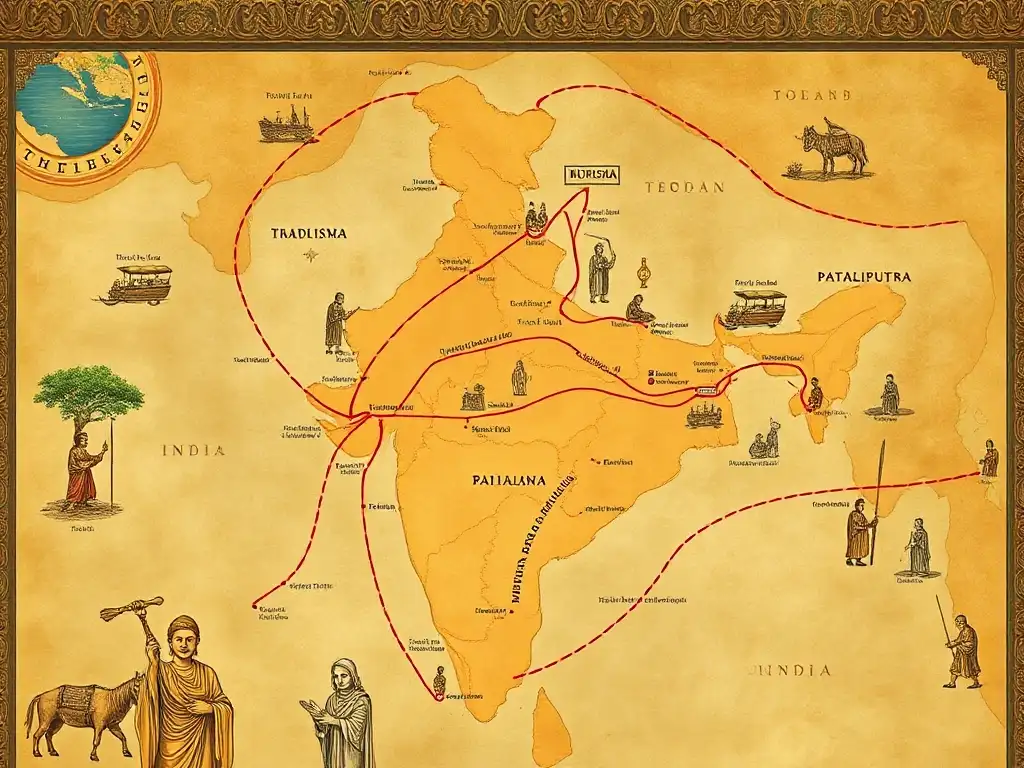
The relationship between trade and the dissemination of Buddhism in ancient India is a fascinating subject that highlights the interconnectedness of commerce and cultural exchange. As Buddhism emerged in the 6th century BCE, it not only transformed religious landscapes but also played a pivotal role in shaping economic practices and trade networks across the subcontinent. This article delves into how trade routes acted as conduits for the spread of Buddhist teachings, facilitating interactions among diverse cultures and communities. By examining the intricate links between trade and Buddhism, we gain valuable insights into how ancient Indian civilizations thrived and evolved.
Introduction to Buddhism and Trade in Ancient India
Overview of Buddhism in Ancient India
Buddhism, founded by Siddhartha Gautama (the Buddha), began as a reformist movement within the broader context of Indian spirituality. Rooted in the quest for enlightenment and the alleviation of suffering, it quickly garnered followers across various regions. By the time of Emperor Ashoka in the 3rd century BCE, Buddhism had gained substantial state support, leading to its flourishing. Ashoka's edicts and missions played an essential role in promoting the religion, but it was the existing trade networks that significantly contributed to its spread beyond the Indian subcontinent.
The principles of Buddhism—emphasizing compassion, ethical living, and community—resonated with traders and travelers, making it a natural fit for dissemination along trade routes. As merchants journeyed through various territories, they not only exchanged goods but also ideas, leading to the establishment of Buddhism in new regions.
Importance of Trade in Cultural Exchange
Trade in ancient India was not merely an economic activity; it was a vital mechanism for cultural exchange. The bustling marketplaces served as melting pots where diverse cultures converged, allowing for the sharing of beliefs, practices, and philosophies.
- Cultural Interactions: Traders often acted as intermediaries, bringing together various cultural elements and facilitating the spread of Buddhist teachings.
- Art and Architecture: The influence of trade can be seen in the artistic expressions inspired by Buddhist motifs, which adorned stupas and monasteries along trade routes.
- Linguistic Exchange: The interaction among traders resulted in the exchange of languages and texts, further propagating Buddhist literature and philosophy.
The Development of Trade Routes in Ancient India
Key Trade Routes Facilitating Buddhism
The trade routes of ancient India, such as the Silk Road and the Grand Trunk Road, were instrumental in the spread of Buddhism. These routes not only traversed the Indian subcontinent but extended to Central Asia and beyond, enabling the movement of people and ideas.
- Silk Road: Connecting India with China, Persia, and the Mediterranean, the Silk Road facilitated significant cultural exchanges, including the dissemination of Buddhist texts and art.
- Maritime Trade Routes: Sea routes connecting the ports of the Indian subcontinent with Southeast Asia played a crucial role in spreading Buddhism to regions like Sri Lanka, Thailand, and Indonesia.
Major Trade Centers and Their Influence on Buddhism
Several key trade centers emerged as hubs for the exchange of goods and ideas, significantly influencing the spread of Buddhism.
| Trade Center | Location | Influence on Buddhism |
|---|---|---|
| Taxila | Northern India | A major center for education, fostering Buddhist scholarship. |
| Pataliputra | Eastern India | A political hub where Buddhist councils were held. |
| Ujjain | Western India | A bustling market that facilitated interactions with merchants from various cultures. |
These trade centers not only served as commercial hubs but also became important sites for the establishment of monasteries and educational institutions, which further promoted Buddhist teachings and practices.
The interplay between trade and Buddhism in ancient India underscores the significance of commerce as a driving force behind cultural exchange and religious dissemination. Understanding these dynamics provides a deeper appreciation of how ancient Indian civilizations were interconnected through trade, ultimately shaping their rich historical narrative.
The Interconnection Between Trade and the Spread of Buddhism
The relationship between trade and the spread of Buddhism in ancient India is profound and multifaceted. Trade routes not only facilitated the exchange of goods but also served as conduits for the dissemination of ideas, cultures, and religions. As merchants traveled along established paths, they carried with them not just products like silk, spices, and precious stones, but also philosophies and teachings. Buddhism, emerging in the 5th century BCE under the guidance of Siddhartha Gautama (Buddha), quickly found its way into the hearts and minds of traders and local populations alike.
The extensive network of trade routes, including the famous Silk Road and maritime paths through the Indian Ocean, allowed for interactions between diverse cultures. This cultural exchange was instrumental in introducing Buddhist concepts to various regions, particularly in Central Asia, Southeast Asia, and beyond. As traders moved from one territory to another, they shared the teachings of Buddhism, which resonated with many due to its emphasis on compassion, ethical living, and the pursuit of enlightenment.
How Trade Routes Enabled the Spread of Buddhist Ideas

Trade routes functioned as vital arteries for the flow of Buddhist thought. Key routes, such as the North-South and East-West corridors, connected major urban centers like Pataliputra, Taxila, and Ujjain, allowing for the easy movement of both people and ideas. These pathways facilitated pilgrimages by monks and followers who sought to visit sacred sites associated with the Buddha’s life, such as Bodh Gaya and Sarnath.
The presence of Buddhist stupas and monasteries along these routes further enhanced their role in spreading the faith. As travelers paused to rest and replenish, they were often exposed to the teachings and practices of Buddhism. Additionally, merchants frequently engaged with local populations, sharing stories of the Buddha and the principles of Dharma, thus integrating Buddhism into various cultures and societies.
Role of Merchants in Promoting Buddhism
Merchants played a crucial role in promoting Buddhism as they traversed vast distances in search of trade opportunities. They were often the first points of contact for local communities with Buddhist ideas. By establishing trade relations, they created a platform for cultural exchange that included the introduction of Buddhist texts, relics, and iconography.
Many merchants adopted Buddhist practices themselves, further solidifying the connection between commerce and religion. Notably, the influence of wealthy merchant families in regions like Gandhara contributed significantly to the patronage of Buddhist art and architecture, leading to the creation of iconic sculptures and stupas that depicted Buddhist narratives. This patronage not only enriched local culture but also helped to entrench Buddhism in the social fabric of emerging societies.
The Influence of Trade on Buddhist Practices and Institutions
The influence of trade on Buddhism extended beyond the mere spread of ideas; it also significantly shaped the practices and institutions of the religion. The economic interactions fostered by trade allowed for the establishment of vibrant Buddhist communities, which were often supported by the wealth generated through commerce.
Establishment of Monasteries Along Trade Routes
As trade flourished, so did the establishment of monasteries along key trade routes. These monasteries served as resting places for travelers and merchants, providing shelter and sustenance while also functioning as centers for the dissemination of Buddhist teachings. Notable examples include the monasteries at Nalanda and Vikramashila, which became important educational hubs attracting scholars from various regions.
These institutions played a dual role; they were not only centers for spiritual practice but also facilitated the exchange of knowledge and trade. Many monasteries engaged in agricultural production and crafts, generating revenue that supported their operations and allowed them to thrive economically. The interactions between traders and monks in these settings fostered a symbiotic relationship that further enriched the cultural and spiritual landscape of ancient India.
Economic Support for Buddhist Communities
The economic support provided by trade significantly bolstered Buddhist communities. Merchants and affluent patrons often contributed resources to monasteries, enabling them to expand their reach and influence. This financial backing allowed for the construction of elaborate structures, the creation of religious art, and the organization of festivals celebrating Buddhist teachings.
Moreover, the wealth generated through trade helped sustain the day-to-day activities of these communities, allowing monks to focus on their spiritual practices and missionary work. As a result, many Buddhist communities flourished, expanding their influence and attracting followers who were drawn not only by the teachings of Buddhism but also by the sense of community and support they found within these institutions.
Case Studies of Specific Trade Routes and Their Impact on Buddhism
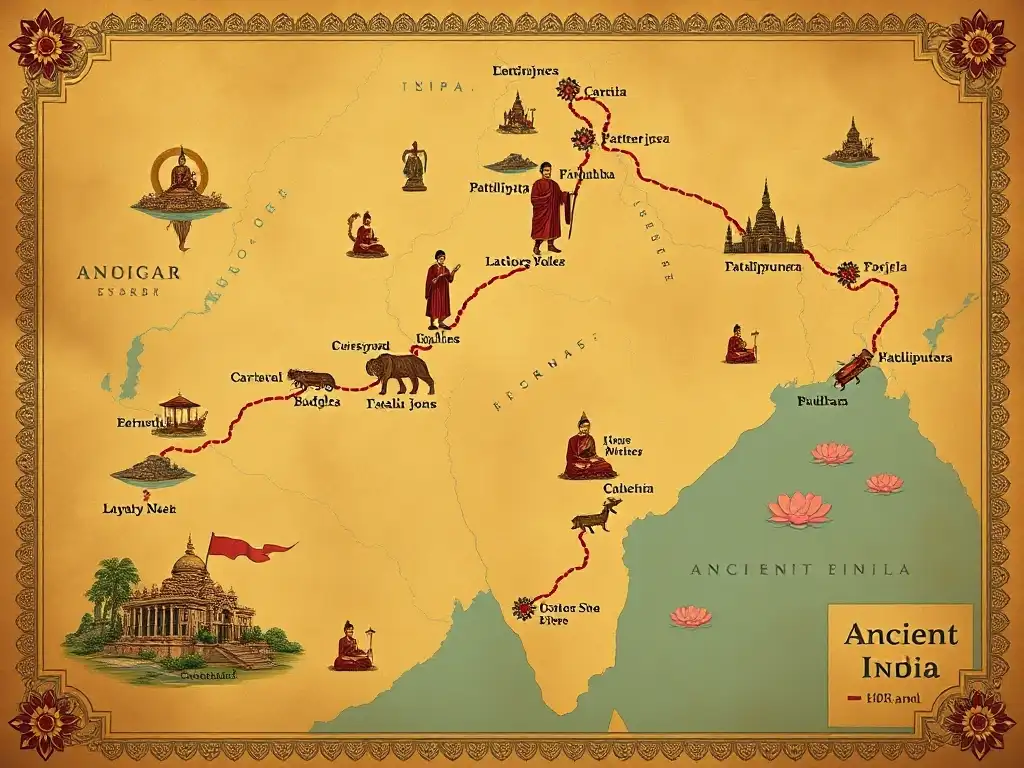
The spread of Buddhism in ancient India was inextricably linked to the extensive trade networks that connected various regions. These trade routes facilitated not just the exchange of goods but also ideas, beliefs, and cultural practices. Two primary trade networks—overland routes like the Silk Road and maritime routes to the south—played crucial roles in disseminating Buddhist teachings across Asia and beyond. By examining these trade routes, we can better understand how Buddhism flourished and adapted in different cultural contexts.
The Silk Road and Its Role in Spreading Buddhism
The Silk Road, a series of interconnected trade routes that linked the East and West, became a pivotal conduit for the spread of Buddhism. Originating in the Han Dynasty (206 BCE – 220 CE), this route allowed merchants, travelers, and monks to traverse vast distances, carrying not just silk and spices but also religious texts and philosophies.
Buddhism reached Central Asia and China through this route, where it encountered various cultural influences, leading to the development of distinct schools of thought. For instance, the arrival of Buddhist monks like Xuanzang in the 7th century CE helped consolidate Buddhist teachings in China, establishing monasteries and translating texts that shaped Chinese Buddhism profoundly.
Additionally, the Silk Road facilitated the movement of art and iconography associated with Buddhism, such as stupas and sculptures depicting the Buddha. These artistic expressions further helped to embed Buddhist beliefs in the local cultures, demonstrating the road's dual role in commerce and cultural exchange.
The Southern Trade Routes and Maritime Influence on Buddhism
The maritime trade routes, particularly those connecting the Indian subcontinent to Southeast Asia, significantly impacted the dissemination of Buddhism. These sea routes facilitated trade with regions like Sri Lanka, the Malay Peninsula, and beyond, promoting cultural interactions that were vital for the growth of Buddhism.
In Sri Lanka, for example, traders and missionaries established a strong Buddhist presence, leading to the construction of stupas and monasteries. The teachings of the Buddha were adapted to local customs, resulting in a unique blend of beliefs that influenced the spread of Buddhism throughout Southeast Asia.
Moreover, the ports along the southern trade routes became melting pots of cultures, where Buddhist traders exchanged goods and ideas with other religions, such as Hinduism and indigenous beliefs. This blending of traditions enriched the Buddhist faith and led to the emergence of new sects and practices, ensuring Buddhism's resilience and adaptability across diverse regions.
The Decline of Trade and Its Effects on Buddhism
As time progressed, several factors contributed to the decline of trade networks in ancient India, which in turn affected the prominence of Buddhism. The interplay of economic, political, and social dynamics led to a significant transformation in the landscape of Indian trade and religion.
Factors Leading to the Decline of Trade Routes
Several factors contributed to the decline of trade routes, including:
- Political Instability: The fragmentation of empires and the rise of regional powers during the late centuries of ancient India caused disruptions in trade. Frequent invasions and conflicts led to the deterioration of established trade networks.
- Economic Changes: As local economies began to prioritize self-sufficiency over trade, the demand for long-distance trading diminished. This shift led to reduced interactions between different cultures and a decline in the exchange of ideas, including Buddhist teachings.
- The Rise of Other Religions: The emergence of new religious movements, particularly Hinduism, began to overshadow Buddhism in many regions of India. This shift in spiritual focus contributed to declining patronage for Buddhist institutions.
Consequences for Buddhism in Ancient India
The decline of trade routes had several consequences for Buddhism in ancient India:
- Reduction in Monastic Support: Many Buddhist monasteries relied on trade for their sustenance. With the decline of trade, they faced financial hardships, leading to decreased support for monks and scholars who were essential for maintaining Buddhist teachings and practices.
- Cultural Isolation: As trade diminished, so did the cultural exchanges that had previously enriched Buddhism. This isolation led to stagnation in the development of Buddhist thought, making it harder for the religion to adapt and thrive in a changing world.
- Geographical Dispersal: The decline in trade routes contributed to the geographical dispersal of Buddhism. While it continued to flourish in regions like Tibet and parts of Southeast Asia, its stronghold in India began to weaken, paving the way for its eventual decline in its birthplace.
Trade routes played an essential role in the expansion and adaptation of Buddhism throughout ancient India, shaping its evolution and interaction with various cultures. However, the decline of these routes marked a significant turning point, leading to changes that ultimately transformed the religious landscape of ancient India.
Conclusion: The Lasting Legacy of Trade in the Spread of Buddhism
The trade routes of ancient India played a pivotal role in disseminating Buddhist teachings and practices across regions, creating a rich tapestry of cultural and spiritual exchange. The interactions along these trade routes not only facilitated the movement of goods but also the exchange of ideas, philosophies, and beliefs. This interconnectedness allowed Buddhism to transcend its geographic origins, reaching diverse populations and adapting to various cultural contexts. The enduring legacy of this trade-driven spread of Buddhism is evident in the continued reverence for Buddhist principles worldwide and the establishment of significant monastic centers that emerged along these routes.
The influence of trade on Buddhism's expansion can be traced through various historical accounts, artifacts, and archaeological findings. Sites such as Taxila and Nalanda became crucial centers of learning where merchants, travelers, and monks converged, fostering an environment conducive to the exchange of knowledge and spiritual exploration. This aspect of trade illustrates how economic activities were intrinsically linked to the spiritual and cultural fabric of ancient societies, contributing to Buddhism's evolution and resilience.
Reflection on Buddhism’s Enduring Influence Through Trade
Buddhism's spread through trade routes in ancient India serves as a testament to the power of economic networks in shaping spiritual landscapes. The movement of traders and travelers not only facilitated commerce but also enabled the sharing of Buddhist teachings, which were often integrated into local cultures. This adaptability allowed Buddhism to resonate with diverse populations, fostering a sense of community and belonging among followers.
The establishment of stupas and monasteries along trade routes further exemplified the enduring influence of Buddhism. These sites became hubs for pilgrims and traders alike, promoting the exchange of ideas and practices. The Buddhist ethos of compassion and interconnectedness found expression through these interactions, leaving a lasting impact on the regions that embraced these teachings. Thus, the legacy of trade in Buddhism's proliferation is not merely a historical phenomenon but a continuing narrative that underscores the importance of cultural exchange in shaping human understanding.
Final Thoughts on Buddhism Trade Routes in Ancient India
The trade routes of ancient India were instrumental in the dissemination of Buddhism, creating a network that connected regions and cultures. The interplay between trade and spirituality highlights the significance of economic systems in promoting religious ideologies. As Buddhism traveled along these routes, it adapted and transformed, reflecting the diverse contexts in which it was embraced.
The study of Buddhism trade routes in ancient India reveals not just the historical significance of commerce but also the profound cultural connections that emerged from these exchanges. As we continue to explore the rich history of ancient Indian civilizations, the role of trade in the spread of Buddhism remains a vital area of inquiry, offering insights into the complexities of cultural diffusion and the enduring power of spiritual traditions. The legacy of these trade routes continues to inspire modern interpretations of Buddhism and its role in fostering intercultural dialogue.
- Introduction to Buddhism and Trade in Ancient India
- The Development of Trade Routes in Ancient India
- The Interconnection Between Trade and the Spread of Buddhism
- How Trade Routes Enabled the Spread of Buddhist Ideas
- Role of Merchants in Promoting Buddhism
- The Influence of Trade on Buddhist Practices and Institutions
- Case Studies of Specific Trade Routes and Their Impact on Buddhism
- The Decline of Trade and Its Effects on Buddhism
- Conclusion: The Lasting Legacy of Trade in the Spread of Buddhism
- What were the primary trade routes in ancient India that facilitated the spread of Buddhism?
- How did Buddhism influence trade in ancient India?
- What role did monasteries play in the trade of Buddhism?
- How did the Gupta Empire contribute to the spread of Buddhism via trade?
- What were some cultural exchanges that occurred due to Buddhism along trade routes?
Frequently Asked Questions
What were the primary trade routes in ancient India that facilitated the spread of Buddhism?
The primary trade routes included the Silk Road and the Maritime Trade Routes, which connected India to Central Asia and beyond, allowing for the exchange of ideas and beliefs, including Buddhism.
How did Buddhism influence trade in ancient India?
Buddhism provided a unified framework for cultural exchange, leading to increased trade interactions between various regions, promoting not only material goods but also spiritual teachings.
What role did monasteries play in the trade of Buddhism?
Monasteries served as important centers of learning and hospitality along trade routes, where travelers could rest and engage in discussions, further spreading Buddhism and its principles.
How did the Gupta Empire contribute to the spread of Buddhism via trade?
During the Gupta Empire, trade flourished, and Buddhism gained royal patronage, leading to the establishment of Buddhist monuments and the promotion of the religion along trade routes, making it more accessible to traders and travelers.
What were some cultural exchanges that occurred due to Buddhism along trade routes?
Cultural exchanges included the sharing of art, language, and religious practices, significantly enriching both Buddhist and local cultures, as merchants and monks traveled and interacted across regions.
Final Reflection: The Enduring Legacy of Trade in Buddhism's Journey
The intricate relationship between trade and the spread of Buddhism throughout ancient India is a testament to the power of cultural exchange. As we navigate a world increasingly defined by globalization, the historical significance of trade routes in facilitating the dissemination of ideas and beliefs becomes ever more relevant. The pathways that once connected merchants and monks not only fostered economic prosperity but also sowed the seeds of spiritual enlightenment, illustrating that commerce can be a vehicle for profound transformation.
The influence of trade on Buddhism's expansion is a reminder of how interconnected our societies have always been. From the bustling markets of ancient India to the serene monasteries that dotted the landscape, the movement of goods paralleled the movement of thoughts and philosophies. This ongoing dialogue between cultures continues to shape our social fabric today. The greatest gift is not what we receive, but what we give to others.
This sentiment encapsulates the essence of trade as a means of sharing not just material wealth but also spiritual richness.
As you reflect on the lessons drawn from the historical interplay of trade and Buddhism, consider how you can apply these insights in your own life. Embrace the idea that every interaction, whether personal or professional, holds the potential to foster understanding and connection. Just as ancient traders navigated their routes with purpose, let us navigate our own paths with the intention of sharing wisdom and compassion, ensuring that the legacy of Buddhism and its teachings continue to thrive in our modern world.
Thank you for diving into the captivating story of how trade shaped the spread of Buddhism across ancient India! Your interest highlights the profound connections between culture, commerce, and spirituality. Now, let's take this journey further together – here’s how you can engage!
- Join a local or online community focused on Buddhism or ancient history to share insights and experiences.
- Explore further: Read books or watch documentaries that delve deeper into the historical context and influences of Buddhism.
- Share this article with friends or on social media to spark discussions about the impact of trade on spiritual traditions.
How do you think trade continues to influence cultural exchanges in today’s world?