
Exploring the Scripts of Ancient Indian Coins: Insights into Trade and Economy

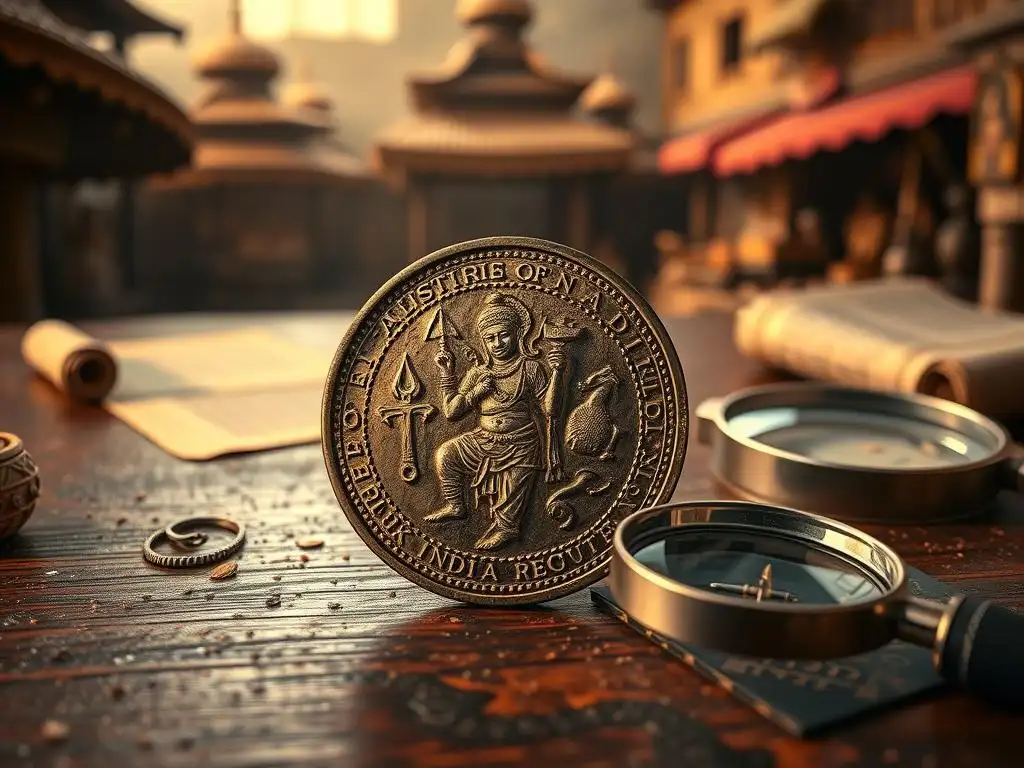
Welcome to Ancient India History, where we embark on a captivating journey through the rich tapestry of India’s past. Delve into the intriguing world of ancient Indian coin scripts, a fascinating window into the trade and economy of bygone civilizations. As we explore the intricate inscriptions that adorned these coins, you'll uncover stories of commerce, culture, and the vibrant exchanges that shaped ancient Indian society.
Prepare to be inspired and enlightened as you navigate through our insights and discover the profound impact these scripts have had on understanding the economic landscape of the time. Join us in unraveling the mysteries of history—your adventure begins now!
- Introduction to Ancient Indian Coin Scripts
- Historical Context of Ancient Indian Coinage
- Types of Ancient Indian Coin Scripts
- Deciphering the Scripts of Ancient Indian Coins
- Insights from Ancient Indian Coin Scripts
- The Impact of Ancient Indian Coin Scripts on Modern Understanding
- Conclusion: The Legacy of Ancient Indian Coin Scripts
- Frequently Asked Questions
- Final Reflection: Unveiling the Legacy of Ancient Indian Coin Scripts
- Unveil the Mysteries of Ancient Indian Coins!
Introduction to Ancient Indian Coin Scripts
The study of ancient Indian coin scripts offers a fascinating glimpse into the economic and cultural exchanges that flourished across the Indian subcontinent. Ancient Indian coin scripts not only served as a medium of trade but also reflected the socio-political dynamics and religious beliefs of the time. From the intricate designs of the Indus Valley civilization to the distinct inscriptions of the Gupta Empire, these scripts are invaluable for historians and archaeologists alike.
They provide insights into trade networks, economic practices, and the evolution of language and writing in ancient India. Understanding these scripts helps to unravel the complexities of ancient Indian economies and their interactions with neighboring civilizations.
Overview of Ancient Indian Coins
Ancient Indian coins emerged as a significant medium of exchange around the 6th century BCE, marking a pivotal shift from barter systems to monetary economy. The earliest known coins, often referred to as punch-marked coins, were made of silver and featured various symbols and marks that signified authority and value.
Key Features of Ancient Indian Coins:
- Materials: Coins were primarily made from metals like silver, copper, and gold, indicating their value and the wealth of the issuing authority.
- Designs and Symbols: Coins often depicted symbols such as animals, deities, and geometric patterns, which held cultural and religious significance.
- Regional Variations: Different regions produced distinct styles of coins, reflecting local traditions and the influence of various dynasties.
The introduction of coins revolutionized trade, facilitating economic transactions across vast distances and fostering relationships between different cultures and civilizations. The inscriptions found on these coins serve as crucial evidence of the languages and scripts in use during various periods of ancient Indian history.
Importance of Scripts in Understanding Trade and Economy
The scripts inscribed on ancient Indian coins are more than mere markings; they are key to unlocking the narratives of trade and economy in ancient India. These inscriptions often include the names of rulers, denominations, and sometimes even proclamations or religious texts, offering context to the economic conditions of the time.
Significance of Scripts:
- Historical Context: Scripts help date coins and associate them with specific rulers or periods, allowing historians to construct a timeline of economic development.
- Language Evolution: The study of coin scripts reveals the evolution of languages in ancient India, showcasing how scripts like Brahmi and Kharosthi contributed to the region's linguistic heritage.
- Trade Networks: The content of inscriptions can indicate trade routes and relationships with other regions, highlighting the interconnectedness of ancient economies.
The exploration of ancient Indian coin scripts not only enhances our understanding of monetary systems but also illuminates the broader cultural and economic landscapes of ancient Indian civilizations. By deciphering these scripts, we gain valuable insights into the complexities of trade and the vibrant interactions that shaped the history of the subcontinent.
Historical Context of Ancient Indian Coinage

The history of ancient Indian coinage is deeply intertwined with the social, political, and economic developments of the region. Coinage emerged as a significant medium of exchange during the period of the Mahajanapadas (approximately 600 BCE), marking a transition from barter systems to a more sophisticated economy. The introduction of metal coins not only facilitated trade but also served as a tool for rulers to assert their power and influence.
The earliest coins were made from silver and copper and were often shaped like punches. These were known as "punch-marked coins," which featured various symbols and insignias that represented different states or rulers. As trade routes expanded and cultural exchanges flourished, the complexity and artistry of coins evolved, reflecting the rich tapestry of ancient Indian civilization.
Evolution of Coinage in Ancient India
The evolution of coinage in ancient India can be traced through several key phases:
- Punch-Marked Coins (circa 600 BCE - 400 BCE):
- These were the earliest known coins in India, primarily made of silver.
- They featured a variety of symbols stamped onto them, including animals, geometric patterns, and symbols that likely had regional significance.
- The Mahajanapadas utilized these coins for local trade, establishing a foundation for economic interaction.
- Standardized Coins (circa 400 BCE - 200 CE):
- With the rise of powerful empires, such as the Maurya Empire, standardized coins began to appear.
- The Nanda and Maurya dynasties produced coins that were not only uniform in weight but also bore the images of rulers, which helped in establishing their authority.
- Coins during this period often featured symbols representing the empire, such as the lion or the elephant.
- Regional Variations and Cultural Influence (circa 200 CE - 600 CE):
- Following the Mauryan period, various regional dynasties like the Kushans and Guptas introduced their own styles of coinage.
- The Kushan coins often depicted deities and incorporated Greek and Persian influences due to their vast empire that spanned across diverse cultures.
- Gupta coins, on the other hand, celebrated the prosperity of the empire, showcasing intricate designs and the portraiture of rulers.
- Decline and Transition (circa 600 CE onwards):
- As the subcontinent faced invasions and shifts in power, the use of coins evolved again.
- This period saw a fragmentation of currency systems, with local rulers minting coins that reflected their individual identities and regional characteristics.
Major Dynasties and Their Currency Systems
Several dynasties played pivotal roles in shaping the currency systems of ancient India:
- Maurya Empire (322-185 BCE):
- The Mauryas standardized coinage, using silver and copper extensively.
- Coins often featured the Chakra and other symbols associated with the state, ensuring a unified economic system.
- Kushan Empire (1st-3rd Century CE):
- The Kushans introduced a variety of coins made from gold, silver, and copper, reflecting their influence from Hellenistic cultures.
- Their coins often depicted Greek inscriptions alongside Indian symbols, signifying the cultural amalgamation of the time.
- Gupta Empire (circa 240-550 CE):
- Known for their golden coins, the Guptas established a flourishing economy that was marked by trade and commerce.
- Gupta coins were characterized by their high-quality gold content and detailed imagery, often depicting the rulers and Hindu deities.
- Chola and Pandya Dynasties (circa 9th-13th Century CE):
- These southern dynasties minted coins that were significant in regional trade networks.
- Their coins often featured Tamil inscriptions and local symbols, highlighting the rich linguistic and cultural heritage of the south.
The Role of Trade in Ancient Indian Economies
Trade was a fundamental aspect of ancient Indian economies, significantly influencing the development and circulation of ancient Indian coin scripts. The extensive trade networks that connected India with regions such as the Middle East, Southeast Asia, and beyond facilitated not only the exchange of goods but also ideas and cultures.
- Internal Trade:
- Local markets flourished with the introduction of coins, allowing for more efficient transactions.
- Agricultural products, textiles, spices, and handicrafts became key commodities traded within India.
- International Trade:
- India became a prominent player in maritime trade, exporting silk, spices, and precious stones.
- Coinage served as a medium for transactions with foreign merchants, enhancing India's economic stature on the global stage.
- Cultural Exchange:
- Trade routes also led to cultural exchanges, as seen in the diverse inscriptions found on coins, which often included multiple languages and scripts.
- The spread of Buddhism and other philosophies was facilitated by traders who carried ideas along with goods.
The evolution of ancient Indian coin scripts reflects the intricate relationship between trade, economy, and culture throughout India's rich history. Understanding these scripts provides valuable insights into the complexities of ancient Indian civilizations and their contributions to the world's economic heritage.
Types of Ancient Indian Coin Scripts
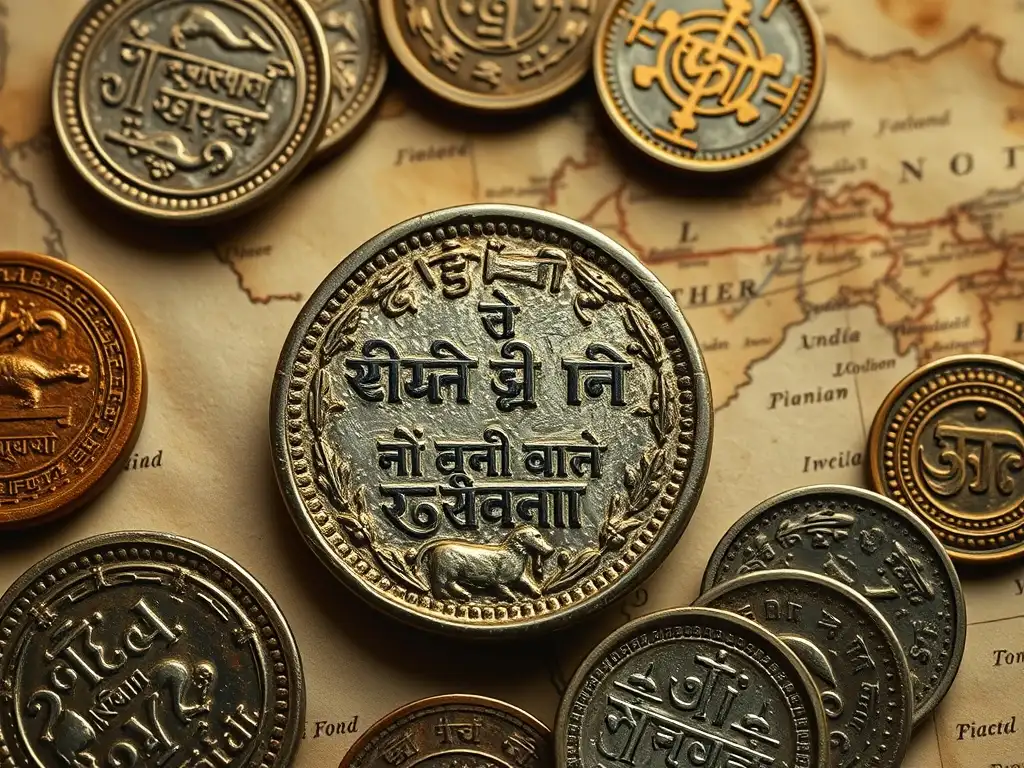
Brahmi Script on Coins
The Brahmi script is one of the earliest writing systems in India, emerging around the 3rd century BCE. It holds significant importance in the study of ancient Indian coin scripts due to its widespread use across various regions and dynasties. Brahmi inscriptions on coins typically feature a variety of denominations, often accompanied by symbols indicating the issuer's authority or the coin’s value.
- Characteristics of Brahmi Script:
- Phonetic Nature: Brahmi is primarily a phonetic alphabet, meaning it represents sounds rather than ideas or concepts.
- Direction of Writing: Unlike modern scripts that are read from left to right, Brahmi was often inscribed from right to left on coins.
- Symbolism: Coins often included symbols such as the chakra (wheel) or lotus, which held cultural significance.
Brahmi inscriptions provide essential insights into the economy and trade practices of ancient Indian civilizations. For instance, the presence of certain denominations can indicate the economic conditions during specific periods. Coins from the Mauryan Empire frequently featured Brahmi inscriptions, which helped standardize currency and facilitate trade across vast distances.
Kharosthi Script and Its Significance
The Kharosthi script is another critical ancient Indian script that played a significant role in the economy, particularly in the northwestern regions of the Indian subcontinent. Originating around the 3rd century BCE, Kharosthi was used primarily in Gandhara and has been pivotal in understanding the trade dynamics of ancient India.
- Distinct Features of Kharosthi:
- Right-to-Left Writing: Kharosthi is unique in that it is written from right to left, a feature that can be compared to Hebrew and Arabic scripts.
- Influence on Other Scripts: Kharosthi has influenced various writing systems in Central Asia, highlighting its extensive reach.
Kharosthi inscriptions on coins often included the names of rulers, titles, and symbols representing their reign. For example, the Indo-Greek kings utilized Kharosthi to signify their authority and facilitate trade within their territories. This script offers valuable insights into the interactions between different cultures, particularly during the Hellenistic period, showcasing how trade routes influenced script usage.
Other Lesser-Known Scripts Used on Coins
While Brahmi and Kharosthi are the most prominent scripts found on ancient Indian coins, several lesser-known scripts also played a role in the numismatic landscape of ancient India. These scripts often reflect regional variations and specific cultural contexts.
- Scripts to Note:
- Tamil-Brahmi: Predominantly used in Southern India, Tamil-Brahmi inscriptions appear on coins from the early Tamil kingdoms, providing insights into their trade practices and linguistic heritage.
- Nagari Script: Evolving from Brahmi, the Nagari script appeared on coins from the Gupta Empire, showcasing the shift in linguistic preferences and regional governance.
- Shankhalikhita: This lesser-known script was used in specific regions, primarily in the context of local trade, indicating localized economies and cultural exchanges.
The study of these various scripts enhances our understanding of the ancient Indian coin scripts and their implications for trade and economic activities. Each script not only serves as a medium of communication but also reflects the cultural and historical context of the time, painting a richer picture of ancient India's economic landscape.
Deciphering the Scripts of Ancient Indian Coins
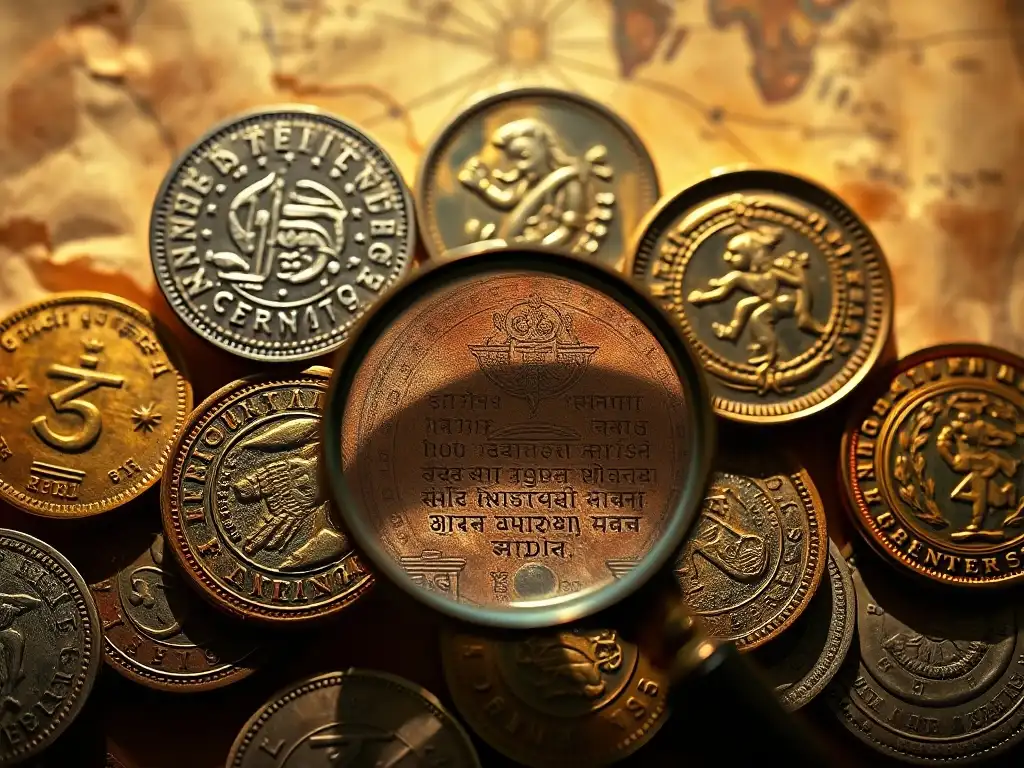
The scripts on ancient Indian coins provide invaluable insights into the trade, economy, and culture of various civilizations. These inscriptions are not only linguistic artifacts but also reflect the socio-economic dynamics of their time. Understanding these scripts involves a multi-faceted approach that combines epigraphy, numismatics, and historical analysis to reconstruct the narratives surrounding these coins.
Methodologies for Decoding Ancient Scripts
Decoding ancient Indian coin scripts requires a systematic methodology that integrates various disciplines. The following approaches are commonly employed:
-
Epigraphic Analysis:
This involves the study of the inscriptions themselves. Scholars analyze the typography, style, and iconography of the scripts to place them within a historical context.
- Comparative Studies: Scholars often compare inscriptions from coins with those found on stone tablets and pottery to identify common linguistic patterns.
- Language Identification: Different regions used various scripts such as Brahmi, Kharosthi, and others. Identifying the language is crucial for further analysis.
-
Numismatic Techniques:
Numismatics, the study of coins, plays a significant role in understanding the economic context of coinage.
- Mint Analysis: Investigating the mints where coins were produced can reveal trade routes and economic relationships.
- Metal Composition: Analyzing the metal content can indicate the technology and resources available during the coin’s minting.
-
Historical Contextualization:
Understanding the historical period in which the coins were minted is essential. This involves:
- Cross-Referencing Historical Texts: Ancient texts can provide context for the economic and political situations reflected in coin inscriptions.
- Archaeological Correlations: Findings from archaeological sites can help corroborate the information gleaned from coin inscriptions.
-
Digital Tools and Technology:
Modern technology has enhanced the ability to analyze ancient scripts.
- Image Processing Software: Tools can enhance visibility of faded inscriptions, making them easier to read.
- Database Compilation: Creating a database of known inscriptions aids researchers in identifying patterns and making connections.
Case Studies: Successful Decipherment of Coin Scripts
Several successful cases of deciphering ancient Indian coin scripts illustrate the effectiveness of these methodologies:
-
The Indo-Greek Coins:
The coins minted by Indo-Greek rulers feature inscriptions in Greek and Kharosthi. Through comparative analysis, researchers have been able to understand the political alliances and cultural exchanges between the Hellenistic world and Indian states. The decipherment of the name "Menander" on these coins exemplifies how inscriptions can illuminate historical narratives.
-
Mauryan Coins:
The coins from the Mauryan Empire, particularly those bearing Brahmi script, have provided insights into the administration and trade practices of the time. The inscriptions often include the titles of rulers and local officials, offering a glimpse into the governance and economic organization of the empire.
-
Gupta Coins:
Gupta coins are notable for their artistic designs and inscriptions that often include the names of rulers and deities. The successful interpretation of these scripts has shed light on the socio-religious dynamics of the Gupta period, particularly the patronage of arts and culture.
Challenges in Understanding Ancient Indian Coin Scripts
Despite the advancements in deciphering ancient Indian coin scripts, numerous challenges persist:
-
Faded Inscriptions:
Many ancient coins bear inscriptions that have worn away over time, making them difficult to read. The lack of visibility can hinder accurate interpretation.
-
Variability in Scripts:
The existence of multiple scripts and languages across different regions complicates the decoding process. Variations in style and writing conventions require scholars to be well-versed in different linguistic traditions.
-
Contextual Ambiguities:
The absence of comprehensive historical records can lead to ambiguities in interpretation. Coins often lack extensive contextual information, necessitating a degree of speculation.
-
Counterfeit Coins:
The presence of counterfeit coins can further complicate the study of ancient scripts. Distinguishing genuine artifacts from replicas is critical for accurate historical analysis.
-
Interdisciplinary Knowledge:
The need for interdisciplinary knowledge poses a challenge. Scholars must integrate expertise from various fields such as linguistics, archaeology, and history, which can be a barrier for some researchers.
By addressing these challenges and employing a range of methodologies, scholars can continue to uncover the rich narratives embedded within ancient Indian coin scripts, enhancing our understanding of the region's historical and cultural heritage.
Insights from Ancient Indian Coin Scripts
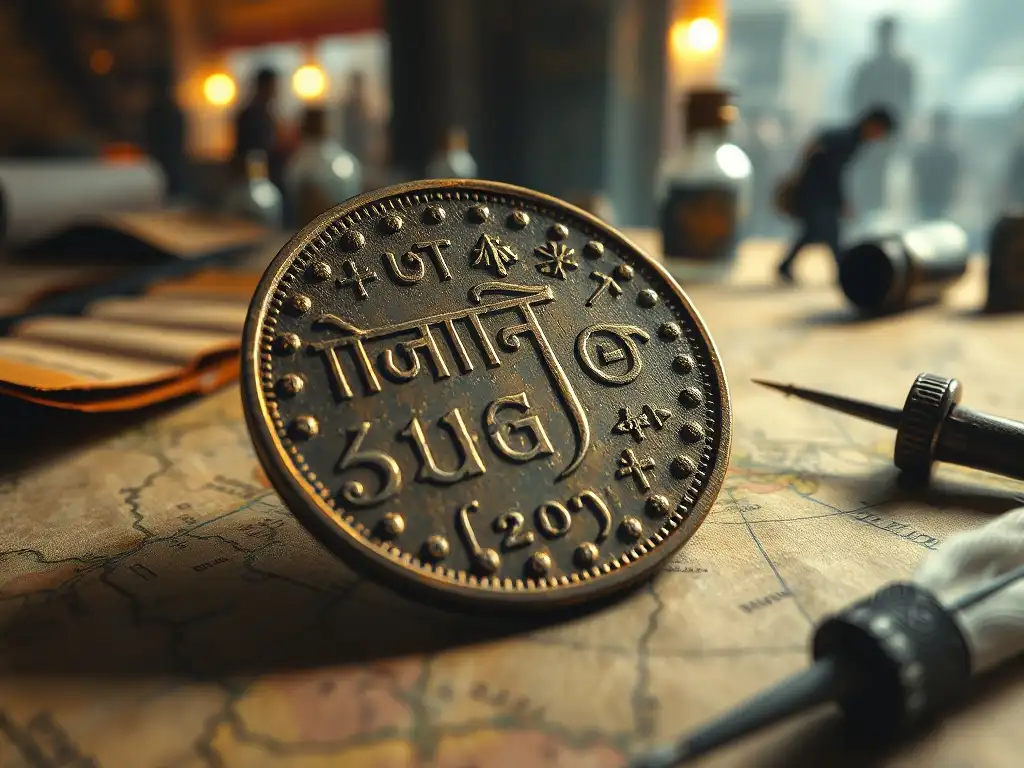
Ancient Indian coin scripts serve as a crucial lens through which we can examine the economic, cultural, and social dynamics of ancient Indian civilizations. The inscriptions and symbols found on coins not only provide evidence of trade practices but also reflect the prevailing religious and cultural ethos. By analyzing these scripts, historians and archaeologists unlock valuable insights into the intricacies of ancient Indian society.
Economic Indicators and Trade Patterns Revealed
The scripts inscribed on ancient Indian coins are rich with information concerning the economy and trade routes of the time. These inscriptions often include the names of issuing authorities, denominations, and weights, providing a framework for understanding economic transactions.
- Trade Routes: Coins featuring specific scripts indicate the regions involved in trade. For instance, coins from the Indo-Greek period often bear inscriptions in Greek and Kharosthi, suggesting a flourishing trade network connecting the Indian subcontinent with Hellenistic cultures.
- Denominations and Standardization: The consistency in weight and size of coins across regions points to a standardized currency system. This uniformity facilitated trade and commerce, allowing merchants to engage in long-distance trade with confidence.
| Coin Type | Script Used | Region | Period |
|---|---|---|---|
| Punch-marked Coins | Brahmi | Northern India | 6th Century BCE |
| Indo-Greek Coins | Greek, Kharosthi | Northwestern India | 2nd Century BCE |
| Gupta Coins | Gupta Script | Northern India | 4th-6th Century CE |
Cultural and Religious Influences Reflected in Coin Scripts
The inscriptions on ancient Indian coins also offer a fascinating glimpse into the cultural and religious milieu of the time. The variety of scripts used illustrates the diversity of languages and religions present across the region.
- Religious Symbolism: Many coins feature deities, symbols, or motifs associated with Hinduism, Buddhism, or Jainism, indicating the religious beliefs that influenced the rulers and their governance. For example, the coins of the Mauryan Empire often depict symbols like the lion or the wheel, which are significant in Buddhist tradition.
- Cultural Identity: The choice of script can reflect the cultural identity of the issuing authority. For instance, the use of Brahmi script signifies a connection to the broader Indian cultural sphere, while the introduction of Arabic script during the medieval period marks a shift towards Islamic influence in trade and governance.
The coins of ancient India are not mere currency; they are artifacts that encapsulate the spirit and ethos of their time.
The Role of Coins in Ancient Indian Society
Coins were not just a medium of exchange; they played a multifaceted role in ancient Indian society. They were instrumental in shaping economic policies, social hierarchies, and cultural exchanges.
- Political Authority: Issuing coins was a privilege of power. Rulers used coins to assert their authority and legitimacy, often inscribing their names and titles on them. This practice helped to reinforce their control over the territory and its economy.
- Cultural Exchange: The circulation of coins across regions facilitated cultural interactions. As merchants traveled, they brought with them not only goods but also ideas, art forms, and religious beliefs, contributing to the syncretic culture of ancient India.
- Social Status: Coins also served as a status symbol. Wealthier individuals often possessed coins of higher denominations, which reflected their economic standing in society. The presence of specific symbols or inscriptions could signify a person’s affiliation with a particular trade or guild.
The exploration of ancient Indian coin scripts offers profound insights into the trade, culture, and societal structures of ancient Indian civilizations. By decoding these inscriptions, we can better understand the rich tapestry of history that has shaped the Indian subcontinent.
The Impact of Ancient Indian Coin Scripts on Modern Understanding
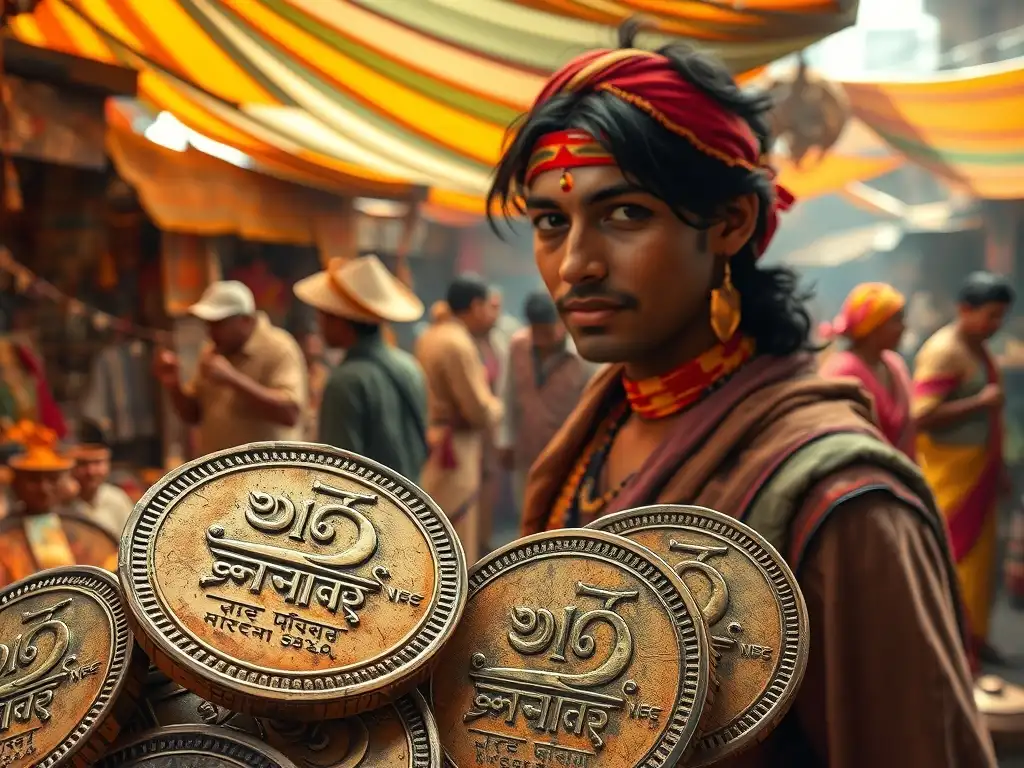
Contributions to Numismatics and Archaeology
The study of ancient Indian coin scripts has made significant contributions to the fields of numismatics and archaeology. These scripts, which include Brahmi, Kharosthi, and various regional variations, provide invaluable insights into the trade practices, political landscapes, and cultural exchanges of ancient Indian civilizations.
- Numismatic Evidence: Ancient coins often bear inscriptions that denote the issuing authority, date, and sometimes even the purpose of the coinage. For example, coins from the Maurya Empire frequently feature inscriptions in Brahmi script that help establish timelines and authenticate historical narratives.
- Cultural Exchange: The presence of various scripts across different regions illustrates the cultural interactions that occurred through trade. Coins from the Indo-Greek and Indo-Scythian periods showcase Hellenistic influences, evidenced by inscriptions in Greek alongside local scripts, offering a glimpse into the syncretic culture of the time.
- Archaeological Context: The discovery of coins in archaeological sites has aided in establishing trade routes and understanding economic networks. For instance, the excavation of coins in trade centers like Taxila provides context for the economic interactions that spanned across the Indian subcontinent and beyond, revealing connections with places such as Central Asia and the Mediterranean.
- Methodological Advances: The analysis of coin scripts has led to the development of specific methodologies in archaeology, enabling researchers to date layers of habitation based on the coinage found within a site, thereby enhancing the chronological framework of ancient Indian history.
Influence on Contemporary Studies of Ancient Indian Economy
The exploration of ancient Indian coin scripts has profound implications for our understanding of the economic systems that prevailed in ancient India.
- Trade and Commerce: The inscriptions on coins often indicate the nature of commerce, including the types of goods traded and the economic policies of different empires. For instance, the presence of specific symbols and denominations can suggest a standardized system of trade that facilitated economic interactions across vast distances.
- Taxation and Revenue: Coins often served as tools for taxation, and the inscriptions provide insights into the fiscal policies of various rulers. Analysis of inscriptions can reveal how ancient states managed revenue collection, which in turn affected their economic stability and growth.
- Market Dynamics: The prevalence of certain denominations can indicate the economic conditions of a region. For example, a high volume of smaller denominations may suggest a thriving local economy with frequent transactions, while a scarcity of coins might point to economic decline or a shift in trade practices.
- Social Stratification: The types of coins used and the scripts employed can also reflect social hierarchies and the distribution of wealth. Differentiation in coinage style and material can imply varying levels of access to resources among different social classes.
By analyzing the ancient Indian coin scripts, researchers can reconstruct a detailed picture of ancient economies, enabling a comprehensive understanding of how trade, politics, and culture intertwined in shaping the subcontinent's history.
Conclusion: The Legacy of Ancient Indian Coin Scripts
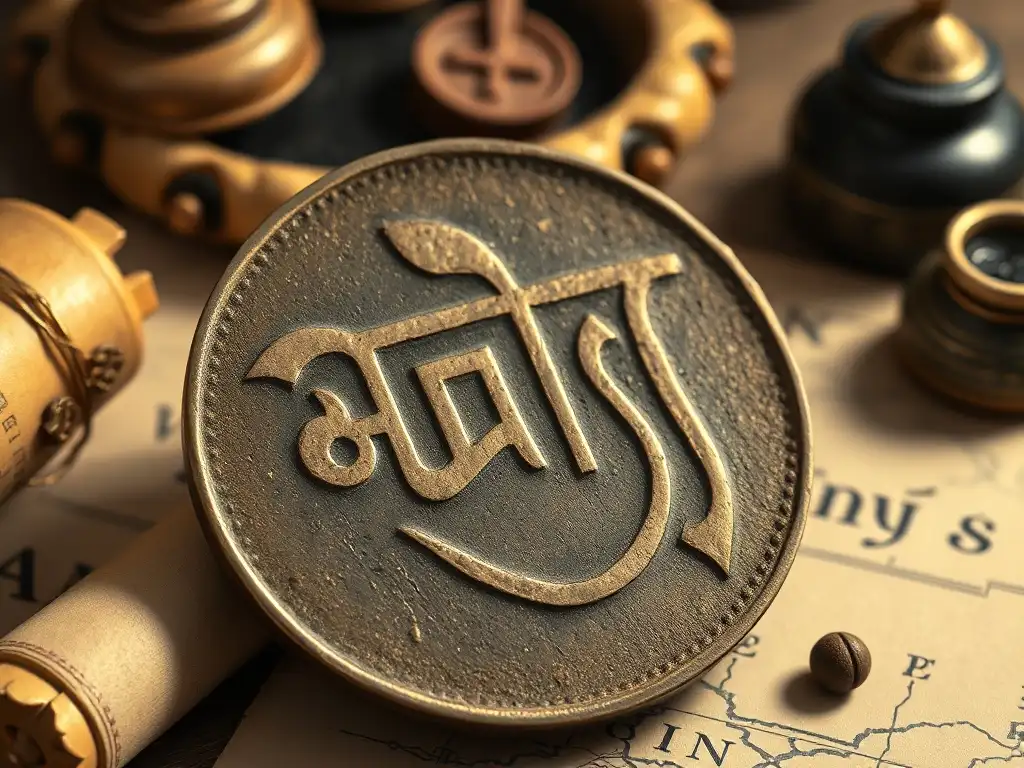
The study of ancient Indian coin scripts provides a fascinating glimpse into the economic, cultural, and social dynamics of ancient civilizations. These inscriptions serve as a vital link to understanding trade practices, governance, and the interplay of various cultures within the broader context of ancient India. By deciphering these scripts, researchers can uncover the intricate relationships between different regions and their contributions to the evolution of commerce and industry in the subcontinent.
Summary of Key Insights
- Diversity of Scripts: Ancient Indian coins feature a plethora of scripts, including Brahmi, Kharosthi, and various regional variants. Each script reflects not only linguistic diversity but also the cultural influences that shaped the regions where the coins were minted.
- Economic Indicators: The inscriptions often include details about the issuing authority, denominations, and sometimes even the purpose of the coinage. This information is crucial for understanding the economic systems and trade networks that flourished in ancient India.
- Cultural Interactions: Coins bearing inscriptions in different languages or scripts indicate cultural exchanges and interactions between various communities. For instance, the presence of Greek and Persian influences in certain regions highlights the impact of foreign trade and conquests on local economies.
- Historical Context: The study of ancient Indian coin scripts allows historians to place coins within a broader historical narrative, connecting them to significant events, rulers, and societal changes throughout different periods, such as the Mauryan and Gupta empires.
- Technological Advances: The evolution of coin minting techniques and materials, as indicated by the inscriptions, reveals technological advancements and their implications for trade and economic stability.
Future Research Directions in Ancient Indian Epigraphy
The exploration of ancient Indian coin scripts is still a burgeoning field, with several promising directions for future research:
- Interdisciplinary Approaches: Engaging with fields such as archaeology, numismatics, and linguistics can provide a multi-faceted understanding of ancient economies. Collaborative research may uncover new insights into the significance of specific inscriptions and their implications for trade practices.
- Digital Epigraphy: The digitization of coin inscriptions can enhance accessibility for researchers worldwide. Developing databases and analytical tools will facilitate more comprehensive studies, enabling scholars to cross-reference scripts across different regions and time periods.
- Comparative Studies: By comparing ancient Indian coin scripts with those from contemporaneous cultures, researchers can better understand the unique characteristics of Indian inscriptions and their influences on and from neighboring civilizations.
- Regional Studies: Focusing on specific regions or dynasties can yield valuable insights into localized economic practices and cultural exchanges. Such studies will contribute to a more nuanced understanding of how regional dynamics influenced broader trends in ancient Indian history.
- Preservation Efforts: Initiatives to preserve ancient coins and their inscriptions are crucial for future research. Documenting and protecting these artifacts will ensure that they remain available for study and help prevent the loss of valuable historical data.
The legacy of ancient Indian coin scripts is rich and multifaceted, offering profound insights into the economic and cultural tapestry of ancient India. Continued exploration in this field promises to deepen our understanding of the past, illuminating the intricate connections that have shaped the Indian subcontinent's history.
Frequently Asked Questions
What are ancient Indian coin scripts?
Ancient Indian coin scripts refer to the various inscriptions and symbols found on coins minted in India from ancient times, which provide insights into trade, economy, and cultural practices.
Why are ancient Indian coin scripts important for historians?
These scripts are crucial as they offer evidence of trade networks, economic practices, and cultural exchanges that occurred in ancient India, helping historians reconstruct historical narratives.
Which civilizations used ancient Indian coin scripts?
The Indus Valley Civilization, the Maurya Empire, and the Gupta Empire are among the notable civilizations that utilized coin scripts, reflecting their economic sophistication and cultural diversity.
How do ancient Indian coin scripts reflect trade practices?
The inscriptions often indicate the denominations, issuers, and sometimes even the trade routes, showcasing the economic relationships between different regions and the value placed on various goods.
Are there any specific challenges in studying ancient Indian coin scripts?
Yes, challenges include deciphering the scripts due to variability across regions and periods, and the scarcity of coins, which can limit the understanding of their full historical context.
Final Reflection: Unveiling the Legacy of Ancient Indian Coin Scripts
The exploration of ancient Indian coin scripts is not merely an academic pursuit; it is a vital key to understanding the intricate tapestry of trade and economy that shaped our civilization. In today’s globalized world, where commerce transcends borders and cultures, the lessons embedded in these ancient scripts remind us of the enduring significance of trade as a catalyst for societal development. The coins of the past serve as tangible artifacts that connect us to our ancestors, revealing their values, aspirations, and the economic systems that sustained them.
Coin scripts have left an indelible mark on our cultural and social landscape, influencing not just historians and archaeologists, but also artists, economists, and everyday citizens. The stories told through these inscriptions illuminate the complexities of ancient trade networks and the rich interactions between diverse cultures. As historian R. S. Sharma aptly stated, The study of coins is the study of history itself.
This sentiment underscores the importance of understanding these artifacts as more than mere currency; they are windows into the lives and economies of those who came before us, shaping our present and future.
As we reflect on the insights gained from ancient Indian coin scripts, let us consider how we can apply these lessons to our own lives. I invite you to explore your own connections to trade, culture, and history, recognizing that every transaction we make today carries echoes of the past.
By appreciating the rich heritage of our economic systems, we can foster a deeper understanding of our place in the world and contribute to a more interconnected and informed society. Embrace the stories that these ancient coins tell, and let them inspire you to engage with the world around you in meaningful ways.
Unveil the Mysteries of Ancient Indian Coins!
Thank you for diving into the fascinating world of ancient Indian coins with us! We hope you’ve discovered valuable insights into how trade and the economy shaped historical landscapes. Now, it’s time to take action and deepen your exploration.
- Start your own research: Investigate a specific coin from ancient India. Visit local museums or browse online databases to uncover its unique history!
- Connect with fellow history enthusiasts: Join online forums or social media groups to discuss your findings and share insights about ancient trade practices.
- Spread the knowledge: Share this article with friends or on your social media platforms, and spark a conversation about the significant role of coins in ancient economies.
Which ancient coin do you find most intriguing, and what draws you to its story? We invite you to share your thoughts below!