
The SocioPolitical Context of Vedic Texts in Ancient India


Welcome to Ancient India History, where we embark on a fascinating journey through the rich tapestry of ancient Indian civilizations. Dive into our latest exploration, “The SocioPolitical Context of Vedic Texts in Ancient India,” to uncover how these sacred writings not only shaped spiritual beliefs but also influenced the sociopolitical landscape of their time. What secrets lie within the verses of the Vedas, and how did they mold the society we study today? Join us as we unravel the complexities of ancient Indian religions and their far-reaching implications. Your adventure into history begins here!
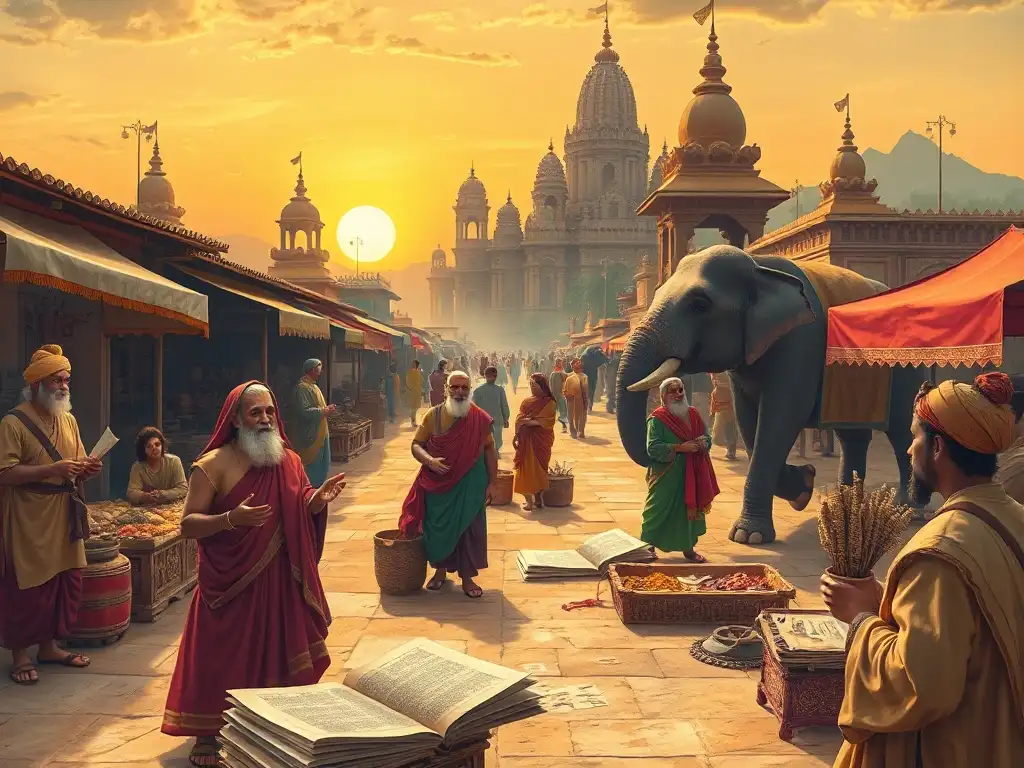
The sociopolitical context of Vedic texts offers a profound insight into the intricate tapestry of ancient Indian civilization, encapsulating the beliefs, values, and societal structures that shaped the ethos of the time. The Vedas, a collection of ancient scriptures, not only serve as foundational texts for Hindu philosophy and spirituality but also reflect the societal norms, political dynamics, and economic conditions prevalent during their composition.
Understanding this context is essential for appreciating how these texts influenced and were influenced by the evolving landscape of ancient India, from the early settlements of the Indus Valley to the emergence of complex political entities in the later Vedic period.
Introduction to Vedic Texts and Their Importance
Definition and Overview of Vedic Texts
Vedic texts are a body of literature composed in ancient India, primarily written in Sanskrit, that form the core of Hindu scriptures. They encompass four main collections:
- Rigveda: A collection of hymns dedicated to various deities.
- Yajurveda: Contains prose mantras and rituals for ceremonies.
- Samaveda: Comprises melodies and chants for religious rituals.
- Atharvaveda: Includes hymns, spells, and incantations for practical purposes.
These texts are not merely religious documents; they encapsulate a rich intellectual tradition, encompassing philosophy, rituals, and social norms, making them invaluable for understanding early Indian culture.
Historical Significance of Vedic Literature
The Vedic literature is crucial for historians and scholars as it provides insights into:
- Religious practices: Rituals and beliefs that formed the bedrock of early Hinduism.
- Social structure: The evolution of caste systems and community organization.
- Philosophical thought: Early concepts of dharma (duty), karma (action), and moksha (liberation).
The significance of Vedic texts transcends their immediate religious implications, offering a lens through which to view the historical progression of Indian civilization.
The Sociopolitical Landscape of Ancient India
Overview of Ancient Indian Society
Ancient Indian society during the Vedic period was characterized by a complex interplay of social hierarchies, familial ties, and community affiliations. Key aspects of this society included:
- Varna System: The classification of society into four main groups: Brahmins (priests), Kshatriyas (warriors), Vaishyas (traders), and Shudras (laborers).
- Patriarchal Structure: While women held certain rights, the society was predominantly patriarchal, influencing familial and social dynamics.
- Ritualistic Practices: Religion permeated daily life, guiding social interactions and governance.
Political Structures in Early Vedic Period
The political landscape of early Vedic India was marked by several features:
- Tribal Confederacies: Communities were often organized into tribes, led by chieftains known as Rajas.
- Decentralized Power: Authority was dispersed, with local rulers exercising significant autonomy within their regions.
- Assembly Systems: Important decisions were made in assemblies called Sabhas and Samitis, reflecting early democratic practices.
Economic Factors Influencing Vedic Society
The economy of early Vedic society was primarily agrarian, with several factors influencing its development:
- Agriculture: The introduction of iron tools greatly enhanced farming productivity.
- Trade and Exchange: Interactions with neighboring regions fostered economic growth and cultural exchange.
- Pastoralism: Livestock rearing played a vital role in the livelihoods of many communities, affecting social status and wealth distribution.
The Vedic texts encapsulate this multifaceted sociopolitical context, serving as both reflections of and influences upon the society from which they emerged. Understanding these dynamics is essential for appreciating the profound legacy of Vedic literature in shaping the cultural and spiritual heritage of ancient India.
Vedic Texts and Their Reflection of Sociopolitical Context
The Vedic texts, which include the Rigveda, Samaveda, Yajurveda, and Atharvaveda, serve as foundational scriptures of ancient Indian civilization. They were composed between approximately 1500 and 500 BCE and reflect the sociopolitical dynamics of their time. These texts not only encapsulate religious and spiritual ideas but also provide a lens through which we can understand the social structures, governance, and cultural practices of early Vedic society.
The sociopolitical context of the Vedic era was characterized by agrarian communities, tribal formations, and the gradual evolution of more complex political systems. The hymns and verses within the Vedas often reflect the values, norms, and conflicts of this society, offering insights into the power dynamics between various groups, including the emerging priestly class and the ruling elite. The interplay of religion and politics is evident as rituals and sacrifices were often employed to legitimize authority and maintain social order.
Moreover, the Vedic texts also highlight the role of kingship and governance, underscoring the significance of rulers in maintaining dharma, or cosmic order. As such, the Vedas are not merely religious documents but are vital historical resources that provide significant information about the sociopolitical landscape of ancient India.
How Vedic Texts Address Social Hierarchies
Social hierarchies in Vedic society were deeply entrenched and reflected in the structure of the texts themselves. The Vedas articulate the concept of varna, which categorizes society into four primary groups: Brahmins (priests), Kshatriyas (warriors), Vaishyas (traders and agriculturists), and Shudras (laborers and service providers). This classification is not merely social but also imbued with religious significance, as each varna had specific duties and responsibilities that contributed to the overall stability and prosperity of society.
The Vedic texts emphasize the importance of rituals and sacrifices, often performed by Brahmins, which reinforced their status as the privileged class. The Kshatriyas, responsible for protection and governance, were depicted as the enforcers of dharma, ensuring that societal order was maintained. The roles of the Vaishyas and Shudras, though less emphasized, were crucial for economic functioning and labor. This hierarchical structure is significant in understanding how the Vedic society operated and the implications it had on later Indian social systems.
Additionally, the emphasis on lineage and familial ties within the Vedic texts further solidified social hierarchies, as status and roles were often inherited. This led to a well-defined social order that influenced the sociocultural fabric of subsequent Indian civilizations.
Political Themes in the Rigveda
The Rigveda, one of the most ancient and revered texts, contains numerous hymns that delve into political themes central to Vedic society. The concept of kingship is prominent, with many hymns dedicated to praising rulers who uphold dharma and protect their people. The ideal king, as depicted in the Rigveda, is one who is wise, just, and capable of ensuring the well-being of his subjects through effective governance.
Additionally, the Rigveda reflects the presence of tribal confederacies and the dynamics of power struggles among various clans. The constant references to battles, alliances, and conquests illustrate the competitive nature of political life during this period. For instance, the hymn dedicated to Indra, the king of gods, often portrays him as a warrior who aids the Aryans in their conflicts against non-Aryans, symbolizing the struggles for dominance and control within the sociopolitical landscape.
Furthermore, the Rigveda also contains philosophical musings on authority and governance, suggesting an understanding of power that goes beyond mere force. The themes of justice and moral conduct emerge prominently, indicating that the legitimacy of a ruler was often tied to their adherence to dharma and the welfare of their people.
The Role of Dharma in Vedic Society
Dharma plays a crucial role in the sociopolitical context of Vedic texts, serving as a guiding principle for both individual conduct and societal norms. In the Vedic worldview, dharma encompasses duty, righteousness, and moral order, which were essential for maintaining harmony within the community. It is often viewed as the foundation upon which social structures and governance are built.
The texts emphasize that each varna has its own dharma that must be fulfilled. For instance, the Kshatriyas are expected to protect and govern, while the Brahmins are tasked with performing rituals and preserving sacred knowledge. This delineation of duties reinforces social order and stability, ensuring that each group contributes to the overall functioning of society.
Moreover, the significance of dharma extends to kingship, where the ruler's primary responsibility is to uphold dharma in governance. A king who fails to maintain dharma jeopardizes not only his authority but also the welfare of his subjects. This intrinsic connection between dharma and governance highlights the moral dimensions of power in Vedic society and sets a precedent for future political thought in India.
The Influence of Vedic Texts on Governance and Law
The Vedic texts have had a lasting impact on the concepts of governance and law in ancient India. They laid the groundwork for political philosophy and administrative principles that would shape the governance structures of subsequent empires. The texts provide insights into the expectations of rulers and the ideals of governance, influencing the norms of political authority and legal frameworks.
The Concept of Rajadharma in Vedic Literature
Rajadharma refers to the duty of a king or ruler as prescribed by the Vedic texts. This concept emphasizes the moral and ethical obligations of governance, detailing how rulers should act justly and maintain order in society. The Vedic literature articulates that a king must pursue the welfare of his subjects, protect them from harm, and uphold justice, which reinforces the idea that power is a responsibility rather than simply a privilege.
The importance of rajadharma is evident in various hymns and verses, which serve as guidelines for rulers. These texts suggest that adherence to rajadharma not only legitimizes a ruler's authority but also fosters loyalty and trust among the populace. As such, rajadharma becomes a cornerstone of political legitimacy in Vedic society, influencing the governance of later Indian kingdoms.
Vedic Texts as Sources of Legal Principles
Vedic texts are also recognized as early sources of legal principles that governed the interactions within society. The texts outline various aspects of law, including property rights, marriage regulations, and the resolution of disputes. These principles were often derived from the concept of dharma, reflecting the moral and ethical dimensions of legal obligations.
The Rigveda, for instance, includes verses that imply the existence of laws governing social conduct and property rights. The later texts, such as the Manusmriti, further elaborate on these legal principles, establishing a comprehensive legal framework that would guide Indian civilization for centuries. The emphasis on fairness, justice, and social responsibility in these laws indicates how Vedic texts shaped the legal landscape of ancient India.
Impact on Later Political Thought and Administration
The influence of Vedic texts extends beyond their immediate historical context, laying the groundwork for later political thought and administrative practices in India. The principles of governance articulated in the Vedas were absorbed into subsequent texts, such as the Arthashastra, which offers a more systematic approach to statecraft and administration.
The blend of political philosophy, ethical governance, and legal principles rooted in Vedic literature influenced the functioning of various dynasties, including the Mauryas and the Guptas. The ideals of responsible kingship, social justice, and the rule of law, as derived from Vedic texts, became central tenets of governance in ancient and medieval India.
As a result, the sociopolitical context established by the Vedic texts not only shaped the immediate society of ancient India but also left an enduring legacy that influenced political thought, governance, and law throughout Indian history.
The Role of Rituals and Religion in Sociopolitical Context
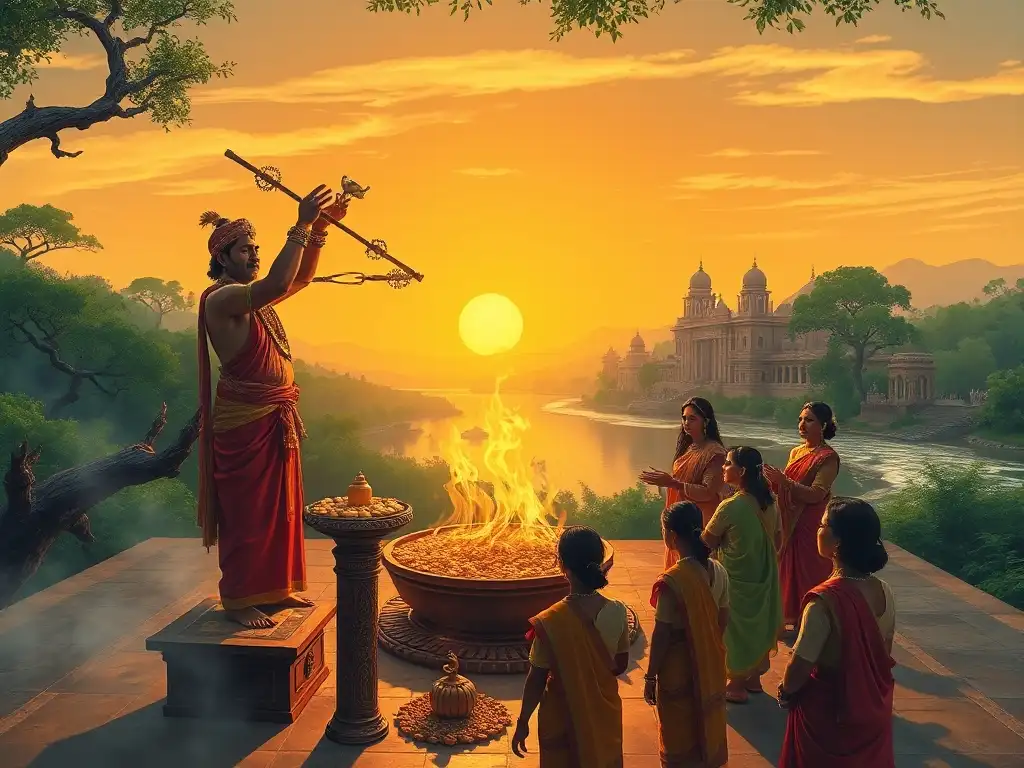
The Vedic texts are not merely religious scriptures; they offer a profound insight into the sociopolitical landscape of ancient India. Rituals and religion played an essential role in shaping societal norms, power structures, and governance. In Vedic society, the performance of rituals was intertwined with political authority, influencing everything from kingly legitimacy to social hierarchy. The texts illustrate how spiritual beliefs were fundamental to the understanding of power, duty, and community cohesion.
Importance of Rituals in Vedic Society
Rituals in Vedic society served multiple purposes, acting as a medium for expressing devotion, ensuring societal cohesion, and legitimizing authority. These rituals were often elaborate and conducted by priests, who were pivotal figures in both spiritual and social realms. The performance of sacrifices (yajnas) was believed to invoke favor from the deities, which in turn was thought to secure prosperity and stability for the community.
- Social Cohesion: Rituals helped to reinforce community ties and shared values, creating a collective identity among participants.
- Economic Implications: Many rituals required substantial resources, which meant that they could also serve as a means of redistributing wealth and consolidating power among elites.
- Political Legitimacy: Kings often performed grand rituals to validate their rule and demonstrate their divine favor, thereby intertwining their authority with religious sanction.
The Interplay Between Religion and Politics
The relationship between religion and politics in ancient India was symbiotic. Political leaders often relied on religious endorsement to solidify their power. Conversely, religious authorities wielded significant influence over political affairs. This interplay is evident in the Vedic texts, where the concept of Dharma (duty/ethics) is closely linked to the responsibilities of rulers and the governed.
- Kingship and Divine Right: Rulers were often considered representatives of the divine on earth, making their actions subject to religious laws and expectations.
- Counsel of Brahmins: The Brahmins, as the priestly class, provided counsel to kings, advising them on religious matters that directly impacted governance and societal order.
- Moral Framework: Religious texts offered guidelines for ethical leadership, shaping laws and practices that governed daily life.
Case Studies: Rituals and Kingship
Several historical accounts illustrate how rituals were integral to kingship in ancient India. One notable example is the Ashvamedha (horse sacrifice), which was performed by kings to assert their sovereignty. This ritual involved releasing a consecrated horse to roam freely for a specified period, after which it would be captured by the king’s forces. The successful completion of this rite symbolized the ruler’s authority and dominion over the land.
- The Mahabharata: This epic illustrates the significance of rituals in securing allegiance and establishing legitimacy among the Kuru dynasty.
- The Rigveda: Contains hymns that reflect the ritualistic practices associated with kingship, emphasizing the connection between divine favor and political power.
Changes in Sociopolitical Context Over Time
The sociopolitical context of Vedic texts evolved significantly from the early to the later Vedic periods. As society transformed, so too did the interpretations and applications of Vedic principles, leading to a more complex relationship between religion and politics.
Transition from Early Vedic to Later Vedic Period
The early Vedic period was characterized by a more egalitarian structure, where tribal chiefs exercised authority based on consensus and kinship ties. However, as society advanced into the later Vedic period, a shift towards more centralized forms of governance emerged. This transition was marked by the rise of larger kingdoms and a more defined caste system, which impacted the sociopolitical dynamics.
- Increased Stratification: The establishment of the varna system categorized society into distinct classes, altering power dynamics and leading to more hierarchical governance.
- Emergence of Monarchies: The later Vedic texts reflect a growing emphasis on the role of kings and the associated need for rituals that reinforced their authority.
Influence of Other Cultures and Societies
As ancient India interacted with neighboring cultures and societies, the sociopolitical context of Vedic texts was influenced by external factors. Trade, warfare, and cultural exchange led to the integration of new ideas and practices.
- Cultural Syncretism: The influx of new beliefs and customs from regions like Persia and Central Asia enriched the Vedic traditions, leading to adaptations in rituals and governance.
- Political Alliances: Interactions with foreign kingdoms often necessitated modifications in diplomatic and military strategies, which were sometimes reflected in the religious practices of the time.
Evolution of Vedic Thought in Response to Sociopolitical Changes
The evolution of Vedic thought is evident in how the texts began to reflect and respond to sociopolitical realities. As the Vedic society encountered challenges such as invasions and internal strife, the philosophies and teachings within the texts adapted to provide guidance.
- Philosophical Developments: The Upanishads, emerging from the later Vedic period, delve into metaphysical questions, reflecting a shift towards introspection amid changing social structures.
- Reinterpretation of Rituals: Some rituals began to be viewed not just as means of political power but also as paths to spiritual enlightenment, indicating a broader cultural transformation.
This dynamic interplay between the sociopolitical context and Vedic texts illustrates the profound impact of religion on governance and societal norms in ancient India, highlighting the richness and complexity of its historical landscape.
Conclusion: Lasting Impact of Vedic Texts on Indian Society
The Vedic texts hold a significant place in the socio-political framework of ancient India, influencing various aspects of life that resonate even today. These scriptures were not merely religious texts; they served as a guiding force in shaping social norms, political structures, and cultural practices. From the establishment of the varna system, which categorized society into distinct groups, to the formulation of governance principles that influenced rulers, the Vedic texts laid the groundwork for a complex societal structure.
Moreover, the Vedic texts contributed to the development of rituals and ceremonies that reinforced social cohesion. These rituals were not only spiritual in nature but served to legitimize authority and maintain the social order, thereby embedding the texts deeply within the cultural fabric of Indian civilization. The enduring influence of the Vedas can be seen in contemporary Indian society, where their principles continue to inform social behaviors, governance, and religious practices. This lasting impact underscores the importance of understanding the sociopolitical context of the Vedic texts.
Summary of Key Insights on Vedic Texts Sociopolitical Context
The exploration of the Vedic texts reveals several key insights regarding their sociopolitical context. Firstly, these texts emerged during a period of significant transition in ancient India, characterized by the shift from nomadic to settled agricultural societies. This transition necessitated the establishment of new social structures and governance systems, which the Vedic texts addressed.
Secondly, the varna system outlined in the Vedas reflects an early attempt to organize society hierarchically, impacting social dynamics and individual roles within the community. This classification system later evolved into the caste system, which has had profound implications on Indian society.
Furthermore, the Vedic texts encapsulate the philosophical and spiritual dimensions of governance, suggesting that rulers were expected to uphold dharma, or moral order, thereby linking spiritual authority with political power. This intertwining of religion and governance has shaped the political landscape of India throughout history.
Reflection on the Relevance of Vedic Texts Today
In the modern context, the relevance of Vedic texts is multifaceted. They continue to be a source of inspiration for various movements and ideologies that advocate for social justice and equality. Contemporary interpretations of the Vedic literature often focus on the ethical and moral teachings that promote harmony and social responsibility.
Moreover, the Vedic texts are increasingly recognized for their philosophical insights that are applicable beyond religious contexts. Concepts such as self-realization, the interconnectedness of all beings, and the importance of duty resonate with modern philosophical discourse, making them relevant to contemporary discussions on ethics and morality.
The continued study and interpretation of these texts foster a deeper appreciation for the historical and cultural heritage of India, encouraging dialogue about identity, tradition, and progress in an ever-evolving society.
Further Reading and Resources
To gain a deeper understanding of the sociopolitical context of Vedic texts and their significance in ancient India, the following resources are recommended:
Suggested Books and Articles on Vedic Literature
-
"The Rig Veda: An Anthology" by Wendy Doniger
This anthology provides a comprehensive collection of key hymns from the Rig Veda, offering insights into its themes and cultural significance.
-
"The Vedas: An Introduction to Hinduism" by Roshen Dalal
This book serves as an accessible introduction to the Vedas, exploring their historical context and role in the development of Hindu philosophy.
-
"Vedic Society: A Historical Perspective" by S. N. Mukherjee
This scholarly work delves into the sociopolitical structures of Vedic society, highlighting the implications of Vedic texts on governance and social order.
Online Resources for Exploring Vedic Texts and Context
-
The Internet Archive
A vast repository of texts, including scanned copies of ancient manuscripts and contemporary analyses of Vedic literature.
-
Sacred Texts
This website hosts a collection of Vedic texts and translations, providing access to original scriptures along with interpretive essays.
-
Stanford Encyclopedia of Philosophy
Offers articles discussing the philosophical aspects of Vedic literature, exploring its impact on Indian philosophy and ethics.
These resources will provide readers with a comprehensive understanding of the Vedic texts and their enduring impact on Indian society, enriching their knowledge of this foundational aspect of ancient Indian history.
- Introduction to Vedic Texts and Their Importance
- The Sociopolitical Landscape of Ancient India
- Vedic Texts and Their Reflection of Sociopolitical Context
- The Influence of Vedic Texts on Governance and Law
- The Role of Rituals and Religion in Sociopolitical Context
- Changes in Sociopolitical Context Over Time
- Conclusion: Lasting Impact of Vedic Texts on Indian Society
- Further Reading and Resources
Frequently Asked Questions
What are Vedic texts?
Vedic texts are ancient Indian scriptures that form the foundation of Hindu philosophy and spirituality. They encompass rituals, hymns, and philosophical discourses.
How did the sociopolitical context influence Vedic texts?
The sociopolitical context of the time shaped the themes and narratives within Vedic texts, reflecting the social hierarchy and governance structures prevalent in ancient India.
What role did Vedic texts play in ancient Indian society?
Vedic texts served as a guide for religious practices, social norms, and ethical conduct, influencing the cultural and political life of ancient Indian civilizations.
Can you explain the significance of the Vedic period in history?
The Vedic period is crucial as it marks the transition to a more structured society with established political systems and social classes, laying the groundwork for later Indian civilizations.
How do Vedic texts relate to the Gupta Empire?
During the Gupta Empire, Vedic texts were revived and interpreted, reinforcing the cultural and religious identity of the time, while also influencing governance and societal norms.
Final Reflection: The Enduring Legacy of Vedic Texts in Sociopolitical Context
The exploration of Vedic texts and their sociopolitical context reveals a profound connection between ancient wisdom and contemporary society. As we navigate the complexities of modern governance, social structures, and cultural identities, the insights gleaned from these ancient scriptures remain strikingly relevant. The Vedic texts not only shaped the foundations of Indian civilization but also offer timeless lessons on the interplay between spirituality and societal organization.
Delving into the socio-political landscape of ancient India through the lens of Vedic texts allows us to appreciate their lasting influence on our cultural and social frameworks. The principles embedded within these texts continue to resonate, guiding discussions on ethics, governance, and community. As Mahatma Gandhi once said, "> The best way to find yourself is to lose yourself in the service of others." This sentiment echoes the communal values found in Vedic literature, emphasizing the importance of collective well-being over individual ambition.
As we reflect on the teachings of the Vedic texts, I invite you to consider how these ancient insights can inform your own life and the world around you. Embrace the wisdom of the past to inspire positive change in your community and beyond. Let the lessons of cooperation, respect, and social responsibility guide your actions, fostering a deeper understanding of our interconnectedness in today’s sociopolitical landscape. Together, we can honor the legacy of the Vedic texts by applying their teachings to create a more harmonious and just society.
Unveil the Wisdom of Ancient India!
Thank you for delving into the rich socio-political context of Vedic texts in ancient India! You’ve unlocked valuable insights into how these texts shaped not just spirituality, but also society and governance. Now, let’s take that knowledge and put it into action!
Here are some ways you can continue your exploration and engage with this fascinating topic:
- Dive Deeper: Read further about specific Vedic texts, such as the Rigveda or Atharvaveda, to understand their impact on social structures.
- Join the Discussion: Share your thoughts with friends and engage in conversations about how ancient philosophies can relate to today’s societal issues.
- Get Involved: Participate in local cultural events or lectures focused on ancient Indian history to connect with like-minded enthusiasts and deepen your understanding.
What aspect of the Vedic texts do you find most intriguing, and how do you think it influences modern society?