
The Use of Geometry in Ancient Indian Temples: A Symbolic Approach


Welcome to Ancient India History, where we embark on a fascinating journey through the rich tapestry of India's past. In this exploration, we delve into the intricate use of geometry in ancient Indian temples, revealing not just architectural brilliance but also profound symbolic meanings that resonate through time. Why did these civilizations choose geometric patterns, and what do they signify in the broader context of art, architecture, and philosophy? Join us as we uncover the secrets behind these magnificent structures and their mathematical elegance, sparking your curiosity to discover more about the incredible contributions of ancient Indian civilizations.
- Introduction to Geometry in Ancient Indian Temples
- Historical Context of Geometry in Ancient Indian Temples
- Key Geometric Principles in Temple Architecture
- Case Studies of Prominent Temples
- Symbolic Interpretation of Geometric Elements
- Conclusion
-
Frequently Asked Questions
- What is the significance of geometry in ancient Indian temples?
- How did ancient Indian architects incorporate geometry into their designs?
- What are some examples of geometrical patterns found in ancient Indian temples?
- Did geometry have any cultural implications in ancient Indian civilization?
- How does the study of geometry in ancient Indian temples contribute to our understanding of their history?
- Final Reflection: The Enduring Legacy of Geometry in Ancient Indian Temples
- Unveil the Geometry of Ancient Temples!
Introduction to Geometry in Ancient Indian Temples
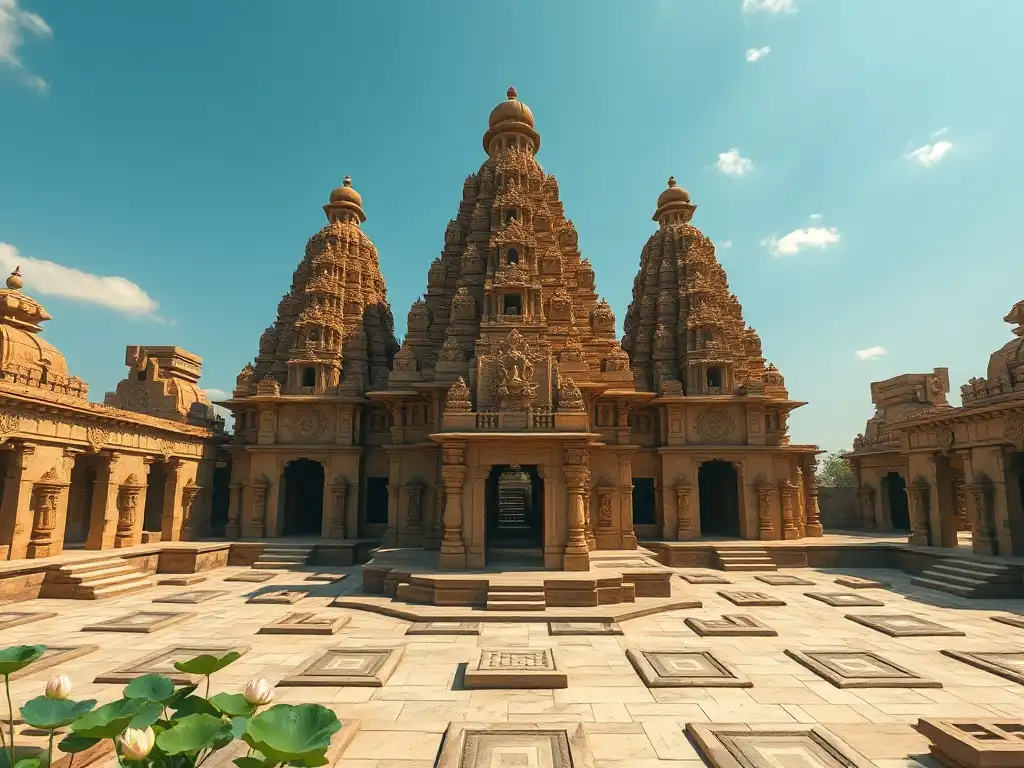
The architecture of ancient Indian temples is a profound reflection of the ingenuity and creativity of the civilizations that flourished in the Indian subcontinent. Among the many aspects that characterize these architectural wonders, the use of geometry stands out as a significant element that not only defines the aesthetic appeal of temples but also serves a deeper symbolic purpose.
From the meticulously planned layouts of the Indus Valley Civilization to the grand structures of the Gupta Empire, geometry in ancient Indian temples manifests the sophisticated understanding of spatial relationships and cosmic principles held by these cultures. This article delves into the intricate application of geometry in the design of ancient temples, exploring how these mathematical principles were not merely aesthetic choices but integral to the spiritual and philosophical paradigms of the time.
Significance of Geometry in Ancient Indian Architecture
Geometry played a crucial role in the architectural practices of ancient India, shaping the design and construction of temples in various ways. The application of geometric principles can be observed in:
- Structural Stability: Geometric shapes, such as squares and circles, were fundamental in creating stable structures that could withstand the test of time. For instance, the square is often seen as a representation of the earth, while the circle symbolizes the cosmos.
- Spatial Organization: Temples were often constructed following a precise layout that reflected the universe's order. The use of geometric ratios ensured that each section of the temple was proportionately aligned, enhancing both its functionality and spiritual significance.
- Aesthetic Harmony: The careful integration of geometry contributed to the visual harmony of temple architecture. The application of symmetry and proportion not only made the structures appealing but also created a sense of balance and tranquility, inviting worshippers to experience a spiritual connection.
Overview of Symbolism in Temple Design
The geometric designs found in ancient Indian temples are imbued with rich symbolism, reflecting the philosophical and religious ideologies of the time. Some key symbolic aspects include:
- Sacred Geometry: Many temple designs incorporate shapes that have sacred meanings, such as the mandala, which represents the cosmos and the human experience. These geometric patterns serve as a guide for meditation and spiritual practice.
- Cosmic Alignment: The orientation of temples often aligns with celestial bodies, symbolizing the connection between the divine and the earthly realm. This alignment uses geometric calculations to create structures that resonate with cosmic energies.
- Cultural Identity: The distinct use of geometry in temple architecture varies across different regions and periods, reflecting the cultural identity and artistic expressions of various civilizations. Each temple tells a unique story through its design, showcasing the diversity of ancient Indian thought and belief systems.
The exploration of geometry in ancient Indian temples reveals much more than aesthetic choices; it uncovers a rich tapestry of meaning, purpose, and cultural significance that continues to inspire and educate us about the profound architectural achievements of ancient India.
Historical Context of Geometry in Ancient Indian Temples
The use of geometry in ancient Indian temples is not merely a coincidence; it is deeply rooted in the historical and cultural context of the time. Ancient Indian civilizations, particularly during the periods of the Indus Valley Civilization, Maurya Empire, and Gupta Empire, showcased remarkable advancements in mathematics and architectural design. Temples from these eras reflect a profound understanding of geometric principles, which were utilized not only for aesthetic purposes but also for symbolic and spiritual meanings.
Development of Architectural Styles in Ancient India
The architectural styles in ancient India evolved significantly over time, influenced by various dynasties and regional characteristics. The initial phase can be traced back to the Indus Valley Civilization (circa 3300–1300 BCE), where urban planning exhibited an advanced grid layout. This early use of geometry laid the groundwork for later temple architecture.
- Mauryan Architecture (circa 322–185 BCE)
- The Mauryan period marked the introduction of monumental stone structures, such as the Ashoka Pillars, which exemplified geometric precision.
- Temples during this time began to incorporate complex geometrical forms, focusing on symmetry and proportion.
- Gupta Architecture (circa 320–550 CE)
- Often referred to as the "Golden Age of India," the Gupta period saw the flourishing of temple architecture characterized by intricate carvings and complex geometry.
- Temples such as the Dashavatara Temple at Deogarh and the Vishnu Temple at Bhitargaon showcase the use of geometric layouts that emphasize both beauty and spiritual symbolism.
- Regional Variations
- Different regions in India adopted unique architectural styles, influenced by local traditions and materials. For instance, South Indian temples are known for their towering Gopurams (gateway towers) adorned with elaborate sculptures, while Northeast Indian temples often feature simpler yet effective geometrical elements.
The evolution of these styles highlights the importance of geometry in the design and construction of temples, demonstrating how ancient architects skillfully combined form and function.
Influence of Mathematics and Geometry in Ancient Indian Culture
Mathematics was a fundamental aspect of ancient Indian culture, and its influence permeated various domains, including architecture, astronomy, and philosophy. The ancient Indian scholars made significant contributions to geometry, which directly impacted temple construction.
- Sacred Geometry
- Temples were often designed using sacred geometry, where specific shapes and proportions were believed to have spiritual significance. For example, the square, representing the earth, and the circle, symbolizing the cosmos, were often integrated into temple layouts.
- The Vastu Shastra, an ancient Indian science of architecture, emphasizes the use of geometric principles to create harmonious spaces that align with cosmic energies.
- Mathematical Texts
- Texts such as the Sulbasutras (circa 800–500 BCE) contain rules for constructing altars using geometric shapes, illustrating the mathematical knowledge of ancient Indians. These texts emphasize the importance of precise measurements and proportions, which were crucial in temple architecture.
- The Aryabhatiya by Aryabhata also reflects the connection between mathematics and astronomy, influencing the orientation and layout of temples based on celestial alignments.
- Cultural Symbolism
- Geometry in ancient Indian temples was not just about aesthetics; it also served as a medium for conveying philosophical concepts. The elaborate designs often depicted cosmic principles, illustrating the connection between the divine and the universe.
- The placement of deities within the temple, aligned along geometric axes, further emphasizes the spiritual significance attributed to these structures.
The study of geometry in ancient Indian temples reveals a rich tapestry of cultural heritage, where architectural marvels are interwoven with mathematical precision and spiritual symbolism. This legacy continues to inspire awe and admiration in the realms of art, architecture, and philosophy.
Key Geometric Principles in Temple Architecture

Ancient Indian temples are not only religious structures but also remarkable embodiments of architectural ingenuity, showcasing a deep understanding of geometry. The geometric principles applied in temple architecture serve both functional and symbolic purposes, reflecting the philosophical and spiritual beliefs of the time. These principles manifest in the layouts, shapes, and overall designs of temples, creating spaces that are harmonious and aesthetically pleasing.
Symmetry and Proportion in Temple Layouts
Symmetry is a fundamental characteristic of ancient Indian temple architecture, influencing both the visual appeal and structural integrity of these sacred sites. Temples were often designed with a focus on balanced proportions, ensuring that each element complemented the others. This symmetry is evident in the layout of temple complexes, where the main shrine (garbhagriha) is centrally located, surrounded by a series of mandapas (pillared halls) and other structures.
- Golden Ratio: Many temples utilize the golden ratio, a mathematical ratio commonly found in nature and art, which is believed to evoke a sense of beauty and harmony. For example, the proportions of the sanctum to the entrance often reflect this ratio, creating a sense of equilibrium.
- Axis of Orientation: The layout typically follows a cardinal orientation, with the main entrance aligned to the east, allowing the first rays of the sun to illuminate the deity within. This eastward orientation is not only practical but also imbued with symbolic significance, representing the arrival of light and knowledge.
- Hierarchical Layout: The arrangement of temple components often follows a hierarchical structure, with the sanctum as the focal point. As one moves outward through the temple complex, the size and complexity of the structures may decrease, symbolizing a journey from the divine to the earthly realm.
Use of Geometric Shapes: Circles, Squares, and Mandalas
The incorporation of geometric shapes in temple design is a profound aspect of ancient Indian architecture. Various shapes serve specific symbolic purposes, intertwining religious significance with aesthetic design.
- Squares: The square is often associated with stability and the earthly plane. Many temple layouts are designed as squares, representing the physical world. The plan of the temple often consists of a square base, which is believed to symbolize the earth and its four cardinal directions.
- Circles: Circles are symbolic of the cosmos and eternity. The circular mandapa (assembly hall) is commonly found in temple architecture, signifying the cyclic nature of life and the universe. The circular design encourages a sense of unity among worshippers, drawing them into the sacred space.
- Mandalas: Mandalas, intricate geometric designs that represent the universe, are frequently used in temple layouts. They serve as spiritual diagrams that guide the worshipper’s journey and reflection. The geometric precision of mandalas reflects the underlying order of the cosmos, merging art and spirituality.
These geometric shapes are not only visually striking but also enhance the spiritual experience, allowing devotees to connect with the divine through the architecture itself.
The Role of Sacred Geometry in Temple Design
Sacred geometry plays a crucial role in the design of ancient Indian temples, intertwining mathematics, spirituality, and art. This concept holds that certain geometric shapes and proportions are inherently connected to the divine.
- Symbolic Meanings: Each geometric form carries specific meanings and associations in Hindu philosophy. For instance, the lotus flower, often represented in temple carvings, symbolizes purity and spiritual awakening. The geometric representation of the lotus in temple design serves as a reminder of the spiritual journey.
- Mathematical Precision: Ancient Indian architects meticulously calculated dimensions and angles to achieve geometric perfection. The use of specific numerical ratios in the construction of temples is believed to channel divine energy, creating an atmosphere conducive to meditation and worship.
- Connection to Cosmology: The geometric designs in temple architecture often reflect cosmological beliefs. The layout may represent the mythical Mount Meru, considered the axis of the universe in Hindu cosmology. This connection to the cosmos emphasizes the temple as a microcosm of the universe, bridging the earthly and divine realms.
The principles of geometry in ancient Indian temples are not merely aesthetic choices but deeply embedded in the cultural, philosophical, and spiritual fabric of the civilization. Through symmetry, the use of shapes, and the application of sacred geometry, these architectural marvels continue to inspire reverence and awe, serving as testament to the ingenuity of ancient Indian architects.
Case Studies of Prominent Temples

Brihadeeswarar Temple: An Architectural Marvel
The Brihadeeswarar Temple, located in Thanjavur, Tamil Nadu, is an exemplary model of the use of geometry in ancient Indian temples. Built during the reign of the Chola dynasty in the 11th century, it showcases a meticulous application of geometric principles in its design and structure.
- Layout and Orientation: The temple's layout is based on a precise square plan, symbolizing the cosmos. The main sanctum (garbhagriha) is constructed to align with specific cardinal points, enhancing its spiritual significance. The Vimana (tower) rises to a height of 66 meters, demonstrating an impressive understanding of proportionality and symmetry.
- Geometric Symbolism: The temple's architecture incorporates various geometric shapes, such as circles, squares, and triangles, which are significant in Hindu cosmology. For instance, the placement of the Lingam (the idol of Shiva) is at the center of the sanctum, symbolizing the universe's center.
- Artistic Features: The intricate carvings and sculptures on the temple walls exhibit a keen eye for geometric patterns and symmetry, enhancing the temple's overall aesthetic appeal. Each figure and motif is strategically placed, reflecting a deep understanding of spatial relationships.
Hampi Temples: Geometry and Sacred Space
Hampi, a UNESCO World Heritage site, is renowned for its stunning temples and ruins that exemplify the sophisticated use of geometry in architectural design. The temples here reveal a profound connection between geometry and the concept of sacred space.
- Spatial Configuration: The layout of the Vijaya Vittala Temple demonstrates a remarkable use of geometric arrangements, with a series of mandapas (pillared halls) aligned in a symmetrical pattern. This design fosters a sense of harmony and balance, crucial for religious practices.
- Architectural Elements: The iconic stone chariot in front of the temple is a prime example of geometric precision. Its construction reflects an understanding of proportions and balance, creating a visually striking focal point within the temple complex.
- Symbolic Geometry: The temples at Hampi often integrate geometric motifs into their carvings. These motifs are not merely decorative but serve as symbolic representations of various deities and cosmic principles, reinforcing the spiritual significance of the space.
Sun Temple at Konark: The Geometry of Light
The Sun Temple at Konark, Odisha, stands as a testament to the advanced understanding of geometry in ancient Indian temple architecture. Constructed in the 13th century, this temple is designed in the form of a colossal chariot, symbolizing the Sun God, Surya.
- Architectural Design: The temple is oriented to capture the first rays of the sun at dawn, demonstrating a precise alignment with celestial movements. The use of a square base and circular elements reflects a sophisticated grasp of geometric principles.
- Light and Shadow Play: The temple’s design incorporates intricate carvings and openings that create a dynamic interplay of light and shadow throughout the day. This phenomenon not only enhances the aesthetic experience but also symbolizes the eternal cycle of time and energy.
- Symbolic Geometry: The wheels of the chariot are adorned with geometric patterns that serve both decorative and symbolic purposes. Each wheel, with its eight spokes, represents the eight directions and the cyclical nature of time, enriching the spiritual narrative of the temple.
The exploration of geometry in ancient Indian temples reveals a profound connection between architectural design and spiritual symbolism. The case studies of Brihadeeswarar Temple, Hampi Temples, and the Sun Temple at Konark illustrate how geometry was not merely a tool for construction, but a vital element that enhanced the sacredness and aesthetic experience of these architectural marvels.
Symbolic Interpretation of Geometric Elements
The use of geometry in ancient Indian temples transcends mere architectural aesthetics; it embodies profound symbolic meanings that reflect the spiritual and philosophical beliefs of the time. The geometric elements found in temple layouts, sculptures, and motifs are not only functional but also serve as a bridge between the earthly realm and the divine. This section delves into the multifaceted interpretations of geometric forms in temple architecture, illustrating their significance in ancient Indian culture.
The Spiritual Significance of Shapes and Patterns
In ancient Indian temples, specific shapes and patterns are employed to evoke spiritual feelings and convey deeper meanings. Each geometric form, from the simple square to complex mandalas, represents various aspects of the cosmos and human experience. For instance:
- Square (Bhūmi Mandala): Represents stability and the earthly plane. It is often the base of temple layouts, symbolizing the foundation of existence.
- Circle (Chakra): Denotes unity, eternity, and the cycle of life and death. The circular designs often found in temple domes signify the infinite nature of the universe.
- Triangle: Represents the divine and the aspirational journey of the soul towards enlightenment. It is frequently used in the spires (shikharas) of temples, pointing upward toward the heavens.
These shapes are not arbitrary; rather, they are carefully chosen for their ability to resonate with the human psyche and facilitate a spiritual connection during worship. The arrangement of these geometric forms also creates a harmonious balance, reflecting the ancient Indian principle of Vastu Shastra, which emphasizes the alignment of structures with cosmic energies.
Geometric Symbolism in Hindu Philosophy
Geometric symbolism is deeply intertwined with Hindu philosophy, where it serves as a visual representation of complex metaphysical concepts. The Mandala, a key element in temple architecture, is a prime example of this symbolism. It is a geometric design that serves as a spiritual diagram, often used in meditation and rituals. Mandalas represent the universe, embodying the belief that the cosmos is a reflection of the divine order.
In addition to mandalas, other geometric patterns such as the Sri Yantra—a complex arrangement of triangles—are prevalent in temple designs. The Sri Yantra symbolizes the union of the feminine and masculine principles, emphasizing divine harmony. Each point and intersection in these designs is imbued with meaning, functioning as a tool for spiritual contemplation.
Alignments and Orientation: Cosmic Connections in Temple Design
The alignment and orientation of ancient Indian temples are meticulously planned to reflect cosmic principles. Temples are often oriented along cardinal directions, aligning with celestial bodies to enhance their spiritual significance. This alignment is believed to facilitate the flow of Shakti (divine energy) and establish a connection between the earthly realm and the cosmos.
The placement of deities within the temple is also guided by geometric considerations. For example, the main deity is typically positioned in a way that allows the sun's rays to illuminate the sanctum during specific times of the year, further emphasizing the connection between the temple’s geometry and cosmic phenomena.
The integration of geometry into the design and alignment of temples showcases the ancient Indian civilization's profound understanding of the universe. By reflecting cosmic truths through architecture, these temples not only serve as places of worship but also as a reminder of the interconnectedness of all existence, highlighting the significance of geometry in ancient Indian temples as a spiritual and symbolic framework.
Conclusion

The intricate use of geometry in ancient Indian temples is not just a testament to the architectural prowess of the time but also serves as a profound reflection of the spiritual and cultural ethos of ancient Indian civilization. The precision and symbolism embedded in the structures showcase a harmonious blend of mathematics and artistry that aimed not only to create beauty but also to elevate the spiritual experience of worshippers.
The Lasting Legacy of Geometry in Ancient Indian Temples
The legacy of geometry in ancient Indian temples is evident in the meticulous planning and design that continues to inspire architects and scholars today. Notable examples, such as the Brihadeeswarar Temple in Thanjavur and the Sun Temple in Konark, illustrate how geometric principles were applied to achieve both aesthetic grandeur and structural integrity.
- Structural Stability: The temples were designed using various geometric forms, such as squares and circles, which not only enhanced their beauty but also contributed to their stability.
- Symbolic Representation: Geometric shapes often symbolize cosmic elements; for instance, the square (shikhara) represents the earthly plane, while the circle symbolizes the divine.
- Mathematical Precision: Many temples exhibit a remarkable understanding of geometry, including the use of proportion and symmetry, which can be seen in the layouts and elevations of their facades.
- Influence on Later Architecture: The principles of geometry established in these ancient structures set a precedent that influenced subsequent generations of architects across India and even beyond.
Geometry as a Reflection of Ancient Indian Spirituality and Culture
Geometry in ancient Indian temples goes beyond mere aesthetics; it encapsulates deep spiritual meanings and cultural ideologies that were integral to the civilization.
- Sacred Geometry: The application of geometric patterns was often tied to religious beliefs. For example, the mandala—a geometric figure representing the universe—was commonly used in temple designs, symbolizing the interconnectedness of all life.
- Alignment with Celestial Bodies: Many ancient temples were oriented in specific directions to align with celestial bodies, reflecting a deep understanding of astronomy and its significance in spiritual practices.
- Cultural Narratives: The geometric motifs and layouts often narrate stories from Hindu mythology, serving as visual representations of sacred texts and teachings.
- Communal Experience: The geometry of temple architecture facilitated communal gatherings, enhancing the spiritual experience of the devotees as they engaged with both the space and each other.
The study of geometry in ancient Indian temples reveals a complex interplay between mathematics, spirituality, and culture, highlighting how these architectural marvels were designed not only to endure the test of time but also to embody the philosophical ideals of the era. The impact of these geometric principles continues to resonate, inspiring new generations to explore and appreciate the rich heritage of ancient Indian architecture.
Frequently Asked Questions
What is the significance of geometry in ancient Indian temples?
Geometry played a crucial role in the design and architecture of ancient Indian temples, symbolizing cosmic order and spiritual principles through structured layouts.
How did ancient Indian architects incorporate geometry into their designs?
Ancient Indian architects applied mathematical principles and geometrical shapes like squares and circles to create harmonious and aesthetically pleasing structures that reflected their beliefs.
What are some examples of geometrical patterns found in ancient Indian temples?
Temples often featured intricate geometrical motifs such as mandalas, which represented the universe, and geometric carvings that conveyed spiritual meanings.
Did geometry have any cultural implications in ancient Indian civilization?
Yes, geometry was not just a technical tool; it also had cultural significance, symbolizing the connection between the divine and the earthly realm in Hindu and Buddhist beliefs.
How does the study of geometry in ancient Indian temples contribute to our understanding of their history?
Studying geometry in these temples allows historians to appreciate the advanced mathematical knowledge of ancient civilizations and how it influenced their architectural achievements.
Final Reflection: The Enduring Legacy of Geometry in Ancient Indian Temples
The intricate use of geometry in ancient Indian temples serves as a profound reminder of how art and mathematics can intertwine to create spaces that resonate with spiritual significance. Today, as we navigate a world increasingly defined by technology and abstraction, the geometric principles that guided ancient artisans continue to inspire architects and designers, demonstrating that the harmony of form and function is timeless. The precision and symbolism embedded in these structures invite us to reflect on the deeper meanings behind our built environments.
The influence of geometry in ancient Indian temples extends beyond mere aesthetics; it shapes cultural identity and spiritual practice. The careful alignment of these sacred spaces with cosmic principles illustrates a profound understanding of the universe, encouraging us to consider how our surroundings affect our perception of the divine. Architecture is the learned game, correct and magnificent, of forms assembled in the light.
— Le Corbusier. This quote encapsulates the essence of how geometry not only serves a practical purpose but also elevates the human experience, creating a dialogue between the physical and the metaphysical.
As we contemplate the lessons of geometry in ancient Indian temples, I invite you to reflect on how you can incorporate these principles into your own life. Consider the spaces you inhabit—are they designed to foster harmony and balance? Let the legacy of these ancient structures inspire you to create environments that resonate with beauty and purpose, reminding us all that geometry is not just a mathematical concept, but a pathway to understanding the world around us.
Unveil the Geometry of Ancient Temples!
Thank you for exploring the fascinating intersection of geometry and spirituality in ancient Indian temples with us! You’ve gained insights into how these magnificent structures encapsulated profound symbolic meanings. Now, it's time to take that knowledge further and truly appreciate the beauty and history around you.
Here are some engaging steps you can take:
- Explore local architectural wonders: Visit nearby temples or historical sites to observe how geometry influences their design and layout. Take notes and reflect on the symbols you encounter!
- Dive deeper into the subject: Read about the history of architecture in India to gain a broader perspective. Consider starting with a comprehensive book on ancient architectural techniques.
- Share your insights with others: Discuss your newfound knowledge with friends or family, or even consider writing a blog post to inspire others to appreciate the beauty of ancient Indian geometry.
As you explore these actions, consider which aspect of temple geometry intrigues you the most and why it resonates with cultural identity.