
Nyaya and Its Impact on Judicial Reasoning in Ancient Indian Courts

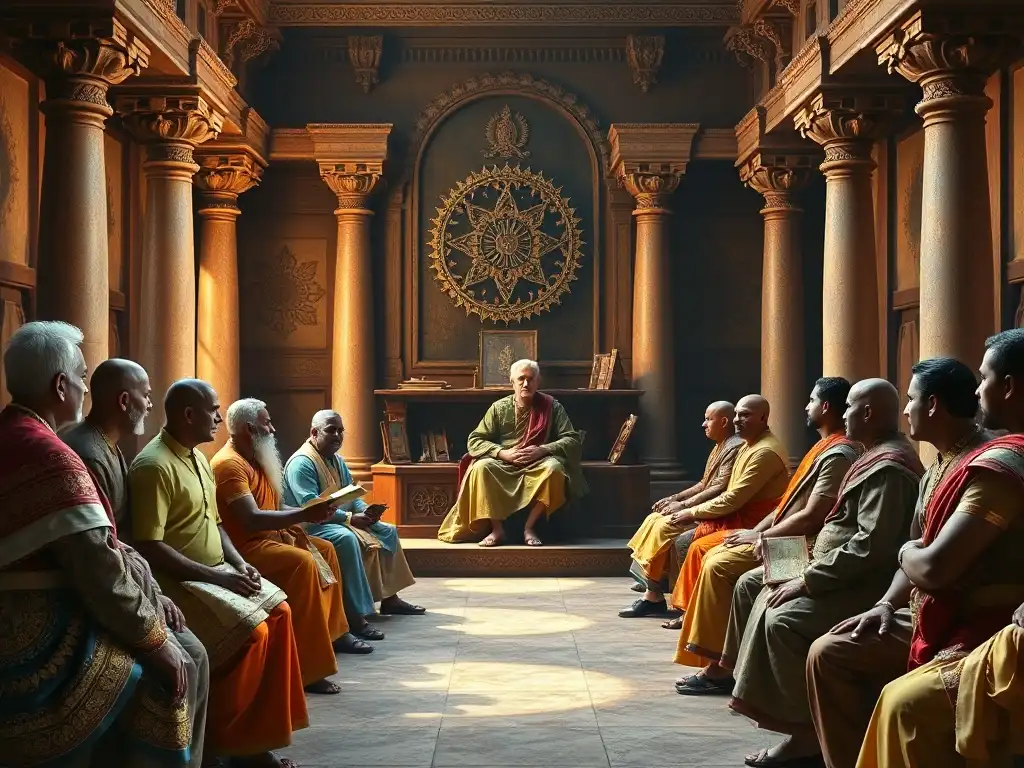
Welcome to Ancient India History, where we embark on a captivating journey through the rich tapestry of India's past. Delve into the profound Nyaya philosophy in ancient India, a cornerstone of judicial reasoning that shaped legal frameworks and ethical thought in ancient Indian courts. As you explore this intricate philosophy, you'll uncover how its principles influenced not just the legal system, but the very fabric of society during the illustrious Gupta Empire and beyond.
Join us as we unravel the threads of history, culture, and intellectual brilliance that define ancient Indian civilization. Are you ready to discover the legacy of Nyaya and its enduring impact?
- Introduction to Nyaya Philosophy in Ancient India
- The Foundations of Nyaya Philosophy
- The Role of Nyaya in Judicial Reasoning
- Comparative Analysis: Nyaya and Other Philosophical Schools
- Practical Applications of Nyaya Philosophy in Ancient Courts
- The Legacy of Nyaya Philosophy in Ancient Indian Judiciary
- Conclusion: The Enduring Influence of Nyaya Philosophy in Ancient India
- Frequently Asked Questions
- Final Reflection: The Enduring Legacy of Nyaya Philosophy in Ancient India
- Unveil the Power of Nyaya in Judicial Thought!
Introduction to Nyaya Philosophy in Ancient India
Nyaya philosophy, a cornerstone of ancient Indian thought, has played a pivotal role in shaping judicial reasoning and legal frameworks within the rich tapestry of India's history. Originating from the ancient texts known as the Nyaya Sutras, attributed to the philosopher Gautama, this philosophical system emphasizes logic, epistemology, and the principles of valid reasoning.
As we delve into the intricate layers of Nyaya, we uncover its profound impact on the functioning of ancient Indian courts and its enduring legacy in the realm of justice and jurisprudence. This exploration not only highlights the philosophical tenets of Nyaya but also illustrates how these principles influenced legal practices, contributed to societal norms, and shaped the intellectual discourse of the time.
Definition and Overview of Nyaya Philosophy
Nyaya, derived from the Sanskrit word for "justice" or "rule," is more than just a philosophical school; it represents a comprehensive system of logic and epistemology that seeks to understand the nature of knowledge, truth, and reality. At its core, Nyaya philosophy is built upon the following key elements:
- Pramanas (Means of Knowledge): Nyaya identifies four primary means of acquiring knowledge:
- Pratyaksha (perception)
- Anumana (inference)
- Upamana (comparison)
- Shabda (testimony)
- Nyaya Sutras: The foundational text of this philosophy, the Nyaya Sutras, outlines methods for resolving disputes through logical reasoning and establishes criteria for valid arguments.
- Epistemological Framework: Nyaya explores the nature of truth, the process of reasoning, and the classification of errors in judgment, thereby providing a systematic approach to understanding knowledge.
Through its rigorous analytical framework, Nyaya philosophy laid the groundwork for a well-structured legal system in ancient India, promoting rational discourse and critical thinking in judicial matters.
Historical Context of Nyaya in Ancient Indian Courts
The historical context of Nyaya philosophy is deeply intertwined with the development of legal practices in ancient India. As societies evolved, the need for a systematic approach to justice became apparent, and Nyaya offered a philosophical foundation that guided judicial proceedings.
- Integration into Legal Frameworks: Nyaya principles were not merely theoretical; they were actively incorporated into the legal systems of various ancient Indian kingdoms. The courts utilized logical reasoning as a means to adjudicate disputes, ensuring that decisions were made based on sound arguments rather than arbitrary judgments.
- Influence of Prominent Figures: Noteworthy philosophers, such as Vatsyayana and Uddyotakara, expanded upon Nyaya ideas, further refining its applications in legal contexts. Their commentaries and interpretations contributed to the evolution of judicial reasoning in ancient courts.
- Documentation and Practice: Historical texts and inscriptions reveal that the rulings of ancient Indian courts often reflected Nyaya principles, emphasizing the importance of evidence and logical reasoning in legal decisions.
The impact of Nyaya philosophy on ancient Indian courts extended beyond mere legal frameworks; it fostered a culture of rational inquiry and ethical considerations in the pursuit of justice, leaving a lasting legacy that continues to resonate in contemporary discussions of law and philosophy.
The Foundations of Nyaya Philosophy

Nyaya philosophy, one of the six orthodox schools of Indian philosophy, is a significant system that emerged around the 2nd century BCE. Its primary focus is on logic, reasoning, and epistemology, aiming to establish a coherent methodology for acquiring knowledge. The term "Nyaya" itself translates to "justice" or "rule," reflecting its foundational principle of discerning truth through logical reasoning.
Nyaya philosophy is characterized by its systematic approach to epistemology, often referred to as "pramana," which includes various means of acquiring knowledge. These means encompass perception (pratyaksha), inference (anumana), comparison (upamana), and testimony (shabda). Each of these pramanas plays a critical role in judicial reasoning, enabling scholars and practitioners to evaluate evidence and arguments effectively.
Moreover, Nyaya philosophy underscores the importance of debate and dialogue, fostering an environment where ideas can be rigorously tested and refined. This dialectical method not only shaped philosophical discourse but also influenced the legal frameworks within ancient Indian courts. Hence, understanding Nyaya philosophy is essential for comprehending the evolution of judicial reasoning in ancient India.
Key Principles of Nyaya Philosophy
The key principles of Nyaya philosophy can be encapsulated in several core concepts that guide its reasoning and methodology:
-
Pramana (Means of Knowledge)
- Pratyaksha (Perception): Direct sensory experience serves as the most immediate source of knowledge.
- Anumana (Inference): Logical deduction based on observation, allowing for conclusions to be drawn from premises.
- Upamana (Comparison): Knowledge gained through analogy or comparison with known instances.
- Shabda (Testimony): Reliance on authoritative sources, such as scriptures and credible witnesses.
-
Tarka (Reasoning)
Nyaya emphasizes the role of reasoning in understanding and establishing truths. Tarka involves the use of logical arguments and counterarguments to clarify concepts and resolve ambiguities.
-
Pratyaksha and Prameya
The distinction between perception (pratyaksha) and the objects of knowledge (prameya) is vital in Nyaya. Understanding this difference aids in developing a structured approach to knowledge acquisition.
-
Nyaya Sutras
The Nyaya Sutras, attributed to the sage Gautama (also known as Akshapada), serve as foundational texts outlining the principles of Nyaya philosophy. They provide a framework for understanding the nature of knowledge, the process of reasoning, and the validation of arguments.
These principles not only underpin the philosophical discourse but also significantly influence the legal practices and court proceedings of ancient India, as they emphasize rationality, evidence, and systematic inquiry.
Major Texts and Scholars of Nyaya
Nyaya philosophy has a rich textual tradition and has been shaped by various scholars throughout history. Some of the most important texts and figures include:
-
Nyaya Sutras
- Authored by: Gautama (Akshapada)
- The Nyaya Sutras are the foundational text of Nyaya philosophy, outlining its core principles and methodologies. This text serves as a guide for reasoning and the application of logic in both philosophical and judicial contexts.
-
Bhasya (Commentaries)
- Nyaya Bhashya: A commentary on the Nyaya Sutras by Vatsyayana, which elucidates and expands upon the original sutras, making them more accessible and applicable.
-
Later Scholars
- Udayana: A prominent philosopher who contributed significantly to Nyaya thought, particularly in the areas of epistemology and metaphysics. His works include "Nyaya Kusumanjali," which explores various pramanas and their implications.
- Gangesha Upadhyaya: He is known for his work "Tattva Chintamani," which synthesizes Nyaya with Advaita Vedanta, demonstrating the adaptability and relevance of Nyaya philosophy in broader philosophical discussions.
-
Influence on Other Schools
Nyaya philosophy not only influenced the development of other philosophical schools, such as Vaisheshika and Mimamsa but also contributed to the evolution of legal thought in ancient India. Its principles of logic and reasoning were integral to the judicial processes, ensuring decisions were made based on sound arguments and evidence.
The texts and scholars associated with Nyaya philosophy laid the groundwork for a sophisticated system of thought that continues to be relevant in discussions of logic, ethics, and jurisprudence today. Understanding these contributions is vital for appreciating the historical impact of Nyaya on the legal and philosophical landscape of ancient India.
The Role of Nyaya in Judicial Reasoning

The Nyaya philosophy, originating from ancient India, played a pivotal role in shaping judicial reasoning and legal thought within its courts. As one of the six orthodox schools of Indian philosophy, Nyaya emphasizes logic and epistemology, providing a systematic approach to understanding truth and justice. Its principles were not only theoretical but also practical, influencing the judicial processes of ancient Indian societies.
How Nyaya Influenced Legal Thought in Ancient India
Nyaya's impact on ancient Indian legal thought can be traced back to its foundational texts, such as the Nyaya Sutras by Gautama. These texts laid the groundwork for analytical reasoning, which was integral in determining the validity of arguments presented in court. The following aspects illustrate how Nyaya influenced legal thought:
- Emphasis on Logic: Nyaya introduced rigorous methods of reasoning, focusing on the four types of valid proof (pramana): perception (pratyaksha), inference (anumana), comparison (upamana), and verbal testimony (shabda). This structured approach allowed judges to evaluate evidence and testimonies critically.
- Debate and Disputation: The Nyaya school encouraged dialectical processes, where disputants would engage in formal argumentation. This practice helped refine judicial decisions by ensuring that multiple viewpoints were considered, fostering a more holistic understanding of the case at hand.
- Definition of Justice: Nyaya's interpretation of justice (dharma) was deeply philosophical, often intertwining ethics with legal principles. This integration ensured that decisions were not solely based on legal codes but also on moral considerations, making the judicial system more humane and just.
- Role of Evidence: The Nyaya philosophy underscored the importance of evidence in legal proceedings. Judges were trained to scrutinize evidence meticulously, which significantly improved the quality of judicial outcomes and reduced arbitrary decision-making.
The Methodology of Reasoning in Nyaya
The methodology of reasoning in Nyaya is characterized by a systematic approach that blends empirical observation with logical deduction. This methodology can be broken down into several key components:
- Pramana (Means of Knowledge): Nyaya identifies four primary means of acquiring knowledge. Each pramana provides a basis for understanding truths in legal cases:
- Pratyaksha (Perception): Direct observation of facts.
- Anumana (Inference): Logical deduction based on premises.
- Upamana (Analogy): Drawing parallels from known instances.
- Shabda (Testimony): Trustworthy statements from credible sources.
- Nyaya's Logical Framework: The logical structure established by Nyaya involves formulating propositions (pratijna), supporting them with reasons (hetu), presenting examples (udaharana), and drawing conclusions (nigamana). This structure ensures that legal arguments are well-founded and coherent.
- Critique and Counterarguments: An essential aspect of Nyaya reasoning is the evaluation of counterarguments. By anticipating opposing views (purvapaksha) and addressing them, legal practitioners could fortify their positions and ensure the robustness of judicial reasoning.
- Application in Court: The methodologies of Nyaya were applied in court settings, where judges acted as neutral arbiters, employing these logical constructs to arrive at fair verdicts. This approach not only upheld justice but also reinforced the credibility of the judicial system.
The Nyaya philosophy in ancient India provided a profound influence on judicial reasoning, blending logical rigor with ethical considerations. Its methodologies continue to be relevant in discussions about justice and legal practices today, reflecting the enduring legacy of ancient Indian thought.
Comparative Analysis: Nyaya and Other Philosophical Schools

Nyaya vs. Vaisheshika: Similarities and Differences
The Nyaya and Vaisheshika schools of thought, both prominent in ancient Indian philosophy, share a foundational belief in logic and epistemology. However, they diverge significantly in their approach and focus.
- Common Ground:
- Both schools emphasize the importance of pramana (means of knowledge) and the pursuit of truth through logical reasoning.
- They are rooted in the six orthodox schools of Hindu philosophy, often referred to collectively as Darshanas, and share many terms and concepts.
- Philosophical Focus:
- Nyaya is primarily concerned with epistemology and the methodology of logic. It aims to establish valid knowledge through rigorous debate, emphasizing reasoning and argumentation.
- Vaisheshika, on the other hand, is more ontological, focusing on the nature and categorization of reality. It introduces a unique classification of substances and emphasizes the material aspects of existence.
- Key Concepts:
- Nyaya introduces the concept of tarka (logical inference), which is central to its philosophical inquiries. It seeks to understand the mechanisms of thought and judgment.
- Vaisheshika, through its discussion of padarthas (categories of reality), lays out a framework to categorize everything in the universe into distinct entities. This includes categories like substance, quality, and action.
- Methodology:
- Nyaya employs a dialectical method that involves structured argumentation, allowing for the challenge and defense of ideas.
- In contrast, Vaisheshika employs a more descriptive approach, focusing on the nature of things rather than the processes of thought.
While both Nyaya and Vaisheshika contribute significantly to ancient Indian philosophy, their differing emphases on logic versus ontology create a rich landscape for philosophical exploration.
Nyaya vs. Sankhya: Diverging Perspectives
The Nyaya and Sankhya schools present contrasting philosophical frameworks that reflect their unique approaches to understanding reality and knowledge.
- Core Philosophical Objectives:
- Nyaya is dedicated to the analysis of knowledge, focusing on the processes of logical reasoning and the validation of truth. Its main objective is to establish a systematic methodology for understanding and arriving at valid conclusions.
- Sankhya, in contrast, is primarily a dualistic system that categorizes reality into two fundamental principles:Purusha (consciousness) and Prakriti (matter). It emphasizes the nature of existence and the relationship between the self and the material world.
- Approach to Knowledge:
- In Nyaya, knowledge is derived from four valid sources:perception, inference, comparison, and testimony. This comprehensive epistemological framework allows for a rigorous analysis of truth.
- Sankhya does not focus as heavily on epistemology. Instead, it presents a more metaphysical approach, detailing the evolution of material reality from the interplay of Prakriti and Purusha.
- Concept of Liberation:
- Nyaya does not explicitly address the concept of liberation (moksha) but rather provides tools for rational thought that can lead to a better understanding of existence.
- Sankhya, however, directly addresses liberation as the ultimate goal, emphasizing the importance of self-realization and the discernment between Purusha and Prakriti to achieve liberation from the cycle of birth and rebirth.
- Influence on Other Schools:
- The logical frameworks established by Nyaya heavily influenced later schools of thought, especially in the context of judicial reasoning and argumentative discourse.
- Sankhya's dualism has had a profound impact on various other philosophies, including Yoga, which builds upon its principles to offer a practical path towards liberation.
While Nyaya focuses on the mechanics of thought and validation of knowledge, Sankhya provides a metaphysical framework that seeks to understand the nature of reality and the path to liberation. These differences illustrate the diverse philosophical landscape of ancient India, where each school contributes uniquely to the broader discourse on existence and knowledge.
Practical Applications of Nyaya Philosophy in Ancient Courts

Nyaya philosophy, one of the six orthodox systems of Indian philosophy, has profoundly influenced the judicial reasoning in ancient Indian courts. The principles of Nyaya, which emphasize logic, reasoning, and the pursuit of truth, were essential in shaping legal practices and procedures. This philosophical framework facilitated a structured approach to justice that sought to achieve fairness and equity in the resolution of disputes.
One of the key practical applications of Nyaya philosophy was its focus on the Pramanas (means of knowledge), which provided a systematic framework for evaluating evidence. Nyaya identified four primary sources of knowledge:
- Pratyaksha (Perception)
- Anumana (Inference)
- Upamana (Comparison)
- Shabda (Testimony)
These sources guided judges in assessing the validity of evidence presented in court, ensuring that decisions were grounded in logical reasoning rather than arbitrary judgment.
Case Studies Illustrating Nyaya in Judicial Decisions
Throughout ancient Indian history, several case studies exemplify the practical application of Nyaya philosophy within the judicial context. One notable example is the debate surrounding the ownership of land between two competing parties. In a typical case, the judge would apply Nyaya principles by critically evaluating the evidence provided by both parties, focusing on:
- Witness Testimonies: Assessing the credibility and relevance of witness statements based on their firsthand experiences.
- Documentary Evidence: Analyzing ancient texts, inscriptions, or land grants that could substantiate claims.
- Logical Inferences: Drawing conclusions based on circumstantial evidence and the established facts.
In one recorded instance, a case involving a land dispute was resolved through meticulous examination of historical land records and testimonies, leading to a verdict that favored the party with more substantial evidence. This approach not only resolved the issue but also reinforced the community's trust in the judicial system.
Another case involved a theft accusation where the judge utilized Anumana to infer the guilt of the accused based on the circumstances surrounding the crime. By considering the time of the offense, the motive, and the opportunity, a logical conclusion was drawn that led to a fair ruling.
The Impact of Nyaya on Legal Procedures and Rulings
The influence of Nyaya philosophy extended beyond individual cases, shaping the broader legal procedures and rulings in ancient Indian courts. The procedural integrity emphasized by Nyaya principles ensured that the justice system was not only about delivering verdicts but also about maintaining a rigorous examination of facts.
- Structured Inquiry: Judges were trained to follow a systematic approach in conducting inquiries, which included:
- Questioning witnesses with an aim to extract consistent and relevant information.
- Analyzing contradictions in testimonies to ascertain truthfulness.
- Establishing Precedents: Nyaya philosophy encouraged the establishment of legal precedents, where earlier decisions influenced future cases. This helped in creating a more predictable and coherent legal framework.
- Focus on Rational Discourse: The emphasis on logical discourse fostered an environment where legal arguments were presented based on reason rather than emotion, leading to more justified outcomes.
The integration of Nyaya philosophy into the judicial processes of ancient India cultivated a legacy of rationality and justice that shaped the evolution of legal thought. The principles of Nyaya continue to resonate in contemporary discussions on justice and legal theory, highlighting the enduring impact of ancient Indian philosophy on modern judicial systems.
The Legacy of Nyaya Philosophy in Ancient Indian Judiciary

The Nyaya philosophy, rooted in ancient Indian thought, significantly shaped the judicial reasoning and legal frameworks of its time. Originating from the Nyaya Sutras, attributed to the sage Gautama around the 2nd century BCE, this philosophical system focused on logic, epistemology, and the use of reason in the pursuit of truth. The principles laid out in Nyaya provided a structured approach to legal arguments and decision-making in ancient Indian courts, emphasizing the importance of evidence and rational discourse.
Nyaya's influence extended beyond mere legal practice; it encapsulated a comprehensive method for evaluating claims, understanding the nature of justice, and the role of the judge. The foundational concepts of Nyaya, such as the categorization of knowledge (pramana) and the importance of logical inference (anumana), established a framework that facilitated the fair administration of justice. This philosophical groundwork ensured that legal proceedings were grounded in rationality rather than arbitrary rule, setting a precedent for the evolution of legal thought in India.
Long-term Effects on Subsequent Legal Systems
The principles of Nyaya philosophy have had profound implications for subsequent legal systems in India and beyond. Its emphasis on logical reasoning and evidentiary standards laid the groundwork for future jurisprudence, influencing various schools of thought within Indian philosophy and legal practices.
- Integration with Other Philosophical Schools:
- Nyaya philosophy interacted with other philosophical systems like Vaisheshika, which focused on categorization of reality, and Mimamsa, which emphasized duty and ritual. This synthesis enriched the legal discourse, leading to a more comprehensive understanding of justice.
- Codification of Laws:
- The Nyaya approach contributed to the eventual codification of laws in ancient India. Texts such as the Manusmriti incorporated Nyaya principles, promoting a more standardized legal system that emphasized rational adjudication.
- Influence on Islamic and Colonial Legal Frameworks:
- The arrival of Islamic rule and later British colonialism introduced new legal paradigms. However, many of the logical structures and evidentiary principles rooted in Nyaya continued to influence judicial reasoning, adapting to new contexts while preserving their core tenets.
The long-term impact of Nyaya philosophy is evident in the continued emphasis on logical reasoning and evidence in contemporary legal systems, highlighting its foundational role in shaping the evolution of law in India.
Relevance of Nyaya in Modern Judicial Reasoning
In the modern legal landscape, the relevance of Nyaya philosophy can be observed through its enduring principles that resonate with contemporary judicial reasoning. The emphasis on logical analysis and evidentiary support has become a cornerstone of modern legal practice.
-
Logical Framework for Judgments:
Courts today rely on structured logical frameworks to evaluate cases, akin to the Nyaya method of assessing arguments. This alignment underscores the philosophical roots of justice that prioritize reasoned deliberation.
-
Evidentiary Standards:
The insistence on evidence as a basis for legal decisions mirrors the Nyaya focus on pramana (means of knowledge). Modern legal systems uphold similar standards, ensuring that judgments are informed by credible evidence rather than conjecture.
-
Critical Thinking and Dispute Resolution:
The analytical skills fostered by Nyaya philosophy encourage critical thinking among legal practitioners. This approach aids in navigating complex legal disputes, promoting a culture of reasoned argumentation and resolution.
The Nyaya philosophy in ancient India has left an indelible mark on judicial reasoning, influencing both historical and modern legal frameworks. Its principles of logic and evidence continue to be relevant, ensuring that the quest for justice remains rooted in rationality and fairness.
Conclusion: The Enduring Influence of Nyaya Philosophy in Ancient India

Summary of Key Insights on Nyaya and Judicial Reasoning
Nyaya philosophy in ancient India emerged as a pivotal school of thought that significantly influenced judicial reasoning and the administration of justice. Rooted in logical analysis, Nyaya provided a systematic framework for understanding truth and justice. Here are some essential insights regarding its impact:
- Logical Framework: Nyaya introduced rigorous methods of reasoning and debate, emphasizing the importance of pramanas (means of knowledge) such as perception, inference, comparison, and testimony. This logical basis was crucial in shaping the procedural aspects of judicial systems in ancient India.
- Role of Evidence: Central to Nyaya philosophy was the insistence on the evaluation of evidence. Courts influenced by Nyaya philosophy required substantial proof for claims. This emphasis on corroborative evidence led to a more structured approach to trials and judgments, ensuring fairness and rigor in legal proceedings.
- Judicial Principles: The principles of Nyaya extended beyond mere logic and evidence; they also encompassed ethical dimensions. Concepts such as dharma (righteousness) and justice were deeply intertwined with the Nyaya approach, aligning legal practices with moral values and social order.
- Influence on Other Schools: Nyaya’s methodologies and concepts influenced other philosophical systems in ancient India, including Vaisheshika and Mimamsa. This cross-pollination enriched the overall philosophical discourse, reinforcing the importance of a logical and ethical foundation in various domains, including law.
- Historical Texts: Texts like the Nyaya Sutras, composed by Gautama, systematically articulated these principles, laying a foundational framework for the interpretation of law and justice. This historical documentation serves as a critical resource for understanding the evolution of legal thought in ancient Indian society.
The Nyaya philosophy not only shaped the intellectual landscape of ancient India but also established enduring standards for judicial reasoning that resonate through time.
Future Perspectives on the Study of Nyaya Philosophy in Historical Context
The study of Nyaya philosophy in ancient India continues to hold relevance today, offering rich avenues for exploration and interpretation. As scholars delve deeper into its historical context, several future perspectives emerge:
- Interdisciplinary Approaches: Integrating insights from philosophy, history, and law can lead to a more nuanced understanding of Nyaya. By examining how Nyaya influenced legal systems in various regions and eras, researchers can uncover patterns of thought that might inform contemporary legal practices.
- Comparative Analyses: Comparative studies between Nyaya and other philosophical schools, both within and outside ancient India, can illuminate unique approaches to reasoning and justice. Such analyses may reveal universal principles that transcend cultural and temporal boundaries, contributing to global discussions on law and ethics.
- Revisiting Historical Texts: Further exploration of primary texts, including commentaries and interpretations by later scholars, can provide fresh insights into Nyaya’s evolution and application. This could involve examining how historical contexts influenced the interpretation of Nyaya principles in various judicial settings.
- Contemporary Relevance: Investigating how Nyaya philosophy can inform modern legal frameworks and ethical considerations invites a reexamination of justice in contemporary society. Questions regarding the role of evidence, fairness, and morality in law can benefit from the rich discussions rooted in Nyaya.
- Digital Humanities: The use of digital tools and resources can enhance the study of Nyaya. Databases that compile historical texts, commentaries, and relevant scholarly work can facilitate research, making it accessible to a broader audience and fostering collaborative scholarship.
The ongoing study of Nyaya philosophy not only enriches our understanding of ancient Indian legal thought but also offers valuable lessons for contemporary discourse on justice and reason. Through interdisciplinary and comparative efforts, the legacy of Nyaya continues to inspire and inform.
Frequently Asked Questions
What is Nyaya philosophy in ancient India?
Nyaya philosophy is one of the six orthodox schools of Indian philosophy, focusing on logic, reasoning, and epistemology, aiming to establish truth through systematic debate.
How did Nyaya influence judicial reasoning in ancient Indian courts?
Nyaya provided a framework for rational discourse and argumentation, significantly shaping judicial processes by emphasizing the importance of evidence and logical reasoning in legal proceedings.
What are the key texts associated with Nyaya philosophy?
The primary text is the Nyaya Sutras, authored by Gautama, which outlines the principles of logic and argumentation that serve as foundational for judicial practices in ancient India.
How does Nyaya philosophy compare to other Indian philosophies?
Unlike other philosophies that may focus on metaphysics or spirituality, Nyaya is distinct in its rigorous approach to logic and analytical reasoning, making it crucial for legal and philosophical discourse.
What legacy has Nyaya philosophy left on modern legal systems?
The principles of Nyaya continue to influence contemporary legal thought in India and beyond, highlighting the importance of logical reasoning and evidence-based adjudication in modern judicial frameworks.
Final Reflection: The Enduring Legacy of Nyaya Philosophy in Ancient India
Nyaya philosophy in ancient India remains a cornerstone of judicial reasoning, illuminating the path for contemporary legal systems. As we navigate the complexities of modern jurisprudence, the principles established by Nyaya continue to resonate, reminding us that the pursuit of justice is not merely a legal obligation but a profound moral endeavor. The wisdom embedded in this ancient philosophy underscores the importance of logical reasoning and ethical considerations in the quest for truth, making it ever-relevant in today’s world.
The influence of Nyaya extends beyond the confines of ancient courts; it has shaped the very fabric of our cultural and social landscape. The principles of logical analysis and critical thinking that Nyaya espouses have permeated various aspects of Indian life, fostering a society that values reasoned discourse and ethical deliberation. As Mahatma Gandhi once said, “An unjust law is itself a species of violence.” This sentiment echoes the essence of Nyaya, emphasizing that justice must be rooted in fairness and rationality, a lesson that remains vital as we confront modern challenges.
As we reflect on the teachings of Nyaya, let us embrace the call to integrate its principles into our daily lives and legal practices. Consider how the pursuit of justice can be enriched by the wisdom of our ancestors. By fostering a culture of reasoned dialogue and ethical reflection, we can honor the legacy of Nyaya and contribute to a more just and equitable society. The journey toward justice is ongoing, and each of us has a role to play in ensuring that the ideals of Nyaya continue to illuminate our path forward.
Unveil the Power of Nyaya in Judicial Thought!
Thank you for diving into the fascinating world of Nyaya and its immense influence on judicial reasoning in ancient Indian courts. Your interest in this pivotal topic highlights the sophisticated nature of legal systems that shaped societal norms and justice in ancient times. Now, it’s time to take the next step!
- Explore further: Delve into ancient texts or modern interpretations of Nyaya philosophy to significantly enhance your understanding of its core principles.
- Share your insights: Engage in discussions within online forums or with friends about how ancient judicial philosophies can influence contemporary legal thought.
- Participate in a seminar: Look for local or online events focusing on Indian philosophy or legal history, and join the conversation with like-minded enthusiasts.
What aspect of Nyaya do you find most intriguing, and how do you think it can be applied in today's legal landscape? We would love to hear your thoughts!