
The Influence of Ancient Indian Architecture on Global Building Practices


Welcome to Ancient India History, where we embark on a captivating journey through the rich tapestry of India's past. In this exploration, we delve into the profound influence of ancient Indian architecture on global building practices. From the majestic structures of the Indus Valley to the ornate temples of the Gupta Empire, discover how the architectural marvels of ancient India have shaped not only local landscapes but also inspired civilizations across the world. Join us as we uncover the secrets behind these monumental designs and their lasting legacy—your adventure into the heart of ancient Indian culture begins now!
Exploring the profound impact of ancient Indian architecture on global building practices allows us to appreciate how this rich heritage has shaped not just local structures but also international architectural trends. From the intricate designs of the Indus Valley Civilization to the grandiosity of the Gupta Empire, ancient Indian architecture embodies a variety of styles, materials, and philosophies that have left an indelible mark on the world's architectural landscape.
This article delves into the diverse influences of ancient Indian architecture, examining its key features, historical contexts, and the major sites that define its legacy. Understanding this influence is essential to grasping the evolution of architectural practices across the globe.
Introduction to Ancient Indian Architecture
Ancient Indian architecture is characterized by its diversity and innovation, reflecting the intricate social, religious, and cultural fabric of the time. From stupas and temples to palaces and forts, the architectural styles evolved through various dynasties, showcasing a blend of local traditions and foreign influences. The hallmark of this architecture includes:
- Geometric Patterns: Intricate carvings and patterns that symbolize spiritual concepts.
- Sacred Geometry: The use of mathematical principles in design, seen in temple layouts.
- Materials: A variety of materials such as stone, brick, and wood, each selected for their availability and suitability.
Overview of Ancient Indian Architectural Styles
The architectural styles of ancient India can be broadly categorized into several distinct types, each reflecting the cultural and spiritual ethos of its time. Key styles include:
- Indus Valley Architecture: Known for its urban planning, drainage systems, and baked brick construction.
- Buddhist Architecture: Characterized by stupas and monasteries, exemplified by the Sanchi Stupa.
- Hindu Temple Architecture: Featuring intricate carvings and towering shikharas, with notable examples like the Brihadeeswarar Temple.
- Islamic Architecture: Influenced by earlier styles, it introduced domes and minarets, as seen in the Qutb Minar.
Significance of Ancient Indian Architecture Influence
The influence of ancient Indian architecture extends beyond its geographical boundaries, impacting various architectural styles around the world. This influence is significant for several reasons:
- Cultural Exchange: The spread of architectural knowledge facilitated cultural dialogues between India and other civilizations.
- Technological Innovations: Techniques such as vaulted ceilings and advanced stone masonry were adopted globally.
- Spiritual Symbolism: The incorporation of sacred geometry and symbolism from ancient Indian architecture can be seen in many religious buildings worldwide.
Historical Context of Ancient Indian Architecture
Understanding the historical context of ancient Indian architecture is crucial in appreciating its evolution and influence. This architecture flourished across various periods, each contributing unique elements to the architectural narrative.
Key Periods in Ancient Indian Architecture
The major periods of ancient Indian architecture include:
- Indus Valley Civilization (c. 3300–1300 BCE): Renowned for its urban planning and advanced drainage systems.
- Maurya Period (c. 322–185 BCE): Marked by the construction of stupas and the spread of Buddhism.
- Gupta Period (c. 240–550 CE): Known as the Golden Age of India, this era saw the construction of intricately designed temples.
Major Architectural Sites in Ancient India
Several sites stand out as epitomes of ancient Indian architectural prowess:
| Site Name | Period | Architectural Features |
|---|---|---|
| Harappa | Indus Valley Civilization | Advanced urban planning and drainage systems |
| Sanchi | Maurya Period | Great Stupa, intricate carvings |
| Khajuraho | Chandela Dynasty | Temples adorned with erotic sculptures |
| Brihadeeswarar Temple | Chola Dynasty | Massive granite construction, grand gopurams |
These sites not only reflect the architectural skills of their time but also serve as a testament to the cultural and religious narratives that shaped ancient Indian society. By studying these influences, we gain insights into how ancient Indian architecture continues to inspire and inform contemporary building practices around the world.
Elements of Ancient Indian Architecture
Ancient Indian architecture is a rich tapestry of design, intricate craftsmanship, and profound symbolism, characterized by various elements that reflect the diverse cultural and religious influences of the time. Key components include temples, stupas, palaces, and fortifications, each serving distinct purposes and showcasing unique architectural styles.
Temples, often the centerpiece of ancient Indian architecture, are designed to house deities and serve as places of worship. They exhibit a variety of styles, including Nagara in the north and Dravidian in the south, each marked by distinctive shikharas (spire) and vimanas (tower). Stupas, on the other hand, are mound-like structures that contain relics and are significant in Buddhist architecture.
The use of carvings and sculptures is another hallmark, often depicting mythological narratives and everyday life, which not only embellish the buildings but also convey cultural stories. Additionally, the incorporation of water bodies, such as tanks and step-wells, exemplifies the ancient understanding of environmental harmony and water management.
Key Features of Ancient Indian Temples
Ancient Indian temples are remarkable for their architectural sophistication and spiritual significance. A few defining features include:
- Shikhara/Vimana: The towering structure above the sanctum, symbolizing the mythical Mount Meru, represents the axis mundi in Hindu cosmology.
- Mandapa: This pillared hall serves as a gathering space for worshippers and is often adorned with elaborate carvings.
- Garbhagriha: The innermost sanctum where the principal deity resides, it is usually small and dimly lit, enhancing the sense of reverence.
- Pradakshina Patha: A circumambulatory path allowing pilgrims to walk around the sanctum as a form of devotion.
The intricate carvings on temple walls often depict scenes from Hindu epics such as the Mahabharata and Ramayana, reflecting the interconnection between architecture and spirituality.
Use of Materials and Techniques in Ancient Indian Construction
The construction of ancient Indian structures utilized locally sourced materials, reflecting the geographical diversity of the region. Stone, particularly granite and sandstone, was preferred for temples due to its durability and ability to hold intricate carvings. Brick was another common material, especially in stupas and residential complexes.
Construction techniques varied, but many ancient builders employed a method known as ashlar masonry, where stones were finely cut and laid without mortar to create a stable structure. This technique not only provided strength but also allowed for precise carvings and designs.
Additionally, the use of vaulting and arch construction can be observed in later periods, particularly in the influence of Islamic architecture. These techniques paved the way for innovative designs and larger structures, showcasing the evolution of architectural practices over time.
Symbolism and Cultural Significance in Design
Ancient Indian architecture is deeply imbued with symbolism, reflecting the philosophical and spiritual ethos of the time. The architecture often embodies the principles of Vaastu Shastra, an ancient Indian science of architecture that emphasizes harmony with nature and cosmic alignment.
Every element, from the orientation of the building to the dimensions of the sanctum, holds significance. For instance, temples are generally oriented towards the east to capture the first rays of sunlight, symbolizing enlightenment and the divine.
Furthermore, the intricate designs and motifs found in sculptures and carvings often depict deities, celestial beings, and nature, serving as a visual narrative that connects the material and spiritual worlds. These artistic expressions are not just ornamental but communicate deeper philosophical ideas, reinforcing the cultural values embedded within ancient Indian society.
The Spread of Ancient Indian Architectural Influence
The influence of ancient Indian architecture extended far beyond its geographical boundaries, shaping architectural practices across various cultures and regions.
Trade Routes and Cultural Exchange
The ancient trade routes, such as the Silk Road and Maritime Trade Routes, played a crucial role in the dissemination of architectural knowledge and styles. As merchants and travelers journeyed through India, they not only exchanged goods but also ideas and techniques.
The flourishing trade in spices, textiles, and precious stones facilitated cultural contact between India and regions like Central Asia, the Middle East, and Southeast Asia. This exchange led to the adoption of Indian architectural principles in foreign lands, evident in the similarities in temple structures and decorative motifs found in these regions.
Influence on Neighboring Civilizations
Ancient Indian architecture significantly influenced neighboring civilizations, particularly in the realms of religious and civic buildings. For example, the Khmer Empire in Cambodia drew heavily from Indian architectural styles, as seen in the famous Angkor Wat temple, which incorporates elements of Hindu temple architecture.
Similarly, the Gandhara region, located in present-day Pakistan and Afghanistan, adapted Indian architectural styles, particularly in the construction of stupas and monasteries. These structures often featured Greco-Buddhist influences, showcasing the syncretism of cultural elements through trade and migration.
Ancient Indian Architecture in Southeast Asia
The impact of ancient Indian architecture is particularly pronounced in Southeast Asia, where it laid the foundation for various regional styles. Countries like Indonesia, Thailand, and Cambodia incorporated Indian design principles into their own architectural practices.
In Indonesia, the Borobudur temple, a UNESCO World Heritage site, exemplifies the influence of Indian stupas, featuring a series of terraces and stupas that symbolize the Buddhist path to enlightenment. Similarly, in Thailand, the Wat Phra Kaew temple complex showcases intricate carvings and the use of gold, reminiscent of ancient Indian temple design.
The architectural legacy of ancient India continues to resonate in these regions, illustrating the profound and lasting influence of Indian civilization on global building practices.
Comparative Analysis of Architectural Influences
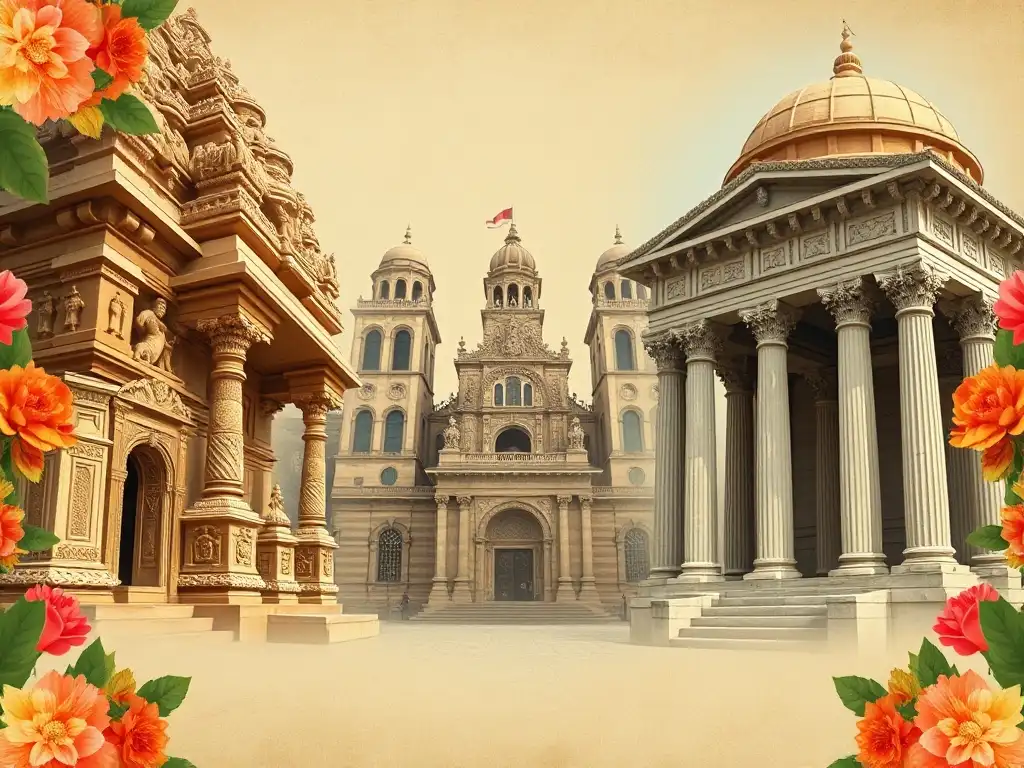
Ancient Indian architecture, with its intricate designs and profound symbolism, has left an indelible mark on global building practices. Its influence can be observed across various cultures and historical periods, showcasing a rich tapestry of architectural evolution. This section delves into a comparative analysis of ancient Indian architectural influences, focusing on its connections and contrasts with other significant architectural traditions.
Comparison with Greco-Roman Architecture
While Greco-Roman architecture is renowned for its emphasis on symmetry, proportion, and the use of columns, ancient Indian architecture presents a more diverse and intricate aesthetic. Indian architecture often incorporates:
- Curvilinear forms: Unlike the linearity of Greco-Roman structures, Indian temples often feature soaring shikharas (towers) that exhibit curvilinear shapes, creating a dynamic silhouette against the skyline.
- Symbolic ornamentation: The rich iconography and elaborate carvings found in Hindu and Buddhist temples serve religious and cultural purposes, contrasting with the more restrained decorative elements of classical Western architecture.
- Spatial organization: Indian architecture emphasizes fluidity in spatial transitions, often blurring the lines between the interior and exterior, which contrasts with the more compartmentalized spaces typical of Greco-Roman buildings.
These differences highlight the distinct philosophical underpinnings of each tradition, with Indian architecture often reflecting a spiritual connection to the cosmos, while Greco-Roman architecture is rooted in civic pride and humanism.
Influence on Islamic Architecture
The interaction between ancient Indian architecture and Islamic architectural practices is profound and multifaceted. After the arrival of Islam in India, various elements of ancient Indian design were integrated into Islamic structures, leading to unique architectural hybrids. Key influences include:
- Use of intricate jaali work: The delicate lattice screens, or jaalis, found in many Indo-Islamic buildings exhibit a synthesis of Indian craftsmanship and Islamic aesthetics, enhancing light diffusion while maintaining privacy.
- Dome and arch: The incorporation of domes and arches in Indian temples, particularly in later structures, influenced Islamic architecture, which often features these elements prominently in mosques and mausoleums.
- Gardens and water features: The Mughal architecture, heavily inspired by ancient Indian garden designs, showcases the integration of lush gardens and water bodies, reflecting the Indian ethos of harmony with nature.
This exchange led to architectural marvels such as the Taj Mahal, which embodies a seamless blend of Persian, Islamic, and Indian styles, demonstrating the lasting impact of ancient Indian architectural principles.
Modern Architectural Adaptations Inspired by Ancient Indian Design
In contemporary architecture, the influence of ancient Indian design is increasingly being recognized and embraced. Modern architects are drawing inspiration from traditional forms and techniques to create innovative spaces that resonate with cultural heritage. Noteworthy adaptations include:
- Sustainable design: Ancient Indian architecture emphasized ecological harmony, using locally sourced materials and passive cooling techniques. Modern architects are revisiting these principles to create energy-efficient buildings that minimize environmental impact.
- Symbolic elements: Incorporating motifs and patterns inspired by ancient Indian art, such as mandalas and lotus designs, modern structures are reflecting cultural narratives and spiritual symbolism, enhancing the connection between the building and its users.
- Community-focused spaces: The traditional Indian concept of community-centric spaces, seen in ancient town planning and temple complexes, is being revived in contemporary urban design, promoting social interaction and communal activities.
These adaptations demonstrate a renewed appreciation for the wisdom embedded in ancient Indian architectural practices, bridging the gap between past and present.
Case Studies of Ancient Indian Architecture Influence
To better illustrate the global impact of ancient Indian architecture, this section highlights case studies that exemplify its influence on various architectural styles and practices around the world.
The Influence of Indian Temples on Southeast Asian Structures
The architectural legacy of ancient Indian temples has profoundly influenced the development of religious structures in Southeast Asia. Key examples include:
- Angkor Wat, Cambodia: Originally dedicated to the Hindu god Vishnu, this monumental temple complex showcases features reminiscent of Indian temple architecture, including elaborate bas-reliefs and towering spires, reflecting the cultural exchange between India and Southeast Asia.
- Borobudur, Indonesia: This Buddhist stupa is intricately designed with terraces and circular platforms, drawing on Indian architectural principles. Its layout and decorative motifs exemplify the assimilation of Indian influences into local interpretations of religious architecture.
These structures serve as testaments to the enduring legacy of ancient Indian architectural practices beyond its geographical confines.
The Impact of Indo-Saracenic Architecture in Colonial India
The Indo-Saracenic architectural style emerged during the British colonial period in India, merging Indian design elements with Gothic and Islamic motifs. Key characteristics include:
- Gothic arches and domes: Buildings like the Chhatrapati Shivaji Terminus in Mumbai showcase a blend of pointed arches and Indian decorative patterns, creating a unique architectural language that reflects both colonial and indigenous influences.
- Use of local materials: The incorporation of red sandstone and intricate tile work in structures like the Victoria Memorial in Kolkata highlights the adaptation of ancient Indian craftsmanship to colonial architectural styles.
Indo-Saracenic architecture represents a significant chapter in the historical narrative of Indian architecture, illustrating the complex interplay between different cultural influences.
Contemporary Architects Inspired by Ancient Indian Principles
Today, a new generation of architects is looking back at ancient Indian architectural principles to inform their designs. Prominent architects have seamlessly integrated these elements into modern architecture, focusing on:
- Cultural context: Architects like B.V. Doshi and Charles Correa have emphasized the importance of understanding local traditions, climate, and social dynamics, drawing from ancient Indian practices to create relevant and meaningful spaces.
- Innovative use of space: Modern designs inspired by traditional Indian courtyards and open-air spaces aim to enhance natural ventilation and light, reflecting the ancient emphasis on environmental harmony.
These contemporary adaptations demonstrate a revival of interest in ancient Indian architecture, showcasing its timeless relevance and potential to inspire future generations.
Conclusion
The influence of ancient Indian architecture on global building practices is both profound and enduring. The architectural styles, techniques, and philosophies that emerged from ancient India have transcended geographical boundaries, leaving an indelible mark on various cultures around the world.
From the intricate carvings of the temples to the urban planning of cities like Mohenjo-Daro, the ingenuity of ancient Indian architects continues to inspire modern architects and builders. As we explore this rich heritage, it is crucial to recognize how these ancient practices have shaped not only the physical structures we see today but also the very essence of architectural thought and design principles across civilizations.
Lasting Legacy of Ancient Indian Architecture
The legacy of ancient Indian architecture is evident in several enduring features that have influenced architectural practices worldwide. One significant aspect is the use of complex geometrical patterns and motifs, which can be seen in various cultures that adopted similar designs, including Islamic architecture and even modern buildings.
Moreover, the incorporation of environmental considerations, such as the orientation of buildings to maximize natural light and ventilation, showcases an understanding of sustainable practices long before they became a contemporary concern. The emphasis on symmetry and aesthetic beauty, reflected in the majestic temples and palaces, underscores a cultural appreciation for artistry that has resonated through the ages.
The principles laid down in ancient Indian texts, such as the Vastu Shastra, have further cemented the country's architectural ethos, providing guidelines that continue to be relevant. These texts emphasize harmony with nature, spatial organization, and the spiritual significance of space, making them foundational to many architectural traditions today.
Future Implications of Ancient Indian Architectural Influence on Global Practices
As global architecture continues to evolve, the ancient Indian architectural influence is poised to play a crucial role in shaping future practices. With the growing emphasis on sustainability and eco-friendly designs, the principles derived from ancient Indian architecture can provide valuable insights.
The integration of natural materials, traditional construction techniques, and an emphasis on community-centered design are aspects that can enhance modern architectural practices. Additionally, as urban populations increase, the ancient Indian approach to urban planning, which emphasized functionality and aesthetics, can inspire solutions to contemporary urban challenges.
Furthermore, the global dialogue on cultural heritage preservation can benefit from the study of ancient Indian architecture. By understanding and valuing these historical influences, architects can create designs that honor traditional wisdom while addressing modern needs, ensuring that the legacy of ancient Indian architecture continues to thrive in future generations.
References
Key Texts and Resources on Ancient Indian Architecture
- A History of Indian Architecture by James Fergusson
- The Hindu Temple: An Introduction to Its Meaning and Forms by George Michell
- Vastu Shastra: The Indian Art of Placement by Robert E. Thum
- Indian Architecture: Buddhist and Hindu Periods by Satish Grover
- Indian Temples: A Cultural History by V. S. Ramachandran
Notable Scholars in the Field of Ancient Indian Architecture Influence
- James Fergusson: Renowned for his extensive writings on Indian architecture and his historical perspective on its development.
- George Michell: An expert on Indian temples who has contributed significantly to the understanding of their architectural styles and significance.
- K. K. Aziz: A historian whose works include critical analyses of architectural practices in ancient India.
- R. V. Smith: A scholar who has explored the interplay between culture and architecture in ancient Indian contexts.
- Amita Bhan: An architect and researcher focusing on the relevance of ancient architectural principles in contemporary designs.
- Introduction to Ancient Indian Architecture
- Historical Context of Ancient Indian Architecture
- Elements of Ancient Indian Architecture
- The Spread of Ancient Indian Architectural Influence
- Comparative Analysis of Architectural Influences
- Case Studies of Ancient Indian Architecture Influence
- Conclusion
- References
- What are the key characteristics of ancient Indian architecture?
- How did ancient Indian architecture influence global building practices?
- What are some notable examples of ancient Indian architecture?
- How did religion shape ancient Indian architecture?
- What materials were commonly used in ancient Indian architecture?
Frequently Asked Questions
What are the key characteristics of ancient Indian architecture?
Ancient Indian architecture is known for its intricate carvings, use of natural materials, and religious symbolism. These features reflect the cultural and spiritual values of the time.
How did ancient Indian architecture influence global building practices?
The architectural styles and techniques developed in ancient India, such as stupas and temples, inspired builders worldwide, contributing to the evolution of various architectural forms across cultures.
What are some notable examples of ancient Indian architecture?
Prominent examples include the Hampi ruins, Khajuraho temples, and the Ajanta and Ellora caves, which showcase the diversity and innovation of ancient Indian building techniques.
How did religion shape ancient Indian architecture?
Religion played a significant role in the design and construction of structures. Temples and stupas were built to serve as spiritual centers, reflecting the cosmic philosophy and ritual significance of their respective faiths.
What materials were commonly used in ancient Indian architecture?
Ancient Indian architects utilized materials like stone, brick, and wood, chosen for their durability and availability. The use of local materials contributed to the distinctive styles seen in different regions.
Final Reflection: The Enduring Legacy of Ancient Indian Architecture
The influence of ancient Indian architecture on global building practices is not merely a historical footnote; it is a vibrant thread woven into the fabric of contemporary design. Today, as we navigate an increasingly interconnected world, the principles and aesthetics of ancient Indian architecture continue to inspire architects and builders, reminding us that the past is not just a relic but a living source of innovation. The intricate designs, sustainable practices, and spiritual philosophies inherent in these ancient structures resonate deeply with modern sensibilities, urging us to rethink how we approach our built environments.
The cultural and social impact of ancient Indian architecture is profound and far-reaching. From the majestic temples that symbolize spiritual devotion to the intricate carvings that tell stories of a bygone era, these architectural marvels have shaped not only the landscapes of India but also the global architectural narrative. As we witness a resurgence of interest in sustainable and culturally sensitive design, we are reminded of the wisdom embedded in these ancient practices. Architecture is the learned game, correct and magnificent, of forms assembled in the light.
– Le Corbusier. This quote encapsulates the essence of how ancient Indian architecture continues to illuminate our understanding of space and form.
As we reflect on the lessons of ancient Indian architecture, let us embrace the opportunity to integrate these timeless principles into our own lives and communities. Consider how you can draw inspiration from this rich heritage to create spaces that are not only functional but also resonate with cultural significance and environmental harmony. By honoring the past and applying its wisdom to our present and future, we can contribute to a more thoughtful and sustainable world, ensuring that the influence of ancient Indian architecture remains a guiding force in our collective journey forward.
Unveil the Legacy of Ancient Architecture!
Thank you for diving into the fascinating world of ancient Indian architecture with us! Your exploration unveils not only the beauty of these structures but also their profound influence on global building practices. Now, it’s time to take this knowledge further and contribute to the preservation and appreciation of this astounding heritage.
Here are some engaging steps you can take right now:
- Dive Deeper: Explore your local museums or cultural centers that showcase influences of ancient architecture. Look for workshops or exhibits that you can attend!
- Share Your Knowledge: Discuss what you've learned with friends and family. Consider organizing an informal gathering to share insights and engage in lively conversations about architectural marvels!
- Connect with Passionate Communities: Join online forums or local groups that focus on architecture and history. Engage in discussions about how ancient designs can influence modern practices.
What aspect of ancient architecture inspires you the most, and how can you incorporate those elements into your own life or community?