
Ancient Indian Literature and Greek Drama: A Comparative Study

Welcome to Ancient India History, where we embark on a captivating journey through the rich tapestry of ancient Indian civilizations. Delve into the fascinating comparative study of Ancient Indian literature and Greek drama, a topic that not only illuminates the unique storytelling traditions of these cultures but also highlights their profound interactions. What insights can we uncover about the shared themes and influences that traversed time and geography? Join us as we explore this intriguing intersection, and prepare to be inspired by the depth and complexity of ancient narratives that shaped civilizations. Your voyage into the past begins here!
- Introduction to Ancient Indian Literature and Greek Drama
- Historical Context of Ancient Indian Literature and Greek Drama
- Key Elements of Ancient Indian Literature
- Key Elements of Greek Drama
- Comparative Analysis of Themes in Ancient Indian Literature and Greek Drama
- Literary Techniques in Ancient Indian Literature vs. Greek Drama
- Impact of Cultural Exchanges on Literature
- Conclusion: The Significance of Comparative Studies in Ancient Indian Literature and Greek Drama
- References and Further Reading
-
Frequently Asked Questions
- What is the focus of the article "Ancient Indian Literature and Greek Drama: A Comparative Study"?
- How does the article approach the comparison between ancient Indian literature and Greek drama?
- What are some key themes discussed in the comparative study?
- Why is the comparison between ancient Indian literature and Greek drama important?
- What contributions did ancient Indian literature make to world literature?
- Final Reflection: Bridging Cultures Through Ancient Narratives
- Embark on a Journey of Cultural Discovery!
Introduction to Ancient Indian Literature and Greek Drama
The exploration of ancient Indian literature and Greek drama reveals a fascinating tapestry of cultural narratives, theatrical expressions, and philosophical inquiries that have significantly shaped human thought and artistic expression. As two remarkable legacies of their respective civilizations, ancient Indian literature and Greek drama not only reflect the societal values and beliefs of their times but also offer rich material for comparative studies.
This article aims to delve into the nuances of these two literary traditions, examining their themes, structures, and cultural significance while highlighting the profound influences and interactions between ancient India and Greece. By drawing parallels and contrasts, we can gain deeper insights into how these two civilizations approached storytelling and performance, thus enriching our understanding of the broader context of human creativity and intercultural dialogue.
Overview of Ancient Indian Literature
Ancient Indian literature encompasses a wide array of texts that span several centuries, reflecting the diverse cultural and spiritual landscape of the region. From the sacred verses of the Vedas to the poetic brilliance of Sanskrit dramas, this literature is characterized by its depth and variety.
- Key Texts:
- Vedas: The oldest sacred texts, composed in Sanskrit, consisting of hymns, rituals, and philosophical discourses.
- Mahabharata and Ramayana: Epic narratives that explore themes of duty, righteousness, and the complexities of human relationships.
- Sanskrit Dramas: Works by playwrights such as Kalidasa and Bhasa, which combine poetic language with intricate character development and thematic depth.
The thematic richness of ancient Indian literature often centers on concepts such as dharma (duty), karma (action), and moksha (liberation), providing a moral and philosophical framework for understanding human existence.
Overview of Greek Drama
Greek drama, emerging from the religious festivals of ancient Greece, is foundational to Western literature and theatre. It is distinguished by its structured forms, including tragedy and comedy, with a focus on complex characters and moral dilemmas.
- Key Elements:
- Tragedy: Explores themes of fate, suffering, and human flaws, exemplified by playwrights like Sophocles and Euripides. Notable works include Oedipus Rex and Medea.
- Comedy: Offers a humorous critique of society and human behavior, with playwrights such as Aristophanes producing works like Lysistrata and The Clouds.
- Chorus: A unique feature of Greek drama that provides commentary, context, and emotional resonance throughout the performance.
The Greek dramatic tradition emphasizes the role of fate and the gods in human life, as well as the exploration of ethical and social issues, reflecting the values and concerns of ancient Greek society.
Importance of Comparative Studies in Literature
Comparative studies of ancient Indian literature and Greek drama are vital for several reasons:
- Cultural Exchange: They provide insights into the interactions and exchanges between the two civilizations, highlighting shared themes and divergent perspectives.
- Literary Techniques: Analyzing narrative structures, character development, and poetic forms allows for a deeper understanding of how different cultures approach storytelling.
- Philosophical Insights: By examining the different philosophical underpinnings of each tradition, scholars can uncover how notions of morality, fate, and human experience are articulated in diverse ways.
Engaging in this comparative study not only enriches our appreciation of each tradition but also fosters a broader understanding of the interconnectedness of human cultures throughout history.
Historical Context of Ancient Indian Literature and Greek Drama
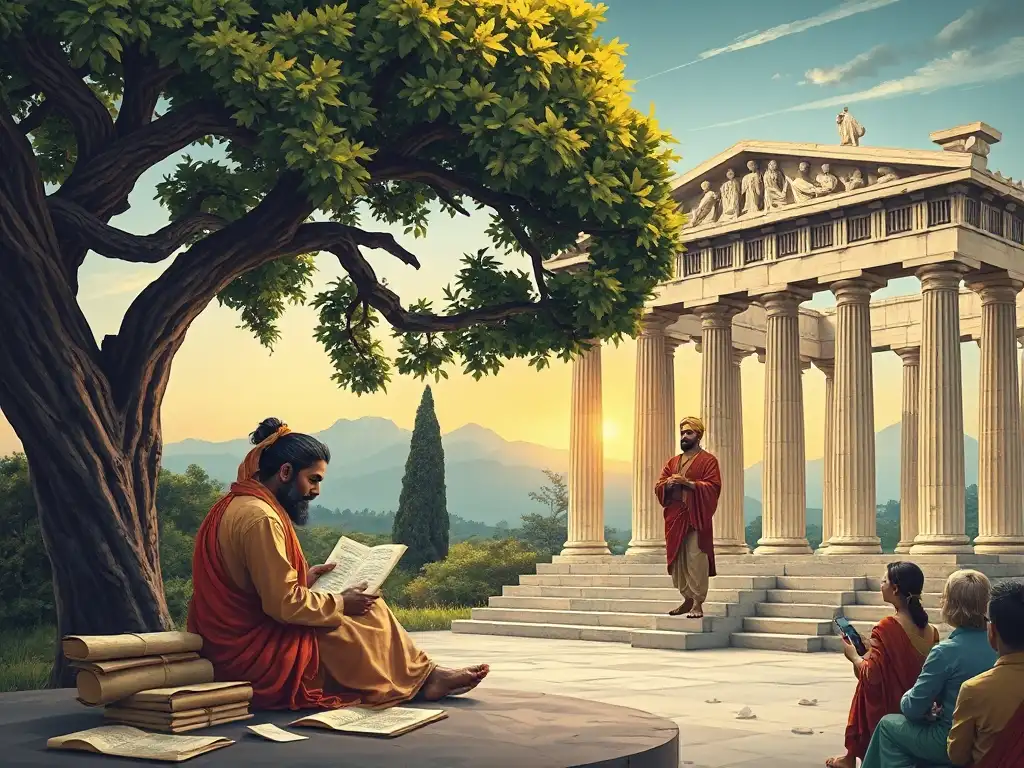
The historical context of ancient Indian literature and Greek drama is essential for understanding the cultural and intellectual exchanges between these two great civilizations. Both India and Greece produced rich literary traditions that not only reflected their respective societies but also interacted with one another over centuries. This interaction was particularly notable during the time of Alexander the Great's campaign in India (4th century BCE), which facilitated the flow of ideas and artistic expressions across borders.
The Evolution of Indian Literature
Indian literature can be traced back to the Vedic texts, composed around 1500 BCE. These texts, primarily in Sanskrit, laid the foundation for a vast literary tradition that evolved through various forms, including epics, poetry, and philosophical treatises. Key milestones in the evolution of Indian literature include:
- Vedic Literature (1500–500 BCE): The Rigveda, Samhitas, and Upanishads introduced hymns, rituals, and philosophical concepts.
- Epic Literature (500 BCE–500 CE): The Mahabharata and Ramayana emerged, blending mythology and moral lessons through their narrative structures.
- Classical Sanskrit Literature (300–600 CE): Poets like Kalidasa and playwrights such as Bhasa created works that explored human emotions and societal norms.
Through this evolution, Indian literature became a vehicle for conveying cultural values, spiritual beliefs, and social commentary, showcasing a profound understanding of human experiences.
The Development of Greek Drama
Greek drama flourished in the 5th century BCE, originating from religious festivals in honor of the god Dionysus. The development of Greek drama can be categorized into three main genres: tragedy, comedy, and satyr play. Key features include:
- Tragedy: Pioneered by playwrights like Aeschylus, Sophocles, and Euripides, Greek tragedies often explored themes of fate, morality, and human suffering. Works such as Oedipus Rex and Medea remain seminal in the exploration of complex human emotions.
- Comedy: In contrast, Aristophanes and other comic playwrights used satire to critique societal norms and politics, creating a space for humor and social discourse.
- Structural Elements: Greek drama was known for its use of the chorus, dramatic irony, and the unities of time, place, and action, which contributed to its enduring appeal.
The impact of Greek drama on literature and theater is profound, as it laid the groundwork for narrative techniques and thematic explorations still relevant today.
Cultural Interactions between India and Greece
The interactions between ancient Indian and Greek cultures were primarily facilitated through trade, diplomacy, and military conquests. Noteworthy aspects include:
- Philosophical Exchanges:
- The arrival of Greek philosophers in India, such as Megasthenes, allowed for the exchange of ideas regarding ethics, governance, and metaphysics.
- Indian philosophical concepts, particularly from the Upanishads, influenced Greek thought, contributing to a broader understanding of metaphysics and the nature of reality.
- Artistic Influences:
- The Gandhara school of art, which flourished in northwestern India, showcased Hellenistic influences, particularly in the depiction of figures and motifs.
- Greek drama's emphasis on character and plot may have inspired Indian playwrights, leading to the development of more structured narratives in Sanskrit literature.
- Literary Comparisons:
- Both traditions share themes of morality, heroism, and the human condition, suggesting a cross-cultural appreciation of storytelling.
- Comparisons can be drawn between Indian epics and Greek tragedies in their exploration of fate and the role of the divine in human affairs.
The historical context of ancient Indian literature and Greek drama reveals a rich tapestry of cultural interactions that shaped both civilizations. This comparative study not only enhances our understanding of literary traditions but also underscores the universality of human experiences across diverse cultures.
Key Elements of Ancient Indian Literature
Ancient Indian literature is a treasure trove of knowledge, philosophy, and artistic expression that spans several millennia. It reflects the complex tapestry of life in ancient India, encompassing diverse genres and themes that offer insights into the cultural, social, and spiritual fabric of the time. A comparative study with Greek drama reveals both unique traits and shared human experiences, making it a fascinating area of exploration within the broader context of Indian-Greek relations.
Major Literary Forms in Ancient India
Ancient Indian literature is characterized by a variety of literary forms, each contributing to the richness of the cultural narrative. The major forms include epics, poetry, prose, and philosophical texts, each serving different purposes and audiences.
Epics: Mahabharata and Ramayana
The Mahabharata and the Ramayana are two of the most significant epics in ancient Indian literature, both in terms of their narrative scope and cultural impact.
- Mahabharata:
- The Mahabharata is an extensive epic that contains over 100,000 shlokas (verses), making it one of the longest literary works in the world. It narrates the story of the Kurukshetra War and the fate of the Kaurava and Pandava princes.
- The poem explores themes of duty (dharma), justice, and morality, interweaving numerous subplots and philosophical discourses, particularly through the Bhagavad Gita—a sacred text that addresses the moral dilemmas faced by Arjuna on the battlefield.
- Ramayana:
- The Ramayana, attributed to the sage Valmiki, focuses on the life of Lord Rama, his wife Sita, and his loyal companion Hanuman.
- It addresses themes of love, devotion, and the struggle between good and evil, highlighting the importance of righteousness (dharma) and the ideal of a ruler.
Both epics have not only shaped Indian literature but have also influenced various art forms, including dance, theater, and modern literature, creating a profound legacy.
Poetry and Prose: Vedas and Upanishads
Ancient Indian literature also includes significant poetic and prose forms, notably the Vedas and the Upanishads.
- Vedas:
- The Vedas are a collection of hymns, prayers, and rituals composed in Sanskrit, foundational to Hindu philosophy and spirituality.
- Comprising four texts (Rigveda, Samaveda, Yajurveda, and Atharvaveda), they contain knowledge on various subjects, including cosmology, ethics, and social order.
- Upanishads:
- The Upanishads are philosophical treatises that delve into the nature of reality and the self (Atman).
- They seek to explore the relationship between the individual soul and the universal spirit (Brahman), emphasizing meditation, morality, and the quest for knowledge.
These texts represent a shift from ritualistic practices to philosophical inquiry, forming the basis for later Indian thought and spirituality.
Themes and Philosophical Ideas in Indian Literature
The themes and philosophical ideas present in ancient Indian literature are as diverse as the texts themselves.
- Dharma (Righteousness):
- A recurring theme in both epics and philosophical texts is the concept of dharma, which governs ethical behavior and duty in personal and social contexts. The Mahabharata, for instance, grapples with the complexities of dharma in times of conflict.
- Moksha (Liberation):
- The pursuit of moksha, or liberation from the cycle of birth and rebirth (samsara), is a crucial philosophical idea found in the Upanishads. This theme emphasizes self-realization and the quest for ultimate truth.
- Cosmology and Creation:
- Many texts explore cosmological themes, discussing the creation of the universe, the nature of time, and the interconnectedness of life. The Vedas, for example, contain hymns that reflect on the origins of existence and the forces of nature.
- Love and Devotion:
- Love, both in its earthly and divine forms, is a significant theme in poetry and prose. The Ramayana epitomizes devotion through the relationship between Rama and Sita, symbolizing the ideal of love and fidelity.
Ancient Indian literature is a rich field of study that offers profound insights into the human experience, with its themes and philosophical ideas resonating across time and cultures. The comparative study with Greek drama can further illuminate the universal values and dilemmas faced by humanity, bridging cultural divides and fostering greater understanding.
Key Elements of Greek Drama
Greek drama, emerging in the 5th century BCE, is a cornerstone of Western literature that has influenced countless cultures, including ancient Indian literature. It primarily consists of tragedies and comedies, characterized by specific structural elements and thematic depth. Understanding these elements is essential for a comparative study between ancient Indian literature and Greek drama.
Structure of Greek Tragedies and Comedies
Greek tragedies typically follow a structured format that includes several key components:
- Prologue: The opening scene, where the main conflict is introduced.
- Parodos: The entrance song of the chorus, setting the mood and context.
- Episodes: The main body of the play, consisting of various scenes that progress the plot.
- Stasimon: A choral ode reflecting on the themes of the play, performed after each episode.
- Exodus: The conclusion, resolving the conflict and offering closure.
Comedies, on the other hand, often feature a more flexible structure, but they typically include:
- Prologue: Establishing the comedic premise.
- Parodos: The chorus's entrance, often with humorous commentary.
- Episodes: Scenes filled with satirical content, engaging in social or political critique.
- Exodus: A resolution that often restores social order, often through comedic means.
| Element | Tragedies | Comedies |
|---|---|---|
| Tone | Serious, somber | Light-hearted, humorous |
| Conflict | Often revolves around fate and morality | Social and political satire |
| Resolution | Tragic ending with moral lessons | Happy endings, restoring order |
The chorus plays a crucial role in both forms, providing commentary and reflecting the emotions of the characters and audience. This element parallels aspects found in ancient Indian literature, such as the use of narrators in plays like Natyashastra.
Notable Playwrights: Aeschylus, Sophocles, and Euripides
Three of the most significant figures in Greek drama are Aeschylus, Sophocles, and Euripides. Each contributed uniquely to the development of drama:
- Aeschylus: Often called the father of tragedy, Aeschylus introduced the concept of a second actor, allowing for more complex interactions. His works, like Agamemnon, explore themes of justice and divine retribution.
- Sophocles: Known for his character-driven plots and the introduction of a third actor, Sophocles enhanced the emotional depth of drama. His most famous play, Oedipus Rex, delves into fate and identity, demonstrating the inevitable nature of destiny.
- Euripides: A revolutionary playwright who often depicted strong female characters and questioned societal norms. His works, such as Medea, challenge traditional values, making his tragedies more relatable to contemporary audiences.
These playwrights set a foundation for narrative techniques and thematic explorations that echo in ancient Indian literature, particularly in the epics and plays that followed.
Central Themes in Greek Drama
Greek drama is rich with thematic explorations that resonate deeply with human experience.
Fate, Morality, and Human Experience
One of the central themes in Greek tragedies is fate. The Greeks believed that fate was a powerful force, often depicted as predetermined and inescapable. Characters like Oedipus exemplify this theme, as their attempts to defy fate lead to tragic outcomes.
Morality is another significant theme, with many plays exploring the ethical dilemmas faced by characters. Questions of justice, revenge, and the consequences of one’s actions are prevalent, urging the audience to reflect on their moral compass.
The exploration of human experience is universal. Greek dramas delve into emotions such as love, jealousy, and despair, allowing audiences to connect with the characters on a personal level. This thematic depth parallels the emotional and ethical inquiries found in ancient Indian literature, particularly in texts like the Mahabharata and Ramayana, where characters also grapple with their destinies and moral choices.
Understanding the structure and themes of Greek drama provides valuable insights into the broader literary landscape, including ancient Indian literature. The comparative study of these cultural artifacts reveals shared human concerns and artistic expressions, enriching our appreciation of both traditions.
Comparative Analysis of Themes in Ancient Indian Literature and Greek Drama
Themes of Heroism and Morality
Both ancient Indian literature and Greek drama present rich explorations of heroism and morality, albeit through different cultural lenses and narrative techniques.
In ancient Indian epics like the Mahabharata and Ramayana, heroism is often portrayed through the lens of dharma, or duty. Characters such as Arjuna and Rama exemplify the struggle between personal desires and societal obligations. For instance, Arjuna's moral dilemma on the battlefield of Kurukshetra, where he hesitates to fight against his relatives, highlights the complexities of ethical decision-making. This internal conflict serves as a profound commentary on the nature of right and wrong, suggesting that true heroism lies in the adherence to dharma, even when it conflicts with personal feelings.
Conversely, Greek dramas, particularly those by playwrights like Sophocles and Euripides, often explore heroism through tragic flaws (hamartia) and the consequences of human actions. In Oedipus Rex, Oedipus's relentless pursuit of truth leads to his downfall, illustrating the Greek belief in the tragic nature of human existence. Here, morality is often depicted as an external force, with characters frequently at the mercy of the gods' will, emphasizing the precarious balance between human agency and divine intervention.
Concepts of Fate and Free Will
The interplay between fate and free will is a central theme in both ancient Indian literature and Greek drama, though approached from distinct philosophical perspectives.
In Indian texts, fate is often intertwined with the concept of karma—actions from past lives influencing present circumstances. This cyclical view is exemplified in the Bhagavad Gita, where Krishna advises Arjuna on the inevitability of fate linked to one's actions. The notion of free will exists, but it is fundamentally connected to one's dharma; individuals are encouraged to act righteously within the constraints of their destinies.
In contrast, Greek literature frequently depicts fate as an overpowering force that dictates the characters' lives, often leading to tragic outcomes. The Fates, or Moirai, personify destiny in Greek mythology, ensuring that characters like Agamemnon in Iphigenia at Aulis face their predestined fates despite their attempts at exercising free will. This stark differentiation highlights a fundamental philosophical divide: while Indian literature promotes the idea of navigating fate through righteous action, Greek drama often portrays a more fatalistic view where human efforts are ultimately futile against predetermined outcomes.
Depictions of Love and Relationships
Love and relationships serve as pivotal themes within both ancient Indian literature and Greek drama, revealing cultural attitudes towards affection, duty, and societal expectations.
In Indian epics, love is often depicted as a divine force that transcends societal norms. The relationship between Rama and Sita in the Ramayana is emblematic of ideal love, characterized by loyalty, sacrifice, and mutual respect. Their bond serves not only as a romantic ideal but also as a moral compass for relationships in society, illustrating how love can uphold dharma. Additionally, in works like Kama Sutra, love is explored in a more nuanced and philosophical manner, integrating physical desire with emotional and spiritual dimensions.
Greek drama, however, presents a more complex and often tumultuous view of love. In plays such as Medea by Euripides, love is portrayed as a double-edged sword, capable of inspiring profound devotion but also leading to vengeance and despair. The relationships in Greek tragedies often highlight the conflict between personal desires and societal duties, as seen in the tragic love story of Phaedra and Hippolytus. This duality reflects a cultural understanding that love can both elevate and destroy, emphasizing the fragility of human connections.
While both ancient Indian literature and Greek drama explore love and relationships, the former often emphasizes love as a means of fulfilling duty, while the latter frequently showcases love's potential for chaos and tragedy.
Literary Techniques in Ancient Indian Literature vs. Greek Drama
Narrative Styles: Epic vs. Dramatic Structure
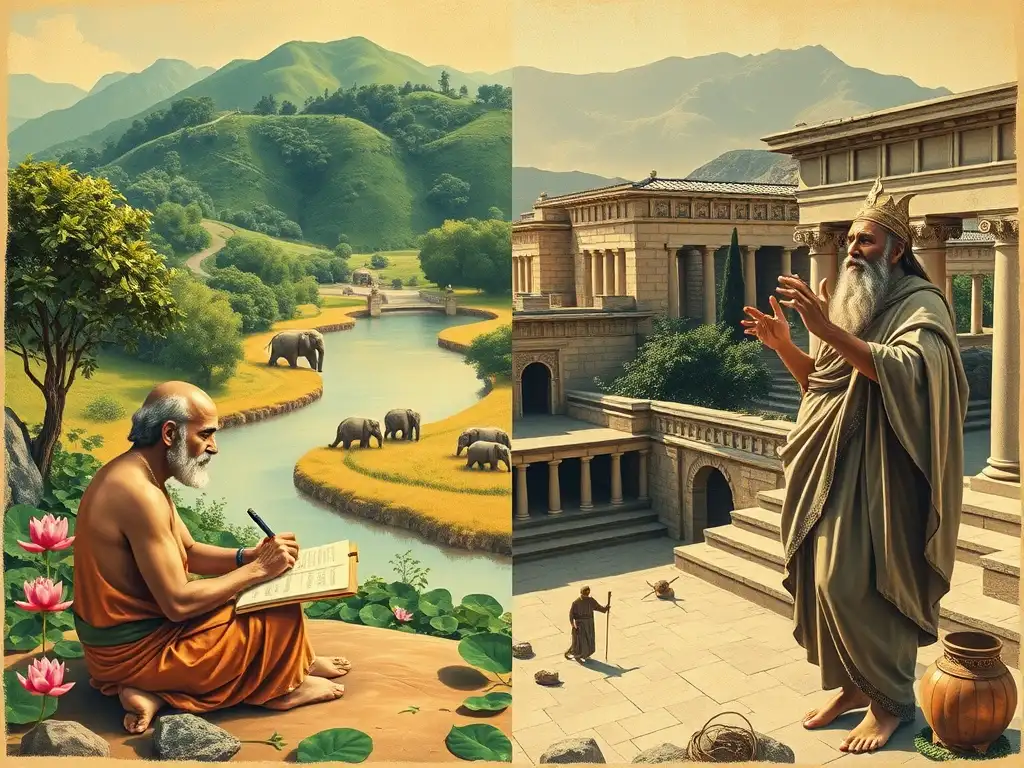
Ancient Indian literature, particularly the epics like the Mahabharata and the Ramayana, showcases a unique narrative style characterized by its extensive use of verse and prose interspersed with philosophical discourses. These epics encompass a vast array of characters, subplots, and moral dilemmas, often reflecting the complex social and spiritual fabric of the time. The storytelling is not merely linear; it embraces a non-linear approach, allowing for flashbacks and multiple viewpoints, enriching the reader's understanding of the narrative.
In contrast, Greek drama, particularly the works of playwrights such as Aeschylus, Sophocles, and Euripides, adheres to a more structured format. Greek plays are generally divided into acts and scenes, focusing on critical moments of conflict and resolution. The dramatic structure is rigid, often following the three unities: unity of time, place, and action. This structure serves to heighten the emotional intensity of the narrative, drawing the audience into the immediate dilemmas faced by the characters.
| Aspect | Ancient Indian Literature | Greek Drama |
|---|---|---|
| Narrative Form | Epic poetry and prose | Structured plays (tragedy/comedy) |
| Character Development | Multi-layered, often allegorical | Focused on key protagonists |
| Temporal Structure | Non-linear, episodic | Linear, adhering to unities |
Use of Dialogue and Monologue
The use of dialogue in ancient Indian literature often serves to convey moral lessons and philosophical discourses. Characters engage in dialogues that explore complex themes such as duty ( dharma), righteousness, and the nature of existence. For example, the Bhagavad Gita, a part of the Mahabharata, is structured as a dialogue between Prince Arjuna and Lord Krishna, addressing profound ethical dilemmas.
In Greek drama, dialogue is the primary means of conveying the plot and developing characters. The use of monologue, particularly in tragedies, allows characters to express their inner thoughts and emotions, providing the audience with insights into their motivations. Notable examples include the soliloquies of Hamlet in Shakespearean adaptations of Greek tragedies, where characters grapple with their fates and moral choices.
- Key Differences:
- Dialogue in Indian literature often reflects a philosophical underpinning.
- Greek dialogue tends to drive the plot forward and reveal character traits.
Symbolism and Allegory in Both Traditions
Symbolism and allegory play significant roles in both ancient Indian literature and Greek drama, though they manifest differently. In Indian literature, symbols such as the lotus, representing purity and spiritual awakening, are prevalent throughout various texts. Allegory is deeply woven into the narratives of epics, where characters often embody moral and ethical principles.
Greek drama employs symbolism more overtly, using objects, colors, and even the chorus to convey deeper meanings. For instance, the use of masks in Greek theater symbolizes the duality of human nature and the concept of fate. The allegorical elements are often found in the portrayal of gods and heroes, serving as reflections of human experiences and societal values.
- Common Symbols:
- Ancient Indian Literature: The lotus, the conch shell, and sacred rivers.
- Greek Drama: Masks, the laurel wreath, and the use of light and darkness.
The comparative study of ancient Indian literature and Greek drama reveals both distinct and overlapping literary techniques that reflect the cultural and philosophical ideals of their respective civilizations. Understanding these nuances enriches our appreciation of ancient Indian literature comparison and its significance in the broader context of world literature.
Impact of Cultural Exchanges on Literature
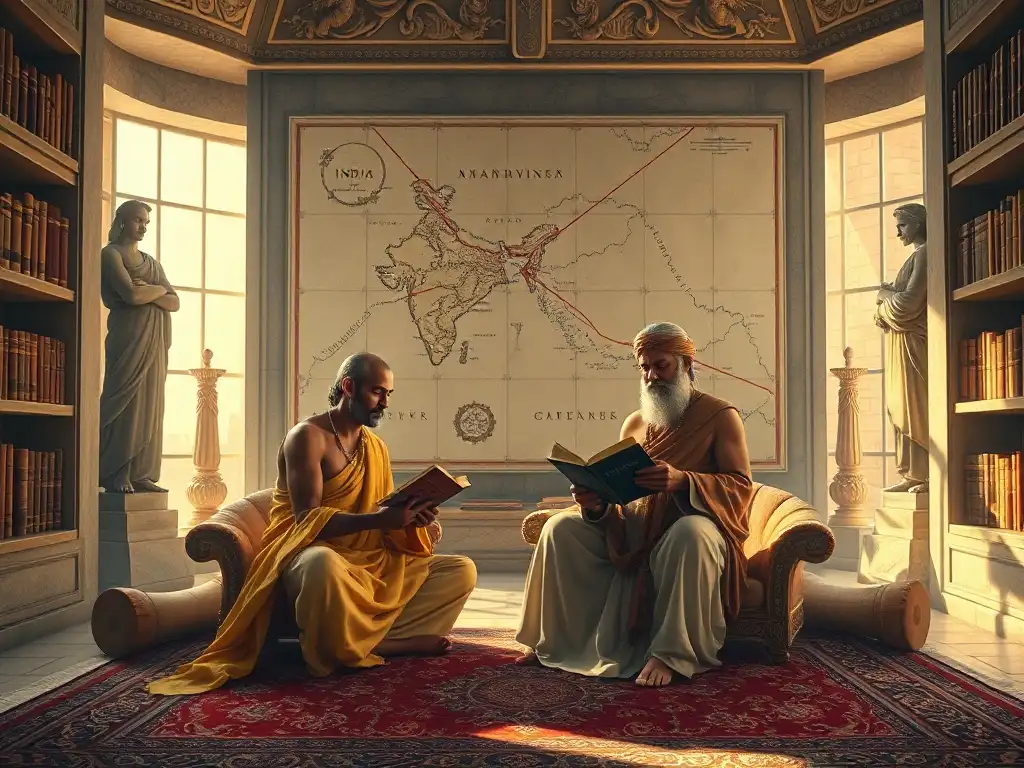
The cultural exchanges between ancient India and Greece during the Hellenistic period significantly influenced the literary landscapes of both civilizations. These exchanges were not merely limited to trade and diplomacy; they also encompassed the sharing of ideas, philosophies, and artistic expressions that shaped the development of literature in both cultures. The intertwining of Indian and Greek narratives not only enriched the storytelling traditions but also fostered a deeper understanding of human experiences and emotions.
Influence of Greek Drama on Indian Literary Traditions
Greek drama, particularly the works of playwrights such as Sophocles, Euripides, and Aeschylus, left an indelible mark on Indian literature. The principles of Greek tragedy, with their emphasis on character development, moral dilemmas, and catharsis, found resonance in Indian plays, especially during the classical period.
Key Aspects of Influence:
- Dramatic Structure: The three-act structure prevalent in Greek drama can be seen in Indian plays like those of Kalidasa. These plays often followed a similar arc of exposition, conflict, and resolution.
- Character Archetypes: The tragic hero, a staple in Greek literature, is mirrored in Indian epics. Characters such as Karna from the Mahabharata exemplify complex moral struggles akin to those faced by Greek heroes.
- Themes of Fate and Free Will: Both traditions explored the tension between fate and individual agency. In Greek tragedies, characters often succumb to their fates, while Indian literature presents a more nuanced view, suggesting that dharma (duty) plays a crucial role in determining outcomes.
Indian Literature's Impact on Greek Thought
The impact of Indian literature on Greek thought is less documented but equally profound. The philosophical texts and narratives from ancient India offered new perspectives that influenced Greek philosophers and writers. The introduction of concepts like karma and dharma contributed to the evolving philosophical landscape of Greece.
Contributions to Greek Philosophy:
- Concepts of Ethics: Indian texts such as the Bhagavad Gita presented ethical dilemmas and moral philosophy that resonated with Greek thinkers. The dialogue between Arjuna and Krishna parallels the Socratic method of inquiry, prompting deeper reflection on moral choices.
- Narrative Structures: The narrative style found in texts like the Panchatantra influenced Greek fables and storytelling techniques, emphasizing moral lessons through allegory and parable.
The convergence of Indian and Greek literary traditions reveals shared philosophical ideas and literary techniques that enriched both cultures. The blending of these elements fostered a unique dialogue that transcended geographical boundaries.
Common Philosophical Themes:
- Human Experience: Both literatures explore universal themes such as love, sacrifice, and the human condition. The exploration of these themes fosters empathy and understanding across cultures.
- Metaphysical Inquiry: Questions about existence, the nature of reality, and the divine are prevalent in both traditions. Greek philosophers and Indian sages alike pondered these profound questions, often arriving at similar conclusions through different paths.
Literary Techniques:
- Allegory and Symbolism: Both traditions utilized allegory and symbolism to convey deeper meanings. For instance, the use of animals in fables serves to impart moral lessons in both Indian and Greek literature.
- Poetic Devices: The use of meter, rhyme, and rhythm in poetry is a hallmark of both traditions. The Mahabharata and Greek epics like the Iliad employ intricate poetic structures that enhance their narratives.
The comparative study of ancient Indian literature and Greek drama reveals a rich tapestry of cultural exchange that has shaped the literary traditions of both civilizations. The ongoing dialogue between these two great cultures continues to inspire writers and thinkers, highlighting the timeless relevance of their shared ideas and artistic expressions.
Conclusion: The Significance of Comparative Studies in Ancient Indian Literature and Greek Drama
Summarizing the Insights Gained from Comparison
The comparative study of ancient Indian literature and Greek drama unveils a rich tapestry of cultural intersections that have shaped the narrative traditions of both civilizations. This analysis highlights several key insights:
- Thematic Parallels: Both literary traditions explore universal themes such as love, duty, morality, and the human condition. For example, the concept of dharma in Indian epics like the Mahabharata resonates with the Greek notion of arete, emphasizing virtue and moral excellence.
- Character Archetypes: The characters in ancient Indian literature, such as those from Ramayana and Mahabharata, often mirror Greek tragic heroes like Oedipus and Antigone. These figures grapple with fate, personal choice, and ethical dilemmas, illustrating the shared human experience across cultures.
- Narrative Techniques: Both traditions employ innovative narrative structures. The use of sutradhar in Indian plays, akin to the Greek chorus, serves to guide the audience's understanding and emotional engagement, showcasing a sophisticated approach to storytelling.
- Cultural Exchange: The interaction between Indian and Greek thinkers, especially during the Hellenistic period, contributed to the evolution of literary forms. The influence of Greek drama on Sanskrit theater, particularly in the works of playwrights like Kalidasa, exemplifies this cross-pollination of ideas and aesthetics.
The Relevance of Ancient Literary Traditions in Modern Context
The enduring legacy of ancient Indian literature and Greek drama extends beyond historical appreciation; it holds significant relevance in contemporary society.
- Inspirational Frameworks: Modern writers and dramatists continue to draw inspiration from these ancient texts. The moral complexities and character developments found in works like Shakuntala and Oedipus Rex provide frameworks for contemporary narratives, addressing issues such as identity, societal norms, and interpersonal relationships.
- Cultural Identity and Heritage: Understanding these literary traditions fosters a sense of cultural identity and continuity. For example, Indian festivals and rituals often echo themes from ancient texts, while Greek theatrical performances remain integral to cultural celebrations, thus keeping the spirit of these traditions alive.
- Literary Education: The comparative study of these literatures enriches academic curricula, encouraging students to appreciate diverse perspectives. By examining similarities and differences, learners gain a broader worldview, enhancing critical thinking and analytical skills.
- Global Dialogue: In an increasingly interconnected world, the dialogue between ancient Indian literature and Greek drama exemplifies how cultures can share and transform ideas. This interaction lays the groundwork for a global literary heritage that transcends geographical boundaries.
The comparative analysis of ancient Indian literature and Greek drama not only deepens our understanding of these rich traditions but also emphasizes their relevance in shaping modern literary expressions and cultural identities. By celebrating these connections, we honor the contributions of both civilizations to the tapestry of global history.
References and Further Reading
Suggested Books and Articles on Indian and Greek Literature
-
"The Mahabharata" by Ramesh Menon
This modern retelling of the ancient Indian epic provides insights into the narrative structures and themes that resonate with Greek tragedies. Key themes such as fate, duty, and moral dilemmas are explored in depth.
-
"Greek Drama and the Indian Classical Tradition" by John M. Dillon
This comparative study examines the thematic parallels and narrative techniques between Greek dramas and ancient Indian plays, highlighting the influences and similarities that shaped both traditions.
-
"The Ramayana" by R.K. Narayan
Narayan's adaptation of the ancient epic presents a captivating exploration of its characters and moral lessons, similar to the character-driven plots found in Greek tragedies.
-
"The History of Indian Literature" by Sukanta Chaudhuri
This comprehensive work covers various periods of Indian literature, including dramatic forms, and discusses how these compare with ancient Greek literature in thematic and stylistic aspects.
-
"Plays of the Classical Indian Theatre" by Shanta Serbjeet Singh
This book offers an in-depth look at the structure and content of classical Indian theatre, drawing parallels with Greek drama in terms of themes, character development, and performance styles.
-
"Tragedy and Comedy in Ancient India" by D.R. Kaarthikeyan
A scholarly analysis that juxtaposes the elements of tragedy and comedy in both Indian and Greek traditions, providing a clearer understanding of how these genres evolved.
Online Resources for Further Exploration of Ancient Civilizations
-
Internet Archive
A valuable resource for finding texts and literature on both ancient Indian and Greek works. Many texts are available for free download, offering access to primary sources and classic literature.
-
Project Gutenberg
This digital library offers numerous literary works from ancient civilizations, including translations of Greek dramas and Indian epics, making it easier for readers to access these foundational texts.
-
The British Museum Collection
The online collection features artifacts, manuscripts, and exhibits related to ancient Indian and Greek civilizations, providing contextual background for literary studies.
-
The Internet Encyclopedia of Philosophy
This resource provides articles on key philosophical texts and figures from both Greek and Indian traditions, enhancing the understanding of their literary contributions.
-
JSTOR
An academic database offering a wealth of research articles on comparative literature, including studies on ancient Indian literature and its connections with Greek drama.
-
Coursera and edX
These platforms often feature courses on world literature and ancient civilizations, offering lectures and materials that delve into the literary traditions of both India and Greece.
By exploring these resources, readers can deepen their understanding of the rich literary traditions of ancient India and Greece, and appreciate the nuanced comparisons and influences that exist between these two great civilizations.
Frequently Asked Questions
What is the focus of the article "Ancient Indian Literature and Greek Drama: A Comparative Study"?
The article examines the similarities and differences between ancient Indian literature and Greek drama, highlighting their cultural significance and artistic expressions.
How does the article approach the comparison between ancient Indian literature and Greek drama?
The article utilizes a comparative framework to analyze themes, structures, and character development, showcasing how both traditions reflect their respective societies.
What are some key themes discussed in the comparative study?
Key themes include morality, heroism, and fate, illustrating how ancient Indian texts and Greek dramas explore similar human experiences through distinct cultural lenses.
Why is the comparison between ancient Indian literature and Greek drama important?
This comparison is important because it reveals the interconnectedness of cultures and the universal nature of storytelling, enriching our understanding of global literary traditions.
What contributions did ancient Indian literature make to world literature?
Ancient Indian literature contributed rich narratives, philosophical insights, and poetic forms that influenced not only its own culture but also had a lasting impact on global literary evolution.
Final Reflection: Bridging Cultures Through Ancient Narratives
The exploration of ancient Indian literature and Greek drama reveals profound connections that resonate with contemporary audiences. In a world increasingly defined by cultural exchange and global narratives, understanding these ancient texts offers us invaluable insights into the human experience. The themes of love, conflict, and morality found in both traditions remind us that, despite geographical distances, the essence of storytelling transcends time and space.
Cross-cultural comparisons not only enrich our understanding of literature but also highlight the shared human condition. The intricate narratives of ancient Indian epics, such as the Mahabharata, alongside the tragic depth of Greek plays like those of Sophocles, showcase the universality of themes that continue to shape our societal values. As noted by the scholar Arjun Appadurai, “The world is a complex tapestry of stories, each thread contributing to the whole.” This perspective encourages us to appreciate the diverse narratives that inform our cultural identities.
As we reflect on the lessons drawn from these ancient texts, let us invite ourselves to engage with the stories that shape our lives today. Consider how the themes of ancient literature can inspire you to navigate modern challenges. Whether through personal storytelling, artistic expression, or simply fostering empathy in our interactions, we have the power to carry forward the legacies of these timeless narratives. Embrace the wisdom of the past, and let it guide you in creating a more connected and understanding world.
Embark on a Journey of Cultural Discovery!
Thank you for diving into the fascinating world of Ancient Indian Literature and Greek Drama. We hope you’ve gained valuable insights into the rich tapestry of storytelling and performance that shaped these two influential cultures. Ready to take your exploration further? Here’s what you can do next:
- Join a local book club focused on comparative literature to discuss and analyze themes from both traditions.
- Share this article with friends who appreciate drama and literature, sparking discussions about cultural influences.
- Attend a local performance of a play inspired by ancient texts—experience the stories come to life!
What new perspective on ancient storytelling will you explore next?