
Art and Aesthetics: The Artistic Exchange Between Ancient India and Southeast Asia

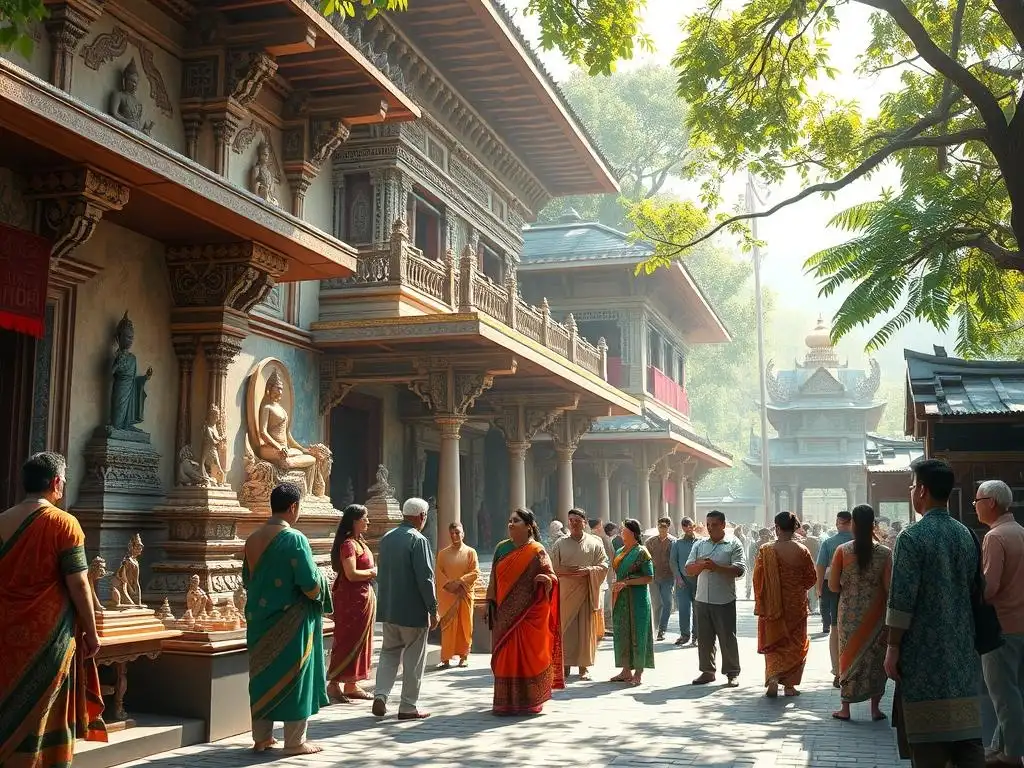
Welcome to Ancient India History, where we embark on a captivating journey through time, uncovering the rich tapestry of ancient Indian civilizations. In this exploration, we delve into the fascinating art and aesthetics that flourished through the artistic exchange between ancient India and Southeast Asia. Discover how these cultural interactions shaped the visual narratives and creative expressions of both regions, revealing a legacy that continues to inspire. Are you ready to unveil the secrets of this vibrant history? Dive in and let the stories of art and influence unfold before you!
- Introduction to Ancient India and Southeast Asia Art
- Historical Context of Artistic Exchange
- Key Artistic Elements Shared Between Ancient India and Southeast Asia
- Major Artistic Contributions from Ancient India to Southeast Asia
- The Impact of Southeast Asian Art on Ancient Indian Aesthetics
- Conclusion: The Lasting Legacy of Ancient India-Southeast Asia Artistic Exchange
- References for Further Reading on Ancient India and Southeast Asia Art
-
Frequently Asked Questions
- What is the significance of artistic exchange between ancient India and Southeast Asia?
- How did Buddhism influence art in Southeast Asia?
- What are some examples of art that showcase the connection between ancient India and Southeast Asia?
- How did trade routes contribute to the cultural exchange between ancient India and Southeast Asia?
- What role did mythology play in the art of ancient India and Southeast Asia?
- Final Reflection: The Enduring Legacy of Ancient India and Southeast Asia's Artistic Exchange
- Unveil the Rich Tapestry of Ancient Cultures!
Introduction to Ancient India and Southeast Asia Art
The artistic traditions of ancient India and Southeast Asia reflect a profound and intricate tapestry of cultural exchange that shaped the aesthetics of both regions. From the early civilizations of the Indus Valley to the flourishing Gupta Empire, ancient Indian art was characterized by its remarkable diversity, innovative techniques, and spiritual depth.
Similarly, Southeast Asia, with its rich array of cultures and societies, was deeply influenced by Indian artistic practices, leading to a unique synthesis of styles and themes that resonated through centuries. This article aims to delve into the artistic connections between these two regions, exploring how ancient Indian art impacted Southeast Asian aesthetics and vice versa, and highlighting the significance of this cultural dialogue in the broader context of history.
Overview of Art in Ancient India
The art of ancient India is a reflection of its philosophical, religious, and social contexts. From the intricate carvings of the temples at Khajuraho to the serene sculptures of the Ajanta Caves, Indian art has always been a medium for storytelling, spirituality, and cultural expression. Key characteristics of ancient Indian art include:
- Religious Themes: Predominantly Hindu and Buddhist motifs that convey spiritual narratives.
- Architectural Marvels: The construction of stupas, temples, and palaces that showcase advanced engineering and artistic skills.
- Sculpture and Reliefs: Detailed representations of deities, mythological events, and daily life, often adorned with vibrant colors and patterns.
- Cave Paintings: The Ajanta and Ellora caves exemplify the fusion of art and spirituality, portraying intricate frescoes that depict tales from religious texts.
This rich artistic heritage laid the groundwork for the cultural exchanges that would later influence Southeast Asia.
Significance of Art in Southeast Asia
Southeast Asia, with its diverse cultures and traditions, has a unique artistic identity that has been shaped by various influences, including those from ancient India. The significance of art in this region can be summarized as follows:
- Cultural Synthesis: The blending of indigenous traditions with Indian artistic elements created unique styles, such as the Khmer temple architecture, which incorporated Hindu and Buddhist motifs.
- Religious Influence: The spread of Buddhism and Hinduism impacted the artistic expressions in Southeast Asia, leading to the creation of monumental structures like Angkor Wat and Borobudur.
- Trade and Exchange: The maritime trade routes facilitated the movement of artists, ideas, and materials, further enriching the artistic landscape of Southeast Asia.
These factors underscore the importance of understanding the artistic ties between ancient India and Southeast Asia as a vital aspect of their historical narratives.
Purpose of the Article
This article aims to provide an in-depth exploration of the artistic exchange between ancient India and Southeast Asia, focusing on the following objectives:
- Analyze Artistic Influences: To examine how ancient Indian art influenced the artistic developments in Southeast Asia.
- Highlight Cultural Interactions: To explore the nature of cultural exchanges and their impact on both regions.
- Showcase Specific Examples: To present case studies and examples that illustrate the artistic connections and shared heritage.
By exploring these themes, we hope to shed light on the rich tapestry of cultural interactions that have shaped the artistic legacies of ancient India and Southeast Asia, ultimately enhancing our understanding of their historical significance.
Historical Context of Artistic Exchange
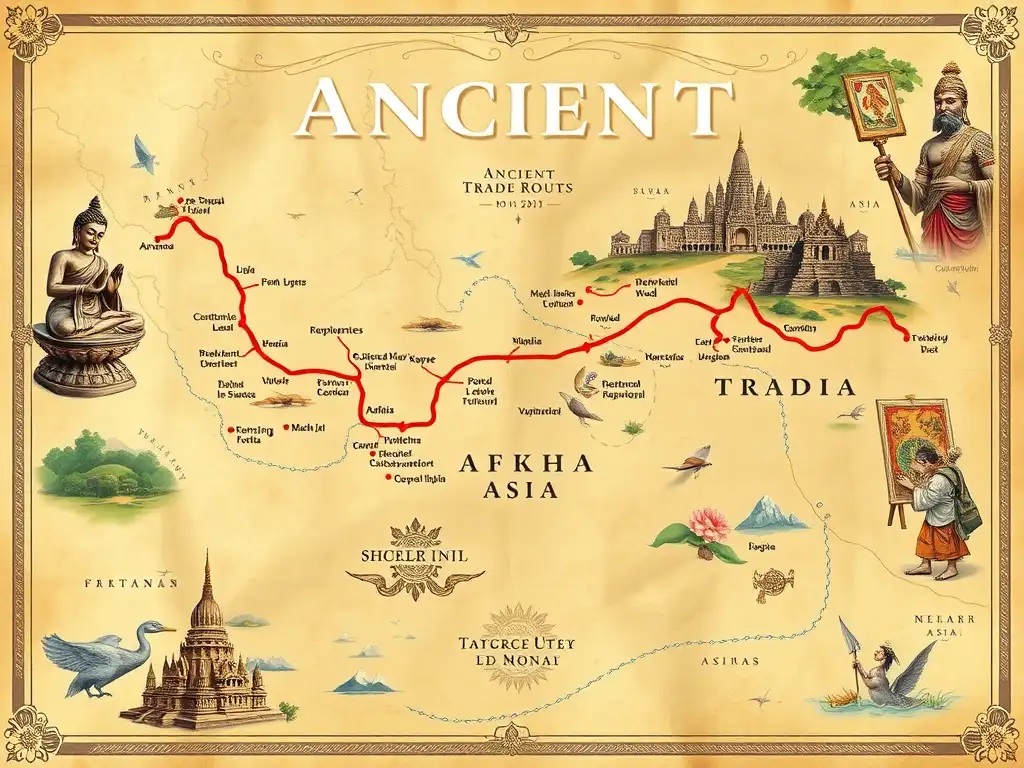
The artistic exchange between ancient India and Southeast Asia is rooted in a rich historical context that spans centuries. This exchange was not merely a one-way transmission of art styles but rather a dynamic interaction that involved the mutual influence of cultures. Ancient India, with its sophisticated civilization, provided fertile ground for the development of art forms that would later have a profound impact on Southeast Asian cultures.
The Indus Valley Civilization and Its Artistic Influence
The Indus Valley Civilization (c. 3300–1300 BCE) is one of the earliest urban cultures in South Asia, known for its advanced town planning, architecture, and artistic achievements. The intricate seals, pottery, and sculptures of this civilization showcase a high degree of artistic skill and a unique aesthetic sensibility.
- Seals and Symbols: The seals, often made of steatite, feature animal motifs and script that are still undeciphered, hinting at a complex symbolic language. These seals have been found in various Southeast Asian archaeological sites, indicating the spread of Indus motifs across the region.
- Terracotta Figurines: The terracotta figurines, depicting human and animal forms, demonstrate the craftsmanship and religious significance of art in the Indus Valley. Their stylistic elements can be traced in later Southeast Asian art, particularly in the representation of deities and mythical creatures.
The influence of the Indus Valley on Southeast Asia can be seen in the adoption of similar artistic techniques and themes, which laid the groundwork for further cultural interactions.
Early Interactions Between Ancient India and Southeast Asia
The interactions between ancient India and Southeast Asia began to intensify around the 1st century CE, driven primarily by trade and the spread of religions such as Buddhism and Hinduism.
- Buddhism's Role: The introduction of Buddhism to Southeast Asia played a significant role in shaping local art. Stupas and sculptures depicting the life of the Buddha, influenced by Indian artistic styles, began to emerge in places like Indonesia and Thailand. The Borobudur Temple in Java is a prime example of this influence, showcasing Indian architectural principles and iconography.
- Hindu Influence: Hinduism also permeated Southeast Asian cultures, resulting in the creation of temple complexes such as Angkor Wat in Cambodia. The intricate bas-reliefs and carvings reflect the artistic traditions of ancient India, illustrating stories from the Ramayana and Mahabharata.
These early interactions highlight a reciprocal relationship where Southeast Asian cultures adopted and adapted Indian artistic elements, creating a unique synthesis that enriched both regions.
Trade Routes and Cultural Exchange
The establishment of trade routes between ancient India and Southeast Asia facilitated not only the exchange of goods but also of cultural and artistic ideas.
- Maritime Trade: The maritime trade routes connecting the Indian subcontinent to Southeast Asia played a crucial role in this exchange. Goods such as spices, textiles, and precious stones were traded alongside artistic influences, with merchants often acting as cultural intermediaries.
- Silk Road Connections: While the Silk Road is commonly associated with overland trade, its maritime counterpart significantly impacted the flow of ideas and artistic traditions. This connectivity allowed for a blend of artistic styles from various cultures, including Indian, Persian, and local Southeast Asian influences.
The result of these trade interactions is evident in the art and architecture of Southeast Asia, which often reflects Indian themes while incorporating local elements. This blend created a vibrant artistic landscape that continues to be celebrated today, showcasing the enduring legacy of ancient India in Southeast Asia.
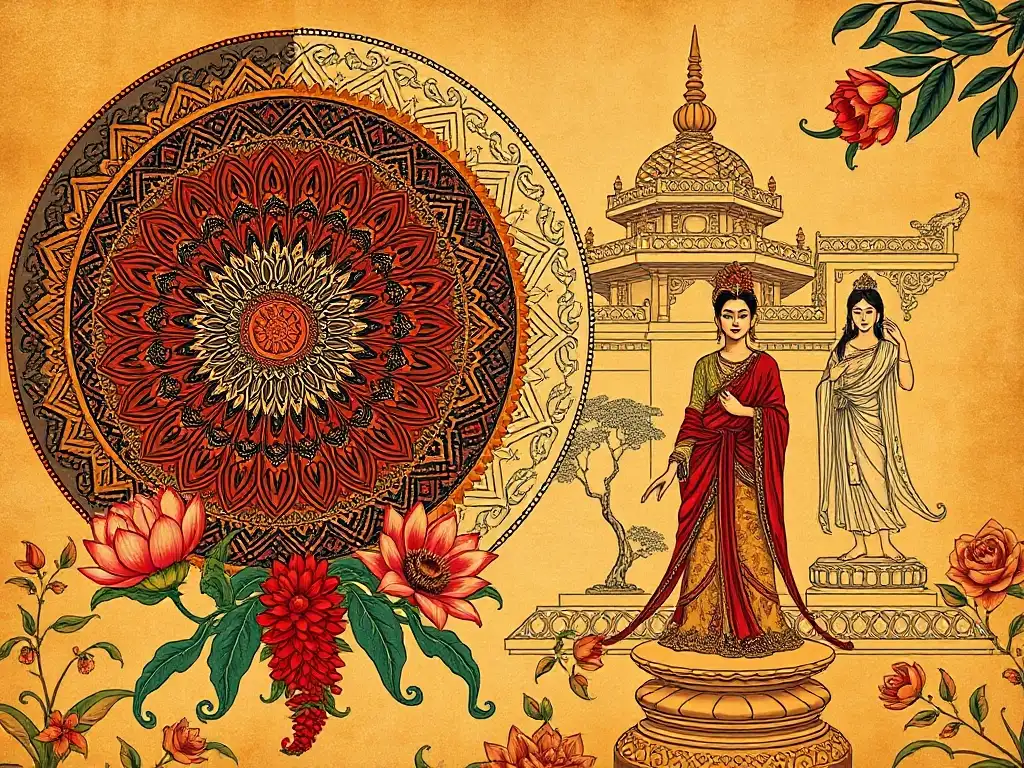
The artistic relationship between ancient India and Southeast Asia is a fascinating area of study, revealing a deep-seated exchange of cultural values, artistic practices, and aesthetic principles. As trade routes expanded and cultural interactions flourished, various artistic elements emerged that highlighted the interconnectedness of these regions. This section will explore some of the key artistic elements shared between ancient India and Southeast Asia, focusing on architectural influences, sculptural traditions, and textile craftsmanship.
Architectural Influences: Temples and Stupas
One of the most significant artistic exchanges between ancient India and Southeast Asia is reflected in the architectural styles of temples and stupas. The architectural designs of Indian origin significantly influenced the construction of religious structures throughout Southeast Asia, with prominent examples including:
- Stupas: The stupa, a dome-shaped structure housing relics, became a hallmark of Buddhist architecture in both regions. The Borobudur in Indonesia, with its multi-tiered stupa structure, draws inspiration from Indian stupas like the Sanchi Stupa, showcasing similar iconographic elements and symbolic representations.
- Temple Architecture: The intricate carvings and sculptural motifs found in ancient Indian temples, particularly during the Gupta period, served as a template for temple design in Southeast Asia. The Angkor Wat temple complex in Cambodia is a prime example, reflecting the use of sandstone, detailed reliefs, and a layout reminiscent of Indian temple architecture.
Key Features:
- Materials Used: Both regions utilized locally sourced stones, with Indian temples often made from sandstone and granite, while Southeast Asian temples frequently employed laterite and sandstone.
- Symbolism: The architectural elements served symbolic purposes, representing cosmic order and spiritual beliefs common to both cultures.
Sculptural Traditions: Iconography and Styles
The sculptural traditions of ancient India greatly influenced the iconographic styles in Southeast Asia. This influence is evident in the following aspects:
- Buddhist Iconography: The portrayal of Buddha and various bodhisattvas in Southeast Asia reflects the Indian tradition. Statues from the Gupta period, characterized by serene expressions and graceful postures, can be seen echoed in Khmer and Thai sculptures, where the same aesthetic principles are employed.
- Hindu Deities: Hindu iconography, particularly of deities like Vishnu and Shiva, found a new home in Southeast Asia. Temples in regions such as Java and Bali feature intricate carvings that depict these deities, often with localized adaptations that reflect the cultural context of the region.
Notable Styles:
- Stylistic Variations: While the foundational styles originated in India, local adaptations resulted in unique artistic expressions, such as the more rounded forms of the Khmer sculptures compared to the elongated figures in Indian art.
- Symbolic Elements: The use of symbolism in sculptures, such as lotus flowers representing purity and rebirth, is a shared feature, emphasizing the spiritual connections between the two regions.
Textile and Craftsmanship Exchange
The exchange of textiles and craftsmanship between ancient India and Southeast Asia is another area where artistic influences can be seen. This exchange not only involved the transfer of techniques but also the sharing of aesthetic values:
- Textile Techniques: Indian textile techniques, such as block printing and tie-dyeing, were adopted and adapted by local artisans in Southeast Asia. The vibrant colors and intricate patterns found in Southeast Asian textiles often reflect Indian motifs, showcasing a blend of cultural influences.
- Craftsmanship: The skills of artisans in both regions were enhanced through this exchange. For instance, the technique of silk weaving flourished in Southeast Asia, influenced by Indian silk traditions. The ikat technique, prevalent in both regions, demonstrates how local artisans incorporated Indian motifs into their textiles.
Key Takeaways:
- Cultural Significance: Textiles often served as more than just clothing; they were imbued with cultural significance, used in rituals and ceremonies, thereby reinforcing the interconnectedness of the societies.
- Trade Routes: The flourishing trade routes facilitated not only the exchange of goods but also ideas and artistic practices, further enriching the artistic heritage of both ancient India and Southeast Asia.
This exploration of the key artistic elements shared between ancient India and Southeast Asia highlights the profound impact of cultural exchanges. By examining the architectural influences, sculptural traditions, and textile craftsmanship, we gain a deeper understanding of how these regions influenced each other, creating a rich tapestry of shared artistic heritage.
Major Artistic Contributions from Ancient India to Southeast Asia
The Spread of Hinduism and Buddhism
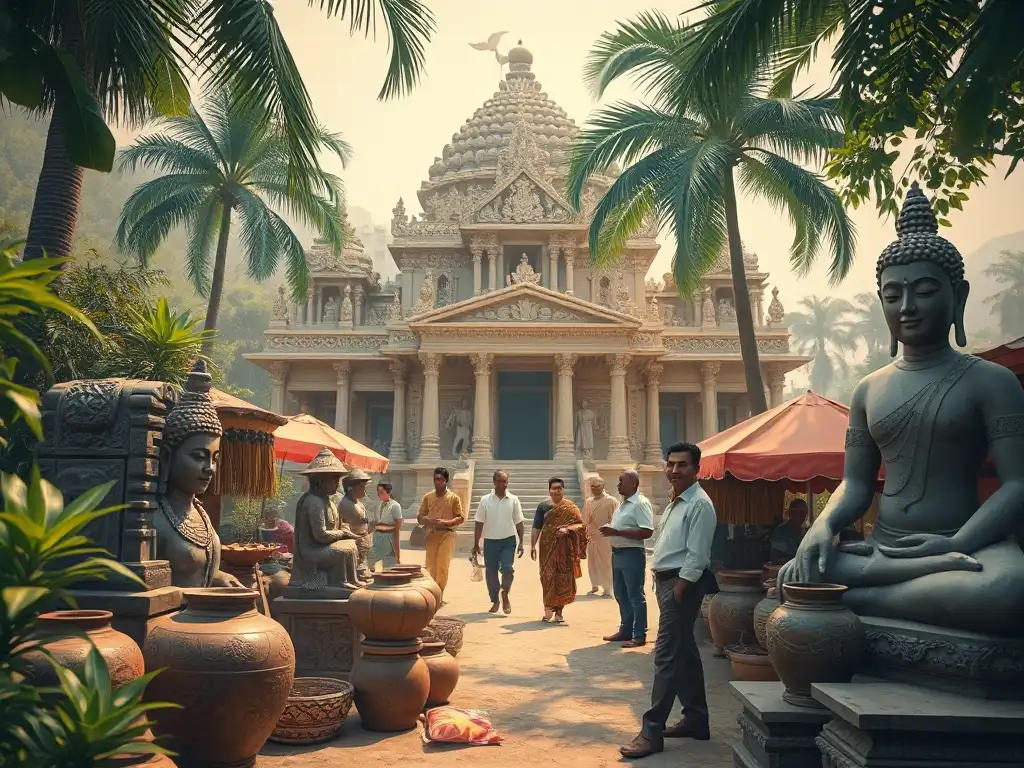
The spread of Hinduism and Buddhism from ancient India to Southeast Asia significantly influenced the region's art and aesthetics. This cultural diffusion began around the 1st century CE, driven by trade routes and the movement of scholars and monks. As these religions took root in Southeast Asia, they brought with them not only religious beliefs but also rich artistic traditions.
- Hinduism introduced the worship of deities like Vishnu and Shiva, which led to the construction of temples adorned with intricate carvings and sculptures. Notable examples include the Prambanan Temple in Indonesia, which showcases detailed reliefs depicting stories from the Ramayana and Mahabharata.
- Buddhism, on the other hand, spread through the efforts of monks who traveled to places like present-day Thailand and Myanmar. The influence of Buddhist art is evident in the Buddha statues and stupas that emerged across the region, emphasizing serenity and enlightenment.
The interaction between these religions and local beliefs resulted in a unique blend of artistic expressions, where indigenous styles merged with Indian motifs, creating a distinct Southeast Asian aesthetic.
The Role of Indian Art in Southeast Asian Religious Practices
Indian art played a pivotal role in shaping religious practices in Southeast Asia. The intricate designs of temples and sculptures not only served devotional purposes but also acted as a medium for storytelling and cultural identity.
- Temple Architecture: The architectural style of ancient Indian temples, characterized by towering spires and ornate decorations, inspired the construction of significant religious sites in Southeast Asia. For instance, the Angkor Wat temple complex in Cambodia reflects Indian architectural principles, combined with local innovations.
- Sculptural Traditions: The depiction of deities in stone carvings became a vital aspect of religious rituals. Indian sculptural techniques were adopted and adapted, leading to the creation of unique forms that resonated with local beliefs. The Burmese Buddha statues, for example, exhibit a blend of Indian stylistic elements with regional features.
- Art as Ritual: In many Southeast Asian cultures, art became integral to religious ceremonies. The colorful murals and sculptures not only beautified spaces but also educated the populace on religious doctrines and narratives.
Notable Artifacts Reflecting Indian Influence
Several artifacts from ancient Southeast Asia exemplify the profound influence of Indian art. These items highlight the synthesis of styles and the shared cultural heritage between the regions.
| Artifact | Location | Description |
|---|---|---|
| Borobudur Stupa | Indonesia | A massive Buddhist structure adorned with reliefs depicting the life of Buddha, showcasing Indian artistic influences. |
| Angkor Wat Reliefs | Cambodia | Intricate carvings that narrate Hindu epics, particularly the Ramayana, reflecting the depth of Indian mythology. |
| Buddha Statues | Thailand | Statues that embody Indian sculptural techniques, yet are stylized to fit local aesthetics, illustrating a fusion of cultures. |
| Sanskrit Inscriptions | Vietnam | These inscriptions found in stone artifacts reveal the spread of Indian languages and scripts, further signifying cultural exchange. |
The artifacts not only serve as historical records but also as testimonies to the vibrant interactions between ancient India and Southeast Asia. They reflect how Indian art and religious concepts were absorbed and transformed, leading to a rich tapestry of regional art that continues to be celebrated today.
The Impact of Southeast Asian Art on Ancient Indian Aesthetics
Adaptation of Indian Styles in Southeast Asian Art
The artistic exchange between ancient India and Southeast Asia was a dynamic process that saw the adaptation of Indian styles across various forms of art in Southeast Asian cultures. Notably, the influence of Indian aesthetics can be traced in sculpture, architecture, and decorative arts.
The spread of Buddhism and Hinduism into Southeast Asia facilitated the introduction of Indian motifs and iconography. For example, the Borobudur Temple in Indonesia showcases intricate carvings that reflect Indian narrative styles, portraying scenes from the Jataka tales. These adaptations are characterized by:
- Iconography: Indian deities like Shiva and Vishnu were incorporated into local pantheons, often leading to new interpretations and representations.
- Architectural Styles: The use of mandapa (pillared halls) and vimana (towering sanctuaries) in temples like Angkor Wat demonstrate the direct influence of Indian temple architecture.
- Materials and Techniques: Southeast Asian artisans adopted Indian techniques in stone carving and bronze casting, evident in artifacts such as the Chola bronzes found in various regions.
This assimilation highlights the fluidity of cultural boundaries during ancient times, where Southeast Asian artists embraced and transformed Indian artistic traditions to create unique regional interpretations.
Unique Blends: Local Influences on Indian Art Forms
While Indian styles significantly influenced Southeast Asian art, the reverse also occurred, leading to unique blends that enriched Indian aesthetics. Local traditions, materials, and cultural narratives played a vital role in shaping these interactions.
For instance, the incorporation of Indigenous motifs and materials into Indian art forms can be seen in the following aspects:
- Textiles: The vibrant textiles of Southeast Asia, characterized by intricate patterns and dyes, influenced Indian fabric arts, leading to the development of unique textile traditions in regions like Gujarat.
- Pottery and Ceramics: The influence of Southeast Asian pottery, particularly in the use of high-fired ceramics, can be observed in Indian pottery styles, where techniques such as glazing were adopted.
- Craftsmanship: The intricate woodwork and metalwork of Southeast Asian artisans introduced new techniques to Indian craftsmen, resulting in the fusion of styles, particularly in temple decorations and household items.
These exchanges illustrate how ancient India was not merely a transmitter of culture but an active participant in a broader dialogue that shaped artistic expressions across regions.
Case Studies of Specific Artifacts
To better understand the artistic exchange between ancient India and Southeast Asia, several artifacts exemplify this rich interplay. Here are a few notable case studies:
- The Khmer Sculpture of Jayavarman VII
- Description: A statue representing the Khmer King Jayavarman VII, influenced by Indian iconography.
- Significance: This sculpture embodies the blend of Indian artistic styles with local Khmer features, showcasing the king’s divine status.
- The Borobudur Relief Panels
- Description: The extensive bas-reliefs at Borobudur depict the life of Buddha and various Jataka tales.
- Significance: These panels reflect the adaptation of Indian narrative art, reinterpreted through the local lens of Javanese culture.
- Chola Bronzes
- Description: Exquisite bronze sculptures from the Chola dynasty, such as Nataraja, demonstrate the influence of Southeast Asian casting techniques.
- Significance: These works highlight the synthesis of Indian religious themes with Southeast Asian craftsmanship, representing the fluidity of artistic traditions.
The exploration of these artifacts reveals not only the aesthetic values shared between ancient India and Southeast Asia but also the cultural narratives that traveled alongside them, enriching both regions' artistic legacies.
Conclusion: The Lasting Legacy of Ancient India-Southeast Asia Artistic Exchange
Summary of Key Points
The artistic exchange between ancient India and Southeast Asia has profoundly shaped the cultural landscape of both regions. Key points of this exchange include:
- Influence of Indian Art Forms: Ancient Indian art forms, such as sculpture, painting, and architecture, significantly influenced Southeast Asian artistic traditions. The introduction of Hindu and Buddhist motifs can be traced to Indian cultural practices.
- Trade Routes as Cultural Conduits: The maritime trade routes not only facilitated the exchange of goods but also allowed for the transfer of artistic techniques and styles. This resulted in the blending of local and Indian artistic elements, creating unique regional art forms.
- Religious Iconography: The dissemination of religions like Hinduism and Buddhism led to the proliferation of religious art across Southeast Asia. Temples such as Angkor Wat in Cambodia showcase intricate carvings that reflect Indian iconography adapted to local contexts.
- Materials and Techniques: The exchange also extended to materials and techniques. For instance, the use of stone, metal, and specific crafting techniques found in ancient Indian art were adopted and adapted by Southeast Asian artisans.
Reflection on the Importance of Cultural Exchange in Art
Cultural exchange in art plays a crucial role in the evolution of artistic practices and ideologies. The interaction between ancient India and Southeast Asia exemplifies how art serves as a vehicle for cultural dialogue and enrichment.
- Cultural Identity Formation: The integration of Indian artistic influences helped Southeast Asian cultures to forge their unique identities while still connecting to the broader Indian cultural sphere. This duality reflects the complexity of cultural identity in a globalizing world.
- Art as a Historical Record: The art produced during this exchange serves as a historical record, providing insights into trade relations, societal values, and religious beliefs of the time. By studying this art, we gain a clearer understanding of the socio-political dynamics that shaped both regions.
- Contemporary Relevance: The legacy of this artistic exchange is still visible today, as modern artists in both regions continue to draw inspiration from their shared past. This ongoing relationship highlights the enduring relevance of ancient artistic traditions in contemporary practices.
Future Research Directions in Ancient Indian and Southeast Asian Art
As we look toward the future, there are several areas ripe for research that can further illuminate the artistic exchange between ancient India and Southeast Asia.
- Archaeological Discoveries: Continued archaeological efforts in both regions can uncover new artifacts and sites that reveal more about the interconnections between Indian and Southeast Asian art.
- Comparative Studies: Comparative studies focusing on specific art forms, such as temple architecture or sculpture, can provide deeper insights into the ways these traditions influenced each other and evolved over time.
- Digital Humanities: The use of digital tools can facilitate the analysis and visualization of artistic exchanges, allowing researchers to trace influences and migrations of styles more effectively.
- Interdisciplinary Approaches: Engaging with other disciplines, such as anthropology, history, and religious studies, can enrich our understanding of the cultural contexts surrounding the artistic exchanges.
By pursuing these research directions, scholars can continue to unravel the complex tapestry of ancient India and Southeast Asia's artistic heritage, deepening our appreciation for their shared legacy.
References for Further Reading on Ancient India and Southeast Asia Art
Books and Articles
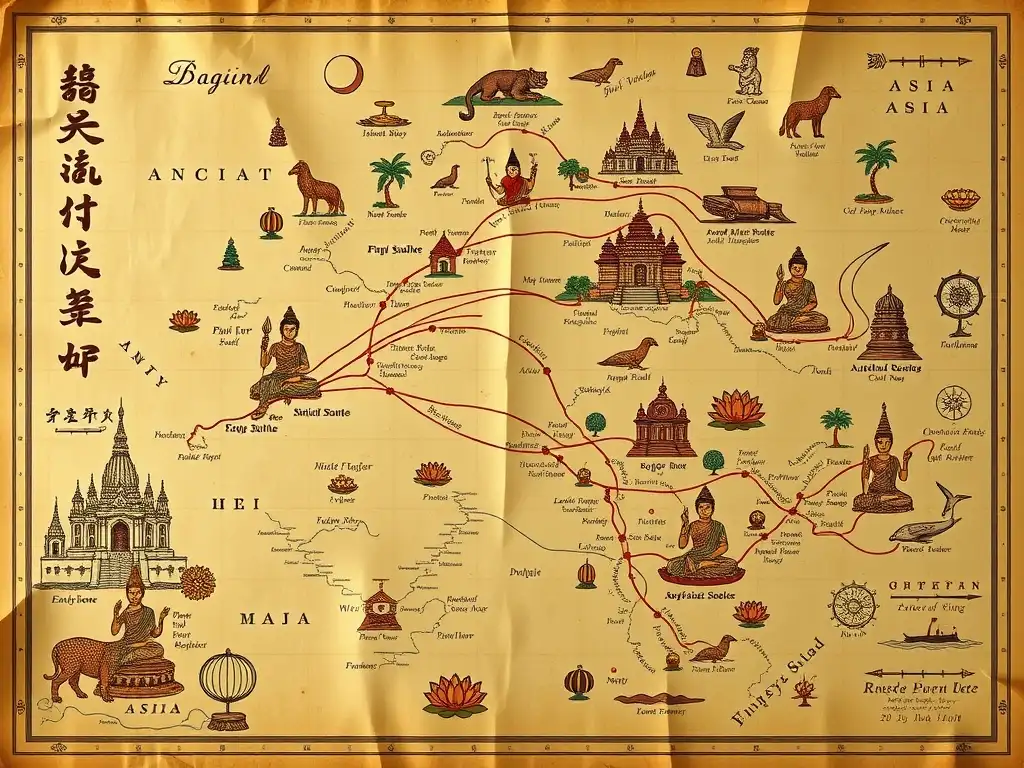
To deepen your understanding of the artistic exchange between ancient India and Southeast Asia, several comprehensive texts and scholarly articles delve into this rich topic. Below are some recommended readings:
-
"The Art of Ancient India: Buddhist, Hindu, Jain" by Susan L. Huntington
This book offers an extensive overview of the various forms of art that evolved in ancient India and their influence on neighboring regions, including Southeast Asia. It highlights key artistic styles and significant works, providing a foundational understanding of Indian aesthetics.
-
"Indian Influence on Southeast Asian Art" by A. M. S. C. S. Sarma
This article presents a detailed examination of how Indian art forms, particularly sculpture and temple architecture, influenced the artistic traditions of Southeast Asia. The author discusses specific case studies, including the Borobudur and Angkor Wat temples.
-
"The Cultural Heritage of India and Southeast Asia" by K. N. Chatterjee
This compilation of essays explores the interconnectedness of Indian and Southeast Asian cultures through art, literature, and religion, emphasizing the dynamic exchanges that shaped both regions.
-
"Sculpture in Ancient India and Southeast Asia" by R. S. Sharma
Focusing on sculptures, this book details the stylistic developments and cross-cultural influences that occurred throughout the centuries, offering insights into the technical and aesthetic aspects of the art.
Online Resources
The digital realm holds a wealth of information regarding ancient India and Southeast Asia art. Below are valuable online resources for further exploration:
-
The Metropolitan Museum of Art: Timeline of Art History
This resource provides detailed timelines and essays that outline the evolution of art from ancient India to Southeast Asia. It includes images of artifacts and descriptions that highlight key artistic developments.
-
Google Arts & Culture: Ancient India
This platform features virtual tours and exhibitions focusing on ancient Indian art and its influence on Southeast Asia. Users can access high-resolution images and in-depth articles that explore various artistic traditions.
-
Asia Society: Southeast Asian Art and Culture
The Asia Society’s website offers a variety of articles and multimedia resources that delve into the cultural exchanges between India and Southeast Asia, with a focus on art, festivals, and historical contexts.
Museums and Exhibitions Worth Exploring
Visiting museums and exhibitions dedicated to ancient art can provide a tactile understanding of the artistic exchanges between ancient India and Southeast Asia. Here are some notable locations:
| Museum/Exhibition | Location | Highlights |
|---|---|---|
| National Museum of India | New Delhi, India | Houses a vast collection of Indian artifacts, including sculptures that influenced Southeast Asian art. |
| Asian Civilisations Museum | Singapore | Features exhibits on the cultural links between India and Southeast Asia, showcasing artifacts from both regions. |
| Bali Museum | Denpasar, Indonesia | Displays Balinese art influenced by Indian aesthetics, including traditional sculptures and textiles. |
| Museum of Asian Art | Berlin, Germany | Offers a collection of Indian and Southeast Asian art, emphasizing the interchange of artistic practices between these regions. |
Exploring these resources will enhance your knowledge of how ancient India’s art shaped the cultural landscape of Southeast Asia, revealing the profound interconnectedness of these civilizations.
Frequently Asked Questions
What is the significance of artistic exchange between ancient India and Southeast Asia?
The artistic exchange facilitated the transfer of cultural ideas and aesthetic values, enriching both regions and leading to the development of unique art forms.
How did Buddhism influence art in Southeast Asia?
Buddhism, which originated in ancient India, played a crucial role in shaping Southeast Asian art, leading to the creation of iconic stupas and sculptures that reflect Indian artistic styles.
What are some examples of art that showcase the connection between ancient India and Southeast Asia?
Examples include Buddhist sculptures, temple architecture, and carvings found in places like Angkor Wat and the Borobudur Temple, which exhibit Indian artistic techniques.
How did trade routes contribute to the cultural exchange between ancient India and Southeast Asia?
Trade routes enabled the movement of goods, ideas, and artistic practices, allowing for a fusion of styles that enriched the cultural landscape of both regions.
What role did mythology play in the art of ancient India and Southeast Asia?
Mythology served as a significant source of inspiration, with artists drawing on Hindu and Buddhist themes to create works that conveyed spiritual narratives and cultural beliefs.
Final Reflection: The Enduring Legacy of Ancient India and Southeast Asia's Artistic Exchange
The artistic exchange between ancient India and Southeast Asia is not just a historical phenomenon; it is a vibrant testament to the interconnectedness of cultures that continues to resonate today. As we explore the intricate tapestry of art and aesthetics that emerged from this relationship, we uncover a rich legacy that informs contemporary artistic practices and cultural dialogues. The influences of ancient Indian art, from sculpture to architecture, have left an indelible mark on Southeast Asian societies, shaping their identities and artistic expressions in profound ways.
This exchange has not only enriched the cultural landscape of both regions but has also fostered a sense of shared heritage that transcends geographical boundaries. The intricate carvings of Angkor Wat and the serene sculptures of Borobudur stand as monuments to this dialogue, inviting us to reflect on the beauty of collaboration and mutual inspiration. Art is the most beautiful of all lies.
This quote reminds us that art, while a reflection of reality, also serves as a bridge connecting diverse cultures and histories, allowing us to understand and appreciate our shared human experience.
As we contemplate the lessons from this artistic journey, I invite you to reflect on your own relationship with art and culture. Consider how the influences of different traditions shape your understanding of beauty and creativity. Let the stories of ancient India and Southeast Asia inspire you to seek connections in your own life, fostering a spirit of curiosity and appreciation for the diverse expressions of art that surround us. Embrace the idea that, like the artists of the past, we too can contribute to a vibrant cultural exchange that enriches our world today and for generations to come.
Unveil the Rich Tapestry of Ancient Cultures!
Thank you for diving into the fascinating world of the artistic exchange between Ancient India and Southeast Asia! We hope you discovered how these vibrant cultures influenced each other and shaped our understanding of art and aesthetics. Now it’s time to take the next step in your journey of exploration.
Here are some actionable ways to deepen your appreciation and understanding of this rich heritage:
- Visit local galleries or museums that showcase South Asian art to witness the intricate details and historical context firsthand.
- Share your newfound knowledge with friends and family by hosting a casual discussion or movie night featuring documentaries about ancient art traditions!
- Engage with an online community or forum dedicated to the study of ancient cultures—exchange insights, ask questions, and connect with fellow enthusiasts.
What specific piece of art or architecture from this exchange resonates with you the most, and how do you observe its influence in today’s artistic landscape?