
Ancient Trade and the Development of Indian Infrastructure

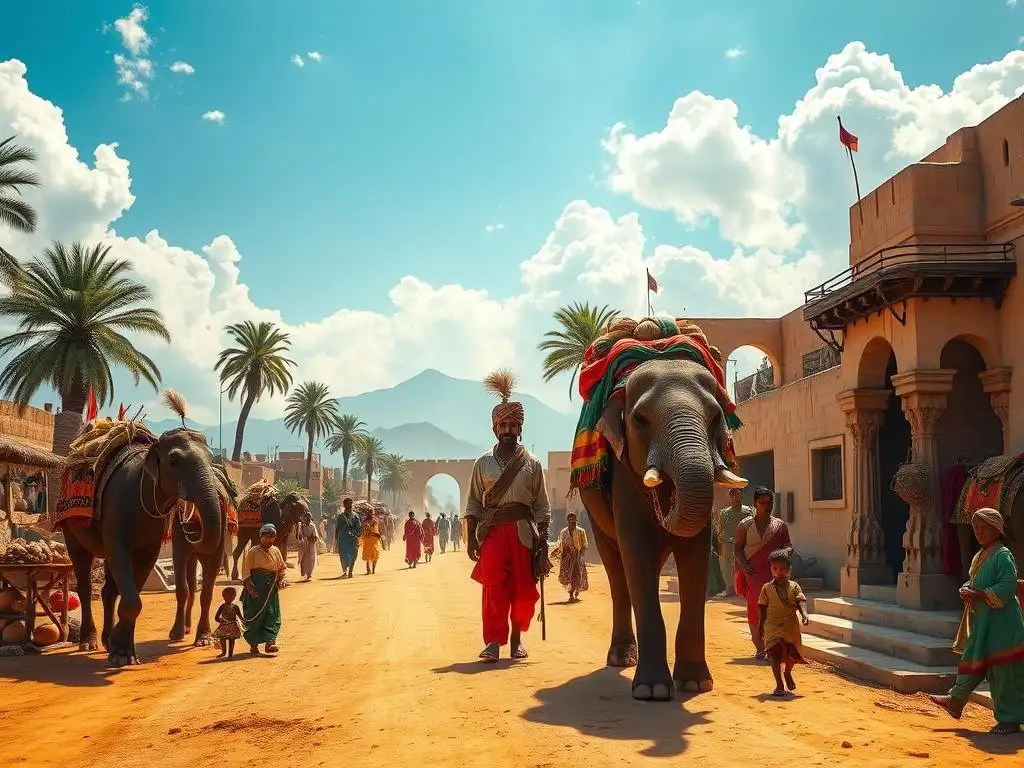
Welcome to Ancient India History, where we embark on a journey through time to uncover the rich tapestry of ancient Indian civilizations. In this exploration, we delve into the fascinating world of ancient Indian trade routes, pivotal pathways that not only facilitated commerce but also fostered cultural exchange and innovation.
As you navigate through our latest article, "Ancient Trade and the Development of Indian Infrastructure," prepare to discover how these routes shaped the economic landscape and contributed to the grandeur of empires from the Indus Valley to the Gupta Era. Join us as we unravel the secrets of the past, igniting your curiosity and deepening your appreciation for the remarkable heritage of India.
- Introduction to Ancient Indian Trade Routes
- Major Ancient Indian Trade Routes
- Infrastructure Development Driven by Trade
- Cultural Exchange Along Ancient Trade Routes
- Economic Contributions of Ancient Indian Trade
- Challenges Faced by Ancient Indian Trade Routes
- Conclusion: Legacy of Ancient Indian Trade Routes
- References and Further Reading on Ancient Indian Trade Routes
- Frequently Asked Questions
- Final Reflection: The Enduring Legacy of Ancient Indian Trade Routes
- Unveil the Secrets of India's Ancient Trade!
Introduction to Ancient Indian Trade Routes
The history of ancient Indian trade routes is a captivating narrative that highlights the intricate connections between diverse cultures and the economic prowess of ancient Indian civilizations. From the bustling marketplaces of the Indus Valley Civilization to the vibrant trade exchanges during the Gupta Empire, these routes not only facilitated commerce but also significantly contributed to the cultural and technological exchanges that shaped the Indian subcontinent.
This article delves into the rich tapestry of ancient Indian trade, exploring its routes, the infrastructure that supported them, and the profound impact they had on the society and economy of the time. By examining these trade routes, we gain insight into how ancient India emerged as a vital hub in the global trade network, influencing regions far beyond its borders.
Overview of Ancient Indian Trade
Ancient Indian trade can be traced back to the Indus Valley Civilization (circa 3300–1300 BCE), which showcased advanced urban planning and a robust economy driven by trade. The major trade routes of ancient India included:
- Land Routes: Connecting the Indian subcontinent to Central Asia, Persia, and beyond.
- Maritime Routes: Linking India to Southeast Asia, the Arabian Peninsula, and even the eastern coast of Africa.
These routes were not merely pathways for the exchange of goods; they were avenues for the exchange of ideas, cultures, and technologies. Key commodities traded included:
- Spices: Such as black pepper and cardamom, which were highly sought after in foreign markets.
- Textiles: Including silk and cotton fabrics renowned for their quality and craftsmanship.
- Precious Stones: Such as diamonds, rubies, and sapphires, which were traded extensively.
The Mauryan Empire (322–185 BCE) and later the Gupta Empire (circa 320–550 CE) further enhanced the trade networks, establishing a more organized system that included the development of infrastructure—roads, ports, and marketplaces—that facilitated the movement of goods and people.
Significance of Trade in Ancient India
Trade in ancient India was not solely an economic activity; it played a pivotal role in the social and cultural evolution of the region. The significance of trade can be summarized in the following points:
- Economic Prosperity: Trade contributed to the wealth of kingdoms, enabling rulers to fund public works, armies, and cultural patronage.
- Cultural Exchange: As traders and travelers moved along these routes, they brought with them ideas, religions, and technologies. This exchange enriched Indian culture, leading to the spread of Buddhism and Hinduism across Asia.
- Urban Development: Trade routes led to the growth of cities and urban centers, making them cultural melting pots where diverse populations coexisted and thrived.
- Diplomatic Relations: Trade fostered diplomatic ties between different regions, as alliances were formed based on mutual economic interests.
Ancient Indian trade routes were instrumental in shaping the historical and cultural landscape of the region, laying the foundation for future economic developments and cultural exchanges that would resonate through history.
Major Ancient Indian Trade Routes
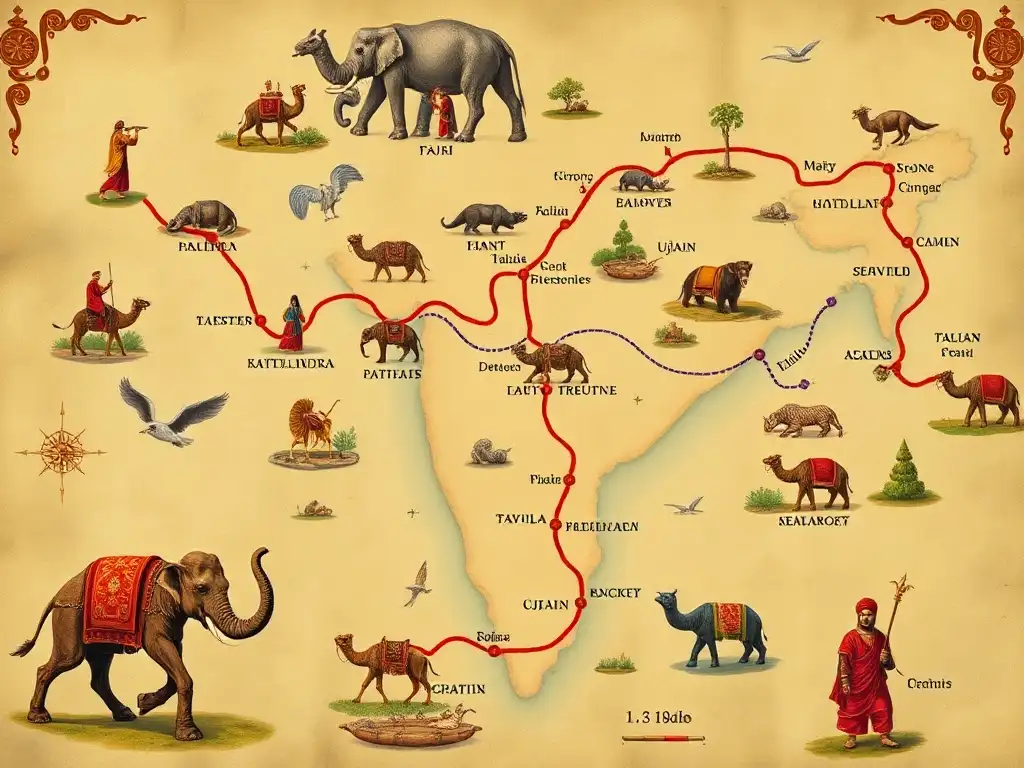
The ancient Indian trade routes were pivotal in shaping the economic landscape of the region and facilitating cultural exchanges across continents. These routes enabled the movement of goods, ideas, and technologies, which significantly influenced the development of civilizations both within India and beyond. Understanding these trade routes provides insight into how ancient Indian societies thrived and interacted with others, promoting a legacy that resonates through history.
The Silk Road and Its Impact on Indian Trade
The Silk Road was not merely a single road but a network of trade routes connecting the East and West, stretching from China through Central Asia and into the Mediterranean. Ancient Indian civilizations played a crucial role in this extensive trade network, particularly during the early centuries CE.
- Cultural Exchange: The Silk Road facilitated not only the exchange of goods but also cultural and religious ideas. Indian traders were instrumental in spreading Buddhism to Central Asia and beyond, influencing regions as far as China.
- Goods Traded: Among the key commodities exchanged along these routes were silk, spices, precious stones, and textiles. Indian merchants exported fine fabrics like cotton and silk, while importing silk from China and goods from Persia, such as glassware and ceramics.
- Economic Impact: The participation in the Silk Road trade significantly enriched Indian kingdoms. Cities such as Taxila and Pataliputra thrived as bustling trade hubs, fostering economic prosperity and cultural development.
The Spice Route: Connecting India to the World
The Spice Route was another vital network of trade routes that connected India with various civilizations across the Indian Ocean, including those in Southeast Asia, the Middle East, and even Europe. This route was particularly significant for its role in the lucrative spice trade.
- Spices and Trade: India was renowned for its diverse spices, including black pepper, cardamom, and cinnamon. These spices were highly sought after in global markets, leading to the establishment of trade links with distant lands.
- Trade Centers: Coastal cities such as Kochi and Calicut became important trading ports, where merchants from different regions converged. The thriving spice trade contributed to the wealth of regional rulers and the establishment of powerful dynasties.
- Cultural Interactions: The Spice Route also facilitated cultural exchanges, leading to the intermingling of various traditions, languages, and religions. This exchange enriched Indian culture and contributed to its diversity.
The Maritime Trade Routes of Ancient India
India's extensive coastline along the Arabian Sea and the Bay of Bengal provided numerous opportunities for maritime trade. The maritime trade routes were crucial for connecting India with various parts of the world, facilitating the exchange of goods and culture.
- Ports and Navigation: Key ports such as Lothal, a prominent Indus Valley Civilization port, exemplified advanced maritime trade practices. The use of ships enabled the transport of heavier goods and expanded trade networks beyond land routes.
- Trade Goods: Maritime routes facilitated the export of textiles, gems, and agricultural products from India, while importing goods like gold, ivory, and exotic animals from Africa and Southeast Asia.
- Impact on Society: The flourishing maritime trade contributed significantly to the economy, leading to the growth of coastal cities and the establishment of trade guilds. This trade not only enhanced the wealth of merchants but also fostered relationships between diverse cultures and communities.
The exploration of these ancient Indian trade routes highlights the remarkable interconnectedness of civilizations and the profound impact of trade on cultural and economic development in ancient India. The legacy of these routes continues to influence modern trade practices and cultural exchanges today.
Infrastructure Development Driven by Trade
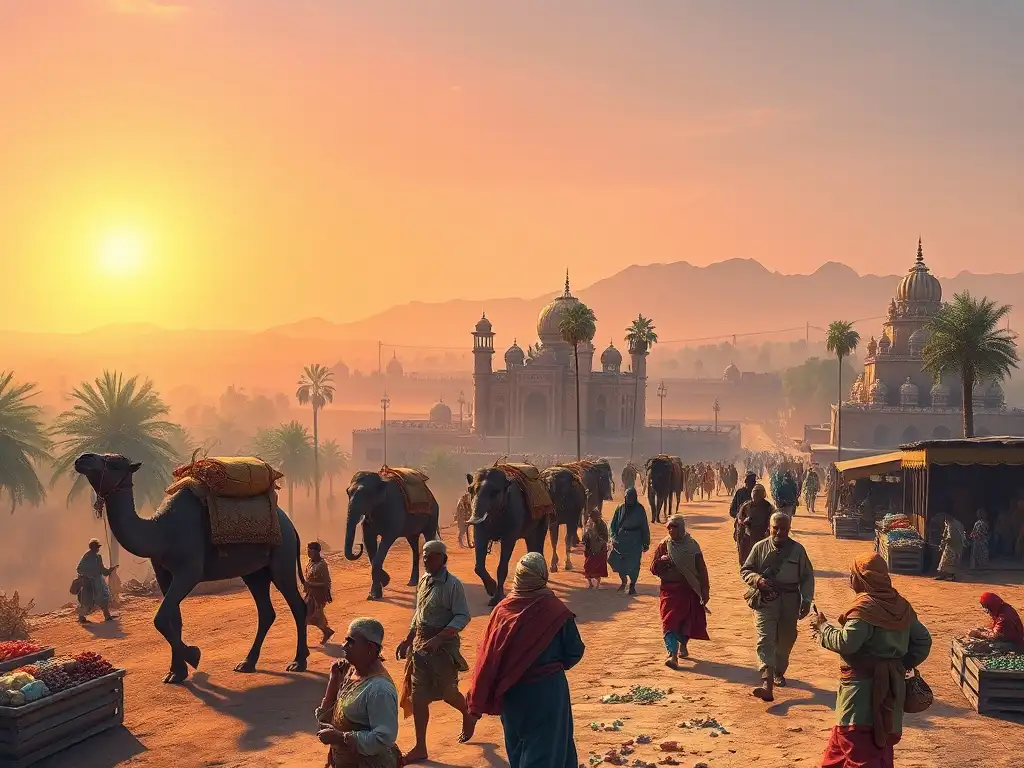
Ancient Indian trade routes played a pivotal role in shaping the infrastructure of the Indian subcontinent. The dynamic exchange of goods, ideas, and cultures necessitated the development of a robust infrastructure, which in turn facilitated trade. This mutual relationship between trade and infrastructure laid the foundation for some of the most significant urban centers in ancient India, particularly during the Indus Valley Civilization and later empires.
The growth of cities was largely influenced by their proximity to key trade routes. As merchants and traders flocked to urban centers, these areas became bustling hubs of economic activity. Cities like Pataliputra, Ujjain, and Taxila emerged as vital trading posts where various cultures converged, exchanging not only goods but also knowledge and innovation. The strategic location of these cities along ancient Indian trade routes contributed significantly to their prosperity and cultural richness.
The Role of Trade in Urbanization
The expansion of ancient Indian trade routes resulted in the emergence of urban centers that were intricately linked to trade activities. As merchants established their businesses, towns began to grow around them, leading to the proliferation of craft industries and markets.
- Key Urban Centers:
- Taxila: Known for its educational institutions, Taxila thrived as a trade nexus, linking Central Asia with the Indian subcontinent.
- Pataliputra: The capital of the Mauryan Empire, it was a significant trading hub due to its location at the confluence of rivers.
- Ujjain: A crucial point for trade routes connecting northern and southern India, it was also a cultural and astronomical center.
The urbanization process was characterized by:
- Increased Population Density: As trade flourished, people migrated to urban centers seeking economic opportunities.
- Cultural Exchange: Diverse communities contributed to a rich tapestry of cultural practices, beliefs, and languages.
- Infrastructure Development: The need for housing, marketplaces, and public amenities led to advancements in urban planning.
Development of Roads and Transportation Networks
The efficient movement of goods across ancient Indian trade routes was facilitated by the development of extensive road networks. These roads were not merely pathways for transportation; they were crucial arteries that connected various regions and facilitated commerce.
- Major Trade Routes:
- Grand Trunk Road: One of the oldest and longest major roads in Asia, it connected eastern India to the northwest, facilitating trade with Central Asia.
- Silk Road Connections: Indian routes were integral to the Silk Road, allowing for trade with China and Persia.
The key features of these road networks included:
- Well-Maintained Paths: Roads were constructed and maintained to ensure safe and efficient travel.
- Rest Stops and Inns: Traders required places to rest, which led to the establishment of waystations and inns along major routes.
- Innovations in Transportation: The use of carts, pack animals, and boats improved the transportation of goods.
Ports and Harbors: Gateways to Trade
Ancient Indian trade routes were not limited to overland paths; maritime trade played an equally significant role. The development of ports along the coastline allowed for the exchange of goods with distant lands, including Africa, the Middle East, and Southeast Asia.
- Prominent Ports:
- Lothal: An ancient dockyard part of the Indus Valley Civilization, it served as a major port for maritime trade.
- Kaveripattinam: Known for its thriving port, it connected South India with trade routes to Southeast Asia.
The significance of these ports included:
- Facilitation of International Trade: Ports enabled the import and export of luxury goods such as spices, textiles, and precious metals.
- Cultural Exchange: Maritime trade routes were conduits for cultural interaction, bringing diverse influences to Indian society.
- Economic Growth: The prosperity of ports spurred local economies and contributed to the wealth of coastal cities.
In conclusion, ancient Indian trade routes were instrumental in driving infrastructure development across the subcontinent. The interdependence between trade and infrastructure not only fostered urbanization but also facilitated cultural exchange and economic growth, shaping the rich tapestry of ancient Indian civilization.
Cultural Exchange Along Ancient Trade Routes
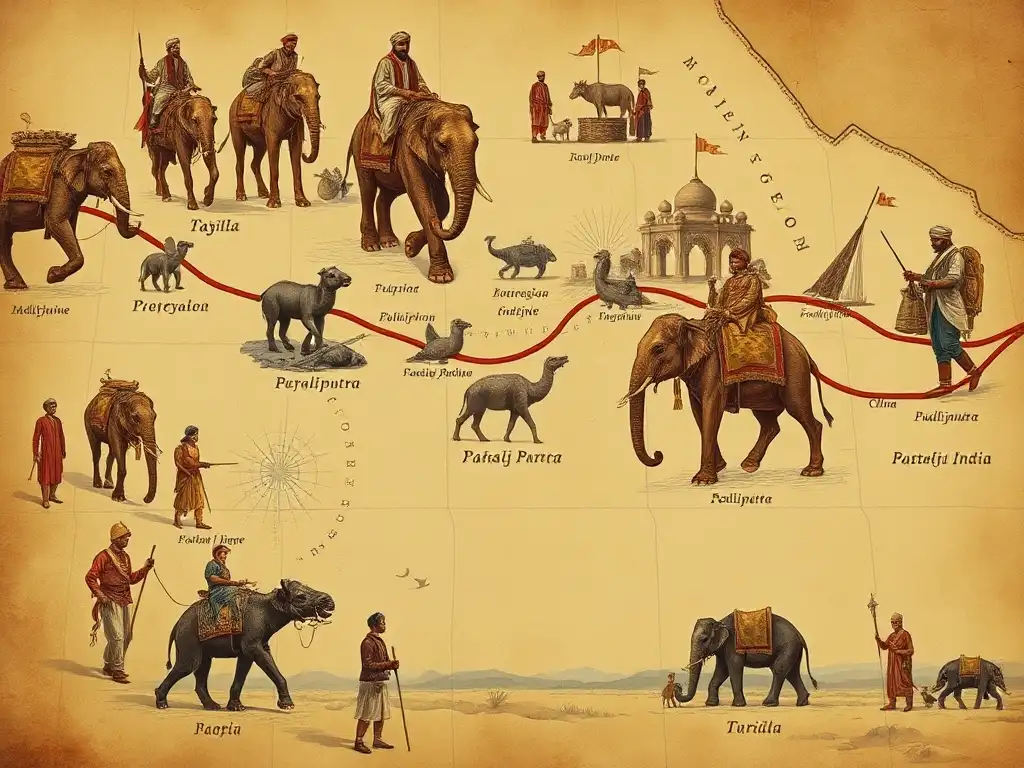
Exchange of Goods and Ideas
Ancient Indian trade routes were vital conduits not only for the movement of goods but also for the exchange of ideas and knowledge. As merchants traversed these paths, they transported an array of products, including spices, textiles, and precious stones, which were highly sought after in distant lands. The Silk Road, for instance, connected India with China, Persia, and beyond, facilitating trade in silk, which was immensely popular in India.
However, the significance of these routes extended beyond mere commerce. Alongside tangible goods, ideas and cultural practices flowed freely. For instance, the introduction of Buddhism from India to Central Asia and China occurred via these trade networks. Merchants often served as informal ambassadors, sharing philosophical concepts and religious beliefs that would later shape the cultures of the regions they visited.
- Major Goods Traded:
- Spices (pepper, cardamom)
- Textiles (cotton, silk)
- Precious stones (diamonds, sapphires)
- Metals (gold, silver)
This exchange of ideas led to the enrichment of local cultures and the establishment of new artistic styles, as influences from Indian art began to permeate various regions along these routes.
Influence on Art, Religion, and Culture
The cultural impact of ancient Indian trade routes on neighboring civilizations cannot be overstated. As traders and travelers moved along these paths, they brought with them a wealth of artistic and religious influences that transformed local traditions and practices.
Artistic Fusion:
The confluence of Indian art with local styles resulted in unique art forms. For example, the Gandhara school of art, which flourished in present-day Pakistan and Afghanistan, showcased a blend of Indian and Greco-Roman artistic elements. This fusion is evident in the intricate carvings of Buddha statues, which displayed Hellenistic features.
Religious Diffusion:
The spread of Buddhism and Hinduism along these trade routes had profound effects on regional spiritual practices. As merchants established trade links, they also established monasteries and temples, where travelers could rest and share beliefs. The Silk Road became a pathway for the dissemination of Buddhist texts, leading to the establishment of vibrant Buddhist communities in Central Asia and China.
Cultural Practices:
Local customs were also influenced by the interactions along these routes. For example, the Indian practice of yoga and meditation found resonance in Central Asia, leading to the emergence of hybrid practices that incorporated local traditions.
The Role of Merchants in Cultural Diffusion
Merchants played a crucial role in the cultural diffusion that occurred along ancient Indian trade routes. They were not merely traders; they were cultural ambassadors, fostering connections between diverse peoples and facilitating the exchange of ideas.
- Networking and Alliances: Merchants often formed networks that transcended regional boundaries, creating alliances that promoted the exchange of not only goods but also cultural practices. This networking was essential in bridging different civilizations, as traders would often share stories, customs, and knowledge with local populations.
- Education and Learning: Many merchants were educated individuals who traveled extensively. They often carried with them not just goods but also books and manuscripts, contributing to the spread of knowledge. The introduction of concepts like mathematics and astronomy from India to other cultures can be traced back to these interactions.
- Cultural Adaptation: As merchants interacted with various communities, they adapted cultural practices to fit local contexts. This led to the blending of traditions, resulting in a rich tapestry of cultural practices that reflected both Indian and local influences.
In essence, ancient Indian trade routes were not just highways of commerce; they were vibrant corridors of cultural exchange that shaped the development of civilizations and fostered a rich diversity of traditions across the regions they connected.
Economic Contributions of Ancient Indian Trade
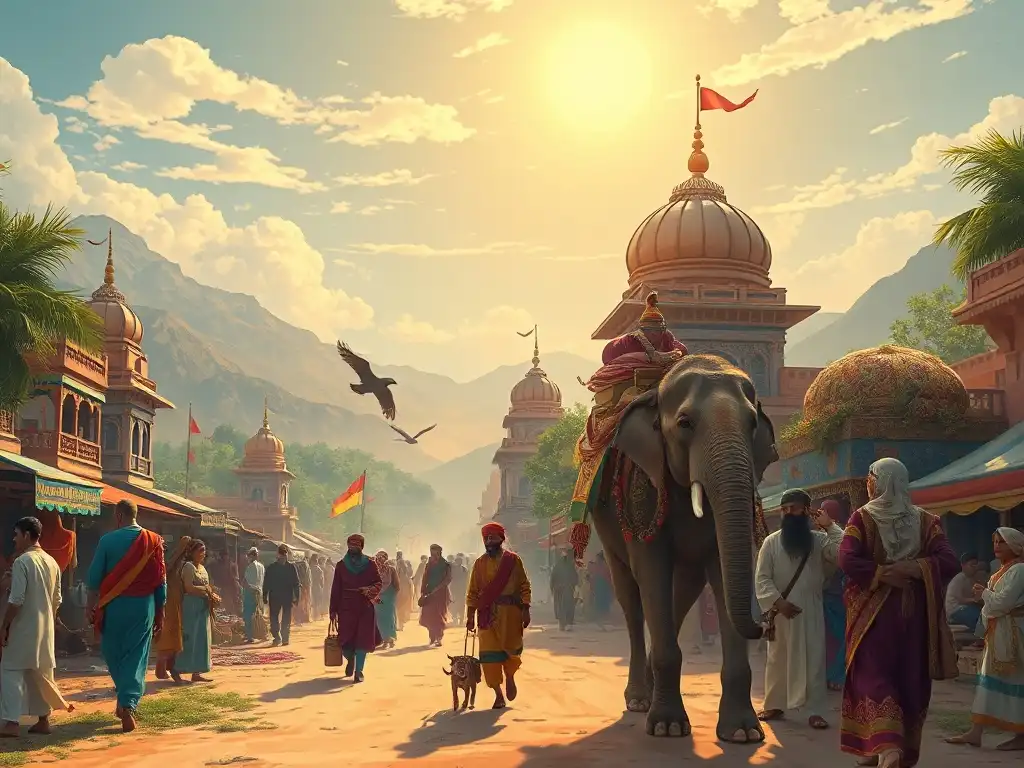
Ancient Indian trade routes played a pivotal role in shaping the economic landscape of the Indian subcontinent. These routes facilitated not only the exchange of goods but also the dissemination of culture, ideas, and technologies. The economic contributions of ancient Indian trade are multifaceted, impacting various sectors and leading to the growth of cities and states.
Trade Goods and Their Economic Impact
The diversity of trade goods in ancient India reflects the country's rich resources and craftsmanship. Key goods traded included:
- Spices: India was famous for its spices, such as black pepper, cardamom, and cinnamon, which were highly sought after in international markets.
- Textiles: Fine cotton and silk textiles were produced in abundance, with Indian fabrics being exported to regions like the Middle East and beyond.
- Metals: Precious metals, including gold and silver, along with iron and copper, were integral to trade, supporting both local economies and international trade.
- Jewelry and Artifacts: Indian artisans created intricate jewelry and various artifacts that captured the attention of traders from different cultures.
The economic impact of these trade goods was significant. For instance, the spice trade alone contributed to the wealth of coastal cities like Kochi and Calicut, establishing them as major trading hubs. The influx of wealth from trade helped in urbanization, leading to the development of infrastructure, such as roads and port facilities, which further facilitated commerce.
Taxation and Revenue from Trade
Taxation on trade was a crucial source of revenue for ancient Indian kingdoms. Merchants were often required to pay taxes at various points along the trade routes, which contributed to the coffers of local and regional rulers. The revenue collected from trade taxes was utilized for:
- Infrastructure Development: Funds were allocated to improve roads, build ports, and develop other essential infrastructure necessary for trade.
- Military Funding: Trade revenue was also important for maintaining armies, ensuring the safety and security of trade routes from banditry and invasion.
- Public Works: Kings invested in public works, including irrigation systems and granaries, which improved agricultural productivity, further bolstering the economy.
The combination of taxation and trade led to a prosperous economy, allowing states to flourish and expand their influence. Cities that thrived on trade often became cultural and political centers, reflecting the intricate relationship between commerce and governance.
The Role of Trade in State Formation
Trade routes were instrumental in the formation and expansion of ancient Indian states. The emergence of powerful kingdoms often coincided with the growth of trade networks. As trade flourished, so did the need for organized governance, leading to the establishment of centralized states.
- Urbanization: Major trade cities, such as Pataliputra and Ujjain, became urban centers that attracted merchants, artisans, and laborers, contributing to population growth and the establishment of complex societies.
- Cultural Exchange: Trade routes facilitated cultural exchanges between different regions, leading to a blend of ideas, religions, and practices, which in turn influenced state policies and governance.
- Political Alliances: The economic advantages of controlling trade routes often resulted in political alliances and conquests, as states sought to expand their territories and secure profitable trade.
Ancient Indian trade routes were a driving force behind the economic contributions that shaped the subcontinent's history. The exchange of goods fostered not only wealth but also the growth of states, showcasing the intricate connections between trade, taxation, and state formation in ancient India.
Challenges Faced by Ancient Indian Trade Routes
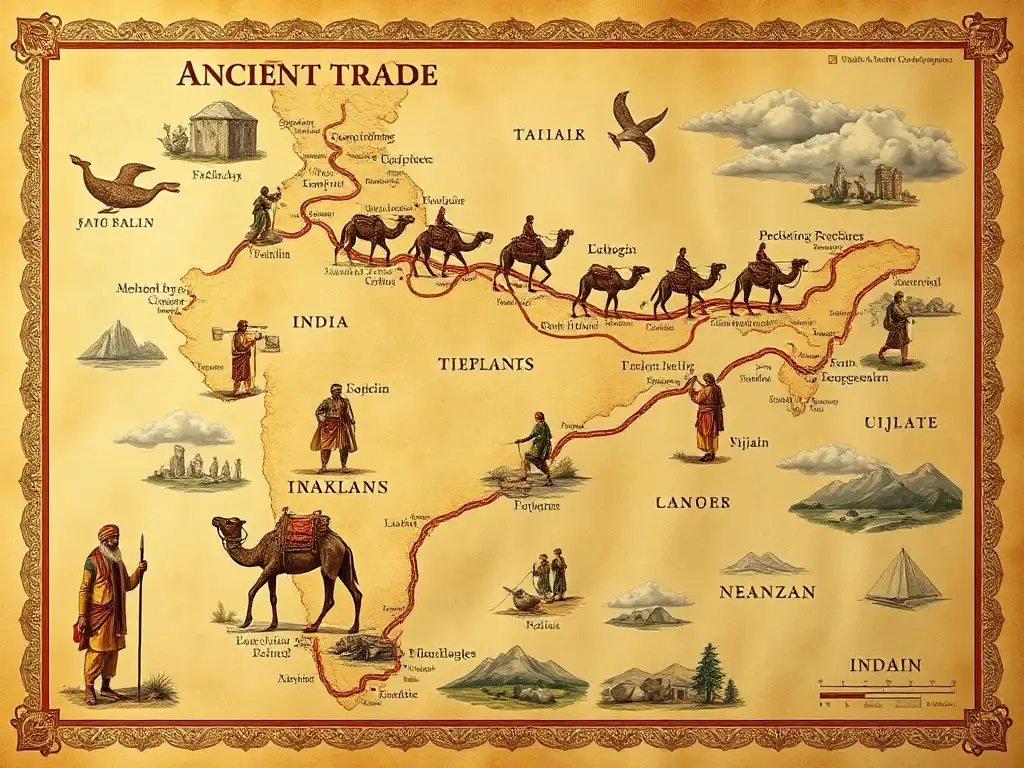
Natural Barriers and Geographical Challenges
Ancient Indian trade routes were significantly influenced by the geographical landscape of the Indian subcontinent. The region is characterized by diverse terrains, including:
- Mountain ranges: The Himalayas and Western Ghats posed formidable barriers to trade. High altitudes and harsh weather conditions made overland routes treacherous, limiting the movement of goods and traders.
- Deserts: The Thar Desert in the northwest created a natural barrier that affected trade with regions such as Central Asia. The harsh climate and lack of water sources made traversal difficult, necessitating the establishment of specific routes and caravanserais to support trade activities.
- Rivers and Coastlines: While rivers like the Ganges and Indus provided vital trade routes, seasonal flooding and varying water levels often disrupted navigation. Coastal trade, although promising, faced challenges from monsoon winds, which could hinder maritime commerce.
These natural barriers necessitated the development of alternative routes and strategies, such as the establishment of trade outposts and the use of pack animals for transporting goods across difficult terrains.
Political Instability and Its Effects on Trade
Political instability had a profound impact on the ancient Indian trade routes. Various factors contributed to this volatility:
- Fragmented Kingdoms: The presence of multiple small kingdoms and states often led to conflicts over territory and resources. This fragmentation made it challenging to maintain consistent trade, as merchants faced the risk of being extorted or attacked while traveling through rival territories.
- Invasions: Frequent invasions, such as those by the Huns and later the Turks, disrupted established trade routes. These invasions not only caused immediate damage but also instilled fear in traders, leading to reduced commerce and the abandonment of certain routes.
- Taxation and Regulation: The imposition of heavy taxes and rigid regulations by local rulers could deter traders from using particular routes. This often resulted in the shifting of trade to more favorable areas, undermining the economic stability of the regions that imposed such burdens.
Political unrest necessitated adaptability among traders, who often had to navigate complex relationships with local rulers to ensure the safety and profitability of their endeavors.
Competition with Other Trade Networks
The ancient Indian trade routes were not only vital for local commerce but also participated in a broader network of international trade. However, competition from other trade networks posed significant challenges:
- Silk Road: The famed Silk Road, connecting China with the Mediterranean, presented a lucrative alternative for traders. Goods such as silk and spices were highly sought after, leading to competition over the same markets. Indian traders had to innovate and offer unique products to attract merchants and sustain their trade.
- Maritime Trade Routes: The rise of maritime trade routes in the Indian Ocean, particularly after the establishment of stable empires in Southeast Asia, created competition as well. Indian ports faced competition from emerging centers like Srivijaya and later the Arabian Peninsula, impacting the flow of goods and resources.
- Cultural Exchanges: With competition came cultural exchanges, which sometimes led to the dilution of local trade practices. For instance, foreign influences on local markets could shift consumer preferences, challenging traditional Indian goods and trade methods.
To thrive amidst intense competition, ancient Indian traders often engaged in alliances, diversified their product offerings, and sought new markets, ensuring the resilience of their trade networks despite external pressures.
Conclusion: Legacy of Ancient Indian Trade Routes
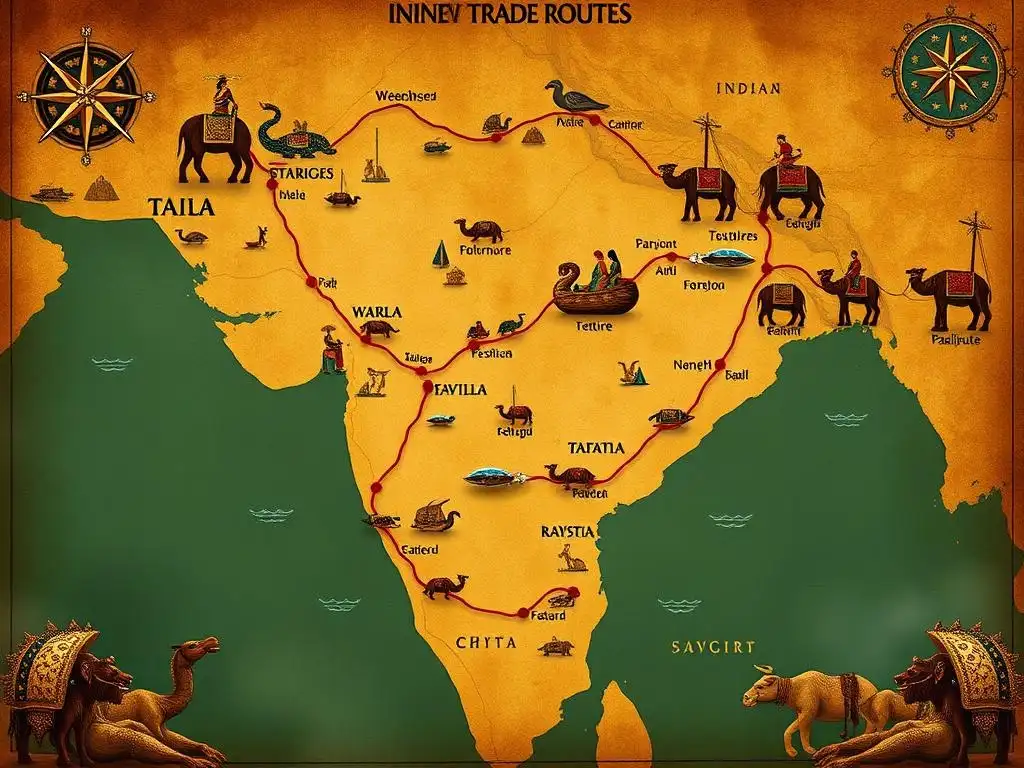
The legacy of ancient Indian trade routes is profound and multifaceted, influencing not only the economic landscape of the time but also the cultural and social dynamics of the region. These routes, including the well-known Silk Road and others that spanned from the Indus Valley to the Gupta Empire, served as vital conduits for commerce, cultural exchange, and technological innovation.
The routes facilitated the movement of goods such as spices, textiles, and precious stones, establishing India as a key player in the global trade network. The interactions along these paths led to the blending of cultures, religions, and philosophies, which enriched Indian society and contributed to its diversity.
Moreover, the infrastructure developed to support these trade routes, including road systems, ports, and waystations, laid the groundwork for future advancements in transportation and commerce. The understanding of trade logistics and the establishment of marketplaces during this period are echoed in modern Indian economic practices, demonstrating the lasting influence of these ancient pathways.
Lasting Impacts on Modern Indian Infrastructure
The infrastructure established during ancient trade routes has had lasting impacts on modern Indian infrastructure. Key elements include:
- Road Networks: Many of today's roads in India trace their origins back to ancient trade routes. The organization and planning used in these early road systems influenced the development of contemporary highways and transport networks.
- Ports and Harbors: Ancient ports, such as those at Lothal and Sopara, were crucial for maritime trade. Their design and functionality have informed modern port facilities, enabling India to maintain its status as a significant player in maritime trade.
- Marketplaces: The bustling bazaars and marketplaces that emerged along trade routes facilitated commerce and social interaction. These centers of trade have evolved but still serve as integral parts of urban planning and economic activity in contemporary India.
- Cultural Exchange: The routes not only enabled the movement of goods but also the flow of ideas, which has influenced architecture, culinary traditions, and art forms seen in modern India.
Overall, the ancient Indian trade routes have left an indelible mark on the infrastructure and cultural fabric of the nation, showcasing the importance of historical trade in shaping contemporary society.
The Importance of Preserving Trade Route History
Preserving the history of ancient Indian trade routes is crucial for several reasons:
- Cultural Heritage: Understanding the historical context of these routes enhances our appreciation of India's cultural heritage. The exchange of goods, ideas, and traditions fostered a rich tapestry of diversity that continues to define Indian identity today.
- Educational Value: Historical trade routes serve as case studies for economic and social development. They provide insight into the evolution of trade practices, infrastructure development, and international relations, offering valuable lessons for modern policymakers and scholars.
- Tourism and Economic Development: Ancient trade routes can become focal points for tourism, attracting visitors interested in history and culture. This not only promotes economic development but also encourages local communities to engage in the preservation of their heritage.
- Environmental Considerations: By studying ancient trade routes, we can better understand the historical relationship between commerce and the environment, informing sustainable practices in contemporary trade and infrastructure development.
The preservation of ancient Indian trade route history is vital for maintaining cultural continuity, fostering education, promoting economic growth, and ensuring sustainable practices. By valuing and protecting this heritage, we can honor the contributions of our ancestors while enriching our future.
References and Further Reading on Ancient Indian Trade Routes
Recommended Books and Articles
-
"The Silk Road: A New History" by Valerie Hansen
This comprehensive book delves into the historical significance of the Silk Road, including its impact on ancient Indian trade routes. Hansen provides an intricate narrative that connects various civilizations and their trading practices.
-
"Ancient Indian Economy" by R.C. Dutt
Dutt’s work offers a detailed analysis of the economic structures of ancient India, focusing on trade routes and their significance in the broader context of Indian civilization. The book discusses the evolution of trade practices and their influence on society.
-
"Trade and Traders in the Early Indian Ocean World" by J. A. C. A. de Silva
An insightful exploration of maritime trade routes that connected ancient India with other civilizations around the Indian Ocean. This book examines the role of traders in fostering economic and cultural exchanges.
-
"The Indian Ocean in World History" by Milo Kearney
This book expands on the importance of the Indian Ocean trade routes, highlighting their role in shaping ancient Indian trade networks and interactions with other cultures.
-
"Ancient Indian Trade Routes: Land and Sea" by Shereen Ratnagar
Ratnagar's work provides a focused study on the various trade routes that flourished in ancient India, analyzing the geographic and socio-political factors that influenced these networks.
Online Resources for Further Exploration
-
Digital South Asia Library
This resource offers a wealth of information on ancient Indian trade routes, including maps, historical texts, and articles. It serves as a comprehensive archive for researchers and enthusiasts.
-
The British Museum - Ancient India
The British Museum has curated a section dedicated to ancient Indian artifacts, many of which provide insights into trade practices and the significance of various routes.
-
The Indian Council of Historical Research (ICHR)
The ICHR offers various publications and resources related to ancient Indian history, including studies on trade routes and their impact on economic development.
-
Encyclopedia Britannica - Trade in Ancient India
This online encyclopedia entry provides a concise overview of trade practices in ancient India, discussing key routes and their importance to the Indian economy.
-
National Geographic - The Spice Trade
An informative article that examines the ancient spice trade routes, detailing how these routes connected India with other parts of the world and influenced cultural exchanges.
By exploring these resources, readers can deepen their understanding of ancient Indian trade routes and their crucial role in shaping the economy and culture of ancient India.
Frequently Asked Questions
What were the main ancient Indian trade routes?
The ancient Indian trade routes included the Silk Road and maritime paths connecting India with Southeast Asia, Africa, and Europe, facilitating the exchange of goods and culture.
How did trade routes contribute to Indian infrastructure?
The trade routes led to the development of roads, ports, and cities, which enhanced commerce and helped in the cultural exchange among diverse civilizations.
What role did the Indus Valley Civilization play in trade?
The Indus Valley Civilization established early trade networks with other cultures, utilizing their advanced urban planning and craftsmanship to become a significant trading power.
How did the Gupta Empire influence trade?
During the Gupta Empire, trade flourished due to improved infrastructure, including roads and seaports, which allowed for increased economic activity and the spread of ideas.
What were some key products traded along these routes?
Key products included spices, textiles, gems, and metals, which were highly sought after in both local and international markets, showcasing India's rich resources and skilled artisans.
Final Reflection: The Enduring Legacy of Ancient Indian Trade Routes
The intricate web of ancient Indian trade routes not only facilitated commerce but also laid the groundwork for the rich tapestry of infrastructure we see today. In an era where globalization is often viewed as a modern phenomenon, it is essential to recognize that the foundations of trade and connectivity were established centuries ago. The significance of these ancient trade routes transcends mere economic exchange; they were vital in shaping cultural interactions and fostering innovation, reminding us that the past continues to influence our present.
The impact of ancient Indian trade routes on our cultural and social landscape cannot be overstated. These routes were conduits for not just goods, but also ideas, languages, and traditions, weaving a complex narrative of shared heritage that resonates even today. As we navigate our increasingly interconnected world, we can draw parallels between the ancient and the modern, understanding that the spirit of trade and collaboration remains a driving force in our societies. Trade is not just about goods; it’s about the exchange of ideas and cultures that enrich our lives.
As we reflect on the lessons of ancient Indian trade routes, let us embrace the opportunity to foster connections in our own lives. Consider how you can contribute to the ongoing dialogue of cultural exchange and infrastructure development in your community.
Whether through supporting local businesses, engaging in cultural initiatives, or simply being open to new ideas, each of us has a role to play in continuing the legacy of trade and connection that has shaped our world. The past is not merely a chapter closed; it is a living testament to the power of collaboration and innovation that we can carry forward into the future.
Unveil the Secrets of India's Ancient Trade!
Thank you for joining us on this journey through the fascinating world of ancient trade and its profound impact on Indian infrastructure. Understanding this rich history not only reveals exciting stories from the past but also offers valuable insights that continue to influence our world today. Now, let’s take the first step towards further discovery.
Here are some actionable suggestions to deepen your exploration:
- Dive Deeper: Explore additional resources on ancient trade routes and their influence on modern infrastructure innovations.
- Share Your Knowledge: Engage with communities interested in ancient history. Consider joining forums or social media groups where you can discuss and share insights.
- Connect Locally: Visit historical sites related to ancient trade routes. Local museums often feature exhibitions on this subject and provide interactive learning opportunities.
What aspect of ancient trade do you find most intriguing, and how do you believe it shapes our current understanding of infrastructure?