
How Ancient Indian Literature Influenced the Narrative Traditions of Neighbors

Welcome to Ancient India History, where we embark on a fascinating journey through the rich tapestry of cultures and civilizations that shaped ancient India. In our exploration of the influence of ancient Indian literature, discover how the narratives crafted in this vibrant land left an indelible mark on the storytelling traditions of neighboring societies.
From the poetic verses of the Vedas to the enchanting tales of the Mahabharata, each word woven into the fabric of history tells a story of cultural exchange and profound impact. Join us as we delve deeper into this captivating topic and uncover the legacy that continues to resonate in literature today.
- Introduction to Ancient Indian Literature Influence
- Major Works of Ancient Indian Literature
- The Influence of Ancient Indian Literature on Neighboring Civilizations
- Key Themes in Ancient Indian Literature and Their Reach
- Cross-Cultural Interactions and Literary Exchanges
- Comparative Analysis of Narrative Traditions
- The Lasting Legacy of Ancient Indian Literature
- Conclusion: The Enduring Influence of Ancient Indian Literature
-
Frequently Asked Questions
- What are the main themes explored in ancient Indian literature?
- How did ancient Indian literature influence neighboring cultures?
- Which forms of ancient Indian literature had the most impact?
- What role did the Gupta Empire play in the development of literature?
- How can we see the influence of ancient Indian literature in modern narratives?
- Final Reflection: The Enduring Influence of Ancient Indian Literature
- Uncover the Rich Tapestry of Narrative Traditions!
Introduction to Ancient Indian Literature Influence
Ancient Indian literature stands as a testament to the rich tapestry of ideas, stories, and philosophies that flourished across the subcontinent. Spanning various forms, such as epics, poetry, and philosophical texts, this body of work not only reflects the culture and values of ancient Indian civilizations but also serves as a crucial point of interaction with neighboring societies.
The influence of ancient Indian literature extends far beyond its geographical boundaries, impacting the narrative traditions of adjacent cultures in profound ways. In this article, we will explore how these literary contributions shaped and enriched the storytelling traditions of neighboring civilizations, highlighting the interconnectedness of cultural exchanges and the enduring legacy of ancient Indian literature.
Overview of Ancient Indian Literature
Ancient Indian literature encompasses a wide range of texts, from the sacred Vedas and Upanishads to the epic narratives of the Mahabharata and Ramayana. Each of these works carries significant cultural and historical weight, providing insights into the beliefs, values, and societal structures of their time. The Vedas, for instance, contain hymns and rituals central to Hindu philosophy, while the epics narrate grand tales of heroism, virtue, and morality.
- Key Texts in Ancient Indian Literature:
- Vedas: Sacred hymns and philosophical texts.
- Upanishads: Philosophical treatises exploring spirituality.
- Mahabharata: An epic narrative that includes the Bhagavad Gita.
- Ramayana: A tale of duty, honor, and love through the adventures of Lord Rama.
This literature not only served religious and educational purposes but also acted as a medium for storytelling that transcended generations, influencing both oral and written traditions in neighboring regions.
Significance of Literature in Ancient Indian Culture
Literature played a pivotal role in shaping ancient Indian society. It was a vehicle for preserving knowledge, history, and cultural values, enabling the transmission of ideas across time and space. The narratives found in these texts often conveyed moral lessons, philosophical inquiries, and cultural identities, fostering a sense of unity among diverse groups within the subcontinent.
Moreover, ancient Indian literature facilitated dialogue with neighboring civilizations, allowing for the exchange of ideas and literary forms. For example, the narrative style and themes found in ancient Indian texts can be seen echoed in the literature of regions such as Southeast Asia, where Hindu and Buddhist influences took root.
- Cultural Impact of Literature:
- Preservation of History: Documenting events and philosophies.
- Moral and Ethical Guidance: Providing frameworks for behavior and values.
- Cultural Exchange: Influencing neighboring literary traditions and practices.
Purpose of the Article
The purpose of this article is to delve into the multifaceted influence of ancient Indian literature on the narrative traditions of neighboring civilizations. By examining specific examples and cases, we aim to illuminate how these texts not only reflect the cultural richness of ancient India but also contribute to a broader understanding of cross-cultural interactions.
Through this exploration, we hope to highlight the enduring significance of ancient Indian literary works and their role in shaping the narratives of cultures beyond the Indian subcontinent. By understanding this influence, we gain insight into the complexities of cultural exchanges that have defined the history of the region.
Major Works of Ancient Indian Literature
Ancient Indian literature is a treasure trove of narratives, philosophies, and cultural expressions that have significantly influenced not only India but also its neighboring civilizations. The foundational texts of this literary heritage set a precedent for storytelling, moral instruction, and cultural continuity across generations. Let's explore some of the major works and their narrative elements that have left an indelible mark on the narrative traditions of neighboring cultures.
The Vedas and Their Narrative Elements
The Vedas, composed between 1500 and 500 BCE, are among the oldest sacred texts in the world. They encompass a wide range of hymns, rituals, and philosophical discourses, but they also contain narrative elements that reflect the cultural ethos of ancient Indian society.
- Structure and Content: The Vedas consist of four main texts: Rigveda, Samaveda, Yajurveda, and Atharvaveda. Each Veda has its own unique focus, with the Rigveda being rich in hymns and praises to deities, while the Atharvaveda includes more practical and magical texts.
- Narrative Techniques: The Vedic texts employ various narrative techniques such as symbolism, allegory, and personification. For instance, the personification of natural elements as deities illustrates the relationship between humans and the cosmos.
Quote: "The Vedas encapsulate the essence of ancient Indian thought, weaving together the spiritual and the mundane."
The influence of the Vedas is evident in the literature of neighboring cultures, particularly in how they conceptualize divinity and morality. Their narratives inspired the storytelling traditions in regions such as Persia and Central Asia, where similar themes of cosmic order and dharma are echoed.
The Epics: Mahabharata and Ramayana
The Mahabharata and the Ramayana stand as monumental pillars of ancient Indian literature, providing profound insights into human nature, ethics, and the complexities of life.
- Mahabharata: This epic, attributed to the sage Vyasa, is not only a narrative of the Kurukshetra War but also a discourse on duty (dharma), righteousness, and the human condition. Its vastness, encompassing over 100,000 verses, allows for multiple interpretations and layers of meaning.
- Key Characters: Figures like Arjuna, Krishna, and Draupadi serve as archetypes in the exploration of moral dilemmas.
- Influence: The Mahabharata's themes of conflict and resolution resonate across various cultures, influencing narrative structures in Southeast Asia, especially in Indonesia and Thailand.
- Ramayana: Attributed to Valmiki, the Ramayana narrates the life of Lord Rama, his wife Sita, and his battle against the demon king Ravana. It emphasizes virtues like loyalty, honor, and the ideal relationships.
- Cultural Impact: The Ramayana has inspired countless adaptations in various languages, including the Thai "Ramakien" and the Indonesian "Ramayana Ballet," showcasing its wide-reaching influence.
Note: Both epics have been instrumental in shaping the narrative traditions of neighboring regions, where they have been adapted into local cultural contexts, thus enriching the storytelling landscape.
Puranas and Their Impact on Storytelling
The Puranas, a genre of ancient Indian literature, serve as a bridge between mythology and history, offering rich narratives that have influenced not only religious practices but also literary traditions.
- Diversity and Themes: Comprising 18 major Puranas, this body of work covers a plethora of themes, including cosmology, genealogy, and mythology. Notable Puranas like the Vishnu Purana and Shiva Purana delve deep into the lives of deities and their interactions with humans.
- Narrative Style: The storytelling in the Puranas often employs a frame narrative technique, where a story is narrated within another story. This style has been adopted in various cultures, enhancing their narrative complexity.
Impact on Neighboring Cultures: The Puranas have significantly influenced the folklore and narrative traditions in Tibet and Southeast Asia, where similar mythological themes and storytelling techniques are prevalent.
The rich tapestry of ancient Indian literature has profoundly influenced the narrative traditions of neighboring civilizations. The Vedas, epics, and Puranas not only reflect the cultural and philosophical depth of ancient India but also serve as a testament to the enduring legacy of ancient Indian literature's influence on global storytelling.
The Influence of Ancient Indian Literature on Neighboring Civilizations
Ancient Indian literature had a profound impact on Persian literary traditions, particularly during the era of the Persian Empire's expansion into the Indian subcontinent. The interaction between these two cultures facilitated the exchange of literary forms, themes, and storytelling techniques. The Mahabharata and Ramayana, two of the most significant epic narratives in ancient Indian literature, played pivotal roles in this cultural exchange.
- Epic Narratives: Persian scholars and poets were influenced by the thematic depth and complexity of Indian epics. The storytelling techniques employed in these epics, such as the use of subplots and character development, found their way into Persian literature.
- Poetic Forms: The structure of Indian poetic forms, including shlokas and sutras, inspired Persian poets to experiment with meter and rhyme, leading to the evolution of new poetic styles like ghazal.
- Translation and Adaptation: The Persian translation of Indian texts, such as the Panchatantra, introduced Persian audiences to moral and philosophical tales, thus enriching Persian literature with Indian narratives.
The blending of these literary traditions not only enhanced the richness of Persian literature but also fostered a cultural dialogue that underscored the interconnectedness of ancient civilizations.
The Impact on Southeast Asian Narrative Forms
The influence of ancient Indian literature extended beyond Persia, significantly shaping the narrative forms in Southeast Asia. The Indian epics, along with religious texts, were instrumental in the development of local literatures in regions such as Indonesia, Thailand, and Cambodia.
- Cultural Adoption: Literary adaptations of the Ramayana and Mahabharata became prevalent in Southeast Asian kingdoms. For instance, the Ramayana was reinterpreted in the Wayang Kulit shadow puppet theater of Indonesia, illustrating how Indian narratives were localized and integrated into indigenous cultures.
- Religious Texts: The proliferation of Sanskrit and Pali texts, alongside the introduction of Hindu and Buddhist philosophies, provided a foundation for Southeast Asian literary traditions. Texts such as the Kakawin Ramayana highlight the integration of Indian literary elements within local storytelling frameworks.
- Historical Records: Southeast Asian historians often drew upon Indian literary styles while documenting local histories, leading to a unique blend of narrative techniques that reflected both indigenous and Indian influences.
This cross-cultural exchange not only enriched the literary landscape of Southeast Asia but also facilitated the growth of cultural identity through the reinterpretation of Indian narratives.
Influence on Chinese Literature and Philosophy
The impact of ancient Indian literature on Chinese literature and philosophy is another remarkable example of cross-cultural influence. The transmission of texts and ideas between these two civilizations led to significant developments in narrative forms and philosophical thought.
- Buddhist Texts: The introduction of Buddhist literature from India, including the Tripitaka, profoundly influenced Chinese literary traditions. The narratives of the Buddha's life and teachings became integral to Chinese culture, leading to the creation of Chinese Buddhist literature that echoed Indian storytelling styles.
- Philosophical Concepts: The philosophical themes found in texts like the Mahabharata, particularly concepts of dharma (duty) and karma (action), resonated with Chinese philosophical traditions, particularly Confucianism and Daoism. This exchange fostered a deeper exploration of moral and ethical dilemmas in Chinese literature.
- Literary Techniques: The narrative techniques employed in Indian literature, such as allegory and parable, were adopted by Chinese writers to convey complex ideas in a more accessible manner. This cross-pollination of ideas enriched Chinese literary forms and expanded the scope of narrative possibilities.
The enduring influence of ancient Indian literature on Chinese culture highlights the dynamic interactions between these two great civilizations and their shared quest for understanding human existence through narrative and philosophy.
Key Themes in Ancient Indian Literature and Their Reach
Ancient Indian literature is a treasure trove of themes and narratives that have significantly influenced neighboring civilizations. The profound concepts of Dharma and Karma, the rich tapestry of mythological motifs, and the vibrant tradition of folklore and oral storytelling have not only shaped Indian society but have also permeated the cultural and literary fabric of surrounding regions. These themes resonate across borders, showcasing the interconnectedness of ancient cultures and their shared human experiences.
Concepts of Dharma and Karma in Neighboring Narratives
The philosophical concepts of Dharma (duty/righteousness) and Karma (action and its consequences) are central to ancient Indian literature, notably in texts like the Mahabharata and Bhagavad Gita. These ideas have far-reaching implications, influencing not just Indian thought but also shaping the moral and ethical frameworks of neighboring civilizations.
- Dharma's Reach:
- In Buddhism, which originated in India, the concept of Dharma was adapted to represent the teachings of the Buddha, emphasizing moral conduct and the path to enlightenment.
- In Jainism, Dharma reflects the path of non-violence and truth, influencing neighboring regions like Nepal and Sri Lanka, where Jain principles were integrated into local customs.
- Karma's Influence:
- The idea of Karma has found resonance in Hinduism and Buddhism across Asia. In Southeast Asia, for instance, countries such as Thailand and Cambodia incorporate these ethical principles in their cultural narratives and religious practices.
- Traditional Chinese philosophy also echoes the sentiments of Karma, particularly in the concept of reciprocal actions, which can be seen in Confucian and Taoist teachings.
The integration of these concepts into the literature and philosophies of other cultures illustrates the profound impact of ancient Indian literature on neighboring societies.
Mythological Motifs and Their Adaptations
Ancient Indian literature is rich with mythological motifs that have been adapted and reinterpreted by various cultures. These motifs often serve as archetypal narratives that resonate universally.
- The Epic Influence:
- The Ramayana and Mahabharata have traveled far beyond India, inspiring local epics in regions such as Southeast Asia. For example, the Ramayana has been retold in adaptations like the Kambaramayanam in Tamil literature and the Hikayat Seri Rama in Malay literature, reflecting local customs and beliefs while preserving core narratives.
- Characters as Archetypes:
- Characters such as Rama, Sita, and Krishna have become archetypical figures in various cultures. In Indonesia, the character of Rama is celebrated in traditional puppet shows (wayang kulit), where the themes of duty and valor are highlighted.
- The gods and goddesses from Hindu mythology have also found their way into the folklore of neighboring regions, adapting to local contexts while retaining their significance.
These adaptations not only demonstrate the influence of ancient Indian literature but also highlight a mutual exchange of ideas and narratives among cultures.
The Role of Folklore and Oral Traditions
Folklore and oral traditions play a crucial role in the dissemination of themes and narratives derived from ancient Indian literature. These traditions serve as a bridge between written texts and the lived experiences of diverse communities.
- Oral Storytelling:
- Oral traditions across South Asia, such as storytelling in villages, often draw upon themes from ancient epics, making them accessible to all layers of society. This storytelling tradition has influenced neighboring cultures, especially in places like Afghanistan and Pakistan, where oral narratives echo the themes of duty and moral dilemmas found in Indian literature.
- Cultural Exchanges:
- As traders and travelers moved across regions, they carried stories and motifs with them. The oral retellings of ancient Indian tales contributed to a shared cultural heritage, evident in the folklore of regions like Tibet, where Indian stories have been woven into local beliefs.
- Festivals and rituals in neighboring cultures often incorporate elements from ancient Indian literature, showcasing the enduring legacy of these narratives.
The key themes present in ancient Indian literature—Dharma, Karma, mythological motifs, and folklore—have significantly influenced the narrative traditions of neighboring civilizations. This cross-cultural exchange underscores the importance of ancient Indian literature influence in shaping a shared human experience across diverse cultures.
Cross-Cultural Interactions and Literary Exchanges
Trade Routes and Their Role in Literary Spread
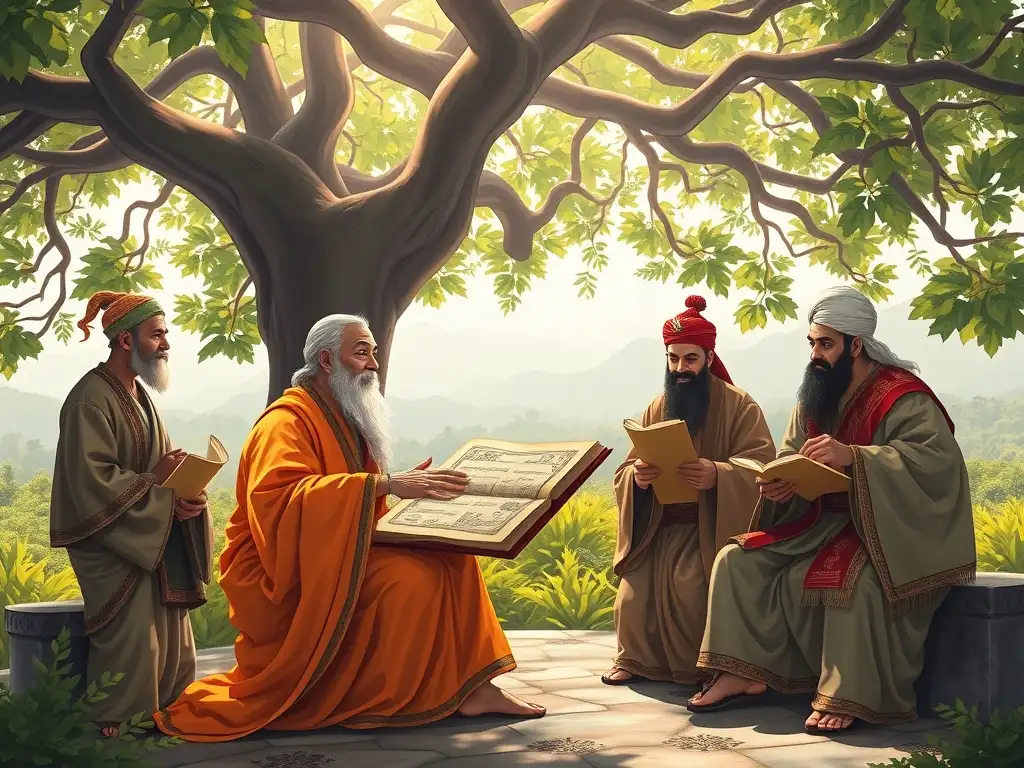
The significance of trade routes in the dissemination of Ancient Indian literature cannot be overstated. These routes, such as the Silk Road and the Maritime Spice Route, were pivotal in facilitating not only the exchange of goods but also cultural and literary ideas between civilizations.
- Geographical Importance:
- Land Routes: The overland Silk Road connected India to Central Asia and beyond, bringing in Greek, Persian, and later, Arab influences.
- Maritime Routes: The Indian Ocean trade network linked the subcontinent to Southeast Asia, the Middle East, and East Africa, allowing for the flow of literary works across vast distances.
- Cultural Exchange:
- Literary Works: Texts such as the Panchatantra and Jataka Tales traveled along these routes, influencing local folklore and storytelling traditions.
- Buddhism and Literature: As Buddhism spread into Central and East Asia, it carried with it not only religious texts but also the narrative and poetic forms of Indian literature, leading to adaptations in Chinese and Tibetan literary traditions.
The impact of these trade routes was profound, as they acted as conduits for the introduction of Indian narrative techniques, genres, and philosophical ideas, thereby enriching the literary traditions of neighboring cultures.
Translation and Adaptation of Indian Texts
The translation and adaptation of Ancient Indian literature played a crucial role in its influence on neighboring civilizations. Scholars and translators, motivated by cultural curiosity and the desire for knowledge, contributed significantly to this cross-cultural exchange.
- Key Translations:
- Buddhist Texts: The translation of Sanskrit Buddhist texts into Chinese by scholars like Kumarajiva in the 4th century CE facilitated the spread of Indian philosophical and literary thought throughout East Asia.
- Persian Adaptations: The Brahmāṇḍa Purāṇa and other texts were translated into Persian during the Mughal Empire, influencing the literary landscape of the region.
- Cultural Syncretism:
- Adaptations often led to the blending of styles and themes. For instance, Indian epics like the Mahabharata were reinterpreted in various forms, including the Katha and the Mahabharata Katha, reflecting local customs and narratives.
- The narrative techniques found in Indian literature also influenced Persian poetry, leading to a unique synthesis in works like the poetry of Mirza Ghalib.
The process of translation not only facilitated the spread of Indian literary forms but also enriched the local literary traditions, creating a vibrant tapestry of cultural exchange.
Influence of Indian Scholars on Neighboring Cultures
Indian scholars significantly impacted the literary traditions of neighboring regions through their travels, teachings, and writings.
- Philosophical Exchange:
- Scholars such as Aryabhata and Brahmagupta traveled to places like Arabia and Persia, where their works on mathematics and astronomy were translated and adapted, influencing local scholars and literary traditions.
- The introduction of Indian philosophical concepts, particularly concerning ethics and governance, is evident in texts like Kautilya's Arthashastra, which found resonance in political literature across Asia.
- Literary Contributions:
- The influence of Indian poets and playwrights on Persian literature is notable, with many elements of Indian storytelling techniques evident in works like the Shahnameh by Ferdowsi.
- Additionally, the concept of drama and performance arts in Indian culture, as articulated in Natya Shastra by Bharata Muni, inspired theatrical traditions in Southeast Asia, particularly in Indonesia and Thailand.
Through their scholarly pursuits and interactions, Indian intellectuals not only shared their literary heritage but also absorbed influences from neighboring cultures, leading to a rich exchange of ideas that shaped the literary landscapes of both India and its neighbors.
Comparative Analysis of Narrative Traditions
Similarities in Storytelling Techniques
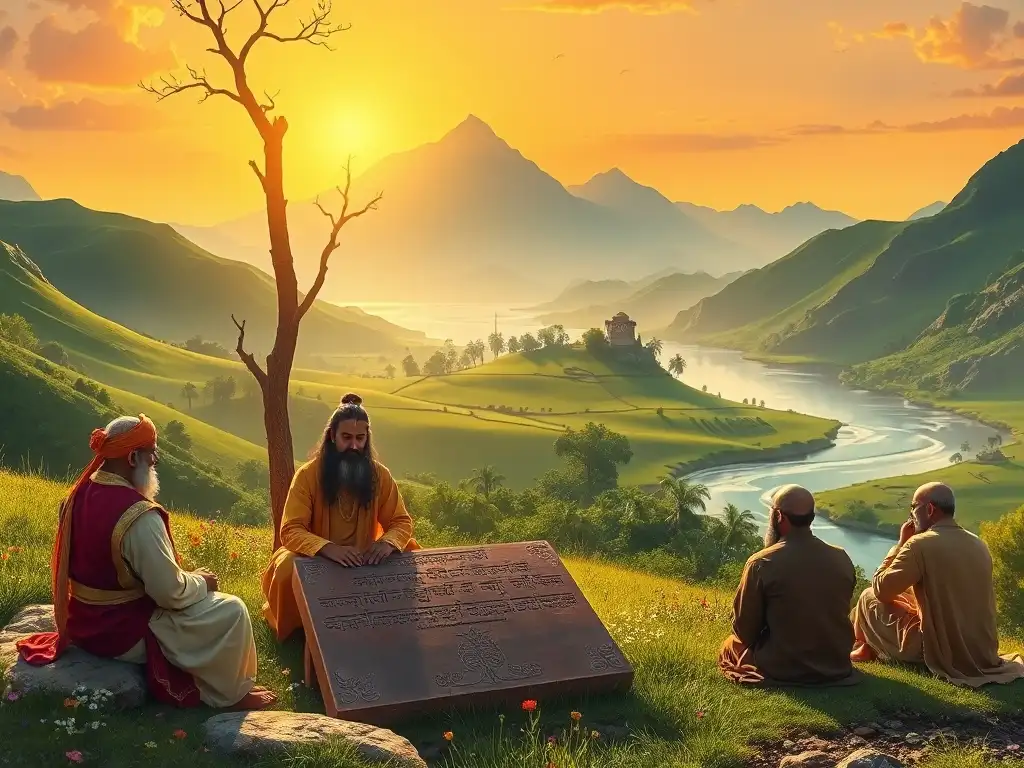
Ancient Indian literature has had a profound impact on the narrative traditions of neighboring civilizations, particularly through its distinctive storytelling techniques. One prominent technique is the use of frame narratives, where a story is embedded within another story. This method is evident in texts such as the Mahabharata and Panchatantra, which utilize a series of tales to convey moral and philosophical lessons. The practice of embedding stories also found resonance in Persian literature, notably in the Shahnameh, where the intertwining of tales serves to enrich the narrative experience.
Another shared technique is the use of allegory and symbolism. Both ancient Indian texts and those from surrounding regions often employ allegorical narratives to convey complex ideas. For instance, the Bhagavad Gita, as part of the Mahabharata, uses the allegory of a battlefield to discuss the moral dilemmas of life and duty, a concept that parallels themes in Persian and Arabic poetry, where the human experience is often depicted through natural imagery and mythological references.
Furthermore, the oral tradition plays a crucial role in the storytelling practices of both ancient India and its neighbors. Epic tales were often recited by bards, creating a dynamic interaction between the storyteller and the audience. This technique is echoed in cultures such as the Greeks, where oral recitation of epics was foundational to cultural identity. The rhythmic and poetic nature of ancient Indian literature made it well-suited for oral transmission, enhancing its accessibility and appeal across regions.
Differences in Themes and Philosophies
While there are notable similarities in storytelling techniques, the themes and philosophies present in ancient Indian literature often diverge from those of neighboring cultures. One significant area of difference is the concept of dharma (duty/righteousness), which is central to Indian narratives, particularly in the Mahabharata. This theme emphasizes moral obligations and the complexities of ethical decision-making in situations of conflict. In contrast, neighboring cultures, such as those in Persia and Greece, often focused more on individual heroism and the pursuit of glory, as seen in the Shahnameh and Iliad, respectively.
Another thematic divergence is the exploration of cosmology and the cyclical nature of life in Indian literature. Texts like the Upanishads delve into metaphysical questions about the universe and the self, presenting a worldview that contrasts with the more linear historical narratives found in many Western traditions. For example, Greek literature often emphasizes a beginning, middle, and end, while Indian texts frequently reflect a cyclical understanding of existence, where life, death, and rebirth are interconnected.
Moreover, the role of the divine and the supernatural in narrative traditions also showcases differences. Ancient Indian literature often integrates deities and divine interventions as critical components of the narrative, guiding characters' destinies and moral choices. In contrast, while divine elements exist in neighboring literatures, they may not be as central to the narrative structure, as seen in the human-centric focus of the Aeneid.
Case Studies of Specific Textual Influences
To illustrate the influence of ancient Indian literature on neighboring traditions, several case studies can be examined:
- The Panchatantra and its Global Reach: The Panchatantra, a collection of fables, has been translated into numerous languages and adapted across cultures. Its moral tales influenced many literary traditions, including the Arabic Kalila wa Dimna, where the stories were reinterpreted and disseminated throughout the Islamic world, showcasing the adaptability of Indian narrative forms.
- The Mahabharata's Impact on Southeast Asian Literature: The Mahabharata has significantly influenced the literary traditions of Southeast Asia, particularly in Indonesia and Malaysia. The epic's themes of heroism, duty, and the cosmic struggle have been integrated into local narratives, as seen in the Wayang Kulit (shadow puppetry), where characters and stories from the Mahabharata are performed, adapting Indian themes to local contexts.
- Buddhist Texts and Their Cross-Cultural Influence: The spread of Buddhism facilitated the dissemination of Indian philosophical ideas and narratives. Texts such as the Jataka Tales have been embraced in various cultures, with adaptations appearing in Tibetan, Chinese, and Japanese literature, reflecting a blend of Indian narrative styles with local storytelling traditions.
These case studies highlight the enduring legacy of ancient Indian literature and its capacity to influence and enrich the narrative traditions of neighboring civilizations, underscoring the interconnectedness of cultural exchanges in shaping literary histories.
The Lasting Legacy of Ancient Indian Literature
Preservation of Ancient Indian Literary Works
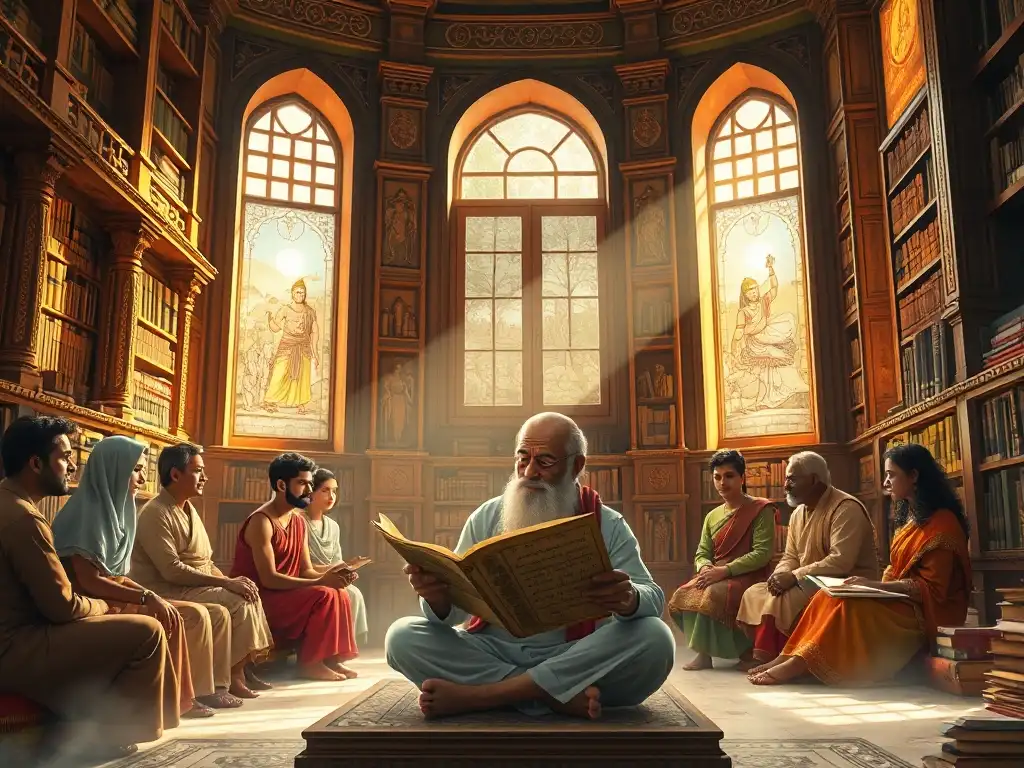
The preservation of ancient Indian literary works has been paramount in understanding the influence of ancient Indian literature on neighboring civilizations. Numerous texts, such as the Vedas, Upanishads, and Mahabharata, have been meticulously copied and transmitted through generations, ensuring their survival. These texts were not merely religious or philosophical manuscripts; they also contained rich narratives, poetry, and moral teachings that resonated beyond the Indian subcontinent.
- Manuscript Traditions: The art of manuscript writing flourished in various parts of India, with scholars and scribes dedicating their lives to transcribing these texts. For instance, the Nalanda University played a crucial role in preserving many Buddhist texts that later influenced East Asian literatures.
- Translation Efforts: The translation of these literary works into languages such as Persian, Arabic, and Tibetan significantly broadened their reach. The Mahabharata, for example, has been translated into various languages, allowing its themes of dharma (duty) and karma (action) to resonate in cultures far beyond India.
- Cultural Exchange Centers: Ancient centers of learning, such as Taxila and Nalanda, served as melting pots for scholars from diverse backgrounds. Here, the exchange of ideas led to the adaptation of Indian narratives into local traditions, further solidifying their legacy.
Contemporary Relevance of Ancient Narratives
The influence of ancient Indian literature is not confined to historical contexts; it continues to manifest in contemporary culture. Modern Indian literature, cinema, and even global narratives often draw upon themes and characters from these ancient texts, showcasing their enduring relevance.
- Adaptations in Modern Media: The Mahabharata and Ramayana have inspired numerous adaptations in film and television, both in India and abroad. For instance, the Ramayana has been retold in various cultures, including the Indonesian Ramayana Ballet, showcasing its universal themes of good versus evil.
- Literary Inspirations: Contemporary authors often weave elements of ancient Indian literature into their works. For example, authors like Devdutt Pattanaik explore mythological narratives, reinterpreting them for modern readers and reflecting on their implications in today’s society.
- Cultural Festivals: Events like Dussehra and Diwali, which celebrate narratives from ancient texts, serve as reminders of their cultural significance. These festivals not only preserve the stories but also foster community and continuity of tradition.
Future Research Directions in Literary Influence
As scholars continue to explore the vast landscape of ancient Indian literature, several research directions can be pursued to further understand its influence on neighboring civilizations.
- Interdisciplinary Studies: Combining literary analysis with archaeology and anthropology could unveil deeper insights into how ancient narratives shaped societal norms and values across borders. For instance, examining ancient trade routes may reveal how literary ideas traveled alongside goods.
- Comparative Literature: Engaging in comparative studies between ancient Indian texts and those from neighboring cultures can highlight cross-cultural influences. For example, analyzing the parallels between the Mahabharata and Greek epics could inform discussions on narrative structures and themes.
- Digital Humanities: The advent of technology offers new avenues for preserving and analyzing ancient texts. Digitizing manuscripts and employing tools such as text mining can facilitate deeper engagement with the narratives, allowing researchers to identify patterns and influences that were previously overlooked.
The influence of ancient Indian literature extends far beyond its geographical boundaries, leaving an indelible mark on the narrative traditions of neighboring civilizations and continuing to inspire contemporary discourse. As research evolves, it will be essential to explore these connections further, ensuring that the legacy of ancient Indian literature remains a vibrant part of the global cultural tapestry.
Conclusion: The Enduring Influence of Ancient Indian Literature
Summary of Key Points
Ancient Indian literature has left an indelible mark on the narrative traditions of neighboring civilizations, showcasing the profound impact of cultural exchange. Key points to consider include:
- Diverse Literary Forms: The vast array of literary works, including epics like the Mahabharata and Ramayana, provided not only entertainment but also moral and philosophical insights that transcended regional boundaries.
- Language and Style: The use of Sanskrit and regional dialects in ancient texts facilitated the dissemination of ideas and stories, influencing the narrative styles of neighboring cultures, particularly in Southeast Asia.
- Themes and Motifs: Common themes such as dharma (duty), karma (action), and the interplay of good and evil resonated across borders, shaping the storytelling traditions of other cultures.
- Adaptation and Integration: Neighboring civilizations adapted elements of ancient Indian literature into their own narratives, leading to a rich tapestry of stories that reflect a blend of cultural influences.
Final Thoughts on Cultural Exchange and Influence
The influence of ancient Indian literature extends far beyond its geographical origins, illustrating the power of storytelling as a vehicle for cultural exchange. Through trade, migration, and intellectual discourse, ancient Indian narratives permeated the literary landscapes of neighboring regions, fostering a shared cultural heritage.
As we explore the legacy of ancient Indian literature influence, it becomes evident that these works served not only as a reflection of societal values but also as a bridge connecting diverse cultures. By understanding this enduring influence, we gain insights into the complexities of historical interactions and the ways in which literature can shape identities and narratives across time and space.
In essence, the study of ancient Indian literature is not just an exploration of texts; it is an investigation into the enduring connections forged through shared stories, ideas, and cultural practices. As we continue to uncover the layers of this rich tradition, we celebrate the profound impact it has had on the narrative traditions of neighboring civilizations and the ongoing relevance of these stories in our contemporary world.
Frequently Asked Questions
What are the main themes explored in ancient Indian literature?
Ancient Indian literature encompasses diverse themes such as mythology, philosophy, and moral values, reflecting the societal norms and cultural practices of the time.
How did ancient Indian literature influence neighboring cultures?
The narrative traditions of neighboring cultures were significantly shaped by ancient Indian literature, particularly through the transmission of epics like the Mahabharata and Ramayana.
Which forms of ancient Indian literature had the most impact?
Epics, poetry, and dramas are the forms that had the most substantial impact, as they conveyed complex ideas and narratives that transcended cultural boundaries.
What role did the Gupta Empire play in the development of literature?
During the Gupta Empire, there was a flourishing of literature, with notable works in Sanskrit and a focus on science, art, and philosophy, setting a foundation for future literary traditions.
How can we see the influence of ancient Indian literature in modern narratives?
Modern narratives often reflect themes and storytelling techniques that originated in ancient Indian texts, showcasing their enduring legacy in contemporary literature and cinema.
Final Reflection: The Enduring Influence of Ancient Indian Literature
The profound impact of ancient Indian literature on neighboring cultures is not just a historical footnote; it is a vibrant thread woven into the fabric of narrative traditions across the globe. As we explore the intricate ways these texts have shaped storytelling, we recognize their relevance in today's multicultural landscape, where the exchange of ideas continues to enrich our collective human experience.
The influence of ancient Indian literature extends far beyond its geographical origins, resonating deeply within the cultural and social frameworks of neighboring societies. From the epic tales of the Mahabharata and Ramayana to the philosophical musings of the Upanishads, these works have inspired countless adaptations and interpretations. As noted by the scholar A.K. Ramanujan, “The Ramayana is not just a story; it is a way of seeing the world.” This observation underscores how these narratives have provided a lens through which diverse cultures understand their own identities and values.
As we reflect on the lessons embedded in these ancient texts, I invite you to consider how you can incorporate their wisdom into your own life. Engage with the narratives that have shaped our world, and let them inspire your own storytelling. Whether through literature, art, or personal expression, embrace the rich tapestry of influences that surround you, and contribute your voice to the ongoing dialogue that connects us all.
Uncover the Rich Tapestry of Narrative Traditions!
Thank you for diving into the fascinating world of ancient Indian literature with us! Your interest in how these rich narratives have influenced neighboring cultures is a wonderful first step towards understanding their broader implications. Now, it’s time to take action and deepen your exploration!
Here are a few ways you can continue your journey:
- Delve deeper: Choose a specific piece of ancient Indian literature and explore its influences on a neighboring culture. What enduring themes can you uncover?
- Share your insights: Discuss your findings with friends or on social media! Use the hashtag #AncientLiteratureInfluence to spark conversations around this captivating topic.
- Join a community: Engage with book clubs or online forums that focus on ancient literature and its impact. Learning alongside others can enhance your understanding!
What aspects of ancient Indian narratives resonate with you today, and whose stories do you believe deserve a revival in our contemporary narratives?