
Ancient Indian Philosophy: Guiding Modern Leadership and Decision Making


Welcome to Ancient India History, where we embark on a fascinating journey through the rich tapestry of ancient Indian civilizations. From the enigmatic Indus Valley to the illustrious Gupta Empire, we explore the profound cultural heritage that has shaped modern thought. In this article, we delve into Ancient Indian philosophy for leadership, uncovering timeless wisdom that continues to inspire contemporary decision-making and innovation. Prepare to ignite your curiosity and discover how these age-old philosophies are intricately woven into the fabric of modern leadership. Your exploration begins now!
- Introduction to Ancient Indian Philosophy for Leadership
- Key Principles of Ancient Indian Philosophy Relevant to Modern Leadership
- Influential Texts on Ancient Indian Philosophy for Leadership
- Comparative Analysis of Ancient Indian Leadership Principles with Modern Theories
- Practical Applications of Ancient Indian Philosophy in Modern Leadership
- Case Study: Successful Leaders Who Embrace Ancient Indian Philosophy
- Workshops and Seminars on Ancient Indian Leadership Principles
- Books and Resources for Leaders on Ancient Indian Philosophy
- Challenges and Misconceptions about Applying Ancient Indian Philosophy in Leadership
- Conclusion: Embracing Ancient Indian Philosophy for Effective Modern Leadership
-
Frequently Asked Questions
- What is Ancient Indian philosophy related to leadership?
- How can ancient Indian teachings influence modern leadership?
- What are some key texts in Ancient Indian philosophy?
- How does the Indus Valley Civilization contribute to our understanding of leadership?
- Can ancient Indian philosophy be applied to contemporary decision-making?
- Final Reflection: Ancient Wisdom for Modern Leadership
- Embrace Ancient Wisdom for Modern Leadership!
Introduction to Ancient Indian Philosophy for Leadership
Ancient Indian philosophy offers a profound exploration of ethical and strategic thought that has shaped leadership and decision-making throughout history. Rooted in diverse traditions such as Vedanta, Buddhism, and Jainism, this philosophy emphasizes principles like dharma (duty), karma (action), and moksha (liberation), which provide timeless guidance for leaders navigating the complexities of modern governance and organizational dynamics.
As contemporary leaders seek to foster inclusive and effective environments, understanding these ancient teachings can illuminate pathways toward wisdom, resilience, and ethical leadership. This article delves into the foundational aspects of ancient Indian philosophy that are particularly relevant for leadership, demonstrating how these age-old insights can inform and enhance decision-making practices today.
Overview of Ancient Indian Philosophy
Ancient Indian philosophy is a rich tapestry woven from various schools of thought that emerged over millennia. Key philosophies include:
- Vedanta: Focuses on the nature of reality and the self, emphasizing unity and the importance of understanding one's place in the cosmos.
- Buddhism: Advocates for mindfulness, ethical conduct, and the Middle Way, promoting compassionate leadership.
- Jainism: Highlights non-violence (ahimsa) and truthfulness (satya), principles that are crucial for ethical decision-making.
Each of these schools contributes unique perspectives on leadership, offering frameworks for ethical governance, self-awareness, and the moral implications of decision-making. Their teachings encourage leaders to cultivate traits such as empathy, integrity, and vision, which are essential in today's rapidly changing world.
The Importance of Philosophy in Leadership and Decision Making
Philosophy plays a critical role in shaping effective leadership and decision-making processes. Here are some reasons why ancient Indian philosophy is particularly relevant:
- Ethical Framework: Ancient Indian texts provide guidelines that help leaders navigate moral dilemmas, ensuring that decisions align with ethical standards.
- Holistic Perspective: Emphasizing interconnectedness, ancient philosophy encourages leaders to consider the broader impact of their decisions on society and the environment.
- Resilience and Adaptability: The teachings instill a sense of resilience in leaders, equipping them to face challenges with a balanced mindset.
- Cultural Sensitivity: Understanding ancient philosophies fosters appreciation for diverse viewpoints, enabling leaders to build inclusive teams.
Incorporating these philosophical insights into modern leadership practices can lead to more thoughtful, reflective, and ethical decision-making, ultimately benefiting individuals and organizations alike.
Key Principles of Ancient Indian Philosophy Relevant to Modern Leadership
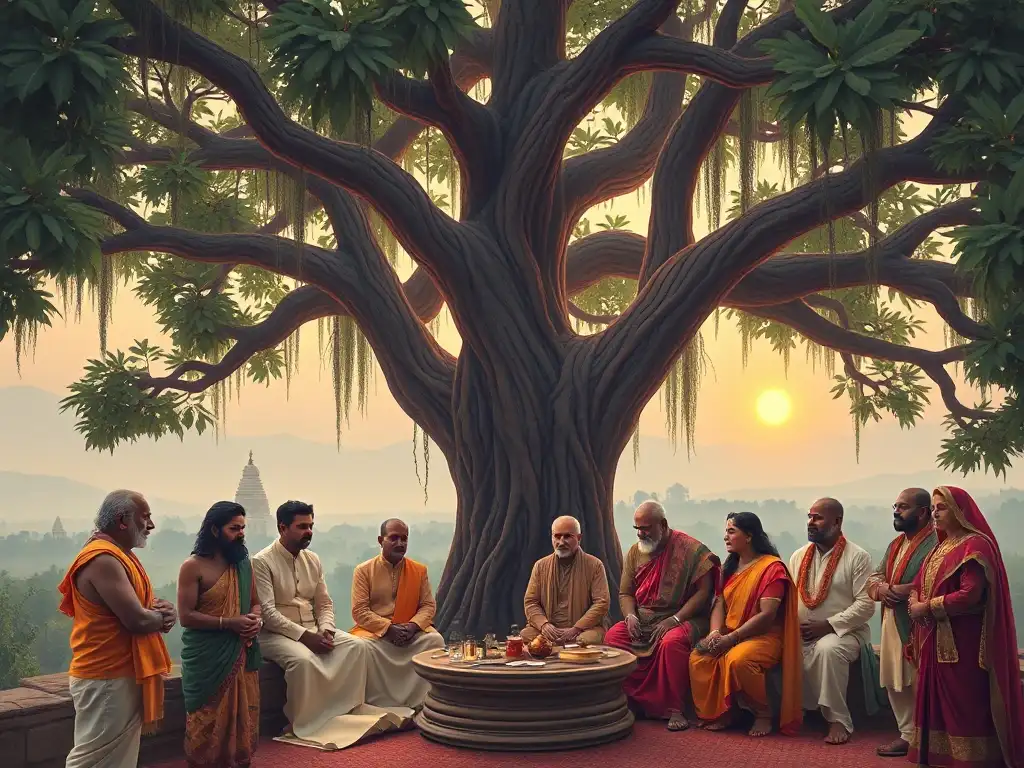
Dharma: The Principle of Righteousness in Leadership
Dharma, often translated as "righteousness" or "duty," serves as one of the cornerstones of ancient Indian philosophy. In the context of leadership, adhering to Dharma emphasizes the importance of ethical decision-making and moral responsibility. Leaders who embody Dharma are expected to act in accordance with universal principles of justice, fairness, and integrity.
- Moral Compass: Leaders guided by Dharma prioritize the greater good over personal gain. They recognize their duty not only to their organization but also to society at large.
- Case Studies: Historical figures like Emperor Ashoka exemplified Dharma in leadership by promoting non-violence and welfare policies after his conversion to Buddhism. His reign illustrates how moral governance can lead to societal harmony and stability.
The application of Dharma in modern leadership encourages a values-driven approach, where decision-making aligns with ethical standards. This alignment fosters trust and loyalty among team members and stakeholders, ultimately leading to sustainable success.
Karma: Understanding Actions and Consequences in Decision Making
Karma, the principle of cause and effect, underscores the significance of understanding that every action has repercussions. In leadership, this translates to a profound awareness of the long-term impacts of decisions made today.
- Action Reflection: Leaders are encouraged to reflect on their actions, considering both immediate outcomes and future consequences. This awareness cultivates a more thoughtful and deliberate approach to decision-making.
- Feedback Loops: Incorporating feedback mechanisms can help leaders understand the effects of their decisions, allowing for adjustments and improvements. For example, companies that actively solicit employee input often see higher morale and productivity.
By integrating the concept of Karma into leadership practices, leaders can create a more responsible and responsive organizational culture. Emphasizing accountability not only enhances performance but also builds a legacy of ethical leadership.
Ahimsa: Non-Violence as a Leadership Strategy
Ahimsa, or non-violence, is a fundamental tenet of ancient Indian philosophy that extends beyond physical non-violence to encompass thoughts, words, and actions. In the realm of leadership, Ahimsa represents a strategy that prioritizes empathy, respect, and constructive dialogue.
- Conflict Resolution: Leaders practicing Ahimsa are more likely to seek peaceful resolutions to conflicts. This approach fosters an atmosphere of collaboration and understanding, allowing for innovative solutions to emerge.
- Empowerment and Inclusion: By embracing non-violent principles, leaders can create inclusive environments where diverse voices are heard and valued. This inclusivity leads to richer discussions and better decision-making.
The application of Ahimsa in leadership not only promotes a healthier workplace culture but also aligns with modern values of corporate social responsibility. Leaders who embody these principles are better equipped to navigate the complexities of today’s globalized world, ensuring their organizations thrive through ethical and compassionate practices.
Influential Texts on Ancient Indian Philosophy for Leadership

The Bhagavad Gita: Lessons on Duty and Ethics
The Bhagavad Gita, a 700-verse Hindu scripture that is part of the Indian epic Mahabharata, offers profound insights into leadership and ethical decision-making. This text presents a dialogue between Prince Arjuna and Lord Krishna, where the concepts of dharma (duty) and karma (action) are explored in depth. These themes are pivotal in shaping the moral framework within which leaders operate.
- Duty over Desire: One of the central teachings of the Gita is the importance of performing one's duty without attachment to the results. This idea can be applied to modern leadership, where leaders must prioritize their responsibilities over personal gain. The Gita emphasizes that true leadership is about serving others and fulfilling one's obligations, which can foster a culture of accountability and integrity in organizations.
- Ethics in Decision-Making: The Gita advocates for ethical decision-making, suggesting that leaders should act in accordance with their values and principles. For instance, Krishna advises Arjuna to engage in battle not for personal glory but to uphold righteousness. This lesson encourages modern leaders to consider the ethical implications of their actions and to lead by example.
- Emotional Intelligence: Another critical aspect of the Gita is the development of self-awareness and emotional intelligence. Krishna teaches Arjuna to remain calm and composed amidst chaos, which is essential for effective leadership. By cultivating emotional resilience, leaders can navigate challenges more effectively and inspire their teams.
The Arthashastra: Strategies for Governance and Power
The Arthashastra, attributed to the ancient philosopher Kautilya (Chanakya), is a seminal text on statecraft and military strategy. It provides a pragmatic approach to governance and power, focusing on the effective management of resources and the art of diplomacy.
- Pragmatism in Leadership: Kautilya’s work emphasizes the importance of pragmatism over idealism. He advocates for a realistic approach to governance, where leaders must assess situations based on empirical evidence rather than theoretical ideals. This perspective is vital for modern leaders who must adapt to rapidly changing environments and make data-driven decisions.
- Networking and Alliances: The Arthashastra highlights the significance of building strategic alliances and networks. Kautilya argued that a leader must cultivate relationships with other states to enhance their power. This principle can be applied to modern business environments, where collaboration and partnerships often lead to mutual benefits and greater innovation.
- Crisis Management: Kautilya also provides insights into crisis management. He suggests that leaders should anticipate challenges and prepare contingency plans. This proactive stance is critical in today’s fast-paced world, where leaders must be equipped to respond swiftly to unforeseen circumstances.
The Upanishads: Insights into Leadership and Self-Realization
The Upanishads, a collection of ancient Indian texts that form the philosophical basis of Hinduism, delve into the nature of reality, the self, and the universe. Their teachings offer valuable insights into personal development and authentic leadership.
- Self-Realization and Authenticity: The Upanishads emphasize the importance of self-realization, which encourages leaders to understand their true nature and purpose. By fostering a deep connection with oneself, leaders can lead authentically, inspiring trust and loyalty among their followers.
- Interconnectedness: A key theme in the Upanishads is the interconnectedness of all beings. This idea can guide leaders to adopt a holistic approach, considering the impact of their decisions on the broader community and environment. Emphasizing sustainability and ethical practices becomes a natural extension of this understanding.
- Meditation and Mindfulness: The Upanishads advocate for practices such as meditation and mindfulness, which enhance mental clarity and focus. Modern leaders can benefit from these practices, as they promote better decision-making and emotional stability, allowing leaders to remain grounded even under pressure.
By integrating the teachings of these influential texts, leaders today can draw from the rich legacy of ancient Indian philosophy to enhance their leadership skills and decision-making processes.
Comparative Analysis of Ancient Indian Leadership Principles with Modern Theories
Ancient Indian Philosophy vs. Western Leadership Models
Ancient Indian philosophy offers a unique perspective on leadership that contrasts sharply with Western models. While Western theories often emphasize individualism, competition, and hierarchical structures, ancient Indian philosophies focus on collectivism, moral integrity, and the pursuit of dharma (righteousness).
-
Collectivism vs. Individualism
Ancient Indian leadership emphasizes the importance of the community and seeks the well-being of all. Leaders are seen as custodians of the collective good, rather than as individuals seeking personal gain. This contrasts with Western models, where leaders often prioritize personal achievements and assertiveness.
-
Moral Integrity
The notion of dharma in ancient Indian thought underscores the importance of ethical behavior in leadership. Leaders are expected to uphold moral values and act in accordance with universal principles. Western leadership models may focus more on strategic outcomes, sometimes at the expense of ethical considerations.
-
Holistic Perspective
Ancient Indian philosophy embraces a holistic view of life, recognizing the interconnectedness of all beings. This perspective encourages leaders to consider the broader implications of their decisions, fostering a sense of responsibility towards society and the environment. In contrast, some Western models may adopt a more fragmented approach, focusing solely on immediate results.
-
Role of Mentorship
In ancient Indian thought, mentorship and guidance from experienced leaders (such as gurus) are highly valued. This approach fosters a culture of learning and growth, contrasting with the Western tendency to emphasize self-reliance and assertiveness in leadership roles.
Integrating Ancient Wisdom with Contemporary Leadership Practices
The integration of ancient Indian philosophy into modern leadership practices can provide valuable insights for today’s leaders. By adopting ancient wisdom, leaders can cultivate a more compassionate and ethical approach to their roles. Here are several ways to achieve this integration:
-
Emphasizing Ethical Decision-Making
Leaders can draw upon the principles of dharma to guide their decision-making processes. This ethical framework encourages leaders to evaluate their choices in terms of moral implications and long-term consequences, rather than solely focusing on short-term gains.
-
Promoting Inclusivity
By embracing the collectivist nature of ancient Indian philosophy, contemporary leaders can foster inclusive environments that prioritize collaboration and teamwork. This approach not only enhances morale but also leads to more innovative solutions by incorporating diverse perspectives.
-
Mentorship and Continuous Learning
Incorporating a mentorship model can enhance modern leadership. By seeking guidance from experienced individuals, leaders can gain valuable insights and avoid common pitfalls. This aligns with the ancient belief in the importance of learning from those who have traversed similar paths.
-
Holistic Leadership Development
Leaders are encouraged to adopt a holistic view of their roles, considering the impact of their decisions on various stakeholders. This perspective can lead to more sustainable practices and cultivate a sense of responsibility towards the community and environment.
-
Resilience and Adaptability
Ancient Indian philosophy teaches the importance of resilience in the face of challenges. Leaders can benefit from these teachings by developing a mindset that embraces change and views obstacles as opportunities for growth.
By integrating these ancient principles into contemporary practices, leaders can not only enhance their effectiveness but also contribute to a more ethical and compassionate society. This synthesis of ancient wisdom and modern strategies represents a powerful approach to leadership that can guide decision-making in today's complex world.
Practical Applications of Ancient Indian Philosophy in Modern Leadership
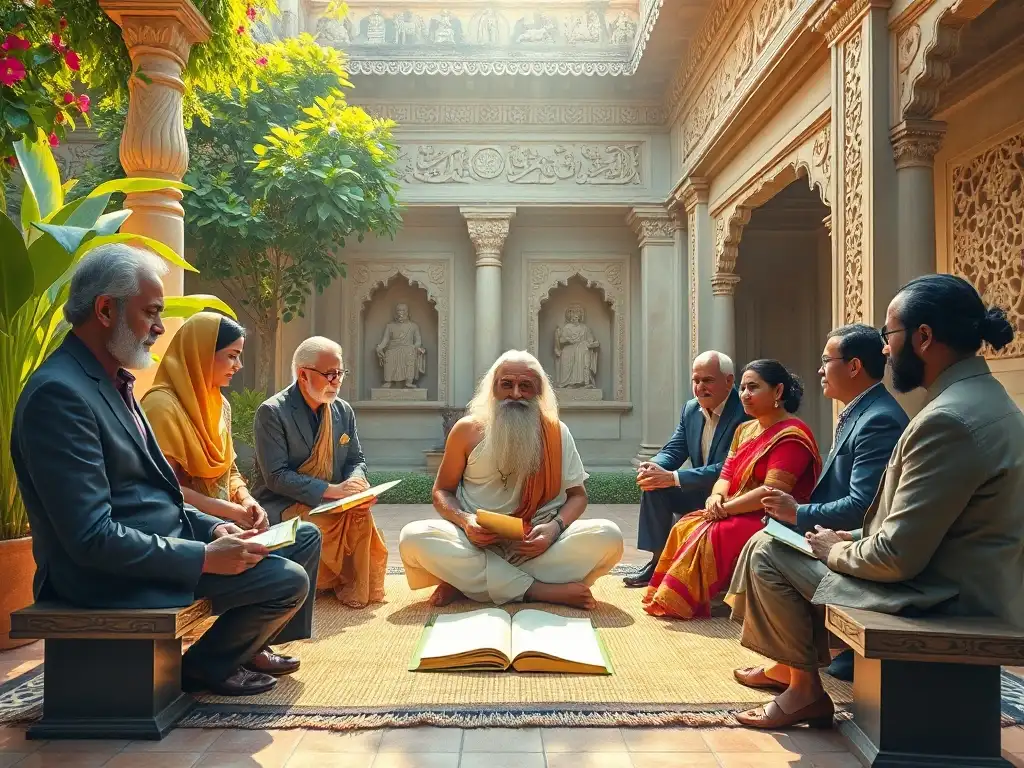
Ancient Indian philosophy offers profound insights that can significantly enhance modern leadership practices. The key concepts derived from texts such as the Bhagavad Gita, Upanishads, and the works of philosophers like Chanakya provide timeless wisdom that resonates with current leadership challenges.
Core Principles of Ancient Indian Philosophy for Leadership
- Dharma (Righteous Duty): Leaders are encouraged to act according to their dharma, or righteous duty. This principle emphasizes ethical decision-making and the importance of fulfilling one's responsibilities with integrity. Leaders who align their actions with dharma foster trust and loyalty among their teams.
- Samatva (Equanimity): The idea of maintaining equanimity in success and failure is crucial for effective leadership. By practicing samatva, leaders can make balanced decisions, reducing the impact of emotional fluctuations that often accompany high-stakes situations.
- Sankhya (Analytical Thinking): Ancient Indian philosophy promotes analytical thinking and self-reflection. Leaders are encouraged to understand the root causes of issues and consider multiple perspectives before making decisions, promoting a culture of inclusivity and collaboration.
- Seva (Service): The concept of service to others is a cornerstone of leadership in ancient Indian thought. Leaders who adopt a servant leadership style prioritize the needs and growth of their team members, creating a supportive environment that fosters innovation and loyalty.
- Moksha (Liberation): While often associated with spiritual liberation, in a leadership context, moksha can be interpreted as the freedom to innovate and think creatively. Leaders who cultivate an environment of psychological safety allow their teams to explore new ideas without the fear of failure.
Case Study: Successful Leaders Who Embrace Ancient Indian Philosophy

Numerous contemporary leaders and organizations have successfully integrated principles of ancient Indian philosophy into their leadership styles.
Example 1: Narayana Murthy - Co-founder of Infosys
Narayana Murthy exemplifies dharma in his leadership approach. He emphasizes ethical practices in business, focusing on integrity and transparency. His commitment to social responsibility has positioned Infosys as a leader in corporate governance.
Example 2: Ratan Tata - Former Chairman of Tata Group
Ratan Tata’s leadership illustrates the principle of seva. He has consistently prioritized community welfare and employee well-being, believing that a leader's role is to serve the interests of their stakeholders. His initiatives in education and healthcare reflect this commitment.
Example 3: N. R. Narayana Murthy and the Infosys Leadership Model
Murthy’s leadership style incorporates samatva, particularly in how he handles successes and setbacks. His analytical approach to problem-solving and decision-making has contributed to Infosys's resilience and adaptability in the evolving technology landscape.
These leaders embody the fusion of ancient wisdom with modern business practices, showcasing that ancient Indian philosophy for leadership can shape effective and ethical leaders in today's world.
Workshops and Seminars on Ancient Indian Leadership Principles
Organizations and educational institutions have begun to recognize the value of ancient Indian philosophy in leadership training. Various workshops and seminars are designed to help leaders incorporate these principles into their practices.
Popular Programs:
- Leadership Retreats: These immersive experiences often include teachings from ancient texts, meditation sessions, and discussions on applying philosophical principles in modern contexts.
- Corporate Training: Many firms are integrating ancient Indian philosophy into their corporate training programs, focusing on ethical leadership and team dynamics.
- University Courses: Several academic institutions now offer courses that explore the intersection of ancient philosophy and modern leadership, providing students with valuable insights into effective decision-making and ethical governance.
Benefits of Participation:
- Enhanced Decision-Making: Participants learn to integrate ethical considerations into their decision-making processes.
- Increased Team Cohesion: Workshops often emphasize team-building through shared philosophical principles, fostering a sense of belonging and collaboration.
- Personal Development: Leaders engage in self-reflection and personal growth, which are vital for effective leadership.
Books and Resources for Leaders on Ancient Indian Philosophy

A wealth of literature and resources is available for leaders interested in exploring ancient Indian philosophy and its applications in leadership.
| Title | Author | Description |
|---|---|---|
| The Bhagavad Gita | Various Translations | A foundational text that discusses duty, righteousness, and ethical decision-making. |
| Chanakya's Arthashastra | Chanakya | An ancient treatise on statecraft and economic policy, offering insights into leadership and governance. |
| The Leadership Sutra | Dr. Rajiv Mehrotra | A modern interpretation of ancient teachings, focusing on leadership principles derived from Indian philosophy. |
| The Wisdom of the Bhagavad Gita | Swami Satchidananda | A comprehensive guide that connects the teachings of the Gita to contemporary leadership challenges. |
Additional Resources:
- Online Courses: Platforms like Coursera and Udemy offer courses on ancient Indian philosophy for leadership.
- Podcasts: Various podcasts explore the application of ancient philosophies in modern leadership, featuring interviews with thought leaders and practitioners.
Engaging with these resources enables leaders to deepen their understanding of ancient Indian philosophy and apply its teachings to foster a more ethical and effective leadership style.
Challenges and Misconceptions about Applying Ancient Indian Philosophy in Leadership
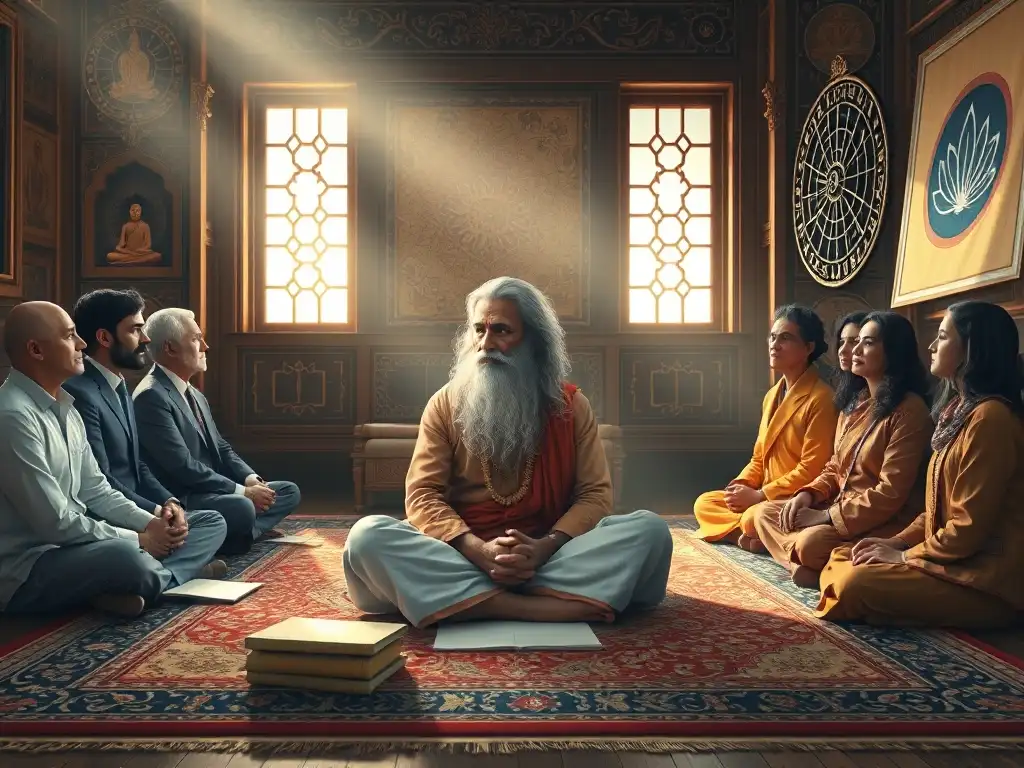
Ancient Indian philosophy offers profound insights that can guide modern leadership and decision-making. However, its application in the contemporary context often faces several challenges and misconceptions. Understanding these barriers is crucial for leaders who wish to integrate ancient wisdom into their practices.
Common Misunderstandings about Ancient Indian Philosophy
One prevalent misconception about ancient Indian philosophy is that it is solely focused on spirituality and metaphysics, sidelining practical applications in daily leadership and management. This view overlooks the extensive body of work from philosophers like Chanakya, who emphasized strategy, governance, and the art of leadership in his treatise, the Arthashastra.
- Myth of Irrelevance: Many believe that ancient philosophies lack relevance in the modern corporate landscape, assuming that the complexities of contemporary business cannot align with ancient principles. In reality, concepts such as ethical governance, sustainable practices, and holistic well-being are increasingly recognized as essential to effective leadership.
- Narrow Interpretation: There is a tendency to reduce ancient Indian philosophy to a set of rigid doctrines, ignoring its dynamic and contextual nature. For example, the Bhagavad Gita presents a flexible approach to duty and righteousness, advocating for discernment and adaptability—qualities that are vital for leaders navigating today's unpredictable environments.
- Cultural Bias: Some skeptics dismiss ancient Indian philosophy due to cultural biases, perceiving it as exotic or irrelevant to Western paradigms of leadership. However, a closer examination reveals that many principles found in ancient Indian texts resonate with global leadership challenges, such as the importance of ethical decision-making and the value of community.
- Overemphasis on Individualism: There is a misconception that ancient Indian philosophy advocates for individualism over collectivism. In truth, many texts stress the importance of community and interdependence, highlighting that a leader's success is often tied to the well-being of those they lead.
Addressing the Relevance of Ancient Wisdom in Today's Fast-Paced World
To effectively incorporate ancient Indian philosophy into modern leadership, it is essential to recognize its relevance in addressing contemporary challenges. Here are several ways this philosophy can inform leadership practices today:
- Ethical Decision-Making: Ancient texts often emphasize the importance of dharma (duty/righteousness) in decision-making. Leaders can draw from these principles to create frameworks that prioritize ethical considerations in their organizations.
- Holistic Management: Ancient Indian philosophy promotes a holistic approach to well-being, recognizing the interconnectedness of mind, body, and environment. Modern leaders can apply this understanding by fostering work cultures that prioritize mental health and work-life balance.
- Strategic Foresight: The strategic insights of Chanakya and others provide valuable lessons in foresight and long-term planning. Leaders can adopt these strategies to navigate uncertainty and make informed decisions that consider both short-term gains and long-term sustainability.
- Adaptability and Resilience: The teachings from the Bhagavad Gita emphasize the importance of resilience and adaptability in the face of challenges. By embodying these qualities, leaders can better manage crises and foster a culture of innovation.
While challenges and misconceptions exist regarding the application of ancient Indian philosophy in leadership, its principles offer valuable guidance for modern leaders. By embracing the wisdom of the past, leaders can cultivate ethical, resilient, and adaptive organizations capable of thriving in today's dynamic world.
Conclusion: Embracing Ancient Indian Philosophy for Effective Modern Leadership
The integration of Ancient Indian philosophy for leadership into contemporary practices is not merely a theoretical exercise; it is a profound exploration of values, ethics, and methodologies that can significantly enhance decision-making and leadership effectiveness today. By weaving principles from ancient texts such as the Bhagavad Gita, Upanishads, and Arthashastra into modern leadership frameworks, leaders can cultivate a more holistic approach that emphasizes moral integrity, community welfare, and long-term vision.
The teachings of ancient sages underscore the importance of self-awareness and introspection, which are critical for modern leaders facing complex challenges. By adopting these philosophical underpinnings, leaders can foster environments that prioritize collaboration, empathy, and resilience. The emphasis on dharma (righteousness) and karma (action) in ancient Indian philosophy encourages leaders to act with purpose and accountability, leading to more sustainable and ethically sound outcomes.
The Future of Leadership Inspired by Ancient Wisdom
As we look to the future, the influence of Ancient Indian philosophy for leadership is poised to grow. Modern organizational structures are increasingly recognizing the value of incorporating ethical frameworks and inclusive practices derived from these ancient teachings. For instance, the concept of Samatva (equanimity) can provide valuable insights into managing diversity and conflict within teams, fostering a culture of respect and understanding.
Moreover, in an era marked by rapid technological advancements and globalization, the ancient Indian perspective on interconnectedness and community can inform how leaders navigate these complexities. By emphasizing the interdependence of individuals and societies, leaders can adopt a more compassionate approach, focusing on collective growth rather than personal gain. This shift could lead to more innovative solutions and collaborative efforts that address global challenges.
The essence of ancient wisdom lies in its timeless relevance. By continuously reflecting on these principles, leaders can adapt them to contemporary contexts, ensuring that their leadership style not only addresses immediate concerns but also contributes to a more equitable and just society.
Call to Action: Exploring Further Resources and Learning Opportunities
To delve deeper into the intersection of Ancient Indian philosophy for leadership and modern practices, consider exploring the following resources:
- Books and Texts: Read foundational texts like the Bhagavad Gita and Arthashastra to understand the philosophical underpinnings of leadership.
- Workshops and Seminars: Participate in workshops focusing on ancient wisdom in leadership to gain practical insights.
- Online Courses: Enroll in courses that examine the applications of ancient philosophies in contemporary leadership settings.
- Discussion Groups: Join or form groups that discuss the integration of ancient philosophies into modern leadership strategies.
By engaging with these resources, you can enhance your leadership skills and contribute to a broader movement that values the wisdom of the past as a guiding light for future decision-making. Embrace the teachings of ancient Indian philosophy and become a leader who inspires positive change in the world.
Frequently Asked Questions
Ancient Indian philosophy encompasses wisdom and teachings from various texts like the Bhagavad Gita and Arthashastra, which offer insights on ethical leadership and decision-making.
How can ancient Indian teachings influence modern leadership?
The principles found in ancient texts promote values such as integrity, empathy, and strategic thinking, which are essential for effective leadership in today's world.
What are some key texts in Ancient Indian philosophy?
Important texts include the Vedas, the Upanishads, and the Puranas, each contributing to the understanding of leadership, ethics, and moral governance.
How does the Indus Valley Civilization contribute to our understanding of leadership?
The Indus Valley Civilization is known for its advanced urban planning and governance, reflecting early leadership principles based on organization, sustainability, and community welfare.
Can ancient Indian philosophy be applied to contemporary decision-making?
Yes, ancient Indian philosophy offers frameworks that encourage holistic thinking, considering both short-term gains and long-term impacts, crucial for today's complex decision-making environments.
Final Reflection: Ancient Wisdom for Modern Leadership
In an era where leadership is often defined by rapid decision-making and immediate results, the insights derived from ancient Indian philosophy offer a profound counterbalance. These timeless teachings remind us that effective leadership is not merely about authority or power; it is about cultivating wisdom, empathy, and a deep understanding of human nature. As we navigate the complexities of contemporary challenges, the principles rooted in ancient Indian thought resonate more than ever, urging leaders to look beyond the surface and embrace a holistic approach to decision-making.
The influence of ancient Indian philosophy on modern leadership is evident in the way it shapes our cultural and social landscapes. These teachings encourage leaders to foster environments of collaboration and ethical responsibility. As we witness a growing demand for authenticity and integrity in leadership, the wisdom of figures like Mahatma Gandhi and Chanakya continues to inspire. The best way to find yourself is to lose yourself in the service of others.
This quote encapsulates the essence of servant leadership, a concept that is gaining traction in today's corporate and social spheres, emphasizing the importance of serving others as a pathway to true leadership.
As we reflect on the lessons from ancient Indian philosophy, I invite you to consider how these principles can be integrated into your own leadership style and decision-making processes. Take a moment to reflect on your values and the impact you wish to have on those around you. Embrace the idea that leadership is not just a position, but a responsibility to uplift and empower others. By incorporating these timeless teachings into our daily lives, we can cultivate a new generation of leaders who are guided by wisdom, compassion, and a commitment to the greater good.
Embrace Ancient Wisdom for Modern Leadership!
Thank you for exploring the depths of Ancient Indian Philosophy with us! We hope you’ve discovered valuable insights that can reshape your approach to leadership and decision-making in today’s fast-paced world. Now, it’s time to take that knowledge and put it into action!
Here are some practical steps you can take right now:
- Implement a mindfulness practice in your daily routine to enhance clarity in decision-making.
- Connect with fellow leaders by participating in forums or discussions that focus on integrating ancient philosophies into contemporary practices.
- Share this article with your team to ignite a conversation about how these timeless principles can transform your leadership approach.
Now, we want to hear from you! How do you plan to incorporate principles from Ancient Indian philosophy into your leadership style this week?