
How Hindu Philosophical Concepts Address the Nature of Reality


Welcome to Ancient India History, where we embark on a fascinating journey through time to uncover the rich tapestry of ancient Indian civilizations. Dive deep into the realms of Hindu philosophy and reality concepts, as we explore how these profound ideas shape our understanding of existence. Our featured article, "How Hindu Philosophical Concepts Address the Nature of Reality," invites you to unravel the intricate connections between thought and reality that have influenced countless generations.
Join us as we illuminate the wisdom of the past, and discover the timeless insights that continue to resonate today. Your exploration of ancient Indian religions starts here!
- Introduction to Hindu Philosophy and Reality Concepts
- Major Hindu Philosophical Concepts Addressing Reality
- Different Schools of Hindu Philosophy and Their Views on Reality
- Hindu Texts and Their Exploration of Reality Concepts
- Practical Implications of Hindu Philosophical Concepts on Reality
- Conclusion: The Impact of Hindu Philosophy and Reality Concepts on Culture
-
Frequently Asked Questions
- What are the main concepts of Hindu philosophy related to reality?
- How does Hindu philosophy differentiate between reality and illusion?
- What role does meditation play in understanding reality in Hinduism?
- How do the concepts of Dharma and Karma relate to Hindu views on reality?
- What influence did the Gupta Empire have on Hindu philosophical thought?
- Final Reflection: Embracing the Depths of Hindu Philosophy and Reality
- Unveil the Mysteries of Reality Today!
Introduction to Hindu Philosophy and Reality Concepts

Hindu philosophy encompasses a rich tapestry of ideas that delve into the nature of reality, existence, and the human experience. With roots in ancient texts and teachings, this philosophical tradition has profoundly influenced various aspects of Indian culture, spirituality, and ethical thought. Central to Hindu philosophy are concepts that seek to explain the essence of reality, the nature of the self, and the relationship between the material and spiritual worlds.
By exploring these intricate ideas, we can gain a deeper understanding of how Hindu philosophical concepts address the nature of reality, and how they continue to resonate with contemporary thought. This article will not only illuminate the foundational principles of Hindu philosophy but also examine the diverse schools of thought that have emerged throughout its evolution.
Understanding the Significance of Reality in Hindu Thought
In Hindu philosophy, the concept of reality is multifaceted and often described through the lens of Maya (illusion) and Brahman (ultimate reality). The interplay between these two concepts highlights a fundamental tension in understanding existence.
- Maya: Refers to the illusory nature of the physical world. It suggests that our perception of reality is often clouded by ignorance and attachment. This notion encourages seekers to look beyond the superficial appearances of life.
- Brahman: Represents the unchanging, infinite reality that underlies all existence. It is considered the ultimate truth, transcending the transient phenomena of the material world.
The journey toward understanding reality involves a process of self-inquiry and realization. This path is well articulated in the Upanishads, ancient texts that explore the relationship between the individual self ( Atman) and Brahman. The famous declaration "Tat Tvam Asi" (That Thou Art) encapsulates this profound connection, emphasizing that the true self is not separate from the ultimate reality.
Moreover, Hindu thought encourages practitioners to engage in various forms of meditation, rituals, and ethical living to transcend Maya and attain a direct experience of Brahman. This holistic approach to understanding reality has significant implications for personal development and spiritual growth.
Overview of Hindu Philosophical Schools
Hindu philosophy is not monolithic; rather, it comprises several schools, each with unique perspectives on reality and existence. The major philosophical systems can be categorized into two broad groups: Astika (orthodox) and Nastika (heterodox) schools.
- Astika Schools:
- Vedanta: Focuses on the teachings of the Upanishads, emphasizing knowledge and realization of Brahman.
- Sankhya: Explores a dualistic framework that differentiates between Purusha (consciousness) and Prakriti (matter).
- Yoga: Integrates philosophical principles with practical techniques for self-realization and spiritual attainment.
- Nastika Schools:
- Buddhism: Challenges the notion of a permanent self and emphasizes impermanence and suffering.
- Jainism: Advocates for a path of non-violence and truth, presenting a unique perspective on the nature of reality and the soul.
Each of these schools contributes to a broader discourse on Hindu philosophy and reality concepts, offering diverse insights and methodologies for understanding the complex nature of existence. Through this exploration, we can appreciate how these ancient teachings continue to inspire and influence modern philosophical thought and spiritual practices.
Major Hindu Philosophical Concepts Addressing Reality
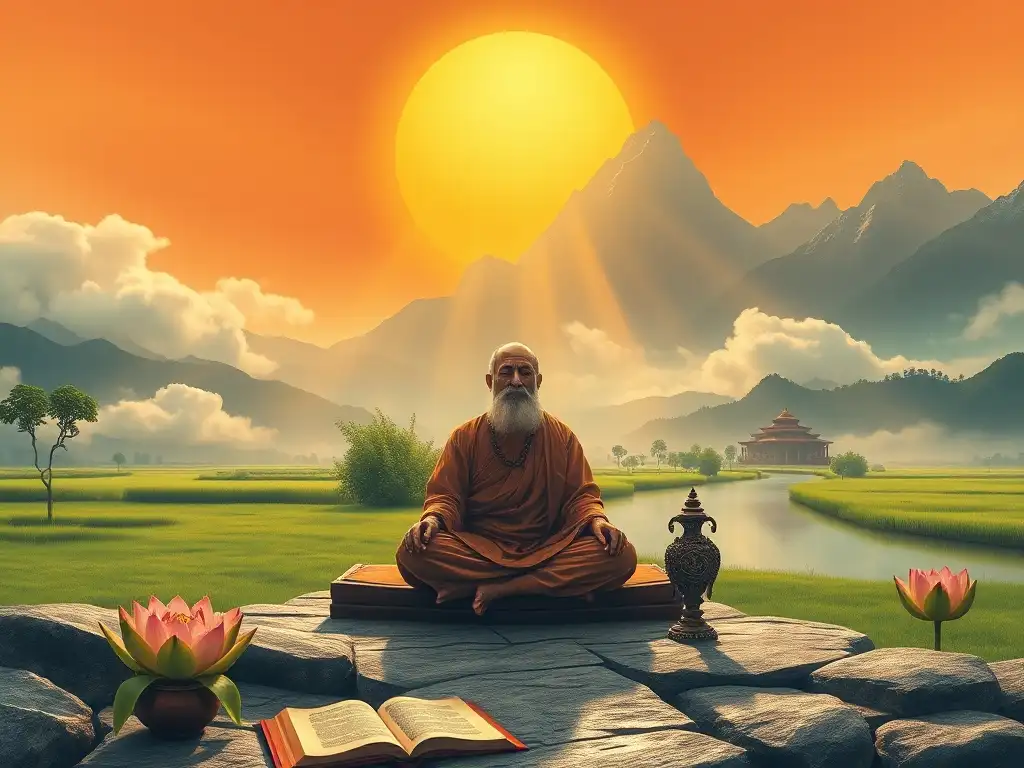
The Nature of Brahman in Hindu Philosophy
In Hindu philosophy, Brahman is the ultimate, unchanging reality, which transcends the physical universe and exists beyond human comprehension. Brahman is described as infinite, eternal, and all-encompassing, serving as the foundational essence of everything. The Upanishads, which are ancient texts central to Hindu thought, articulate Brahman as both the source and the substance of the universe.
- Characteristics of Brahman:
- Sat (Existence): Brahman is the ultimate existence that underlies all phenomena.
- Chit (Consciousness): It embodies pure consciousness, representing the awareness that is inherent in all beings.
- Ananda (Bliss): Brahman is also associated with ultimate bliss, suggesting that true happiness arises from realizing one's unity with it.
The relationship between Brahman and the universe is often compared to that of the ocean and its waves. Just as waves are manifestations of the ocean, the universe is seen as a manifestation of Brahman. This perspective encourages seekers to recognize the divine essence within all aspects of reality, promoting a sense of unity and interconnectedness.
Key Takeaways:
- Brahman is the ultimate reality in Hindu philosophy.
- It encompasses existence, consciousness, and bliss.
- The metaphor of ocean and waves illustrates the relationship between Brahman and the universe.
Atman and Its Relation to Reality
Atman refers to the individual self or soul in Hindu philosophy, which is considered eternal and distinct from the physical body. Understanding Atman is crucial for grasping the nature of reality within Hindu thought, as it posits that the true essence of an individual is not bound by worldly experiences or material existence.
- Key Aspects of Atman:
- Eternal Nature: Atman is unchanging and imperishable, existing beyond birth and death.
- Unity with Brahman: The ultimate goal in Hinduism is to realize the oneness of Atman with Brahman, a realization that leads to liberation (moksha) from the cycle of birth and rebirth (samsara).
This concept emphasizes the intrinsic value of each individual, encouraging ethical living and spiritual practices aimed at self-realization. The journey toward understanding Atman involves meditation, self-inquiry, and ethical conduct, guiding individuals to perceive the underlying reality of existence.
Highlights:
- Atman is the eternal self or soul, distinct from the physical body.
- The realization of Atman's unity with Brahman leads to liberation.
- The pursuit of self-realization is central to Hindu philosophical practice.
The Concept of Maya and Illusion in Hinduism
Maya is a critical concept in Hindu philosophy that refers to the illusionary nature of the world. It suggests that the physical universe is deceptive, creating a false perception of separateness and individuality. This concept is intricately linked to the understanding of reality, emphasizing that what is perceived through the senses does not represent the ultimate truth.
- Key Points about Maya:
- Illusion of Duality: Maya creates the illusion of duality, leading individuals to mistakenly identify themselves with their physical bodies and external circumstances.
- Spiritual Awakening: The realization of Maya's illusory nature is essential for spiritual awakening, helping individuals break free from the attachments and distractions of the material world.
Maya serves as a reminder that true knowledge transcends sensory experiences, guiding practitioners toward deeper insights into the nature of existence. By recognizing the transient nature of the material world, individuals can cultivate a more profound understanding of reality, ultimately aiming for liberation.
Important Concepts:
- Maya represents the illusory nature of the physical universe.
- It fosters the illusion of separation and individuality.
- Recognizing Maya is key to achieving spiritual awakening and liberation.
Hindu philosophical concepts regarding reality—encompassing Brahman, Atman, and Maya—offer profound insights into the nature of existence. By exploring these principles, individuals can deepen their understanding of their own reality and the interconnectedness of all life.
The Role of Karma in Shaping Reality
Karma, a fundamental concept in Hindu philosophy, plays a crucial role in understanding how actions influence reality. The term "karma" derives from the Sanskrit word meaning "action" or "deed," and it encapsulates the idea that every action has consequences that affect the individual’s future experiences, both in this life and in subsequent rebirths. This principle is intricately woven into the fabric of Hindu thought, shaping beliefs about morality, justice, and the nature of existence.
At its core, karma emphasizes that reality is not merely a passive experience; instead, individuals actively participate in the creation of their own destinies. The concept operates on a moral framework where good actions lead to positive outcomes, while harmful actions result in suffering. This cause-and-effect relationship is often illustrated through the metaphor of a seed: just as a seed will yield a specific type of fruit based on its nature, so too will actions produce corresponding results, which can manifest in various forms of life experiences.
The implications of karma extend beyond individual experiences to encompass broader societal dynamics. Collective karma—shaped by the actions of groups or communities—can influence societal norms, customs, and even the course of history. This interconnectedness illustrates a holistic view of reality, where personal choices resonate through the collective, shaping the societal landscape over time. It encourages individuals to act with mindfulness and responsibility, fostering a sense of ethical duty towards oneself and others.
Moreover, the concept of karma introduces the idea of rebirth (samsara), wherein the accumulated karma influences the circumstances of future existences. This cyclical understanding of life reinforces the belief that reality is not fixed; rather, it is fluid and shaped by ongoing actions and their repercussions. Each life is an opportunity for learning and growth, allowing individuals to refine their actions and, consequently, their reality.
Karma serves as a foundational pillar in Hindu philosophy, intricately linking actions to the fabric of reality. It emphasizes moral responsibility, the interconnectedness of individuals within society, and the dynamic nature of existence, ultimately guiding individuals towards a path of ethical living and spiritual evolution.
Different Schools of Hindu Philosophy and Their Views on Reality

Advaita Vedanta: Non-Duality and Reality
Advaita Vedanta, founded by the philosopher Adi Shankaracharya in the 8th century CE, presents a profound interpretation of reality that emphasizes non-duality (Advaita). This school posits that the ultimate reality is Brahman, which is infinite, formless, and beyond all attributes. The material world, or Maya, is considered an illusion that veils the true nature of Brahman.
In Advaita Vedanta, the individual self (Atman) is fundamentally identical to Brahman. This is encapsulated in the famous Mahavakya, or great utterance, "Tat Tvam Asi" (That Thou Art). The realization of this oneness is the ultimate goal of human existence, leading to liberation (Moksha).
Key Concepts:
- Maya: The illusory power that creates the perception of diversity and separation in the world.
- Atman: The individual soul or self, which is ultimately one with Brahman.
- Liberation: The realization of one's true nature, transcending the illusory world.
The practice of self-inquiry and meditation is crucial in Advaita Vedanta, allowing individuals to discern the transient nature of the world and recognize their inherent unity with the ultimate reality.
Dvaita Vedanta: Dualism and Its Perspective on Reality
In contrast to Advaita, Dvaita Vedanta, founded by Madhvacharya in the 13th century CE, articulates a dualistic view of reality. This school asserts that God (Vishnu) and the individual souls (Jivas) are fundamentally distinct. According to Dvaita, the material world is real, and the relationship between the individual and God is one of difference rather than unity.
Key Concepts:
- Vishnu: The Supreme Being, who is separate from His creations.
- Jivas: Individual souls that retain their uniqueness and individuality.
- Realism: The material world and the divine are both real, and their interactions play a crucial role in the cosmic order.
In Dvaita philosophy, devotion (Bhakti) is emphasized as the means to attain liberation. The worship of Vishnu is seen as essential for salvation, and understanding one's place within the divine hierarchy is pivotal to spiritual growth.
Samkhya Philosophy: Reality in Dualistic Framework
Samkhya, one of the oldest philosophical systems in Hindu thought, presents a dualistic framework that classifies reality into two fundamental categories: Purusha (consciousness) and Prakriti (matter). This system, attributed to the sage Kapila, asserts that these two elements are eternal and independent.
Key Concepts:
- Purusha: The true self, which is pure consciousness and unchanging.
- Prakriti: The material world, characterized by change, diversity, and evolution.
- Evolution of Reality: The interaction between Purusha and Prakriti gives rise to the diversity of the universe.
Samkhya philosophy emphasizes the importance of discernment (Viveka) to understand the distinction between the self and the material world. Liberation is achieved through recognizing the true nature of Purusha and freeing oneself from the binds of Prakriti.
These schools of Hindu philosophy offer distinct insights into the nature of reality, from the non-dualistic unity of Advaita to the dualistic perspectives of Dvaita and Samkhya. Each contributes to the rich tapestry of Hindu thought, providing varied pathways towards understanding and experiencing the ultimate reality.
Yoga Philosophy: Experiential Understanding of Reality
Yoga philosophy, rooted in ancient Indian traditions, offers a profound approach to understanding reality through direct experience. Unlike some philosophical systems that rely heavily on theoretical discussions, the Yoga school emphasizes practical techniques and experiential knowledge as a means to grasp the nature of existence.
At the core of Yoga philosophy is the concept of unity of consciousness. Practitioners believe that through disciplined practices such as meditation, breath control (pranayama), and physical postures (asanas), individuals can transcend their ordinary experiences and achieve a state of higher awareness. This state allows them to perceive reality beyond the limitations of the mind and senses. The goal is to attain moksha, or liberation, which is seen as the ultimate realization of the true self (Atman) and its oneness with the universal consciousness (Brahman).
Key Tenets of Yoga Philosophy
- Pratyahara (Withdrawal of Senses): This practice involves turning inward and detaching from external stimuli. By doing so, practitioners can focus on their inner world, facilitating a deeper understanding of their true nature and the nature of reality.
- Dhyana (Meditation): Through meditation, individuals can quiet the mind and ego, leading to a profound sense of clarity. This clarity allows practitioners to experience reality as it is, free from the distortions of personal bias and conditioning.
- Samadhi (Union with the Divine): The ultimate aim of Yoga is to achieve samadhi, a state of deep absorption and union with the divine. In this state, the practitioner experiences a dissolution of the individual self and realizes the interconnectedness of all existence.
The Role of Ethical Disciplines
Yoga philosophy also incorporates ethical disciplines known as the Yamas and Niyamas, which guide practitioners in aligning their actions with their spiritual goals. These principles promote a harmonious way of living that fosters mental clarity and a more profound understanding of reality.
- Yamas include non-violence (ahimsa), truthfulness (satya), and non-possessiveness (aparigraha).
- Niyamas consist of purity (saucha), contentment (santosha), and self-discipline (tapas).
Conclusion
In essence, Yoga philosophy posits that understanding the nature of reality is not merely an intellectual pursuit but an experiential journey. Through disciplined practice and ethical living, individuals can uncover the layers of illusion that obscure true knowledge, ultimately leading to a realization of the profound unity between the self and the cosmos. This experiential understanding of reality is a cornerstone of Hindu philosophy, illustrating how direct experience can illuminate the complexities of existence.
Hindu Texts and Their Exploration of Reality Concepts

The Upanishads: Philosophical Insights into Reality
The Upanishads, a collection of ancient texts that form the concluding part of the Vedas, serve as a foundational pillar of Hindu philosophy and provide profound insights into the nature of reality. These texts primarily focus on Brahman, the ultimate reality, and Atman, the individual self. The relationship between these two concepts is central to Upanishadic thought, suggesting that understanding the nature of Atman leads to the realization of Brahman.
The Upanishads articulate several key philosophical concepts regarding reality:
- Non-Dualism (Advaita): One of the most significant teachings is the non-dualistic view, which posits that Atman and Brahman are essentially the same. This perspective, articulated by philosopher Adi Shankaracharya, asserts that the perception of duality is an illusion (Maya). The famous phrase "Tat Tvam Asi" (That Thou Art) encapsulates this idea, emphasizing the unity of the self with the cosmic principle.
- Maya: The concept of Maya is crucial to understanding reality in the Upanishads. It refers to the illusionary nature of the world, which distracts individuals from perceiving the true essence of existence. This leads to the philosophical inquiry into what constitutes reality versus mere appearance.
- Meditation and Self-Realization: The Upanishads advocate for meditation as a means to transcend the illusions of the material world. Through introspection and spiritual practices, individuals can attain self-realization, thus understanding their true nature and the nature of the universe.
The Bhagavad Gita: Reality in Action and Duty
The Bhagavad Gita, part of the Indian epic Mahabharata, presents a unique perspective on reality through the lens of duty (Dharma) and action. It addresses the moral and philosophical dilemmas faced by the warrior Arjuna on the battlefield, ultimately exploring how one should engage with reality while adhering to their responsibilities.
Key themes in the Bhagavad Gita concerning reality include:
- Dharma: The concept of Dharma is pivotal in understanding how reality is navigated in the world. The Gita emphasizes that individuals must fulfill their duties according to their position in society, which in turn contributes to the greater balance of cosmic order. This reflects the interconnectedness of all beings within the framework of reality.
- Karma: The doctrine of Karma plays a significant role in the Gita’s exploration of reality. It teaches that every action has consequences, which reinforces the idea that reality is shaped by one’s deeds. The Gita encourages selfless action (Nishkama Karma), suggesting that detachment from the fruits of one’s actions leads to a deeper understanding of existence.
- Yoga: The Gita introduces various paths of Yoga, including Bhakti (devotion), Jnana (knowledge), and Karma (action) as means for individuals to engage with reality. Each path offers a different approach to understanding the universe and one's place within it, leading to spiritual enlightenment.
The Puranas: Mythological Perspectives on Reality
The Puranas are a genre of ancient Indian literature that blends mythology, history, and cosmology, providing a narrative framework through which to explore reality. They serve as a rich source of cultural and religious knowledge, often filled with allegorical tales that reflect deeper philosophical truths.
Key aspects of reality as depicted in the Puranas include:
- Creation Myths: Many Puranas contain elaborate accounts of the creation of the universe and the cycles of existence (Samsara). These narratives convey the idea of a cyclical reality, where creation and destruction are ongoing processes that reflect the transient nature of life.
- Divine Play (Lila): The Puranas often depict reality as a divine play (Lila) orchestrated by the gods. This perspective suggests that the world is not merely an illusion but a manifestation of divine consciousness, where every being and event holds significance within the grand cosmic scheme.
- Moral Lessons: The stories within the Puranas frequently serve to illustrate moral lessons and ethical dilemmas, framing the challenges of human existence within a broader cosmic reality. These narratives encourage readers to reflect on their actions and the consequences they bear in the context of divine order.
Through the exploration of these texts, we can appreciate the multifaceted nature of "Hindu philosophy and reality concepts," revealing a rich tapestry of thought that continues to influence spiritual discourse today.
Practical Implications of Hindu Philosophical Concepts on Reality

Meditation and Its Role in Understanding Reality
Meditation is a cornerstone of Hindu philosophy, deeply intertwined with its understanding of reality. Rooted in ancient texts such as the Vedas and Upanishads, meditation serves as a practical method for individuals to explore and comprehend the nature of existence. It is viewed as a gateway to realizing Brahman, the ultimate reality, and understanding the illusion of Maya.
- Types of Meditation:
- Dhyana: This form of meditation focuses on single-pointed concentration, fostering a deep internal awareness.
- Mantra Meditation: Utilizing sacred sounds, or mantras, this practice helps in calming the mind and connecting with higher states of consciousness.
- Benefits of Meditation:
- Clarity of Thought: Regular practice enhances cognitive functions, allowing practitioners to perceive reality without the distortions of ego and desire.
- Inner Peace: Meditative techniques promote a sense of tranquility, which is crucial for understanding the transient nature of worldly experiences.
Through meditation, individuals can transcend ordinary perceptions and tap into deeper layers of reality, aligning themselves with the cosmic order and achieving a state of enlightenment.
Ethical Living: How Hindu Philosophy Influences Reality Perception
Hindu philosophy emphasizes ethical living as a crucial aspect of understanding and interacting with reality. The principles of Dharma (righteous duty) play a vital role in shaping how individuals perceive and engage with the world around them.
- Concept of Dharma:
- Dharma encompasses moral values, social duties, and ethical conduct, influencing personal choices and societal interactions. When individuals live in accordance with Dharma, they contribute to a harmonious reality that reflects cosmic balance.
- Karma and Its Effects:
- The law of Karma dictates that every action has consequences, impacting not only the individual but also the collective reality. This principle encourages ethical behavior, as it fosters a deeper awareness of the interconnectedness of life.
- Examples of Ethical Living:
- Practicing non-violence ( Ahimsa), truthfulness ( Satya), and compassion can transform both personal experiences and broader societal realities, promoting a more just and equitable world.
By embracing ethical living rooted in Hindu philosophy, individuals not only shape their own realities but also contribute positively to the collective experience of society.
Application of Hindu Concepts in Modern Contexts
The ancient concepts of Hindu philosophy are not merely relics of the past; they find relevance in contemporary discussions about reality, spirituality, and ethics.
- Mindfulness and Well-being:
- Modern psychological practices often incorporate mindfulness techniques that echo the meditative practices of Hinduism. This alignment fosters mental well-being and a deeper understanding of one's place in the universe.
- Sustainability and Environmental Ethics:
- The Hindu principle of interconnectedness encourages sustainable living practices. By understanding that all life forms are part of a larger whole, there is a growing emphasis on environmental responsibility in various fields, from agriculture to urban planning.
- Interfaith Dialogue:
- Hindu philosophical concepts provide a framework for interreligious understanding. Engaging with ideas such as Brahman and Maya can enhance discussions about the nature of reality across different faiths, promoting tolerance and shared wisdom.
The application of Hindu philosophy and reality concepts in modern contexts highlights their enduring significance, offering practical tools for navigating the complexities of contemporary life while remaining rooted in ancient wisdom.
Conclusion: The Impact of Hindu Philosophy and Reality Concepts on Culture

Hindu philosophy has profoundly influenced various aspects of culture, society, and individual thought in ancient and modern India. The exploration of reality concepts within Hinduism, particularly through the lenses of Vedanta, Samkhya, and Yoga, has shaped how generations perceive existence, consciousness, and the universe. The key philosophical ideas, such as Brahman (the ultimate reality) and Maya (illusion), have left an indelible mark on literature, art, and spiritual practices.
The concept of Dharma, which emphasizes duty and moral order, has guided societal norms and ethics, fostering a culture that values harmony and balance in personal and communal life. The interplay between the individual and the cosmos, as articulated through philosophical discourse, has led to a holistic understanding of existence that transcends mere materialism, encouraging a quest for deeper spiritual truths.
The Legacy of Hindu Thought in Shaping Understanding of Reality
The legacy of Hindu thought is evident in its enduring influence on various fields of study. For instance, Indian classical philosophy has contributed to debates on metaphysics, epistemology, and ethics, offering unique perspectives that continue to resonate in contemporary philosophical discussions. The texts of renowned philosophers like Adi Shankaracharya and Maharishi Patanjali have provided frameworks for understanding the nature of consciousness and the self, which are increasingly relevant in modern psychological and cognitive science discourse.
Furthermore, the artistic expressions of Hindu philosophy are reflected in classical dance, music, and visual arts, where themes of reality and illusion are explored. The intricate symbolism found in temple architecture and sculpture serves not only as aesthetic marvels but also as philosophical narratives that invite contemplation of the nature of existence.
The integration of these ideas into daily life has fostered a culture of introspection and inquiry, encouraging individuals to seek meaning beyond the superficial layers of reality. Thus, the philosophical underpinnings of Hinduism continue to inspire and challenge both scholars and practitioners alike.
Future Directions in the Study of Hindu Philosophy and Reality Concepts
As we look to the future, the study of Hindu philosophy and reality concepts presents numerous avenues for exploration. Increasing interest in comparative philosophy opens up opportunities to examine the intersections between Hindu thought and other philosophical traditions, such as Buddhism, Taoism, and Western philosophy. This comparative approach can lead to a richer understanding of universal existential questions and the diverse ways cultures address the nature of reality.
Moreover, contemporary issues such as environmental ethics, social justice, and mental health can benefit from insights derived from Hindu philosophical frameworks. The emphasis on interconnectedness in Hindu thought can inform discussions on sustainability and responsibility towards the planet, while the principles of self-realization and meditative practices offer valuable tools for addressing modern psychological challenges.
In academia, interdisciplinary research that combines philosophy, theology, psychology, and cultural studies will likely yield new interpretations and applications of ancient concepts to modern contexts. Engaging with these ideas not only honors their historical significance but also keeps them relevant in the dynamic landscape of philosophical inquiry.
The impact of Hindu philosophy and its reality concepts is vast and multifaceted, shaping cultural narratives and inspiring future generations to explore the profound questions of existence, consciousness, and the nature of reality.
Frequently Asked Questions
Hindu philosophy encompasses various concepts like Brahman, the ultimate reality, and Maya, the illusion of the material world. These ideas help explain the nature of existence and perception.
How does Hindu philosophy differentiate between reality and illusion?
Hindu philosophy posits that Maya creates a veil over true reality, leading individuals to perceive a false sense of self. Understanding this distinction is crucial for spiritual enlightenment.
What role does meditation play in understanding reality in Hinduism?
Meditation in Hinduism serves as a key practice for transcending ordinary perception and experiencing higher states of awareness, allowing practitioners to connect with the ultimate reality.
How do the concepts of Dharma and Karma relate to Hindu views on reality?
Dharma represents moral order and duty, while Karma signifies actions that shape one’s reality. Together, they guide individuals in navigating the ethical complexities of life.
What influence did the Gupta Empire have on Hindu philosophical thought?
The Gupta Empire was a golden age for Hindu philosophy, fostering the development of schools of thought that deeply explored reality concepts, thereby influencing later philosophical and spiritual traditions.
Final Reflection: Embracing the Depths of Hindu Philosophy and Reality
Hindu philosophy offers profound insights into the nature of reality that resonate deeply in today's complex world. As we navigate the challenges of modern existence, the ancient teachings of Hindu thought remind us of the interconnectedness of all beings and the illusion of separateness. This timeless wisdom invites us to explore the layers of reality beyond mere appearances, urging us to seek a deeper understanding of our place in the universe.
Hindu philosophical concepts have significantly shaped our cultural and social landscape, encouraging a more holistic view of existence. The teachings of non-duality, for instance, challenge the binary thinking prevalent in contemporary society, promoting a sense of unity and compassion. As Mahatma Gandhi once said, The best way to find yourself is to lose yourself in the service of others.
This sentiment encapsulates the essence of Hindu philosophy, which emphasizes selflessness and the pursuit of truth as pathways to realizing our interconnected reality.
As we reflect on these teachings, I invite you to consider how you can integrate the principles of Hindu philosophy into your daily life. Take a moment to contemplate the nature of your own reality—how do your thoughts, actions, and relationships shape your experience? By embracing the wisdom of Hindu philosophy, you can cultivate a greater sense of awareness and connection, ultimately leading to a more fulfilling and harmonious existence. Let this exploration inspire you to delve deeper into the nature of reality and your role within it, fostering a journey of self-discovery and collective growth.
Unveil the Mysteries of Reality Today!
Thank you for exploring the depths of Hindu philosophical concepts with us. We hope you’ve gained valuable insights into the nature of reality that inspire you to reflect and take action. Now, it’s time to take these ideas further and integrate them into your own journey of understanding.
Here’s how you can delve deeper into these intriguing philosophies:
- Join a discussion group to explore Hindu philosophies and share your thoughts with others who share your passion.
- Visit ancient temples or cultural exhibitions to experience these concepts in real-world settings and let history come alive around you.
- Read a book on Hindu philosophy to broaden your perspective, perhaps exploring themes or ideas you’ve never considered before.
What new perspectives on reality have you uncovered through your exploration of Hindu philosophy, and how do you plan to apply them in your life?