
The Interactions Between Northern India and Neighboring Civilizations: A Historical Overview


Welcome to Ancient India History, where we embark on an enthralling journey through the rich tapestry of India's past. In our latest exploration, we delve into the Ancient Northern India civilizations and uncover the fascinating interactions between these vibrant societies and their neighboring cultures. What were the influences that shaped their development? How did trade, conflict, and collaboration weave together the intricate narratives of this region? Prepare to ignite your curiosity and deepen your understanding as we unravel these historical threads. Join us as we dive into this captivating chapter of ancient history!
Introduction to Ancient Northern India Civilizations
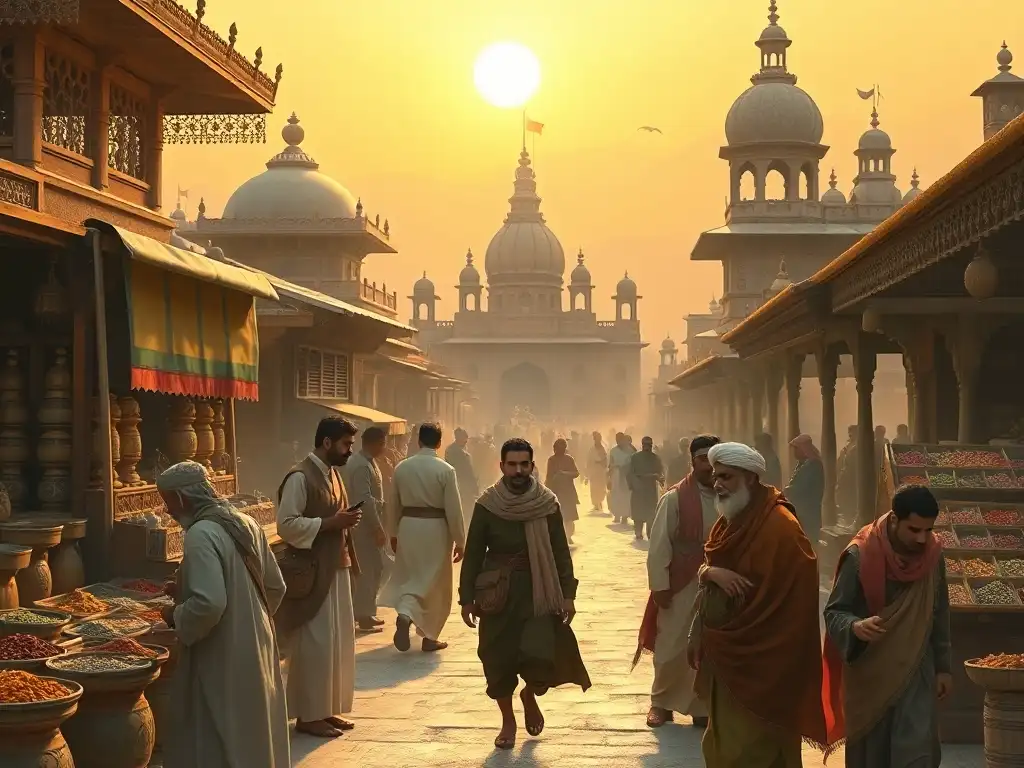
The history of Ancient Northern India civilizations is a fascinating tapestry woven from the threads of diverse cultures, trade routes, and significant historical interactions with neighboring societies. From the sophisticated urban planning of the Indus Valley Civilization to the philosophical advancements of the Gupta Empire, Northern India has played a crucial role in shaping the cultural and historical landscape of the Indian subcontinent. This article delves into the rich historical interactions between Northern India and its neighbors, highlighting how these encounters influenced the development of its civilizations and contributed to the broader narrative of ancient history.
Overview of Northern India’s Historical Significance
Northern India has long been a cradle of civilization, home to some of the earliest urban settlements and cultural developments. Its geographical location made it a strategic crossroads for trade and cultural exchange. Key features of its historical significance include:
- Geographical Diversity: The region encompasses fertile plains, mountainous terrains, and access to major rivers, facilitating agriculture and trade.
- Cultural Melting Pot: Northern India has been a hub for various ethnic groups, languages, and religions, enhancing its cultural richness.
- Political Powerhouses: Major dynasties such as the Mauryas, Guptas, and Kushans rose to prominence in this region, influencing governance and society.
The interactions with neighboring civilizations, including those in Central Asia and the Middle East, further enriched Northern India's historical narrative, fostering advancements in art, science, and philosophy.
Key Civilizations of Ancient Northern India
Several notable civilizations emerged in Northern India, each contributing uniquely to its historical legacy. Key civilizations include:
- Indus Valley Civilization (c. 3300–1300 BCE): Renowned for its urban planning, advanced drainage systems, and trade networks, this civilization laid the foundation for subsequent cultures.
- Vedic Civilization (c. 1500–500 BCE): Marked by the composition of the Vedas, this period saw the development of social structures and spiritual beliefs that would shape Indian society.
- Mauryan Empire (c. 322–185 BCE): Under Ashoka, the Mauryan Empire expanded significantly, promoting Buddhism and contributing to cultural and political stability.
- Gupta Empire (c. 320–550 CE): Often referred to as the Golden Age of India, this period was characterized by significant achievements in science, mathematics, literature, and art.
These civilizations interacted not only with each other but also with various neighboring cultures, leading to a dynamic exchange of ideas and practices.
Early Interactions with Neighboring Civilizations
The interactions between Northern India and its neighboring civilizations played a pivotal role in shaping its historical trajectory. These connections facilitated the exchange of goods, ideas, and cultural practices, leading to a rich tapestry of shared heritage.
The Indus Valley Civilization and Its Influence
The Indus Valley Civilization stands as one of the earliest examples of urban sophistication, with cities like Harappa and Mohenjo-Daro showcasing advanced architecture and planning. Its influence extended beyond its borders through:
- Trade Networks: Evidence shows that the Indus Valley engaged in trade with Mesopotamia, exchanging goods such as cotton textiles and beads.
- Cultural Exchange: Artifacts suggest that there was a transfer of ideas and technologies, influencing surrounding regions.
This civilization's sophisticated urban systems and trade practices laid the groundwork for subsequent interactions with neighboring cultures.
Connections with Mesopotamia and the Persian Empire
As Northern India developed, its interactions with Mesopotamia and the Persian Empire became increasingly significant. Key aspects of these connections include:
- Trade Routes: The Silk Road and maritime routes facilitated the exchange of goods, including spices, textiles, and precious stones, fostering economic ties.
- Cultural Influences: Interaction with Persian art and architecture can be seen in the subsequent cultural developments in Northern India, influencing everything from sculpture to urban planning.
These early interactions set the stage for the rich cultural exchanges that would define Northern India's history, influencing its civilizations and their contributions to the world.
The Vedic Period and Cultural Exchanges
The Vedic Period, which spans from approximately 1500 BCE to 500 BCE, marks a significant era in ancient Northern India characterized by the composition of the Vedas, the oldest sacred texts of Hinduism. This period not only laid the foundations for Indian culture and religion but also facilitated extensive cultural exchanges with neighboring civilizations. The interactions during this time were pivotal in shaping the social, political, and economic landscapes of the region.
The Emergence of Vedic Society
The emergence of Vedic society was marked by the migration of Indo-Aryan tribes into the northern Indian plains. This transition saw the establishment of a complex social structure, known as the varna system, which categorized society into four primary groups: Brahmins (priests), Kshatriyas (warriors), Vaishyas (traders and farmers), and Shudras (laborers). The Vedic texts also highlight the importance of rituals, sacrifices, and the pursuit of knowledge, which fostered a rich cultural milieu.
As the society evolved, interactions with indigenous cultures and neighboring regions became increasingly significant. The Vedic people engaged in various forms of exchange, including agricultural practices, trade, and the sharing of religious beliefs. This period also witnessed the blending of different cultural elements, which enriched the spiritual and philosophical traditions of ancient Northern India.
Trade Routes and Cultural Interactions with Central Asia
During the Vedic Period, trade routes began to emerge, facilitating not only the movement of goods but also the exchange of ideas and cultural practices. The region's strategic position made it a crossroads for trade between Central Asia and the Indian subcontinent. As a result, merchants and travelers traversed routes such as the Silk Road, which connected Northern India with regions as far as Persia and beyond.
Cultural interactions along these trade routes led to the introduction of new technologies, agricultural techniques, and even artistic influences. The exchange of goods like textiles, spices, and precious metals contributed to economic prosperity and established Northern India as a significant player in the ancient trade networks. Additionally, these interactions helped foster a sense of cultural synergy, where ideas from different civilizations merged and influenced local traditions.
Mauryan Empire: A Hub of Interaction
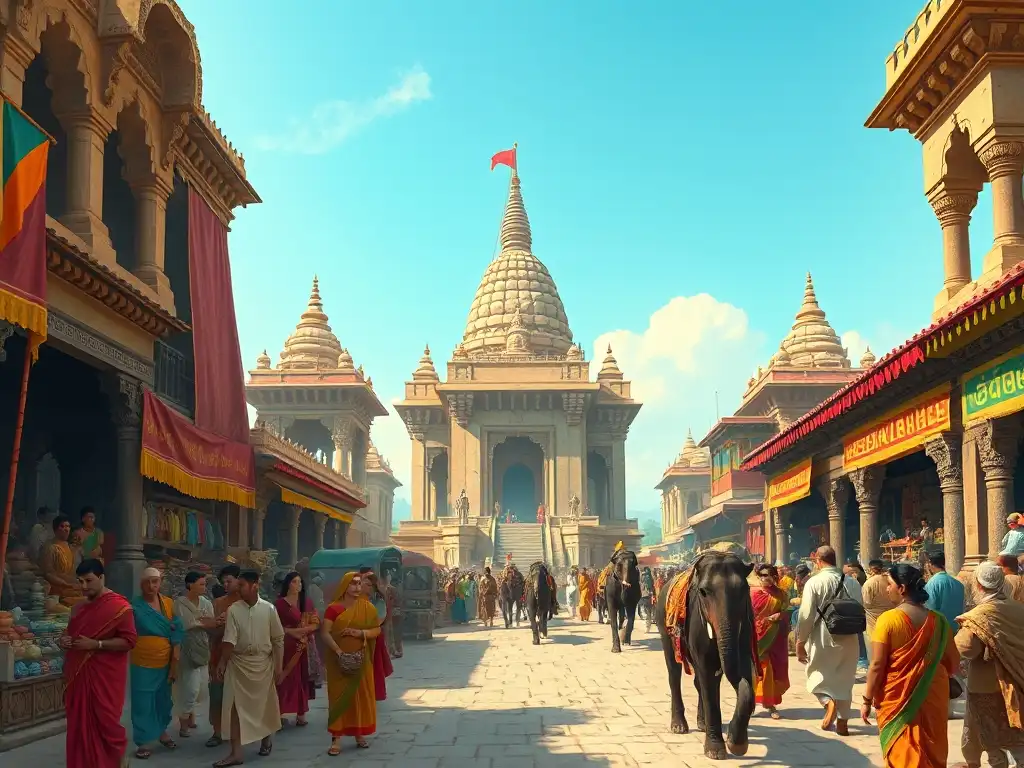
The Mauryan Empire, which existed from 322 BCE to 185 BCE, is often regarded as one of the most powerful and influential empires in ancient Northern India. It was during this period that Northern India experienced an unprecedented level of interaction with neighboring civilizations, solidifying the region's historical significance.
The Role of the Mauryan Empire in Regional Dynamics
Under the leadership of Chandragupta Maurya and later Ashoka the Great, the Mauryan Empire expanded its territory across the Indian subcontinent and beyond. This expansion was not merely military; it also facilitated diplomatic and cultural exchanges with various neighboring states. The Mauryan Empire established a centralized administration that enabled efficient governance and trade, creating a robust infrastructure that connected different regions.
The empire's influence extended beyond its borders, as it engaged in diplomatic relations and cultural exchanges with kingdoms in Central Asia, Persia, and even the Hellenistic world. The interplay of cultures during this time led to significant advancements in art, architecture, and philosophy, with the spread of Buddhism playing a key role in unifying diverse populations and promoting cultural exchange.
Diplomatic Relations with Hellenistic Civilizations
The Mauryan Empire's diplomatic relations with Hellenistic civilizations, particularly after Alexander the Great's campaigns in the late 4th century BCE, marked a critical juncture in ancient Northern India's history. The interactions with the Greeks facilitated an exchange of knowledge, art, and ideas, which influenced both Indian and Hellenistic cultures.
Notably, Ashoka's efforts to spread Buddhism reached far beyond India, with missionaries sent to various regions, including the Mediterranean. The establishment of trade relations and cultural ties with Hellenistic states not only enriched Indian civilization but also allowed for the exchange of philosophical and scientific ideas. This period exemplifies how ancient Northern India civilizations were not isolated but were actively engaged in a dynamic network of interactions that shaped their historical trajectory.
Gupta Empire and Its Influence on Neighboring Regions
The Gupta Empire, which flourished from approximately 240 to 550 CE, is often referred to as a golden age of ancient Northern India. This period was characterized by remarkable advancements in science, art, literature, and political organization. The Gupta rulers, particularly Chandragupta II and Samudragupta, expanded their territory and influence, establishing a vast empire that interacted significantly with neighboring regions.
The empire’s strategic location facilitated trade and cultural exchanges with various civilizations. The Gupta administration promoted trade routes that connected Northern India with Central Asia and beyond, allowing for the flow of goods, ideas, and technologies. This interaction was crucial in shaping the cultural landscape of both Northern India and its neighbors, leading to a blend of artistic styles, religious practices, and social structures.
The Golden Age of the Gupta Empire
The Gupta Empire is renowned for its cultural and intellectual achievements, often referred to as the "Golden Age" of India. During this time, advancements in mathematics, astronomy, literature, and the arts were profound. Scholars like Aryabhata made significant contributions, including the concept of zero and the approximation of pi, which had lasting impacts on mathematics globally.
In literature, poets such as Kalidasa produced timeless works that explored human emotions and nature, reflecting the rich cultural fabric of the era. The art of this period saw the flourishing of sculpture and temple architecture, characterized by intricate carvings and vibrant murals that depicted scenes from mythology and daily life.
The Gupta Empire also established a stable and prosperous economy, which facilitated trade with regions as far away as the Mediterranean and Southeast Asia. This economic strength underpinned the political stability and cultural achievements of the period, making it a pivotal time in the history of ancient Northern India.
Interactions with Southeast Asia and the Silk Road
The Gupta Empire’s influence extended beyond the Indian subcontinent, particularly into Southeast Asia. Trade routes, including parts of the Silk Road, were vital in fostering interactions between Northern India and various Southeast Asian kingdoms. Indian merchants and traders played a crucial role in introducing Indian culture, language, and religion to these regions.
The exchange was not merely economic; it also involved the spread of ideas and cultural practices. Hinduism and Buddhism gained significant traction in Southeast Asia, influencing local cultures and leading to the establishment of Indianized kingdoms, such as the Khmer Empire and Srivijaya. Temples, art, and literature from these regions bear the hallmark of Indian influence, showcasing the far-reaching impact of Gupta culture.
Furthermore, these interactions allowed for an exchange of goods, such as spices, textiles, and precious metals, enriching both the Indian economy and that of Southeast Asia. This interconnectedness during the Gupta period laid the groundwork for future diplomatic and cultural relations between India and its neighboring regions.
Religious and Cultural Exchanges in Ancient Northern India
Ancient Northern India was a melting pot of diverse religious and cultural influences, resulting from its geographical position and historical interactions with neighboring civilizations. The region witnessed a rich tapestry of belief systems, artistic expressions, and social practices that evolved through centuries of exchange and adaptation.
The Spread of Buddhism and Its Impact on Neighboring Cultures
Buddhism, originating in the 6th century BCE in Northern India, rapidly spread to neighboring regions, significantly impacting various cultures. The teachings of Siddhartha Gautama, known as the Buddha, resonated with many, leading to the establishment of monastic communities and the construction of stupas and monasteries throughout the region.
As Buddhism spread to Central Asia, China, and beyond, it facilitated a cultural exchange that introduced Indian philosophies, art, and literature to diverse civilizations. The Silk Road played a crucial role in this dissemination, allowing Buddhist monks and traders to travel and share their beliefs. This cross-cultural interaction led to the emergence of new forms of art, such as the Gandhara style, which blended Indian and Hellenistic influences.
Moreover, Buddhism’s emphasis on compassion and ethical conduct influenced neighboring cultures, contributing to the development of similar philosophies and practices. The establishment of trade links also fostered mutual respect and understanding among different religious communities, further enriching the cultural landscape of ancient Northern India.
Hinduism and Its Influence on Surrounding Civilizations
Hinduism, one of the oldest religions in the world, also played a significant role in shaping the cultural and religious landscape of ancient Northern India and its neighboring regions. The religion’s diverse beliefs, rituals, and practices found resonance beyond Indian borders, influencing various cultures across Southeast Asia and Central Asia.
The spread of Hinduism was largely facilitated through trade and cultural exchanges, as Indian merchants and travelers introduced their religious beliefs to local populations. Temples dedicated to Hindu deities, such as Shiva and Vishnu, were constructed in regions like Indonesia and Cambodia, illustrating the profound influence of Hindu cosmology and mythology on these cultures.
Hindu art and architecture also left a lasting legacy, with intricate carvings and sculptures reflecting the spiritual and aesthetic values of the religion. The cultural exchanges fostered by Hinduism contributed to the formation of Indianized states, where local traditions merged with Hindu practices, resulting in unique cultural identities.
The interactions between ancient Northern India and neighboring civilizations were vital in shaping the region's religious and cultural dynamics, leading to a rich exchange of ideas and practices that resonated through history.
Challenges and Conflicts: The Role of Invasions
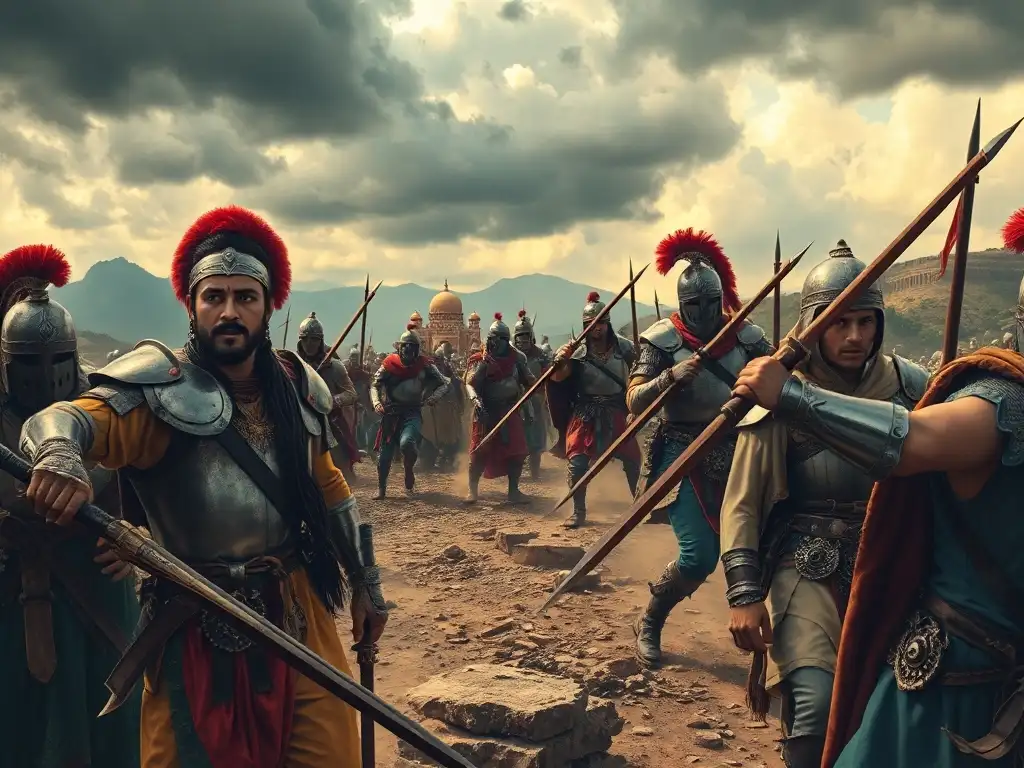
Throughout history, Northern India has been a pivotal region that has witnessed numerous invasions and conflicts, which significantly influenced its civilization. The interactions between local cultures and foreign invaders led to a complex tapestry of socio-political and cultural exchanges. These invasions were not merely acts of aggression; they often resulted in the amalgamation of ideas, technologies, and practices that shaped the course of Indian history. Understanding the role of these invasions is crucial to grasping the evolution of ancient Northern Indian civilizations.
The Persian Invasion and Its Effects on Northern India
The Persian invasion of Northern India, particularly during the reign of Darius I in the 6th century BCE, marked a significant turning point. The Achaemenid Empire expanded into the northwestern regions of India, influenced by trade routes and the rich resources available in the area. The Persian presence introduced new administrative practices and encouraged the establishment of trade networks that connected India with Persia and beyond.
The effects of this invasion were multifaceted:
- Cultural Exchange: The introduction of Persian art, architecture, and administrative systems influenced local practices. The use of the Persian script for administrative purposes introduced a new linguistic dimension to the region.
- Economic Impact: The Persian Empire facilitated trade across its vast territory, leading to an increase in commerce in Northern India. This economic boost enabled local kingdoms to flourish and engage more actively in regional trade.
- Political Dynamics: The Persian invasion also altered the political landscape. Local rulers had to navigate their relationships with the Persian authorities, which sometimes led to conflicts and, at other times, alliances that reshaped power dynamics in the region.
The Impact of the Huns on Ancient Northern Indian Civilizations
The Huns, a nomadic group that emerged in Central Asia, posed a significant threat to the stability of Northern India during the 5th and 6th centuries CE. Their invasions led to widespread upheaval and transformation within ancient Indian societies.
Key impacts of the Hunnic invasions included:
- Disruption of Socio-Political Structures: The Huns attacked and destabilized established kingdoms, including the Gupta Empire, leading to a fragmentation of political power and the rise of smaller regional states.
- Cultural Assimilation and Resistance: Amidst conflict, there were instances of cultural exchange and assimilation. The Huns brought with them new cultural influences, which sometimes blended with local traditions. However, this also led to resistance from local populations, resulting in a complex interplay of acceptance and rejection of foreign influences.
- Economic Decline: The invasions disrupted trade routes and agricultural production, leading to economic decline in affected regions. This decline had long-term implications for the prosperity of Northern Indian civilizations.
Conclusion: The Legacy of Interactions in Ancient Northern India
The interactions between ancient Northern Indian civilizations and neighboring cultures, particularly through invasions, have left an indelible mark on the region's history. These encounters, characterized by both conflict and collaboration, were instrumental in shaping the cultural, political, and economic landscape of ancient India.
Summary of Key Interactions and Their Historical Importance
The Persian and Hunnic invasions exemplify the broader theme of external influences in Northern India.
- Cultural Diffusion: These interactions led to significant cultural diffusion, where art, architecture, and governance practices were exchanged and adapted.
- Political Evolution: The invasions prompted shifts in political power, leading to the rise and fall of empires and the emergence of new political entities.
- Economic Transformation: Trade networks were established and transformed, reflecting the interconnectedness of Northern India with other civilizations.
These key interactions not only shaped ancient Northern India but also laid the groundwork for subsequent historical developments.
Lasting Influences on Modern Indian Culture and Society
The legacy of these ancient interactions continues to resonate in modern Indian culture and society.
- Cultural Heritage: Elements of Persian art and architecture can still be seen in Indian culture, particularly in the Indo-Islamic architectural style that emerged later.
- Linguistic Influence: The influence of Persian on languages spoken in Northern India, such as Urdu and Hindi, underscores the long-lasting impact of these ancient interactions.
- Political Structures: The historical evolution of governance in India can trace its roots back to the administrative practices introduced during these periods of foreign influence.
The invasions and interactions of ancient Northern India serve as a reminder of the region's dynamic history and its ability to adapt and integrate diverse influences, shaping a rich cultural legacy that endures to this day.
References and Further Reading on Ancient Northern India Civilizations
Understanding the intricacies of ancient Northern India civilizations requires a deep dive into various scholarly resources. This section compiles a list of recommended books, articles, and online resources that provide valuable insights into the historical interactions between Northern India and its neighboring civilizations.
Suggested Books and Articles on Regional Histories
-
"The Indus Valley Civilization: A Historical Overview" by Jane McIntosh
This book explores the Indus Valley Civilization's origins, development, and decline, emphasizing its interactions with neighboring cultures.
-
"Ancient India: A History" by Romila Thapar
Thapar's comprehensive account covers the evolution of Indian society, including the dynamics of Northern India and its relationships with adjacent regions.
-
"The Mauryan Empire" by Radhakumud Mookerji
This scholarly work examines the rise and fall of the Mauryan Empire, detailing its cultural exchanges and political interactions with surrounding territories.
-
"India: A History" by John Keay
Keay’s narrative outlines the vast timeline of Indian history, providing context for the ancient civilizations of Northern India and their external relationships.
-
"Cultural Interactions in Ancient India" (Journal of Ancient Civilizations)
This article discusses the cross-cultural exchanges that shaped the societal frameworks of Northern Indian civilizations.
-
"Trade and Trade Routes in Ancient India" by R. C. Majumdar
This text focuses on the economic interactions and trade networks that linked Northern India with other ancient cultures.
Online Resources for Further Exploration of Ancient Civilizations
-
Digital South Asia Library
An extensive online collection of resources related to South Asian history, culture, and civilization, offering access to texts, maps, and images.
-
The British Museum: Ancient India
This resource provides detailed information about artifacts from ancient Indian civilizations, along with historical context and analysis.
-
Internet Archive
A wealth of digitized books and documents on ancient Indian history, including texts on Northern India civilizations and their interactions.
-
Ancient History Encyclopedia
An educational website with articles on various topics related to ancient civilizations, including Northern India, its culture, and external influences.
-
Project Gutenberg
A collection of free eBooks on topics related to ancient history, including works by early historians and scholars that discuss Northern India's past.
These resources serve as a robust foundation for anyone interested in delving deeper into the rich tapestry of ancient Northern India civilizations and their interactions with neighboring cultures.
- Introduction to Ancient Northern India Civilizations
- Early Interactions with Neighboring Civilizations
- The Vedic Period and Cultural Exchanges
- Mauryan Empire: A Hub of Interaction
- Gupta Empire and Its Influence on Neighboring Regions
- Religious and Cultural Exchanges in Ancient Northern India
- Challenges and Conflicts: The Role of Invasions
- Conclusion: The Legacy of Interactions in Ancient Northern India
- References and Further Reading on Ancient Northern India Civilizations
- What were the major civilizations in Ancient Northern India?
- How did Northern India interact with its neighboring civilizations?
- What were the cultural contributions of Ancient Northern India?
- How did geography influence the civilizations of Northern India?
- What role did religion play in the life of Ancient Northern India civilizations?
Frequently Asked Questions
What were the major civilizations in Ancient Northern India?
Ancient Northern India was home to significant civilizations such as the Indus Valley Civilization, the Mauryan Empire, and the Gupta Empire, each contributing to the region's rich history.
How did Northern India interact with its neighboring civilizations?
Interactions included trade, cultural exchanges, and military conquests. These interactions significantly influenced the political and cultural landscape of Ancient Northern India.
What were the cultural contributions of Ancient Northern India?
Ancient Northern India contributed to philosophy, mathematics, and art. Notable achievements include the development of zero in mathematics and the creation of intricate sculptures and architecture.
How did geography influence the civilizations of Northern India?
The Himalayas, rivers, and fertile plains shaped agriculture, trade routes, and defense strategies, enabling the growth and sustenance of ancient civilizations in Northern India.
What role did religion play in the life of Ancient Northern India civilizations?
Religion was central to the cultural identity, influencing art, literature, and social structure. Major religions like Hinduism and Buddhism originated and flourished in this region, impacting millions.
Final Reflection: The Enduring Legacy of Ancient Northern India Civilizations
The interactions between ancient Northern India civilizations and their neighboring counterparts are not merely relics of the past; they are the foundation upon which our modern cultural and social landscapes are built. Today, as we navigate an increasingly interconnected world, the lessons from these ancient exchanges remind us of the importance of collaboration and understanding across diverse cultures. The rich tapestry of history woven by these civilizations serves as a powerful reminder that our shared human experience transcends borders and time.
The historical interactions between Northern India and its neighbors have profoundly shaped the region's identity and continue to resonate in contemporary society. From trade routes that facilitated the exchange of goods and ideas to the blending of artistic and philosophical traditions, these interactions have fostered a spirit of innovation and resilience. As historian Romila Thapar noted, History is not just about the past; it is a continuum that informs our present and shapes our future.
This perspective invites us to recognize that the legacies of ancient civilizations are not confined to textbooks but are alive in our cultural practices, languages, and social norms today.
As we reflect on the significance of these ancient Northern India civilizations, I encourage you to consider how their stories of interaction and exchange can inspire your own life. Embrace the richness of diversity in your surroundings, seek to understand different perspectives, and engage in meaningful dialogues with those from varied backgrounds. By doing so, you contribute to a legacy of interconnectedness that honors the past while paving the way for a more harmonious future. Let us carry forward the lessons of our ancestors, fostering a world where collaboration and mutual respect thrive.
Unveil the Rich Tapestry of Northern India's History!
Thank you for exploring the fascinating interactions between Northern India and its neighboring civilizations. Your interest in this rich historical overview not only enhances your understanding but also connects you to the vibrant cultures that have shaped our world.
Now, it’s time to take that knowledge a step further! Here are a few actionable suggestions for you to dive deeper:
- Join a local history group to discuss and share insights about the civilizations that influenced Northern India.
- Visit a nearby museum or historical site that features artifacts from ancient India, and elevate your learning experience!
- Share your newfound knowledge with friends or on social media, inviting others to engage in the conversation about these remarkable historical connections.
What’s one surprising fact you discovered about Northern India’s interactions with its neighbors that you can't wait to share?