
The Science of Patterns: How Ancient Indian Mathematics Inspired Modern Design Technologies

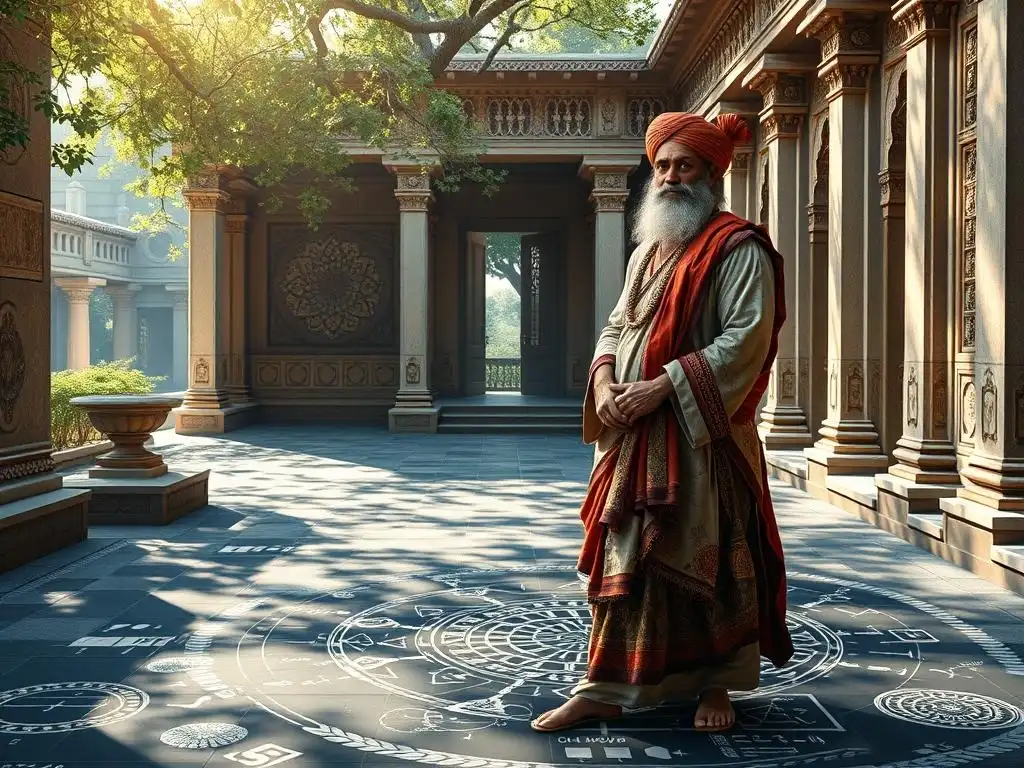
Welcome to Ancient India History, where we embark on a fascinating journey through the rich tapestry of India’s past! In this exploration, we delve into how Ancient Indian mathematics influence has shaped modern design technologies, connecting the brilliance of ancient civilizations with today’s innovations. Discover the intricate patterns and profound insights that originated thousands of years ago and continue to inspire cutting-edge advancements. Join us as we unravel the secrets of the past and see how they resonate in our contemporary world—your adventure into the depths of history awaits!
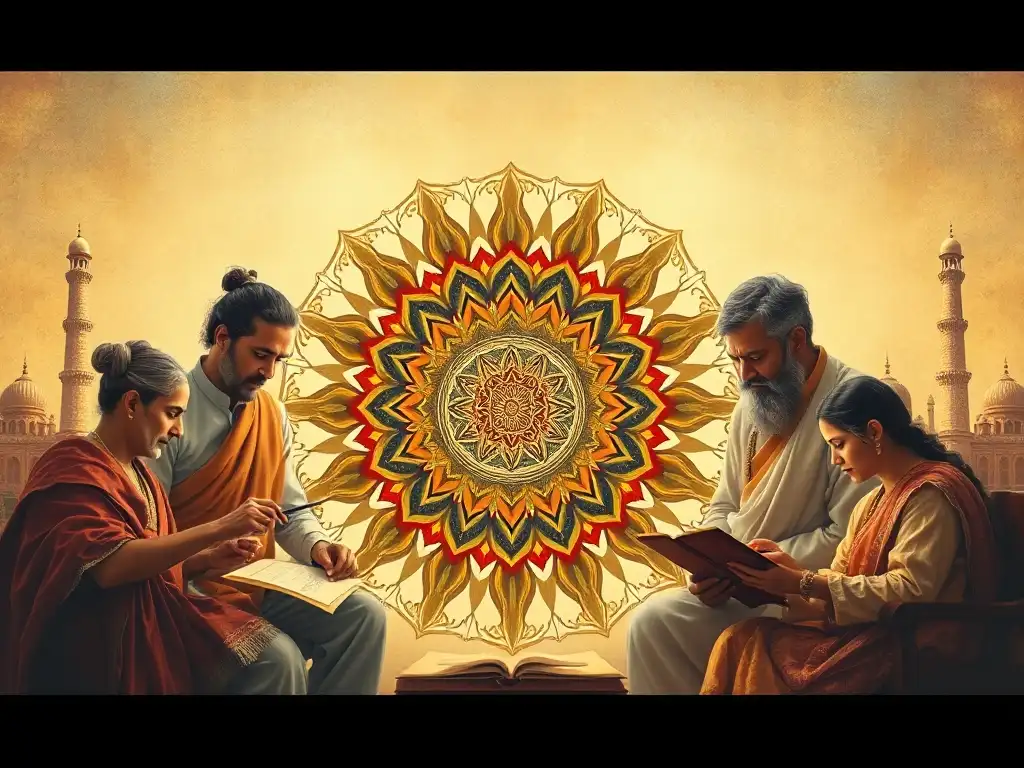
Exploring the intricate relationship between ancient Indian mathematics and modern design technologies reveals a fascinating tapestry of innovation and creativity. Ancient Indian mathematicians laid the groundwork for concepts that not only shaped their own civilization but also influenced contemporary scientific and technological advancements. From the precise calculations of the Indus Valley Civilization to the sophisticated theories articulated during the Gupta Empire, the mathematical knowledge of ancient India has permeated various fields, including architecture, engineering, and design. This article delves into the significant influence of ancient Indian mathematics, illustrating how its principles continue to inspire modern technologies and designs.
Introduction to Ancient Indian Mathematics Influence
Ancient Indian mathematics is a treasure trove of knowledge that has left a lasting impact on various domains, particularly in shaping modern design technologies. The influence of ancient Indian mathematics is evident in several contemporary applications, such as computer algorithms, architectural designs, and even graphic arts. The mathematical advancements from ancient India, characterized by their systematic approach and profound understanding of patterns, have provided the bedrock for many modern innovations.
Historical Foundations of Ancient Indian Mathematics
The roots of mathematics in ancient India can be traced back to various texts and practices that emerged over millennia. The earliest evidence of mathematical activity can be found in the artifacts of the Indus Valley Civilization (approximately 3300–1300 BCE), which showcase advanced understanding in measurement, geometry, and urban planning. As time progressed, Indian scholars like Aryabhata and Brahmagupta further expanded mathematical knowledge, introducing concepts that would later be integral to global mathematics.
Key Contributions of Ancient Mathematicians
Ancient Indian mathematicians made remarkable contributions that have shaped the field significantly:
- Aryabhata (476–550 CE): Credited with introducing the concept of zero as a numeral and establishing a place-value system, Aryabhata's work laid the foundation for arithmetic and algebra.
- Brahmagupta (598–668 CE): Known for his rules on arithmetic operations, Brahmagupta's texts provided insights into solving quadratic equations and understanding negative numbers.
- Bhaskara II (1114–1185 CE): His works, particularly "Lilavati," explored practical applications of mathematics, such as calculation of areas, volumes, and astronomical calculations.
These mathematicians not only advanced theoretical mathematics but also contributed to practical applications that resonate in today's technological landscape.
Influence of Vedic Texts on Mathematical Concepts
The Vedic texts, composed between 1500 and 500 BCE, are pivotal in understanding the development of mathematical thought in ancient India. These texts contain references to various mathematical concepts, including:
- Geometry: The Sulbasutras, part of Vedic literature, outline geometrical principles for constructing altars, demonstrating a sophisticated understanding of spatial relationships.
- Arithmetic and Algebra: The Vedic texts provide algorithms for multiplication and division, which were crucial for trade and commerce.
- Astronomy: Ancient Indian astronomers used mathematical calculations for celestial navigation, leading to advancements in both mathematics and astronomy.
The intricate patterns and methodologies described in these texts not only contributed to the rich tapestry of ancient Indian mathematics but also served as a source of inspiration for modern mathematical and design technologies.
By examining these historical foundations and contributions, we can appreciate the profound influence of ancient Indian mathematics and its ongoing relevance in the realm of technology and design.
Patterns in Ancient Indian Art and Design
Ancient Indian art and design are renowned for their intricate patterns and mathematical precision. From the geometric designs found in temple architecture to the elaborate motifs in textiles and pottery, ancient Indian artisans employed sophisticated mathematical principles to create aesthetically pleasing and symbolically rich works. These patterns often reflected a deep understanding of geometry and symmetry, which were not merely artistic choices but also held cultural and spiritual significance.
The use of patterns was prevalent across various forms of art, including frescoes, sculptures, and even dance forms, showcasing a harmonious blend of mathematics and creativity. The underlying mathematical principles served as a foundation for creating balance, proportion, and rhythm in art, mirroring the natural world and the cosmos. As such, the patterns found in ancient Indian art provide a fascinating glimpse into the mathematical knowledge of the time, demonstrating how it influenced their cultural expressions.
The Use of Geometry in Traditional Art Forms
Geometry played a crucial role in shaping traditional art forms across ancient India. Artists utilized geometric shapes and forms to create designs that were not only visually striking but also conveyed deeper meanings. For instance, the mandala, a spiritual and ritual symbol, features intricate, symmetrical patterns that represent the universe, often constructed using precise geometric calculations.
In textiles, we observe the use of repeating patterns and motifs derived from geometric principles. Techniques such as block printing and weaving incorporated these mathematical designs, demonstrating how geometry can enhance both functionality and beauty.
Additionally, traditional Indian architecture, especially in temple design, relied heavily on geometric arrangements. The layout of temples often followed specific proportions derived from ancient texts, ensuring alignment with cosmic principles and enhancing spiritual experiences. The geometric harmony found in these structures reflects the sophisticated understanding of space and form that ancient Indian mathematicians possessed.
Case Study: The Architectural Marvels of Ancient India
The architectural wonders of ancient India, such as the Brihadeeswarar Temple in Thanjavur and the Sun Temple at Konark, exemplify the profound influence of mathematics on design and construction. These structures are not only feats of engineering but also showcase the meticulous application of mathematical principles in their design.
- Brihadeeswarar Temple: Built in the 11th century, this temple is a UNESCO World Heritage Site renowned for its grand scale and intricate carvings. The temple's layout follows a precise geometric plan, with its towering vimana (temple tower) exhibiting remarkable symmetry and proportion. The use of specific ratios in its dimensions enhances its majestic appearance.
- Sun Temple at Konark: Constructed in the 13th century, this temple resembles a colossal chariot with intricately carved wheels and horses. The alignment of the temple with the sun demonstrates an advanced understanding of astronomy and geometry. Each wheel is designed with perfect circular proportions, reflecting the mathematical prowess of its creators.
These case studies highlight how ancient Indian mathematicians and architects utilized geometric concepts to create timeless architectural masterpieces that continue to inspire modern design.
Modern Design Technologies Inspired by Ancient Indian Mathematics
The influence of ancient Indian mathematics extends into contemporary design technologies, where the principles of patterns, geometry, and symmetry are integrated into various fields. Designers and engineers often draw inspiration from historical Indian art and architecture to create innovative solutions that are both functional and aesthetically appealing.
Integrating Mathematical Patterns into Modern Design
In the realm of modern design, the integration of ancient mathematical patterns has led to the development of unique visual styles and structural designs. Architects and designers incorporate fractal patterns, symmetrical designs, and geometric configurations rooted in ancient Indian traditions to create spaces and products that resonate with cultural significance while meeting contemporary needs.
For example, the use of tessellation—where shapes fit together perfectly without gaps—can be traced back to ancient Indian decorative arts. This concept is now widely applied in modern flooring, wall designs, and even digital graphics, showcasing how ancient ideas are reimagined for modern applications.
Moreover, parametric design, a computational design process that allows for the manipulation of geometric parameters, often employs principles found in ancient Indian mathematics. Architects leverage these patterns to explore new forms and structures that are sustainable and visually impactful, bridging the gap between tradition and innovation.
Examples of Modern Technologies Utilizing Ancient Patterns
Several modern technologies have successfully incorporated ancient Indian mathematical patterns into their designs. Here are a few notable examples:
- 3D Printing: Many designers use ancient geometric patterns to create 3D-printed objects that reflect cultural heritage. These designs not only celebrate traditional aesthetics but also provide unique functional benefits.
- Architectural Software: Programs that allow architects to visualize and manipulate designs often include algorithms inspired by ancient patterns. This enables the creation of structures that are not only visually appealing but also structurally sound.
- Fashion and Textiles: The revival of traditional motifs in contemporary fashion showcases how ancient patterns influence modern textile design. Designers are increasingly using algorithms to create patterns that pay homage to ancient Indian textiles, blending heritage with modern trends.
- Interior Design: The use of geometric and fractal patterns in interior design has gained popularity, with many modern spaces reflecting the intricate designs of ancient Indian architecture. This fusion creates environments that are rich in cultural narrative while maintaining a modern aesthetic.
Through these examples, we can see how ancient Indian mathematics continues to inspire contemporary design technologies, fostering a dialogue between the past and the present.
The Science Behind Patterns: Mathematical Principles Explained
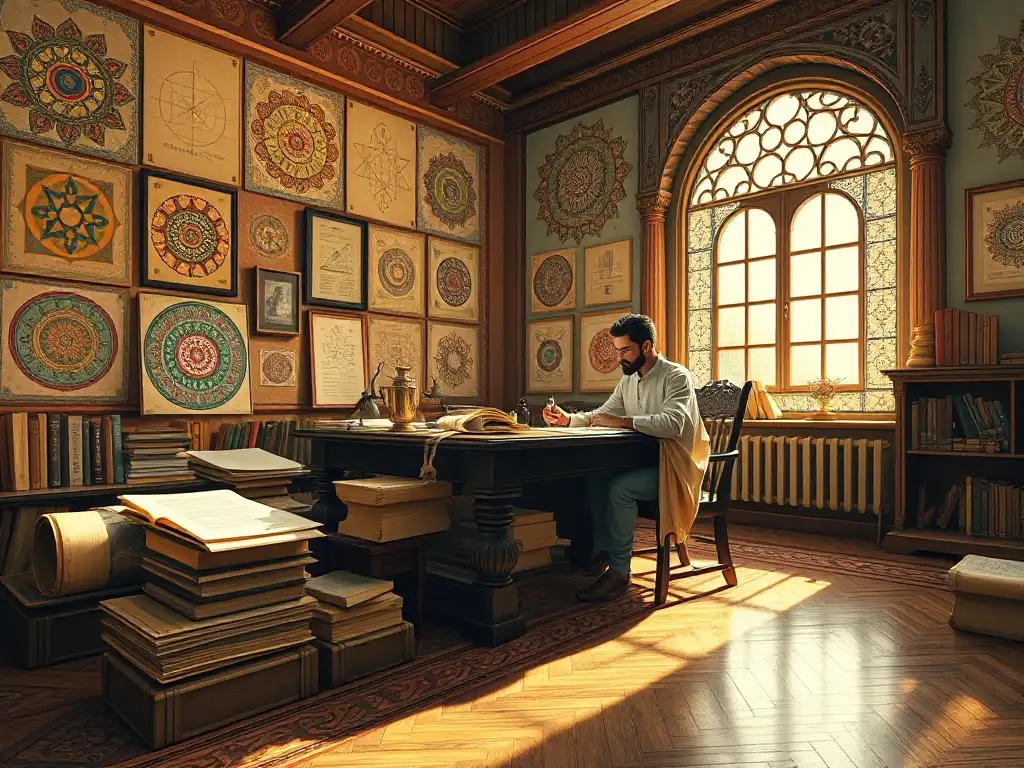
Patterns are an integral part of both nature and human-made designs, serving as a bridge between aesthetics and mathematics. Ancient Indian mathematics laid the groundwork for understanding these patterns through principles such as geometry, symmetry, and proportion. These principles are not only foundational in art and architecture but also in modern design technologies that utilize algorithms and computational design.
In ancient India, mathematicians like Aryabhata and Brahmagupta explored the relationships between shapes, dimensions, and their proportions. Their work on geometry, particularly in the context of constructing temples and palaces, emphasized the importance of symmetry and scale. This understanding of geometric relationships has been translated into algorithms used in modern computer-aided design (CAD) systems, allowing designers to create intricate patterns with precision and efficiency.
Understanding Symmetry and Proportion
Symmetry and proportion are two fundamental concepts in mathematics that have been extensively studied in the context of ancient Indian art and architecture. Symmetry refers to the balanced and harmonious arrangement of elements, while proportion deals with the relative size of these elements to one another.
Ancient Indian architects and artists applied these principles to create visually appealing structures, such as the intricate carvings seen in temples like the Brihadeeswarar Temple in Thanjavur. The use of golden ratios and other proportional systems allowed for the creation of aesthetically pleasing designs that have stood the test of time.
Modern design technologies leverage these principles through algorithms that analyze and replicate symmetry and proportion in various mediums. For instance, fractals, which are geometric shapes that can be split into parts, each of which is a reduced-scale copy of the whole, are inspired by the natural patterns observed in ancient Indian designs. This application can be seen in everything from architecture to digital art, demonstrating the lasting influence of these mathematical concepts.
The Role of Algorithms in Design Inspired by Ancient Patterns
Algorithms play a crucial role in translating ancient mathematical principles into modern design practices. The study of patterns—be it in textiles, architecture, or graphic design—often relies on algorithmic processes to generate complex forms and structures.
Ancient Indian mathematicians developed methods for simplifying calculations and solving problems, which laid the groundwork for algorithmic thinking. These methods have evolved into sophisticated computer algorithms that can efficiently create intricate patterns, optimize designs, and even simulate natural phenomena.
For example, the use of parametric design tools allows architects and designers to manipulate parameters such as symmetry and proportion based on ancient patterns, resulting in innovative and sustainable designs. This technological advancement showcases how ancient Indian mathematics continues to inspire and influence contemporary design methodologies.
The Influence of Ancient Indian Mathematics on Global Design
The mathematical concepts and patterns developed in ancient India have transcended geographical boundaries, influencing global design practices across various cultures. The beauty and complexity of these patterns can be observed in art, architecture, and even technology worldwide.
Ancient Indian designs often feature intricate geometric patterns and a deep understanding of symmetry. This has inspired artists and designers from different regions to adopt similar approaches in their work. Moreover, the principles of ancient Indian mathematics have been integrated into educational curricula around the world, promoting a deeper understanding of the significance of these contributions.
Cross-Cultural Impact of Ancient Indian Patterns
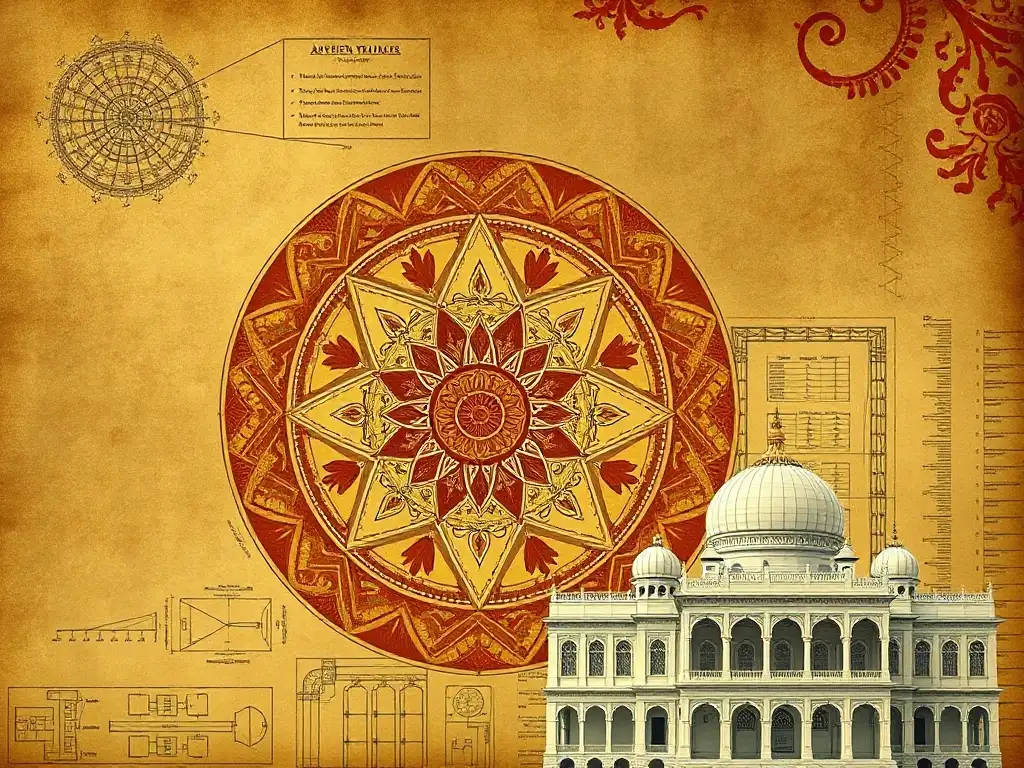
The cross-cultural impact of ancient Indian patterns is evident in various art forms and architectural styles across the globe. For instance, the Mughal architecture in India exhibits a blend of Persian and Indian influences, showcasing the fusion of geometric patterns and intricate designs. This style later influenced architectural movements in Europe and beyond.
Additionally, the spread of Indian textiles, featuring intricate patterns and designs, has inspired fashion and interior design industries worldwide. The use of block printing techniques, which originated in ancient India, is now a staple in global textile production, highlighting the enduring legacy of these ancient patterns.
Case Studies of Successful Integrations
Several contemporary design projects have successfully integrated ancient Indian mathematical principles into their frameworks. One notable example is the Lotus Temple in Delhi, which employs geometric principles derived from ancient Indian architecture. The construction of the temple showcases a harmonious blend of modern engineering and ancient wisdom, reflecting the beauty of symmetry and proportion.
Another fascinating case is the use of traditional Indian motifs in modern digital art and graphic design. Artists and designers are increasingly drawing inspiration from the intricate patterns found in ancient Indian manuscripts and textiles, creating a fusion of old and new that resonates with audiences today.
These case studies illustrate how ancient Indian mathematics continues to inspire innovation and creativity in design, proving that the principles established centuries ago are still relevant and influential in contemporary practices.
Conclusion: The Enduring Legacy of Ancient Indian Mathematics
The influence of ancient Indian mathematics extends far beyond the boundaries of its historical context, echoing through the corridors of modern design technologies. From the sophisticated algorithms of the Gupta period, which laid the groundwork for mathematical concepts still in use today, to the intricate patterns found in traditional Indian art and architecture, the legacy of this ancient knowledge is profound.
One of the most significant contributions is the concept of zero, which revolutionized arithmetic and calculus, affecting fields as diverse as engineering, computer science, and graphics design. Furthermore, the principles of geometry explored by ancient Indian mathematicians have been instrumental in the development of modern architectural practices, where symmetry and proportion are paramount.
As contemporary designers and engineers continue to draw inspiration from these ancient techniques, it becomes evident that the mathematical patterns created centuries ago are not only relevant but are also foundational in our quest to innovate. The intricate designs of Indian textiles, the layout of cities, and even the algorithms that power modern computing can trace their roots back to the mathematical frameworks established in ancient India.
This enduring legacy underscores the importance of preserving and studying ancient mathematical texts, as they offer insights that can enhance our understanding of both the past and the future. By acknowledging the contributions of ancient Indian mathematics, we can appreciate the rich tapestry of knowledge that continues to influence our world today.
Call to Action: Exploring Further
To delve deeper into the fascinating world of ancient Indian mathematics and its impact on modern technologies, consider the following steps:
- Research Ancient Texts: Explore classic texts such as the Sulba Sutras and Aryabhata's Aryabhatiya, which contain valuable mathematical principles and techniques.
- Attend Workshops and Lectures: Look for educational programs that focus on the history of mathematics and its applications in technology. Many universities and cultural organizations offer resources to enhance your understanding.
- Engage with Online Communities: Join forums and social media groups dedicated to mathematics history, where enthusiasts and scholars share insights and discoveries.
- Visit Historical Sites: If possible, explore museums and sites in India that showcase the rich history of mathematics, including ancient manuscripts and architectural marvels influenced by mathematical principles.
- Apply the Knowledge: Experiment with incorporating ancient design principles into modern projects, whether in art, architecture, or technology. This practical approach can lead to innovative solutions inspired by historical wisdom.
By taking these steps, you can further appreciate the intricate connections between ancient Indian mathematics and contemporary design technologies, fostering a deeper understanding of how the past continues to shape the future.
- Introduction to Ancient Indian Mathematics Influence
- Historical Foundations of Ancient Indian Mathematics
- Patterns in Ancient Indian Art and Design
- Modern Design Technologies Inspired by Ancient Indian Mathematics
- The Science Behind Patterns: Mathematical Principles Explained
- Understanding Symmetry and Proportion
- The Role of Algorithms in Design Inspired by Ancient Patterns
- The Influence of Ancient Indian Mathematics on Global Design
- Cross-Cultural Impact of Ancient Indian Patterns
- Case Studies of Successful Integrations
- Conclusion: The Enduring Legacy of Ancient Indian Mathematics
- Call to Action: Exploring Further
- What is the significance of ancient Indian mathematics in modern design technologies?
- How did ancient Indian mathematicians contribute to the field of geometry?
- What are some examples of ancient Indian mathematical texts that impacted modern science?
- In what ways did the Indus Valley Civilization contribute to mathematics?
- How does the study of ancient Indian mathematics enhance our understanding of cultural heritage?
Frequently Asked Questions
What is the significance of ancient Indian mathematics in modern design technologies?
Ancient Indian mathematics has had a profound influence on modern design technologies by introducing concepts such as geometry and numerical systems that are fundamental to contemporary engineering and architecture.
How did ancient Indian mathematicians contribute to the field of geometry?
Ancient Indian mathematicians, like Brahmagupta and Aryabhata, made significant contributions to geometry, including the formulation of the Pythagorean theorem and methods for calculating areas of various shapes, which are essential in today's design applications.
What are some examples of ancient Indian mathematical texts that impacted modern science?
Key texts such as Aryabhata's Aryabhatiya and Brahmagupta's Brahmasphutasiddhanta include advanced mathematical concepts that have influenced not only design but also astronomy, navigation, and engineering.
In what ways did the Indus Valley Civilization contribute to mathematics?
The Indus Valley Civilization showcased advanced urban planning and architectural designs, indicating a sophisticated understanding of measurement and geometry, which laid the groundwork for future mathematical developments in India.
How does the study of ancient Indian mathematics enhance our understanding of cultural heritage?
Studying ancient Indian mathematics reveals the rich intellectual traditions of the time, showcasing how mathematics was intertwined with art, architecture, and spiritual beliefs, thus enriching our appreciation of cultural heritage.
Final Reflection: The Enduring Legacy of Ancient Indian Mathematics
The intricate relationship between ancient Indian mathematics and modern design technologies highlights the profound impact of historical knowledge on contemporary innovation. As we navigate a world increasingly driven by technology, it becomes evident that the foundational principles established by ancient scholars continue to shape our design paradigms today. The realization that these mathematical concepts are not merely relics of the past, but rather living influences that inform our present and future, is both striking and essential.
The influence of ancient Indian mathematics extends far beyond academic circles; it permeates our cultural and social landscapes, inspiring creativity and innovation across various fields. From architecture to digital design, the patterns and principles derived from this rich mathematical heritage resonate in our everyday lives. As the renowned mathematician Srinivasa Ramanujan once said, An equation for me has no meaning unless it expresses a thought of God.
This perspective invites us to appreciate the spiritual and philosophical dimensions of mathematics, reminding us that these ancient ideas are not just numbers and formulas, but reflections of a deeper understanding of the universe.
As we reflect on the lessons from ancient Indian mathematics, let us embrace the call to integrate these timeless principles into our own lives and work. Consider how the patterns and structures that have stood the test of time can inspire your creativity and problem-solving approaches.
Whether you are an artist, designer, or engineer, take a moment to explore the connections between your work and the mathematical traditions that have shaped our world. By doing so, you not only honor the legacy of these ancient thinkers but also contribute to a future where innovation is rooted in a rich tapestry of knowledge and culture.
Unveil the Secrets of Mathematical Patterns!
Thank you for diving into the fascinating world of ancient Indian mathematics with us! You’ve uncovered the incredible influence this rich heritage has on modern design technologies. Now, it's time to put that inspiration into action!
Here are a few practical steps you can take right now:
- Explore a local exhibit or an online resource that showcases contemporary designs inspired by ancient patterns. Witness how history meets innovation!
- Share your newfound knowledge! Engage in discussions with friends or on social media about how ancient Indian mathematics has shaped today’s design landscape.
- Challenge yourself! Create your own design inspired by ancient patterns using everyday materials, and don't forget to share your creations!
What innovative design ideas will you develop by blending ancient wisdom with modern technology? Let's spark a conversation!