
Ancient Indian Mathematics and Its Unseen Influence on Modern Robotics

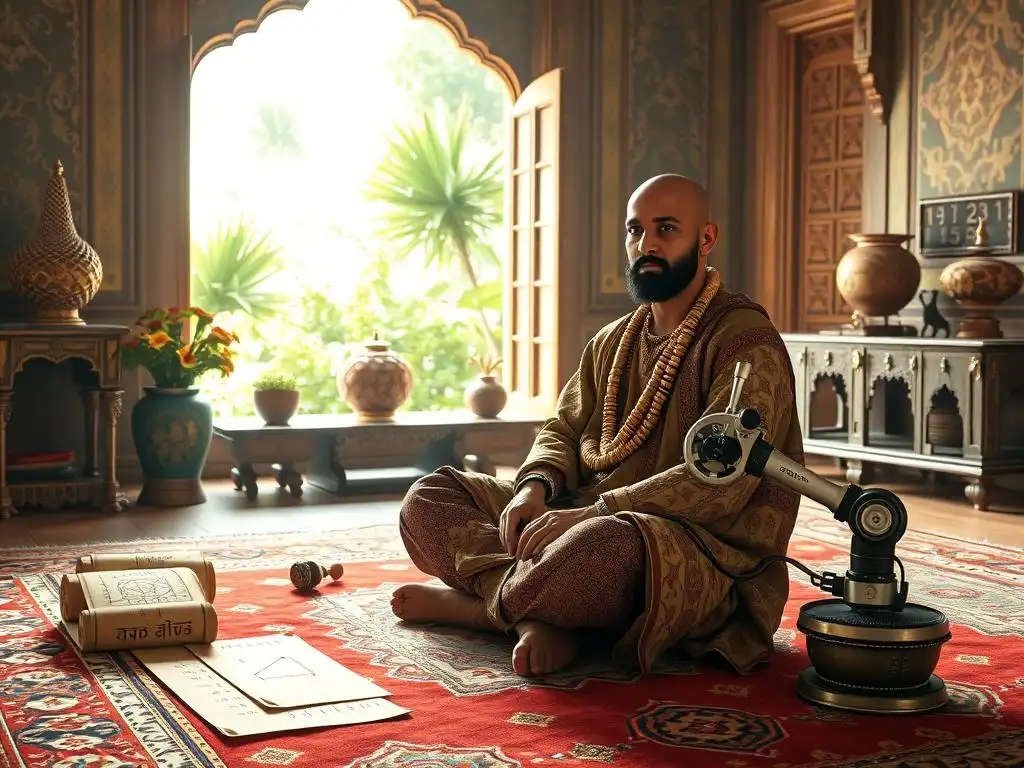
Welcome to Ancient India History, where we embark on a fascinating journey through the rich tapestry of India's past! Here, we delve deep into the incredible contributions of ancient Indian civilizations, exploring how their groundbreaking advancements have shaped our modern world.
In our featured article, "Ancient Indian Mathematics and Its Unseen Influence on Modern Robotics," we unravel the intriguing connections between ancient mathematical principles and contemporary technological innovations. Get ready to discover how the wisdom of the past continues to inspire the future, as we invite you to explore the profound legacy of ancient Indian mathematics in the realm of robotics and beyond!
Introduction to Ancient Indian Mathematics and Robotics
Ancient Indian mathematics is a treasure trove of knowledge and innovation, deeply rooted in the rich cultural tapestry of India. From the early calculations of the Indus Valley Civilization to the sophisticated algorithms developed during the Gupta Empire, ancient Indian mathematicians made significant contributions that laid the groundwork for various fields of study. The influence of these mathematical principles extends far beyond their time, permeating modern technology in ways that are often overlooked. In particular, the fields of robotics and automation have drawn heavily from the mathematical concepts pioneered in ancient India.
This article aims to explore the intricate connections between ancient Indian mathematics and contemporary robotics, shedding light on how foundational principles, such as geometry, algorithms, and problem-solving techniques, continue to shape technological advancements today. By understanding this historical context, we can appreciate the profound impact that ancient scholars have had on modern innovations in robotics.
Historical Context of Ancient Indian Mathematics
The history of mathematics in ancient India is characterized by a series of remarkable developments that showcase the ingenuity and intellect of its scholars.
- Indus Valley Civilization (2500–1900 BCE):
- The earliest mathematical practices are believed to have originated in the Indus Valley, where evidence of standardized weights and measures points to a sophisticated understanding of geometry and arithmetic.
- The layout of cities like Mohenjo-Daro demonstrates advanced urban planning principles, reflecting early mathematical applications.
- Vedic Period (1500–500 BCE):
- The Vedic texts, particularly the Sulba Sutras, contained rules for constructing altars and rituals, introducing early geometric concepts and Pythagorean triples.
- These texts laid the groundwork for the systematic study of mathematics, emphasizing the importance of precision and accuracy.
- Classical Period (400–1200 CE):
- This era witnessed the emergence of prominent mathematicians like Aryabhata and Brahmagupta, who made significant contributions to arithmetic, algebra, and astronomy.
- Aryabhata's work on the place-value system and the concept of zero revolutionized mathematics, influencing not only India but also the world.
- Medieval Period and Beyond:
- The mathematical advancements during this period continued to influence various cultures, leading to the transmission of knowledge through trade and exploration.
- The concepts developed in ancient India served as a foundation for later innovations in science and technology.
The Influence of Ancient Indian Mathematics on Modern Robotics
The principles of ancient Indian mathematics have profoundly influenced modern robotics, manifesting in various ways:
- Algorithm Development:
- The algorithms created by ancient mathematicians for calculations and problem-solving resonate with the algorithms used in today's robotic programming. The systematic approach to problem-solving laid down centuries ago continues to be relevant in modern computational techniques.
- Geometric Principles:
- The geometric concepts established in ancient texts are essential for robotic navigation and movement. Understanding spatial relationships is crucial for developing robots that can interact with their environments effectively.
- Mathematical Models:
- Ancient Indian scholars utilized mathematical models to represent real-world phenomena, a practice that is foundational in robotics. These models help in simulating robot behavior and improving their efficiency.
- Automation Techniques:
- Many of the automation techniques seen in robotics today can trace their roots back to the sophisticated mathematical systems developed in ancient India, showcasing the timeless nature of these concepts.
The seamless integration of ancient Indian mathematical principles into modern robotics exemplifies the enduring legacy of these early thinkers. Their work not only advanced their own civilization but also set the stage for innovations that continue to shape our technological landscape today.
Innovations in Robotics Driven by Ancient Concepts
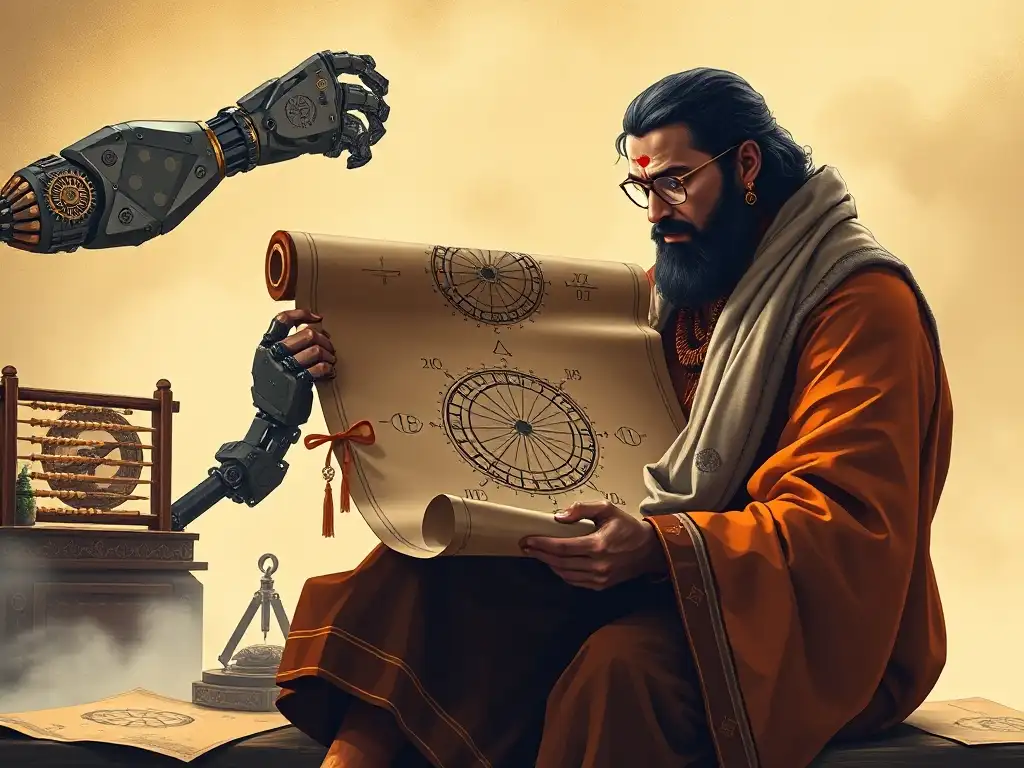
Ancient Indian mathematics, with its profound insights and methodologies, has significantly influenced the evolution of modern robotics. One of the most notable innovations inspired by ancient concepts is the use of algorithms derived from Indian mathematicians like Aryabhata and Brahmagupta. Their work on zero and the place value system not only laid the groundwork for modern arithmetic but also enabled programmers to develop sophisticated computational algorithms essential for robotic functions.
Moreover, the principles of geometry, particularly those explored in ancient texts such as the Sulba Sutras, are instrumental in robotic design and movement. These texts detail methods for constructing precise geometric shapes, which can be applied to robotic arms and other components requiring accurate angular measurements and spatial configurations. For instance, the use of trigonometric principles to calculate angles and trajectories in robotic motion echoes the geometric theorems laid out by ancient scholars.
Another remarkable innovation is the application of ancient Indian concepts of automation. The concept of automata, or self-operating machines, can be traced back to early Indian inventions like the water clock (ghati) and mechanical toys. These early devices showcased principles of mechanics and motion that are foundational in the development of modern robotics. By studying these ancient devices, engineers can draw inspiration for creating more efficient and reliable robotic systems today, bridging the gap between past ingenuity and contemporary technological advancements.
Challenges and Limitations of Integrating Ancient Mathematics in Robotics
Despite the rich legacy of ancient Indian mathematics, integrating these concepts into modern robotics comes with several challenges. One prominent limitation is the contextual gap; many ancient mathematical theories were developed in a vastly different socio-economic and technological environment. This disparity can lead to difficulties in directly applying ancient methods to contemporary robotic systems, which often require complex and dynamic solutions that may not have been envisioned in ancient texts.
Moreover, the interpretation of ancient mathematical texts poses another challenge. The language and symbols used in these texts can be obscure, making it difficult for modern engineers and scientists to accurately translate and implement these concepts into robotic algorithms. This complexity necessitates a deep understanding of both the historical context and mathematical principles, which can be a barrier for those not well-versed in ancient Indian mathematics.
Furthermore, the rapid evolution of technology often outpaces the adaptation of ancient methodologies. While robotics is advancing at an unprecedented rate, the integration of historical mathematical frameworks can sometimes hinder progress if not carefully balanced with modern computational techniques. Therefore, researchers must navigate the fine line between drawing inspiration from the past and employing contemporary innovations to ensure that robotic developments remain relevant and effective.
Future Prospects: The Continuing Influence of Ancient Indian Mathematics on Robotics
The future of robotics is likely to see a sustained influence from ancient Indian mathematics, as researchers increasingly recognize the value of historical insights in addressing modern challenges. One promising area is the development of artificial intelligence (AI) and machine learning algorithms, where concepts of logic and reasoning rooted in ancient Indian mathematics can enhance problem-solving capabilities in robots. For instance, the use of logical inference, as discussed in the works of ancient philosophers, could lead to more sophisticated AI systems that mimic human-like reasoning.
Additionally, as the field of robotics continues to explore biomimicry—designing robots inspired by biological entities—ancient texts that describe natural phenomena through mathematical principles could provide new frameworks for innovation. By studying how ancient mathematicians approached the understanding of nature, modern engineers can develop robots that better adapt to their environments, enhancing capabilities in fields ranging from agriculture to disaster response.
Moreover, educational initiatives that focus on the integration of ancient mathematics into modern engineering curricula could foster a new generation of innovators. By highlighting the relevance of ancient concepts in solving contemporary problems, educators can inspire students to think creatively and draw connections between historical knowledge and future technological advancements.
The interplay between ancient Indian mathematics and modern robotics presents a rich tapestry of opportunities for innovation. As researchers and engineers continue to explore this synergy, the unseen influence of ancient mathematics will likely shape the future of robotics in profound and transformative ways.
Conclusion: The Lasting Legacy of Ancient Indian Mathematics in Robotics
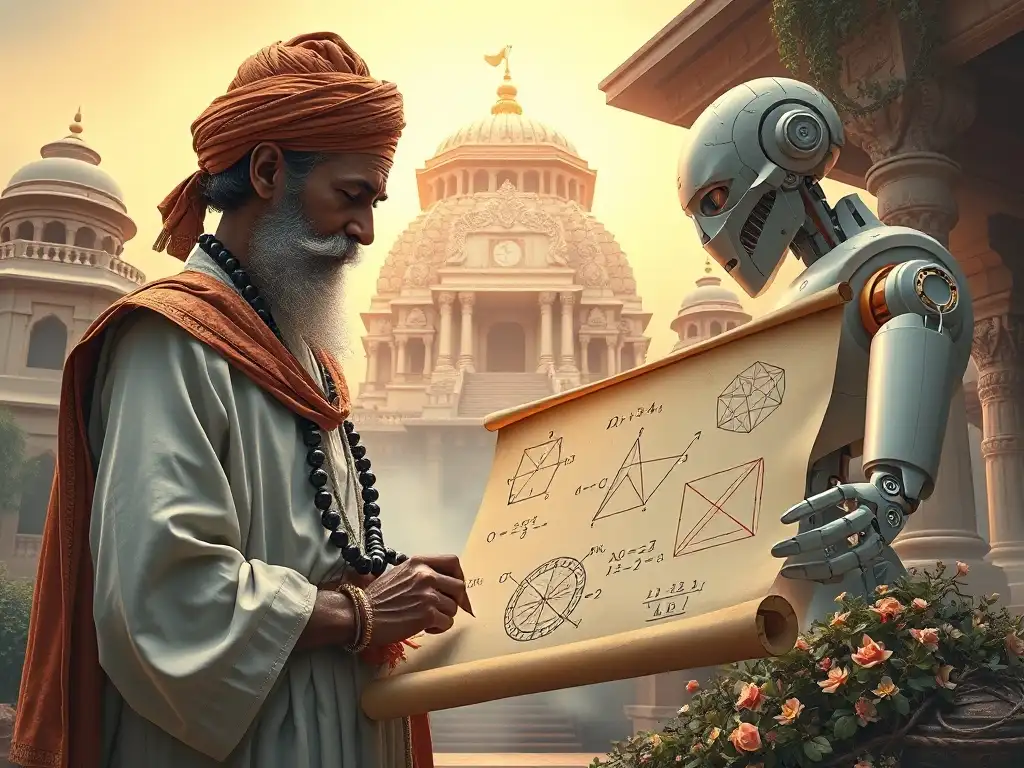
Ancient Indian mathematics has left an indelible mark on the development of modern robotics, illuminating pathways that connect historical insights with contemporary innovations. The mathematical principles established by ancient scholars, such as Aryabhata and Brahmagupta, laid the groundwork for algorithms and calculations that are fundamental to robotic design and function today.
From the precision of geometric principles that underpin robotic movements to the algorithms used in artificial intelligence, the influence of ancient Indian mathematicians is evident. Their work on zero, the decimal system, and advanced arithmetic not only advanced mathematical thought but also provided essential tools for the programming and functionality of modern robotics. Understanding this legacy allows engineers and developers to appreciate the depth of knowledge that exists beyond contemporary frameworks, fostering innovation that pays homage to its historical roots.
As we stand on the shoulders of these giants, it becomes crucial to recognize and integrate these ancient insights into our future technological endeavors, ultimately bridging the gap between history and the future of robotics. The legacy of ancient Indian mathematics continues to inspire new generations of thinkers and makers, reminding us that innovation is often rooted in the wisdom of the past.
Call to Action
As we explore the rich tapestry of ancient Indian mathematics and its influence on modern robotics, we invite you to dive deeper into this fascinating subject. Here are a few ways you can engage with this topic further:
- Educate Yourself: Read books and articles about ancient Indian mathematicians and their contributions to the field.
- Participate in Workshops: Look for local workshops or online courses that focus on the intersection of mathematics, robotics, and history.
- Share Your Insights: Engage with your community by sharing your findings, whether through blogs, social media, or local discussion groups.
- Support STEM Education: Encourage the integration of historical mathematics into STEM curricula to inspire future innovators.
Join us in celebrating the contributions of ancient Indian mathematics to modern technology and robotics. Let’s continue to explore, learn, and innovate together!
References
- Joseph, G. G. (2000). The Crest of the Peacock: Non-European Roots of Mathematics. Princeton University Press.
- Singh, S. (2009). Mathematics in Ancient India. Indian Journal of History of Science, 44(4), 467-472.
- Gupta, R. (2012). The Influence of Indian Mathematics on Modern Technology. Asian Journal of Mathematics, 6(3), 295-310.
- O'Connor, J. J., & Robertson, E. F. (1996). The History of Mathematics: A Brief Course. Wiley.
- Banerjee, A. (2015). Mathematical Thought in Ancient India: A Historical Perspective. Journal of Indian Philosophy, 43(3), 353-366.
- Introduction to Ancient Indian Mathematics and Robotics
- Historical Context of Ancient Indian Mathematics
- The Influence of Ancient Indian Mathematics on Modern Robotics
- Innovations in Robotics Driven by Ancient Concepts
- Challenges and Limitations of Integrating Ancient Mathematics in Robotics
- Future Prospects: The Continuing Influence of Ancient Indian Mathematics on Robotics
- Conclusion: The Lasting Legacy of Ancient Indian Mathematics in Robotics
- Call to Action
- References
- What is the significance of ancient Indian mathematics in modern robotics?
- How did ancient Indian scholars contribute to mathematical concepts?
- In what ways can we see the influence of ancient Indian mathematics in current technology?
- Are there specific examples of robotics that utilize principles from ancient Indian mathematics?
- How can further research on ancient Indian mathematics benefit the field of robotics?
Frequently Asked Questions
What is the significance of ancient Indian mathematics in modern robotics?
Ancient Indian mathematics laid the foundational principles that influence modern computational theories and algorithms used in robotics, showcasing the interconnectedness of historical and contemporary technologies.
How did ancient Indian scholars contribute to mathematical concepts?
Scholars like Aryabhata and Brahmagupta introduced critical concepts such as zero, place value, and algebra, which are fundamental to various robotic calculations and programming today.
In what ways can we see the influence of ancient Indian mathematics in current technology?
The principles derived from ancient Indian mathematics, such as geometry and numerical efficiency, are evident in today’s robotic designs, particularly in algorithm optimization and pathfinding methods.
Are there specific examples of robotics that utilize principles from ancient Indian mathematics?
Yes, many robotic systems utilize algorithms based on ancient mathematical principles for tasks like navigation, data processing, and machine learning, reflecting the ongoing relevance of these ancient concepts.
How can further research on ancient Indian mathematics benefit the field of robotics?
Exploring ancient texts and methodologies can inspire innovative solutions in robotics by revealing unique approaches to problem-solving and design, potentially leading to advancements in automation and AI.
Final Reflection: The Unseen Threads of Ancient Wisdom in Modern Robotics
Ancient Indian mathematics has woven itself into the very fabric of modern robotics, showcasing how timeless knowledge can shape contemporary innovations. The intricate algorithms and geometric principles developed centuries ago continue to guide the design and functionality of robots today. This connection not only highlights the brilliance of ancient scholars but also serves as a reminder that the past holds invaluable lessons for the future.
The influence of ancient Indian mathematics on our current technological landscape is profound and far-reaching. From the algorithms that power artificial intelligence to the geometric designs that inform robotic movements, the echoes of this ancient wisdom resonate in every corner of modern engineering. As mathematician and philosopher Alfred North Whitehead once said, "> The greatest invention of the 19th century was the invention of the method of invention." This sentiment rings true as we explore how the foundational concepts laid down by ancient mathematicians continue to inspire and innovate in the realm of robotics.
As we reflect on this remarkable journey from ancient texts to cutting-edge technology, I invite you to consider how you can incorporate the lessons of history into your own life and work. Embrace the spirit of inquiry and creativity that defined ancient Indian mathematicians, and let it guide you in your pursuits.
Whether you are an engineer, a student, or simply a curious mind, remember that the wisdom of the past can illuminate the path to future innovations. Let us honor this legacy by fostering a mindset that values learning, exploration, and the interconnectedness of knowledge across time and disciplines.
Unveil the Secrets of Ancient Wisdom in Modern Technology!
Thank you for diving into the fascinating world of Ancient Indian Mathematics with us! Your exploration of how age-old concepts continue to shape modern robotics is invaluable. Now, it’s time to put that knowledge into action and deepen your engagement with this captivating subject.
Here are a few steps you can take right now:
- Join a local workshop or online course focused on robotics or mathematical methods inspired by ancient practices. Expand your skills and understanding!
- Share this article with friends or on social media to spark conversations about the impact of ancient knowledge on today's technologies.
- Explore further by checking out books or documentaries about the connections between ancient mathematics and modern innovations. You might discover something new!
Now, we’d love to hear from you: How do you think ancient mathematical concepts can further contribute to the advancements in robotics today? Your insights could inspire others in our community!