
Trade and Diplomacy: Ancient India's Relations with Foreign Powers

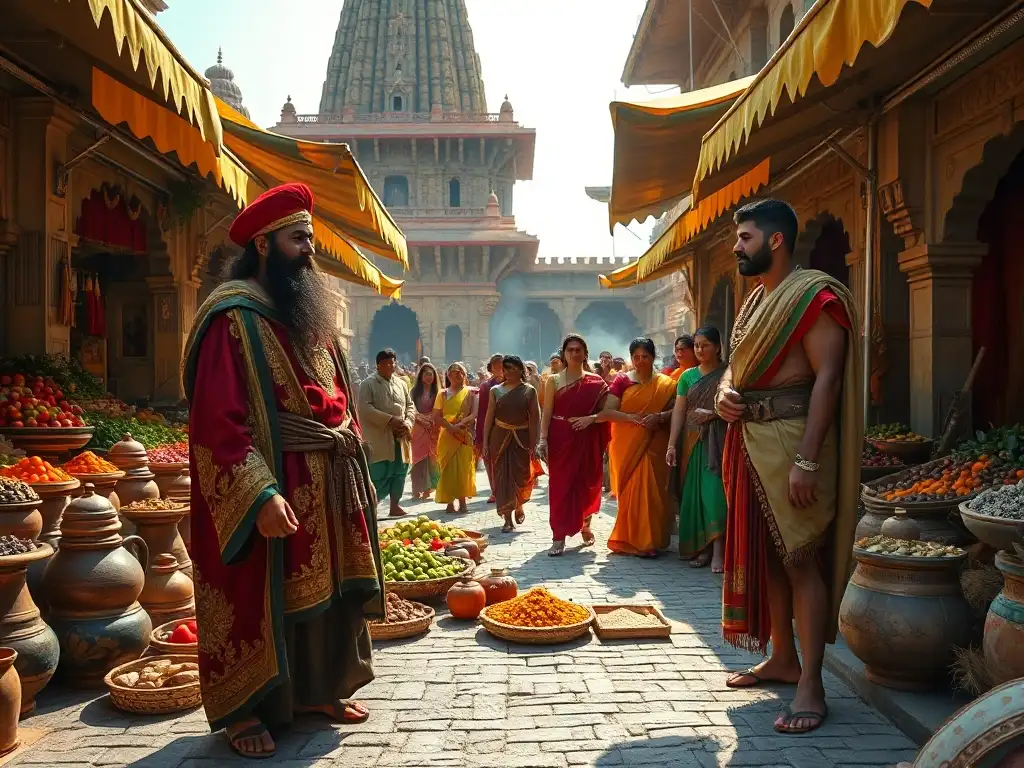
Welcome to Ancient India History, where we invite you to embark on a fascinating journey through time, exploring the rich tapestry of ancient Indian civilizations. In our featured article, “Trade and Diplomacy: Ancient India's Relations with Foreign Powers,” we delve into the intricate web of trade relations that not only shaped the economy but also forged diplomatic ties with distant lands. Discover how the vibrant markets and skilled merchants of ancient India connected cultures and influenced the world.
Are you ready to uncover the secrets of how these interactions laid the groundwork for a legacy that resonates even today? Dive in and let the exploration begin!

Introduction to Ancient India Trade Relations
Ancient India was a vibrant hub of trade and cultural exchange, boasting complex economic systems and rich diplomatic ties with several foreign powers. From the bustling markets of the Indus Valley Civilization to the sophisticated trade networks of the Gupta Empire, ancient Indian civilizations engaged in extensive commerce that not only contributed to their economic prosperity but also fostered cultural interactions across borders.
The trade relations of Ancient India played a crucial role in shaping its historical narrative, influencing everything from technological advancements to the spread of religious beliefs. This article explores the multifaceted trade connections that ancient India established with various foreign powers, highlighting their significance in the broader context of global history.
Overview of Ancient India's Economic Landscape
Ancient India's economy was characterized by its agricultural wealth, artisanal craftsmanship, and evolving trade practices.
- Agriculture: The fertile plains of the Indus Valley and the Ganges River basin supported diverse crops, making agriculture the backbone of the economy.
- Artisan Goods: Skilled artisans produced textiles, pottery, and metalwork, which became highly sought after in both domestic and international markets.
- Trade Practices: Barter systems predominated early trade, but over time, coinage emerged, facilitating more complex transactions.
The combination of these elements set the stage for India's extensive trade relations with foreign powers, demonstrating a sophisticated understanding of commerce and diplomacy.
Importance of Trade in Ancient Indian Society
Trade was not merely an economic activity in ancient India; it was woven into the very fabric of society.
- Cultural Exchange: Trade facilitated the exchange of ideas, art, and religion, leading to cultural syncretism.
- Political Alliances: Diplomatic relations were often strengthened through trade agreements, fostering political stability.
- Economic Prosperity: The influx of wealth from trade routes contributed to urbanization, leading to the growth of cities like Pataliputra and Taxila.
The importance of trade transcended economic benefits, impacting social structures and cultural developments throughout ancient Indian history.
Key Foreign Powers Engaged in Trade with Ancient India
Ancient India maintained trade relations with a variety of foreign powers, each contributing uniquely to its economic landscape:
- Mesopotamia: Early trade with Mesopotamian civilizations involved the exchange of textiles for luxury goods such as silver and lapis lazuli.
- Persian Empire: The Achaemenid Empire opened new trade opportunities through the establishment of the Royal Road, connecting India to the Mediterranean.
- Roman Empire: India exported spices, silk, and gems to Rome, while importing wine, glassware, and olive oil.
- Southeast Asian Kingdoms: Trade with civilizations in Southeast Asia, such as the Khmer and Srivijaya, facilitated the spread of Indian culture and religions.
These relationships underscore the dynamic nature of ancient India's trade and diplomacy, showcasing its integral role in regional and global networks.
Major Trade Routes Connecting Ancient India
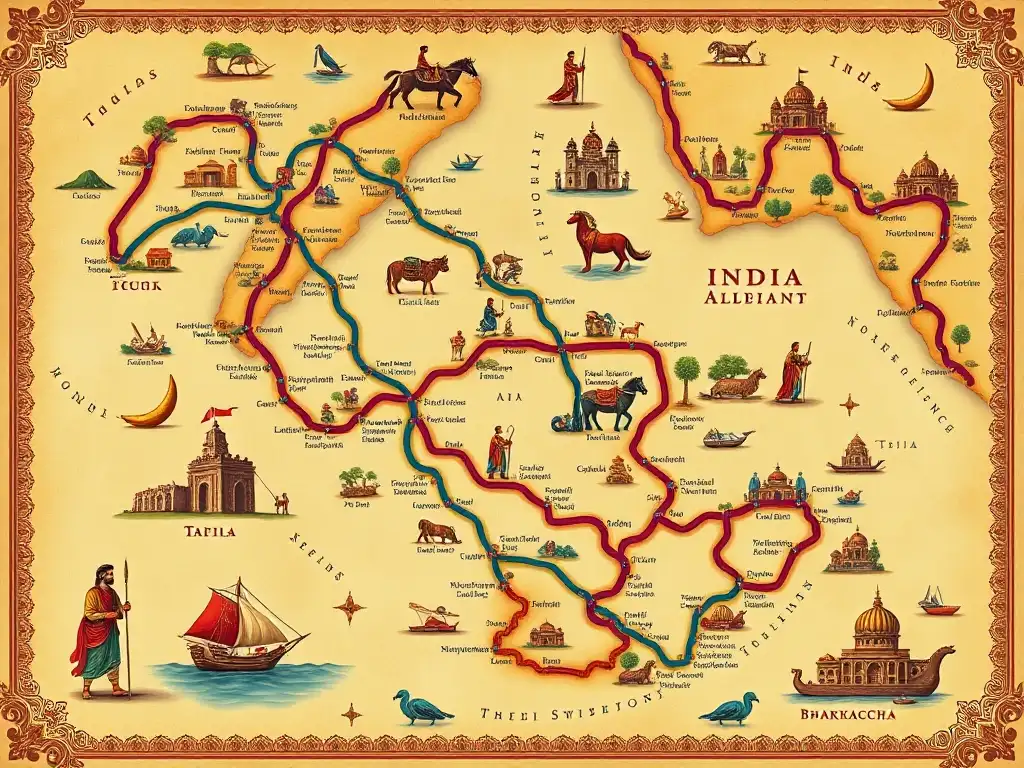
The Silk Road: A Vital Link for Trade and Cultural Exchange
The Silk Road was not just a singular route but a network of interconnected trade pathways that linked India to Central Asia, the Middle East, and beyond.
- Goods Traded: India was known for its silk, spices, and precious stones, which were highly prized along the Silk Road.
- Cultural Impact: The exchange along this route also allowed for the spread of Buddhism and other cultural practices, significantly influencing societies on both ends.
This vital trade route exemplified the interconnectedness of ancient civilizations and the importance of diplomacy in facilitating trade.
The Maritime Routes: Connecting India to Southeast Asia and Beyond
The maritime trade routes played a crucial role in ancient India's economic interactions, connecting it to regions such as Southeast Asia, Africa, and the Arabian Peninsula.
- Port Cities: Key port cities like Lothal and Arikamedu served as bustling trade hubs.
- Trade Goods: Spices, textiles, and other goods were exchanged for gold, silver, and exotic items from distant lands.
These maritime routes not only enhanced trade but also fostered cultural exchanges that enriched Indian society.
The Role of Overland Trade Routes in Ancient India's Economy
Overland trade routes were integral to India's economic framework, connecting it with neighboring regions and facilitating commerce.
- Northern Routes: Routes through the Himalayas linked India with Central Asian and Chinese markets.
- Western Routes: The route through Persia allowed access to Mediterranean trade networks.
These overland connections were essential for the movement of goods and ideas, reinforcing India's position as a key player in ancient trade relations.
By examining the rich tapestry of trade and diplomacy in ancient India, this article will uncover the complexities and significance of these interactions in shaping not just India, but world history as a whole.
Diplomatic Relations and Their Impact on Trade
The diplomatic relations established by ancient India with foreign powers significantly influenced trade dynamics, opening avenues for commerce that enriched both Indian civilization and its partners. These relations were not merely transactional; they involved complex interactions that facilitated the exchange of goods, ideas, and cultural practices. Diplomatic missions often served as conduits for trade negotiations, leading to the establishment of trade agreements that benefited all parties involved.
The establishment of diplomatic ties allowed ancient Indian merchants to access new markets and resources. For instance, Indian spices, textiles, and precious stones became highly sought after commodities in foreign markets, while India imported luxury goods and raw materials essential for its economy. Diplomatic envoys played a crucial role in negotiating favorable trade terms, which often included exemptions from tariffs and other trade barriers. In this way, diplomacy directly bolstered trade relations, resulting in increased economic prosperity for ancient Indian states.
Establishing Diplomatic Ties with Foreign Powers
Ancient India was proactive in establishing diplomatic ties with various foreign powers, utilizing both marriage alliances and formal diplomatic missions. Historical records indicate that Indian rulers often sent emissaries to neighboring regions, such as Persia and the Hellenistic kingdoms, to foster peaceful relations and enhance trade opportunities. The Mauryan Empire, particularly under Emperor Ashoka, is noted for its diplomatic outreach which included sending envoys to Southeast Asia and beyond.
These diplomatic efforts were often formalized through letters and emissaries, which laid the groundwork for sustained interactions. For instance, the exchanges between Indian rulers and their counterparts in the Greco-Roman world resulted in mutual recognition and respect, paving the way for increased trade. Such diplomatic engagements often included cultural exchanges that enriched both civilizations, demonstrating how diplomacy played a pivotal role in shaping ancient India’s foreign relations.
Treaties and Agreements: Facilitating Trade and Commerce
Treaties and agreements between ancient Indian states and foreign powers were instrumental in facilitating trade and commerce. These documents often outlined specific trade routes, goods to be exchanged, and the rights of merchants. One notable example is the trade agreements between the Mauryan Empire and the Seleucid Empire, which allowed for the safe passage of goods and reduced tariffs for traders.
Such treaties not only promoted the flow of goods but also established mechanisms for conflict resolution. This legal framework provided merchants with the security needed to conduct business across borders, thus encouraging long-distance trade. Trade routes like the Silk Road and maritime routes connecting India to the Mediterranean were heavily influenced by these agreements, highlighting the importance of diplomatic negotiations in promoting economic interactions.
Cultural Exchange through Trade Diplomacy
Trade diplomacy in ancient India was characterized by significant cultural exchanges alongside economic transactions. As merchants traveled to foreign lands, they brought with them not only goods but also ideas, art, religion, and technology. The interactions facilitated by trade routes enabled the dissemination of Indian philosophies such as Buddhism and Hinduism, which influenced cultures in regions like Central Asia and Southeast Asia.
Conversely, foreign cultures also impacted Indian society, introducing new art forms, architectural styles, and culinary practices. The blending of different cultures through trade diplomacy enriched the social fabric of ancient India, making it a vibrant hub of cultural interaction. This symbiotic relationship fostered by trade not only enhanced economic ties but also created a rich tapestry of cultural diversity that continues to be celebrated today.
Key Foreign Powers in Ancient India's Trade Relations
Ancient India's trade relations were not limited to its immediate neighbors; several key foreign powers played significant roles in shaping its economic landscape. Each of these powers contributed uniquely to the trade dynamics, enhancing the flow of goods and cultural exchange.
Persia: Trade and Cultural Influences
Persia was one of the earliest and most influential foreign powers in ancient India's trade relations. The Achaemenid Empire established extensive trade links with India, facilitating the exchange of goods such as textiles, spices, and precious stones. Persian traders introduced advanced trade practices, including the use of coinage, which significantly enhanced commercial transactions.
Culturally, the influence of Persia was profound. The exchange of art and architectural styles led to a fusion of designs evident in various Indian structures. Moreover, the Persian language and administrative practices influenced local governance in some Indian states, showcasing the dual impact of trade and cultural diplomacy.
Greece: The Hellenistic Impact on Indian Trade
The arrival of Greek traders and the subsequent Hellenistic influence had a transformative effect on ancient India’s trade relations. Following Alexander the Great's campaigns, Indian and Greek merchants established direct trade routes, facilitating the exchange of Indian spices, textiles, and knowledge with the Mediterranean world.
The Hellenistic period saw the introduction of new artistic styles and philosophical thoughts into India, which were integrated into local traditions. The establishment of cities like Taxila became important trading hubs, reflecting the blending of Greek and Indian cultures. This cross-cultural exchange not only expanded trade networks but also enriched the cultural dialogue between the two civilizations.
China: Silk, Spices, and Diplomatic Exchanges
China emerged as a crucial trade partner for ancient India, particularly through the famed Silk Road. This route facilitated the exchange of silk, spices, and other luxurious goods, establishing a vibrant trade network between the two civilizations. The demand for Indian spices in China significantly impacted economic prosperity, leading to increased diplomatic exchanges.
Culturally, the interactions between India and China were profound, with the spread of Buddhism into China being one of the most notable outcomes of their trade relations. The early diplomatic missions helped to establish a lasting relationship that endured for centuries, characterized by both trade and cultural exchange. This bilateral relationship highlights the importance of diplomatic engagements in enhancing ancient India’s trade relations with foreign powers.
Trade Goods and Commodities in Ancient India
Ancient India was a hub of trade and commerce, renowned for its diverse and luxurious goods that attracted foreign merchants and travelers. The subcontinent's strategic geographical location facilitated extensive trade networks, connecting it with various regions, including the Middle East, Southeast Asia, and beyond. Key commodities traded included spices, textiles, precious stones, and metalworks, each playing a vital role in shaping India's economic landscape and its relations with foreign powers.
Spices and Their Role in Global Trade
Spices were perhaps the most coveted commodities in ancient Indian trade, with India being known as the "land of spices." From black pepper to cardamom and cloves, these aromatic products were highly sought after in markets across Asia and Europe. The spice trade significantly contributed to India's wealth, as these commodities were not only used for culinary purposes but also for preservation and medicinal applications.
The demand for Indian spices led to the establishment of trade routes that crisscrossed the Indian subcontinent and extended to distant lands. Merchants from Rome, Persia, and China traveled vast distances to procure these goods, leading to the establishment of thriving port cities along the western and eastern coasts of India, such as Calicut and Cochin. The lucrative nature of the spice trade also encouraged diplomatic relations, as foreign powers sought alliances with Indian kingdoms to secure a steady supply of these essential commodities.
Textiles: The Fabric of Ancient Indian Economy
Textiles were another cornerstone of ancient India's trade relations, with the subcontinent famed for its fine cotton and silk fabrics. Indian textiles, especially muslin and silk, were highly prized in both domestic and international markets. The craftsmanship involved in weaving and dyeing these textiles was unparalleled, leading to a robust export market that catered to the tastes of foreign elites.
Trade in textiles helped fortify diplomatic ties between India and other cultures. For instance, Indian cotton was traded extensively with the Roman Empire, while silk was sought after in regions like Persia and Central Asia. The establishment of guilds and trade associations among weavers further enhanced the organization and efficiency of textile production, enabling India to maintain its status as a leading textile exporter for centuries.
Precious Stones and Metalworks: Ancient India's Luxury Exports
Ancient India was also renowned for its exquisite jewelry and skilled metalworks. The subcontinent's vast mineral resources allowed for the production of high-quality gold, silver, and precious stones, including diamonds, rubies, and emeralds. These luxury items were not only symbols of wealth but also served as significant trade commodities.
The trade of precious stones and metalworks was intricately linked to the power dynamics of the time. Kings and emperors often engaged in diplomacy to secure access to these valuable resources, fostering trade relations with foreign powers. The opulence of Indian jewelry attracted merchants from distant lands, leading to a flourishing market that transcended cultural boundaries and strengthened India's economic stature on the global stage.
The Influence of Religion and Culture on Trade Relations
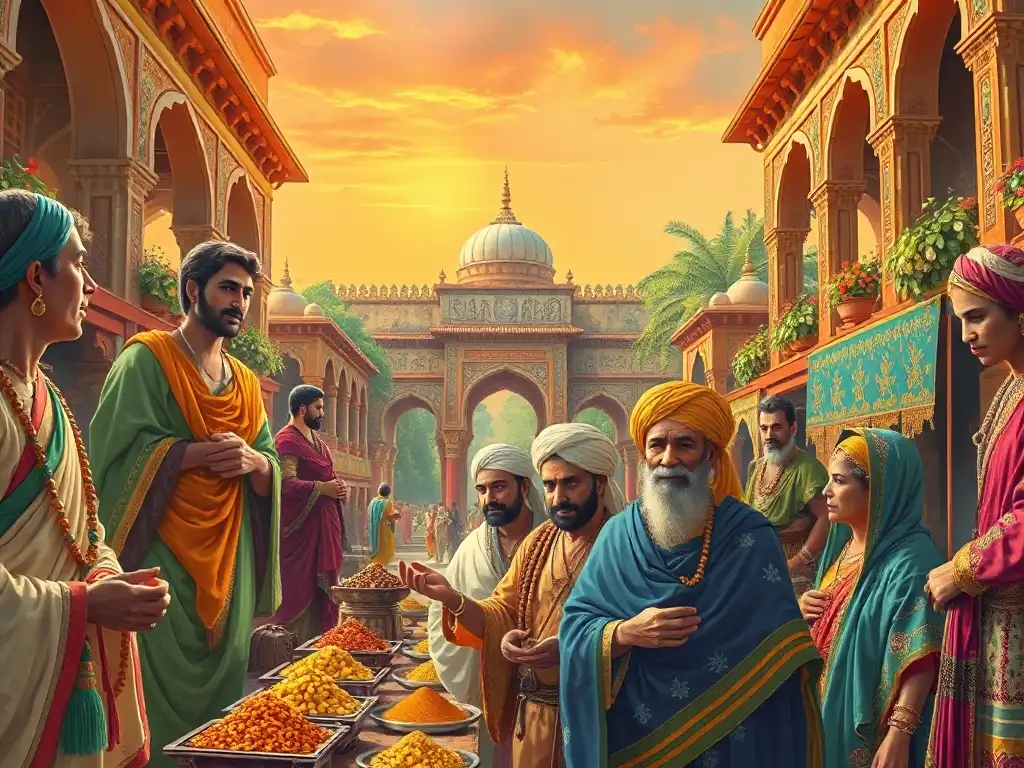
The intermingling of trade and cultural exchange in ancient India played a crucial role in shaping its relations with foreign powers. Religion, particularly Buddhism and Hinduism, influenced trade practices and established networks that extended beyond mere economic transactions.
Spread of Buddhism and Trade Routes
Buddhism, which originated in India, spread along trade routes, facilitating not only the exchange of goods but also the sharing of ideas and philosophies. As Buddhist missionaries traveled to regions like Central Asia and Southeast Asia, they established connections that encouraged trade.
Monasteries often served as rest stops for traders, fostering a mutual exchange of culture and commerce. The establishment of trade links between India and regions influenced by Buddhism led to a flourishing of trade relations, as merchants sought to transport not only commodities but also religious texts and artifacts, further intertwining economic and cultural exchanges.
Influence of Hinduism and Trade Practices
Hinduism also left a significant mark on ancient Indian trade practices. The principles of dharma (duty) and artha (wealth) guided merchants in their trade dealings, encouraging ethical practices and fostering trust among traders. Festivals and religious rituals often coincided with trade fairs, creating opportunities for commerce and reinforcing community bonds.
Moreover, Hindu kings often promoted trade by establishing trade policies that facilitated commerce and protected merchants. This patronage helped create a stable environment for trade, ensuring that India's economic relations with foreign powers were not only lucrative but also culturally enriching.
The Role of Cultural Exchanges in Strengthening Trade Ties
Cultural exchanges, driven by trade, played an essential role in strengthening India's relations with foreign powers. The influx of foreign merchants brought diverse cultural influences, leading to the amalgamation of art, philosophy, and cuisine. Such interactions enriched Indian society and fostered a spirit of cooperation and mutual respect.
Furthermore, as Indian goods made their way to foreign lands, they carried with them elements of Indian culture, including art forms and religious beliefs. This exchange laid the groundwork for enduring relationships between ancient India and other civilizations, establishing a legacy of cultural diplomacy that complemented economic ties.
Challenges and Conflicts in Ancient Trade Relations
Ancient India's trade relations were not without their challenges and conflicts. As one of the key players in regional and international trade, various factors affected the stability and prosperity of these trade routes. Understanding these challenges provides insight into the resilience of ancient Indian civilizations and their adeptness in navigating a complex web of interactions with foreign powers.
Navigating Political Instability and Trade Disruptions
Political instability often posed significant threats to trade relations in ancient India. The rise and fall of empires, internal strife, and shifting alliances could abruptly change the dynamics of trade routes. For example, during the decline of the Maurya Empire, trade with regions like Central Asia and the Mediterranean was disrupted due to local power struggles and invasions.
Additionally, changing political alliances meant that traders had to navigate a landscape where tariffs, trade agreements, and diplomatic relations were in constant flux. Merchants often had to adapt quickly to new rulers and their policies, which could either enhance or hinder trade. The establishment of diplomatic missions and treaties was one way to mitigate these risks, yet the underlying political instability remained a persistent challenge.
Warfare and Its Impact on Trade Routes
Warfare had a profound impact on ancient trade routes, often leading to destruction and significant losses for merchants. The frequent conflicts between regional powers, such as the clashes between the Mauryas and the Greeks, disrupted trade flows and created a climate of uncertainty. For instance, the campaigns of Alexander the Great not only affected the territories of India but also had lasting repercussions on trade with the West.
In many cases, trade routes were strategically targeted during conflicts, leading to the decline of certain paths and the rise of others. The Silk Road, while a crucial artery for trade between India and the rest of the world, faced numerous challenges as warring factions vied for control. The establishment of safe passage treaties was essential for ensuring that trade could continue despite the backdrop of ongoing warfare.
Natural Disasters: The Unseen Challenges of Ancient Trade
Natural disasters also played a significant role in disrupting ancient trade relations. Events such as floods, earthquakes, and droughts could devastate agricultural production and infrastructure, leading to food shortages and economic instability. The monsoon season, critical for agriculture in India, could also bring about unpredictable flooding, affecting trade routes and the movement of goods.
The impact of these disasters often extended beyond immediate physical damage. Societal upheaval resulting from famine or displacement could lead to increased tensions and conflicts, further complicating trade relations. Ancient traders had to be resourceful and resilient, often resorting to alternative routes or methods of trade to mitigate the effects of such disasters.
Conclusion: The Legacy of Ancient India's Trade Relations
The intricate web of trade relations established by ancient India laid the groundwork for its interactions with foreign powers, creating a legacy that continues to resonate in modern times. The skills and strategies developed to navigate challenges and conflicts have left an indelible mark on contemporary trade practices.
Lasting Impact on Modern International Trade
The trade networks formed during ancient times have had a lasting impact on modern international trade. The principles of diplomacy, negotiation, and mutual benefit that were emphasized in ancient trade relations continue to inform contemporary trade agreements and international relations. The legacy of ancient India's trade routes, such as the Silk Road, can still be observed in today's global trade networks, highlighting the enduring significance of these ancient practices.
Lessons from Ancient Trade Diplomacy for Contemporary Relations
Ancient India's approach to trade diplomacy offers valuable lessons for contemporary international relations. The emphasis on cooperation, cultural exchange, and dialogue in trade negotiations can guide modern policymakers in fostering mutual understanding and collaboration. Additionally, the ability to adapt to changing political landscapes and navigate conflicts remains crucial in today's interconnected world.
By studying the complexities of ancient trade relations, modern societies can glean insights into the importance of resilience and diplomacy in overcoming challenges and fostering prosperous international partnerships. The rich history of ancient India's trade relations serves as a testament to the power of commerce in bridging cultural divides and promoting mutual growth.
Further Reading on Ancient India Trade Relations
To gain a deeper understanding of Ancient India's trade relations and the complexities of its diplomacy with foreign powers, exploring various resources can be incredibly enlightening. Here is a curated list of books and articles that provide rich insights into the trade networks, economic practices, and international relations that characterized ancient Indian civilizations.
Suggested Books and Resources for Deeper Understanding
-
"The Ancient Trade Routes of India" by R. C. Majumdar
This book delves into the historical trade routes that connected India with various civilizations, including the Persian Empire and the Roman Empire. It provides a comprehensive overview of the goods exchanged and the impact of trade on cultural exchanges.
-
"India: A History" by John Keay
Offering a broader historical context, this book examines the evolution of India from ancient times to the modern era, highlighting the significance of trade and diplomacy in shaping its history. Keay's narrative provides valuable insights into the socio-economic structures of ancient Indian societies.
-
"Silk Roads: Highways of Culture and Commerce" by Valerie Hansen
Hansen explores the Silk Road's extensive network, which linked India with Central Asia and beyond. This resource emphasizes the cultural and economic exchanges that took place, showcasing how Indian traders interacted with various foreign powers.
-
"The Economy of Early India: From the Indus to the Gupta" by R. S. Sharma
This scholarly work focuses on the economic systems in ancient India, analyzing trade practices, currency, and the role of merchants in society. It serves as an essential resource for understanding the foundational economic principles that facilitated trade relations.
-
"Trade and Traders in the Roman Empire" by J. P. T. H. de Groot
Though not exclusively about India, this book discusses the broader context of trade in the ancient world, including the significance of Indian goods in Roman markets. It provides insights into how trade routes operated and the impact of Indian exports on foreign economies.
Recommended Articles on Major Trade Routes and Diplomacy
-
"The Maritime Silk Road: Ancient India’s Link to the World"
This article explores the maritime routes that connected India to Southeast Asia and beyond, detailing the commodities traded and the cultural exchanges that occurred through these sea routes.
-
"Diplomatic Ties and Trade Relations: Ancient India and Persia"
An examination of the historical ties between India and Persia, focusing on trade agreements and diplomatic missions that facilitated economic and cultural exchanges between the two regions.
-
"Traders and Travelers: The Role of Indian Merchants in Global Trade"
This piece highlights the contributions of Indian merchants in the global trade landscape, discussing how they navigated foreign markets and established trade relationships with various civilizations.
-
"The Spice Trade and Its Impact on Ancient Indian Economy"
An insightful article that discusses how spices became a significant commodity in ancient India and their role in shaping trade relations with foreign powers, particularly in Europe and the Middle East.
These resources will not only enhance your understanding of Ancient India's trade relations but also provide a broader context for the economic and diplomatic dynamics that shaped this remarkable civilization.
- Introduction to Ancient India Trade Relations
- Overview of Ancient India's Economic Landscape
- Importance of Trade in Ancient Indian Society
- Key Foreign Powers Engaged in Trade with Ancient India
- Major Trade Routes Connecting Ancient India
- Diplomatic Relations and Their Impact on Trade
- Key Foreign Powers in Ancient India's Trade Relations
- Trade Goods and Commodities in Ancient India
- The Influence of Religion and Culture on Trade Relations
- Challenges and Conflicts in Ancient Trade Relations
- Conclusion: The Legacy of Ancient India's Trade Relations
- Further Reading on Ancient India Trade Relations
Frequently Asked Questions
What were the main trade routes used in ancient India?
Ancient India utilized key trade routes such as the Silk Road and the Maritime Silk Route, facilitating trade with regions like Southeast Asia, Africa, and the Middle East.
How did ancient Indian civilizations engage in trade with foreign powers?
Ancient Indian civilizations practiced diplomatic relations through trade agreements, establishing mutual benefits and fostering connections with foreign empires like the Persians and Greeks.
What were the primary goods traded by ancient India?
Spices, textiles, jewelry, and precious stones were among the main commodities that ancient India exported, contributing to its reputation as a thriving trade hub.
How did trade influence ancient Indian culture?
Trade led to cultural exchanges, introducing new religions, art forms, and ideas, which enriched the diversity of ancient Indian culture and society.
What role did ancient Indian merchants play in diplomacy?
Merchants acted as diplomatic envoys, negotiating trade deals and fostering relationships between different cultures, which played a crucial role in the political landscape of ancient India.
Final Reflection: The Enduring Legacy of Ancient India's Trade Relations
The intricate web of trade and diplomacy that Ancient India wove with foreign powers remains profoundly relevant today. As we navigate a globalized world, the lessons learned from these historical interactions remind us that commerce and diplomacy are not merely economic tools but vital threads that connect cultures and foster mutual understanding. The significance of Ancient India's trade relations transcends time, illustrating how the exchange of goods can lead to the exchange of ideas, values, and innovations.
The impact of Ancient India's trade relations is evident in the cultural and social landscapes of both historical and contemporary societies. From the Silk Road to maritime routes, these connections facilitated not just the movement of spices and textiles but also the flow of philosophies and religions. As we reflect on this rich tapestry, we are reminded of the words of historian Will Durant: Civilization exists by geological consent, subject to change without notice.
This highlights the importance of adaptability and cooperation in maintaining relationships that can withstand the test of time.
As we look to the future, let us embrace the lessons of Ancient India's trade relations in our own lives. Consider how you can foster connections across cultures, whether through personal relationships, professional collaborations, or community engagement. Reflect on the power of diplomacy in your daily interactions and the potential for trade—be it of ideas, resources, or goodwill—to create a more harmonious world. In doing so, we honor the legacy of our ancestors and contribute to a future where understanding and cooperation reign supreme.
Unveil the Legacy of Ancient Indian Diplomacy!
Thank you for exploring the fascinating world of trade and diplomacy in Ancient India! We hope you’ve uncovered valuable insights into how India engaged with foreign powers. Now, it’s your turn to take the next steps in deepening your knowledge and sharing this rich history.
Here’s how you can continue your journey:
- Dive deeper into ancient texts: Explore primary sources and manuscripts that detail the trade routes and diplomatic relationships of the era.
- Share your discoveries: Post about a significant figure or event you learned about on social media to inspire others to engage with Ancient Indian history.
- Join our community: Connect with fellow history enthusiasts in our forum to discuss insights and share new perspectives.
What aspect of ancient Indian diplomacy resonates with you the most, and who would you like to discuss it with?