
Monsoon Winds and Maritime Routes: How Ancient India Dominated Sea Trade

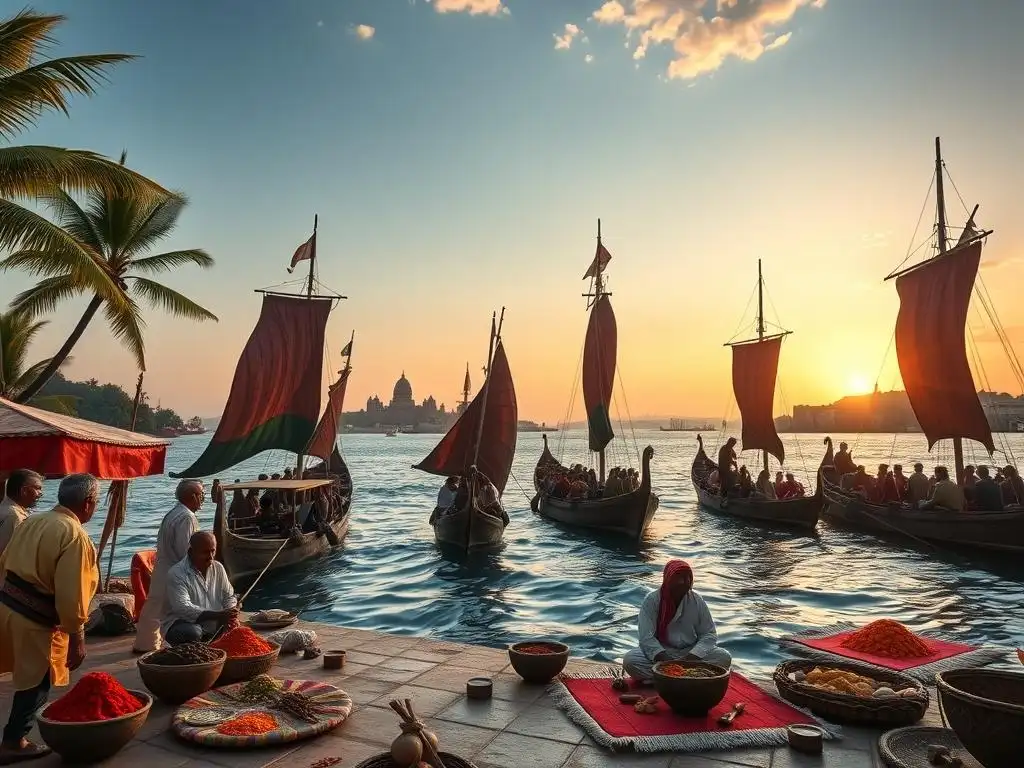
Welcome to Ancient India History, where we embark on a captivating journey through the rich tapestry of ancient Indian civilizations! Delve into the fascinating world of Ancient India sea trade routes, and discover how the monsoon winds shaped not just the economy, but also the cultural exchanges that thrived across the oceans. As you explore our featured article, Monsoon Winds and Maritime Routes: How Ancient India Dominated Sea Trade, you’ll unravel the secrets of a maritime legacy that connected continents and transformed trade.
Prepare to be intrigued and inspired as we unveil the stories and innovations that made ancient India a pivotal player in global commerce. Your adventure into the depths of history begins now!
The ancient Indian subcontinent was a vibrant hub of commerce and cultural exchange, shaped significantly by its unique geographical position and climatic conditions. The ancient India sea trade routes were not merely pathways for goods; they were conduits of civilization, facilitating the exchange of ideas, culture, and technology across vast distances. Dominated by the monsoon winds, these maritime routes connected India with far-flung regions, including the Middle East, Africa, and Southeast Asia, fostering a dynamic trade network that thrived for centuries.
The Role of Monsoon Winds in Sea Trade
The monsoon winds were a critical factor in the development of ancient India's maritime trade. The seasonal winds dictated the timing and direction of sea voyages, allowing merchants to navigate with remarkable precision.
- Summer Monsoon (June to September):
- Winds blow from the southwest, facilitating trade routes towards the west.
- Winter Monsoon (October to March):
- Winds shift to the northeast, enabling return journeys to India.
This understanding of the monsoon patterns not only enhanced the safety of maritime navigation but also optimized the trading cycles, leading to robust economic growth in coastal cities.
Key Maritime Trade Routes of Ancient India
Ancient India's sea trade was characterized by several key maritime routes that interlinked various civilizations.
- Western Sea Routes:
- Connecting the ports of Gujarat (like Bharukaccha) to the Arabian Peninsula.
- Trade in spices, textiles, and precious stones flourished along these paths.
- Eastern Sea Routes:
- Linking the ports of Tamil Nadu and Andhra Pradesh to Southeast Asia.
- Facilitated the exchange of rice, spices, and handicrafts, contributing to the cultural diffusion in the region.
- Indian Ocean Trade Network:
- A vast network that included many coastal trading hubs, such as Lothal and Kaveripattinam.
- Merchants engaged with various cultures, bringing back not just goods but also ideas and innovations.
Cultural and Economic Impact of Sea Trade
The influence of ancient India's sea trade was profound, impacting both economy and culture.
- Economic Prosperity:
- The influx of wealth from trade led to the rise of influential kingdoms and a flourishing urban culture.
- Coastal cities became centers of commerce, attracting artisans, traders, and scholars.
- Cultural Exchange:
- The movement of goods facilitated cultural interactions, leading to the spread of religions like Buddhism and Hinduism across maritime routes.
- The exchange of art, literature, and scientific knowledge enriched Indian civilization and influenced neighboring regions.
Conclusion
The ancient India sea trade routes were pivotal in shaping the subcontinent's economic and cultural landscape. The mastery of monsoon winds not only facilitated trade but also cemented India's position as a dominant maritime power in the ancient world. Understanding these routes provides valuable insights into the complexities of ancient economies and the interconnectedness of civilizations.
- The Role of Monsoon Winds in Sea Trade
- Key Maritime Trade Routes of Ancient India
- Cultural and Economic Impact of Sea Trade
- Conclusion
- What were the main sea trade routes used by ancient India?
- How did monsoon winds impact ancient Indian trade?
- What were the primary goods traded via ancient India’s maritime routes?
- How did ancient Indian civilizations influence global trade?
- What role did ancient Indian ports play in maritime trade?
Introduction to Ancient India Sea Trade Routes
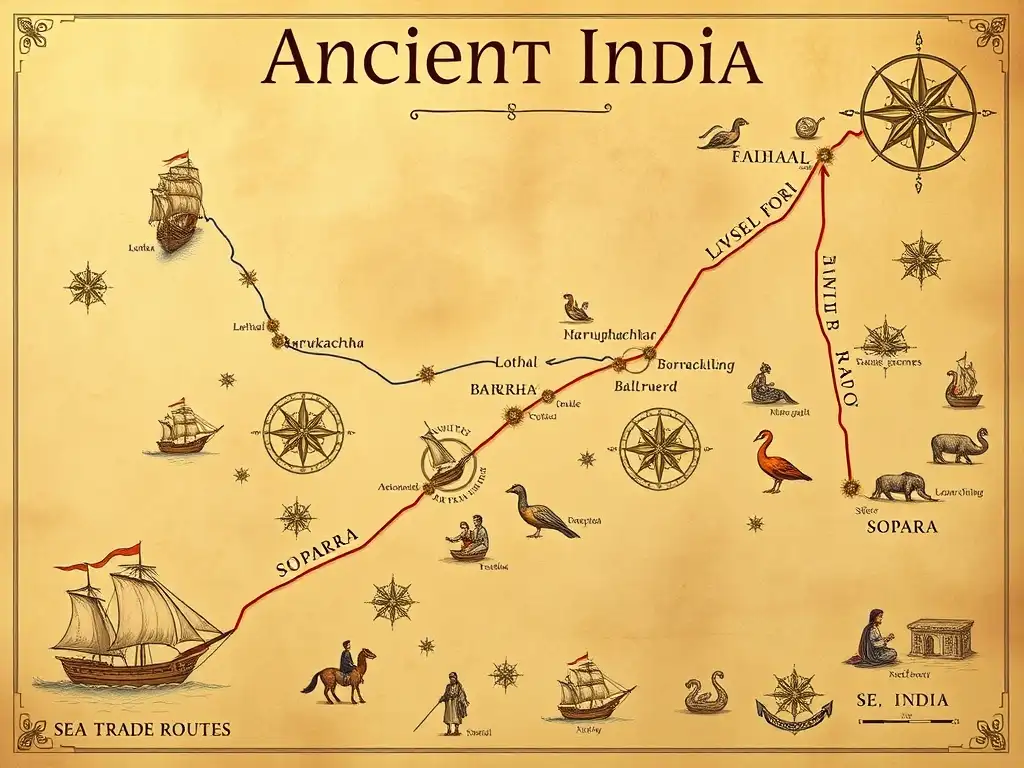
The ancient Indian sea trade routes played a pivotal role in the economic and cultural exchanges between India and various civilizations across the globe. These routes not only facilitated the movement of goods but also promoted the exchange of ideas, culture, and technology. The strategic geographic position of India, surrounded by the Arabian Sea, the Indian Ocean, and the Bay of Bengal, made it an ideal hub for maritime trade. The ancient Indians capitalized on this advantage, establishing thriving trade networks that connected them with regions as far as Africa, the Middle East, and Southeast Asia.
Overview of Ancient Indian Maritime Trade
Ancient India’s maritime trade can be traced back to as early as 3000 BCE, with the Indus Valley Civilization demonstrating advanced trading practices. The inhabitants of cities like Harappa and Mohenjo-Daro engaged in trade with Mesopotamia, using maritime routes that allowed them to export goods such as textiles, beads, and pottery.
By the time of the Mauryan Empire (c. 322–185 BCE), the maritime trade had expanded significantly. The famous Greek ambassador Megasthenes described Indian ports bustling with activities, where merchants and traders from various regions gathered to exchange goods. The primary ports during this period included:
- Lothal: Considered one of the earliest ports in India, it served as a major trading center for the Indus Valley Civilization.
- Barygaza (modern Bharuch): A key port on the west coast that connected India to the Mediterranean world.
- Tamralipti: Located on the eastern coast, it was an essential hub for trade with Southeast Asia.
The maritime trade routes were not just limited to the movement of goods; they also allowed for the spread of cultural elements, such as religion and art. Indian merchants played a crucial role in disseminating Buddhism and Hinduism across the seas, influencing regions like Sri Lanka, Southeast Asia, and beyond.
Importance of Monsoon Winds in Sea Trade
The monsoon winds were a significant factor that shaped the maritime trade routes of ancient India. These seasonal winds, which change direction with the seasons, enabled sailors to navigate vast oceanic expanses with greater efficiency. The southwest monsoon, blowing from June to September, facilitated voyages from the western coast of India to the eastern shores of Africa and Arabia.
Key Aspects of Monsoon Winds:
- Navigation: The predictable nature of the monsoon winds allowed mariners to plan their voyages with precision. Sailors could time their departures and arrivals to take advantage of these winds, reducing travel time significantly.
- Trade Cycles: The monsoons created natural trade cycles, where merchants would sail out to trade during favorable winds and return when the winds shifted. This cycle allowed for the establishment of regular trade routes and schedules.
- Safety and Efficiency: By understanding the patterns of monsoon winds, ancient sailors could avoid treacherous waters and navigate safely, ensuring the protection of their cargo and crew.
The mastery of these winds exemplified the ingenuity of ancient Indian navigators and their ability to adapt to environmental conditions. By harnessing the power of the monsoons, they established a robust maritime trading network that not only enriched their economy but also fostered cultural exchanges that shaped the history of the Indian subcontinent and its maritime neighbors.
The ancient India sea trade routes were vital to the region's economic and cultural development, with the monsoon winds serving as a crucial element in facilitating this extensive maritime network. The legacy of these ancient trade practices continues to influence maritime trade in the region today.
Historical Context of Ancient India Sea Trade
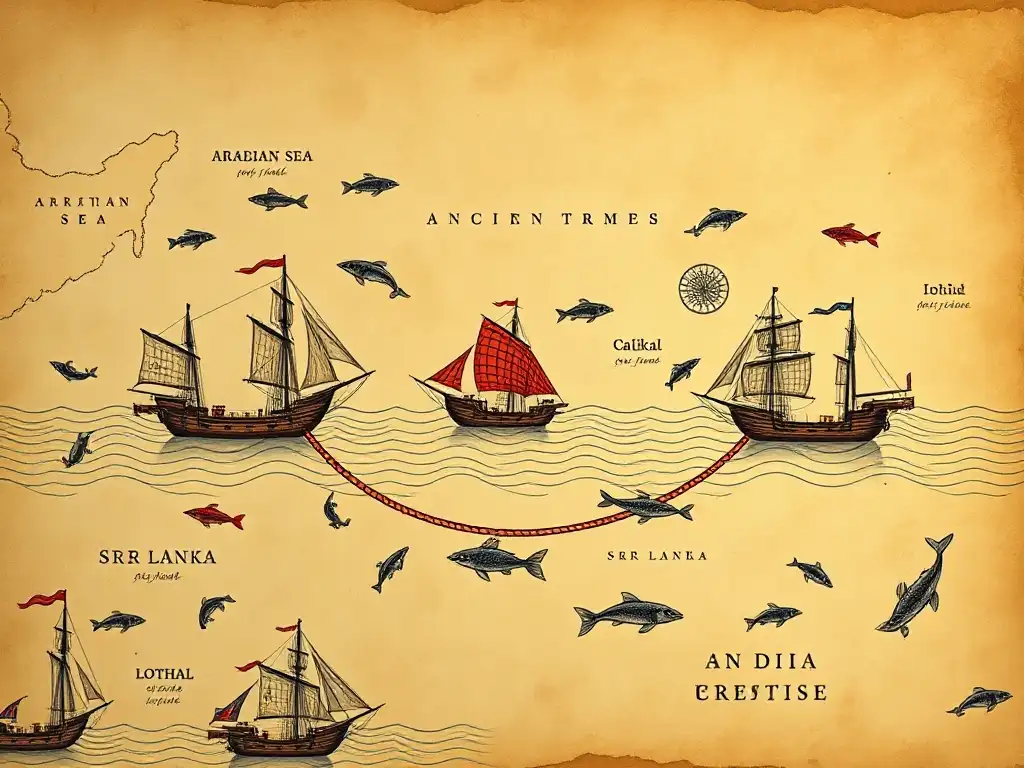
The sea trade routes of ancient India were crucial in shaping the economic landscape of the region. Dating back to as early as 3000 BCE, these maritime pathways connected Indian civilizations with distant lands, facilitating the exchange of goods, culture, and ideas. The strategic location of the Indian subcontinent, bordered by the Arabian Sea to the west and the Bay of Bengal to the east, made it a pivotal hub in maritime trade networks.
The rise of the Indus Valley Civilization marked the beginning of organized trade in ancient India. Evidence suggests that traders engaged in commerce with Mesopotamia, exporting goods such as cotton textiles, beads, and pottery. As time progressed, the Maurya and Gupta Empires emerged, further enhancing maritime trade capabilities through superior shipbuilding technologies and navigational skills.
The monsoon winds played an instrumental role in sea trade, as they dictated the timing and routes of maritime journeys. Knowledge of the seasonal shifts enabled sailors to plan their voyages effectively, allowing for safe passage across the Indian Ocean. This mastery of navigation not only increased trade volumes but also established cultural exchanges between India, Africa, the Middle East, and Southeast Asia.
Key Civilizations Involved in Sea Trade
Several key civilizations contributed to the flourishing of ancient sea trade routes in India:
- Indus Valley Civilization (c. 3300–1300 BCE)
- One of the earliest urban cultures, known for its advanced trade practices and extensive maritime activities.
- Key exports included textiles, jewelry, and pottery.
- Maurya Empire (c. 322–185 BCE)
- Under the reign of Chandragupta Maurya and Ashoka, the empire expanded its trade networks.
- Promoted the use of standardized weights and measures, which facilitated trade.
- Gupta Empire (c. 320–550 CE)
- Known for its golden age, the Gupta period saw advancements in science and mathematics, which improved navigation and trade efficiency.
- Established trade relations with Southeast Asia and the Mediterranean.
- Chola Dynasty (c. 300 BCE–1279 CE)
- Pioneers in shipbuilding, the Cholas established a vast maritime empire, enhancing trade with China, Sri Lanka, and Southeast Asia.
- Their naval power allowed them to control sea routes effectively.
These civilizations not only engaged in trade but also influenced the cultural and social dynamics of the regions they interacted with, leading to a rich tapestry of shared ideas and practices.
Major Ports and Trade Centers in Ancient India
Ancient India boasted several significant ports and trade centers that were integral to its maritime trade network:
| Port/Trade Center | Location | Notable Features |
|---|---|---|
| Lothal | Gujarat | One of the earliest known ports, featuring a dockyard and granaries. |
| Kaveripattinam | Tamil Nadu | A major port during the Sangam period, known for trade with Rome. |
| Cochin | Kerala | Key center for spice trade, connecting to markets in the Middle East. |
| Narmada | Gujarat | Trade hub for goods traveling to the Arabian Sea. |
| Tamralipti | West Bengal | Important for trade with Southeast Asia, particularly during the Gupta period. |
These ports served as vital links in the maritime trade routes, facilitating the exchange of spices, textiles, precious stones, and other goods. They not only contributed to the economy but also acted as melting pots of culture, fostering interactions among diverse peoples and traditions.
The ancient Indian sea trade routes were a testament to the ingenuity and resilience of its civilizations, laying the groundwork for future economic and cultural exchanges across the globe.
Understanding Monsoon Winds and Their Impact on Trade
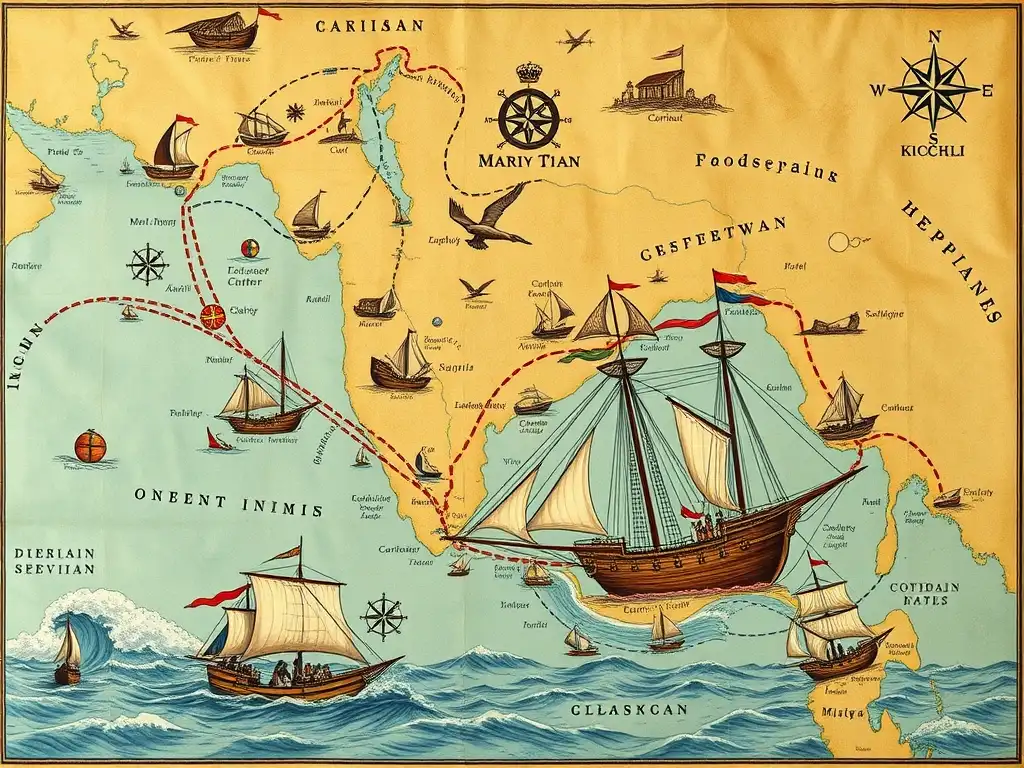
Monsoon winds have played a crucial role in shaping the maritime trade routes of ancient India, significantly influencing the movement of goods and cultural exchanges across the Indian Ocean. Understanding these winds is essential to grasp how ancient Indian civilizations engaged with distant lands and developed robust sea trade networks.
Monsoon winds are seasonal winds that change direction at certain times of the year, characterized by their predictable patterns. In India, these winds are primarily divided into two major periods: the southwest monsoon (from June to September) and the northeast monsoon (from October to December).
- Southwest Monsoon: This wind blows from the southwest, bringing heavy rains and favorable conditions for sailors heading from the Arabian Sea towards the east coast of Africa and Southeast Asia. The winds allowed traders to sail with the current, making voyages faster and more efficient.
- Northeast Monsoon: Conversely, this wind reverses direction, blowing from the northeast. It facilitated the return journeys for merchants after the monsoon season, allowing them to navigate back to India from their trading posts in the south.
These predictable wind patterns enabled ancient Indian mariners to establish regular trading routes, enhancing commercial activities and ensuring the timely delivery of goods. The knowledge of these winds was critical for successful navigation, allowing traders to plan their voyages with precision.
Seasonal Trade Patterns Driven by Monsoon Winds
The impact of monsoon winds extended beyond navigation; they directly influenced the seasonal trade patterns of ancient India. Merchants adapted their trading schedules to align with these winds, leading to a cyclical rhythm in maritime commerce.
- Summer Trade: During the southwest monsoon, merchants would set out from Indian ports such as Lothal and Kaveripattinam to trade with regions such as the Red Sea and the East African coast. Goods like spices, textiles, and precious stones were highly sought after, and the favorable winds allowed for quicker voyages.
- Winter Trade: As the northeast monsoon set in, traders would return to India with exotic goods from foreign lands, including gold, ivory, and frankincense. This seasonal pattern created a network of trade that thrived not only on Indian shores but also extended to far-off lands, enriching both the economy and cultural exchanges.
The regularity of these trade routes fostered economic stability and cultural interactions, leading to the diffusion of ideas, art, and technology between different civilizations. Moreover, the bustling ports became melting pots of culture, where diverse communities interacted and thrived.
The interplay between monsoon winds and maritime trade routes was a defining feature of ancient India's economic landscape. The mastery of navigation techniques and the strategic timing of voyages allowed Indian traders to dominate sea trade, establishing a legacy that would influence maritime commerce for centuries to come.
Major Ancient India Sea Trade Routes
The Indian Ocean Trade Route
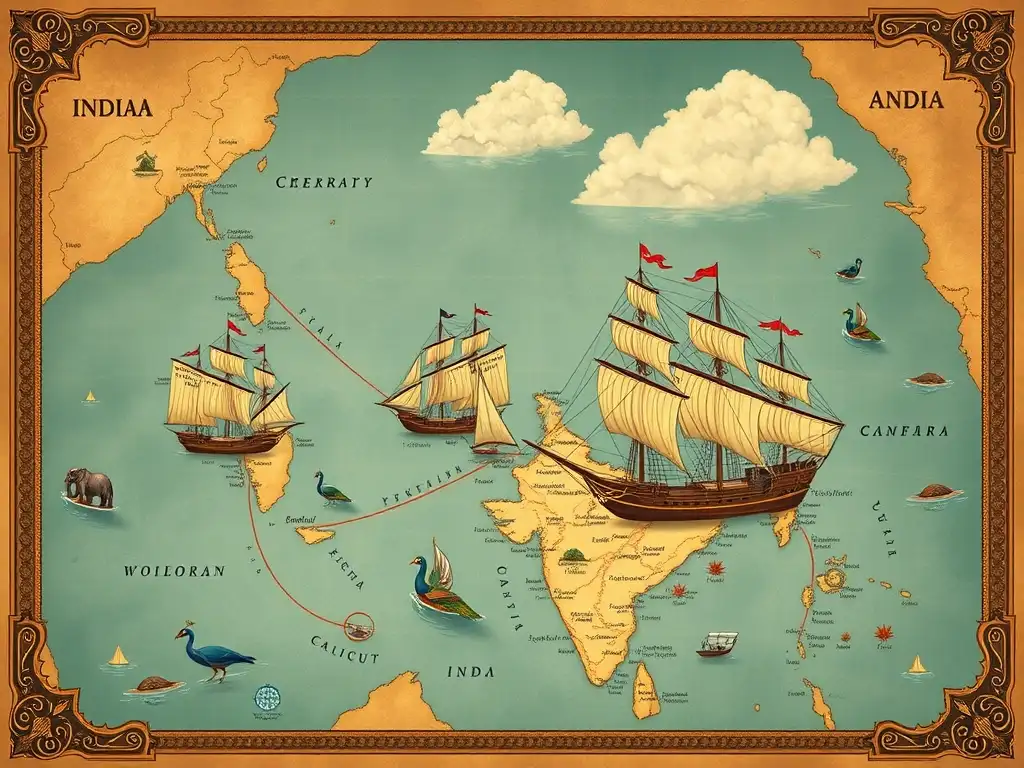
The Indian Ocean Trade Route was a crucial maritime corridor that facilitated trade between ancient India and various regions across Africa, the Middle East, and Southeast Asia. This network of sea routes not only enabled the exchange of goods but also promoted cultural interactions and the spread of ideas. The favorable monsoon winds played a significant role in enabling ships to traverse vast distances, allowing traders to plan their journeys efficiently.
The Indian Ocean was well-connected with several major ports in ancient India, including Lothal, Surat, and Kochi. These ports served as bustling hubs for trade, where merchants from diverse backgrounds converged to conduct business. The Indian Ocean Trade Route was characterized by its vibrant exchanges and the establishment of economic ties that lasted for centuries.
Key Destinations and Trading Partners
The Indian Ocean Trade Route connected ancient India with numerous key destinations and trading partners:
- East Africa: The Swahili Coast was a significant trading partner, where goods such as ivory, gold, and slaves were exchanged for Indian textiles and spices.
- Arabian Peninsula: Cities like Aden and Muscat served as vital trading hubs, facilitating the exchange of frankincense, myrrh, and precious stones.
- Southeast Asia: The Spice Islands (present-day Indonesia) became essential for their nutmeg and cloves, which were highly sought after in Indian markets.
- China: The trade route also extended to the southern coast of China, where silk and porcelain were highly valued commodities.
These interactions not only enriched the economies of ancient Indian civilizations but also fostered cultural exchanges, leading to the assimilation of various customs, languages, and beliefs.
Goods Traded Along the Indian Ocean Route
The Indian Ocean Trade Route was renowned for its diverse range of goods traded. Some of the prominent commodities included:
- Spices: Pepper, cardamom, and cinnamon from India were in high demand and formed a substantial part of trade.
- Textiles: Fine cotton fabrics and silk were significant exports, with Indian textiles being prized for their quality and craftsmanship.
- Precious metals and stones: Gold and silver were frequently traded, along with gems like diamonds and rubies.
- Agricultural products: Rice, sugar, and various fruits were exchanged, contributing to the sustenance of trading communities.
The broad spectrum of traded goods highlights the economic prowess of ancient India and its central role in the maritime trade networks of the time.
The Arabian Sea Trade Route
The Arabian Sea Trade Route was another pivotal maritime corridor that linked ancient India to the Middle East and beyond. This route was instrumental in facilitating trade across the Arabian Sea, allowing for the movement of goods and ideas between various civilizations.
The Arabian Sea, with its strategic location, was critical for maritime navigation. Ancient Indian traders adeptly utilized the seasonal monsoons to sail across the sea, establishing a regular pattern of trade that was both efficient and profitable. Ports along the western coast of India, including Bharuch and Diu, played a significant role in this trade network.
Significance of the Arabian Sea in Ancient Trade
The Arabian Sea served multiple purposes in ancient trade:
- Cultural Exchange: The route facilitated not just the exchange of goods but also cultural interactions between Indian, Arab, and African merchants, leading to the blending of traditions.
- Economic Growth: The trade fostered economic growth in coastal towns, which developed into vibrant trading cities with bustling marketplaces.
- Maritime Knowledge: The experience gained in navigation and shipbuilding through the Arabian Sea trade contributed to advancements in maritime technologies.
These elements underscore the importance of the Arabian Sea as a conduit for trade that shaped the economic landscape of ancient India.
Key Trade Goods and Cultural Exchanges
The Arabian Sea Trade Route was characterized by a rich array of goods and cultural exchanges. Some of the key trade goods included:
- Incense: Frankincense and myrrh were highly valued in various cultures and were among the prominent exports from the Arabian Peninsula.
- Textiles: Indian silk and cotton continued to be staple exports, reaching markets in Arabia and Africa.
- Spices: The region also played a role in the spice trade, with products like saffron being exchanged.
- Cultural Influences: The maritime interactions led to the exchange of religious beliefs, culinary practices, and languages, enriching the cultural tapestry of the regions involved.
The Arabian Sea Trade Route was not just a pathway for goods; it was a vibrant channel for cultural diffusion that left a lasting legacy on the civilizations it connected.
The Economic Impact of Sea Trade on Ancient India
Trade and Its Contribution to Ancient Indian Economy
The ancient Indian economy was significantly influenced by its sea trade routes, which facilitated the exchange of goods and ideas with distant lands. The coastal regions of India—particularly the western coast along the Arabian Sea and the eastern coast along the Bay of Bengal—became bustling hubs of commerce as a result of maritime trade.
Key Contributions of Sea Trade:
- Diverse Goods Exchange: Ancient Indian traders exported a variety of products, including spices, textiles, precious stones, and metalwork. These goods were highly sought after in markets across the Middle East, Africa, and Southeast Asia, creating a substantial trade surplus for India.
- Cultural Exchange: Along with goods, traders facilitated the exchange of cultural practices, religions, and technologies. This interaction enriched Indian society and contributed to the development of a cosmopolitan culture, particularly in port cities.
- Economic Prosperity: The revenues generated from sea trade were pivotal in supporting the economies of local kingdoms and city-states. This wealth allowed for the patronage of art, architecture, and scholarship, leading to advancements in various fields.
The impact of sea trade was not just limited to economic prosperity; it also laid the foundation for India's integration into the global trading system of the ancient world.
Influence of Sea Trade on Urban Development
The flourishing sea trade during ancient times had a profound impact on the urbanization of coastal areas in India. Port cities emerged as prominent centers of commerce, culture, and administration, leading to significant changes in urban development patterns.
Key Aspects of Urban Development Influenced by Sea Trade:
- Growth of Major Port Cities: Notable cities such as Kochi, Calicut, and Surat became critical trade centers, attracting merchants from different regions. These cities developed complex infrastructures, including docks, warehouses, and marketplaces, to accommodate the growing trade.
- Cultural Melting Pots: The influx of traders from various regions and cultures led to a melting pot of ideas, languages, and traditions. This cultural exchange fostered a vibrant urban life, with diverse communities coexisting in these trading hubs.
- Urban Planning and Architecture: The wealth generated from sea trade contributed to advancements in urban planning. Cities were often designed with a grid layout, featuring wide streets and public spaces. Architectural innovations were also notable, with influences seen from various cultures, leading to unique styles that blended local and foreign elements.
The impact of ancient India sea trade routes extended beyond mere economic transactions; they were instrumental in shaping the urban landscape and cultural fabric of the region. The legacy of this maritime prowess continues to resonate in India's history and development.
Cultural Exchanges Through Maritime Trade
Spread of Ideas and Technologies via Sea Routes
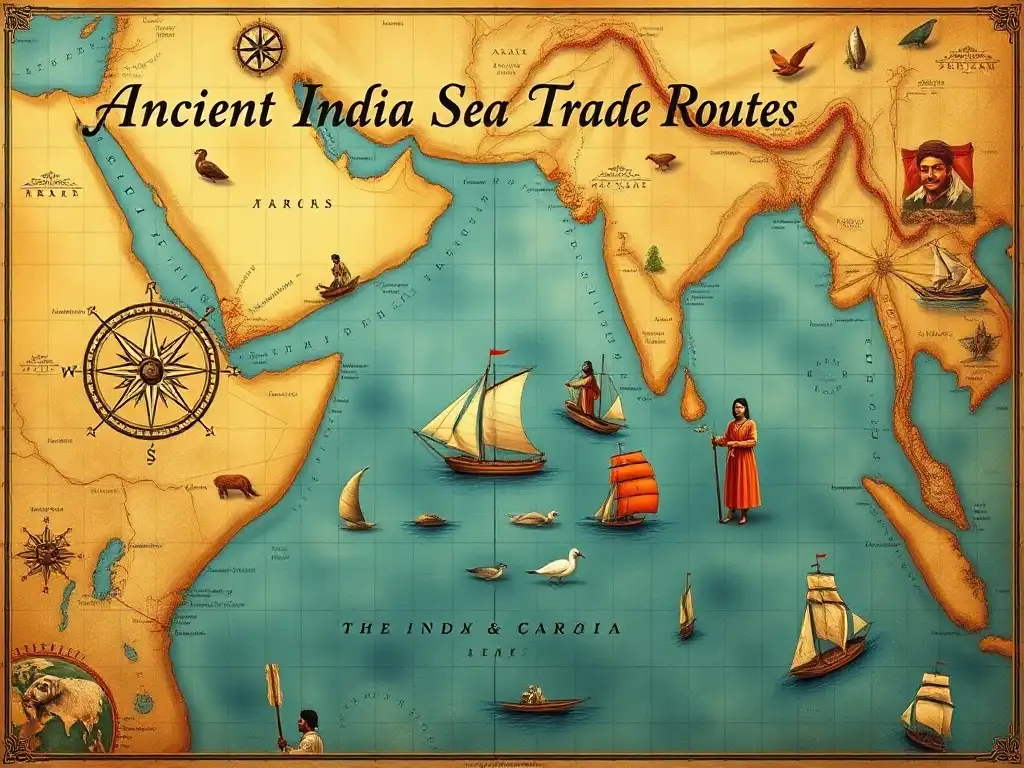
Ancient India’s sea trade routes were not just conduits for goods; they also facilitated a vibrant exchange of ideas and technologies among various civilizations. The primary maritime routes extended across the Indian Ocean, connecting India with regions as far as the Arabian Peninsula, Southeast Asia, and even the eastern coast of Africa. This extensive network allowed for the diffusion of knowledge in several domains:
- Navigation Techniques: Indian mariners were skilled navigators who employed advanced methods, including the use of the stars and monsoon wind patterns, to traverse vast distances. Their expertise contributed to the evolution of maritime navigation, influencing seafaring practices in neighboring regions.
- Agricultural Innovations: Trade interactions led to the exchange of agricultural techniques and crops. Notably, the introduction of spices like black pepper, which became a highly sought-after commodity, significantly influenced culinary practices across continents.
- Art and Craftsmanship: The maritime trade routes also served as channels for artistic exchanges. Indian artisans shared their skills in textiles, pottery, and metalwork, which were adopted and adapted by different cultures along the trade routes. For instance, the intricate patterns of Indian textiles influenced designs in regions such as Persia and Southeast Asia.
- Spiritual and Philosophical Ideas: The movement of goods was often accompanied by the dissemination of cultural and religious beliefs. Buddhism, for example, spread from India to Southeast Asia via maritime routes, leading to the establishment of numerous Buddhist communities and the construction of stupas and temples across the region.
Cultural Interactions with Other Civilizations
The interactions fostered by ancient India's sea trade routes were pivotal in shaping the cultural landscape of various civilizations. The blend of diverse traditions and practices enriched societies on both sides of the Indian Ocean:
- Arabian Peninsula: Trade with the Arabian Peninsula led to the exchange of goods such as frankincense and myrrh, which were highly valued in ancient Indian markets. This interaction also facilitated the introduction of Arabic numerals and the Islamic faith into Indian culture.
- Southeast Asia: Indian merchants played a crucial role in establishing trade links with Southeast Asia. The region absorbed various aspects of Indian culture, including language, art, and religion. Hinduism and Buddhism became prominent, significantly influencing local customs and governance. The kingdoms of Srivijaya and Majapahit exemplify this cultural synthesis.
- East Africa: The maritime routes extended to the eastern coast of Africa, where Indian traders established settlements. This interaction contributed to the formation of the Swahili culture, a unique blend of African, Arab, and Indian influences, visible in language, architecture, and trade practices.
- Mutual Benefits: The cultural exchanges were mutually beneficial, allowing civilizations to adapt and innovate. For instance, the introduction of Indian textiles and metal goods enriched local economies, while the demand for African ivory and gold enhanced Indian trade networks.
The ancient India sea trade routes were instrumental in not only facilitating commerce but also in fostering rich cultural exchanges that shaped the civilizations connected through these maritime pathways. The legacy of these interactions continues to influence cultural dynamics in the regions involved.
Conclusion: Legacy of Ancient India Sea Trade Routes
The maritime trade routes of Ancient India played a pivotal role in shaping not only the economy of its civilizations but also influencing cultural exchanges across continents. These sea routes, which included the Arabian Sea and the Bay of Bengal, facilitated trade with regions as far as Rome, Africa, and Southeast Asia. The legacy of these ancient sea trade routes continues to resonate in modern maritime practices, showcasing the ingenuity and foresight of early Indian traders.
Lasting Impact on Modern Maritime Trade
The influence of Ancient India's sea trade routes is evident in several aspects of contemporary maritime trade. First and foremost, the strategic locations of ancient ports such as Lothal, Sopara, and Muziris laid the groundwork for modern shipping hubs. These ports were essential in the exchange of goods like spices, textiles, and precious stones, which remain crucial commodities in today's global market.
| Aspect | Ancient India | Modern Maritime Trade |
|---|---|---|
| Major Ports | Lothal, Sopara, Muziris | Mumbai, Chennai, Kolkata |
| Key Commodities | Spices, textiles, gems | Electronics, oil, agricultural products |
| Trade Partners | Rome, Persia, Southeast Asia | Global markets, including Europe and East Asia |
| Shipping Techniques | Dhows, wooden ships | Container ships, tankers |
Moreover, the trade practices established during this period, such as the use of monsoon winds for navigation, have informed modern maritime strategies. The understanding of seasonal winds and currents is still crucial for efficient shipping routes today, highlighting the sophistication of ancient navigational techniques.
Lessons from Ancient India’s Sea Trade Strategies
The sea trade strategies of Ancient India offer valuable lessons that can be applied to contemporary trade practices.
- Adaptation to Environmental Conditions:
- Ancient traders capitalized on the monsoon winds, adjusting their sailing schedules accordingly. This adaptability ensured that they maximized their trade potential while minimizing risks associated with weather unpredictability.
- Cultural Exchange as a Trading Tool:
- Trade was not merely a transaction of goods but also a bridge for cultural exchange. The spread of ideas, religious beliefs, and cultural practices via maritime routes enriched societies. Modern businesses can learn from this by fostering cultural sensitivity and understanding in global trade relations.
- Building Strong Trade Networks:
- The establishment of extensive trade networks allowed ancient Indian traders to connect with diverse markets. Today, building robust supply chains and partnerships is essential for successful international trade.
- Sustainability Practices:
- Ancient traders demonstrated sustainable practices by utilizing local resources and maintaining balance in trade. In modern trade, adopting sustainable practices can enhance corporate responsibility and appeal to environmentally conscious consumers.
The legacy of Ancient India’s sea trade routes is not just a historical narrative; it encapsulates strategic insights and practices that remain relevant in today's global trade landscape. Understanding these ancient strategies can provide a roadmap for navigating the complexities of modern maritime commerce.
Frequently Asked Questions
What were the main sea trade routes used by ancient India?
Ancient India utilized key maritime routes connecting the Indian subcontinent to the Middle East, Southeast Asia, and Africa, significantly enhancing trade and cultural exchanges.
How did monsoon winds impact ancient Indian trade?
The monsoon winds played a crucial role in navigation, allowing merchants to sail with favorable conditions, thus facilitating timely and efficient trade journeys across the seas.
What were the primary goods traded via ancient India’s maritime routes?
Ancient Indian traders exported spices, textiles, and precious stones, while importing metals, glassware, and other luxury goods, contributing to a vibrant trade economy.
How did ancient Indian civilizations influence global trade?
By establishing trade networks across the Indian Ocean, ancient India contributed to the exchange of ideas, cultures, and technological advancements, shaping global commerce.
What role did ancient Indian ports play in maritime trade?
Ancient ports like Lothal and Kalyan were vital for shipbuilding, warehousing, and facilitating trade, serving as hubs for economic activity and cultural interchange.
Final Reflection: The Enduring Legacy of Ancient India's Sea Trade Routes
The intricate web of ancient India's sea trade routes not only shaped the economic landscape of its time but also laid the foundation for cultural exchanges that resonate in today's globalized world. The significance of these maritime pathways is not merely a relic of history; they serve as a reminder of how interconnected our societies have always been. The ability of ancient India to dominate sea trade exemplifies the power of innovation and adaptability in navigating both waters and relationships.
The influence of these ancient trade routes extends far beyond commerce; they fostered a rich tapestry of cultural interactions that continue to shape our identities. From the exchange of spices and textiles to the mingling of ideas and philosophies, the legacy of ancient India's maritime prowess is evident in the diverse cultures that thrive today. As historian K. N. Chaudhuri aptly stated, The sea was not a barrier but a bridge, connecting distant lands and peoples.
This perspective invites us to reflect on how our modern world, much like ancient India, relies on connections that transcend geographical boundaries.
As we contemplate the lessons of ancient India's sea trade routes, let us embrace the spirit of exploration and collaboration that defined this era. I encourage you to reflect on your own connections—be they personal, cultural, or professional—and consider how you can foster relationships that enrich your life and the lives of others. Just as the winds of the monsoon guided ancient mariners, may we also be guided by the winds of curiosity and understanding as we navigate our own journeys in an interconnected world.
Embark on Your Journey Through Ancient Maritime Trade!
Thank you for diving into the captivating world of ancient India's sea trade. Your exploration of how monsoon winds shaped maritime routes showcases the brilliance of our ancestors in navigating vast waters. Now, it's your turn to sail forward!
Here are some inspiring steps you can take next:
- Research the Influence of Monsoon Winds: Delve deeper into how these seasonal winds affected trade routes. Look for scholarly articles or books that explore ancient navigation techniques.
- Share Your Insights: Discuss your newfound knowledge with friends or in online forums. What intrigues you most about ancient sea trade?
- Join a History Community: Connect with fellow enthusiasts. Engage in discussions about maritime history through local history clubs or social media groups.
Are you ready to uncover more fascinating stories about the extraordinary connections forged across the seas in ancient times?