
The Spiritual Exchange: How Indian Philosophies Shaped Southeast Asian Thought


Welcome to Ancient India History, where we delve into the rich tapestry of ancient civilizations that shaped not only India but also the world. In our featured article, “The Spiritual Exchange: How Indian Philosophies Shaped Southeast Asian Thought,” we explore the profound influence of Indian philosophies on the cultures of Southeast Asia. As you journey through the intricate connections between these regions, prepare to uncover the fascinating ways in which ancient Indian thought transcended borders, leaving an indelible mark on diverse societies. Join us in this exploration and discover how the echoes of the past continue to resonate today!
The exchange of ideas and philosophies between ancient India and Southeast Asia represents one of the most profound cultural interactions in history. As Indian civilizations flourished, their diverse philosophies, religious beliefs, and cultural practices began to migrate beyond the subcontinent, significantly impacting the spiritual landscape of Southeast Asia.
This article delves into the intricate ways in which Indian philosophies influenced Southeast Asian thought, examining key historical contexts, philosophical tenets, and enduring legacies. From the early trade routes that facilitated these exchanges to the establishment of religious institutions, the interplay between these regions illuminates a rich tapestry of shared heritage, demonstrating how Indian philosophies not only shaped Southeast Asian societies but also fostered a unique synthesis of cultural identities.
The Historical Context of Indian Influence in Southeast Asia
The historical backdrop of Indian philosophies in Southeast Asia can be traced back to the early centuries of the Common Era, particularly through trade and maritime routes. As merchants traversed these paths, they brought with them not only goods but also ideas and beliefs.
- Trade Routes: The maritime Silk Road and overland routes enabled the movement of people, ideas, and cultural practices.
- Cultural Exchange: Indian traders, scholars, and monks played a pivotal role in introducing concepts of Hinduism and Buddhism to Southeast Asian kingdoms.
These interactions laid the foundation for a cultural exchange that would profoundly influence local belief systems, governance, and artistic expressions.
Key Philosophical Tenets Transmitted to Southeast Asia
Indian philosophies, particularly those rooted in Hinduism and Buddhism, introduced several key concepts that resonated with Southeast Asian societies.
- Karma and Dharma: The ideas of karma (action and consequence) and dharma (duty/righteousness) found a fertile ground in local beliefs, shaping ethical frameworks across various cultures.
- Meditative Practices: The emphasis on meditation and mindfulness from Buddhism influenced spiritual practices among Southeast Asian populations, leading to the establishment of monastic communities.
This philosophical exchange was not one-sided; Southeast Asian cultures also adapted and transformed these ideas, creating unique interpretations that enriched their local traditions.
The Enduring Legacy of Indian Philosophies in Southeast Asia
The influence of Indian philosophies in Southeast Asia is evident in various aspects of life, including religion, art, and governance.
- Religious Institutions: Temples, such as Angkor Wat in Cambodia and Borobudur in Indonesia, are prime examples of Indian architectural and religious influences.
- Cultural Festivals: Festivals celebrating Hindu deities and Buddhist teachings became integral to the cultural fabric of Southeast Asian societies.
This enduring legacy continues to shape the spiritual and cultural landscapes of Southeast Asia, illustrating the deep-rooted connections forged through centuries of philosophical exchange.
- The Historical Context of Indian Influence in Southeast Asia
- Key Philosophical Tenets Transmitted to Southeast Asia
- The Enduring Legacy of Indian Philosophies in Southeast Asia
- What are the main Indian philosophies that influenced Southeast Asia?
- How did trade facilitate the spread of Indian philosophies to Southeast Asia?
- What role did religion play in the cultural exchange between India and Southeast Asia?
- Can you give examples of Southeast Asian countries influenced by Indian philosophies?
- How did Indian art and literature contribute to Southeast Asian culture?
Introduction to Indian Philosophies and Their Influence
The influence of Indian philosophies on Southeast Asia is a profound aspect of historical cultural exchanges. This section delves into the rich tapestry of Indian thought, examining how these philosophies permeated and shaped the spiritual and intellectual landscapes of Southeast Asian nations. By analyzing the origins, dissemination, and adaptation of these ideas, we can appreciate the intricate connections between these regions.
Overview of Indian Philosophies
Indian philosophies encompass a diverse range of schools of thought, most notably Hinduism, Buddhism, and Jainism, each offering unique perspectives on existence, morality, and the nature of reality. These philosophies developed over millennia and were characterized by their emphasis on:
- Metaphysics: Exploring the nature of reality and the universe.
- Ethics: Defining moral values and social responsibilities.
- Epistemology: Investigating the nature and scope of knowledge.
Key Philosophical Schools
- Hinduism:
- Emphasizes concepts like Dharma (duty/righteousness), Karma (action and its consequences), and Moksha (liberation).
- The Upanishads and Bhagavad Gita are central texts.
- Buddhism:
- Founded by Siddhartha Gautama, it focuses on the Four Noble Truths and the Eightfold Path as a means to attain Nirvana (enlightenment).
- It promotes concepts of impermanence and compassion.
- Jainism:
- Centers around the principles of non-violence (Ahimsa) and truth (Satya).
- It emphasizes the importance of asceticism and self-discipline.
These philosophies were not just abstract ideas; they were deeply intertwined with the daily lives of individuals, shaping societal norms, rituals, and governance.
The Significance of Cultural Exchange in Ancient History
Cultural exchange has always been a crucial aspect of human history, facilitating the flow of ideas, religions, and philosophies across borders. In the ancient world, this exchange was often facilitated by trade routes, such as the Silk Road and maritime pathways, which connected India with Southeast Asia.
Mechanisms of Exchange
- Trade: Merchants and traders carried not only goods but also ideas and beliefs. This was particularly evident in port cities like Southeast Asia’s Srivijaya and Funan, where Indian traders settled and shared their philosophies.
- Missionary Activities: Buddhist missionaries, for instance, traveled extensively, establishing monastic communities and spreading Buddhist teachings across regions like present-day Thailand, Cambodia, and Indonesia.
- Political Alliances: Interactions between Indian and Southeast Asian rulers often involved the adoption of Indian ideologies to legitimize authority, leading to the establishment of Hindu and Buddhist kingdoms.
Through these mechanisms, Indian philosophies influenced Southeast Asian societies, leading to the development of unique syncretic cultures that blended indigenous beliefs with Indian thought.
The Role of Indian Thought in Southeast Asia
The adaptation of Indian philosophies in Southeast Asia is evident in various aspects of culture, religion, and governance. This influence can be categorized as follows:
- Religious Syncretism:
- Indian religions, particularly Buddhism and Hinduism, became dominant in several Southeast Asian countries. Temples, such as Angkor Wat in Cambodia, symbolize the fusion of local and Indian architectural styles and religious practices.
- Literature and Arts:
- Indian epics like the Ramayana and Mahabharata were not only translated but also reinterpreted in local contexts, influencing Southeast Asian literature, dance, and theater.
- Traditional art forms often depict themes and characters drawn from these epics, illustrating the deep cultural integration.
- Philosophical Thought:
- Concepts such as Karma and Dharma began to permeate the moral and ethical frameworks within Southeast Asian societies, shaping their worldview and social structures.
The legacy of Indian philosophies in Southeast Asia is a testament to the enduring power of cultural exchanges that transcended geographical boundaries, enriching the spiritual and intellectual heritage of the region. The Indian philosophies influence Southeast Asia continues to resonate today, reflecting a shared history of thought and belief that has shaped the identities of these diverse cultures.
Historical Context of Indian Philosophies in Southeast Asia

Early Contacts Between India and Southeast Asia
The interaction between India and Southeast Asia dates back to at least the 1st century CE, marked by both maritime and overland trade routes. These early contacts facilitated not only the exchange of goods but also the transmission of ideas, culture, and philosophies. Indian traders, seafarers, and missionaries traveled to regions such as modern-day Indonesia, Malaysia, and Thailand, bringing with them not just commodities but also their rich philosophical traditions.
Key elements of these early contacts include:
- Maritime Trade: The Indian Ocean trade network connected various civilizations, allowing for the exchange of not only spices and textiles but also philosophical concepts.
- Cultural Integration: Many Southeast Asian societies began to adopt elements of Indian culture, which included governance, art, and religious practices, leading to the establishment of Indianized kingdoms.
The influence of Indian philosophies during this era can be seen in the integration of spiritual and ethical teachings, which laid the groundwork for subsequent developments in Southeast Asian thought.
Trade Routes and Cultural Interactions
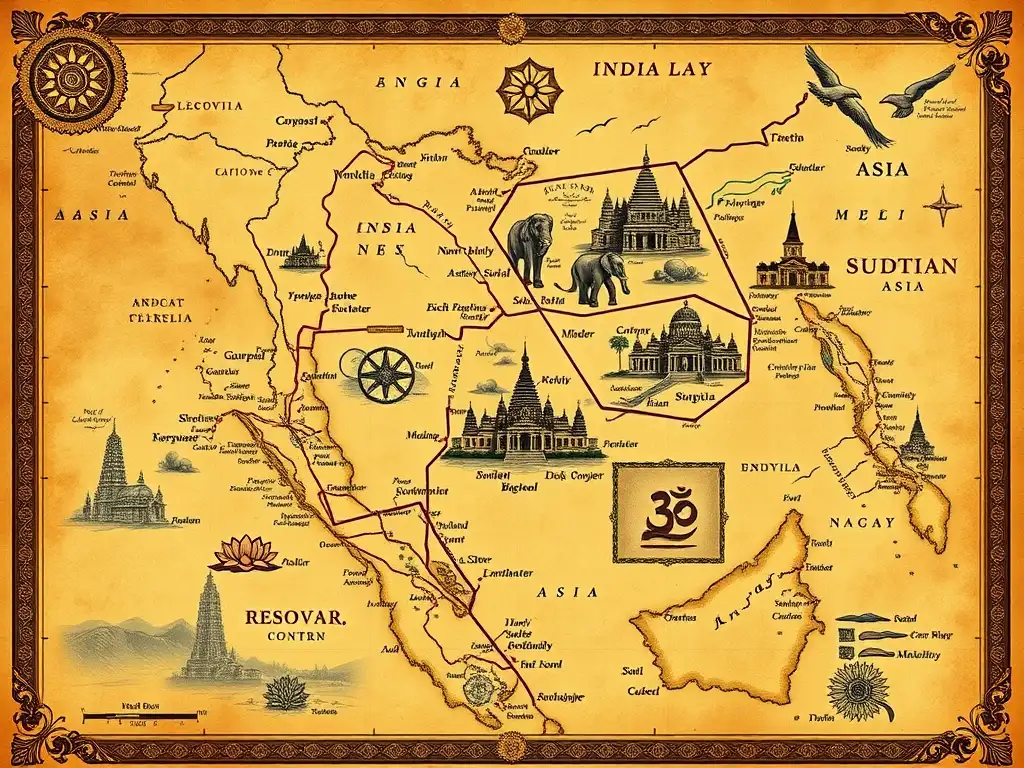
Trade routes played a critical role in the spread of Indian philosophies to Southeast Asia. The maritime Silk Road and the Spice Route not only facilitated economic exchanges but also became conduits for cultural and intellectual flows.
Notable aspects of these trade routes include:
- Silk Road Influence: The overland Silk Road allowed for the movement of scholars and monks, who disseminated Indian philosophical ideas across borders.
- Ports as Cultural Hubs: Major trading ports like Srivijaya and Funan became melting pots of diverse cultures where Indian ideas mingled with local beliefs, leading to unique syncretic philosophies.
As a result of these interactions, Southeast Asian societies started to incorporate Indian concepts of governance, ethics, and cosmology into their own societal structures, which significantly influenced their local philosophies.
The Spread of Indian Religions: Hinduism and Buddhism
The introduction of Hinduism and Buddhism to Southeast Asia was pivotal in shaping the region's spiritual landscape. These religions brought with them distinct philosophical frameworks that resonated with local traditions and beliefs.
Key points regarding the spread of these religions include:
- Hinduism's Influence: As the dominant religion in many Indian empires, Hinduism introduced concepts such as dharma (duty) and karma (action) that were embraced by various Southeast Asian cultures. Temples like Angkor Wat in Cambodia reflect this influence through their architectural grandeur and religious practices.
- Buddhism's Expansion: Buddhism, particularly Mahayana Buddhism, found fertile ground in Southeast Asia. The teachings of the Buddha emphasized compassion and enlightenment, concepts that aligned with the spiritual aspirations of many Southeast Asian societies. The establishment of Buddhist monasteries and the spread of texts like the Pali Canon further solidified this influence.
Both Hinduism and Buddhism not only shaped religious practices but also influenced art, literature, and political philosophy in Southeast Asia, creating a lasting legacy that can still be observed today.
The profound impact of Indian philosophies on Southeast Asia is evident through the intertwined histories of trade, culture, and religion, which collectively enriched the spiritual and intellectual fabric of the region.
Key Indian Philosophies that Influenced Southeast Asia
The Concept of Dharma and Its Application
The concept of Dharma, originating from ancient Indian philosophy, holds a fundamental place in the spiritual and ethical framework of various cultures, especially in Southeast Asia. Dharma can be understood as a set of moral and ethical duties or responsibilities that individuals must follow, which is intricately linked to the idea of righteousness and societal order.
In Southeast Asia, particularly in countries like Indonesia and Thailand, Dharma has been adapted to fit local customs and beliefs. The integration of Dharma into local cultures can be observed in the governance systems, where rulers are often seen as upholders of Dharma, ensuring the well-being of their subjects. The Buddhist interpretation of Dharma emphasizes the path towards enlightenment, which has profoundly influenced the region's spiritual practices.
- Examples of Dharma in Southeast Asian Contexts:
- In Thailand, the concept of “Buddha Dharma” plays a crucial role, guiding the behavior of individuals and communities.
- In Indonesia, particularly within the Balinese Hindu community, Dharma is reflected in the social structure and rituals that maintain harmony and balance.
The application of Dharma extends beyond individual behavior; it influences art, literature, and governance, making it a cornerstone of cultural identity in Southeast Asia. The adaptability of this concept showcases its enduring relevance and the profound impact of Indian philosophies on Southeast Asian thought.
The Influence of Karma on Southeast Asian Societies
Karma, a key principle in Indian philosophies, refers to the law of cause and effect, where an individual’s actions directly influence their future experiences. This concept has transcended geographical boundaries, significantly shaping the moral and ethical landscape of Southeast Asian societies.
In countries such as Cambodia and Myanmar, Karma is deeply embedded in the cultural consciousness, influencing social hierarchies and personal relationships. The belief that one's actions in this life affect their future reincarnations fosters a sense of moral responsibility among individuals.
- Key Aspects of Karma in Southeast Asia:
- Social Behavior: People are often motivated to act ethically, as they believe that good deeds will yield positive outcomes in their current or future lives.
- Cultural Practices: Festivals and rituals often emphasize the importance of accumulating good Karma, encouraging altruism and communal support.
The influence of Karma can also be seen in the legal and social systems, where actions are often judged based on their moral implications. This philosophical framework promotes a collective sense of accountability, shaping the interactions within communities across Southeast Asia.
Meditation and Mindfulness Practices
Meditation and mindfulness, rooted in Indian philosophies, have gained significant traction in Southeast Asia as essential practices for spiritual growth and mental well-being. These practices, originally developed within the context of Hinduism and Buddhism, have transcended their religious origins to become integral to various cultural and personal development programs.
- Historical Context: The transmission of meditation techniques from India to Southeast Asia occurred alongside the spread of Buddhism, particularly during the reign of Emperor Ashoka in the 3rd century BCE.
Today, meditation practices can be observed in various forms across Southeast Asian countries:
- Mindfulness in Thailand: Vipassana meditation, a technique that emphasizes insight and awareness, is widely practiced in monasteries and retreats, reflecting its Indian roots.
- Mindfulness in Vietnam: The integration of meditation into daily life, particularly in Zen Buddhism, emphasizes being present and aware, illustrating its widespread acceptance.
The influence of meditation and mindfulness extends beyond spiritual practices; they contribute to mental health initiatives and educational programs, promoting emotional well-being and resilience among individuals in Southeast Asia. The growing interest in these practices signifies the lasting impact of Indian philosophies on the region's contemporary thought and lifestyle.
Case Studies: Indian Philosophies in Southeast Asian Cultures

The Adoption of Hindu Practices in Bali
Bali is a prime example of how Indian philosophies have influenced Southeast Asia through the adoption of Hindu practices. The island's unique blend of Hinduism and indigenous beliefs creates a rich tapestry of cultural and spiritual life.
Religious Festivals and Rituals
Bali is renowned for its vibrant festivals that reflect Hindu cosmology and mythology. One notable celebration is Nyepi, the Day of Silence, which marks the Balinese New Year. This day of fasting and introspection is preceded by grand processions featuring Ogoh-Ogoh, large effigies symbolizing evil spirits that are paraded through the streets before being burned. The rituals surrounding Nyepi demonstrate the integration of Indian religious concepts, such as purification and the cyclical nature of time.
Architectural Influence
The influence of Indian philosophies is also evident in Balinese architecture. Temples, known as pura, are built in accordance with Hindu principles, often aligned with cosmic elements. The Besakih Temple, considered the Mother Temple of Bali, showcases this alignment, with its structures symbolizing the sacred mountains and the spiritual connection to the divine.
Buddhist Teachings in Thailand and Cambodia
In Thailand and Cambodia, the influence of Indian philosophies is profoundly illustrated through the adoption and adaptation of Buddhist teachings.
Theravada Buddhism in Thailand
Thailand is predominantly a Theravada Buddhist country, where Indian philosophies have shaped religious practices and societal norms. The teachings of the Buddha, which emphasize the Four Noble Truths and the Eightfold Path, are deeply rooted in the Indian philosophical tradition. This is reflected in the monastic community, or Sangha, which plays a crucial role in Thai society, promoting values such as compassion and mindfulness that are echoed in Indian thought.
Khmer Empire and Mahayana Buddhism
In Cambodia, the Khmer Empire embraced Mahayana Buddhism, which incorporates elements from both Indian philosophies and local beliefs. The construction of the Angkor Wat temple complex demonstrates this synthesis, showcasing intricate carvings that depict Hindu and Buddhist narratives. The temple serves not only as a place of worship but also as a representation of the cosmos, aligning with Indian philosophical views on the universe.
The Integration of Indian Epics in Local Literature
The influence of Indian philosophies extends into the literary traditions of Southeast Asia, where local adaptations of Indian epics have left a lasting legacy.
The Ramayana in Southeast Asia
The Ramayana, one of the two great Indian epics, has been retold in various forms across Southeast Asia. In Indonesia, the Wayang Kulit shadow puppetry brings the epic to life, illustrating its themes of duty, honor, and morality. The story of Rama and Sita resonates deeply with Indonesian audiences, showcasing the universal values embedded in Indian philosophies.
The Mahabharata's Impact
Similarly, the Mahabharata has found its place in Southeast Asian literature, particularly in Malaysia and Thailand. The epic's complex characters and moral dilemmas are explored through traditional performances and storytelling, enriching the cultural landscape. In Thailand, the Khon dance-drama incorporates elements from the Mahabharata, emphasizing the philosophical teachings of dharma (duty) and karma (action) that are central to Indian thought.
By examining these case studies, we can see how Indian philosophies have profoundly influenced Southeast Asian cultures, contributing to a shared spiritual and intellectual heritage that continues to thrive today.
The Lasting Impact of Indian Philosophies on Southeast Asian Thought
Transformation of Religious Practices
The influence of Indian philosophies on Southeast Asia is particularly evident in the transformation of religious practices. With the spread of Hinduism and Buddhism, indigenous beliefs underwent significant changes, incorporating elements from these Indian traditions.
- Hinduism's Integration:
- Temples dedicated to Hindu deities, such as Shiva and Vishnu, began to emerge throughout Southeast Asia. These temples, like the iconic Angkor Wat in Cambodia, were not merely places of worship but also centers for cultural and social gatherings.
- Festivals, rituals, and even the caste system were adapted into local customs, creating a unique fusion of beliefs that persisted over centuries.
- Buddhism's Expansion:
- The arrival of Buddhism in Southeast Asia led to the establishment of monastic communities and the promotion of Buddhist teachings. Countries like Thailand, Myanmar, and Indonesia adopted Theravada Buddhism, while Mahayana Buddhism found a strong foothold in Vietnam.
- Sacred texts, philosophies, and practices from Indian Buddhism, such as meditation and mindfulness, became integral to the spiritual lives of Southeast Asian populations.
The adaptation of these religious practices showcases the deep-rooted impact of Indian philosophies, creating a rich tapestry of spiritual traditions that continues to evolve today.
Influence on Art, Architecture, and Literature
The impact of Indian philosophies on Southeast Asian art, architecture, and literature is profound and multifaceted. This exchange can be observed in various forms:
- Artistic Expression:
- Indian motifs and iconography significantly influenced the artistic styles of Southeast Asian cultures. For instance, the intricate carvings in temples often depict scenes from Hindu epics like the Ramayana and Mahabharata, showcasing the integration of Indian narratives into local art.
- The use of vibrant colors and elaborate designs in textiles and pottery reflects Indian aesthetics, merging them with local craftsmanship.
- Architectural Marvels:
- The architectural style of Southeast Asia was notably shaped by Indian influences, with the construction of stupas and pagodas resembling those found in India. The Borobudur Temple in Indonesia stands as a monument to this synthesis, embodying Buddhist cosmology while showcasing Indian architectural principles.
- The layout of many cities was influenced by Indian urban planning concepts, emphasizing the importance of sacred spaces and the relationship between the physical and spiritual realms.
- Literary Contributions:
- Indian philosophies also permeated the literary traditions of Southeast Asia. The adaptation of Sanskrit literature into local languages led to the creation of new literary forms that blended Indian themes with indigenous storytelling techniques.
- Epic tales, poetry, and folklore often drew upon Indian philosophical ideals, influencing moral values and societal norms across the region.
This rich interplay of Indian philosophies with local artistic expressions has left an indelible mark on Southeast Asian culture, fostering a unique identity that resonates to this day.
Modern Interpretations of Ancient Indian Philosophies
In contemporary times, the influence of Indian philosophies on Southeast Asia is being reinterpreted and revitalized. Scholars, spiritual leaders, and practitioners are increasingly looking back at these ancient teachings and adapting them to modern contexts.
- Philosophical Relevance:
- The core philosophies of Hinduism and Buddhism, such as karma, dharma, and the pursuit of enlightenment, continue to resonate with modern audiences seeking answers to ethical dilemmas and existential questions. Workshops, retreats, and seminars on these topics have become popular, bridging ancient wisdom with contemporary issues.
- The teachings of Indian philosophers like Adi Shankaracharya and Gautama Buddha are often revisited in discussions about mindfulness, compassion, and social responsibility, highlighting their relevance in addressing modern challenges.
- Cultural Revitalization:
- There is a growing interest in traditional practices such as yoga and meditation, which are rooted in Indian philosophies. This revival not only fosters spiritual growth but also promotes physical well-being among Southeast Asian communities.
- Festivals celebrating Indian cultural heritage, such as Diwali and Vesak, are increasingly observed, fostering a sense of identity and continuity among the people in the region.
- Educational Initiatives:
- Academic institutions are beginning to incorporate Indian philosophy into their curricula, promoting interdisciplinary studies that explore the intersections of philosophy, culture, and history. This educational shift helps cultivate a deeper understanding of the region's rich heritage and its ongoing dialogue with Indian thought.
Through these modern interpretations, the essence of Indian philosophies continues to thrive in Southeast Asia, illustrating a dynamic and evolving legacy that transcends time and geographical boundaries.
Conclusion: The Enduring Legacy of Indian Philosophies in Southeast Asia
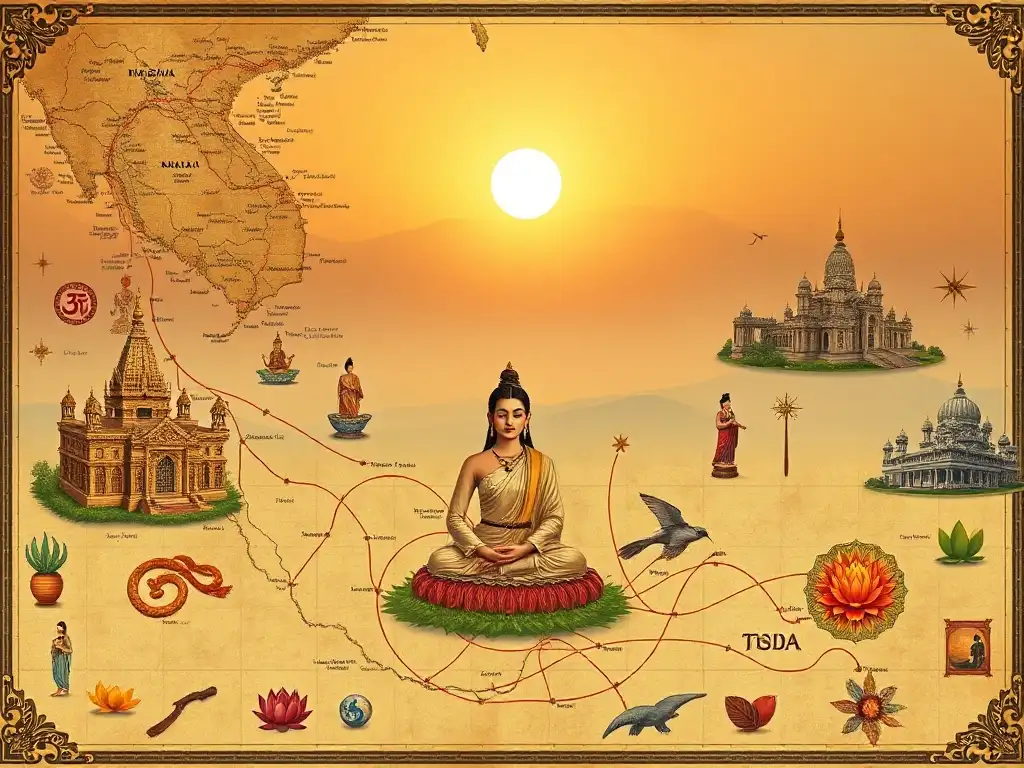
The exchange of ideas between Indian philosophies and Southeast Asian thought has left an indelible mark on the cultural landscape of the region. This interaction, which began more than a millennium ago, has not only shaped religious beliefs but also influenced art, architecture, governance, and social structures. The enduring legacy of Indian philosophies in Southeast Asia can be observed across various domains, showcasing a blend of indigenous traditions with Indian thought.
Summary of Key Points on Indian Philosophies Influence
- Religious Syncretism:
- The arrival of Hinduism and Buddhism from India introduced new spiritual and philosophical frameworks that were integrated with local beliefs. For instance, the adoption of Hindu deities and Buddhist teachings led to the creation of a unique spiritual tapestry that characterizes many Southeast Asian cultures today.
- Artistic Expression:
- Indian philosophies influenced Southeast Asian art forms, evident in temple architecture and sculpture. Structures like Angkor Wat and Borobudur reflect Indian cosmological concepts, with intricate carvings depicting Hindu epics and Buddhist narratives.
- Literature and Language:
- Sanskrit and Pali became foundational languages for many literary traditions in Southeast Asia. Texts such as the Ramayana and Mahabharata were adapted into local languages, enriching the cultural heritage and literary canon of the region.
- Political Ideologies:
- Indian concepts of kingship and governance, such as the "Dharma" concept, were incorporated into local political thought. This integration helped shape the governance systems in kingdoms like Srivijaya and Majapahit.
- Cultural Practices:
- Festivals, rituals, and social customs in Southeast Asia often reflect the influence of Indian philosophies. The celebration of rituals related to Hindu and Buddhist calendars showcases this enduring impact.
Reflections on Cultural Exchange and Future Studies
The cultural exchange between Indian philosophies and Southeast Asia is a testament to the dynamic nature of human interaction. As scholars and researchers delve deeper into this fascinating area, several avenues for future studies emerge:
- Interdisciplinary Approaches: Combining anthropology, history, and religious studies can yield richer insights into how Indian philosophies adapted and transformed within Southeast Asian contexts.
- Comparative Analyses: Future research could benefit from comparative studies of different Southeast Asian nations to understand the varying degrees and forms of Indian influence.
- Modern Implications: Examining how this historical exchange informs contemporary Southeast Asian identities and practices can shed light on the ongoing relevance of Indian philosophies today.
The influence of Indian philosophies on Southeast Asia is not merely a historical phenomenon but a continuing legacy that shapes the region's spiritual and cultural identity. Understanding this legacy fosters a deeper appreciation of the shared heritage that binds diverse cultures across Asia.
Additional Resources for Further Exploration
Recommended Books on Indian Philosophies
-
"The Upanishads"
This ancient Indian text is foundational to understanding Indian philosophy. It covers various philosophical concepts, including the nature of reality and the self, which have significantly influenced Southeast Asian thought.
-
"The Bhagavad Gita"
This 700-verse Hindu scripture is part of the Indian epic Mahabharata. It addresses the moral and philosophical dilemmas faced by the warrior Arjuna, providing insights into duty, righteousness, and spirituality that resonate in Southeast Asian cultures.
-
"Indian Philosophy: A Very Short Introduction" by Sue Hamilton
A concise overview that provides insights into the key philosophical schools of thought in India and their implications for understanding Southeast Asian philosophies.
-
"The Philosophy of the Upanishads" by Paul Deussen
This work delves deep into the philosophical aspects of the Upanishads, exploring themes such as the nature of the universe and consciousness, which have been pivotal in shaping Southeast Asian spiritual beliefs.
-
"Buddhism and Indian Philosophy" by Christopher I. Beckwith
This book traces the development of Buddhist philosophy from its Indian roots to its influence across Southeast Asia, highlighting the dialogues between Indian and Southeast Asian thought.
Online Courses on Southeast Asian Cultural History
-
"Introduction to Southeast Asian History" (Coursera)
This course offers a comprehensive overview of the historical developments in Southeast Asia, including the influence of Indian philosophies and religions.
-
"Understanding India: A Cultural History" (edX)
This course examines the cultural exchanges between India and Southeast Asia, focusing on how Indian philosophies have shaped local beliefs and practices.
-
"Indian Philosophy and Southeast Asia" (FutureLearn)
This specialized course explores the direct relationships between Indian philosophical traditions and their Southeast Asian counterparts, delving into religious and cultural exchanges.
Documentaries on Indian Influence in Southeast Asia
-
"The Lost Kingdoms of India"
This documentary series explores the historical connections between ancient India and Southeast Asian kingdoms, highlighting the spread of Indian philosophies and cultural practices.
-
"India: The Modi Question"
While primarily focused on contemporary issues, this documentary also touches upon historical influences, including the spread of Indian thought across Southeast Asia.
-
"Ancient Secrets of the East"
This documentary investigates the spiritual and philosophical exchanges between India and Southeast Asia, showcasing how Indian philosophies have permeated Southeast Asian cultures and traditions.
These resources provide a deeper understanding of how Indian philosophies have influenced Southeast Asian thought and culture, enriching the exploration of this significant cultural exchange.
Frequently Asked Questions
What are the main Indian philosophies that influenced Southeast Asia?
The main Indian philosophies include Hinduism, Buddhism, and Jainism, which spread through trade and cultural exchanges, profoundly impacting Southeast Asian thought.
How did trade facilitate the spread of Indian philosophies to Southeast Asia?
Trade routes between India and Southeast Asia allowed for the exchange of not only goods but also ideas and beliefs, leading to the adoption of Indian philosophies in various Southeast Asian cultures.
What role did religion play in the cultural exchange between India and Southeast Asia?
Religion was a significant factor, as many Southeast Asian societies adopted Hindu and Buddhist beliefs, which were intertwined with their local traditions, creating a unique spiritual landscape.
Can you give examples of Southeast Asian countries influenced by Indian philosophies?
Countries like Indonesia, Thailand, and Cambodia show significant Indian influence through their religious practices, art, and architecture, reflecting the integration of Indian philosophies.
How did Indian art and literature contribute to Southeast Asian culture?
Indian art and literature, such as epic tales like the Ramayana, inspired local storytelling, sculptural styles, and temple architecture, showcasing the cultural exchange between India and Southeast Asia.
Final Reflection: The Enduring Legacy of Indian Philosophies in Southeast Asia
The profound impact of Indian philosophies on Southeast Asian thought is not just a historical curiosity; it is a living testament to the interconnectedness of cultures. Today, as we navigate an increasingly globalized world, the principles and ideas that originated in India continue to resonate, shaping the spiritual and intellectual landscapes of Southeast Asia. The exchange of ideas across borders has created a rich tapestry of beliefs that enrich our understanding of both past and present.
The influence of Indian philosophies has transcended mere academic interest; it has woven itself into the very fabric of Southeast Asian societies. From the spiritual practices to the ethical frameworks that guide communities, the teachings of Indian sages have fostered a unique blend of traditions that continue to thrive. As noted by philosopher Arvind Sharma, The dialogue between cultures is not just about sharing ideas; it is about transforming them into something new and meaningful.
This ongoing dialogue invites us to reflect on our own beliefs and the ways in which they have been shaped by the thoughts of others.
As we contemplate the lessons of this rich exchange, I invite you to consider how the philosophies discussed in this article can inform your own life. What aspects of Indian thought resonate with you, and how can you incorporate these teachings into your daily practices? Embrace the opportunity to explore the depths of your own spirituality and understanding, drawing inspiration from the profound legacy of Indian philosophies that continue to influence Southeast Asia. Let this reflection be a catalyst for personal growth and a reminder of the power of cultural exchange in shaping our collective journey.
Embrace the Wisdom: Transform Your Perspective Today!
Thank you for taking the time to explore how Indian philosophies have profoundly shaped Southeast Asian thought. We hope this journey has enriched your understanding and inspired you to delve deeper into this fascinating intersection of cultures. Now, let’s turn that inspiration into action!
Here are a few powerful steps you can take:
- Dive deeper into specific Indian philosophies that resonate with you by researching relevant texts or enrolling in courses that explore the principles of Vedanta, Buddhism, or Jainism.
- Participate in discussions within community groups or online forums that focus on the impact of Indian thought in Southeast Asia. Engaging in these conversations can enhance your understanding and provide new insights.
- Share your newfound knowledge with friends and family or on social media. Consider writing a post about your learnings—your perspective might inspire others to explore these ideas further!
What aspects of Indian philosophy do you believe hold the most relevance in today's world, and how can we incorporate these teachings into our daily lives?