
The Contribution of Ancient Indian Trade to Global Civilization


Welcome to Ancient India History, where we embark on a journey through the mesmerizing tapestry of India's past! Dive into our latest exploration of Ancient Indian trade contributions, a vital thread that wove together civilizations and shaped the economic landscapes of the world. Discover how the bustling markets of the Indus Valley and the thriving trade networks of the Gupta Empire laid the foundation for global commerce and cultural exchange. Prepare to be intrigued as we unveil the remarkable impact of ancient Indian traders on the world stage—your adventure into history starts here!
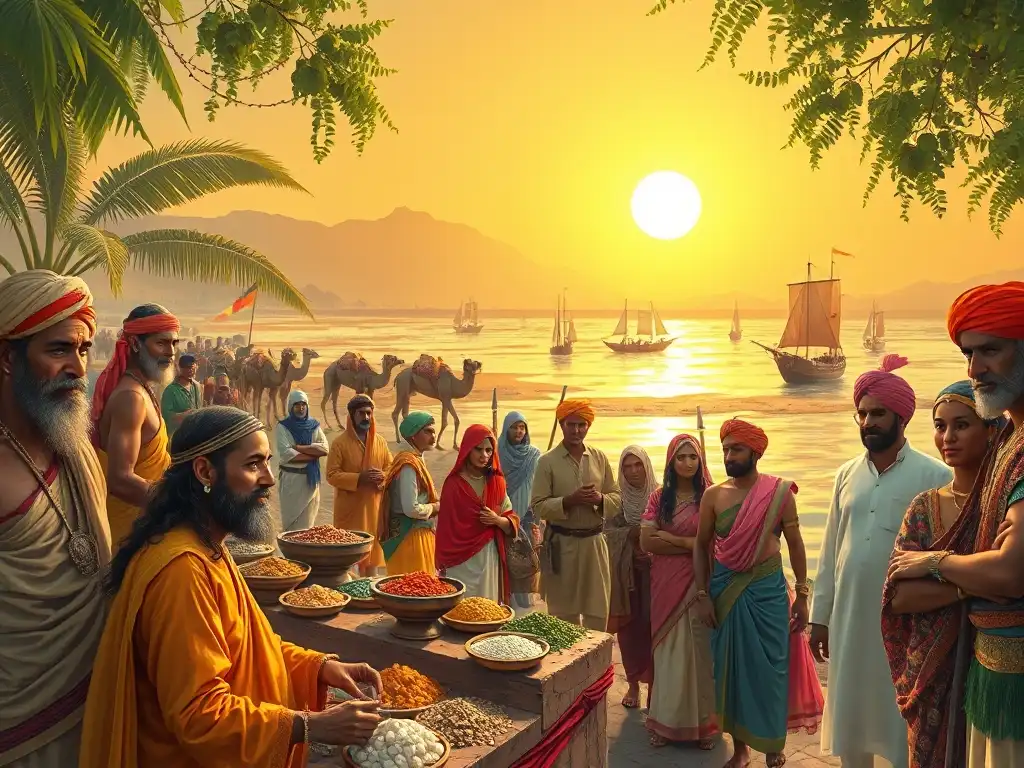
Introduction to Ancient Indian Trade Contributions
The history of ancient India is intricately woven with vibrant trade practices that not only shaped its civilization but also contributed significantly to global commerce and cultural exchange. Ancient Indian trade contributions encompassed a vast network of routes and exchanges that facilitated the movement of goods, ideas, and innovations across continents.
From the bustling markets of the Indus Valley to the prosperous cities of the Gupta Empire, trade played a pivotal role in fostering economic prosperity and cultural diversity. This article delves into the rich tapestry of ancient Indian trade, examining its significance, key trade routes, and lasting impacts on global civilization.
Overview of Ancient Indian Trade
Trade in ancient India was characterized by its diversity and dynamism, encompassing a wide range of goods and services. The Indus Valley Civilization (circa 2500-1900 BCE) is often recognized as one of the earliest societies to engage in extensive trade, evidenced by the discovery of seals indicating commerce with Mesopotamia and Persia. The Indian subcontinent became a melting pot of various commodities, including spices, textiles, precious stones, and metals. As trade flourished, it established connections with neighboring regions, creating a rich cultural exchange that laid the foundation for future economic endeavors.
- Key commodities traded:
- Spices (e.g., black pepper, cardamom)
- Textiles (e.g., silk, cotton)
- Precious stones (e.g., diamonds, rubies)
- Metals (e.g., gold, silver, copper)
Significance of Trade in Ancient Indian Civilization
The significance of trade in ancient Indian civilization extended beyond mere economic transactions. It was a catalyst for cultural interactions, technological advancements, and the spread of religious and philosophical ideas. Trade routes facilitated the movement of scholars, artists, and merchants, leading to a cross-pollination of cultures. The wealth generated through trade also contributed to the patronage of art, architecture, and education, laying the groundwork for significant achievements in various fields.
- Cultural impacts:
- Exchange of religious beliefs (e.g., Buddhism, Hinduism)
- Spread of artistic styles and techniques
- Development of urban centers and marketplaces
Key Trade Routes and Networks
Ancient Indian trade was supported by a complex network of trade routes that connected the subcontinent to the broader world. These routes can be broadly categorized into overland and maritime paths, each playing a crucial role in facilitating trade and cultural exchange. The establishment of these networks not only enhanced economic opportunities but also promoted diplomatic relations among different regions.
- Types of trade routes:
- Overland routes (e.g., Silk Road)
- Maritime routes (e.g., Indian Ocean trade)
Major Trade Routes of Ancient India
The Silk Road and Its Connection to India
The Silk Road, a series of interconnected trade routes that spanned Asia, was instrumental in the exchange of goods between the East and West. Ancient Indian trade contributions to the Silk Road were significant, as Indian merchants played a crucial role in transporting silk, spices, and other valuable goods. The cultural interactions that occurred along the Silk Road fostered the exchange of ideas, art, and technology, leaving a lasting impact on both Indian and global civilizations.
- Key contributions:
- Introduction of Indian textiles to Central Asia
- Spread of Buddhism along the trade routes
- Exchange of scientific knowledge and innovations
Maritime Trade Routes and the Indian Ocean
The Indian Ocean served as a vital hub for maritime trade, connecting India to Africa, the Arabian Peninsula, and Southeast Asia. Ancient Indian traders navigated these waters, facilitating not only the exchange of goods but also cultural interactions among diverse civilizations. The flourishing trade in spices and textiles established India as a prominent player in global commerce, leading to the establishment of trade cities along the coastline.
- Major ports:
- Lothal (Gujarat)
- Muziris (Kerala)
- Arikamedu (Tamil Nadu)
Overland Trade Routes: From the Indus Valley to the Gupta Empire
Overland trade routes have been a defining feature of ancient Indian trade history. The routes originating from the Indus Valley Civilization evolved over the centuries, becoming more sophisticated during the Mauryan and Gupta empires. These paths not only facilitated the movement of goods but also encouraged the exchange of ideas and innovations, contributing to India’s rich cultural heritage.
- Notable routes:
- The Grand Trunk Road
- Routes connecting India to Persia and Central Asia
Through these comprehensive trade networks, ancient Indian trade contributions left an indelible mark on global civilization, fostering economic prosperity, cultural interactions, and technological advancements that continue to resonate today.
Goods and Commodities in Ancient Indian Trade
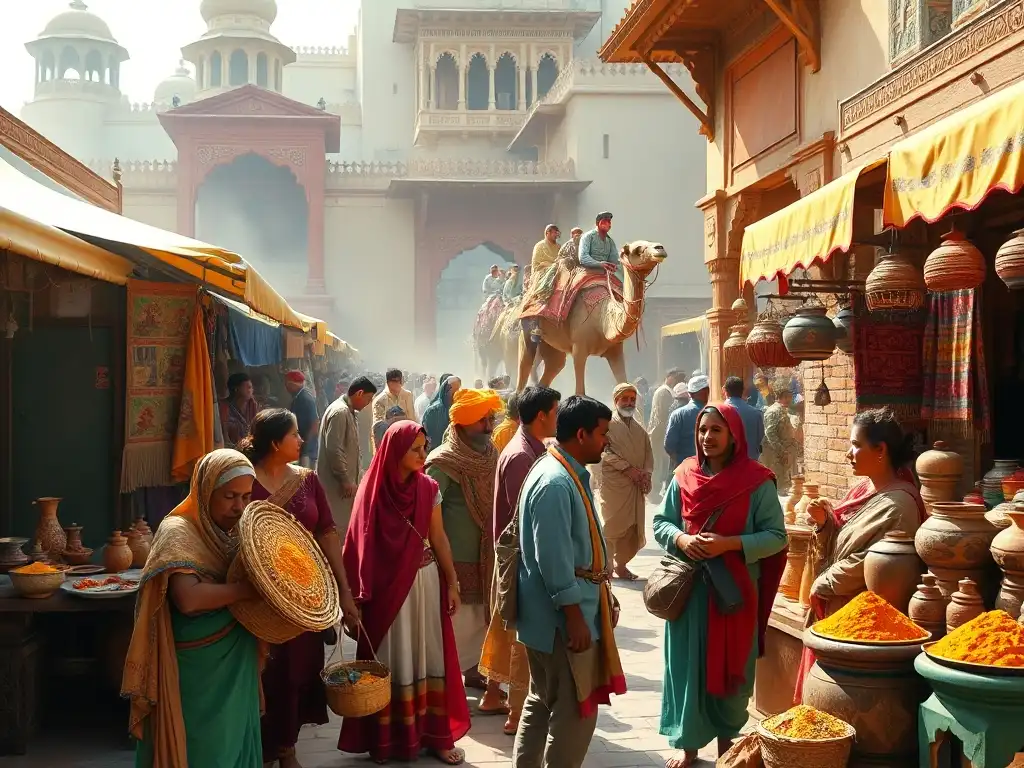
Ancient Indian trade was characterized by a diverse array of goods and commodities that not only enriched the local economy but also significantly influenced global markets. The Indian subcontinent was strategically located along major trade routes, including the Silk Road and maritime paths, facilitating the exchange of various products with neighboring regions and distant lands. Key commodities traded included spices, textiles, precious stones, and metals, each contributing uniquely to the global marketplace.
The trade of these goods was not merely about commerce; it involved complex interactions between different cultures and societies. As traders traveled across vast distances, they brought with them not only products but also ideas, traditions, and innovations. This exchange laid the foundation for an interconnected world, where the influence of ancient Indian trade can still be felt today.
Spices and Their Global Impact
Spices were among the most coveted commodities in ancient Indian trade, with a rich history that dates back thousands of years. India was renowned for its production of various spices, including black pepper, cardamom, cloves, and turmeric, which were highly sought after in both domestic and international markets. These spices were not only used for culinary purposes but also held medicinal and preservative properties, making them invaluable in different cultures.
The global impact of Indian spices can be traced through historical records that highlight their role in shaping trade dynamics. For instance, the search for spices was a significant factor behind the exploration of sea routes by European powers in the late 15th century. The Portuguese, Dutch, and later the British established trade monopolies, which fundamentally altered global trade patterns. The high demand for Indian spices in Europe led to the establishment of direct sea routes, fostering a new era of maritime trade that would redefine economic relationships across continents.
Textiles: Silk, Cotton, and Dyes
Textiles were another cornerstone of ancient Indian trade, with the subcontinent being a major producer of silk and cotton. Indian silk, known for its exquisite quality and intricate designs, became highly prized in international markets. The art of weaving and dyeing textiles was deeply embedded in Indian culture, with vibrant colors and unique patterns that attracted buyers from as far away as China, Persia, and Europe.
Cotton textiles, particularly those from regions like Gujarat and Maharashtra, were also immensely popular. The export of these textiles was facilitated by well-established trade networks that connected Indian artisans with merchants across the globe. The invention of dyeing techniques, such as indigo dyeing, allowed for the production of rich, colorful fabrics that became synonymous with Indian craftsmanship.
The legacy of Indian textiles continues to influence global fashion and textile industries today, showcasing the enduring impact of ancient trade practices on contemporary markets.
Precious Stones and Metals in Trade
The trade of precious stones and metals was another significant aspect of ancient Indian commerce. India has a long-standing reputation as a source of high-quality gemstones, including diamonds, rubies, emeralds, and sapphires. The famous Golconda mines, known for their diamond production, attracted traders from various regions, leading to the establishment of a vibrant gem trade.
Metals such as gold, silver, and copper were also widely traded in ancient India. The subcontinent was known for its skilled craftsmen who created intricate jewelry and metalwork. The demand for these precious metals and stones extended beyond India’s borders, with trade routes linking India to the Middle East, Africa, and beyond.
The influence of Indian gemstones and metalwork is evident in various cultures, with artifacts and jewelry styles reflecting the craftsmanship that originated from the subcontinent. This exchange of materials contributed to the wealth of ancient civilizations and played a pivotal role in the development of global trade networks.
Cultural Exchanges Through Trade
Trade in ancient India was not just an economic activity; it was a vital conduit for cultural exchanges that shaped the societies involved. The movement of goods facilitated the mingling of ideas, beliefs, and artistic expressions, leading to a rich tapestry of cultural influences that transcended geographical boundaries.
The Spread of Religions and Philosophies
One of the most profound impacts of ancient Indian trade was the dissemination of religions and philosophies. As traders traveled along established routes, they carried with them not just commodities but also their beliefs. Buddhism and Hinduism, for example, spread across Asia through trade caravans and maritime routes, reaching regions such as Southeast Asia, China, and Japan.
The influence of Indian thought can be seen in the adoption of Buddhist principles in countries like Sri Lanka, Thailand, and Indonesia, where local cultures integrated these ideas, leading to unique syncretic forms of spirituality. This movement of religious ideas showcases how trade acted as a catalyst for cultural diffusion, fostering understanding and exchange among diverse communities.
Artistic Influences and Cultural Syncretism
The interaction between different cultures through trade also led to significant artistic influences and cultural syncretism. Indian art, characterized by vibrant colors, intricate designs, and spiritual themes, began to permeate into neighboring regions. The motifs and styles found in Indian sculptures and paintings influenced the artistic traditions of Central Asia, Southeast Asia, and beyond.
Moreover, the fusion of artistic elements resulted in the creation of unique cultural expressions that blended Indian aesthetics with local traditions. This phenomenon is evident in the architectural marvels such as the Angkor Wat temple complex in Cambodia, which showcases Indian architectural influence combined with local styles. The exchange of artistic ideas through trade not only enriched local cultures but also contributed to the development of a shared cultural heritage across regions.
Language and Literature Exchange via Trade
Trade routes also served as conduits for the exchange of language and literature. As merchants and travelers interacted, they shared stories, texts, and linguistic practices, leading to the blending of languages and the emergence of new literary forms. The impact of this exchange can be seen in the spread of Sanskrit, as well as the incorporation of Indian literary themes into regional literatures.
Furthermore, ancient Indian texts, such as the Ramayana and Mahabharata, influenced narratives in various cultures. These epics were translated and adapted, contributing to a shared literary tradition that continues to resonate across cultures today. The exchange of language and literature through trade illustrates the profound interconnectedness of human societies and the role of commerce in fostering intellectual development.
Economic Impact of Ancient Indian Trade
The economic impact of ancient Indian trade was profound, influencing not only the subcontinent but also global civilizations. Ancient India was strategically located along major trade routes connecting Asia, Europe, and Africa, facilitating the exchange of goods, ideas, and culture. This trade network played a crucial role in establishing India as a significant economic power during ancient times.
Trade in ancient India was characterized by the exchange of a variety of goods, including spices, textiles, precious metals, and agricultural products. The flourishing trade activities led to the accumulation of wealth, which in turn spurred advancements in various sectors such as art, science, and architecture. Moreover, the economic interactions with distant lands fostered a sense of interconnectedness, laying the foundation for future global trade.
Wealth Accumulation and Trade Cities
Ancient Indian trade resulted in the accumulation of immense wealth, particularly in key trade cities that emerged as prominent commercial hubs. Cities like Taxila, Pataliputra, and Ujjain became vital centers for trade where merchants gathered to exchange goods from various regions.
- Taxila: Known for its educational institutions, Taxila was not only a trading hub but also a center for intellectual exchange, drawing scholars from across Asia.
- Ujjain: This city was crucial for trade routes leading to the west and became famous for its astronomical observatory, showcasing the wealth generated through commerce.
The concentration of wealth in these cities encouraged the development of infrastructure, including roads, ports, and marketplaces, which further facilitated trade and attracted more merchants and artisans.
Role of Trade in Urban Development
Trade significantly contributed to urban development in ancient India. As trade routes flourished, urban centers expanded, leading to increased population density and the establishment of complex societies. The influx of wealth from trade allowed for the construction of grand public buildings, temples, and residential areas.
- Infrastructure Development: Roads, ports, and warehouses were constructed to accommodate the growing needs of trade, enhancing connectivity and efficiency.
- Cultural Exchange: Trade routes acted as conduits for cultural diffusion, bringing diverse customs, languages, and religions into urban centers, thus enriching the local culture.
The growth of cities as trade hubs was instrumental in advancing governance, economic systems, and social structures, laying the groundwork for future civilizations.
Ancient Indian Trade Contributions to Global Economy
Ancient Indian trade made significant contributions to the global economy by introducing various goods and ideas that shaped other cultures. The exchange of spices, textiles, and precious stones not only enriched local economies but also influenced global markets.
- Spices: Indian spices like black pepper, cardamom, and cinnamon were highly sought after, leading to the establishment of trade routes that connected India to the Roman Empire and beyond.
- Textiles: Indian cotton and silk textiles became popular in markets across Asia and Europe, prompting trade exchanges that significantly impacted global textile industries.
Furthermore, the dissemination of innovations such as the numeral system and advancements in mathematics and astronomy through trade interactions influenced economic practices in various civilizations, showcasing India’s role as a pivotal player in the development of the global economy.
Challenges and Decline of Ancient Indian Trade
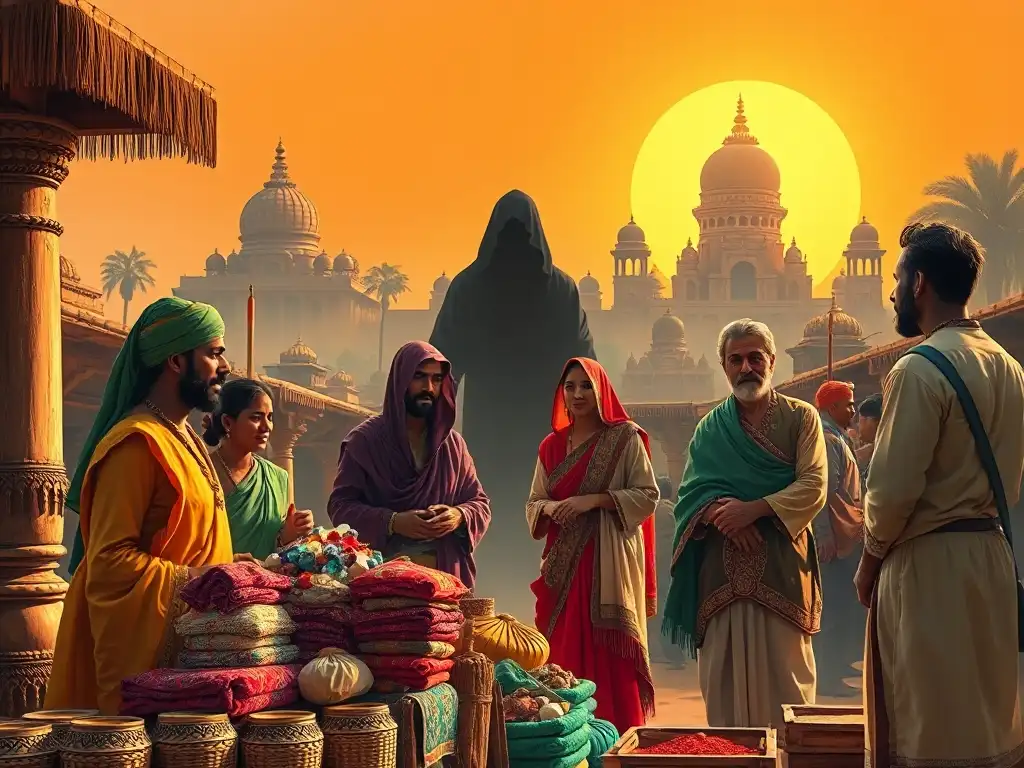
Despite its prosperity, ancient Indian trade faced several challenges that eventually led to its decline. Various political, environmental, and economic factors contributed to the diminishing significance of India in global trade networks.
Political Factors Affecting Trade Routes
Political instability and conflicts significantly impacted trade routes in ancient India. The rise and fall of empires, such as the Maurya and Gupta dynasties, often led to disruptions in trade as wars and invasions made certain routes unsafe for merchants.
- Regional Conflicts: Internal strife and local rivalries diverted trade routes, forcing merchants to seek alternative paths or abandon trade altogether.
- Foreign Invasions: The invasions of various foreign powers, including the Huns and later the Turks, altered the dynamics of trade by destabilizing established trade networks.
These political challenges created uncertainty among traders and reduced the volume of commerce, contributing to the decline of ancient Indian trade.
Natural Disasters and Their Impact
Natural disasters also played a critical role in the decline of ancient Indian trade. Events such as floods, earthquakes, and droughts disrupted agricultural production and damaged vital trade infrastructure.
- Flooding: The Indus River, while a crucial trade artery, was prone to flooding, which could devastate agricultural lands and disrupt supply chains.
- Droughts: Periods of severe drought affected crop yields, leading to food shortages that curtailed trade activities and increased local tensions.
The cumulative effect of these natural disasters undermined the stability of trade, diminishing its profitability and attractiveness for merchants.
The Rise of Alternative Trade Routes
The rise of alternative trade routes also contributed to the decline of ancient Indian trade. As maritime trade gained prominence, new sea routes emerged that bypassed traditional land routes through India.
- Maritime Trade: The development of maritime trade routes, particularly those connecting Europe and Asia via the Indian Ocean, began to overshadow overland routes, reducing India’s role as a central trading hub.
- Competition from Other Regions: Other regions, such as the Arabian Peninsula and Southeast Asia, developed their own trade networks that attracted merchants away from Indian routes.
This shift in trade dynamics diminished the importance of ancient Indian trade, leading to a gradual decline in economic activity and influence in the global market.
Legacy of Ancient Indian Trade Contributions
The legacy of ancient Indian trade contributions is profound and far-reaching, laying the groundwork for various aspects of commerce, culture, and connectivity that resonate even in contemporary times. From the bustling markets of the Indus Valley Civilization to the trade routes established during the Mauryan and Gupta Empires, ancient India was a pivotal player in the global trade network. Indian merchants engaged in extensive trade with civilizations across Asia, the Middle East, and even Europe, facilitating not only the exchange of goods but also ideas, technologies, and cultural practices.
Indian trade routes, such as the Silk Road and maritime paths across the Indian Ocean, served as conduits for the exchange of spices, textiles, precious stones, and other valuable commodities. The intricate web of trade networks established by ancient Indian traders not only enriched their own economy but also contributed significantly to the economies of other regions. This interconnectivity encouraged the cross-pollination of cultures, leading to the spread of religions, art forms, and scientific knowledge.
Lasting Influence on Modern Trade Practices
Ancient Indian trade practices have left an indelible mark on modern commerce. The principles of trade that emerged during ancient times, such as bartering, market regulation, and trade guilds, continue to influence contemporary trading systems. The concept of “mandis” or local markets, which originated in ancient India, still exists today, reflecting the age-old tradition of community-based commerce.
Moreover, the ancient Indian approach to trade emphasized ethical practices and mutual benefit, principles that are increasingly relevant in today's globalized economy. The use of standardized weights and measures, introduced by ancient traders, laid the foundation for modern accounting and trade regulations. Additionally, the integration of cultural exchanges and diplomacy in trade relations can be seen as precursors to today’s international trade agreements and partnerships.
Contributions to Global Civilization and Economy
The contributions of ancient Indian trade to global civilization and economy are manifold. The trade of spices, particularly black pepper, cardamom, and turmeric, not only enriched the culinary practices of various cultures but also drove European exploration and colonization. Indian textiles, renowned for their quality and craftsmanship, influenced fashion and textile production worldwide, with products like silk and cotton becoming staples in international trade.
Furthermore, ancient India was instrumental in the dissemination of important innovations, such as the numeral system which includes the concept of zero, and advancements in metallurgy and astronomy. These contributions significantly shaped scientific thought and technological progress in other civilizations, demonstrating the interconnectedness of trade and knowledge transfer.
Preservation of Ancient Trade Knowledge
The preservation of ancient trade knowledge has been vital in understanding the evolution of commerce. Historical texts, such as the Arthashastra by Kautilya, provide insight into ancient trade practices, economic policies, and market dynamics. Additionally, archaeological discoveries, including trade artifacts and ancient inscriptions, offer tangible evidence of the sophisticated trade networks that once flourished in ancient India.
Institutions that have dedicated themselves to the study of ancient Indian commerce contribute to this preservation effort, ensuring that the legacy of ancient trade is not forgotten. The continued research into ancient trade routes and practices highlights the importance of maintaining a dialogue between the past and present, allowing us to draw lessons that can inform modern economic strategies.
Conclusion: Reflecting on Ancient Indian Trade Contributions
The exploration of ancient Indian trade contributions reveals a rich tapestry of economic, cultural, and social interactions that have shaped global civilization. The practices established in ancient times continue to resonate today, reminding us of the profound interconnectedness of human societies.
Summary of Key Points
Ancient Indian trade contributions have played a crucial role in shaping the global economy and cultural exchanges throughout history. Key points include:
- Extensive Trade Networks: The establishment of trade routes like the Silk Road and maritime paths facilitated the exchange of goods, ideas, and cultures.
- Influence on Modern Practices: Principles such as bartering, market regulation, and ethical trading practices have roots in ancient commerce.
- Cultural and Economic Impact: The global demand for Indian spices and textiles significantly influenced trade dynamics and international relations.
- Preservation of Knowledge: Historical texts and archaeological findings provide critical insights into ancient trade practices.
The Importance of Understanding Ancient Trade in Modern Context
Understanding ancient trade is essential in the modern context as it offers valuable lessons in economic cooperation, cultural exchange, and ethical practices. As the world grapples with globalization and interconnected economies, the principles and practices of ancient Indian trade can inspire contemporary trade policies that prioritize sustainability, mutual benefit, and cultural respect. By reflecting on the rich legacy of ancient Indian trade contributions, we can appreciate the foundations of our current economic systems and strive for a more inclusive and equitable global marketplace.
- Introduction to Ancient Indian Trade Contributions
- Overview of Ancient Indian Trade
- Major Trade Routes of Ancient India
- Goods and Commodities in Ancient Indian Trade
- Cultural Exchanges Through Trade
- Economic Impact of Ancient Indian Trade
- Challenges and Decline of Ancient Indian Trade
- Legacy of Ancient Indian Trade Contributions
- Conclusion: Reflecting on Ancient Indian Trade Contributions
- What were the key contributions of ancient Indian trade to global civilization?
- How did the location of ancient India influence its trade activities?
- What were some major trade goods exported by ancient India?
- How did ancient Indian trade contribute to cultural exchange?
- What role did trade routes play in the prosperity of ancient Indian empires?
Frequently Asked Questions
What were the key contributions of ancient Indian trade to global civilization?
Ancient Indian trade contributed significantly by introducing luxury goods, such as spices, silks, and precious stones, to international markets, enhancing global economic exchanges and cultural interactions.
How did the location of ancient India influence its trade activities?
Situated at the crossroads of major trade routes, ancient India benefited from its strategic location, facilitating trade with Europe, Africa, and East Asia, which bolstered its cultural and economic influence.
What were some major trade goods exported by ancient India?
Ancient India was known for exporting spices, textiles, metals, and jewelry, which were highly sought after in international markets, establishing India as a key player in global trade networks.
How did ancient Indian trade contribute to cultural exchange?
Through trade, ancient Indian merchants interacted with various cultures, leading to the exchange of ideas, religions, and art forms, which enriched both Indian civilization and those of its trading partners.
What role did trade routes play in the prosperity of ancient Indian empires?
Trade routes were essential for the economic prosperity of ancient Indian empires; they not only facilitated the movement of goods but also encouraged political alliances and the spread of knowledge and technology.
Final Reflection: The Enduring Legacy of Ancient Indian Trade Contributions
The contributions of ancient Indian trade to global civilization are not merely historical footnotes; they are the very threads that weave together the fabric of our interconnected world today. As we navigate the complexities of globalization, understanding the roots of these connections is essential. The trade routes established by ancient Indian merchants were not just pathways for goods; they were conduits for the exchange of ideas, cultures, and innovations that continue to shape our societies.
The influence of ancient Indian trade is evident in the rich tapestry of cultural exchanges that have persisted through centuries. From the spread of spices and textiles to the dissemination of philosophies and religions, the impact of these early trade networks is profound and ongoing. As historian Romila Thapar aptly stated, Trade is not just about the exchange of goods; it is about the exchange of ideas and the forging of relationships that transcend borders.
This perspective highlights how ancient Indian trade laid the groundwork for a more interconnected and culturally rich world.
As we reflect on the lessons of ancient Indian trade, let us embrace the spirit of collaboration and openness that characterized these early exchanges. I invite you to consider how you can contribute to the ongoing dialogue of cultures in your own life. Whether through travel, learning, or simply engaging with diverse communities, each of us has the power to foster connections that honor the legacy of ancient trade. By doing so, we not only pay homage to the past but also pave the way for a more harmonious and understanding future.
Explore the Legacy of Ancient Indian Trade Today!
Thank you for diving into the remarkable impact of Ancient Indian trade on global civilization. Your interest in this topic highlights the interconnectedness of our historical heritage and its lasting effects. Now, it’s time to take what you've learned and bring it into your own world!
Here are a few ways you can actively engage with this rich history:
- Dive Deeper: Read books or watch documentaries about major trade routes such as the Silk Road and their influences on culture and economy.
- Share Your Insights: Discuss your newfound knowledge with friends or participate in online communities focused on ancient civilizations to broaden the conversation.
- Experience History: Consider visiting local museums or attending exhibitions that showcase artifacts from ancient trade, helping you visualize the legacy.
What aspect of Ancient Indian trade fascinates you the most, and how do you see it influencing today's global commerce?