
Vaisheshika Philosophy: Understanding the Nature of Reality and Atomism

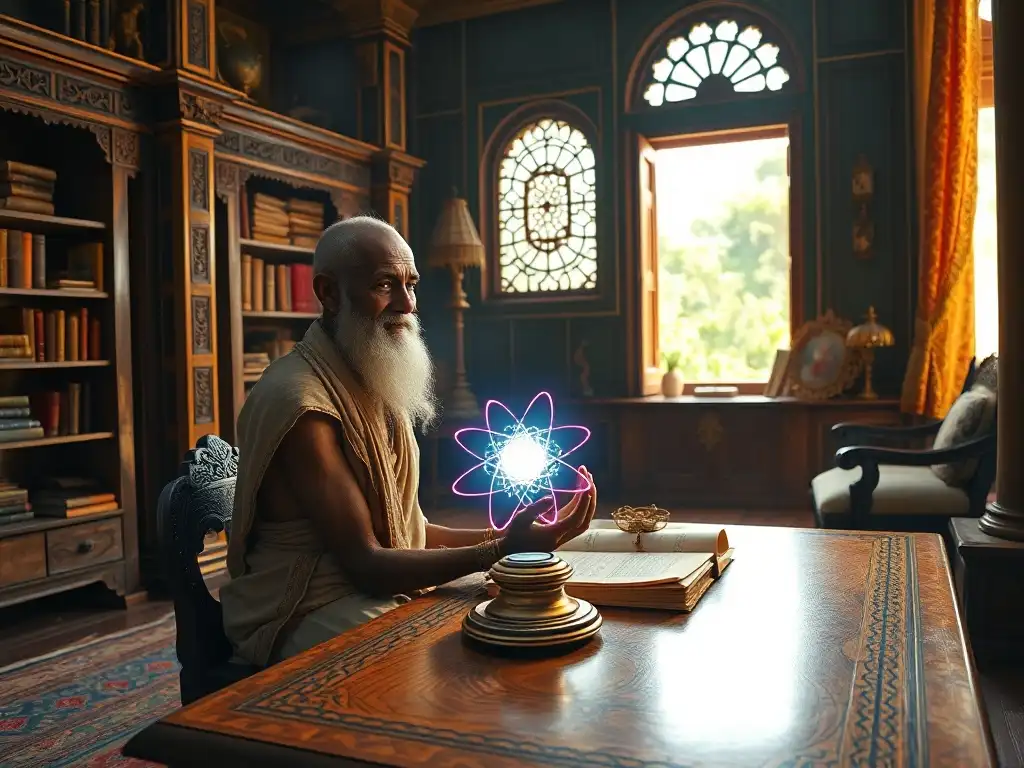
Welcome to Ancient India History, where we embark on a fascinating journey through the tapestry of India's rich and diverse past. In our featured article, we delve into the captivating world of Vaisheshika philosophy and atomism, exploring how these ancient ideas shaped our understanding of reality. Discover the intricate beliefs that laid the foundation for scientific thought and philosophical inquiry in India.
Join us as we unlock the secrets of the Indus Valley to the Gupta Empire, and uncover the profound contributions that continue to influence our world today. Your adventure into the depths of history begins now—are you ready to explore?
- Introduction to Vaisheshika Philosophy and Atomism
- Core Principles of Vaisheshika Philosophy
- Atomism in Vaisheshika Philosophy
- The Nature of Reality According to Vaisheshika
- The Influence of Vaisheshika Philosophy on Later Thinkers
- Conclusion: The Legacy of Vaisheshika Philosophy and Atomism
- Frequently Asked Questions
- Final Reflection: Embracing the Depths of Vaisheshika Philosophy and Atomism
- Explore the Essence of Your Existence Today!
Introduction to Vaisheshika Philosophy and Atomism
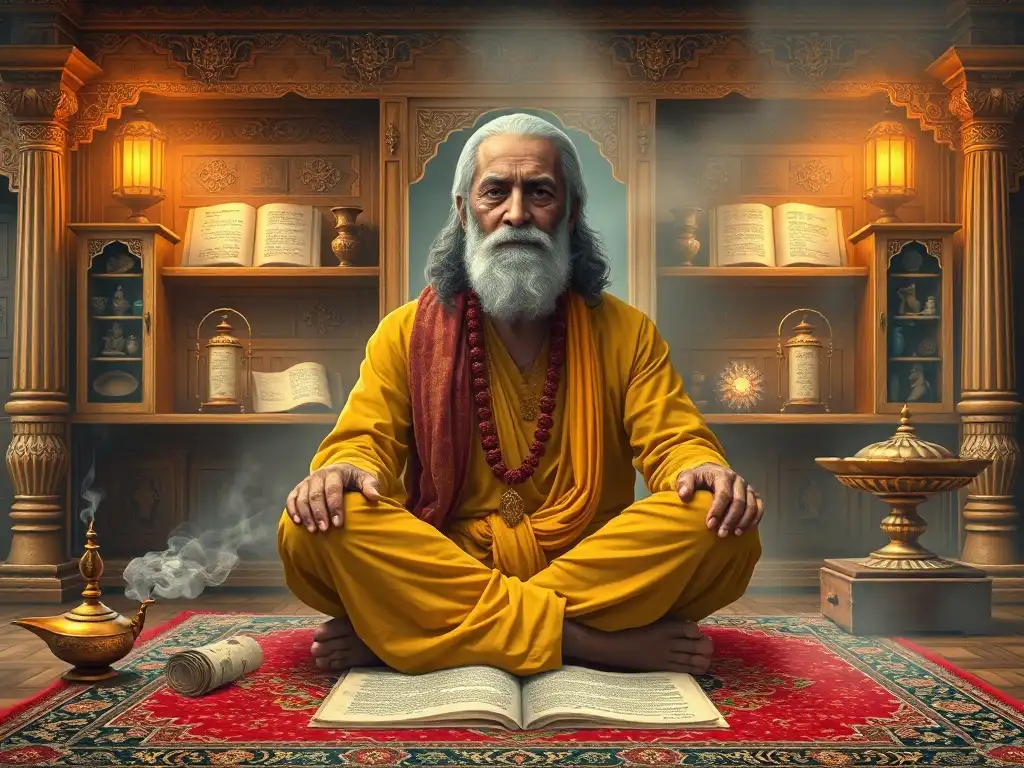
Vaisheshika philosophy, a key component of ancient Indian thought, delves into the intricate nature of reality and the fundamental building blocks that constitute it. Rooted in the teachings of the sage Kanada, Vaisheshika offers a unique approach to understanding the universe through the lens of atomism. This philosophical system not only emphasizes the existence of atoms but also explores their interactions and the resultant phenomena.
As we embark on this exploration of Vaisheshika philosophy and atomism, we will uncover its profound implications on science, metaphysics, and the very essence of existence itself. Through this article, we aim to provide a comprehensive understanding of Vaisheshika, its historical significance, and its lasting impact on subsequent philosophical discourse.
Overview of Vaisheshika Philosophy
Vaisheshika philosophy is characterized by its analytical approach to reality, proposing that everything in the universe can be understood through categories known as "padarthas." These categories include substance, quality, action, generality, particularity, and inherence. Central to this philosophy is the concept of "anu" (atom), which is considered the smallest indivisible entity.
- Core Principles of Vaisheshika:
- Atomism: The belief that all material objects are composed of atoms.
- Categories of Existence: The classification of reality into different categories that help in understanding and describing the world.
- Causation: An exploration of how atoms interact to form compounds and how these interactions lead to observable phenomena.
Vaisheshika philosophers argue that a systematic study of these categories leads to a clearer understanding of the nature of reality, laying a foundation for both scientific inquiry and philosophical exploration.
Importance of Understanding the Nature of Reality
Understanding the nature of reality has profound implications not only in philosophy but also in science and ethics. The Vaisheshika perspective on reality emphasizes:
- Clarity of Thought: By defining the fundamental components of existence, Vaisheshika philosophy encourages clearer thinking and reasoning.
- Scientific Inquiry: The atomistic view paved the way for early scientific principles, influencing later developments in physics and chemistry.
- Ethical Implications: Understanding the nature of reality can inform moral and ethical behavior, as it fosters a sense of interconnectedness among all beings.
By exploring these dimensions, we can appreciate the relevance of Vaisheshika philosophy in contemporary discourse on reality and existence.
Historical Context of Vaisheshika Philosophy
Vaisheshika philosophy emerged around the same time as its counterpart, Nyaya, during the early centuries of the first millennium BCE. This period was marked by a significant intellectual awakening in India, characterized by the flourishing of various philosophical schools.
- Foundational Texts: The primary text of Vaisheshika, the "Vaisheshika Sutras," compiled by Kanada, outlines the core tenets and principles of the philosophy.
- Influence of Other Philosophies: Vaisheshika is often discussed in conjunction with Nyaya, as both schools share a focus on logic and epistemology.
- Evolution Over Time: Throughout history, Vaisheshika philosophy has undergone various adaptations and interpretations, influencing and being influenced by other philosophical and scientific traditions.
By understanding the historical context of Vaisheshika, we gain insight into how this ancient philosophy has shaped not only Indian thought but also the global philosophical landscape.
Core Principles of Vaisheshika Philosophy

The Vaisheshika philosophy, one of the six orthodox schools of Indian philosophy, proposes a systematic approach to understanding the nature of reality through its foundational concepts and categories. At its core, Vaisheshika emphasizes atomism—the belief that everything in the universe is made up of indivisible particles called "anu" (atoms). This philosophy seeks to elucidate the nature of existence by analyzing the structure and interrelation of substances, qualities, and actions.
Vaisheshika philosophy articulates a mechanistic view of the universe, positing that all phenomena can be explained through a finite number of fundamental elements. These principles are encapsulated in the concept of "Padarthas," which refers to the categories that describe reality. Through rigorous logical analysis and empirical observation, Vaisheshika aims to categorize and explain the nature of the physical and metaphysical world, paving the way for a deeper understanding of existence itself.
Concept of Dravya (Substance) in Vaisheshika
In Vaisheshika, the term "Dravya," or substance, is central to its metaphysical framework. Dravyas are categorized as the fundamental building blocks of reality, and they provide the basis for all existence. According to the Vaisheshika school, there are nine types of Dravyas:
- Prithvi (Earth): Represents solidity and is associated with qualities such as heaviness and smell.
- Apas (Water): Symbolizes fluidity and is characterized by qualities like taste and coolness.
- Tejas (Fire): Denotes energy and light, with qualities of heat and color.
- Vayu (Air): Represents movement and is associated with qualities such as touch and sound.
- Akasha (Ether): The medium through which sound travels; it is formless and omnipresent.
- Kaal (Time): A fundamental aspect that governs change and the sequence of events.
- Desh (Space): Defines the spatial dimensions in which substances exist.
- Atma (Soul): The conscious principle that distinguishes living beings.
- Manas (Mind): The aspect of cognition and perception, integral to understanding experiences.
These substances are further analyzed in terms of their interactions and properties, leading to a comprehensive understanding of the physical world. The Vaisheshika system asserts that a deep comprehension of Dravyas is essential for grasping the intricacies of existence and the processes of nature.
The Role of Gunas (Qualities) in Understanding Reality
The concept of Gunas (qualities) plays a pivotal role in the Vaisheshika philosophy, as it complements the understanding of Dravyas. Gunas are the attributes that characterize substances and inform their interactions. According to Vaisheshika, there are 24 primary Gunas that can be grouped into four categories:
- Sattva: Represents qualities such as purity, lightness, and harmony.
- Rajas: Conveys activity, change, and dynamism.
- Tamas: Embodies inertia, darkness, and heaviness.
- Vishesha: The unique quality that distinguishes one substance from another.
These Gunas help in defining the nature of substances and their behavior in the world. The interplay of Gunas determines how substances manifest and interact with one another, leading to the diversity of experiences in the physical realm. In essence, the Vaisheshika philosophy posits that understanding these qualities is crucial for comprehending the nature of reality and the underlying principles that govern the universe.
The Classification of Categories: Padarthas in Vaisheshika
The Vaisheshika philosophy classifies reality into seven primary categories, known as Padarthas. Each Padartha represents a different aspect of reality and serves as a foundational element for philosophical inquiry. The seven Padarthas are:
- Dravya (Substance): The fundamental materials that constitute the universe.
- Guna (Quality): The attributes that characterize substances.
- Karma (Action): The activity or change that substances undergo.
- Sambhava (Genus): The class or type to which a substance belongs.
- Abhava (Non-existence): The absence or negation of a substance or quality.
- Samanya (Universal): The common aspect shared by multiple substances.
- Vishesha (Particular): The unique aspect that differentiates individual substances.
This classification allows for a systematic exploration of reality, enabling philosophers to dissect and analyze the constituents of existence. By understanding the interrelations among these Padarthas, one can gain insight into the nature of the universe and its workings. The detailed examination of Padarthas is essential for those seeking a profound understanding of Vaisheshika philosophy and its implications on atomism, as it highlights the complexity and richness of ancient Indian philosophical thought.
Atomism in Vaisheshika Philosophy

Definition and Significance of Atomism
Atomism in Vaisheshika philosophy is a fundamental concept that posits the existence of indivisible particles, known as "paramanu," which constitute the material world. This philosophy, attributed to the sage Kanada, is notable for its early articulation of an atomic theory that predates many Western notions of atomism by centuries. The term "Vaisheshika" itself derives from "vishesha," meaning "particular," highlighting the school’s focus on the particular elements that make up reality.
The significance of atomism within the Vaisheshika framework lies in its attempt to explain the nature of reality through a metaphysical lens. It seeks to understand how these atoms interact, combine, and produce the diverse array of phenomena observed in the universe. By asserting that all physical objects are composed of these fundamental particles, Vaisheshika philosophy provides a systematic approach to categorize and analyze various forms of matter, making it a crucial element in the study of ancient Indian philosophy.
The Vaisheshika View on Atoms and Their Properties
The Vaisheshika school outlines several key characteristics of atoms that differentiate them from other entities. According to this philosophy, atoms are:
- Indivisible: Atoms cannot be further divided; they are the basic building blocks of matter.
- Eternal: Atoms exist independently of time and space; they have no beginning or end.
- Invisible: Being exceedingly small, atoms cannot be perceived by the naked eye.
- Homogeneous: Atoms of the same type share identical properties, which contributes to their ability to form compounds.
The interactions between these atoms give rise to various physical substances and phenomena. For instance, the combination of different types of atoms results in the formation of elements, which in turn, combine to create more complex materials. This view places a strong emphasis on the qualitative differences that arise from atomic combinations, leading to the conclusion that the physical world is a manifestation of atomic arrangements.
Comparison of Vaisheshika Atomism with Western Atomism
Vaisheshika atomism presents several intriguing contrasts and parallels when compared to Western atomism, particularly the models developed by philosophers like Democritus and later, John Dalton.
| Aspect | Vaisheshika Atomism | Western Atomism |
|---|---|---|
| Nature of Atoms | Indivisible particles (paramanu) | Also indivisible, but modern physics recognizes subatomic particles |
| Eternality | Atoms are eternal and unchanging | Classical atoms were thought to be stable, but modern science shows decay |
| Interaction | Atoms interact based on their qualities | Focuses on forces such as electromagnetism between particles |
| Perception | Atoms are beyond sensory perception | Modern technology allows for the observation of atoms through indirect means |
While both philosophies acknowledge the existence of fundamental particles that make up matter, the methodologies and implications of their atomic theories diverge significantly. Vaisheshika atomism emphasizes metaphysical and philosophical inquiries into the nature of reality, while Western atomism has evolved into a scientific framework focusing on empirical observations and experimentation.
The exploration of Vaisheshika philosophy and atomism not only reveals the sophistication of ancient Indian thought but also invites a deeper understanding of how these ideas have influenced subsequent philosophical and scientific developments in the understanding of matter and reality.
The Nature of Reality According to Vaisheshika

Vaisheshika philosophy, one of the six orthodox schools of Indian philosophy, offers a unique perspective on the nature of reality. It emphasizes a systematic categorization of the world, positing that all entities can be understood through their attributes, interactions, and the principles that govern them. The foundation of Vaisheshika thought is its atomistic viewpoint, which posits that the universe is composed of indivisible particles (atoms) and various substances that manifest different qualities. This philosophical framework helps in understanding the fundamental nature of reality and existence.
Understanding Sat (Existence) and Asat (Non-Existence)
In Vaisheshika philosophy, the concepts of Sat (existence) and Asat (non-existence) are pivotal to understanding reality.
- Sat refers to anything that has a true existence or can be perceived in some form. This includes physical objects, qualities, and even abstract entities like time and space.
- Asat, on the other hand, denotes non-existence or the absence of an entity. It is crucial to recognize that for something to be considered Asat, it must not only lack physical presence but must also be distinguishable from Sat entities.
Vaisheshika philosophers argue that true knowledge arises from the discernment between these two states. They assert that understanding Sat and Asat leads to a clearer comprehension of the universe and allows individuals to navigate the complexities of existence.
The Interplay Between Substance and Quality
The Vaisheshika system categorizes reality into various substances and their qualities. In this framework, substances are the fundamental entities, while qualities describe their characteristics.
Substances
The primary substances in Vaisheshika philosophy can be classified as:
- Dravya (Substance): This includes categories such as earth, water, fire, air, and ether. Each of these substances possesses unique attributes and can exist independently.
- Sukshma (Subtle Substances): These are imperceptible entities, including atoms and molecules, which play a critical role in forming the material world.
Qualities
Qualities (Guna) are attributes that define the nature of substances. They can be classified into:
- Primary Qualities: These include qualities like color, taste, smell, and sound, which can be directly perceived.
- Secondary Qualities: These arise from the interaction of primary qualities and include things like temperature and texture.
The interaction between substances and qualities is fundamental to Vaisheshika philosophy. This interplay helps explain how complex phenomena arise from simple entities, illustrating the underlying unity of the material world.
The Role of Time and Space in Vaisheshika Philosophy
In Vaisheshika philosophy, Time and Space are considered essential dimensions that govern the existence and interaction of substances. Their roles can be elaborated as follows:
- Time is viewed as an eternal continuum, which allows for the progression and changes that substances undergo. It is a necessary framework for understanding how entities exist and interact over intervals.
- Space serves as the medium in which substances reside and interact. It is not just an empty void but an essential aspect of how substances are positioned and related to one another.
Incorporating both time and space into the understanding of reality allows Vaisheshika philosophy to present a more holistic view of existence. It demonstrates that substances do not merely exist in isolation but are part of a dynamic interplay influenced by temporal and spatial contexts.
Vaisheshika philosophy and atomism provide profound insights into the nature of reality by exploring concepts like existence, the relationship between substances and their qualities, and the significance of time and space. This philosophical framework contributes to a deeper understanding of the material world and our place within it.
The Influence of Vaisheshika Philosophy on Later Thinkers

Impact on Indian Philosophical Thought
Vaisheshika philosophy, founded by the sage Kanada in the 2nd century BCE, played a pivotal role in shaping the trajectory of Indian philosophical discourse. Its core tenets, which emphasize the categorization of reality into distinct substances, qualities, and actions, laid the groundwork for subsequent philosophical explorations. One of the key impacts of Vaisheshika was its integration with Nyaya philosophy, which focused on logic and epistemology. The combination of these two schools led to a more comprehensive understanding of knowledge and existence, influencing thinkers such as Udayana and Gangesha Upadhyaya.
The atomistic approach of Vaisheshika inspired later philosophers to delve deeper into metaphysics and epistemology. For instance, the concept of "anu" (atom) and "paramanu" (sub-atom) introduced by Kanada became foundational for later discussions on the nature of existence and the material world. This philosophical framework not only influenced Indian philosophy but also echoed in the thoughts of Buddhist philosophers, who engaged with atomistic concepts in their own dialogues.
Moreover, the Vaisheshika system's structured methodology of categorizing reality into various classes provided a systematic approach that resonated with later thinkers. The emphasis on observation and inference as valid means of acquiring knowledge further solidified its influence, as these methods became central to many philosophical inquiries that followed.
Contributions to Science and Natural Philosophy
Vaisheshika philosophy significantly contributed to the development of early scientific thought in India, particularly in the fields of natural philosophy and metaphysics. The detailed classification of substances and their inherent qualities not only provided a philosophical framework for understanding the universe but also laid the groundwork for scientific inquiry.
- Atomism and Natural Elements: The core concept of atomism in Vaisheshika posits that all material objects are composed of indivisible particles called "anu." Kanada's assertion that these atoms combine to form various substances based on their qualities was revolutionary. This idea predated and paralleled similar developments in Western science, highlighting a sophisticated understanding of matter.
- Influence on Chemistry: The classification of substances into categories such as earth, water, fire, air, and ether in Vaisheshika philosophy influenced early Indian alchemical practices. The exploration of how these elements interacted and combined laid the foundation for later advancements in chemistry and metallurgy.
- Natural Laws and Causation: Vaisheshika's exploration of causation, particularly the relationship between substance and quality, contributed to an early understanding of natural laws. The philosophical inquiries into the nature of change and permanence sparked discussions that would eventually lead to a more formalized understanding of natural phenomena.
- Integration of Empirical Observation: The emphasis on empirical observation as a means to understand reality encouraged a scientific approach to studying the natural world. This focus on direct experience and logical reasoning influenced various branches of science, including astronomy and medicine.
Comparison with Other Philosophical Schools (Nyaya, Sankhya)
The Vaisheshika philosophy stands distinct yet interrelated with other prominent Indian philosophical schools, particularly Nyaya and Sankhya.
| Feature | Vaisheshika | Nyaya | Sankhya |
|---|---|---|---|
| Core Focus | Atomism and categorization of reality | Logic, epistemology, and debate | Dualism and enumeration of principles |
| Nature of Reality | Composed of atoms and qualities | Focused on perception and inference | Composed of purusha (consciousness) and prakriti (matter) |
| Methodology | Empirical observation and classification | Analytical reasoning and debate | Introspective analysis and categorization |
| Concept of Causation | Interaction of atoms and qualities | Cause-effect relationships | Evolution of prakriti leading to manifestation |
| Ultimate Goal | Understanding the nature of reality | Attaining valid knowledge | Liberation through knowledge of the self |
The Vaisheshika school is primarily concerned with the material composition of reality, while Nyaya emphasizes the methods of knowledge acquisition and logical reasoning. On the other hand, Sankhya presents a dualistic framework that distinguishes between consciousness and matter, offering a more metaphysical perspective.
The dialogues between these schools enriched Indian philosophical thought, leading to a synthesis of ideas that addressed the complexities of existence, knowledge, and reality. Each school, while maintaining unique features, contributed to a broader philosophical landscape that has had lasting impacts even in contemporary discussions.
Vaisheshika philosophy's influence on later thinkers and its contributions to science and philosophy underscore its significance in the broader context of Indian intellectual history. Its comparative analysis with other schools reveals a rich tapestry of thought that continues to inspire philosophical inquiry today.
Conclusion: The Legacy of Vaisheshika Philosophy and Atomism

Summary of Key Concepts in Vaisheshika Philosophy
Vaisheshika philosophy, attributed to the ancient sage Kanada, revolves around the understanding of reality through its unique categorizations and analysis of substances. Central to this philosophy is the belief in atomism, which posits that the universe is composed of indivisible particles (anu) that combine to form the various entities we perceive. The core concepts can be summarized as follows:
- Categories of Reality: Vaisheshika identifies six fundamental categories (padarthas) that constitute reality:
- Dravya (Substance)
- Guna (Quality)
- Karma (Action)
- Samanya (Generality)
- Vishesha (Particularity)
- Abhava (Non-existence)
- Atomism: The philosophy asserts that atoms are eternal, indivisible, and the smallest units from which all material objects are formed. Each atom possesses unique characteristics that determine the properties of the substances they compose.
- Causation: Vaisheshika emphasizes a systematic approach to causation, suggesting that every effect has a cause rooted in the fundamental atoms and their combinations.
The contributions of Vaisheshika philosophy to the understanding of reality, particularly through its atomic theory, have showcased a sophisticated method of inquiry that aligns closely with the empirical observations of the natural world.
Relevance of Vaisheshika in Modern Philosophical Discourse
The principles of Vaisheshika philosophy continue to resonate within modern philosophical discussions, particularly in the realms of metaphysics and the philosophy of science. Its atomistic view parallels contemporary scientific theories, such as:
- Quantum Physics: The exploration of subatomic particles and their interactions echoes the ancient understanding of reality as being composed of discrete units.
- Philosophical Materialism: The insistence on a material basis for existence aligns with modern materialistic perspectives, where the physical world is regarded as the primary reality.
- Ontology: Vaisheshika’s categorization of existence invites modern philosophers to reflect on the nature of being, substance, and the interplay between universals and particulars.
The enduring influence of Vaisheshika philosophy in these areas underscores its significance as a precursor to many contemporary philosophical inquiries. By providing a framework for understanding the composition of reality, Vaisheshika has paved the way for continued exploration of both philosophical and scientific paradigms.
Final Thoughts on the Nature of Reality and Atomism in Ancient Indian Philosophy
Vaisheshika philosophy and its atomistic approach offer profound insights into ancient Indian thought. The meticulous analysis of reality and the categorization of existence reveal a sophisticated understanding that challenges simplistic interpretations of the nature of being.
- The interconnectedness of all things, as envisioned by the Vaisheshika school, prompts us to reconsider our perceptions of the universe and our place within it.
- Emphasizing rational inquiry and empirical observation, Vaisheshika philosophy remains a vital part of the philosophical landscape, inviting ongoing dialogue about the nature of reality, existence, and the fundamental components that constitute the world around us.
The legacy of Vaisheshika philosophy is not only a testament to the intellectual achievements of ancient India but also an enduring source of inspiration for contemporary thinkers grappling with the complexities of existence and the universe.
Frequently Asked Questions
What is Vaisheshika philosophy?
Vaisheshika philosophy is an ancient Indian school of thought that focuses on understanding the nature of reality through the concept of atomism, proposing that everything in the universe is made up of indivisible particles called atoms.
How does atomism relate to Vaisheshika philosophy?
In Vaisheshika philosophy, atomism is the foundational element, suggesting that all matter is composed of small, indivisible atoms, which combine to form various substances and can explain the diversity of the physical world.
Who was the founder of Vaisheshika philosophy?
The founder of Vaisheshika philosophy is Kanada, a philosopher who articulated the principles of this school in the 2nd century BCE and emphasized the significance of atomism in understanding the nature of reality.
What are the main contributions of Vaisheshika philosophy to Indian thought?
Vaisheshika philosophy has significantly contributed to Indian thought by introducing the concept of atomism, influencing various fields such as science, metaphysics, and even the development of later philosophical schools, including Nyaya.
How does Vaisheshika philosophy compare to other Indian philosophies?
Compared to other Indian philosophies, Vaisheshika stands out due to its focus on empirical observation and atomism, contrasting with Idealist schools like Advaita Vedanta, which emphasize the non-dual nature of reality.
Final Reflection: Embracing the Depths of Vaisheshika Philosophy and Atomism
The exploration of Vaisheshika philosophy and atomism is not merely an academic pursuit; it is a profound journey into the very fabric of reality itself. In today's world, where scientific advancements and philosophical inquiries intersect, understanding these ancient concepts becomes increasingly relevant. The principles of Vaisheshika remind us that the quest for knowledge is timeless, urging us to question and comprehend the nature of existence in a way that resonates with both our intellectual curiosity and our spiritual essence.
The influence of Vaisheshika philosophy extends beyond the confines of ancient texts; it permeates our modern understanding of science and metaphysics. This philosophical framework has shaped the discourse around atomism, inspiring generations of thinkers to delve deeper into the nature of matter and existence. As we navigate a world filled with complexities, the insights offered by Vaisheshika serve as a guiding light. The universe is a vast and intricate tapestry, woven together by the threads of understanding and inquiry.
This quote encapsulates the essence of our ongoing exploration into the nature of reality, reminding us that every question leads to new discoveries.
As you reflect on the teachings of Vaisheshika philosophy and its implications for atomism, consider how these ancient insights can enrich your own understanding of the world. I invite you to embrace this philosophical journey, to question the nature of reality, and to seek knowledge that transcends time.
Let the principles of atomism inspire you to explore the interconnectedness of all things, fostering a deeper appreciation for the intricate dance of existence that surrounds us. In doing so, you not only honor the wisdom of the past but also contribute to the ongoing dialogue about the nature of reality in our lives today.
Explore the Essence of Your Existence Today!
Thank you for diving into the fascinating world of Vaisheshika philosophy! We hope you’ve gained insights into the nature of reality and the intriguing concept of atomism. Now, it's time to take the next step on this intellectual journey.
Here are some actionable ways you can engage further with this profound philosophy:
- Dive Deeper: Read additional texts on Vaisheshika and its influence on modern science to uncover the connections between ancient wisdom and contemporary thought.
- Join the Discussion: Share your newfound insights with friends or participate in online discussions to spark conversations about philosophy and its relevance today.
- Reflect and Apply: Consider how understanding the nature of reality can influence your daily life and decision-making.
What aspect of Vaisheshika philosophy resonates most with you, and how do you believe it can be applied to address contemporary challenges?