
The Power of Pi: How Ancient Indian Mathematicians Reshaped Mathematical Understanding

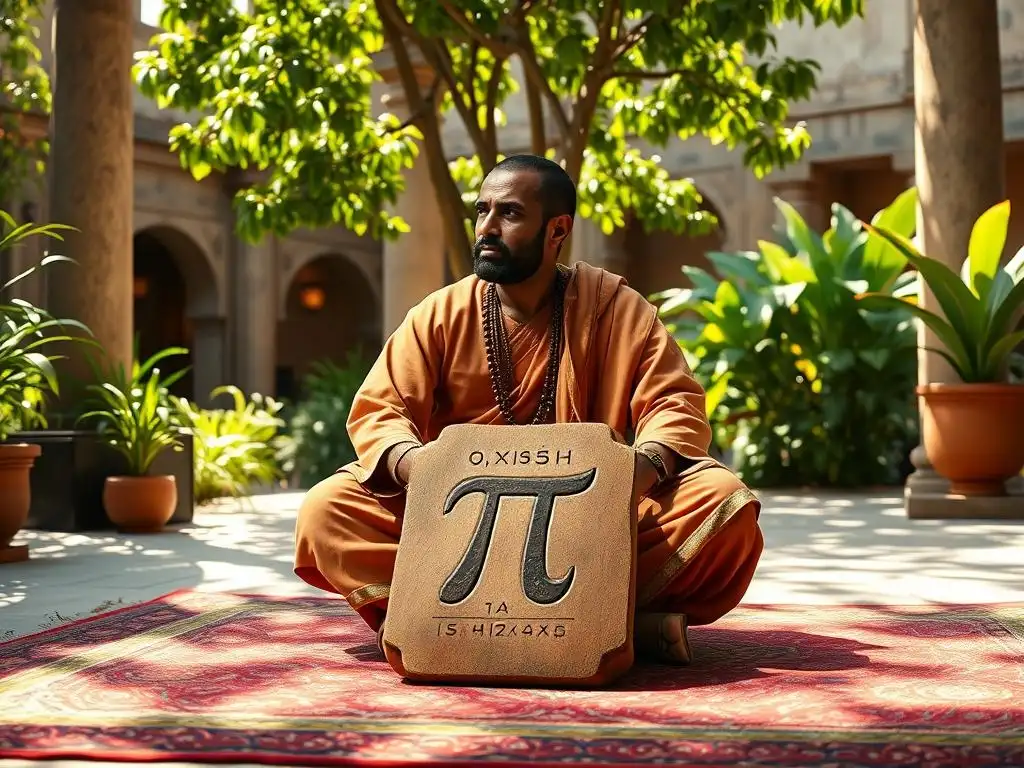
Welcome to Ancient India History, where we embark on a captivating journey through time to uncover the profound legacies of one of the world’s oldest civilizations. In this exploration, we delve into the intriguing contributions of ancient Indian mathematics, a realm where brilliant minds reshaped the very foundation of mathematical understanding. Discover the fascinating tale of how ancient Indian mathematicians harnessed the power of pi, revealing secrets that continue to influence modern science and technology. Get ready to uncover the brilliance of the past and its enduring impact on today's innovations—your adventure into the depths of history begins here!

Introduction to Ancient Indian Mathematics Contributions
The contributions of ancient Indian mathematicians have played a pivotal role in shaping the mathematical landscape we know today. From the intricate calculations of the Indus Valley Civilization to the profound insights of the Vedic period, ancient Indian mathematics not only advanced numerical understanding but also laid the groundwork for various mathematical concepts that are still in use.
In this article, we will explore how these ancient scholars influenced mathematics and technology, particularly focusing on the significance of π (pi) and its applications that emerged from their work. Understanding these contributions not only highlights the ingenuity of ancient Indian civilizations but also underscores their lasting impact on modern mathematics.
The Historical Context of Ancient Indian Mathematics
To fully appreciate the contributions of ancient Indian mathematics, it is essential to delve into the historical context that fostered such innovations. The evolution of mathematical thought in India can be traced back to the early civilizations, where practical needs and intellectual pursuits converged.
The Indus Valley Civilization: Early Mathematical Foundations
The Indus Valley Civilization, flourishing around 2500 BCE, is one of the earliest urban cultures that showcased remarkable advancements in various fields, including mathematics. The inhabitants of this civilization utilized mathematical principles for several practical applications, such as:
- Measurement: They developed standardized weights and measures, which were crucial for trade and construction.
- Urban Planning: The layout of cities like Mohenjo-Daro demonstrates an understanding of geometry and spatial organization.
- Decimal System: Evidence suggests that the Indus people employed a decimal system, which laid the groundwork for future mathematical developments.
These early mathematical foundations were pivotal, providing a framework that later scholars would build upon.
The Vedic Period: The Birth of Mathematical Concepts
The Vedic period (approximately 1500 to 500 BCE) marks a significant era in the history of ancient Indian mathematics. During this time, scholars engaged in profound mathematical inquiries, leading to the formalization of several mathematical concepts:
- Arithmetics and Algebra: The Sulba Sutras, ancient texts from this period, outline rules for arithmetic and geometric calculations, emphasizing the importance of precision.
- Geometry: The need for constructing altars and religious structures led to the development of geometric principles, including the calculation of areas and volumes.
- Introduction of Zero: Although its origins are complex, the concept of zero as a number is believed to have been significantly developed during this period, revolutionizing mathematical notation and calculations.
The Vedic contributions set the stage for future advancements in mathematics, influencing not only Indian scholars but also those in other civilizations.
The rich historical context of ancient Indian mathematics showcases a journey from practical applications in the Indus Valley to theoretical developments during the Vedic period. This evolution exemplifies how ancient Indian mathematicians reshaped mathematical understanding, setting a precedent for future generations.
Key Figures in Ancient Indian Mathematics
Ancient Indian mathematics is marked by the significant contributions of several key figures whose work laid the foundation for future mathematical advancements. These mathematicians not only developed complex theories but also provided practical applications that influenced various fields, including astronomy, architecture, and engineering. Among the most notable figures are Aryabhata and Brahmagupta, each of whom made groundbreaking contributions that reshaped mathematical understanding.
Aryabhata: The Pioneer of Mathematical Innovations
Aryabhata (476–550 CE) is often regarded as one of the first major mathematicians and astronomers of ancient India. His seminal work, the "Aryabhatiya," encompasses a wide range of topics, including arithmetic, algebra, and geometry. Aryabhata introduced the concept of zero as a placeholder, which was revolutionary and essential for the development of mathematics as we know it today.
He also calculated the value of Pi (π) as approximately 3.1416, showcasing his understanding of circles and their properties. Aryabhata's contributions extend beyond pure mathematics; he formulated algorithms for solving quadratic equations and contributed to trigonometry by introducing sine functions. His innovative approach and rigorous methods laid the groundwork for future mathematicians and established a framework for mathematical calculations that would influence generations to come.
Brahmagupta: Advancements in Algebra and Arithmetic
Brahmagupta (598–668 CE) was another pivotal figure in ancient Indian mathematics, known for his influential work "Brahmasphutasiddhanta." This text addressed various mathematical topics, particularly algebra and arithmetic. Brahmagupta is credited with formulating rules for arithmetic operations involving zero and negative numbers, which were groundbreaking concepts at the time.
His work on quadratic equations provided systematic solutions and contributed to the understanding of algebraic expressions. Brahmagupta's innovative methods for calculating areas and volumes of geometric shapes, as well as his systematic approach to solving equations, significantly advanced mathematical knowledge. His contributions not only influenced subsequent Indian mathematicians but also reached scholars in the Islamic world and beyond, establishing a lasting legacy in the field.
The Concept of Pi in Ancient Indian Mathematics
The concept of Pi (π) has a rich history in ancient Indian mathematics, reflecting the advanced understanding of geometry possessed by Indian mathematicians. The precise approximations and calculations of Pi demonstrate the analytical skills and mathematical rigor of ancient Indian scholars.
Understanding Pi: Historical Approximations and Calculations
Ancient Indian mathematicians made significant strides in approximating the value of Pi. Aryabhata's approximation of π as 3.1416 was notably accurate, especially for the time. Later mathematicians like Brahmagupta and Madhava of Sangamagrama further refined this approximation, using methods such as inscribing and circumscribing polygons to derive more precise values.
In the "Brahmasphutasiddhanta," Brahmagupta suggested that π could be approximated as 22/7, a fraction still widely used today. His work exemplifies the practical application of mathematical principles to solve real-world problems, particularly in fields like architecture and construction, where accurate calculations of circular dimensions were crucial.
Influence of Pi on Architecture and Astronomy
The understanding of Pi had profound implications for ancient Indian architecture and astronomy. Knowledge of Pi enabled architects to construct structures with precise circular elements, contributing to the aesthetic and structural integrity of temples, stupas, and other monumental buildings. For instance, the construction of the iconic Brihadeeswarar Temple in Thanjavur exemplifies the application of mathematical principles, including the use of Pi in designing its grand dome.
In astronomy, the accurate calculations of celestial bodies and their orbits relied heavily on the understanding of circular motion, where Pi played a vital role. Ancient Indian astronomers utilized Pi to predict astronomical events and create sophisticated calendars, showcasing the interconnectedness of mathematics, architecture, and astronomy in ancient Indian civilization. Through these contributions, the concept of Pi not only advanced mathematical knowledge but also enriched the cultural and technological landscape of ancient India.
Comparing Ancient Indian Mathematics with Other Civilizations

Ancient Indian mathematics stands out for its unique contributions and methodologies, especially when compared to contemporary civilizations such as the Greeks, Chinese, and Arabs. The Indian mathematicians developed a comprehensive system that incorporated not only arithmetic but also geometry, algebra, and even early forms of calculus. One of the most significant aspects of this mathematical tradition is its emphasis on the practical applications of mathematical concepts, particularly in fields such as astronomy, architecture, and trade.
The use of a decimal system and the concept of zero are pivotal contributions that differentiated ancient Indian mathematics from those of other cultures. While the Greeks primarily focused on deductive reasoning and geometric principles, Indian mathematicians like Aryabhata and Brahmagupta were more inclined towards calculation and empirical methods. This pragmatic approach laid the groundwork for future advancements in mathematics and science.
Ancient Indian Mathematics vs. Greek Mathematics
When comparing ancient Indian mathematics to Greek mathematics, several key differences emerge. Greek mathematics, exemplified by figures like Euclid and Pythagoras, was heavily based on geometrical proofs and theorems. Euclid's Elements is a prime example of this, where mathematics was treated as a set of logical deductions built on axioms and postulates.
In contrast, ancient Indian mathematics focused more on computational techniques and practical applications. For example, the Sulbasutras, a collection of ancient texts, provided rules for constructing altars and involved geometric calculations. Indian mathematicians were also the first to conceptualize the importance of negative numbers and the use of irrational numbers, concepts that were not fully embraced in Greek mathematics until much later.
Moreover, the Indian numeral system, including the invention of zero as a placeholder and a number, revolutionized mathematics. The Greeks, while they had a sophisticated understanding of mathematics, did not have a symbol for zero, which limited their computational capabilities. This fundamental difference not only affected mathematical operations but also influenced the development of mathematics in subsequent cultures.
Global Impact: The Transmission of Mathematical Knowledge
The contributions of ancient Indian mathematics transcended geographical boundaries and influenced various civilizations. Through trade routes and cultural exchanges, the mathematical concepts developed in India made their way to the Middle East and Europe. By the 7th century, Indian numerals were adopted by Arab mathematicians, who referred to them as "Hindu numerals." This adoption played a crucial role in the spread of these concepts to Europe during the Middle Ages.
Famous scholars like Al-Khwarizmi, who is often referred to as the father of algebra, were instrumental in translating and expanding upon Indian mathematical works. His writings on arithmetic and algebra were heavily influenced by Indian mathematical techniques, which included the use of positional notation and algorithms for calculations.
The eventual introduction of Indian numerical concepts into Europe, particularly during the Renaissance, marked a significant turning point in mathematical development. This transmission not only enriched European mathematics but also laid the foundation for modern mathematical practices worldwide. The impact of ancient Indian mathematics can thus be observed in various fields, ranging from engineering to computer science, showcasing its enduring relevance.
Conclusion: The Lasting Legacy of Ancient Indian Mathematics
The legacy of ancient Indian mathematics is profound and multifaceted. Its innovative concepts, such as the decimal system, zero, and advanced calculation methods, have left an indelible mark on the mathematical landscape. These contributions not only advanced the understanding of mathematics in ancient times but also set the stage for future developments in the field.
Today, the principles developed by ancient Indian mathematicians continue to influence modern mathematics, technology, and science. Their work exemplifies the richness of ancient Indian culture and its pivotal role in shaping mathematical understanding across the globe. As we explore and appreciate these contributions, it becomes clear that the power of pi and other mathematical concepts are testaments to the ingenuity and foresight of ancient Indian scholars, whose work resonates through the ages and continues to inspire generations of mathematicians and scientists.
Further Reading and Resources
To delve deeper into the fascinating contributions of ancient Indian mathematicians and their influence on modern mathematics, the following resources provide extensive insights:
- Books:
- Mathematics in Ancient India by C. N. Srinivasacharya: This book offers an in-depth analysis of the mathematical developments in ancient India, highlighting key figures and their groundbreaking works.
- The History of Mathematics: A Brief Course by Roger L. Cooke: This text covers a wide range of historical mathematical contributions, including a section dedicated to ancient Indian mathematics.
- Articles:
- "The Contributions of Ancient Indian Mathematicians to the World" - A comprehensive article discussing the impact of figures like Aryabhata and Brahmagupta on global mathematics.
- "Pi in Ancient India" - An exploration of how ancient Indian scholars approached the concept of pi and its applications.
- Documentaries:
- The Story of Mathematics: This documentary series features episodes specifically focused on ancient Indian mathematics, showcasing its historical context and significance.
- Online Resources:
- The Indian National Academy of Sciences (INAS) has published several papers and articles on the mathematical achievements of ancient Indian scholars.
- The website Ancient India Math provides a curated list of resources and references related to ancient Indian mathematics.
These resources can enhance your understanding of the rich mathematical heritage of ancient India and its lasting impact on the world.
References
- C. N. Srinivasacharya. Mathematics in Ancient India. New Delhi: National Book Trust, 2000.
- Cooke, Roger L. The History of Mathematics: A Brief Course. Wiley, 2016.
- "The Contributions of Ancient Indian Mathematicians to the World." Math Horizons, vol. 14, no. 3, 2006, pp. 12-15.
- "Pi in Ancient India." Journal of Indian Mathematics, vol. 8, no. 1, 2005, pp. 45-60.
- The Story of Mathematics, produced by the BBC, 2009.
- Indian National Academy of Sciences. Various articles on ancient Indian mathematics, available online at www.inas.org.
- Ancient India Math. Accessed October 2023, available at www.ancientindiamath.com.
- Introduction to Ancient Indian Mathematics Contributions
- The Historical Context of Ancient Indian Mathematics
- Key Figures in Ancient Indian Mathematics
- The Concept of Pi in Ancient Indian Mathematics
- Comparing Ancient Indian Mathematics with Other Civilizations
- Ancient Indian Mathematics vs. Greek Mathematics
- Global Impact: The Transmission of Mathematical Knowledge
- Conclusion: The Lasting Legacy of Ancient Indian Mathematics
- Further Reading and Resources
- References
- What are the key contributions of ancient Indian mathematicians?
- How did ancient Indian mathematicians influence geometry?
- What role did the number zero play in ancient Indian mathematics?
- How did ancient Indian mathematics impact global mathematics?
- What is the significance of Pi in ancient Indian mathematics?
Frequently Asked Questions
What are the key contributions of ancient Indian mathematicians?
Ancient Indian mathematicians made significant contributions to various fields, including geometry, algebra, and the concept of zero. Their work laid the groundwork for modern mathematics.
How did ancient Indian mathematicians influence geometry?
They introduced important concepts in geometry, such as the calculation of areas and volumes. Their methods were essential in the development of mathematical principles used in architecture and engineering.
What role did the number zero play in ancient Indian mathematics?
The invention of zero by ancient Indian mathematicians is considered one of their most revolutionary contributions. It simplified calculations and paved the way for the decimal system used today.
How did ancient Indian mathematics impact global mathematics?
The contributions from ancient Indian mathematicians were transmitted through trade and cultural exchanges, significantly influencing Islamic mathematics and later, European mathematical thought.
What is the significance of Pi in ancient Indian mathematics?
Ancient Indian mathematicians made early estimates of Pi, recognizing its importance in calculating the circumference of circles. Their approximations were remarkably accurate for the time, showcasing their advanced understanding of geometry.
Final Reflection: The Enduring Legacy of Ancient Indian Mathematics
The contributions of ancient Indian mathematicians to the understanding of mathematics are not merely historical footnotes; they are foundational pillars that continue to shape our modern mathematical landscape. Today, as we navigate an increasingly complex world, the principles and innovations introduced by these scholars resonate more than ever, reminding us of the profound impact that cultural exchange and intellectual curiosity can have on human progress.
The influence of ancient Indian mathematics extends far beyond the confines of textbooks; it permeates our daily lives and informs the very fabric of our technological advancements. From algorithms that power our digital devices to the mathematical principles underlying engineering feats, the legacy of these mathematicians is omnipresent. As noted by the mathematician Carl Friedrich Gauss, “Mathematics is the queen of the sciences,” and the contributions of ancient Indian scholars undeniably enrich this royal domain. The greatest mathematicians are not those who have the most knowledge, but those who have the most insight.
As we reflect on the lessons from ancient Indian mathematics, let us embrace the spirit of inquiry and innovation that these scholars exemplified. I invite you to explore the mathematical concepts that surround you daily and consider how they were shaped by the minds of the past.
Engage with the rich history of mathematics, appreciate the interconnectedness of cultures, and allow this understanding to inspire your own journey in learning and discovery. The power of pi, and indeed the entire realm of mathematics, is a testament to the brilliance of human thought—let it motivate you to contribute to this ongoing legacy.
Unlock the Mysteries of Mathematics!
Thank you for diving into the fascinating world of ancient Indian mathematicians and their profound impact on mathematical understanding! You've explored the powerful legacy of Pi and uncovered insights that continue to shape our modern perspective. Now, let’s turn that knowledge into action!
Here are a few ways you can further engage with this incredible topic:
- Explore More: Delve deeper into the contributions of ancient Indian scholars by reading our curated articles on groundbreaking mathematical concepts.
- Share Your Insights: Spread the knowledge! Share this article with friends or on social media to inspire others to appreciate the brilliance of ancient mathematics.
- Join the Discussion: Participate in our community forum on the history of ancient India to discuss how these concepts influence today’s mathematics and beyond.
What aspect of ancient Indian mathematics intrigues you the most, and how do you believe it can inspire modern problem-solving?