
From Manuscripts to Machines: The Journey of Ancient Indian Math in Today’s Tech

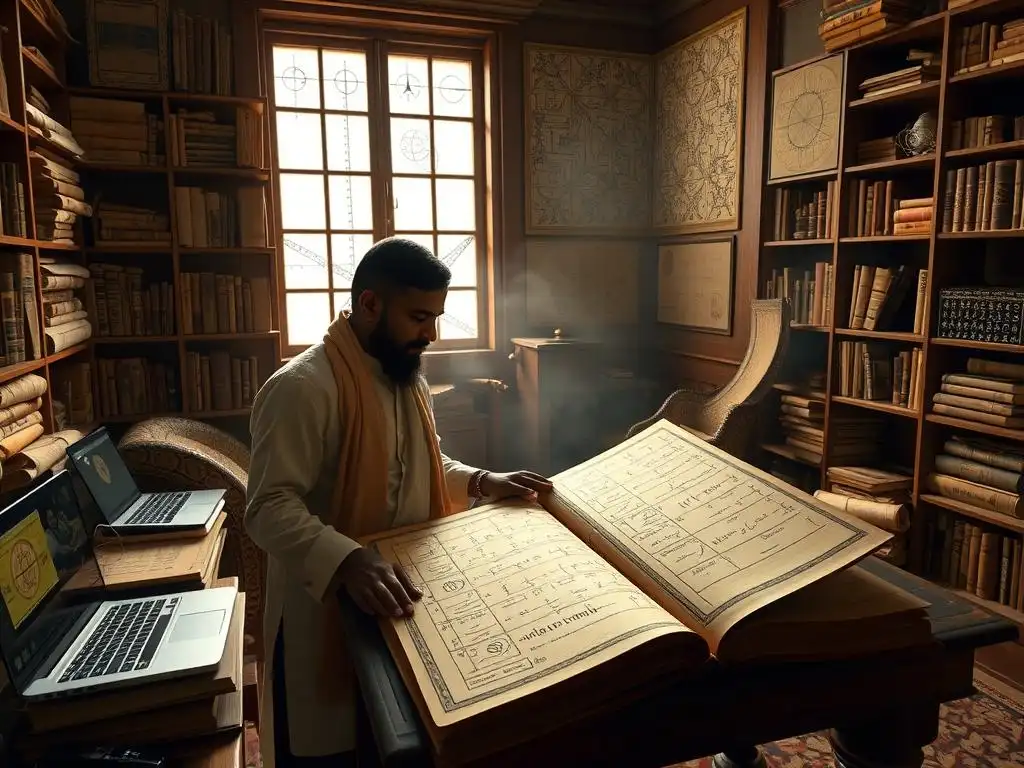
Welcome to Ancient India History, where we embark on a fascinating journey through the rich and diverse tapestry of ancient Indian civilizations. As we delve into the remarkable world of ancient Indian mathematics history, prepare to uncover the profound contributions that shaped not only Indian culture but also the very foundations of modern technology.
In our featured article, "From Manuscripts to Machines: The Journey of Ancient Indian Math in Today’s Tech," we invite you to explore how ancient techniques and knowledge continue to inspire innovation today. Join us as we unravel the mysteries of the past and discover the enduring legacy of ancient Indian thinkers that still resonates in our digital age.
- Introduction to Ancient Indian Mathematics History
- Key Historical Figures in Ancient Indian Mathematics
- Ancient Indian Mathematical Concepts that Shaped Technology
- Influence of Ancient Indian Mathematics on Modern Technology
- Comparative Analysis of Ancient Indian and Other Mathematical Traditions
- The Journey of Manuscripts to Machine Learning
- Challenges in Integrating Ancient Indian Mathematics with Modern Tech
- Conclusion: The Lasting Legacy of Ancient Indian Mathematics
- Additional Resources for Exploring Ancient Indian Mathematics History
- Call to Action: Engage with Ancient Indian Mathematics
-
Frequently Asked Questions
- What is the significance of ancient Indian mathematics in history?
- How did ancient Indian mathematicians contribute to the field?
- What role did manuscripts play in preserving ancient Indian mathematics?
- How has ancient Indian mathematics influenced modern technology?
- What can we learn from the study of ancient Indian mathematics today?
- Final Reflection: The Enduring Legacy of Ancient Indian Mathematics
- Unlock the Secrets of Ancient Math Today!
Introduction to Ancient Indian Mathematics History
The history of ancient Indian mathematics is a captivating journey that reflects the profound intellect and innovation of its civilization. Dating back thousands of years, this rich mathematical heritage not only laid the groundwork for various mathematical concepts but also significantly influenced the technological advancements we experience today.
From the meticulous calculations found in the Sulba Sutras to the sophisticated numeral system that led to the creation of zero, ancient Indian mathematics offers a treasure trove of knowledge. This article delves into the significance and contributions of ancient Indian mathematics, highlighting its enduring legacy and the ways it continues to inspire modern technology.
The Significance of Ancient Indian Mathematics
Ancient Indian mathematics is notable for its unique approaches and methodologies that have shaped mathematical thought throughout history. Here are some key aspects of its significance:
- Foundation of Modern Mathematics: Concepts such as the decimal system and the concept of zero originated in ancient India, forming the basis of modern arithmetic.
- Influence on Global Mathematics: The works of Indian mathematicians like Aryabhata and Brahmagupta were translated into Arabic and later into Latin, spreading their influence across the world.
- Integration with Astronomy: Mathematical principles were intricately linked with astronomy. For instance, Aryabhata's calculations for planetary positions showcased the blend of math and science.
- Practical Applications: Ancient texts contain mathematical methods used in architecture, land measurement, and even trade, demonstrating the practical applications of these theories.
Overview of Ancient Indian Contributions to Mathematics
The contributions of ancient Indian mathematicians are diverse and far-reaching. Below is an overview of some notable figures and their key contributions:
| Mathematician | Contributions |
|---|---|
| Aryabhata | Introduced the concept of zero and the decimal place value system. His work, Aryabhatiya, includes calculations for pi and planetary motions. |
| Brahmagupta | Developed rules for arithmetic operations with zero and negative numbers in his book Brahmasphutasiddhanta. |
| Bhaskara I | Known for his commentary on Aryabhata's work and his own innovations in trigonometry and algebra. |
| Bhaskara II | Authored Lilavati, a treatise on arithmetic, and Bijaganita, which elaborates on algebraic concepts. |
These mathematicians not only made substantial contributions to the field of mathematics but also influenced various other disciplines, including astronomy, physics, and engineering. Their works laid the groundwork for future developments and remain relevant in the realm of technology today. As we continue to explore the journey from manuscripts to machines, the impact of ancient Indian mathematics on contemporary advancements becomes increasingly evident.
Key Historical Figures in Ancient Indian Mathematics
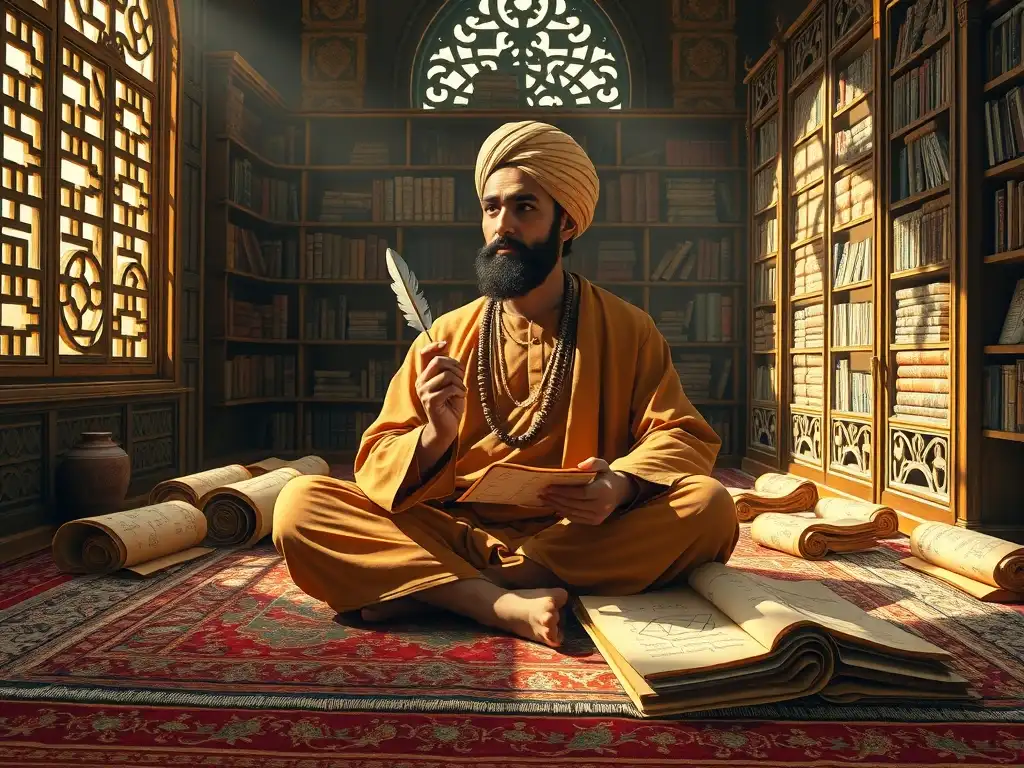
Aryabhata: The Pioneer of Mathematical Concepts
Aryabhata (476–550 CE) is often heralded as the pioneer of mathematical concepts in ancient India. His most significant work, the Aryabhatiya, not only laid down the foundations of mathematics but also melded it seamlessly with astronomy. In this text, Aryabhata introduced the idea of zero as a placeholder, a revolutionary concept that would later transform mathematics globally.
One of his key contributions was the introduction of the decimal place value system, which is essential in modern mathematics. He also calculated the value of π (pi) with remarkable precision, approximating it to 3.1416. Additionally, Aryabhata's work encompassed advanced arithmetic operations, including square and cube roots, and methods for solving linear and quadratic equations.
His astronomical observations led him to propose that the Earth rotates on its axis, a theory that predated similar Western concepts by centuries. Aryabhata's innovative methodologies not only influenced his contemporaries but also shaped future generations of mathematicians and scientists, making him a pivotal figure in the history of ancient Indian mathematics.
Brahmagupta: Innovations in Algebra and Astronomy
Brahmagupta (598–668 CE) significantly advanced the field of algebra and made notable contributions to astronomy. His seminal work, the Brahmasphutasiddhanta, is regarded as one of the first comprehensive texts on algebra. He introduced several key concepts, including rules for solving equations and the treatment of negative numbers, which were groundbreaking for his time.
In his writings, Brahmagupta established algorithms for arithmetic operations, including rules for addition, subtraction, multiplication, and division, which laid the groundwork for future algebraic thought. His solutions to quadratic equations were particularly innovative, employing methods that closely resemble those used today.
Brahmagupta also made significant contributions to astronomy, calculating the positions of celestial bodies with precision. He proposed methods for predicting eclipses and provided detailed instructions on how to calculate the circumference of the Earth. His integration of mathematics with practical applications in astronomy underscored the vital role of ancient Indian mathematics in shaping scientific inquiry.
Bhaskara II: Advancements in Calculus and Number Theory
Bhaskara II (1114–1185 CE), also known as Bhaskara the Great, is celebrated for his profound contributions to both calculus and number theory. His major work, the Lilavati, is a comprehensive treatise that covers a wide array of mathematical topics, including arithmetic, geometry, and algebra, all presented in a poetic format that made the content engaging and accessible.
One of Bhaskara II's notable achievements was his exploration of the concept of "infinitesimals," which laid the groundwork for calculus long before it was formally developed in Europe. He formulated the principles of differentiation and integration, allowing for the calculation of areas and volumes, which were revolutionary concepts in mathematics.
In addition to his work in calculus, Bhaskara II made significant advancements in number theory, including the formulation of rules for cyclic numbers and the properties of numbers in relation to their factors. His contributions have had a lasting impact on mathematics, influencing scholars across the globe and showcasing the rich history of ancient Indian mathematics as a crucial foundation for modern mathematical thought.
Ancient Indian Mathematical Concepts that Shaped Technology
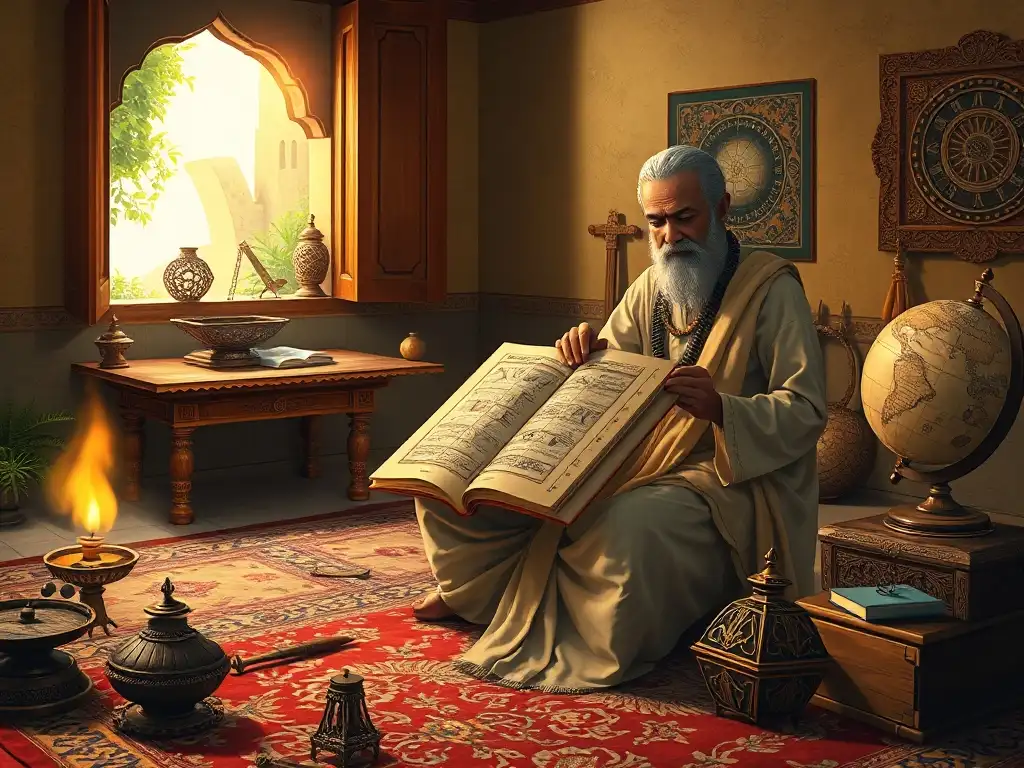
The Decimal System: A Revolutionary Innovation
The development of the decimal system in ancient India marks a pivotal moment in the history of mathematics. This system, which uses ten symbols (0-9) to represent numbers, was not only innovative but also laid the groundwork for modern arithmetic. The earliest recorded use of the decimal system can be traced back to the Indus Valley Civilization, where archaeological findings suggest the use of weights and measures that reflect decimal subdivisions.
Key Features of the Decimal System:
- Base-10 Structure: The system is based on powers of ten, which simplifies calculations and facilitates arithmetic operations.
- Positional Notation: Each digit's position indicates its value, allowing for concise representation of large numbers.
- Adaptability: This system can easily accommodate fractions, decimals, and various numerical formats, making it versatile for various applications.
The widespread adoption of the decimal system can be attributed to prominent mathematicians such as Brahmagupta and Aryabhata, who further refined its principles in their works. This innovation significantly influenced global mathematics, as it was transmitted to the Islamic world and later to Europe, revolutionizing how numbers were understood and manipulated.
Algorithms in Ancient Indian Mathematics
Ancient Indian mathematicians were pioneers in the formulation of algorithms, systematic procedures for solving mathematical problems. The term "algorithm" itself is derived from the name of the Persian mathematician Al-Khwarizmi, whose works were influenced by earlier Indian texts.
Notable Algorithms:
- Rules for Arithmetic Operations: Ancient texts, such as the Bakhshali Manuscript, detail algorithms for addition, subtraction, multiplication, and division, showcasing a structured approach to arithmetic.
- Geometry and Measurement: Algorithms for calculating areas and volumes, particularly in the context of land measurement and construction, were prevalent in ancient texts like Siddhanta Shiromani by Bhaskara II.
- Astronomical Calculations: The Surya Siddhanta contains algorithms for calculating celestial positions, influencing both astronomy and navigation.
These algorithms not only aided in practical applications, such as trade and architecture, but also laid the foundation for computational methods used in modern technology. Their structured approach to problem-solving resonates in today’s programming and algorithmic design.
The Concept of Zero: Transforming Numerical Representation
Perhaps one of the most profound contributions of ancient Indian mathematics is the concept of zero. This revolutionary idea transformed numerical representation and is often considered a cornerstone of modern mathematics.
Significance of Zero:
- Placeholder Value: Zero serves as a placeholder in the decimal system, allowing for the distinction between numbers like 10 and 100, which is fundamental in numerical representation.
- Mathematical Operations: The introduction of zero enabled the formulation of new mathematical operations, such as subtraction and division, leading to a more comprehensive understanding of mathematics.
- Philosophical Implications: Beyond its numerical significance, zero also carries philosophical weight in Indian culture, representing the concept of "nothingness" and influencing various fields, including metaphysics and cosmology.
The earliest documented use of zero is found in Bakhshali Manuscript, dating back to the 7th century CE. The acceptance and integration of zero into mathematics facilitated advancements in various fields, including algebra, calculus, and computer science, showcasing the enduring legacy of ancient Indian mathematics in contemporary technology.
Influence of Ancient Indian Mathematics on Modern Technology
Integration of Ancient Techniques in Contemporary Computing
Ancient Indian mathematics, particularly its foundational principles, has made a significant impact on contemporary computing practices. The use of zero, as a concept and symbol, originated in ancient India and is crucial for modern computational systems. Without zero, binary code—the backbone of all digital technologies—would not function effectively. This fundamental shift in numerical representation allowed for complex calculations and programming languages to evolve.
Moreover, techniques such as Vedic mathematics, developed around 1500 BCE, emphasize mental calculation and simplification techniques that have been adopted in various computational algorithms. For instance, the sutras of Vedic mathematics provide shortcuts for multiplication and division, making calculations faster and more efficient. These methods are being explored in educational technology and software development to enhance computational learning in students.
Additionally, the decimal system, attributed to ancient Indian mathematicians like Aryabhata, is now a standard in computer science. This system not only simplifies calculations but also allows for the integration of multiple data types in programming. The influence of ancient Indian mathematics is evident in modern programming languages that utilize base-10 systems for data representation and manipulation.
The Role of Ancient Algorithms in Data Science
The algorithms developed during ancient times in India serve as precursors to modern statistical and computational methods used in data science today. The Pascal's triangle, which is prevalent in probability theory, has roots in ancient Indian mathematics, specifically in the work of mathematicians such as Brahmagupta and Bhaskara II. Their explorations of combinatorial mathematics laid the groundwork for algorithms that are now foundational in data analytics.
Moreover, ancient Indian texts often employed systematic problem-solving techniques that align closely with contemporary data analysis methodologies. For example, the Aryabhata algorithm for approximating square roots is one of the earliest forms of iterative algorithms. This method is mirrored in today's machine learning models that rely on iterative approaches to optimize solutions.
The historical approach to interpolation and extrapolation used by ancient Indian mathematicians is also applicable in modern data science. Techniques derived from their understanding of mathematical patterns contribute to predictive analytics, which is essential for businesses looking to derive insights from large datasets.
Case Study: How Ancient Indian Math Informs Modern AI
A compelling case study that illustrates the influence of ancient Indian mathematics on modern artificial intelligence (AI) is the application of the Sanskrit language in natural language processing (NLP) systems. The structure of Sanskrit, with its emphasis on syntax and semantics, offers a unique framework for developing AI algorithms that can understand and process human language more effectively.
Research has indicated that the grammatical rules of Sanskrit can enhance parsing techniques used in NLP, leading to improved language models that outperform traditional approaches. The precision and clarity inherent in ancient Indian linguistic frameworks allow for more sophisticated AI applications, such as chatbots and translation services.
Furthermore, the concept of recursion, which is prevalent in ancient Indian texts, is a key principle in computer science and AI. Recursive algorithms, essential for tasks like tree traversal and search functions, reflect methods described in ancient Indian mathematical literature. This recursive thinking is not only foundational to programming but also to developing intelligent systems that learn from previous inputs to enhance decision-making processes.
Overall, the integration of ancient Indian mathematics into modern technology underscores the timeless relevance of these principles, showcasing their potential to drive innovation in the digital era. By acknowledging this rich history, we can appreciate how ancient wisdom continues to shape contemporary advancements.
Comparative Analysis of Ancient Indian and Other Mathematical Traditions
Ancient Indian Mathematics vs. Greek Mathematics
Ancient Indian mathematics has often been compared to its Greek counterpart due to their profound impacts on the development of mathematics. While both civilizations made significant contributions, their approaches and underlying philosophies diverged in notable ways.
- Conceptual Foundations:
- Indian Mathematics: The Indian tradition emphasized the use of place value and the decimal system, which facilitated complex calculations. The introduction of zero as a numeral by Indian mathematicians marked a revolutionary shift, enabling the representation of large numbers and more sophisticated arithmetic operations.
- Greek Mathematics: Greek mathematicians, such as Euclid and Archimedes, focused on geometry and theoretical constructs. Their work was largely influenced by deductive reasoning and geometric proofs, prioritizing logical frameworks over computational methods.
- Notation and Representation:
- Indian mathematicians developed a unique system of notation that allowed for more efficient calculations, especially in algebra. For example, Brahmagupta's rules for arithmetic and the use of symbols for operations were advanced for their time.
- In contrast, Greek mathematics relied heavily on geometric diagrams and verbal descriptions, which limited the complexity of calculations that could be performed without extensive written explanations.
- Applications and Practicality:
- The practical applications of Indian mathematics can be seen in various fields such as astronomy, where Aryabhata’s work on planetary positions and time calculations was groundbreaking.
- Greek mathematics, while also influential in astronomy, was more focused on philosophical inquiries and theoretical explorations, often detached from practical applications.
Unique Features of Indian Mathematics Compared to Babylonian Mathematics
The mathematical contributions of ancient India and Babylon are distinguished by several unique features that highlight the former's innovation and depth:
- Numerical System:
- The Babylonians utilized a base-60 (sexagesimal) numeral system, which was complex and limited in some aspects of calculations. In contrast, ancient Indian mathematicians adopted a base-10 (decimal) system, which is more intuitive and efficient for arithmetic operations.
- The introduction and extensive use of the concept of zero in the Indian numeral system allowed for simpler computation and a clearer representation of large numbers.
- Algebraic Developments:
- Indian mathematics made significant strides in algebra, with texts like Brahmasphutasiddhanta detailing rules for solving equations and providing methods for finding solutions to polynomial equations.
- Babylonian mathematics, while proficient in solving quadratic equations, lacked the algebraic notation and systematic approaches that would later be developed in India.
- Trigonometry and Astronomy:
- The Indian approach to trigonometry was highly advanced, with the use of sine and cosine functions being documented in ancient texts. This was essential for astronomical calculations, which were crucial for navigation and calendar systems.
- The Babylonians contributed to astronomy but primarily through observational methods rather than the analytical techniques seen in Indian works, showcasing a more empirical rather than theoretical approach.
Lessons Modern Technology Can Learn from Ancient Practices
The innovative practices of ancient Indian mathematics offer valuable lessons that can inform modern technological advancements:
- Emphasis on Algorithms:
- Ancient Indian mathematicians developed algorithms that laid the groundwork for computational methods used today. For example, the rules for arithmetic operations documented in texts like Aryabhatiya can inspire efficient algorithms in modern computing.
- By studying these historical algorithms, modern mathematicians and computer scientists can uncover more efficient computational techniques.
- Interdisciplinary Approaches:
- Ancient Indian mathematicians often integrated various fields such as astronomy, music, and architecture into their mathematical practices. This interdisciplinary approach can inspire current technologists to adopt broader perspectives in problem-solving and innovation.
- Encouraging collaboration across diverse fields can lead to novel solutions in technology, as seen in areas like data science and artificial intelligence.
- Focus on Education and Knowledge Dissemination:
- The emphasis on teaching and sharing knowledge in ancient India, as shown through the establishment of institutions like the Nalanda University, highlights the importance of education in fostering innovation.
- Modern technology can benefit from enhancing educational frameworks, promoting lifelong learning, and ensuring knowledge transfer across generations to sustain innovation.
The journey of ancient Indian mathematics provides invaluable insights that are not only relevant to understanding historical developments but also essential in shaping future technological advancements. By recognizing and applying the principles derived from this rich mathematical heritage, modern technology can continue to evolve and innovate effectively.
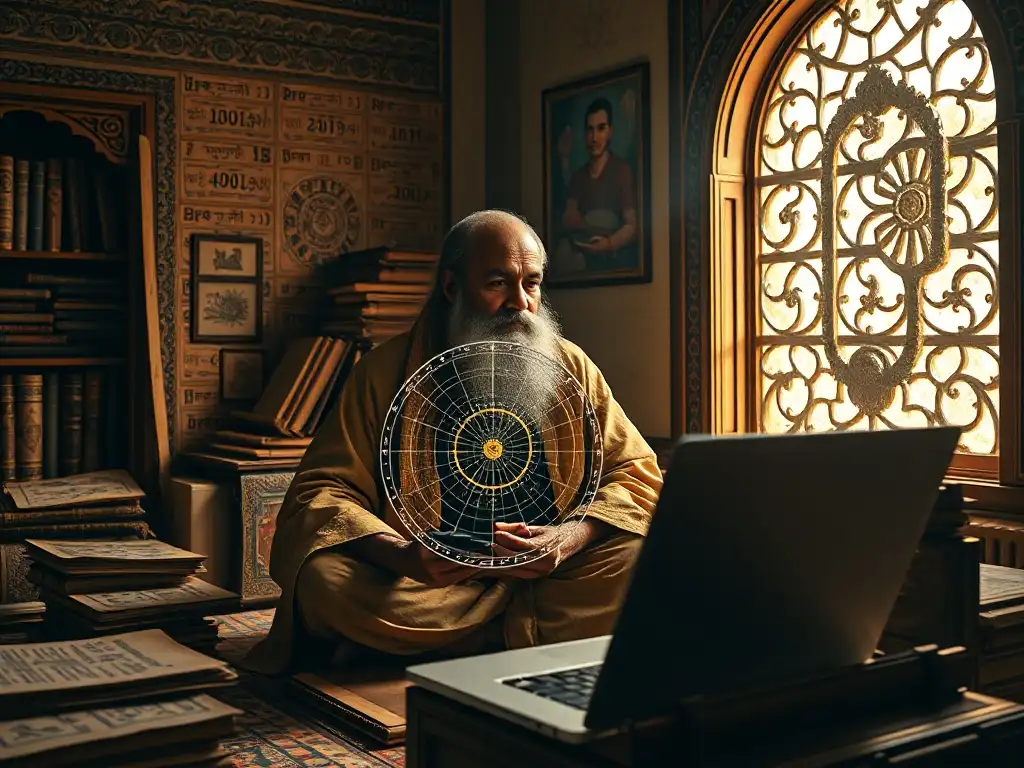
The Journey of Manuscripts to Machine Learning
Preservation of Ancient Texts: A Bridge to Modern Understanding
The preservation of ancient Indian mathematical texts has been crucial in bridging the gap between historical knowledge and contemporary applications. These texts, often inscribed on palm leaves and later on paper, encompass a wealth of mathematical theories and practices that date back thousands of years. Notable manuscripts like the Aryabhatiya by Aryabhata and Brahmasphutasiddhanta by Brahmagupta serve as foundational works, illuminating the sophisticated numerical systems and astronomical calculations employed in ancient India.
- Key Contributions:
- Decimal System: Indian mathematicians developed the decimal system, including the concept of zero, which revolutionized mathematics globally.
- Trigonometry: Texts from ancient India laid the groundwork for trigonometric concepts that are still in use today.
- Algebra: The early formulations of algebraic equations found in these manuscripts paved the way for later developments in mathematics.
The meticulous preservation efforts by scholars and institutions have ensured that these texts remain accessible for study, enabling modern researchers to draw insights from the past. The translation and interpretation of these manuscripts into contemporary languages have further facilitated their integration into modern mathematical curricula.
Digitization of Ancient Indian Mathematical Manuscripts
In recent years, the digitization of ancient Indian mathematical manuscripts has emerged as a pivotal step in preserving and disseminating knowledge. Institutions like the National Mission for Manuscripts in India have spearheaded initiatives to digitize thousands of manuscripts. This process not only secures these documents against physical degradation but also makes them readily available to scholars and enthusiasts around the world.
- Benefits of Digitization:
- Accessibility: Digital archives allow global access to ancient texts, breaking geographical barriers.
- Searchability: Digitized manuscripts can be indexed and searched, facilitating research and comparative studies.
- Interactive Learning: Modern technology enables the creation of interactive platforms where users can engage with these texts and their mathematical concepts.
The digitization efforts have also led to the development of online databases and educational resources that highlight the significance of ancient Indian mathematics. As a result, a new generation of mathematicians and technologists can explore the foundational concepts that have influenced contemporary mathematics.
Machine Learning and the Revival of Ancient Mathematical Concepts
The intersection of machine learning and ancient Indian mathematics is a burgeoning area of research that seeks to revive and apply historical mathematical concepts in modern technological contexts. With the advancements in artificial intelligence, researchers are leveraging machine learning algorithms to analyze ancient texts, extract mathematical principles, and apply them in innovative ways.
- Applications of Machine Learning:
- Pattern Recognition: Machine learning algorithms can identify and analyze patterns within ancient mathematical texts, uncovering new insights into historical practices.
- Algorithm Development: Concepts derived from ancient Indian mathematics, such as algorithms for solving quadratic equations, are being re-evaluated and adapted for use in modern computational methods.
- Cultural Heritage: AI-driven projects aim to reconstruct ancient mathematical models and visualize their applications, enriching our understanding of their relevance in today’s world.
This revival not only honors the legacy of ancient Indian mathematicians but also demonstrates the timelessness of their contributions. By integrating these concepts into current technological frameworks, we can foster a deeper appreciation for the richness of ancient Indian mathematics history and its influence on contemporary innovations.
Challenges in Integrating Ancient Indian Mathematics with Modern Tech
The integration of ancient Indian mathematics into contemporary technology is fraught with several challenges. These obstacles not only stem from the complexities of the ancient mathematical concepts themselves but also from the ways in which these concepts have been interpreted and understood over time. Addressing these challenges is crucial for harnessing the full potential of ancient Indian mathematics in modern technological applications.
Misinterpretations of Ancient Texts
One of the primary challenges lies in the misinterpretation of ancient texts. Many of the foundational works of ancient Indian mathematics, such as the Sulbasutras and Aryabhata's Aryabhatiya, are written in a style that can be cryptic and open to varied interpretations.
- Ambiguity in Language: The language used in these texts often employs metaphors and specific terminologies that may not have direct equivalents in modern mathematical language. This can lead to misunderstandings regarding the intent and applications of the mathematical principles discussed.
- Cultural Context: The cultural backdrop in which these texts were written is vastly different from today’s technological landscape. Without an understanding of this context, modern interpretations may overlook critical aspects that influence the applicability of these ancient concepts.
- Historical Context: Additionally, the historical development of mathematical ideas can lead to misconceptions. For instance, the contributions of ancient Indian mathematicians were often contemporaneous with those from other civilizations, which can result in misattribution or underappreciation of their innovations.
The Need for Accurate Translations and Interpretations
To effectively integrate ancient Indian mathematics into modern technology, there is a significant need for accurate translations and interpretations of these texts.
- Scholarly Research: Rigorous scholarly research is essential to provide clear and precise translations. This involves not only linguistic expertise but also a deep understanding of mathematical concepts.
- Interdisciplinary Approach: An interdisciplinary approach that combines mathematics, history, and linguistics can yield richer interpretations. Collaborations between mathematicians and historians can help clarify the meanings and implications of ancient texts.
- Publishing and Accessibility: Increasing the accessibility of these translated texts through digital platforms can facilitate wider study and application. Online repositories that provide both original texts and reliable translations can serve as valuable resources for researchers and technologists alike.
Balancing Tradition with Innovation
The integration of ancient Indian mathematics into modern technology also requires balancing tradition with innovation.
- Respecting Heritage: While striving to innovate, it is crucial to respect and preserve the mathematical heritage of ancient India. This involves not only understanding the principles but also appreciating the philosophical and cultural contexts in which they were developed.
- Adaptive Techniques: Modern applications can benefit from adaptive techniques that reinterpret ancient methods for contemporary use. For instance, concepts like zero and place value from ancient Indian mathematics have profound implications in today's algorithms and data structures.
- Educational Frameworks: Developing educational frameworks that incorporate ancient mathematical concepts alongside modern techniques can foster a deeper understanding. This can be achieved through curricula that highlight the relevance of ancient mathematics in solving current technological challenges.
While the journey of integrating ancient Indian mathematics into modern technology presents challenges, it also offers opportunities for innovation that respect and utilize the rich legacy of India's mathematical heritage. Addressing misinterpretations, ensuring accurate translations, and balancing tradition with innovation are essential steps toward leveraging these ancient insights for contemporary technological advancements.
Conclusion: The Lasting Legacy of Ancient Indian Mathematics
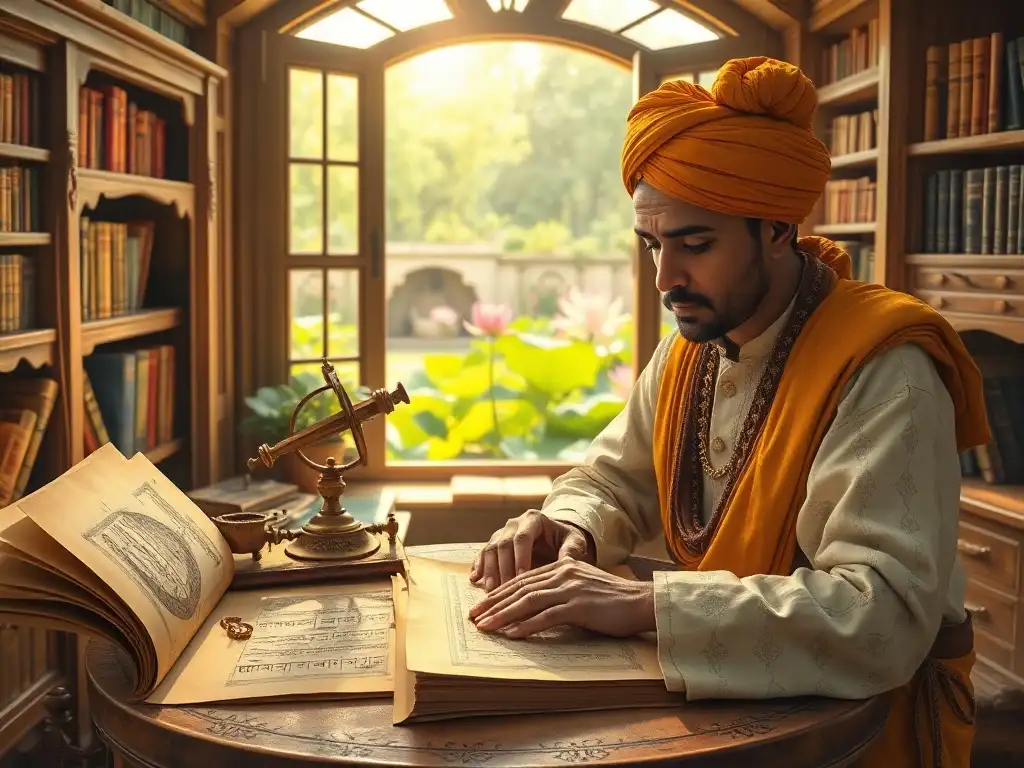
The legacy of ancient Indian mathematics is profound and multifaceted, influencing various fields of study and technology throughout history. From the early systems of numerals developed in the Indus Valley Civilization to the complex mathematical concepts articulated by scholars like Aryabhata and Brahmagupta, the contributions of ancient Indian mathematicians have laid the groundwork for modern mathematical thought and practices.
The concept of zero, a groundbreaking idea attributed to Indian mathematicians, revolutionized numerical representation and calculations. This innovation not only transformed mathematics but also had significant implications for computing and digital technologies in the contemporary world. Additionally, ancient texts such as the Aryabhatiya and Brahmasphutasiddhanta serve as vital resources, showcasing advanced ideas in algebra, trigonometry, and arithmetic that are relevant to today’s technological advancements.
As we explore the intersection of ancient Indian mathematics and modern technology, it becomes evident that the principles established centuries ago continue to resonate in various fields, including computer science, engineering, and data analysis. This enduring legacy is a testament to the ingenuity of ancient Indian scholars and their ability to solve complex problems, which remains relevant in the ever-evolving landscape of technology.
Future Prospects for Ancient Indian Mathematics in Technology
The future of ancient Indian mathematics in technology holds immense potential. With the increasing interest in artificial intelligence (AI) and machine learning, the algorithms and mathematical principles rooted in ancient Indian texts can provide unique insights into data processing and computational efficiency. For example, the algorithms derived from ancient principles of geometry and numerical systems could enhance the development of AI models, making them more efficient and accurate.
Moreover, the integration of ancient mathematical concepts into modern education systems can foster a deeper understanding of mathematics among students, encouraging innovation in technology. By incorporating historical perspectives and ancient methodologies into the curriculum, educators can inspire the next generation of mathematicians and technologists to explore new frontiers in research and application.
The ongoing collaboration between historians, mathematicians, and technologists can further bridge the gap between ancient knowledge and modern application. This interdisciplinary approach can lead to new discoveries and innovations, ensuring that the wisdom of ancient Indian mathematics continues to thrive in the context of contemporary technological advancements.
Encouraging Further Research and Exploration
To fully appreciate and harness the contributions of ancient Indian mathematics, it is crucial to encourage further research and exploration in this field. Scholars and researchers should focus on:
- Translating and Analyzing Ancient Texts: Continued efforts to translate and interpret ancient mathematical manuscripts will provide insights into their historical context and relevance, facilitating a better understanding of their applications in modern technology.
- Interdisciplinary Studies: Promoting interdisciplinary research that combines mathematics, history, and technology will enrich our understanding of ancient contributions and inspire innovative applications today.
- Public Awareness and Education: Increasing public awareness about the significance of ancient Indian mathematics can stimulate interest in these subjects. Workshops, seminars, and educational programs can help disseminate knowledge and foster a greater appreciation for this rich heritage.
The journey of ancient Indian mathematics from historical manuscripts to contemporary technological applications is a testament to the enduring nature of this discipline. By continuing to explore, research, and integrate these ancient practices into modern technology, we can ensure that the legacy of ancient Indian mathematics not only survives but thrives in the future.
Additional Resources for Exploring Ancient Indian Mathematics History

Recommended Books on Ancient Indian Mathematics
The study of ancient Indian mathematics is enriched by a variety of scholarly works, each providing insights into the historical context, techniques, and significance of mathematical developments in ancient India. Here are some recommended readings:
-
"Indian Mathematics: From Vedic Roots to Modern Applications" by C. D. Sharma
This book offers a comprehensive overview of the mathematical concepts that emerged from ancient India, tracing their evolution and application in modern times.
-
"The History of Indian Mathematics" by Kim Plofker
Plofker's work meticulously documents the contributions of Indian mathematicians through various epochs, including the Vedic period and the Golden Age of India.
-
"Mathematics in Ancient India" by P. L. Bhargava
This text delves into the unique mathematical practices of ancient Indian civilizations, highlighting key figures and their contributions.
-
"The Lost History of Indian Mathematics" by M. N. Saha
Saha explores lesser-known aspects of Indian mathematics, shedding light on how these concepts were pivotal to advancements in various fields.
Online Courses and Lectures on Indian Mathematical Heritage
In the digital age, numerous online platforms offer courses and lectures focused on the rich heritage of ancient Indian mathematics. Here are some options:
-
Coursera: "History of Mathematics in India"
This course covers the timeline of mathematical developments in India, featuring famous mathematicians and their contributions.
-
edX: "Ancient Indian Mathematics: A Historical Perspective"
This course offers a deep dive into the mathematical theories and practices that originated in ancient India, providing context to their modern applications.
-
YouTube Lectures by Indian Scholars
Channels such as "History of Mathematics" feature lectures by renowned Indian mathematicians who discuss the significance of ancient Indian mathematical texts.
Documentaries and Films Highlighting Ancient Indian Contributions
Visual storytelling can be a powerful medium for understanding the contributions of ancient Indian mathematics. Here are some notable documentaries and films:
-
"The Story of Mathematics: The Indian Contribution"
This documentary highlights the mathematical advancements made in ancient India, focusing on notable figures like Aryabhata and Brahmagupta.
-
"Mathematics: The Language of the Universe"
This film includes a segment dedicated to ancient Indian mathematics, showcasing how it laid the groundwork for modern mathematical thought.
-
"Ancient India: The Land of Mathematics"
A comprehensive documentary that explores the mathematical innovations of ancient Indian civilizations and their impact on global mathematics.
By exploring these resources, readers can gain a deeper understanding of the ancient Indian mathematics history and its lasting influence on contemporary technology and innovation.
Call to Action: Engage with Ancient Indian Mathematics
The journey of ancient Indian mathematics is not just a historical exploration but also a call to action for enthusiasts, scholars, and the general public to actively engage with this rich intellectual heritage. By participating in various initiatives, individuals can help preserve, promote, and further the understanding of ancient Indian mathematics and its profound impact on contemporary technology.
Join Online Forums and Discussions on Ancient Math
Engaging in online forums and discussions is a fantastic way to delve deeper into the complexities of ancient Indian mathematics. Here are some platforms and initiatives you might consider:
- Reddit: Subreddits like r/Mathematics and r/History offer spaces to discuss ancient mathematical concepts and their applications.
- Facebook Groups: Various groups dedicated to Indian history and mathematics provide opportunities to connect with like-minded individuals and share insights.
- Academic Forums: Websites like ResearchGate and Academia.edu allow you to follow and interact with scholars who specialize in ancient Indian mathematics.
By joining these platforms, you can:
- Share your insights and learn from others.
- Participate in discussions on how ancient Indian mathematical techniques, such as the use of algorithms and zero, influence modern technology.
- Collaborate on research projects or initiatives focusing on ancient mathematics.
Support Organizations Preserving Ancient Mathematical Heritage
Several organizations and initiatives work tirelessly to preserve and promote the heritage of ancient Indian mathematics. Supporting these efforts can significantly contribute to the continuation of this knowledge. Here are a few noteworthy organizations:
- Indian National Science Academy (INSA):
- Focuses on promoting the use of science and mathematics and understanding its historical context.
- Offers resources and publications related to ancient Indian mathematics.
- The Bhaskara Pratishthana:
- Dedicated to the study and promotion of the works of the ancient mathematician Bhaskara II.
- Engages in workshops and seminars that highlight the significance of ancient mathematical texts.
- National Council of Educational Research and Training (NCERT):
- Involved in developing educational materials that incorporate ancient mathematical concepts into the curriculum.
- Supports research initiatives that explore the influence of ancient mathematics on contemporary practices.
- Maths History Websites:
- Various online platforms curate resources, articles, and discussions about ancient Indian mathematics, making them accessible to a wider audience.
By supporting these organizations, you can help ensure that the legacy of ancient Indian mathematics is preserved for future generations. Consider donating, volunteering, or simply spreading the word about their efforts to engage more individuals in this vital area of study.
Engaging with ancient Indian mathematics is not only about preserving history but also about recognizing its ongoing relevance in today's technological landscape. Whether through discussions or supporting preservation efforts, your involvement can contribute significantly to the appreciation and understanding of this essential aspect of our shared heritage.
Frequently Asked Questions
What is the significance of ancient Indian mathematics in history?
Ancient Indian mathematics has profound significance as it introduced concepts like zero, decimal system, and algebra, which laid the groundwork for modern mathematics.
How did ancient Indian mathematicians contribute to the field?
Ancient Indian mathematicians, such as Aryabhata and Brahmagupta, made groundbreaking contributions in areas like geometry, trigonometry, and the calculation of pi, influencing both Indian and global mathematical practices.
What role did manuscripts play in preserving ancient Indian mathematics?
Manuscripts served as critical artifacts that preserved mathematical knowledge, techniques, and theories, enabling future generations to access and build upon the achievements of ancient scholars.
How has ancient Indian mathematics influenced modern technology?
The principles of ancient Indian mathematics have greatly influenced modern technology, particularly in fields such as computer science, where algorithms and computational techniques trace back to ancient methods.
What can we learn from the study of ancient Indian mathematics today?
Studying ancient Indian mathematics offers insights into the evolution of mathematical thought and encourages a deeper appreciation for the cultural contributions of ancient civilizations to contemporary science and technology.
Final Reflection: The Enduring Legacy of Ancient Indian Mathematics
The journey of ancient Indian mathematics from manuscripts to machines is not just a historical narrative; it is a testament to the profound influence of this knowledge on contemporary technology. As we navigate an era dominated by artificial intelligence and complex algorithms, the foundational principles laid down by ancient scholars continue to resonate, shaping the very fabric of modern computational methods. The brilliance of ancient Indian mathematicians is not merely a relic of the past; it is a beacon guiding our technological advancements today.
The impact of ancient Indian mathematics extends far beyond textbooks; it permeates our cultural and social landscapes, inspiring innovation and creativity. The principles of zero and the decimal system, for instance, have revolutionized not just mathematics but also the way we perceive and interact with the world. As we reflect on this legacy, we are reminded of the words of the great mathematician Srinivasa Ramanujan: An equation for me has no meaning unless it represents a thought of God.
This perspective invites us to appreciate mathematics not just as a tool, but as a profound expression of human thought and creativity that continues to inspire generations.
As we stand at the crossroads of tradition and innovation, I invite you to reflect on how the lessons of ancient Indian mathematics can inform your own journey. Consider how the principles of logic, problem-solving, and creativity can be applied in your daily life and professional endeavors. Let the legacy of these ancient scholars inspire you to think critically, embrace challenges, and innovate boldly in your own pursuits. The past holds valuable insights that can illuminate our path forward, urging us to honor and build upon the rich tapestry of knowledge that has shaped our world.
Unlock the Secrets of Ancient Math Today!
Thank you for diving into the fascinating world of how ancient Indian mathematics shapes our modern technology! Your curiosity has uncovered essential connections between history and innovation. Now, let’s take that insight further and apply it to your own journey!
Here’s how you can continue exploring and engaging with this powerful legacy:
- Dive deep into advanced topics: Explore our articles on ancient mathematical texts and their applications in today's world.
- Share your discoveries: Engage with fellow enthusiasts on social media to discuss your insights and findings about ancient knowledge.
- Become part of our community: Subscribe to our newsletter to stay informed about the latest articles and events celebrating India’s rich mathematical heritage.
What aspect of ancient mathematical concepts inspires you the most, and how do you envision it influencing future innovations?