
The Cultural Exchange Between Ancient India and Other Civilizations in Theater

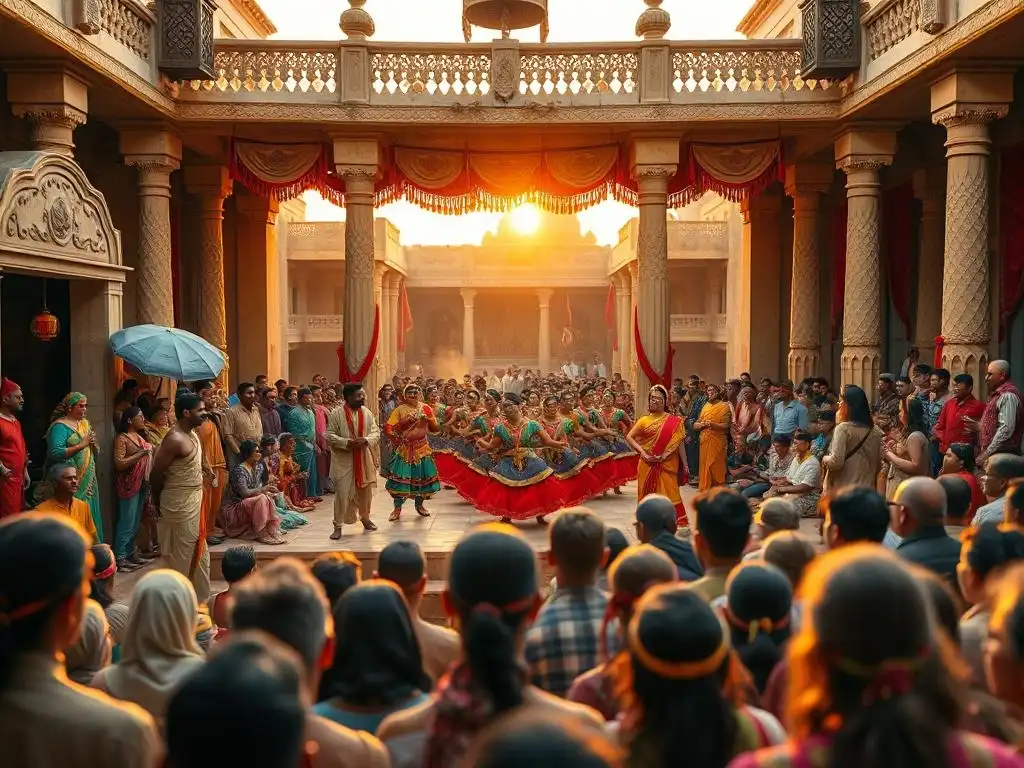
Welcome to Ancient India History, where we embark on a journey through the vibrant tapestry of India’s past! Dive into the enthralling world of theater and discover how cultural exchange between ancient India and other civilizations enriched the art forms we cherish today. From the dramatic performances of the Indus Valley to the theatrical innovations during the Gupta Empire, this exploration will unveil the fascinating connections that shaped a unique cultural landscape. Get ready to unravel the stories behind the stage—your adventure begins here!
- Introduction to Ancient India Theater Cultural Exchange
- Historical Context of Ancient Indian Theater
- Major Ancient Indian Theater Forms
- Cultural Exchange with Neighboring Civilizations
- Key Figures and Their Contributions to Theater
- The Role of Religion and Mythology in Theater
- Preservation and Evolution of Ancient Indian Theater
- Conclusion: The Legacy of Ancient India Theater Cultural Exchange
- References and Further Reading
-
Frequently Asked Questions
- What role did theater play in ancient Indian culture?
- How did cultural exchange influence ancient Indian theater?
- What are some notable theatrical works from ancient India?
- How did religion impact the development of theater in ancient India?
- In what ways did trade routes contribute to the cultural exchange in theater?
- Final Reflection: The Enduring Legacy of Ancient India's Cultural Exchange in Theater
- Unveil the Threads of Cultural Connection!
Introduction to Ancient India Theater Cultural Exchange
The cultural exchange between ancient India and other civilizations significantly shaped the theatrical arts, leading to a rich tapestry of performance traditions that have influenced various cultures across Asia and beyond. This article delves into the intricate dynamics of how ancient Indian theater was not only a reflection of its own diverse heritage but also a vibrant conduit through which ideas, practices, and artistic expressions flowed between civilizations.
From the compelling narratives of the Indus Valley to the sophisticated dramas of the Gupta Empire, the evolution of theater in ancient India showcases the profound impact of cultural interactions, highlighting its role in shaping the identity and artistic landscape of the region. By exploring these exchanges, we gain insights into the universal nature of theater as an art form and its capacity to transcend geographical and cultural boundaries.
Importance of Cultural Exchange in Theater
Cultural exchange is foundational to the development of theater, as it allows for the sharing and blending of ideas, techniques, and narratives. In ancient India, this exchange was crucial for several reasons:
- Enrichment of Artistic Expression:
- Interaction with neighboring cultures introduced new themes and styles, enhancing the emotional depth and complexity of performances.
- Influences from Persian, Greek, and Southeast Asian theater brought diverse storytelling techniques that enriched the narrative structures of Indian drama.
- Development of Performance Techniques:
- The incorporation of different theatrical forms led to the evolution of unique performance styles, such as Natya Shastra, the ancient treatise on performing arts authored by Bharata Muni.
- Cross-pollination of dance, music, and drama from various cultures created a more dynamic and multifaceted theatrical experience.
- Promotion of Dialogue and Understanding:
- Theater served as a platform for social commentary and philosophical discourse, allowing for the exploration of shared human experiences across cultures.
- It fostered intercultural dialogues that promoted tolerance and understanding through the representation of diverse narratives.
Overview of Ancient Indian Theater
Ancient Indian theater boasts a rich history, characterized by its unique forms, styles, and themes. Key elements include:
- Historical Roots:
- The origins of theater in India can be traced back to the Vedic period, with performances originally serving religious and ritualistic purposes.
- The Natya Shastra, composed around 200 BCE to 200 CE, codified various aspects of performance, including gestures, expressions, and stagecraft.
- Forms of Theater:
- Sanskrit Drama: This elevated form of theater emphasized poetic language, intricate plots, and moral themes, often derived from epics like the Mahabharata and Ramayana.
- Folk Theater: Local traditions flourished, showcasing regional stories and customs, with performances that were accessible to the general populace.
- Influence of Other Cultures:
- The Mauryan and Gupta periods marked significant interactions with Hellenistic cultures, leading to the adoption of certain Greek theatrical elements.
- Trade routes facilitated the spread of ideas, with travelers and merchants acting as conduits for cultural exchange, thus enriching Indian theater.
The exploration of ancient Indian theater reveals a vibrant and evolving art form deeply intertwined with the cultural exchanges that shaped its development. Understanding this history not only highlights the significance of these interactions but also underscores the enduring legacy of ancient Indian performance arts in the global cultural landscape.
Historical Context of Ancient Indian Theater
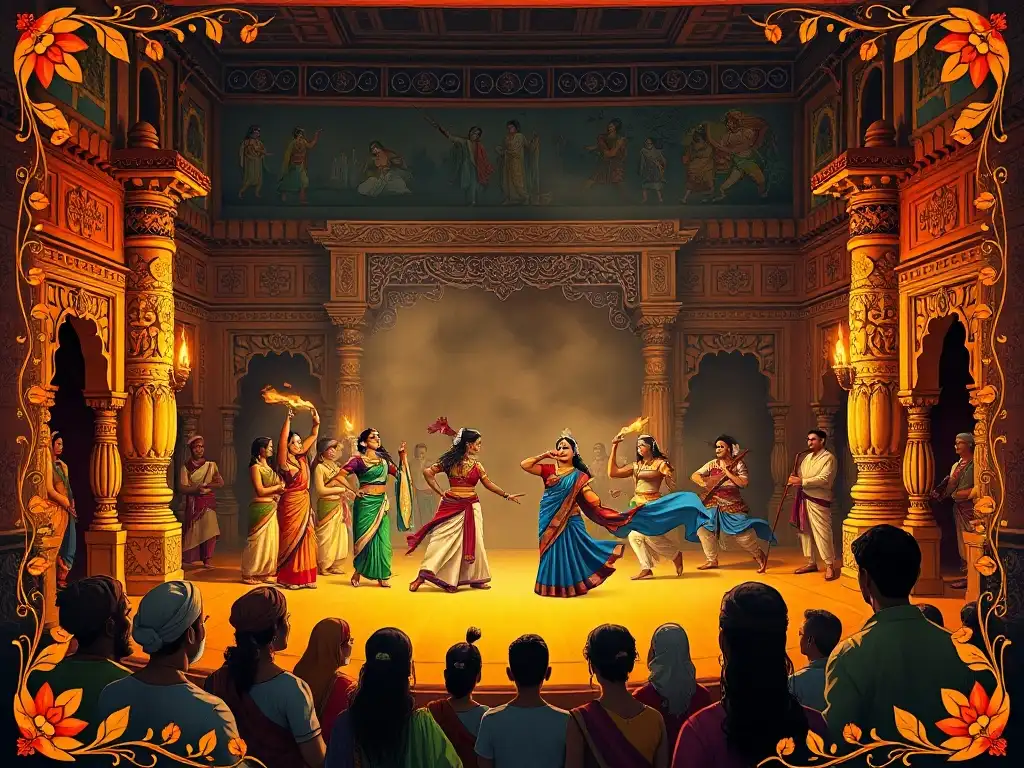
The history of theater in ancient India is deeply intertwined with the cultural, social, and religious practices of the time. This rich tapestry reflects a significant cultural exchange with neighboring civilizations, influencing and being influenced by various artistic forms. Understanding the historical context of ancient Indian theater involves exploring its early roots, the evolution of its forms, and the pivotal empires that shaped its development.
Theater in the Indus Valley Civilization
The Indus Valley Civilization (circa 3300–1300 BCE), one of the world's earliest urban cultures, provides intriguing insights into the origins of theater. While direct evidence of theatrical performances is scarce, archaeological findings suggest that art and ritual were integral to daily life.
- Artifacts: Numerous terracotta figurines and seals depicting dancers and musicians indicate that performance arts may have existed. For instance, the famous "dancing girl" statuette found in Mohenjo-Daro highlights the significance of dance in this civilization.
- Ritualistic Elements: The presence of large public baths and intricate drainage systems implies communal gatherings, possibly for performances and rituals, where storytelling through dance and music could have played a role.
Despite the lack of written records, the early stages of theater in the Indus Valley seem to have laid the groundwork for future dramatic expressions in ancient India.
Influence of Vedic Traditions on Performing Arts
The Vedic period (circa 1500–500 BCE) marked a significant evolution in Indian culture, with profound implications for the performing arts. The Vedas, a collection of ancient texts, not only codified religious practices but also introduced various performance forms.
- Samskaras: The Vedic texts outline numerous life rituals (samskaras) that often included dramatic elements, such as dance and recitation. These performances were essential for religious and social ceremonies.
- Natya Shastra: The seminal text on performing arts, attributed to Bharata Muni, emerged during this period. The Natya Shastra is considered a comprehensive guide to theater, drama, and dance, detailing aspects of performance, including:
- Rasa: The aesthetic experience or emotional flavor conveyed through performance.
- Bhava: The expression of emotions by performers, which is crucial for connecting with the audience.
The Vedic influence established a framework for theatrical expression, merging spirituality with artistic performance and paving the way for future developments in ancient Indian theater.
The Role of the Maurya Empire in Theater Development
The Maurya Empire (circa 322–185 BCE) was a significant period for the flourishing of ancient Indian theater, particularly under the reign of Emperor Ashoka. This era witnessed a notable cultural exchange between India and other civilizations, which enriched theatrical traditions.
- Royal Patronage: The Mauryan rulers were known for their patronage of the arts, including theater. Ashoka's support for Buddhist art and architecture also extended to performances that conveyed moral and spiritual lessons through drama.
- Cultural Synthesis: The Maurya Empire's interactions with Hellenistic cultures, especially after Alexander the Great's invasion, led to the introduction of new artistic influences. This synthesis resulted in the incorporation of Greek theatrical elements, such as:
- Stagecraft: Innovations in stage design and performance techniques.
- Narrative Structures: The use of complex plots and character development.
The Mauryan period not only advanced theatrical practices but also solidified the role of theater as a medium for storytelling and cultural exchange, influencing subsequent dynasties and their approaches to performance arts.
This exploration of ancient Indian theater highlights its dynamic evolution through various historical contexts, emphasizing the rich cultural exchange that defined its development. The influences from the Indus Valley, Vedic traditions, and the Maurya Empire collectively shaped the theatrical landscape, setting the stage for future artistic expressions in India.
Major Ancient Indian Theater Forms
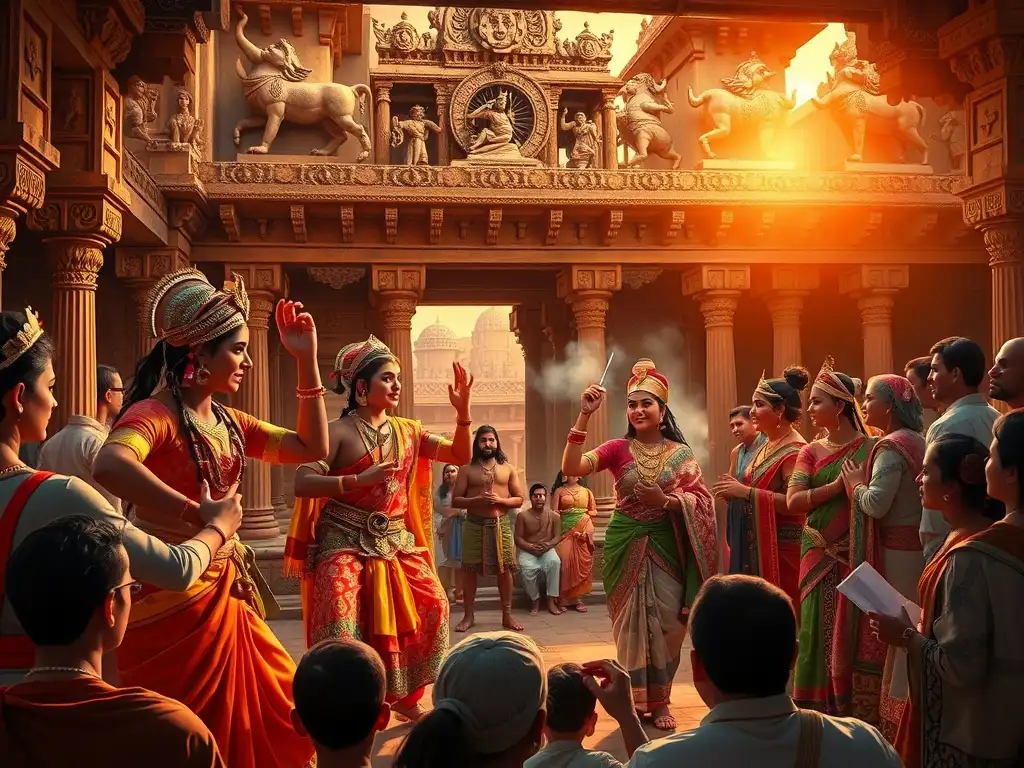
Ancient Indian theater is characterized by its rich tapestry of forms that reflect the cultural, social, and spiritual dynamics of the time. The evolution of theater in India can be traced through various significant movements, styles, and texts that have influenced not only local performance arts but also engaged in cultural exchange with other civilizations. Here, we delve into the major forms of theater that emerged in ancient India.
Natya Shastra: The Foundation of Indian Theater
The Natya Shastra, attributed to the sage Bharata Muni, is a seminal text that lays the foundation for Indian theater and performing arts. Written around 200 BCE to 200 CE, it encompasses various aspects of drama, including performance techniques, stagecraft, and the emotional expressions known as "rasa."
- Key Components of Natya Shastra:
- Natyadharmi vs. Lokadharmi: Distinguishes between the stylized performance (natyadharmi) and the naturalistic representation (lokadharmi).
- Nine Emotions (Navarasa): The text outlines the nine primary emotions that should be evoked in performance:
- Shringara (love)
- Hasya (laughter)
- Karuna (compassion)
- Raudra (anger)
- Veera (heroism)
- Bhayanaka (fear)
- Bibhatsa (disgust)
- Adbhuta (wonder)
- Shanta (peace)
The Natya Shastra not only established the theoretical framework for Indian theater but also facilitated cultural exchanges, as its principles influenced neighboring regions, leading to the development of diverse theatrical traditions across Asia.
Classical Dance and Drama: A Syncretic Art Form
Classical dance forms in India, such as Bharatanatyam, Kathak, Odissi, and Kuchipudi, are intrinsically linked to theater. These art forms are not merely dance; they embody storytelling and dramatic expression. The integration of dance and drama exemplifies a syncretic art form that has evolved through interactions with other cultures.
- Influences of Other Civilizations:
- Persian and Mughal Contributions: The Mughal Empire introduced new themes and narrative styles, enriching classical theater and dance. For example, the Raas Leela performances incorporated Persian storytelling techniques.
- Buddhist and Jain Traditions: These religions contributed to the narratives and moral themes, often depicted in dance dramas, highlighting the shared cultural ethos.
The blending of various cultural elements in classical dance and drama not only enriched Indian theatrical traditions but also facilitated cultural exchange with regions such as Southeast Asia, where similar forms of performance arts adapted Indian influences.
Folk Theater Traditions Across Ancient India
Folk theater in ancient India represents the grassroots expression of cultural narratives and local traditions. Each region developed its unique style, often reflecting the local dialects, customs, and religious practices.
- Notable Folk Theater Forms:
- Ramlila: A dramatic reenactment of the Ramayana, Ramlila engages communities during festivals, highlighting the cultural significance of storytelling.
- Tamasha: Originating from Maharashtra, this folk theater incorporates music, dance, and humor, addressing social issues while entertaining audiences.
- Yakshagana: A traditional theater form from Karnataka, Yakshagana combines elements of dance, music, and dialogue, often depicting mythological stories.
These folk traditions demonstrate the diverse landscape of ancient Indian theater, showcasing how local communities have engaged in cultural exchange through performance. The adaptability of these forms reflects the ongoing dialogue between different regions and cultures, preserving ancient narratives while fostering new interpretations.
The exploration of ancient Indian theater forms illustrates the profound impact of cultural exchange between ancient India and other civilizations. From the foundational principles outlined in the Natya Shastra to the vibrant expressions found in classical and folk traditions, the legacy of ancient Indian theater continues to resonate today.
Cultural Exchange with Neighboring Civilizations
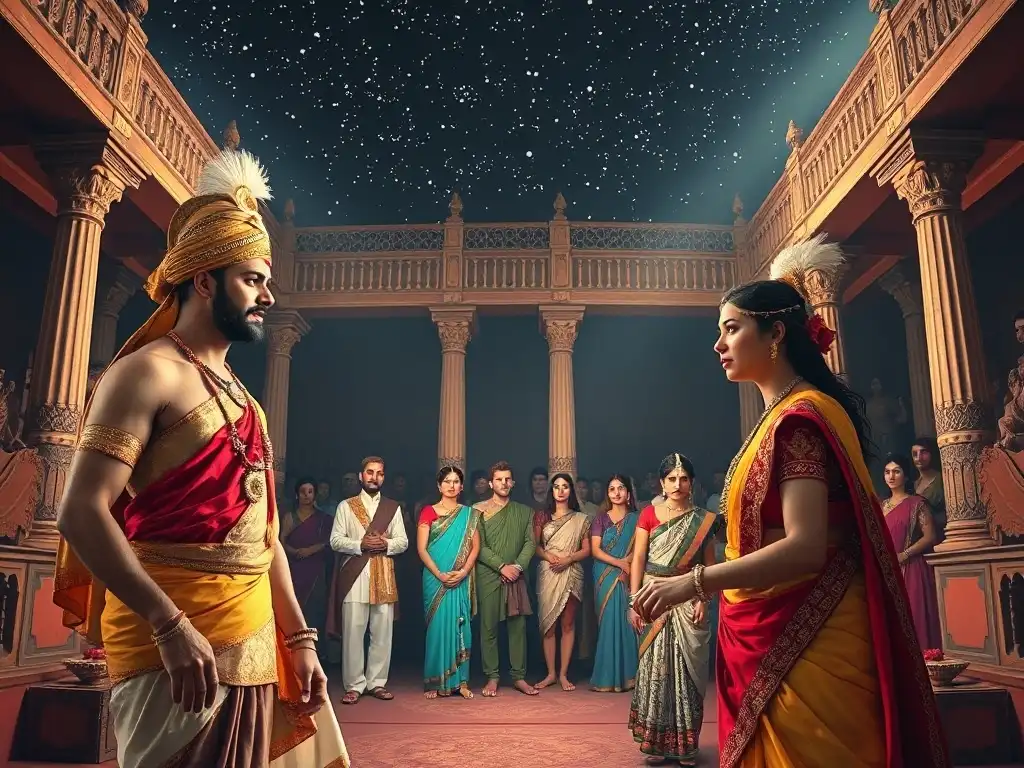
Interaction with Persian Theater Traditions
The cultural exchange between ancient India and Persia significantly influenced the development of Indian theater. During the Achaemenid Empire (circa 550–330 BCE), interactions intensified due to trade routes and political alliances. Persian theater, characterized by its elaborate storytelling and performance traditions, found a receptive audience in India.
Key elements of Persian theater that made their way into Indian performing arts include:
- Narrative Techniques: Persian storytelling often involved intricate plots and character development, which were adopted in various Indian theatrical forms.
- Costume and Makeup: The elaborate costumes and makeup used in Persian performances inspired Indian artisans, leading to the evolution of visually stunning theatrical presentations in plays such as Rama Lila and Krishna Lila.
- Musical Influences: Persian music styles blended with local Indian forms, enriching the auditory experience of theater.
Thus, the interaction with Persian theater traditions helped shape the thematic and stylistic richness of ancient Indian theater.
Influence of Greek Drama on Indian Theater
The arrival of Greek culture in India, particularly during the time of Alexander the Great and the subsequent Indo-Greek kingdoms, marked a pivotal moment for Indian theater. Greek drama, with its structured forms and compelling narratives, left an indelible mark on Indian performing arts.
Key aspects of Greek influence include:
- Tragic and Comedic Elements: The introduction of tragedy and comedy from Greek theater encouraged Indian playwrights to explore complex themes, leading to the creation of sophisticated dramas such as those by Kalidasa and Bhasa.
- Theatrical Structure: Greek theater’s use of acts and scenes influenced the format of Indian plays, fostering a more organized approach to storytelling.
- Philosophical Themes: Greek philosophy and ethical dilemmas found resonance in Indian narratives, prompting playwrights to delve into moral and philosophical questions, enhancing the depth of characters and plots.
The cross-cultural engagement with Greek drama significantly diversified the narrative styles and themes present in ancient Indian theater.
The Impact of Southeast Asian Cultures on Indian Performing Arts
The cultural exchanges between ancient India and Southeast Asia were profound and transformative, particularly in the realm of performing arts. Indian merchants and pilgrims traveled to Southeast Asia, bringing with them cultural practices that influenced local theatrical traditions.
The impact of Southeast Asian cultures on Indian performing arts can be observed in several ways:
- Dance Forms: Traditional dance forms in Southeast Asia, such as Balinese and Khmer dances, were influenced by Indian classical dance traditions, reflecting shared mythological themes and storytelling techniques.
- Theatrical Techniques: The integration of shadow puppetry, particularly in Indonesia and Malaysia, showcases how Indian storytelling methods were adapted and reinterpreted in Southeast Asian contexts.
- Religious Narratives: The spread of Hinduism and Buddhism in Southeast Asia led to the incorporation of Indian mythological stories into local theater, creating a rich tapestry of cultural narratives that blended elements from both regions.
The cultural exchange between ancient India and its neighboring civilizations, including Persia, Greece, and Southeast Asia, not only enriched Indian theater but also fostered a diverse and dynamic performing arts landscape that continues to influence contemporary practices.
Key Figures and Their Contributions to Theater
Kalidasa: The Poet-Playwright
Kalidasa, regarded as one of the greatest poets and playwrights of ancient India, made significant contributions to the evolution of theater, particularly in the realm of Sanskrit drama. His works, notable for their lyrical beauty and intricate characterizations, reflect a profound understanding of human emotions and relationships.
Kalidasa's most famous plays, such as "Shakuntala" and "Malavikagnimitram," exemplify his mastery of language and dramatic structure.
- "Shakuntala" - This play tells the poignant love story between King Dushyanta and Shakuntala, a tale rich in themes of love, loss, and destiny.
- "Malavikagnimitram" - This romantic comedy showcases the cleverness of love, where King Agnimitra falls in love with Malavika, a beautiful maid, resulting in comedic misunderstandings and ultimately, a joyous union.
Kalidasa’s works not only influenced Indian theater but also left an indelible mark on the theatrical traditions of other cultures, showcasing the impact of ancient India theater cultural exchange. His poetic dialogues and vivid imagery continue to inspire playwrights and performers, establishing a legacy that transcends time.
Bhasa: The Pioneer of Sanskrit Drama
Bhasa is another monumental figure in the history of ancient Indian theater, often hailed as the pioneer of Sanskrit drama. His contributions laid the groundwork for subsequent playwrights, including Kalidasa. Bhasa's plays are characterized by their innovative use of narrative techniques and the exploration of themes such as love, valor, and moral dilemmas.
Some of his notable works include:
- "Svapnavasavadattam" – A tale of love and intrigue that revolves around the dream of the protagonist, Vasavadatta, and her quest for reunion with her beloved.
- "Pancharatra" – This play explores the conflicts and resolutions stemming from familial relationships and societal expectations.
Bhasa’s unique style often involves a blend of dialogue and monologue, which not only deepens character development but also enhances emotional engagement with the audience. His influence on the ancient India theater cultural exchange is observable in the way his narratives have been adapted and reinterpreted across different cultures and eras.
Contributions of Other Notable Playwrights
In addition to Kalidasa and Bhasa, several other playwrights significantly contributed to the rich tapestry of ancient Indian theater, each bringing their unique perspectives and themes.
- Harsha: Known for his plays like "Nagananda", which depicts the love story of a prince and a serpent princess, Harsha’s works often blend elements of spirituality and morality, reflecting the complex societal norms of his time.
- Bhavabhuti: With masterpieces like "Malatimadhava," Bhavabhuti's narratives are marked by their emotional depth and philosophical undertones. His plays often tackle themes of love and sacrifice, showcasing the interconnectedness of human experiences.
- Vishakhadatta: A lesser-known yet influential playwright, Vishakhadatta's work "Mudrarakshasa" highlights political intrigue and strategy in ancient India, demonstrating the role of theater as a medium for social commentary.
These playwrights not only enriched the ancient India theater cultural exchange but also facilitated the cross-pollination of ideas with neighboring cultures, influencing the evolution of theatrical traditions beyond the Indian subcontinent. Their collective contributions underscore the significance of theater as a vital art form in ancient India, fostering a legacy that continues to inspire contemporary performing arts.
The Role of Religion and Mythology in Theater
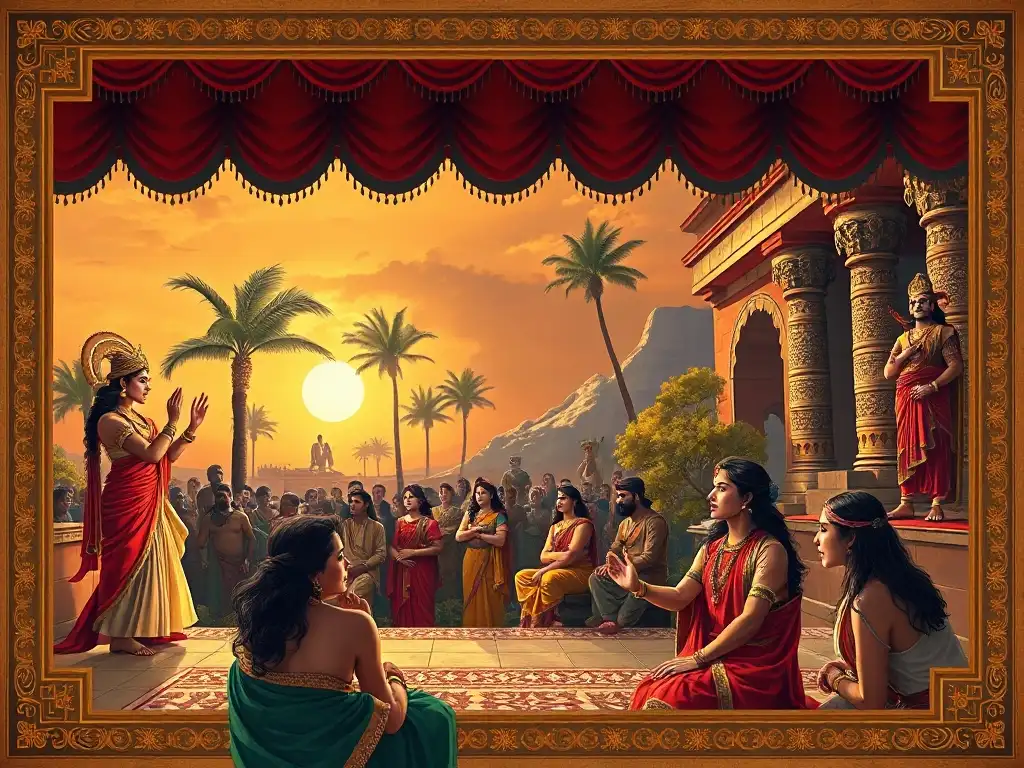
The interplay between religion and mythology has been a significant driving force in shaping ancient Indian theater. This relationship is evident in the thematic content, performance styles, and audience engagement of theatrical productions. The sacred narratives from Hinduism and Buddhism provide a rich tapestry of stories and characters that have been interpreted and reinterpreted through various theatrical forms.
How Hindu Mythology Shaped Indian Theater
Hindu mythology, with its vast pantheon of gods, goddesses, and epic narratives, has profoundly influenced Indian theater. The Natyashastra, an ancient treatise on performing arts attributed to Bharata Muni, outlines the principles of drama, dance, and music, emphasizing the importance of mythological themes. The characters from Hindu epics like the Mahabharata and Ramayana serve as archetypes that resonate with audiences through their moral dilemmas and divine interventions.
- Characterization and Archetypes:
- Divine Characters: Many plays feature gods such as Vishnu, Shiva, and Durga, which not only convey religious devotion but also explore human experiences.
- Heroic Figures: Characters like Rama and Arjuna embody virtues such as duty and righteousness, making them relatable to audiences and serving as moral exemplars.
- Narrative Structures:
- Mythical Frameworks: The plots often draw directly from mythological stories, offering audiences a familiar context that enhances emotional engagement.
- Moral Lessons: The narratives frequently impart moral and ethical teachings, reflecting the societal values of the time.
- Ritualistic Elements:
- Performance as Worship: Many theatrical performances were originally conducted as part of religious rituals, blurring the lines between worship and entertainment.
- Use of Symbols: Costumes, props, and gestures are imbued with symbolic meanings derived from mythology, enriching the visual and emotional impact of the performance.
The Influence of Buddhism on Performance Arts
The influence of Buddhism on ancient Indian theater is marked by the integration of Buddhist themes and values, which offered a different perspective compared to Hindu traditions. The emergence of Buddhist performance arts can be traced back to the 3rd century BCE, primarily during the reign of Emperor Ashoka, who promoted Buddhist teachings through various mediums, including theater.
- Themes of Compassion and Non-Violence:
- Moral Narratives: Buddhist plays often emphasize compassion, selflessness, and the transient nature of life, appealing to the audience’s ethical sensibilities.
- Character Development: Unlike the often heroic figures of Hindu mythology, Buddhist characters may represent common people facing moral challenges, making the stories more accessible.
- Dramatic Techniques:
- Use of Dialogue: Buddhist theater often includes dialogues that encourage philosophical discussions, allowing audiences to engage with complex ideas.
- Emphasis on Inner Conflict: The exploration of personal dilemmas and introspection is a hallmark of Buddhist performance arts, reflecting the teachings of the Buddha on self-awareness and enlightenment.
- Cultural Exchange:
- Integration with Local Traditions: As Buddhism spread, it absorbed local customs and theatrical practices, leading to a rich tapestry of performances that reflect diverse influences.
- Influence on Other Cultures: The theater forms influenced by Buddhism, such as Jataka tales, traveled beyond India, impacting theatrical traditions in other regions, including Southeast Asia.
Theatrical Representations of Ancient Epics: Mahabharata and Ramayana
The Mahabharata and Ramayana are two of the most significant epics in ancient Indian literature, and their theatrical representations have played a vital role in the cultural exchange between ancient India and other civilizations. These epics are not just stories; they are complex narratives that delve into themes of dharma (duty), ethics, and the human condition.
- Performance Traditions:
- Shadow Puppetry: In regions like Tamil Nadu, shadow puppetry has been used to narrate stories from the epics, blending visual arts with storytelling.
- Dance and Drama: Classical dance forms such as Kathakali and Bharatanatyam incorporate episodes from the epics, demonstrating the synergy between dance and narrative.
- Cultural Resonance:
- Adaptations Across Cultures: The themes and characters of the Mahabharata and Ramayana have transcended Indian borders, inspiring adaptations in various cultures, including Indonesian Wayang Kulit and Thai Khon.
- Intermediary Role: These adaptations have facilitated cultural exchanges, allowing different civilizations to interpret and incorporate elements of Indian epics into their own theatrical traditions.
- Contemporary Relevance:
- Modern Interpretations: Today, the stories from these epics continue to inspire contemporary theater, with modern playwrights reimagining traditional narratives to address current societal issues.
- Global Influence: The universal themes of the Mahabharata and Ramayana resonate with audiences worldwide, fostering a dialogue about morality, justice, and human relationships in various theatrical contexts.
The cultural exchange between ancient India and other civilizations through theater is a testament to the enduring power of storytelling, where religion and mythology play pivotal roles in shaping narratives that transcend time and geography. The rich traditions established in ancient India continue to influence and inspire modern performance arts across the globe.
Preservation and Evolution of Ancient Indian Theater
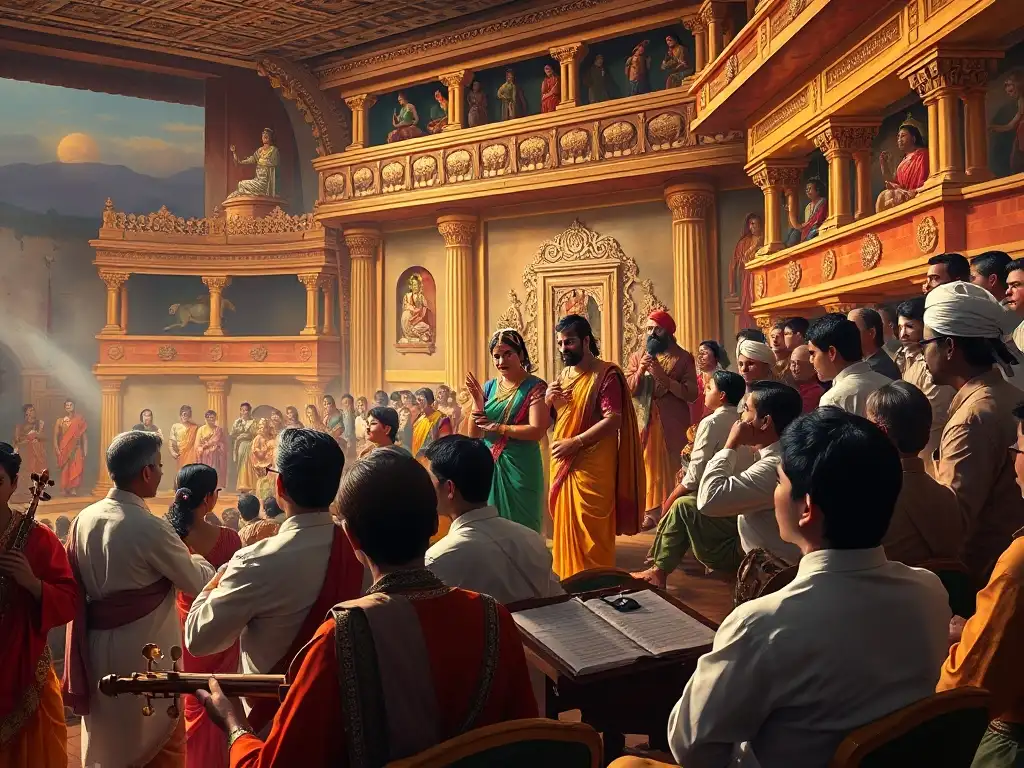
The preservation and evolution of ancient Indian theater is a testament to the resilience and adaptability of cultural expressions in the face of changing influences. Theater in ancient India was not merely a form of entertainment; it was a vital medium for storytelling, religious expression, and social commentary.
How Cultural Exchange Facilitated Adaptation
Cultural exchange played a pivotal role in the evolution of ancient Indian theater. The interaction with neighboring civilizations, such as the Greeks, Persians, and later the Chinese, introduced new themes, styles, and techniques. For example:
- Influence of Greek Tragedy: The arrival of Greek traders and intellectuals brought the elements of Greek tragedy into Indian narratives. This was evident in the incorporation of dramatic structures and themes of fate and morality, which enriched the existing forms of Indian theater.
- Persian Storytelling: The Persian influence, particularly during the Maurya and Gupta empires, introduced narrative styles that blended poetry with performance, leading to the emergence of new genres like Natya Shastra and Rasa Lila. This blending created a more refined and thematic approach to storytelling.
- Cross-Cultural Collaborations: Festivals and trade routes served as melting pots for ideas. For instance, interactions during trade festivals led to the integration of music and dance into theatrical performances, creating a more immersive experience for audiences.
The adaptation of ancient Indian theater was thus not a linear process but rather a dynamic interplay of diverse cultural elements, leading to a rich tapestry of performance arts that resonated with various audiences.
The Transition of Ancient Theater to Medieval and Modern Forms
The transition from ancient to medieval and eventually modern forms of Indian theater illustrates the ongoing evolution of performance arts. This transformation can be characterized by several key developments:
- Rise of Regional Styles: As different regions in India began to develop their unique theatrical traditions, such as Kathakali in Kerala and Kabuki in Japan, these styles retained core elements of ancient Indian theater while incorporating local myths and stories.
- Influence of Colonialism: The British colonial period introduced Western theatrical forms, which led to a hybridization of styles. This was evident in the adaptation of Shakespearean plays into Indian contexts, creating performances that resonated with both traditional and contemporary audiences.
- Modern Adaptations: Today, Indian theater continues to draw from its ancient roots while embracing modern themes and technologies. The influence of cinema and digital media has also transformed how theater is performed and perceived, leading to innovative storytelling methods that appeal to younger generations.
This transition highlights the fluidity of cultural expressions, where ancient traditions are preserved yet evolve to remain relevant in contemporary society.
The Role of Oral Traditions in Sustaining Theater Arts
Oral traditions have been instrumental in sustaining the theater arts throughout ancient and modern India. These traditions served as the primary means of sharing stories, moral lessons, and cultural values before written forms became widespread. Key aspects include:
- Storytelling Techniques: Oral traditions employed various storytelling techniques, such as repetition and improvisation, which were critical in engaging audiences and ensuring the transmission of narratives through generations.
- Community Involvement: Theater performances often involved the community, making them participatory events. This communal aspect not only preserved the narratives but also strengthened social bonds, allowing performances to act as a reflection of societal issues and aspirations.
- Preservation of Language and Dialects: Oral traditions have played a crucial role in preserving regional languages and dialects, which are often integral to local theater forms. This linguistic diversity enriches the cultural fabric of theater, allowing for a multitude of voices and perspectives.
The preservation and evolution of ancient Indian theater are deeply intertwined with cultural exchanges, adaptations, and the resilient nature of oral traditions. This rich history continues to influence the vibrant landscape of Indian theater today, ensuring that it remains a vital aspect of cultural expression.
Conclusion: The Legacy of Ancient India Theater Cultural Exchange
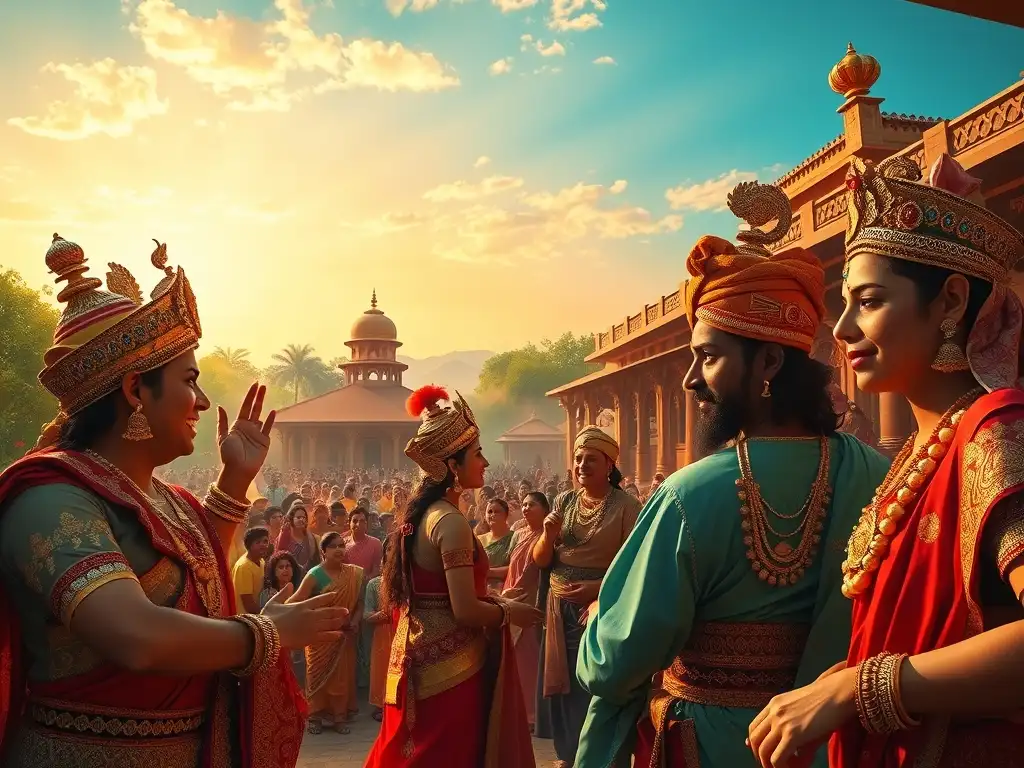
The cultural exchange between ancient India and other civilizations significantly shaped the development of theater as an art form. The myriad influences from neighboring regions, along with the rich traditions of storytelling and performance that originated in India, have created a unique synthesis that continues to resonate today. Ancient India's theater cultural exchange was not merely a one-way process; it involved mutual influences that enriched the theatrical practices across various cultures.
The legacy of this exchange can be seen in the thematic depth, stylistic diversity, and performance techniques that characterize contemporary theater. The incorporation of Indian narratives and performance styles into global theater has resulted in a fusion of artistic expressions, showcasing the enduring impact of ancient traditions. From the use of elaborate costumes and intricate storytelling to the incorporation of music and dance, the influence of ancient Indian theater is palpable in various forms of performance arts worldwide.
Lasting Impact on Contemporary Theater Practices
The theater practices of ancient India, particularly those stemming from the Natya Shastra—a seminal text on drama and performance—have laid foundational principles for contemporary theater. Techniques such as Mudras (hand gestures), Bhava (emotions), and Raga (melody) continue to be integral in modern performances, not only in India but across the globe.
Examples of this lasting impact include:
- Adaptation of Indian Epics: Many contemporary plays and performances draw inspiration from ancient Indian epics like the Mahabharata and Ramayana, reinterpreting these narratives for modern audiences.
- Cross-Cultural Collaborations: Indian theater artists frequently collaborate with international performers, blending traditional Indian techniques with Western theatrical practices. This has led to innovative productions that celebrate diversity while highlighting shared human experiences.
- Festivals and Performances: International theater festivals often feature Indian performances, facilitating further cultural exchange. This representation helps promote a deeper understanding of ancient Indian theater traditions and their relevance today.
Overall, the lasting impact of ancient Indian theater cultural exchange is evident in how it continues to inspire and transform contemporary theater practices, making them more vibrant and globally interconnected.
Future Directions for Research in Ancient Indian Theater
As scholars and practitioners continue to explore the vast domain of ancient Indian theater, several promising directions for research emerge:
- Interdisciplinary Studies: Combining insights from anthropology, history, and performance studies can yield a richer understanding of how ancient Indian theater interacted with various cultural contexts.
- Digital Archives and Preservation: There is a growing need to document and digitize ancient texts, scripts, and performances, which may provide new insights into long-forgotten practices and regional variations.
- Global Comparative Analysis: By comparing ancient Indian theater with other global theatrical traditions, researchers can discover parallels and divergences, enhancing our understanding of universal themes in storytelling.
- Community-Based Research: Engaging with local communities that preserve traditional performance practices can provide valuable perspectives on the continuity and evolution of ancient theater forms.
The study of ancient India theater cultural exchange not only sheds light on the historical interplay between civilizations but also offers valuable insights into contemporary artistic expressions and future research opportunities. The rich tapestry of influences continues to inspire today's artists, ensuring that the legacy of ancient Indian theater remains vibrant and relevant.
References and Further Reading
Suggested Books on Ancient Indian Theater
-
"Theatre in Ancient India" by Kapila Vatsyayan
This seminal work delves into the intricacies of ancient Indian theater, examining its origins, evolution, and the various forms it took throughout different periods. Vatsyayan's comprehensive analysis provides readers with a deeper understanding of the cultural context and the significance of theater in ancient India.
-
"The Natyashastra" by Bharata Muni
Often regarded as the foundational text for Indian classical arts, this ancient treatise provides crucial insights into the principles of drama, performance, and aesthetics in ancient Indian theater. The Natyashastra remains an essential reference for anyone interested in the theoretical and practical aspects of Indian performing arts.
-
"Indian Theatre: Traditions of Performance" by Ananda K. Coomaraswamy
Coomaraswamy's exploration of Indian theater emphasizes the interplay between various forms of art, including dance and music, within the theatrical tradition. This book highlights the cultural exchange that shaped these art forms over centuries.
-
"The Cultural Heritage of India: Volume III - The Classical Age" by Haridas Bhattacharya
This volume provides a broader historical context, tracing the evolution of various art forms, including theater, during the classical period of Indian history. It discusses how cultural exchanges with other civilizations influenced Indian theatrical practices.
Articles on Cultural Exchange in Performing Arts
-
"Cultural Interactions in Ancient India: A Study of Theatre and Performance"
This article examines the dynamic exchanges of ideas and practices between ancient Indian theater and other global traditions. It highlights specific instances of cultural blending, particularly with the Greek and Persian influences on Indian performance arts.
-
"The Impact of Buddhism on Indian Theater"
This scholarly piece explores how the spread of Buddhism facilitated cultural exchanges that enriched Indian theater. It discusses the integration of Buddhist themes and narratives into performance arts, showcasing how these exchanges influenced the dramatic traditions.
-
"Trade Routes and Their Influence on Cultural Exchanges in Ancient India"
This article analyzes the role of trade routes in fostering cultural exchange, particularly focusing on how these routes affected the dissemination of theatrical practices across borders. It provides examples of how interactions with other civilizations led to the evolution of Indian theater.
-
"The Role of Festivals in Cultural Exchange: Insights from Ancient India"
This article highlights the significance of festivals as a medium for cultural exchange, particularly in performing arts. It discusses how theatrical performances during these events served as platforms for the integration of diverse cultural elements from neighboring regions.
Frequently Asked Questions
What role did theater play in ancient Indian culture?
Theater served as a vital form of entertainment and storytelling, reflecting the values, beliefs, and social dynamics of ancient Indian society.
How did cultural exchange influence ancient Indian theater?
Cultural exchange with various civilizations, including the Greeks and Persians, enriched ancient Indian theater by introducing new themes, styles, and techniques.
What are some notable theatrical works from ancient India?
Notable works include the Natya Shastra, a foundational text on drama and performance, and famous plays like Shakuntala by Kalidasa, showcasing the depth of ancient Indian theater.
How did religion impact the development of theater in ancient India?
Religion significantly influenced ancient Indian theater, as many performances were centered around mythological themes and religious rituals, fostering a connection between art and spirituality.
In what ways did trade routes contribute to the cultural exchange in theater?
Trade routes facilitated not only the exchange of goods but also ideas and artistic practices, allowing for a blending of theatrical traditions between ancient India and neighboring civilizations.
Final Reflection: The Enduring Legacy of Ancient India's Cultural Exchange in Theater
The exploration of Ancient India's theater cultural exchange reveals a rich tapestry of artistic collaboration that continues to resonate in our modern world. As we delve into the historical interactions between ancient Indian theater and other civilizations, we uncover a profound truth: the arts have always served as a bridge, connecting diverse cultures and fostering understanding. This timeless relevance underscores the importance of recognizing and celebrating our shared artistic heritage.
The influence of ancient Indian theater extends far beyond its historical context, shaping the cultural and social landscapes of many societies. This exchange has not only enriched the theatrical traditions of various regions but has also fostered a sense of unity among disparate cultures. As playwright and actor Peter Brook once said, The theater is a place of meeting, a place of exchange, a place of understanding.
This sentiment captures the essence of how ancient Indian theater has inspired countless artists and thinkers, encouraging them to draw from its depths to create new forms of expression.
As we reflect on the lessons of cultural exchange highlighted in this article, I invite you to consider how you can contribute to this ongoing dialogue. In a world that often feels divided, the arts remain a powerful tool for connection and empathy. Embrace the spirit of collaboration and exploration in your own life, whether through participating in local theater, engaging with diverse artistic traditions, or simply appreciating the rich cultural narratives that surround you. Let us honor the legacy of ancient India's theater by fostering a future where creativity knows no boundaries and cultural exchange flourishes.
Unveil the Threads of Cultural Connection!
Thank you for diving into the fascinating world of ancient Indian theater and its vibrant exchanges with other civilizations. Your curiosity adds to our collective understanding of this rich history! Now, let's take a step forward together and explore how you can further immerse yourself in this remarkable cultural tapestry.
- Discover a local theater performance that celebrates diverse global influences – experience the art form in action!
- Share this article with friends and fellow history enthusiasts to spark conversations about the cultural exchanges that have shaped our world.
- Join our online community focused on ancient Indian history to connect with other learners and share insights on how theater reflects societal changes throughout time.
What aspect of this cultural exchange intrigues you the most, and how do you think it continues to influence contemporary theater today?