
The Gupta Empire’s Contributions to Philosophy: The Thinkers and Their Ideas


Welcome to Ancient India History, where we embark on a captivating journey through the rich tapestry of ancient Indian civilizations. Dive deep into the remarkable Gupta Empire and discover how its philosophers shaped the intellectual landscape of their time. What groundbreaking ideas emerged from this era, and who were the brilliant minds behind them? Join us as we explore the philosophy contributions that not only influenced their society but continue to resonate through the ages. Your adventure into the remarkable world of ancient thought begins here—read on to unveil the wisdom of the Gupta Empire!

Introduction to the Gupta Empire Philosophy Contributions
The Gupta Empire, often heralded as the Golden Age of India, was a period marked by remarkable advancements across various fields, particularly in philosophy. Flourishing from approximately 320 to 550 CE, the Gupta period witnessed an intellectual renaissance that laid the groundwork for future philosophical thought in India and beyond. This era was characterized by significant contributions from a myriad of thinkers who explored profound questions regarding existence, ethics, metaphysics, and the nature of knowledge. The philosophy that emerged during this time not only influenced Indian thought but also left an indelible mark on global philosophical traditions.
In this article, we will delve into the contributions of the Gupta Empire to philosophy, examining the key thinkers of the time and their groundbreaking ideas. By understanding these contributions, one can appreciate how the Gupta Empire’s intellectual legacy continues to resonate in contemporary philosophical discourse.
Overview of the Gupta Empire and Its Golden Age
The Gupta Empire was established by Maharaja Sri Gupta and is recognized for unifying much of northern India under a centralized governance. This period is often celebrated for its:
- Political Stability: The Gupta rulers, including Chandragupta I and Samudragupta, implemented effective administrative systems that promoted peace and prosperity.
- Cultural Flourishing: Art, literature, and science thrived, with notable works emerging in various domains, including the famed play "Shakuntala" by Kalidasa.
- Scientific Innovations: Scholars like Aryabhata made significant contributions to mathematics and astronomy, which were interwoven with philosophical inquiries.
The Golden Age ethos fostered an environment where philosophical thought could flourish, leading to the emergence of various schools of thought that explored ethics, the nature of reality, and the purpose of life.
Importance of Philosophy in Ancient Indian Civilization
Philosophy in ancient India was not merely an academic pursuit; it was deeply intertwined with spirituality and daily life. Key aspects include:
- Integration with Religion: Philosophical ideas often emerged from religious texts such as the Vedas and Upanishads, influencing and being influenced by spiritual practices.
- Ethical Frameworks: Philosophers contributed to the development of moral principles that guided personal and societal conduct, emphasizing concepts like dharma (duty) and karma (action and its consequences).
- Metaphysical Exploration: The quest for understanding the nature of reality and existence led to profound philosophical systems, including Advaita Vedanta and Samkhya.
This rich philosophical tradition provided a foundation for the thinkers of the Gupta Empire, who built upon existing ideas and introduced new perspectives.
Key Philosophers of the Gupta Empire

The Gupta Empire was home to several influential philosophers whose works and ideas shaped the philosophical landscape of the time. Here are a few notable figures:
- Vatsyayana: Known for his work Kama Sutra, Vatsyayana integrated philosophy with practical ethics, discussing the nature of love, relationships, and societal norms.
- Aryabhata: While primarily celebrated as a mathematician and astronomer, Aryabhata’s philosophical inquiries into the nature of time and space contributed to a broader understanding of the cosmos.
- Buddhagupta: A key figure in Buddhist philosophy, he explored concepts of emptiness and the nature of consciousness, providing a counterpoint to more materialistic views.
The Role of Thinkers in Shaping Gupta Philosophy
The thinkers of the Gupta Empire played an essential role in the evolution of philosophical thought. Their contributions can be summarized as follows:
- Synthesis of Ideas: By engaging with earlier philosophical traditions, Gupta philosophers synthesized various schools of thought, creating a more comprehensive understanding of reality.
- Practical Applications: Many thinkers emphasized the importance of applying philosophical concepts to everyday life, thus bridging the gap between theory and practice.
- Influence on Future Generations: The ideas developed during this period influenced subsequent philosophical movements, shaping the discourse in medieval and modern India.
Through their innovative ideas and collaborative spirit, the philosophers of the Gupta Empire significantly advanced the landscape of Indian philosophy, ensuring its enduring relevance throughout history.
Major Philosophical Ideas Emerged During the Gupta Period
The Gupta Empire, often regarded as the Golden Age of India, witnessed a flourishing of philosophical thought that significantly shaped Indian intellectual traditions. It was during this period that numerous schools of philosophy emerged, each contributing unique perspectives on metaphysics, epistemology, and ethics. The thinkers of the Gupta era not only explored ancient texts but also engaged in dialogues that would influence future generations. The period saw the consolidation of ideas from earlier traditions, as well as the development of new frameworks for understanding reality and existence.
Several major philosophical ideas were prominent during this time, including Advaita Vedanta, Nyaya, and Samkhya. These philosophies addressed fundamental questions about the nature of self, reality, and the path to knowledge, setting the stage for debates that would persist in Indian philosophy for centuries. The interplay between these philosophical systems and their responses to one another contributed to a rich tapestry of thought that characterized the Gupta period.
Advaita Vedanta: Non-Dualism and Its Philosophical Implications
Advaita Vedanta, a non-dualist school of thought, emerged as a significant philosophical system during the Gupta Empire. It was primarily popularized by the philosopher Adi Shankaracharya, who lived in the early 8th century, although his ideas were rooted in earlier texts like the Upanishads. Advaita posits that the ultimate reality, Brahman, is the singular essence of the universe, and that the individual soul (Atman) is fundamentally identical to Brahman.
This philosophical stance leads to profound implications regarding the nature of existence and the self. It asserts that the perceived duality of the world is an illusion (Maya), and liberation (Moksha) is achieved through the realization of one's true nature. The teachings of Advaita Vedanta emphasize meditation, ethical living, and the study of scriptures as pathways to enlightenment, encouraging seekers to transcend the limitations of the physical world.
Nyaya and Logic: The Quest for Knowledge and Truth
The Nyaya school, with its emphasis on logic and epistemology, played an essential role in Gupta philosophy. Founded by the ancient philosopher Gautama, Nyaya sought to establish a systematic approach to understanding reality through rigorous reasoning and debate. During the Gupta Empire, the Nyaya thinkers expanded upon earlier texts, developing complex theories of inference, perception, and testimony as valid sources of knowledge.
Nyaya philosophy is characterized by its insistence on the importance of logical analysis in comprehending truth. The Nyaya Sutras outline a framework for argumentation that remains influential in Indian philosophy. By focusing on the pursuit of knowledge and the elimination of error, Nyaya contributed significantly to the intellectual discourse of the time and laid the groundwork for future philosophical inquiry.
Samkhya Philosophy: Understanding the Nature of Reality
Samkhya, one of the oldest philosophical systems in India, gained prominence during the Gupta Empire as it provided a dualistic framework for understanding reality. Samkhya posits that existence consists of two fundamental principles: Purusha (consciousness) and Prakriti (matter). This dualism distinguishes between the observer and the observed, leading to an exploration of the nature of reality and the process of evolution.
The Samkhya system emphasizes the concept of evolution in the material world, with Prakriti manifesting into the myriad forms of life through a series of transformations. This philosophical stance encourages individuals to discern the difference between the eternal self (Purusha) and the transient material world (Prakriti). The teachings of Samkhya influenced later schools, particularly Yoga, which incorporates its principles into practices aimed at achieving spiritual liberation.
The Influence of Gupta Philosophy on Later Indian Thought
The philosophical developments during the Gupta Empire had a profound and lasting impact on subsequent Indian thought. The ideas that emerged during this period not only shaped the trajectory of Indian philosophy but also influenced cultural and religious practices across the subcontinent.
Impact on Medieval Indian Philosophers
The philosophies of the Gupta period served as a foundation for medieval Indian thinkers, who further engaged with and expanded upon these ideas. Philosophers such as Ramanuja and Madhva built upon Advaita Vedanta, introducing the concepts of qualified non-dualism and dualism, respectively. The logical frameworks established by Nyaya were also instrumental in the works of later philosophers, who employed its principles to articulate their own viewpoints.
This continuous dialogue among philosophers enriched the intellectual landscape of India, resulting in diverse interpretations and adaptations of earlier ideas. The synthesis of these philosophical traditions fostered a dynamic environment for spiritual and intellectual exploration, which remained influential throughout medieval India.
Contributions to Islamic Philosophy and Cultural Exchange
The Gupta Empire's philosophical contributions also facilitated cultural exchanges that reached beyond its borders, influencing Islamic philosophy during the medieval period. As trade routes expanded and cultural interactions increased, Indian philosophical ideas, particularly those related to logic and metaphysics, found their way into Islamic intellectual circles.
Philosophers such as Al-Farabi and Ibn Sina (Avicenna) engaged with Indian texts and incorporated elements of Nyaya and Samkhya into their own works. This cross-fertilization of ideas contributed to the development of Islamic philosophy, highlighting the Gupta Empire's role in fostering a rich milieu of intellectual exchange that transcended cultural and religious boundaries.
Lasting Legacy of Gupta Philosophy in Contemporary Thought
The legacy of Gupta philosophy continues to resonate in contemporary thought, both within India and globally. The fundamental questions posed by philosophers during this period regarding the nature of reality, the self, and the pursuit of knowledge remain relevant today.
Modern philosophical discussions often revisit concepts from Advaita Vedanta, Nyaya, and Samkhya, reflecting a renewed interest in these ancient ideas. Furthermore, the emphasis on logical reasoning and ethical living found in Gupta philosophy has influenced various fields, including psychology, ethics, and metaphysics. This enduring legacy underscores the Gupta Empire's pivotal role in shaping not only the course of Indian philosophy but also its contributions to global philosophical discourse.
Conclusion: The Enduring Impact of Gupta Empire Philosophy Contributions
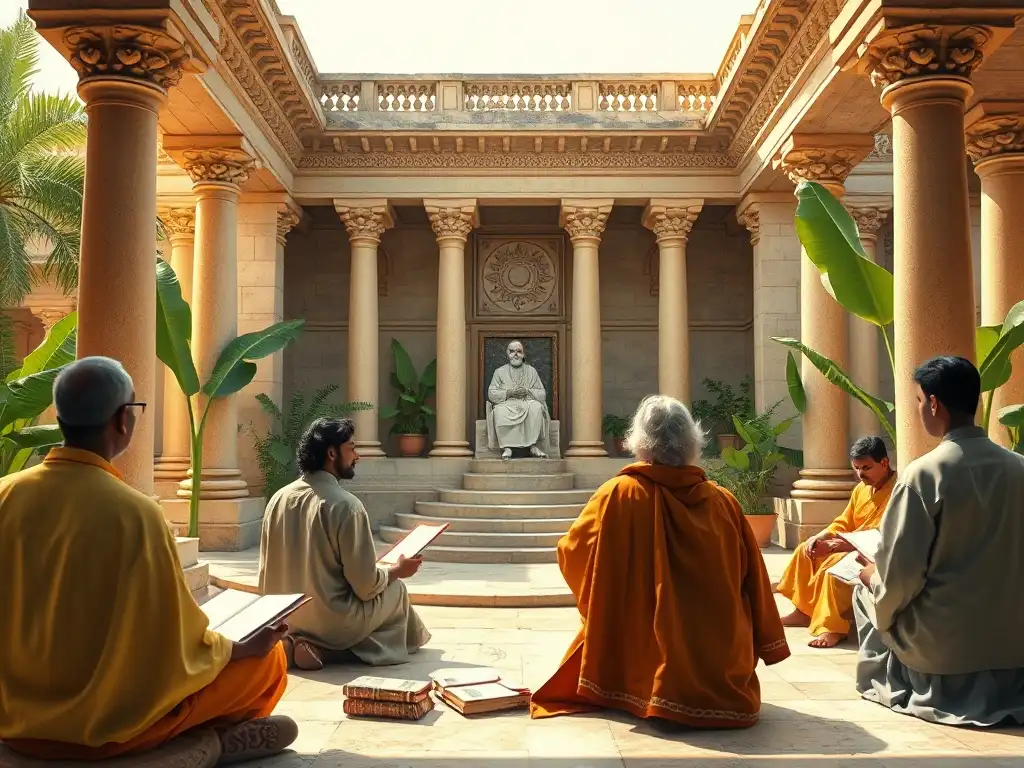
The Gupta Empire is often hailed as the Golden Age of India, not only for its achievements in art and science but also for its profound contributions to philosophy. The thinkers of this era laid the groundwork for various philosophical schools that continue to influence modern thought.
The synthesis of ideas from diverse schools of thought, including Hinduism, Buddhism, and Jainism, created a rich tapestry of intellectual discourse that resonated beyond the borders of India. The philosophical advancements made during this period helped shape ethical, metaphysical, and epistemological discussions, making the Gupta Empire a pivotal point in the history of Indian philosophy.
Summary of Key Contributions and Thinkers
During the Gupta Empire, several notable philosophers emerged, each contributing unique perspectives that enriched Indian philosophy. Here are some of the key figures and their contributions:
- Aryabhata: A mathematician and astronomer, Aryabhata's work laid a foundation for mathematical principles that intertwined with philosophical inquiry, especially in understanding the cosmos.
- Varahamihira: Known for his work on astrology, Varahamihira integrated philosophical concepts with astronomical observations, influencing both science and spiritual thought.
- Bhadanta Nagarjuna: He played a crucial role in developing Mahayana Buddhism, emphasizing emptiness and the nature of reality, which sparked philosophical debates that continue in various forms today.
- Vatsyayana: Author of the "Kama Sutra," Vatsyayana explored moral philosophy and ethics, discussing the balance between pleasure and duty, an idea that remains relevant in contemporary discussions about human behavior.
- Adikavi Valmiki: While primarily known for his epic poetry, Valmiki's works also delve into ethical dilemmas and human nature, offering philosophical reflections interwoven with narratives.
Reflection on the Importance of Gupta Philosophy in Modern Context
The philosophical contributions of the Gupta Empire carry significant relevance today. In a world increasingly characterized by cultural pluralism and the exchange of ideas, the dialogues initiated by Gupta philosophers foster a spirit of inquiry and understanding. Their examination of concepts such as ethics, the nature of reality, and human purpose forms a bridge connecting ancient wisdom with contemporary philosophical discourse.
Moreover, the emphasis on reason, debate, and the synthesis of diverse viewpoints in Gupta philosophy resonates with modern philosophical practices. The dialogues about morality and ethics established by thinkers like Vatsyayana continue to influence modern ethical theories, including discussions on hedonism and utilitarianism. As societies grapple with complex moral issues, the Gupta Empire’s philosophical frameworks offer valuable insights that remain pertinent in today's context.
In essence, the enduring impact of Gupta Empire philosophy contributions not only enriches our understanding of ancient thought but also serves as a crucial resource for addressing modern philosophical and ethical challenges.
- Introduction to the Gupta Empire Philosophy Contributions
- Overview of the Gupta Empire and Its Golden Age
- Importance of Philosophy in Ancient Indian Civilization
- Key Philosophers of the Gupta Empire
- Major Philosophical Ideas Emerged During the Gupta Period
- The Influence of Gupta Philosophy on Later Indian Thought
- Conclusion: The Enduring Impact of Gupta Empire Philosophy Contributions
- Summary of Key Contributions and Thinkers
- Reflection on the Importance of Gupta Philosophy in Modern Context
- What were the main contributions of the Gupta Empire to philosophy?
- Who were some notable philosophers from the Gupta Empire?
- How did the Gupta Empire influence modern philosophy?
- What role did religion play in Gupta philosophy?
- How did the Gupta Empire facilitate the exchange of philosophical ideas?
Frequently Asked Questions
What were the main contributions of the Gupta Empire to philosophy?
The Gupta Empire significantly advanced philosophical thought, particularly in metaphysics, ethics, and epistemology, leading to a rich intellectual tradition that influenced future generations.
Who were some notable philosophers from the Gupta Empire?
Prominent thinkers included Aryabhata, known for his contributions to mathematics and astronomy, and Vatsyayana, who wrote the Kama Sutra, discussing ethics and human behavior.
How did the Gupta Empire influence modern philosophy?
The Gupta philosophers laid the groundwork for various philosophical schools, shaping discussions on morality, knowledge, and the nature of reality, which continue to resonate in contemporary thought.
What role did religion play in Gupta philosophy?
Religion, especially Hinduism and Buddhism, deeply influenced Gupta philosophy, as spiritual concepts were often intertwined with philosophical ideas, shaping moral and ethical frameworks.
How did the Gupta Empire facilitate the exchange of philosophical ideas?
The Gupta Empire fostered a culture of scholarship and debate, establishing universities such as Nalanda, which attracted thinkers from various regions, promoting the sharing of diverse philosophical perspectives.
Final Reflection: The Enduring Legacy of Gupta Empire Philosophy
The Gupta Empire's contributions to philosophy are not merely historical footnotes; they resonate profoundly in today's intellectual landscape. As we navigate a world increasingly defined by complex moral dilemmas and philosophical inquiries, the ideas birthed during this golden age of Indian thought remind us of the timeless nature of philosophical exploration. The insights of Gupta thinkers continue to challenge and inspire, urging us to reflect on the essence of existence, ethics, and the pursuit of knowledge.
The influence of Gupta philosophy extends far beyond its geographical and temporal confines, shaping cultural and social paradigms across centuries. The profound ideas of thinkers such as Aryabhata and Kalidasa have woven themselves into the fabric of not just Indian culture, but also global philosophical discourse. Their reflections on life, ethics, and the universe encourage a deeper understanding of our own beliefs and values. Philosophy is the study of the fundamental nature of knowledge, reality, and existence.
This quote encapsulates the essence of the Gupta thinkers' contributions, reminding us that their inquiries remain relevant as we grapple with our own understanding of the world.
As we conclude this exploration of the Gupta Empire’s philosophical contributions, I invite you to reflect on how these ancient ideas can illuminate your own life. Consider how the principles of inquiry, ethics, and the pursuit of wisdom can guide your decisions and interactions in a rapidly changing world. Let the legacy of Gupta philosophy inspire you to cultivate a deeper understanding of yourself and your place in the universe, fostering a commitment to lifelong learning and introspection.
Unveil the Wisdom of the Gupta Era!
Thank you for diving into the fascinating world of the Gupta Empire and exploring its profound contributions to philosophy. Your interest not only enriches your knowledge but also honors the remarkable thinkers who shaped our understanding of ideas, ethics, and knowledge.
Now, it's time to take that newfound inspiration and put it into action! Here are some ways you can deepen your exploration:
- Dive Deeper: Read selected works from influential Gupta philosophers such as Kalidasa and Aryabhata, and reflect on their enduring ideas.
- Join the Discussion: Share your thoughts and insights with friends or engage on social media to broaden the conversation around ancient philosophy.
- Explore Philosophy Today: Attend a local lecture or participate in an online course focusing on ancient Indian philosophy to bridge the gap between past and present thinking.
Which insights from Gupta philosophy resonate most with your life today, and how can they inspire your decisions moving forward?