
Ancient Indian Mathematicians: The Unsung Heroes Behind Technological Progress

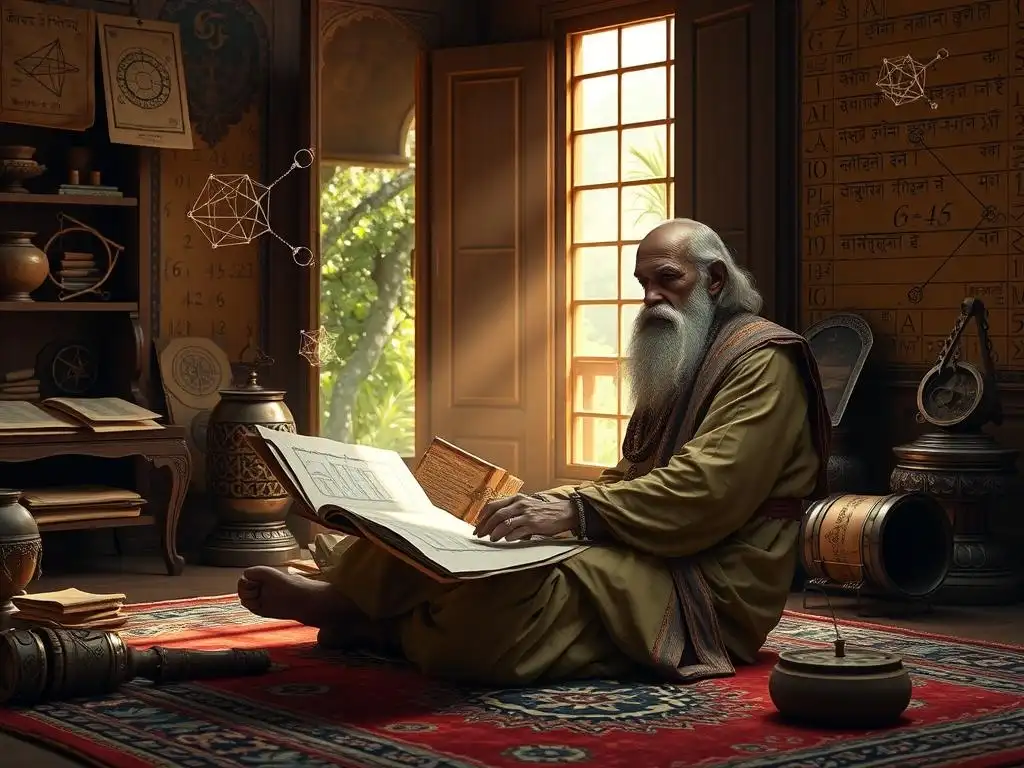
Welcome to Ancient India History, where we embark on a fascinating journey through the vibrant tapestry of ancient Indian civilizations. Here, we delve deep into the remarkable contributions of ancient Indian mathematicians, whose groundbreaking innovations laid the foundation for modern technology and scientific thought. In our featured article, "Ancient Indian Mathematicians: The Unsung Heroes Behind Technological Progress," prepare to uncover the brilliance of these scholars and the profound impact they had on the world. What secrets did they unlock? Join us as we explore their legacies and inspire your curiosity about an era that shaped the future.
- Introduction to Ancient Indian Mathematicians Contributions
- Historical Context of Mathematics in Ancient India
- Notable Ancient Indian Mathematicians and Their Contributions
- The Impact of Ancient Indian Mathematicians on Modern Technology
- Comparative Analysis of Ancient Indian Mathematics and Other Civilizations
- The Relevance of Ancient Indian Mathematicians in Contemporary Education
- Conclusion: The Lasting Legacy of Ancient Indian Mathematicians
- Frequently Asked Questions
- Final Reflection: Celebrating the Legacy of Ancient Indian Mathematicians
- Celebrate and Share the Legacy of Ancient Indian Mathematicians!
Introduction to Ancient Indian Mathematicians Contributions
The contributions of ancient Indian mathematicians are often overshadowed by their Western counterparts, yet they played a pivotal role in shaping the foundations of mathematics and technology as we know them today. From the sophisticated calculations of the Indus Valley civilization to the profound insights of mathematicians during the Gupta Empire, ancient Indian scholars made significant advancements in areas such as arithmetic, algebra, and geometry.
This article delves into the rich legacy of these unsung heroes, exploring their contributions and how they have influenced technological progress across various fields. By understanding their achievements, we can appreciate the profound impact that ancient Indian mathematicians had on the development of modern mathematics and technology.
Understanding the Legacy of Ancient Indian Mathematics
Ancient Indian mathematics is characterized by its originality and depth, encompassing a wide array of concepts that were fundamental to later developments in mathematics worldwide. Key figures such as Aryabhata, Brahmagupta, and Bhaskara II introduced concepts that not only advanced mathematical theory but also had practical applications in astronomy, engineering, and commerce.
- Aryabhata (476–550 CE): Often regarded as one of the first mathematicians of India, Aryabhata introduced the concept of zero as a numeral and developed methods for solving linear and quadratic equations. His work, Aryabhatiya, laid the groundwork for future mathematicians and influenced both Indian and Islamic mathematicians.
- Brahmagupta (598–668 CE): Known for his seminal work Brahmasphutasiddhanta, Brahmagupta contributed significantly to the rules of arithmetic operations and the treatment of negative numbers. He formulated algorithms for solving quadratic equations and provided rules for calculating the area of cyclic quadrilaterals.
- Bhaskara II (1114–1185 CE): A prominent figure in Indian mathematics, Bhaskara II's work, Lilavati, covers various mathematical topics, including arithmetic, geometry, and algebra. He is credited with developing methods for calculating the solutions to indeterminate equations and contributed to understanding calculus long before it was formalized in Europe.
These mathematicians not only enhanced mathematical knowledge but also demonstrated its practical applicability in real-world situations, paving the way for technological advancements.
Importance of Ancient Indian Mathematicians in Technological Progress
The advancements made by ancient Indian mathematicians were not merely theoretical; they had profound implications on technology and scientific practices. The precision in mathematics facilitated remarkable achievements in various fields:
- Astronomy: The mathematical techniques developed by Indian scholars allowed for accurate predictions of celestial events. Aryabhata's calculations regarding the Earth's rotation and the length of the solar year were remarkably accurate, influencing astronomical practices in other cultures.
- Architecture and Engineering: The use of mathematical principles in architecture enabled the construction of intricate structures, such as temples and stepwells. The knowledge of geometry and measurement was crucial in achieving stability and aesthetic beauty in these constructions.
- Trade and Commerce: The introduction of the decimal system and the concept of zero streamlined calculations, facilitating trade and commerce. Merchants relied on these mathematical advancements to conduct transactions with greater efficiency.
- Medicine: Mathematical concepts were also applied in Ayurveda, the ancient Indian system of medicine. Calculations related to dosages and the timing of treatments were essential for effective healthcare practices.
The contributions of ancient Indian mathematicians were foundational in advancing technology across multiple domains. Their innovative ideas and methods not only enriched the field of mathematics but also fostered significant technological progress that resonates even in today’s world. As we explore the unsung heroes of ancient Indian mathematics, we uncover a legacy that continues to inspire and inform modern technological advancements.
Historical Context of Mathematics in Ancient India

The Origins of Mathematical Thought in Ancient Indian Civilizations
Mathematics in ancient India has roots that trace back to the early Vedic period, where it was primarily used for astronomical calculations, rituals, and architecture. The earliest documented records of mathematical concepts appear in the Sulbasutras (circa 800–500 BCE), texts that provided guidelines for constructing altars and other sacred structures. These texts utilized geometric principles and demonstrated an understanding of various shapes, including squares, rectangles, and circles.
- Vedic Mathematics: The Vedic texts, particularly the Atharva Veda, hint at the early usage of arithmetic and geometry. Mathematical operations were often intertwined with religious practices, highlighting the spiritual significance of numbers.
- Numerical System: Ancient Indian mathematicians developed a decimal system, which included the concept of zero as a placeholder. This numerical innovation was pivotal, as it allowed for more complex calculations and laid the groundwork for modern mathematics.
- Astronomy and Calendar Systems: The need for precise astronomical observations led to advancements in mathematics. Ancient Indians calculated the length of the solar year and developed a calendar system that accounted for lunar cycles, showcasing their sophisticated understanding of time.
Key Civilizations and Their Contributions to Mathematics
Different ancient Indian civilizations made significant contributions to mathematics, which not only influenced their own culture but also laid the foundation for future developments in the field.
1. Indus Valley Civilization
The Indus Valley Civilization (circa 2500–1900 BCE) is known for its advanced urban planning and architectural precision. While direct evidence of mathematics is sparse, the standardized weights and measures suggest a sophisticated understanding of geometry and arithmetic.
- Urban Layout: The grid layout of cities like Mohenjo-Daro indicates knowledge of geometry and spatial awareness.
- Weights and Measures: The use of a consistent system for weights and measures reflects an understanding of numerical relationships.
2. Gupta Empire
During the Gupta Empire (circa 320–550 CE), mathematics flourished, leading to groundbreaking advancements.
- Aryabhata: One of the most renowned ancient Indian mathematicians, Aryabhata introduced concepts such as the approximation of π (pi) and the place-value system. His work, Aryabhatiya, included techniques for solving quadratic equations and understanding the motion of celestial bodies.
- Brahmagupta: Another influential figure, Brahmagupta's Brahmasphutasiddhanta expanded on Aryabhata's work, introducing rules for arithmetic operations involving zero and negative numbers. His contributions laid the groundwork for algebra.
| Mathematician | Key Contributions |
|---|---|
| Aryabhata | Approximation of π, place-value system, astronomy |
| Brahmagupta | Rules for zero and negative numbers, quadratic equations |
3. Kerala School of Astronomy and Mathematics
Emerging in the 14th century, the Kerala School was pivotal in the development of calculus concepts long before they were formalized in Europe.
- Madhava of Sangamagrama: He developed infinite series and laid the groundwork for the concept of limits. His work on trigonometry included sine and cosine functions, which were essential for astronomical calculations.
- Influence on Later Mathematicians: The Kerala School's findings influenced later mathematicians in Europe, bridging ancient and modern mathematical thought.
The contributions of ancient Indian mathematicians not only advanced their own civilization but also created a rich legacy that influenced mathematical development across the globe. The innovative spirit of these mathematicians reflects a profound understanding of numbers, geometry, and their applications in both practical and theoretical contexts.
Notable Ancient Indian Mathematicians and Their Contributions

Aryabhata: The Pioneer of Indian Mathematics
Aryabhata, born in 476 CE, is often regarded as one of the most significant mathematicians and astronomers of ancient India. His work laid the foundation for many mathematical concepts that would be developed further in later centuries. His insights into mathematics were revolutionary and have had a lasting impact on both Indian and global mathematical traditions.
Major Contributions: Place Value System and Zero
Aryabhata's most notable contribution is arguably the introduction of the place value system. This system is crucial for understanding and performing arithmetic operations efficiently. By assigning a value to the position of a numeral, Aryabhata set the stage for the algebraic calculations that are fundamental in mathematics today.
Moreover, Aryabhata's work acknowledges the concept of zero as a number, a groundbreaking idea that facilitated advanced calculations and the development of algebra. His mathematical treatise, the Aryabhatiya, includes rules for calculating squares and cubes, as well as methods for solving linear and quadratic equations.
“Aryabhata’s introduction of zero was not just a numeral, but a revolutionary concept that changed the course of mathematics forever.”
Influence on Astronomy and Timekeeping
In addition to his mathematical contributions, Aryabhata made significant advancements in the field of astronomy. He calculated the length of the solar year to be approximately 365.358 days, a remarkably accurate figure for his time. His work in astronomy also included methods for predicting eclipses and understanding the movements of celestial bodies.
Aryabhata's influence extended to timekeeping as well. He proposed the use of a decimal time system, dividing the day into hours, minutes, and seconds. This method of timekeeping has been foundational in creating the modern systems we use today. The precision of Aryabhata’s astronomical calculations underscores the importance of his contributions not only to mathematics but to scientific inquiry as a whole.
Brahmagupta: The Father of Algebra
Brahmagupta, who lived in the 7th century CE, is often hailed as the "Father of Algebra." His seminal work, the Brahmasphutasiddhanta, made significant strides in the understanding of algebraic concepts, providing a framework that would influence mathematicians for centuries to come.
Key Works: Brahmasphutasiddhanta
The Brahmasphutasiddhanta is a comprehensive text that covers a wide range of mathematical topics, including arithmetic, algebra, and geometry. In this work, Brahmagupta introduced rules for calculating with negative numbers, a concept that was largely absent in earlier mathematical texts. He defined zero and described operations involving zero, which were pivotal in the evolution of mathematical thought.
Brahmagupta's approach to solving quadratic equations laid the groundwork for future advancements in algebra. His rules and theorems provided a systematic way to approach problems, emphasizing the importance of logical reasoning in mathematics.
Contributions to Arithmetic and Geometry
Brahmagupta's contributions are not limited to algebra; he made significant advances in arithmetic and geometry as well. He provided methods for calculating areas of various geometric shapes, including triangles and quadrilaterals, and introduced formulas that are still in use today.
His work also included applications of mathematics in astronomy, particularly in calculating the positions of celestial bodies. Brahmagupta's influence is evident in the way mathematical concepts were integrated into various fields, including science and engineering.
Overall, the contributions of ancient Indian mathematicians like Aryabhata and Brahmagupta were foundational in the development of mathematics and influenced technological progress in profound ways. Their pioneering work not only enriched mathematical understanding in their time but also laid the groundwork for future innovations.
Bhaskara I and II: The Innovators of Advanced Mathematics
The legacy of ancient Indian mathematicians is profoundly marked by the contributions of Bhaskara I and Bhaskara II. These two scholars not only advanced the field of mathematics but also laid foundational principles that would echo through the ages, influencing mathematical thought across cultures. Their works span various mathematical disciplines, from trigonometry to calculus, showcasing the rich tapestry of knowledge that ancient Indian civilizations nurtured.
Bhaskara I: Contributions to the Concept of Sine
Bhaskara I, who lived in the 7th century CE, is renowned for his pioneering work in trigonometry, particularly his contributions to the concept of sine. He was among the first to systematically define the sine function, which he referred to as "jya," a term that translates to "chord." His influential text, the "Lilavati," provided a comprehensive treatment of arithmetic and geometry, but it was his work on trigonometric functions that set the groundwork for future advancements.
- Sine Table: Bhaskara I created the first known sine table, which calculated the sine values for various angles. This was a significant leap in mathematical sciences, as it allowed for the precise calculation of angles in astronomical contexts, which was essential for navigation and timekeeping.
- Relation to Chord Length: Bhaskara's interpretation of sine was closely linked to the concept of chord length in a circle, which facilitated easier computations in geometry and astronomy. He established a formula for calculating the sine of an angle based on its chord, bridging the gap between geometry and trigonometry.
- Introduction of the Concept of Jya and Kotijya: He introduced the terms "jya" for sine and "kotijya" for cosine, which were instrumental in the evolution of trigonometric terminology. This nomenclature would later influence Arabic and, subsequently, European mathematical texts.
Bhaskara I's work laid the groundwork for future mathematicians, and his contributions to the sine function became a critical component in the development of trigonometry as a whole.
Bhaskara II: The Breakthroughs in Calculus and Number Theory
Bhaskara II, also known as Bhaskara Acharya, flourished in the 12th century CE and is often regarded as one of the most prominent mathematicians of ancient India. His major works, including "Lilavati" and "Bijaganita," reflect profound advancements in arithmetic, algebra, and calculus.
- Calculus Concepts: Bhaskara II made significant strides in calculus, particularly in the area of infinitesimals. He introduced concepts that can be seen as precursors to differential calculus, such as the idea of "derivative" and methods for finding the maxima and minima of functions. His analytical techniques allowed for the solution of complex equations, demonstrating an understanding of change and motion that would not be formally recognized in European mathematics until centuries later.
- Number Theory: His work in number theory included the formulation of rules for solving equations and understanding the properties of numbers. One notable contribution is his work on cyclic numbers and the concept of "persistence" in multiplication, which has implications in modular arithmetic.
- The Influence of Astronomy: Bhaskara II's mathematical innovations were closely tied to astronomy. He developed algorithms for calculating planetary positions and eclipses, which required precise mathematical formulations. His astronomical text, "Siddhanta Shiromani," synthesized mathematical concepts with astronomical applications, further demonstrating the integral relationship between these fields in ancient Indian scholarship.
Overall, Bhaskara II's contributions not only advanced mathematics in India but also had a lasting impact on the global mathematical community, paving the way for future innovations in both mathematics and science.
The Impact of Ancient Indian Mathematicians on Modern Technology
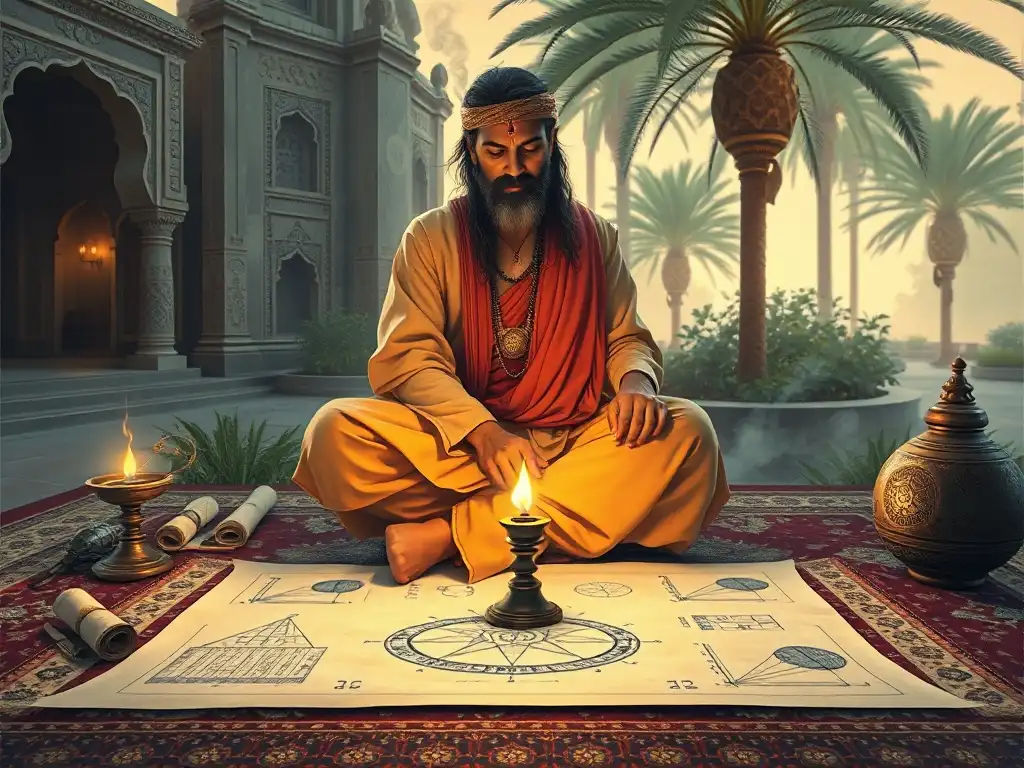
The contributions of ancient Indian mathematicians have had a profound impact on the development of modern technology. Their innovative approaches, theoretical frameworks, and practical applications laid the groundwork for various fields, including mathematics, astronomy, and engineering. This section delves into the significant influence these mathematicians have had, highlighting their contributions that resonate in today’s technological landscape.
How Ancient Indian Contributions Influence Today's Mathematical Applications
Ancient Indian mathematicians such as Aryabhata, Brahmagupta, and Bhaskara made groundbreaking advancements that remain relevant in contemporary mathematics. Their work encompassed various areas, including:
- Number Systems: The introduction of the decimal system and the concept of zero, credited to Indian mathematicians, revolutionized calculations and record-keeping.
- Algebra: Brahmagupta’s rules for solving quadratic equations and his work on negative numbers laid foundational principles that are still taught in schools today.
- Trigonometry: The sine and cosine functions were explored extensively by Indian mathematicians, paving the way for modern trigonometric applications in engineering and physics.
The methodologies developed by these mathematicians have been integrated into various technological applications, enabling advancements in fields such as computer science and data analysis.
Real-World Technologies Inspired by Ancient Indian Mathematics
The influence of ancient Indian mathematics extends beyond theoretical contributions and finds applications in various modern technologies. Several innovations can be traced back to mathematical principles established in ancient India:
- Computer Algorithms: The binary number system and algorithms for calculations, drawn from ancient Indian texts, have influenced modern computer programming and data processing techniques.
- Cryptography: Techniques for secure communication, including those rooted in ancient Indian mathematics, have shaped contemporary cryptographic systems used in digital security.
- Artificial Intelligence: The logic and reasoning frameworks developed by ancient Indian scholars have informed algorithms in the field of AI, enhancing machine learning models.
Examples from Astronomy, Engineering, and Architecture
The ancient Indian mathematicians made notable contributions across various fields, particularly in astronomy, engineering, and architecture:
- Astronomy:
- Aryabhata is renowned for his work in calculating the Earth's circumference and explaining solar and lunar eclipses. His astronomical calculations laid the groundwork for modern celestial mechanics.
- Brahmagupta contributed significantly to understanding planetary motion and was one of the first to describe gravitational concepts.
- Engineering:
- Siddhanta Shiromani by Bhaskara II includes principles of mechanics that facilitated the construction of complex structures and machines. His work on the concepts of calculus directly influenced engineering practices.
- The ancient practice of using geometry in surveying and construction is evident in historical monuments and temples, showcasing advanced engineering techniques.
- Architecture:
- Ancient Indian texts, such as the Vastu Shastra, incorporate mathematical principles in architectural design, emphasizing symmetry and proportions, which are essential in modern architecture.
- The calculation of precise angles and measurements in temple constructions demonstrates the sophisticated understanding of geometry by ancient Indian architects.
Through these contributions, ancient Indian mathematicians have not only shaped their era but have also sown the seeds for future technological advancements, illustrating the timeless relevance of their work in today’s world.
Comparative Analysis of Ancient Indian Mathematics and Other Civilizations

Ancient Indian Mathematicians vs. Greek Mathematicians
The contributions of ancient Indian mathematicians are often overshadowed by their Greek counterparts, yet the two civilizations approached mathematics with distinct philosophies and methodologies.
1. Foundations of Mathematics:
- Indian Mathematicians: The ancient Indians developed mathematics as a practical tool for trade, astronomy, and land measurement. Notable figures such as Aryabhata and Brahmagupta emphasized arithmetic and algebraic concepts, introducing the concept of zero (0) and the decimal system, which revolutionized numerical representation.
- Greek Mathematicians: In contrast, Greek mathematicians like Euclid and Pythagoras focused more on geometry and theoretical frameworks. Their contributions were often abstract, prioritizing deductive reasoning and proofs, which established a rigorous foundation for modern mathematics.
2. The Role of Geometry:
- Indian mathematicians applied geometric principles to real-world problems, such as calculating land areas and volumes. For instance, Brahmagupta's formulas for the area of cyclic quadrilaterals directly influenced practical applications in architecture and agriculture.
- Greek mathematicians, on the other hand, developed a systematic study of geometry, culminating in Euclidean geometry’s axioms and theorems. Their work laid the groundwork for future mathematical disciplines, predominantly focusing on theoretical constructs rather than practical applications.
3. Algebra and Number Theory:
- Indian mathematicians made significant strides in algebra, with Brahmagupta's rules for solving quadratic equations and his work on arithmetic operations involving negative numbers. They recognized the importance of algorithms, which facilitated advancements in computational methods.
- Although Greek mathematicians contributed to number theory, they did not explore algebraic concepts in the same depth. Their focus was more on the properties of numbers rather than their manipulation, leading to a slower progression in algebraic techniques compared to Indian developments.
Key Differences in Approaches and Contributions
| Aspect | Ancient Indian Mathematics | Greek Mathematics |
|---|---|---|
| Focus | Practical applications, trade, astronomy | Abstract theories and proofs |
| Geometry | Applied geometry for real-world problems | Systematic study of theoretical geometry |
| Algebra | Advanced concepts including zero and negative numbers | Limited exploration of algebra |
| Contributions | Decimal system, algorithms, quadratic equations | Euclidean geometry, number theory |
The differing focuses of these civilizations not only highlight the diversity of mathematical thought but also underscore the profound impact that ancient Indian mathematicians had on the evolution of mathematics as a practical discipline. The legacy of their contributions continues to influence modern technology and mathematical practices.
The Interaction of Ancient Indian Mathematics with Other Cultures
The rich tapestry of ancient Indian mathematics did not develop in isolation; it interacted significantly with other cultures, especially during the periods of trade and cultural exchange.
Influences on Islamic Mathematics and Beyond
Ancient Indian mathematicians were instrumental in shaping the mathematical landscape of the Islamic Golden Age. The introduction of Indian numerals and the concept of zero had a transformative effect on Islamic scholarship, leading to significant advancements in mathematics.
1. Transmission of Knowledge:
- The translations of key Indian texts, such as Aryabhata’s Aryabhatiya, into Arabic played a pivotal role in disseminating Indian mathematical concepts. Scholars like Al-Khwarizmi, who is often referred to as the "father of algebra," were influenced by these texts, which facilitated the integration of Indian mathematical principles into Islamic mathematics.
2. Development of Algebra:
- The algebraic methods introduced by Indian mathematicians were further developed by Islamic scholars. The term "algebra" itself is derived from the Arabic word al-jabr, which refers to the process of restoring and balancing equations. This evolution marked a significant shift in mathematical thought, allowing for more complex problem-solving techniques.
3. Influence on Europe:
- As Islamic mathematicians translated and expanded upon Indian works, this knowledge eventually made its way to Europe during the Renaissance. The introduction of the decimal system and zero into European mathematics changed the course of mathematical history, setting the stage for advancements in science, engineering, and technology.
The contributions of ancient Indian mathematicians not only laid the groundwork for their own civilization but also significantly influenced other cultures, particularly during the Islamic Golden Age, which in turn impacted the development of mathematics in Europe. The collaborative nature of knowledge exchange underscores the importance of ancient Indian mathematicians in the broader context of global mathematical progress.
The Relevance of Ancient Indian Mathematicians in Contemporary Education

The contributions of ancient Indian mathematicians have had a profound impact on the field of mathematics and technology, influencing contemporary education in various ways. Their work laid foundational principles and concepts that continue to be relevant in modern mathematics. Recognizing and integrating these contributions into educational curricula promotes a deeper understanding of mathematical history and its development.
The ancient Indian mathematicians, notably figures such as Aryabhata, Brahmagupta, and Bhaskara II, introduced several groundbreaking concepts, including the decimal system, the concept of zero, and intricate algorithms for computation. By studying their methodologies and discoveries, students can appreciate the evolution of mathematical thought and the cultural context of these innovations.
Incorporating the achievements of ancient Indian mathematicians into contemporary education not only enriches the curriculum but also fosters a sense of pride and identity among learners, particularly in regions influenced by these historical figures. It highlights the global contributions to mathematics and encourages students to explore the diverse cultural foundations of scientific knowledge.
Incorporating Ancient Indian Mathematics in Modern Curriculum
To effectively incorporate ancient Indian mathematics into modern curricula, educational institutions can adopt several strategies:
- Curricular Integration:
- Mathematics lessons can include historical perspectives on ancient Indian mathematicians, emphasizing their contributions to key concepts such as algebra, geometry, and arithmetic.
- Project-based learning can be utilized where students explore the works of mathematicians like Aryabhata and present their findings, fostering research skills and critical thinking.
- Interdisciplinary Approaches:
- Integrating mathematics with history and culture can provide a holistic view. For example, lessons on the Indus Valley Civilization can include discussions on their trade practices and how mathematics facilitated those activities.
- Use of Technology:
- Digital resources and interactive software can be used to teach ancient Indian mathematical concepts in engaging ways. For instance, simulations that demonstrate the use of algorithms developed by ancient mathematicians can enhance learning.
- Teacher Training:
- Professional development programs focusing on the history of mathematics can equip teachers with the knowledge needed to teach these concepts effectively, ensuring that the contributions of ancient Indian mathematicians are accurately represented in the classroom.
Resources and Tools for Learning About Ancient Indian Mathematicians Contributions
To deepen understanding of ancient Indian mathematicians and their contributions, a variety of resources and tools are available:
- Online Databases and Archives:
- Platforms like JSTOR and Google Scholar provide access to scholarly articles and papers discussing the works and influence of ancient Indian mathematicians.
- Documentaries and Educational Videos:
- Several documentaries explore the lives and contributions of mathematicians like Aryabhata and Brahmagupta, making complex concepts more accessible to learners.
- Interactive Websites:
- Websites dedicated to mathematics history often feature sections on ancient Indian mathematicians, offering timelines, biographies, and interactive content.
Recommended Books and Online Courses
For those looking to delve deeper into the contributions of ancient Indian mathematicians, the following books and online courses are highly recommended:
| Title | Author/Provider | Description |
|---|---|---|
| The History of Mathematics in India | Kim Plofker | A comprehensive overview of the development of mathematics in ancient India. |
| Mathematics in Ancient India | C. M. Whish | An exploration of key mathematical texts and their relevance today. |
| Introduction to Indian Mathematics | edX (Online Course) | A free course that examines ancient Indian mathematical concepts and techniques. |
| Aryabhata: The First Indian Mathematician | Udemy (Online Course) | A detailed look at Aryabhata’s work and its impact on mathematics. |
By utilizing these resources, educators and learners can gain a richer understanding of the significant and often overlooked contributions of ancient Indian mathematicians, emphasizing their role in shaping mathematical thought and technological advancement.
Conclusion: The Lasting Legacy of Ancient Indian Mathematicians

The contributions of ancient Indian mathematicians are not merely historical footnotes; they are integral to the very foundation of modern mathematics and technology. From the sophisticated numeral system to groundbreaking concepts in geometry and algebra, these scholars laid the groundwork for mathematical practices that continue to shape various fields today.
The works of mathematicians like Aryabhata, Brahmagupta, and Bhaskara II not only reflect a deep understanding of mathematical principles but also demonstrate an innovative spirit that transcended their time. The introduction of the zero as a numeral, the decimal system, and advanced techniques in trigonometry and calculus are just a few highlights of their remarkable achievements.
As we delve into the lasting legacy of these unsung heroes, it becomes evident that their contributions have had a profound impact on various technological advancements. The principles they established are still employed in fields such as computer science, engineering, and even economics. Recognizing their influence allows us to appreciate the depth and breadth of ancient Indian mathematics and its role in global technological progress.
Celebrating the Unsung Heroes of Ancient Indian Mathematics
Ancient Indian mathematicians deserve recognition not only for their contributions but also for their unique approaches to problem-solving and theoretical formulation. For instance, Aryabhata's Aryabhatiya introduced concepts like sine and cosine, which are fundamental in trigonometry today. His work exemplifies the analytical rigor and creativity inherent in ancient Indian mathematical thought.
Brahmagupta, in his Brahmasphutasiddhanta, made significant strides by formulating rules for arithmetic operations involving negative numbers and zero. His insights into solving quadratic equations laid the groundwork for future mathematical explorations and applications.
Moreover, Bhaskara II’s Lilavati and Bijaganita not only tackled complex mathematical problems but also integrated them into everyday life, demonstrating the practical applications of mathematics. His work influenced generations of mathematicians, extending far beyond the Indian subcontinent.
To commemorate these figures, various initiatives are underway to promote ancient Indian mathematics. Educational programs, workshops, and exhibitions are being organized to highlight their contributions and inspire future generations to explore this rich heritage.
Future Directions: Reviving Interest in Ancient Indian Contributions to Technology
As we look ahead, it is crucial to revitalize interest in the contributions of ancient Indian mathematicians and their relevance in today’s technological landscape. Educational institutions and researchers can play a pivotal role by incorporating ancient mathematical concepts into contemporary curricula. This not only honors the legacy of these mathematicians but also encourages a new generation to engage with their ideas.
- Integration into Modern Education: Curricula can benefit from the inclusion of ancient Indian mathematics, showcasing its historical context and modern applications. This interdisciplinary approach can attract students from various fields.
- Research and Development: Collaborations between mathematicians, historians, and technologists can lead to innovative applications of ancient principles in contemporary technology. Exploring the mathematical frameworks established by ancient Indian scholars can inspire solutions to modern challenges.
- Public Awareness Campaigns: Engaging the public through seminars, online courses, and multimedia presentations can foster a greater appreciation for ancient Indian contributions. Highlighting their relevance in current technology can spark interest and inspire further exploration.
- Cultural Events and Competitions: Hosting competitions that focus on ancient mathematical problems or cultural events that celebrate the achievements of ancient mathematicians can create a vibrant community interested in this field.
By actively promoting and integrating ancient Indian mathematicians' contributions into various sectors, we can ensure that their legacy continues to inspire innovation and technological progress for future generations. The impact of their work is profound, and understanding it is essential to appreciate the evolution of mathematics and technology as we know them today.
Frequently Asked Questions
What were the key contributions of ancient Indian mathematicians?
Ancient Indian mathematicians made significant contributions in areas such as algebra, geometry, and the concept of zero, which laid the groundwork for modern mathematics.
How did ancient Indian mathematicians influence the world?
Their work in numerical systems and calculus greatly influenced mathematical development in other cultures, particularly through translations into Arabic and later into European languages.
Who are some notable ancient Indian mathematicians?
Key figures include Aryabhata, known for his work on the place value system, and Brahmagupta, who made important advancements in algebra and the rules for solving equations.
What role did the Gupta Empire play in mathematics?
The Gupta Empire was a golden age for mathematics, during which many innovative concepts were developed, including advancements in astronomy and the use of decimal systems.
Why are ancient Indian mathematicians often overlooked in history?
Despite their profound contributions, ancient Indian mathematicians are often unsung heroes due to a lack of documentation and recognition in mainstream historical narratives compared to their Western counterparts.
Final Reflection: Celebrating the Legacy of Ancient Indian Mathematicians
The contributions of ancient Indian mathematicians are not just historical footnotes; they are the very foundation upon which modern technology stands. As we navigate a world increasingly driven by data and algorithms, the brilliance of these unsung heroes becomes more relevant than ever. Their innovative ideas and methodologies paved the way for advancements in mathematics and science that continue to shape our lives today. Recognizing their impact is essential for appreciating the depth of human ingenuity.
The influence of ancient Indian mathematicians extends far beyond their time, resonating through centuries and across cultures. Their work has not only enriched the field of mathematics but has also inspired generations of thinkers and innovators. The principles they developed, such as the concept of zero and the decimal system, are integral to the technological advancements we experience today. As the mathematician Carl Friedrich Gauss once said, "> Mathematics is the queen of the sciences, and number theory is its most beautiful queen." This sentiment underscores the timeless beauty and significance of the contributions made by these early scholars.
As we reflect on the invaluable lessons from the past, I invite you to explore how the wisdom of ancient Indian mathematicians can inform your own journey. Consider how their relentless pursuit of knowledge and innovation can inspire you to embrace challenges and think creatively in your personal and professional life. Let their legacy encourage you to delve deeper into the world of mathematics and science, and to recognize the profound connections between history and the future. Together, let us honor these remarkable figures by continuing to push the boundaries of knowledge and technology.
Thank you for exploring the remarkable contributions of ancient Indian mathematicians with us! We hope you’ve uncovered invaluable lessons and insights from their groundbreaking work. Now, it's time to take action and honor their legacy.
- Engage with the Past: Delve into a significant mathematical concept or theorem that resonates with you, and attempt to apply it in a modern context.
- Spread the Word: Share this article with friends or on social media to ignite conversations about the influence of ancient Indian scholars on contemporary technology.
- Join the Discussion: Consider writing a brief piece about what you’ve learned or highlighting a mathematician whose work you find fascinating.
How can the wisdom of these ancient mathematicians shape your approach to problem-solving today?