
The Impact of Buddhism on the Development of Yoga Philosophy

Welcome to Ancient India History, where we embark on a fascinating journey through the rich tapestry of ancient civilizations that shaped the subcontinent. In this exploration, we invite you to delve into our featured article, “The Impact of Buddhism on the Development of Yoga Philosophy,” which uncovers the profound connections between these two influential traditions. How did Buddhist principles intertwine with the roots of Yoga, shaping its philosophy and practice? Join us as we unveil the intricate layers of this relationship, sparking your curiosity and encouraging you to discover the timeless wisdom that continues to inspire wellness today.
Exploring the intricate tapestry of ancient Indian thought reveals a significant relationship between Buddhism and the evolution of yoga philosophy. This connection is not merely historical but also philosophical, as both traditions share common roots and have influenced one another over centuries. Understanding how Buddhism has shaped the development of yoga philosophy is crucial for appreciating the depth and richness of these ancient practices. This article delves into the core principles of Buddhism, its teachings, and how these elements intertwine with yoga practices, providing insight into the profound impact of Buddhism on yoga philosophy.
Understanding Buddhism and Its Core Principles
The Origins of Buddhism: Key Historical Context
Buddhism emerged in the 5th century BCE, founded by Siddhartha Gautama, known as the Buddha. This period in ancient India was marked by significant socio-political changes, including the rise of urban centers and the questioning of traditional Vedic rituals. As a response to the prevailing spiritual landscape, Buddhism advocated for a path of personal enlightenment through introspection and ethical living. The historical context in which Buddhism developed is essential to understanding its influence on subsequent Indian philosophies, including yoga.
Fundamental Teachings of Buddhism: The Four Noble Truths and the Eightfold Path
At the heart of Buddhism lie the Four Noble Truths and the Eightfold Path, which serve as guiding principles for practitioners:
- The Four Noble Truths:
- Dukkha: The truth of suffering, recognizing that life encompasses pain and dissatisfaction.
- Samudaya: The truth of the cause of suffering, which is attachment and desire.
- Nirodha: The truth of the cessation of suffering, proposing that liberation is achievable.
- Magga: The truth of the path leading to the cessation of suffering, which is the Eightfold Path.
- The Eightfold Path:
- Right Understanding
- Right Intent
- Right Speech
- Right Action
- Right Livelihood
- Right Effort
- Right Mindfulness
- Right Concentration
These teachings emphasize the importance of mindfulness, ethical conduct, and meditation, which resonate deeply with yoga philosophy.
The Relationship Between Buddhism and Yoga Philosophy
Historical Intersections: How Buddhism Influenced Ancient Indian Thought
The historical intersections between Buddhism and early yoga practices are noteworthy. Both traditions emerged in a similar cultural milieu, sharing philosophical ideas and practices that evolved over time. Many early yogic texts, such as the Upanishads, reflect influences from Buddhist thought, particularly in concepts related to meditation and consciousness. This exchange of ideas contributed to the development of a more nuanced understanding of the self and the nature of reality in both traditions.
Comparative Analysis: Buddhism vs. Hinduism in Yoga Practices
While Buddhism and Hinduism have distinct philosophical frameworks, their approaches to yoga practice exhibit remarkable similarities and differences.
- Commonalities:
- Both traditions emphasize meditation and ethical living as means to attain a higher state of consciousness.
- Practices such as mindfulness and concentration are integral to both Buddhist and yogic disciplines.
- Differences:
- Buddhism focuses more on the concept of anatta (non-self), while Hinduism often emphasizes the idea of atman (soul).
- The ultimate goals differ, with Buddhism seeking nirvana and Hinduism pursuing moksha.
Understanding these nuances enriches our comprehension of how Buddhism has influenced the development of yoga philosophy, creating a dialogue between two of the most profound spiritual traditions in history.
Key Concepts in Yoga Philosophy Influenced by Buddhism
Buddhism has significantly shaped the development of yoga philosophy through a variety of key concepts that intertwine the teachings of both traditions. One of the most notable influences is the integration of mindfulness and meditative practices aimed at achieving a state of inner peace and self-awareness. The core principles of Buddhism, such as the Four Noble Truths and the Eightfold Path, have found resonance within yoga philosophy, particularly in the pursuit of ethical living and spiritual growth.
Another critical area of influence is the concept of impermanence (anicca), which emphasizes the transient nature of all things. This tenet encourages practitioners to cultivate a non-attachment mindset, fostering emotional resilience and clarity. In addition, the non-dualistic nature of reality, prevalent in both Buddhism and certain schools of yoga, promotes the understanding that the self is interconnected with the universe, leading to a deeper sense of unity and purpose.
The Role of Meditation: Mindfulness and Concentration Techniques
Meditation serves as a cornerstone in both Buddhism and yoga philosophy, with techniques that focus on mindfulness and concentration being essential for spiritual development. Mindfulness, originating from the Buddhist practice of sati, involves being fully present and engaged in the moment without judgment. This practice allows individuals to observe their thoughts, emotions, and physical sensations, fostering a deeper understanding of the self.
In yoga, meditation techniques often incorporate similar principles, emphasizing breath control ( pranayama) and body awareness to enhance concentration. These practices help practitioners quiet the mind, allowing for a profound sense of stillness and clarity. As both traditions converge, the integration of mindfulness and concentration techniques has become crucial for achieving higher states of consciousness and self-realization.
The Concept of Suffering: Dukkha and Its Relation to Yoga Practice
A fundamental aspect of Buddhist philosophy is the concept of dukkha, which translates to suffering or dissatisfaction. This notion plays a pivotal role in shaping yoga philosophy, as practitioners are encouraged to confront and understand the nature of suffering in their lives. By acknowledging dukkha, individuals can begin to explore the root causes of their pain and develop strategies to alleviate it.
In yoga, this understanding is often facilitated through practices such as asanas (postures) and meditation, which promote physical and mental well-being. The ultimate goal is to transcend suffering by cultivating awareness and acceptance, leading to a more balanced and harmonious existence. The interconnectedness of suffering, mindfulness, and personal growth exemplifies the potent influence of Buddhism on yoga philosophy.
The Notion of Enlightenment: Nirvana and Samadhi Explained
The concepts of nirvana and samadhi represent the pinnacle of spiritual attainment in Buddhism and yoga, respectively. Nirvana signifies the liberation from the cycle of birth and rebirth (samsara) and the cessation of suffering, while samadhi refers to a state of profound meditative absorption where the practitioner experiences unity with the object of meditation.
Both states signify the ultimate goal of spiritual practice, where one transcends the limitations of the ego and experiences a deep sense of peace and enlightenment. In yoga philosophy, achieving samadhi is often viewed as the culmination of dedicated practice, mirroring the Buddhist pursuit of nirvana. This shared emphasis on transcendence highlights the significant impact of Buddhist thought on the evolution of yoga philosophy, encouraging practitioners to strive for higher states of consciousness and ultimate liberation.
Major Buddhist Texts Shaping Yoga Philosophy
Buddhist texts have played an essential role in informing and shaping the principles of yoga philosophy. Key scriptures provide insights that have enriched the understanding of ethical conduct, meditation, and the nature of reality, serving as a bridge between the two traditions.
The Dhammapada: Insights into Ethics and Conduct
The Dhammapada, a revered collection of verses attributed to the Buddha, offers profound insights into the ethical and moral dimensions of life. Its teachings emphasize the importance of right action, speech, and intention, aligning closely with the ethical precepts found in yoga philosophy.
Practitioners are encouraged to cultivate virtues such as compassion, non-violence ( ahimsa), and truthfulness, which resonate deeply within the yogic framework. By integrating these ethical principles into their practice, individuals can foster a more harmonious existence, ultimately enhancing their spiritual journey.
The Yoga Sutras of Patanjali: Integrating Buddhist Thought
The Yoga Sutras of Patanjali serve as a foundational text for yoga philosophy, outlining the eight limbs of yoga, which include ethical guidelines, meditation, and the attainment of spiritual insight. Notably, the sutras reflect several Buddhist principles, particularly in their emphasis on mental discipline, mindfulness, and the nature of suffering.
Patanjali's teachings encourage practitioners to develop a focused mind through meditation and ethical living, paralleling the Buddhist path to enlightenment. The integration of these philosophies not only enriches the understanding of yoga but also establishes a profound connection between the two spiritual traditions, highlighting the enduring influence of Buddhism on yoga philosophy.
The Evolution of Yoga Philosophy Through Buddhist Influence
The intermingling of Buddhism and Yoga philosophy has significantly shaped the evolution of both practices. Originating in ancient India, both traditions share a foundational ethos centered on the pursuit of enlightenment and self-realization. As Buddhism spread across the Indian subcontinent and beyond, it introduced new philosophical concepts and practices that gradually permeated Yoga.
One of the most profound impacts of Buddhism on Yoga philosophy is the emphasis on meditation and mental discipline. Buddhist meditation techniques, such as vipassana (insight meditation) and samatha (calm abiding), have been integrated into various Yoga styles, enhancing the meditative aspects of the practice. This evolution is evident in the practices of hatha yoga, which emphasizes postural alignment and breath control, focusing on the cultivation of awareness and presence—hallmarks of Buddhist meditation.
Moreover, the Buddhist principle of anatta (non-self) has influenced Yoga's understanding of the self. Traditional Yoga often emphasizes the concept of atman (soul), but the incorporation of Buddhist ideas has encouraged practitioners to explore the nature of the self as transient and interconnected. This philosophical shift promotes a more holistic approach to personal development, aligning physical practice with mental and spiritual growth.
The Transition from Classical to Modern Yoga: Influences and Adaptations
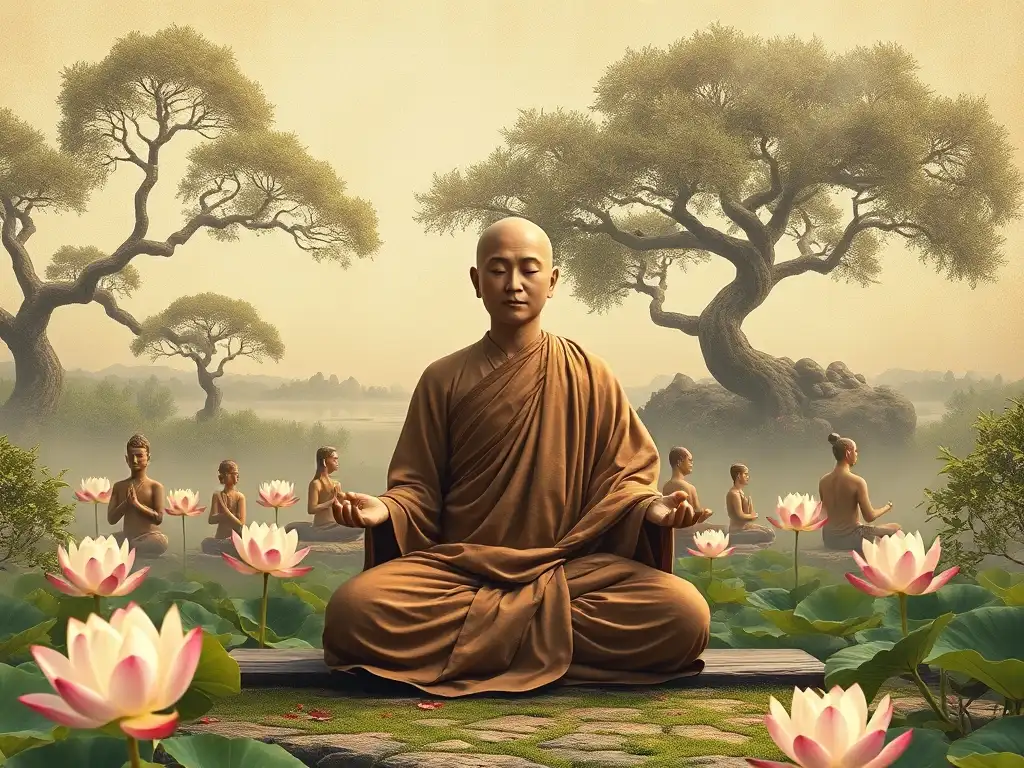
The transition from classical Yoga, as detailed in texts like the Yoga Sutras of Patanjali, to modern Yoga has seen significant adaptations influenced by Buddhist teachings. In the late 19th and early 20th centuries, as interest in Eastern philosophies grew in the West, Yoga began to evolve into more accessible forms that incorporated Buddhist elements.
One notable adaptation is the integration of mindfulness practices into contemporary Yoga classes. The focus on living in the present moment, a core tenet of Buddhism, has become a central theme in modern Yoga, making it appealing to a broader audience seeking mental peace and stress relief. This shift reflects a blend of traditional Yoga postures (asanas) with mindfulness meditation, creating a practice that addresses both physical and mental well-being.
Additionally, the rise of vinyasa and power yoga reflects a dynamic approach to Yoga that emphasizes flow and breath synchronization, reminiscent of the meditative aspects found in Buddhist practices. This adaptability has allowed Yoga to remain relevant and engaging, appealing to those who may not identify with the more rigid structures of classical Yoga.
Prominent Figures: How Key Buddhist Teachers Shaped Contemporary Yoga
Several key figures have played a pivotal role in shaping contemporary Yoga through their incorporation of Buddhist principles. Among these, T.K.V. Desikachar stands out for his emphasis on the therapeutic aspects of Yoga, influenced by his studies in Buddhist meditation. His teachings encourage adapting Yoga practices to individual needs, promoting a personalized approach that resonates with the Buddhist focus on compassion and understanding.
Another influential figure is B.K.S. Iyengar, known for his alignment-focused style of Yoga. Iyengar's teachings reflect a deep understanding of Buddhist mindfulness, encouraging practitioners to cultivate awareness in each pose. His method has inspired countless practitioners and teachers, bridging the gap between traditional Yoga and the modern emphasis on mindfulness and presence.
Furthermore, the work of Jon Kabat-Zinn in integrating mindfulness into healthcare has popularized the fusion of Buddhist techniques within Yoga. His Mindfulness-Based Stress Reduction (MBSR) program illustrates how Buddhist practices can enhance physical and mental health, further influencing contemporary Yoga practices.
Practical Applications of Buddhist Influence on Yoga
The influence of Buddhism on Yoga philosophy extends beyond theory into practical applications that enhance the overall experience of practitioners. These applications emphasize mindfulness, compassion, and self-awareness, fostering personal growth and well-being.
Mindfulness-Based Practices: Incorporating Buddhist Techniques into Yoga
Mindfulness-based practices in Yoga have become increasingly popular, drawing directly from Buddhist traditions. Techniques such as mindful breathing, body scans, and focused meditation are now integral components of many Yoga classes. These practices encourage a heightened awareness of thoughts, emotions, and physical sensations, allowing practitioners to cultivate a deeper connection to themselves.
Additionally, the integration of metta (loving-kindness) meditation into Yoga routines promotes a sense of compassion towards oneself and others. This approach not only enhances the emotional benefits of Yoga but also aligns with the Buddhist principle of interconnectedness, fostering a supportive community within classes.
The emphasis on present-moment awareness also aids in stress reduction and emotional regulation, making mindfulness a powerful tool for those seeking relief from the pressures of modern life. By incorporating these techniques, Yoga becomes a holistic practice that nurtures both body and mind.
The Rise of Buddhist Yoga Retreats: A Fusion of Practices
The popularity of Buddhist Yoga retreats has surged as practitioners seek deeper experiences that combine the physical and spiritual aspects of these traditions. These retreats often feature a blend of Yoga asanas, meditation sessions, and teachings on Buddhist philosophy, creating an immersive environment for personal exploration and growth.
Participants in these retreats benefit from the dual focus on physical practice and mental clarity, often experiencing profound insights into the nature of their thoughts and behaviors. The tranquil settings of these retreats further enhance the experience, allowing individuals to disconnect from daily distractions and engage fully in their practice.
Moreover, these retreats often promote community building, encouraging participants to share their experiences and support one another on their journeys. This sense of belonging aligns with both Buddhist and Yogic philosophies, emphasizing the value of connection and shared growth.
The influence of Buddhism on Yoga philosophy is evident in various aspects of practice, from the evolution of traditional teachings to the practical applications in contemporary settings. This rich interplay continues to inspire practitioners, making Yoga a dynamic and multifaceted discipline that resonates across cultures and time.
Conclusion: The Lasting Impact of Buddhism on Yoga Philosophy
The confluence of Buddhism and Yoga philosophy has left a profound and lasting impact on the spiritual landscape of India and beyond. As both traditions emerged and evolved over centuries, they significantly influenced each other, leading to a rich tapestry of practices and beliefs that continue to shape modern interpretations of yoga.
Buddhism introduced concepts such as mindfulness, meditation, and the understanding of suffering, which became integral to Yoga philosophy. The emphasis on mental discipline and ethical living in Buddhist teachings has enhanced the holistic approach of Yoga, promoting not just physical postures but a comprehensive lifestyle aimed at attaining spiritual liberation. The integration of these principles has fostered a deeper understanding of the self and the nature of existence, making the practice of Yoga a transformative journey.
Moreover, the Buddhist interpretation of concepts like impermanence and non-attachment has enriched the philosophical underpinnings of Yoga. Practitioners are encouraged to cultivate awareness of the transient nature of thoughts and experiences, leading to a more profound experience of the present moment. This interweaving of philosophies highlights the adaptability and depth of Yoga, demonstrating how it can evolve while retaining its core essence.
As we navigate through the complexities of modern life, the teachings derived from this intersection offer valuable insights. The lasting impact of Buddhism on Yoga philosophy serves as a reminder of the interconnectedness of various spiritual traditions, encouraging practitioners to explore and integrate diverse teachings for a more enriching experience.
Future Directions: Continuing Integration of Buddhist Principles in Yoga
The future of Yoga philosophy is poised for further evolution as the integration of Buddhist principles continues to resonate with practitioners worldwide. As the global interest in mindfulness and holistic health grows, the teachings of Buddhism remain a vital component of modern Yoga practices.
One of the key areas of growth is the emphasis on mindfulness meditation. This practice, rooted in Buddhist tradition, is increasingly being incorporated into yoga classes and workshops. By focusing on breath awareness and present-moment attention, practitioners can cultivate a deeper connection to their practice, enhancing the benefits of both physical and mental well-being. This ongoing integration will likely lead to more innovative approaches that blend traditional teachings with contemporary needs.
Additionally, the dialogue between Buddhism and Yoga is expected to expand, with teachers and scholars from both traditions engaging in discussions and collaborations. This exchange of ideas can foster a richer understanding of the philosophical underpinnings of both practices, leading to the development of new methodologies that honor their respective heritages while addressing modern challenges.
Moreover, as the global yoga community continues to diversify, there is an increasing recognition of the importance of ethical and compassionate living, principles deeply embedded in Buddhist teachings. This could lead to a broader movement within Yoga that emphasizes social responsibility and environmental awareness, encouraging practitioners to apply their insights beyond the mat.
The future of Yoga philosophy, influenced by Buddhism, holds significant potential for growth and transformation. As practitioners seek deeper meaning and connection within their practice, the principles of Buddhism will likely continue to play a pivotal role in shaping the evolution of Yoga, fostering a more integrated, mindful, and compassionate approach to life.
- Understanding Buddhism and Its Core Principles
- The Relationship Between Buddhism and Yoga Philosophy
- Key Concepts in Yoga Philosophy Influenced by Buddhism
- The Role of Meditation: Mindfulness and Concentration Techniques
- The Concept of Suffering: Dukkha and Its Relation to Yoga Practice
- The Notion of Enlightenment: Nirvana and Samadhi Explained
- Major Buddhist Texts Shaping Yoga Philosophy
- The Dhammapada: Insights into Ethics and Conduct
- The Yoga Sutras of Patanjali: Integrating Buddhist Thought
- The Evolution of Yoga Philosophy Through Buddhist Influence
- The Transition from Classical to Modern Yoga: Influences and Adaptations
- Practical Applications of Buddhist Influence on Yoga
- Conclusion: The Lasting Impact of Buddhism on Yoga Philosophy
- What is the main focus of the article "The Impact of Buddhism on the Development of Yoga Philosophy"?
- How did Buddhism influence Yoga philosophy?
- What are the key contributions of ancient Indian civilizations to Yoga?
- Can you name any texts that reflect Buddhism's influence on Yoga?
- Why is understanding the influence of Buddhism on Yoga philosophy important?
Frequently Asked Questions
What is the main focus of the article "The Impact of Buddhism on the Development of Yoga Philosophy"?
The article explores the interconnections between Buddhism and Yoga, highlighting how Buddhist principles have shaped the evolution of Yoga philosophy over time.
How did Buddhism influence Yoga philosophy?
Buddhism introduced concepts such as mindfulness and meditative practices, which significantly enriched Yoga philosophy, emphasizing inner peace and spiritual growth.
What are the key contributions of ancient Indian civilizations to Yoga?
Ancient Indian civilizations, particularly during the Gupta Empire, contributed foundational texts and practices that integrated Buddhism, enhancing the spiritual dimensions of Yoga.
Can you name any texts that reflect Buddhism's influence on Yoga?
Key texts like the Yoga Sutras of Patanjali and various Buddhist scriptures illustrate the blending of philosophical ideas and practices from both traditions.
Why is understanding the influence of Buddhism on Yoga philosophy important?
Recognizing this influence helps in grasping the holistic nature of Yoga, showcasing its evolution and relevance in promoting mental and spiritual well-being in modern practices.
Final Reflection: The Interwoven Paths of Buddhism and Yoga Philosophy
The influence of Buddhism on Yoga philosophy is not merely a historical footnote; it is a living testament to the profound interconnectedness of spiritual traditions. As we navigate an increasingly complex world, understanding how these philosophies have shaped one another offers us valuable insights into our own spiritual journeys. The dialogue between Buddhism and Yoga continues to resonate today, reminding us that the quest for inner peace and enlightenment transcends cultural boundaries.
Culturally and socially, the fusion of Buddhism and Yoga philosophy has created a rich tapestry that informs contemporary practices and beliefs. This interplay encourages individuals to explore their own spirituality in a holistic manner, blending mindfulness with physical discipline. As the renowned Buddhist teacher Thich Nhat Hanh once said, The mind is like a garden; if you do not cultivate it, it will grow wild.
This quote encapsulates the essence of how both traditions emphasize the importance of nurturing our inner landscape, fostering a deeper connection to ourselves and the world around us.
As you reflect on the teachings and practices derived from the convergence of Buddhism and Yoga, consider how they can inspire your own life. Take a moment to explore your inner garden; what seeds of mindfulness and compassion can you cultivate today? Embrace the wisdom of these ancient philosophies and allow them to guide you toward a more harmonious existence. The journey of self-discovery is ongoing, and every step you take can contribute to a more peaceful and enlightened world.
Unveil Your Inner Peace: Take Action Today!
Thank you for taking the time to explore the fascinating intersection of Buddhism and yoga philosophy. You've gained valuable insights into how these ancient teachings intertwine to promote harmony and personal growth. Now, it's time to translate that knowledge into meaningful action!
Here are some steps you can take to deepen your practice and understanding:
- Immerse yourself in a meditation practice: Start with just 5 minutes a day and gradually increase your time to cultivate mindfulness and inner peace.
- Join a local yoga class or group: Engage with a community that shares your interest in yoga philosophy and Buddhist teachings for a more enriching experience.
- Share your insights: Discuss what you've learned with friends or on social media to spark conversations and inspire others on their journey.
As you embark on this reflective path, consider this: How might integrating both Buddhist and yoga philosophies transform your daily life?