
The Influence of Ancient Indian Mathematics on Yoga Postures and Alignments

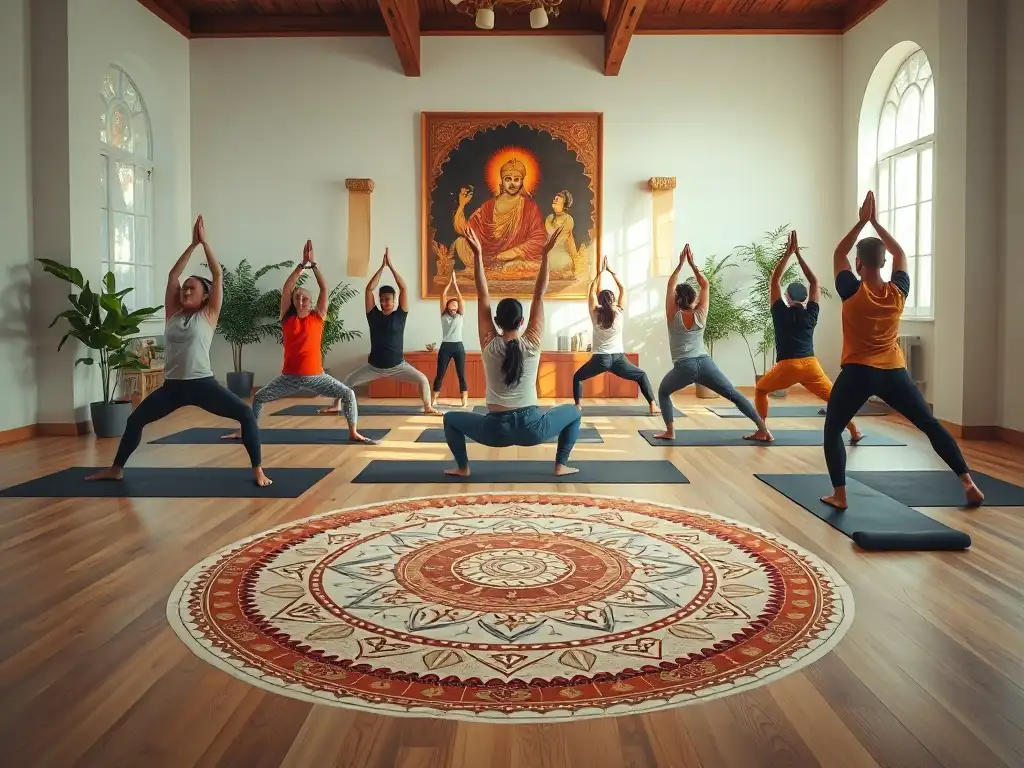
Welcome to Ancient India History, where we embark on a fascinating journey through the vibrant tapestry of ancient Indian civilizations. Here, we delve into the profound influence of ancient Indian mathematics on yoga postures and alignments, revealing how these two seemingly distinct realms are intricately woven together. What if the key to perfecting your yoga practice lies in the ancient mathematical principles that shaped it?
Join us as we uncover the secrets of wisdom passed down through centuries, and discover how the legacy of ancient Indian scholars continues to enrich our understanding of wellness today. Dive deeper and let the exploration begin!
Introduction to Ancient Indian Mathematics and Yoga
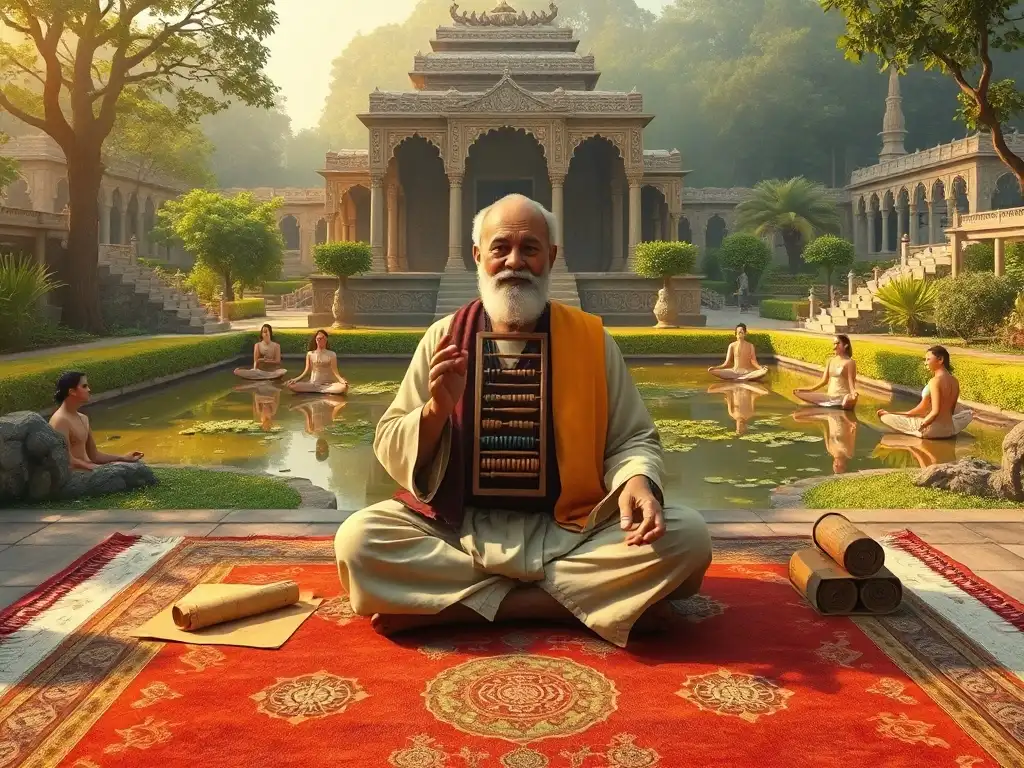
The interplay between ancient Indian mathematics and yoga is a fascinating subject that reveals the profound depth of Indian civilization. Mathematics is often viewed merely as a collection of numbers and formulas; however, in ancient India, it was intricately woven into the very fabric of life, influencing various domains, including philosophy, spirituality, and the practice of yoga. Yoga, known for its holistic approach to physical and mental well-being, not only incorporates physical postures (asanas) but also emphasizes the alignment of the body in relation to the mind and spirit.
The principles of mathematics—such as symmetry, geometry, and proportions—are reflected in the alignment and execution of yoga postures, enhancing both their efficacy and aesthetic appeal. By exploring the connections between ancient Indian mathematics and yoga, we can uncover a rich tapestry of knowledge that highlights how these disciplines complement and enrich each other, ultimately contributing to a more profound understanding of wellness and spirituality in ancient Indian culture.
Historical Context of Ancient Indian Mathematics
Ancient Indian mathematics can be traced back to the Indus Valley Civilization (circa 3300-1300 BCE), where evidence of advanced urban planning and architectural layouts suggests an understanding of geometrical principles. As time progressed, significant contributions emerged during the Vedic period, where mathematicians began to explore concepts such as arithmetic, geometry, and algebra, laying the groundwork for future advancements.
The classical period of Indian mathematics, particularly between the 5th and 12th centuries CE, saw the emergence of notable texts that not only documented mathematical theories but also explored their applications in daily life, including rituals and spiritual practices. This period is crucial for understanding how mathematical concepts were integrated into yoga, influencing the design of asanas and their execution.
Key Figures in Ancient Indian Mathematics
Several prominent mathematicians played pivotal roles in shaping the landscape of ancient Indian mathematics:
- Aryabhata (476-550 CE): Often considered the father of Indian mathematics, Aryabhata introduced concepts such as the place value system and zero, which are foundational in both mathematics and yoga.
- Brahmagupta (598-668 CE): Known for his work in algebra and number theory, Brahmagupta's texts emphasized practical applications of mathematics, which likely influenced the precise movements and alignments in yoga.
- Bhaskara II (1114-1185 CE): His contributions included advancements in calculus and astronomy, highlighting the relationship between mathematical precision and physical practices like yoga.
These figures not only advanced mathematical thought but also contributed to the philosophical underpinnings of yoga, where the alignment of body and mind can be viewed as a mathematical equation of balance and harmony.
Mathematical Concepts in Ancient Indian Texts
Ancient Indian texts often reflect a deep understanding of mathematical concepts, which can be observed in various aspects of yoga:
- Geometry and Symmetry: Many yoga postures require an understanding of geometric shapes and symmetry to achieve balance and stability. The Patanjali Yoga Sutras and other texts emphasize the importance of posture and alignment, which can be interpreted through a mathematical lens.
- Proportions: The concept of proportions, vital in both mathematics and art, is crucial in yoga as practitioners aim for equal distribution of weight and energy in postures.
- Rhythm and Patterns: The flow of breath and movement in yoga can also be associated with mathematical rhythms, echoing the principles found in ancient Indian music and dance.
The intersection of ancient Indian mathematics and yoga offers a unique perspective on how these disciplines are interrelated, enhancing our understanding of both practices. Through this exploration, we can appreciate the depth of knowledge that ancient Indian civilizations contributed to the world, particularly in the realms of wellness and spirituality.
The Philosophy of Yoga in Ancient India
Yoga, rooted deeply in ancient Indian philosophy, encompasses more than mere physical postures; it is a holistic practice that integrates mind, body, and spirit. The philosophical foundations of yoga can be traced back to ancient texts like the Vedas, Upanishads, and the Yoga Sutras of Patanjali, which offer profound insights into the nature of existence, consciousness, and the interconnectedness of all beings.
The essence of yoga lies in its goal of achieving unity with the self and the universe, often described as “yuj,” meaning to join or unite. This quest for union reflects the intrinsic belief in a cosmic order and the pursuit of self-realization. Ancient Indian sages understood that the body serves as a vehicle for spiritual growth; therefore, physical practices were designed to facilitate deeper states of meditation and awareness.
Moreover, the philosophy of yoga emphasizes ethical principles, known as the Yamas and Niyamas, which guide practitioners toward a balanced and harmonious life. These principles not only shape individual conduct but also promote a sense of responsibility towards others and the environment. Thus, yoga in ancient India was a comprehensive discipline aimed at cultivating both physical health and spiritual enlightenment.
Understanding Yoga Beyond Physical Postures
While many contemporary interpretations of yoga focus heavily on asanas (physical postures), ancient Indian philosophy teaches that yoga is a multifaceted practice integrating various elements, including breath control (pranayama), meditation (dhyana), and ethical living. This broader understanding emphasizes the importance of inner awareness and mental clarity, highlighting that the physical postures are merely a gateway to deeper spiritual experiences.
The practice of yoga invites individuals to observe their thoughts, emotions, and physical sensations, fostering a greater connection between the mind and body. This introspective approach encourages practitioners to explore their true nature, promote self-discipline, and cultivate a sense of peace and well-being. The ancient texts assert that the ultimate goal of yoga is to transcend the limitations of the ego and realize the interconnectedness of all life.
Through this lens, yoga becomes a powerful tool for personal transformation and self-discovery, allowing individuals to navigate the challenges of life with greater resilience and understanding.
The Role of Alignment in Yoga Practice
Alignment plays a crucial role in the practice of yoga, serving as a foundation for both safety and effectiveness in asanas. Proper alignment ensures that practitioners engage their muscles and joints correctly, reducing the risk of injury while maximizing the benefits of each posture. This focus on alignment reflects the ancient Indian understanding of balance—both within the body and in relation to the surrounding environment.
Incorporating principles of alignment into yoga practice also aligns with the ancient Indian belief in the harmony of the physical, mental, and spiritual aspects of being. The physical body must be aligned correctly to allow the energy (prana) to flow freely, facilitating deeper states of meditation and awareness. This interconnectedness between alignment and energy flow underscores the holistic nature of yoga.
Moreover, alignment serves as a metaphor for balance in life, encouraging practitioners to cultivate stability and mindfulness in their daily actions. By paying attention to alignment, both on and off the mat, individuals can foster a sense of equilibrium that transcends physical practice.
Intersection of Ancient Indian Mathematics and Yoga Postures

The intersection of ancient Indian mathematics and yoga postures reveals a fascinating relationship between geometry and physical practice. Mathematicians and yogis of ancient India understood that certain geometric principles could enhance the effectiveness and beauty of yoga postures. This integration of mathematics into yoga reflects a holistic worldview where physicality and spirituality converge.
Ancient texts often describe asanas in terms of shapes and forms, illustrating how practitioners could embody these geometric concepts. The incorporation of mathematical principles into yoga not only enhances physical alignment but also deepens the spiritual experience of the practitioner.
Geometric Principles in Yoga Postures
Geometric principles such as symmetry, angles, and proportions are intrinsic to the practice of yoga. Many asanas mimic geometric shapes, such as triangles, squares, and circles, reflecting a profound understanding of balance and stability. For instance, in the pose of Trikonasana (Triangle Pose), the body forms a triangle, which is known for its strength and durability in geometry.
These geometric forms allow practitioners to explore the relationships between their bodies and the space around them. By aligning the body according to these principles, practitioners can achieve a greater sense of stability and strength, thereby enhancing their overall practice.
Furthermore, the use of geometry in yoga postures serves to illustrate the concept of interconnectedness, as each pose interacts with the environment in a harmonious manner. This relationship between geometry and yoga not only enriches the physical practice but also deepens the practitioner's understanding of their place within the universe.
Symmetry and Balance in Yoga Alignments
Symmetry and balance are fundamental concepts in both ancient Indian mathematics and yoga practice. Achieving symmetry in asanas is essential for maintaining stability and preventing injury. When the body is balanced symmetrically, it allows for equal distribution of weight, which is crucial in various postures.
In yoga, practitioners often focus on achieving a balanced alignment where both sides of the body are equally engaged. This emphasis on symmetry not only enhances physical stability but also promotes mental clarity and emotional equilibrium. Ancient Indian teachings suggest that balance within the body reflects balance in the mind and spirit, reinforcing the notion that yoga is a holistic practice.
Moreover, the pursuit of balance extends beyond individual postures, encouraging practitioners to cultivate a sense of harmony in their overall lives. By understanding and applying the principles of symmetry and balance, individuals can create a more integrated and fulfilling experience both on and off the mat.
The rich interplay between ancient Indian mathematics and yoga postures highlights a profound understanding of the physical, mental, and spiritual dimensions of practice, guiding practitioners toward greater awareness and harmony.
Case Studies: Ancient Texts and Their Influence on Modern Yoga
The connection between ancient Indian mathematics and yoga is deeply rooted in historical texts and practices that have shaped how yoga is taught and practiced today. Two significant texts, the Yoga Sutras of Patanjali and the Hatha Yoga Pradipika, offer insights into the mathematical principles that inform yoga postures and alignments. These historical documents not only provide philosophical frameworks but also contain detailed instructions on the mechanics of the body, which can be understood through a mathematical lens.
The Yoga Sutras of Patanjali
The Yoga Sutras of Patanjali, composed around 400 CE, is a foundational text in yoga philosophy that outlines the eight limbs of yoga, known as Ashtanga. While primarily a philosophical treatise, the Sutras illustrate the importance of balance and proportion, which can be related to mathematical concepts. For instance, the idea of samyama emphasizes the coordination of body and mind, akin to the balanced equations in mathematics.
Patanjali's emphasis on asana (postures) reflects a structured approach to body alignment that can be analyzed through geometric principles. The Sutras elucidate how practitioners can create stability and flexibility in their postures by understanding angles, symmetry, and the body's center of gravity. This mathematical understanding aids in achieving optimal alignment, enhancing both physical practice and meditative states.
The Hatha Yoga Pradipika
Another critical text, the Hatha Yoga Pradipika, written by Swami Swatmarama in the 15th century, provides practical guidance on various yoga practices, including asanas, pranayama (breath control), and meditation. This text delves into the physical aspects of yoga, describing postures in detail and emphasizing the importance of alignment.
Mathematics plays a pivotal role in the Hatha Yoga Pradipika through its descriptions of body mechanics and spatial awareness. For example, the alignment of the spine and limbs in various asanas can be understood through geometric relationships, ensuring that practitioners maintain equilibrium and prevent injury. The text's systematic approach to postures can be likened to mathematical formulas, where specific alignments yield optimal results in terms of strength, balance, and energy flow.
Practical Applications: Integrating Mathematics into Yoga Practice
The insights gleaned from ancient texts about the interplay between mathematics and yoga are increasingly being applied in contemporary yoga practices. This integration enhances the efficacy of yoga postures and promotes a deeper understanding of alignment principles.
Workshops and Classes Focusing on Alignment
Many modern yoga studios now offer workshops and classes that emphasize alignment through a mathematical lens. These sessions often incorporate the principles derived from ancient texts, teaching students how to visualize their bodies in geometric terms.
Practitioners learn to consider angles, spatial relationships, and proportions, which helps them refine their postures. By applying mathematical concepts, such as symmetry and balance, students can achieve greater stability and reduce the risk of injury. These classes often include specific drills and exercises designed to highlight how precise alignment can enhance the overall practice.
Tools and Products for Yoga Alignment
The modern yoga market has seen an increase in tools and products designed to assist practitioners in achieving proper alignment, reflecting the influence of ancient Indian mathematics on contemporary practices. Items such as alignment mats, blocks, and straps are designed to support the body in achieving optimal postures.
These products often come with guidelines that draw from the mathematical principles of alignment. For example, alignment mats may feature printed lines or grids to help practitioners visualize their body positioning in relation to the mat's dimensions. Similarly, blocks can be used to adjust the height of postures, ensuring that practitioners maintain proper alignment regardless of their flexibility level.
Through these practical applications, the legacy of ancient Indian mathematics continues to influence how yoga is practiced, making it more accessible and effective for practitioners of all levels.
Conclusion: The Lasting Impact of Ancient Indian Mathematics on Yoga
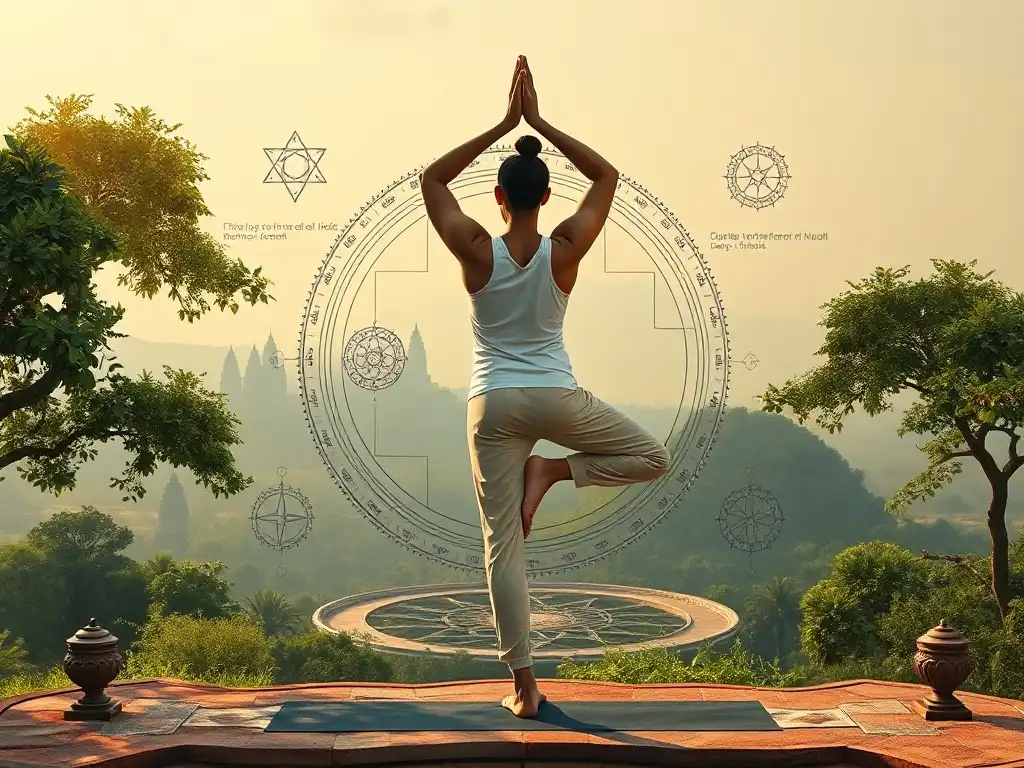
The interplay between ancient Indian mathematics and yoga is a profound illustration of how disciplines can influence one another, creating a rich tapestry of knowledge that has shaped practices for centuries. The precise alignments and postural techniques in yoga, often derived from mathematical principles, underscore the sophistication of ancient Indian thought. This connection not only enhances the physical practice of yoga but also deepens its philosophical foundations, revealing an intricate relationship between the body, mind, and the universe.
The legacy of ancient Indian mathematics continues to inform contemporary yoga practices, bridging traditional wisdom with modern interpretations. As practitioners engage with yoga postures, they unknowingly embrace the mathematical concepts that guide their alignment and balance, leading to a more profound understanding of their bodies and the principles of harmony within.
Moreover, the influence of ancient Indian mathematics extends beyond yoga, permeating various fields such as astronomy, architecture, and philosophy. This multifaceted impact highlights the importance of recognizing and preserving the contributions of ancient civilizations, especially as we seek to integrate holistic practices like yoga into our modern lives.
Further Reading and Resources
For those interested in exploring the connections between ancient Indian mathematics and yoga further, the following resources are recommended:
- Books:
- "The Yoga Sutras of Patanjali" – A foundational text that outlines the philosophy behind yoga, providing insights into the alignment and balance inherent in yoga postures.
- "Mathematics in Ancient India" by Kim Plofker – This book delves into the mathematical concepts developed in ancient India and their applications in various fields.
- Research Articles:
- Articles on the historical context of yoga and its mathematical influences can often be found in journals dedicated to the study of ancient civilizations or Indian philosophy.
- Online Courses:
- Platforms offering courses on yoga philosophy might also touch upon the mathematical principles that inform yoga practices.
- Documentaries:
- Documentaries exploring the history of yoga and mathematics in ancient India can provide visual insights into the practices and their evolution.
References
- Plofker, K. (2009). Mathematics in Ancient India. Princeton University Press.
- Patanjali. The Yoga Sutras of Patanjali. Various translations available.
- Ghosh, A. (2008). "The Interrelation of Yoga and Mathematics in Ancient India". Journal of Indian Philosophy.
- Sharma, R. (2016). "The Mathematical Foundations of Yoga Postures". International Journal of Yoga Studies.
- Introduction to Ancient Indian Mathematics and Yoga
- Historical Context of Ancient Indian Mathematics
- The Philosophy of Yoga in Ancient India
- Intersection of Ancient Indian Mathematics and Yoga Postures
- Case Studies: Ancient Texts and Their Influence on Modern Yoga
- Practical Applications: Integrating Mathematics into Yoga Practice
- Conclusion: The Lasting Impact of Ancient Indian Mathematics on Yoga
- Further Reading and Resources
- References
- What is the connection between ancient Indian mathematics and yoga?
- How did ancient Indian mathematicians contribute to yoga postures?
- What role does alignment play in yoga practice according to ancient Indian teachings?
- Are there any specific yoga postures that are directly influenced by ancient Indian mathematical concepts?
- How can modern practitioners incorporate these principles into their yoga practice?
Frequently Asked Questions
What is the connection between ancient Indian mathematics and yoga?
Ancient Indian mathematics has significantly influenced yoga by providing precise measurements and alignments for postures, ensuring they are performed accurately for maximum benefits.
How did ancient Indian mathematicians contribute to yoga postures?
They developed geometric principles and concepts of ratios and angles, which helped in designing yoga postures that promote balance, stability, and alignment in the body.
What role does alignment play in yoga practice according to ancient Indian teachings?
Alignment is crucial in yoga practices as it ensures that the body is in the correct position, enhancing the effectiveness of the poses while preventing injuries and promoting well-being.
Are there any specific yoga postures that are directly influenced by ancient Indian mathematical concepts?
Yes, many postures, such as Trikonasana (Triangle Pose) and Padmasana (Lotus Pose), embody geometric shapes and principles derived from ancient mathematics to enhance alignment and stability.
How can modern practitioners incorporate these principles into their yoga practice?
By understanding the mathematical aspects of postures, practitioners can focus on proper alignment and proportions, leading to a more effective and fulfilling yoga experience.
Final Reflection: The Harmonious Intersection of Ancient Indian Mathematics and Yoga
The profound connection between ancient Indian mathematics and yoga is not just a historical curiosity; it is a testament to how precision and balance can shape our physical and spiritual practices today. In an age where we often seek holistic well-being, understanding these ancient principles can enhance our yoga practice and deepen our connection to its roots. The intricate alignments and postures in yoga, influenced by mathematical concepts, remind us that our journey towards physical and mental harmony is grounded in a rich heritage of knowledge.
The influence of ancient Indian mathematics on yoga is a reflection of how interconnected our cultural practices are, shaping our understanding of balance and symmetry in life. As we explore the postures and their alignments, we realize that they are not merely physical exercises but rather a dance of mathematical precision and spiritual awakening. Mathematics is the language with which God has written the universe.
– Galileo Galilei. This quote resonates deeply as it encapsulates the essence of how ancient Indian mathematicians viewed the world, and how their insights continue to inspire our yoga practices today.
As you step off the mat and into your daily life, I invite you to reflect on the lessons of balance and alignment that both ancient Indian mathematics and yoga impart. Consider how you can integrate these principles into your own journey, fostering a deeper connection to your body and mind. Embrace the wisdom of the past as you navigate the complexities of the present, allowing the harmony of mathematics and yoga to guide you toward a more centered and fulfilling existence.
Unlock the Power of Ancient Wisdom through Action!
Thank you for exploring the fascinating connection between ancient Indian mathematics and yoga postures! Your interest not only enriches your understanding but also empowers you to deepen your practice. Now, let’s embrace this knowledge and take meaningful steps forward.
Here’s how you can engage further:
- Explore Yoga Techniques: Incorporate principles of alignment and balance into your daily yoga practice to enhance your postures.
- Share Your Journey: Discuss your experiences with friends or online communities. Share how integrating these concepts has transformed your practice.
- Discover More: Seek out workshops or resources that delve deeper into the relationship between mathematics and yoga.
What has been your biggest revelation about the connection between ancient wisdom and your yoga practice? **We invite you to share your thoughts in the comments below! **