
How Chandragupta Maurya Established a Bureaucratic System in Ancient India

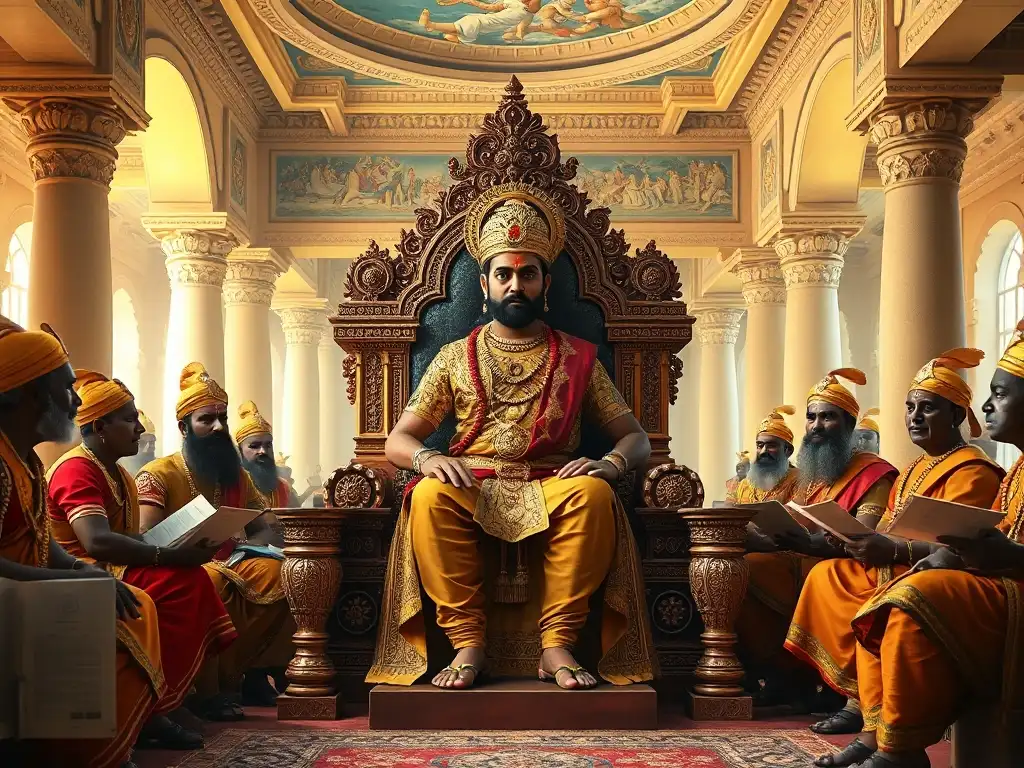
Welcome to Ancient India History, where we delve deep into the rich tapestry of India’s past, exploring the vibrant cultures and remarkable contributions of ancient civilizations. In this journey, we invite you to uncover the fascinating story of Chandragupta Maurya—a key historical figure whose innovative bureaucratic system laid the foundation for governance in Ancient India. What strategies did he employ to unify a vast empire?
How did his methods influence future administrations? Join us as we unravel these intriguing questions and more, setting the stage for a deeper understanding of this extraordinary era. Dive in and discover the legacy of a ruler who transformed the course of history!
- Introduction to Chandragupta Maurya and His Bureaucratic System
- The Rise of Chandragupta Maurya
- Foundations of the Bureaucratic System in Ancient India
- Structure of Chandragupta Maurya's Bureaucratic System
- Implementation of the Bureaucratic System
- The Role of Chanakya in Shaping the Bureaucratic System
- Impact of Chandragupta Maurya's Bureaucratic System
- Conclusion
-
Frequently Asked Questions
- What was the significance of Chandragupta Maurya's bureaucratic system?
- How did Chandragupta Maurya implement his bureaucratic system?
- What were the main features of the bureaucratic system established by Chandragupta Maurya?
- How did Chandragupta Maurya's system influence later Indian empires?
- What role did Kautilya play in Chandragupta Maurya's bureaucratic system?
- Final Reflection: The Enduring Legacy of Chandragupta Maurya's Bureaucratic System
- Unleash the Power of Ancient Governance Today!
Introduction to Chandragupta Maurya and His Bureaucratic System
Chandragupta Maurya, a pivotal figure in ancient Indian history, is renowned for founding the Maurya Empire, which marked a significant turning point in the political landscape of the Indian subcontinent. His visionary leadership not only unified various kingdoms but also laid the groundwork for a sophisticated bureaucratic system that would influence governance in India for centuries to come.
Understanding how Chandragupta Maurya established a bureaucratic system provides insights into the administrative innovations that supported his empire's stability and expansion. This article will explore the mechanisms of governance that characterized Chandragupta's rule and examine the broader historical context of ancient India during this transformative period.
Overview of Chandragupta Maurya's Historical Significance
Chandragupta Maurya emerged as a formidable leader in the 4th century BCE, establishing one of the largest empires in ancient India. His significance lies not only in his conquests but also in his ability to create a centralized administration that effectively managed a diverse population. Under his rule, the Maurya Empire stretched from the northern regions of India to the Deccan Plateau, encompassing various cultures and communities.
Key aspects of his historical significance include:
- Unification of India: Chandragupta's military campaigns successfully unified several small kingdoms, creating a sense of national identity and political cohesion.
- Foundation of a Bureaucratic System: He established a structured bureaucracy, which included various administrative divisions and appointed officials responsible for governance, tax collection, and law enforcement. This system enabled efficient management of the vast empire.
- Influence on Future Governance: The principles laid down by Chandragupta's administration influenced subsequent Indian rulers, including his grandson, Ashoka the Great, whose reign is often viewed as a golden age of Indian civilization.
The Context of Ancient India During Chandragupta's Reign
To fully appreciate the advancements made by Chandragupta Maurya, it is essential to consider the historical context of ancient India during his reign. The period preceding his rise to power was characterized by political fragmentation and instability.
- Political Landscape: The Indian subcontinent was marked by numerous small kingdoms and regional powers, each vying for dominance. This disunity often led to conflict and vulnerability to external invasions.
- Economic Conditions: Trade routes were established, and agriculture flourished, but the lack of a centralized authority hindered economic growth and stability. The Mauryan Empire's establishment brought about a more organized trade system and better resource management.
- Cultural Diversity: Ancient India was a melting pot of different cultures, languages, and religions. Chandragupta's bureaucratic system had to navigate this diversity, ensuring that various groups felt represented and included within the empire.
Chandragupta Maurya's establishment of a bureaucratic system was not merely a product of his ambitions but a response to the needs and complexities of ancient Indian society. His legacy continues to influence the political and administrative frameworks of modern India, making his story a crucial chapter in the annals of Indian history.
The Rise of Chandragupta Maurya

Early Life and Influences
Chandragupta Maurya, born around 340 BCE, emerged from humble beginnings in the region of Magadha. His early life was significantly influenced by several factors that shaped his character and ambitions. Growing up in a society marked by disunity and fragmentation, he witnessed the decline of the Nanda Dynasty, which ruled over Magadha. This environment fostered a desire in him to unify the fragmented states of India.
Among the most pivotal influences during his formative years was the philosopher Chanakya (Kautilya), a Brahmin who played a crucial role in shaping Chandragupta’s political ideologies. Chanakya's vision of a centralized governance system stood in stark contrast to the prevalent independent kingdoms. His teachings emphasized the importance of strategy, diplomacy, and military prowess, which Chandragupta adopted as he pursued his ambitions.
Moreover, Chandragupta was inspired by the historical context of the time. The chaos following the fall of the Nanda Empire offered him the perfect opportunity to forge alliances and gather support from various factions. He adeptly engaged with the local populace, securing their loyalty through promises of stability and prosperity. This groundwork was essential in his rise to power and laid the foundation for his subsequent bureaucratic system, which aimed to govern a united empire.
Key Events Leading to the Establishment of His Kingdom
The journey of Chandragupta Maurya towards establishing his kingdom was marked by a series of strategic maneuvers and significant events.
- Alliance with Chanakya: After fleeing from the Nanda court, where he faced persecution, Chandragupta teamed up with Chanakya. Together, they devised a plan to overthrow the Nanda dynasty. This alliance proved to be instrumental in Chandragupta’s rise, as Chanakya provided both political acumen and military strategies.
- Military Campaigns: Chandragupta’s first significant military engagement was against the Nanda forces. With Chanakya’s guidance, he organized a formidable army and employed guerrilla warfare tactics that capitalized on the element of surprise. The successful campaigns against the Nandas culminated in Chandragupta seizing the throne around 321 BCE, marking the beginning of the Maurya Empire.
- Consolidation of Power: Once in power, Chandragupta faced the challenge of consolidating his rule over the vast territories he had conquered. He implemented a series of administrative reforms that laid the groundwork for a robust bureaucratic system. This included appointing provincial governors, establishing a system of taxation, and creating a network of spies to maintain order and gather intelligence.
- Influence of Alexander the Great: During Chandragupta's rise, Alexander the Great invaded northwestern India. Although the Mauryan leader did not directly confront Alexander, the latter's campaigns weakened local kingdoms and enabled Chandragupta to consolidate his power more effectively. After Alexander's retreat, Chandragupta expanded his empire, incorporating territories in the northwest, which further solidified his position.
- Establishment of a Bureaucratic System: Recognizing the need for a structured administration, Chandragupta, with Chanakya's assistance, established a bureaucratic system characterized by well-defined roles and responsibilities. This system facilitated effective governance over the diverse cultures and regions of the Maurya Empire, setting a precedent for future rulers.
Chandragupta Maurya's rise was a product of strategic alliances, military acumen, and the establishment of a bureaucratic system that allowed him to maintain control over a vast empire, ultimately laying the foundation for one of the most significant periods in ancient Indian history.
Foundations of the Bureaucratic System in Ancient India
Definition and Importance of a Bureaucratic System
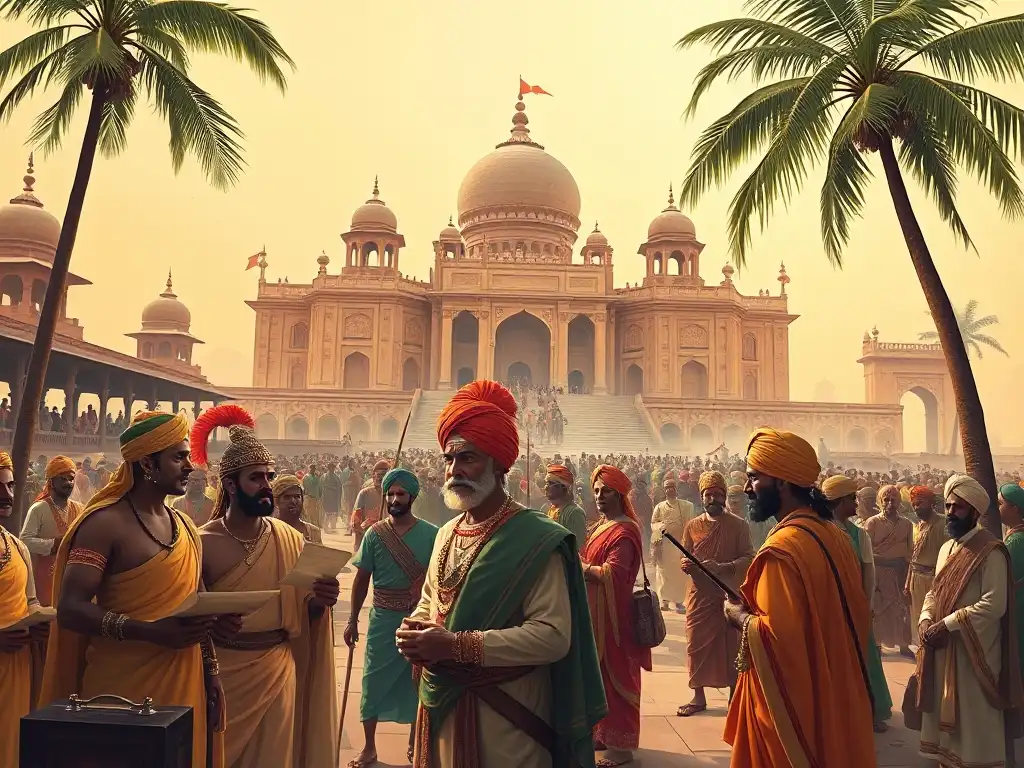
A bureaucratic system is a structured organization that utilizes a hierarchy of authority, standardized procedures, and defined roles to manage the affairs of a state or institution. In the context of ancient India, particularly during the reign of Chandragupta Maurya, this system was pivotal in transforming governance from a loose assembly of local rulers to a centralized authority capable of managing extensive territories and diverse populations.
The significance of a bureaucratic system in the Mauryan Empire can be summarized as follows:
- Centralized Control: Chandragupta established a strong centralized government, allowing for uniformity in administration across his vast empire, which included various ethnic and cultural groups.
- Efficient Tax Collection: With a well-organized bureaucracy, tax collection became systematic, ensuring a steady revenue stream for the state, which was essential for funding military campaigns and public works.
- Law and Order: The bureaucratic structure facilitated the enforcement of laws and maintenance of order, thereby reducing the potential for local insurrections and enhancing the overall stability of the empire.
- Public Welfare: Bureaucratic mechanisms allowed for the implementation of policies that addressed public welfare, such as infrastructure development and support for trade, which in turn contributed to economic prosperity.
In essence, the bureaucratic system established by Chandragupta Maurya laid the groundwork for a more organized and effective governance model that would influence subsequent Indian empires.
Comparison with Other Governance Models in Ancient India
When comparing the bureaucratic system of Chandragupta Maurya with other governance models in ancient India, several key distinctions emerge. Below are a few notable governance models:
- Decentralized Local Rule:
- Description: Prior to the Mauryan Empire, many regions in India were governed by local chieftains or kings, each operating independently.
- Pros: Local rulers were often more attuned to the needs of their communities and could respond quickly to local issues.
- Cons: This model often resulted in fragmentation, with little cohesion among the various regions, leading to conflicts and inefficiencies.
- Monarchical Systems:
- Description: Many ancient Indian states were ruled by monarchs who held absolute power, often justified by divine right.
- Pros: Quick decision-making and clear leadership.
- Cons: Such systems lacked the administrative sophistication necessary for large empires, often leading to corruption and arbitrary rule.
- Guild Systems:
- Description: In urban areas, trade guilds played a significant role in governance, handling local trade regulations and community affairs.
- Pros: Guilds were effective in managing local economies and resolving disputes among merchants.
- Cons: Their influence was limited to urban centers and lacked the authority to govern wider territories.
In contrast, the Chandragupta Maurya bureaucratic system integrated elements of these models but provided a more cohesive framework. It combined the strengths of local governance with centralized authority, creating a layered administrative structure that included:
- District Administrators (Pradeshikas): Oversaw regions and reported directly to the emperor.
- Village Heads (Gramikas): Managed local affairs, ensuring that the needs of the populace were addressed.
- Tax Collectors (Sthanikas): Ensured efficient collection and management of taxes, which were crucial for state revenue.
This bureaucratic innovation not only facilitated efficient governance but also set a precedent for future Indian empires, showcasing how structured administration can enhance state power and stability.
Structure of Chandragupta Maurya's Bureaucratic System
Key Administrative Divisions
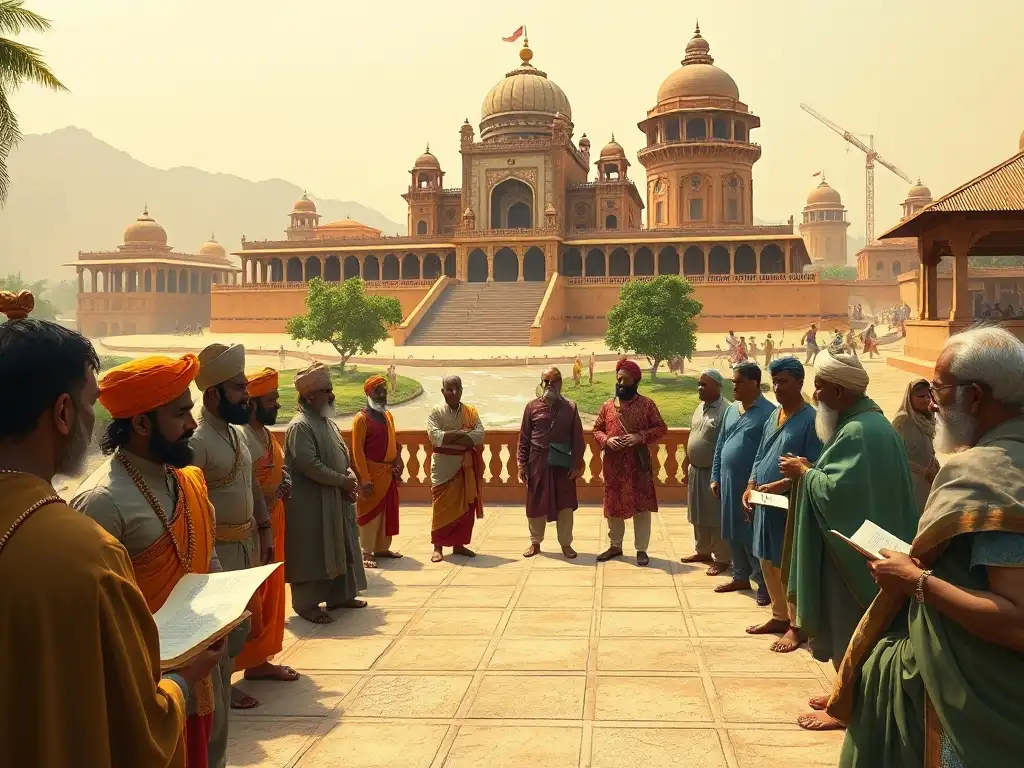
Chandragupta Maurya, the founder of the Maurya Empire, implemented a well-structured bureaucratic system that was crucial for the effective governance of his vast empire. This system was marked by a clear hierarchy and delineation of responsibilities across various administrative divisions, which can be categorized into three main levels:
Central Administration
At the apex of Chandragupta Maurya's bureaucratic framework was the central administration. This body was responsible for formulating policies, managing state affairs, and ensuring the smooth functioning of the empire. Key features of the central administration included:
- The Emperor's Role: Chandragupta himself, guided by his advisor Chanakya (Kautilya), played a pivotal role in decision-making and governance.
- Council of Ministers: A group of trusted officials assisted the king, providing counsel on various matters, ranging from military strategies to economic policies.
- Central Departments: Various ministries were established to oversee specific domains, such as finance, military, foreign affairs, and agriculture. Each ministry was headed by an official accountable for the administration of that sector.
Provincial Administration
The Maurya Empire was divided into several provinces, each governed by a provincial governor, known as a Uparika. This tier of administration was crucial in maintaining law and order and implementing the directives of the central authority. Key aspects included:
- Governance Structure: Each province had its own set of officials who reported to the Uparika, ensuring that the policies of the central government were executed effectively.
- Revenue Collection: Governors were tasked with collecting taxes and managing resources, which were vital for sustaining the empire's economy.
- Cultural Integration: Provincial governors also played a role in promoting local culture and integrating diverse populations into the Mauryan framework.
Local Governance
At the grassroots level, local governance was essential for addressing the needs of rural communities and towns. This level of administration was characterized by:
- Village Assemblies: Local governance was often managed through village councils ( grama sabhas), which allowed villagers to take part in decision-making.
- Local Officials: Appointed officials, such as Pradhanas or Gramika, managed day-to-day affairs, including dispute resolution and local taxation.
- Community Participation: The involvement of local leaders ensured that governance was responsive to the immediate needs of the populace, fostering a sense of ownership and loyalty among citizens.
Roles and Responsibilities of Bureaucrats
The effectiveness of Chandragupta Maurya's bureaucratic system depended greatly on the roles and responsibilities assigned to various bureaucrats throughout the empire. Each level of administration had distinct functions that contributed to the overarching goals of stability and prosperity.
High Officials and Their Functions
High officials played a significant role in the central and provincial administration, executing the orders of the emperor and ensuring adherence to the laws of the land. Their functions included:
- Policy Implementation: High officials were responsible for translating royal decrees into actionable policies.
- Advisory Roles: They advised the emperor on critical issues, providing insights derived from their expertise in various fields.
- Oversight and Accountability: These officials were tasked with monitoring the performance of lower bureaucrats, ensuring accountability and efficiency within the administrative framework.
Regional Governors and Their Authority
Regional governors held substantial power within their provinces, acting as the emperor's representatives. Their authority encompassed:
- Legislative Powers: Governors had the authority to enact laws and regulations pertinent to their provinces, tailored to local needs.
- Military Command: In times of unrest or invasion, governors could mobilize local forces, ensuring the defense of their territories.
- Judicial Functions: They often presided over local disputes, administering justice and maintaining order within their jurisdictions.
Local Leaders and Community Involvement
Local leaders were crucial in bridging the gap between the provincial administration and the common populace. Their involvement included:
- Mediation and Representation: Local leaders acted as mediators between the government and the community, voicing the concerns and needs of the citizens.
- Facilitating Governance: They helped implement central policies at the local level, ensuring that the directives of the central and provincial governments reached the grassroots.
- Encouraging Civic Engagement: By promoting participation in local governance, these leaders fostered a sense of community and responsibility among the populace, which was essential for the stability of the Mauryan Empire.
Through this well-defined bureaucratic system, Chandragupta Maurya not only established a robust framework for governance but also laid the groundwork for future empires in India to build upon. The legacy of his administrative strategies continues to be a point of reference in discussions about governance in ancient India.
Implementation of the Bureaucratic System
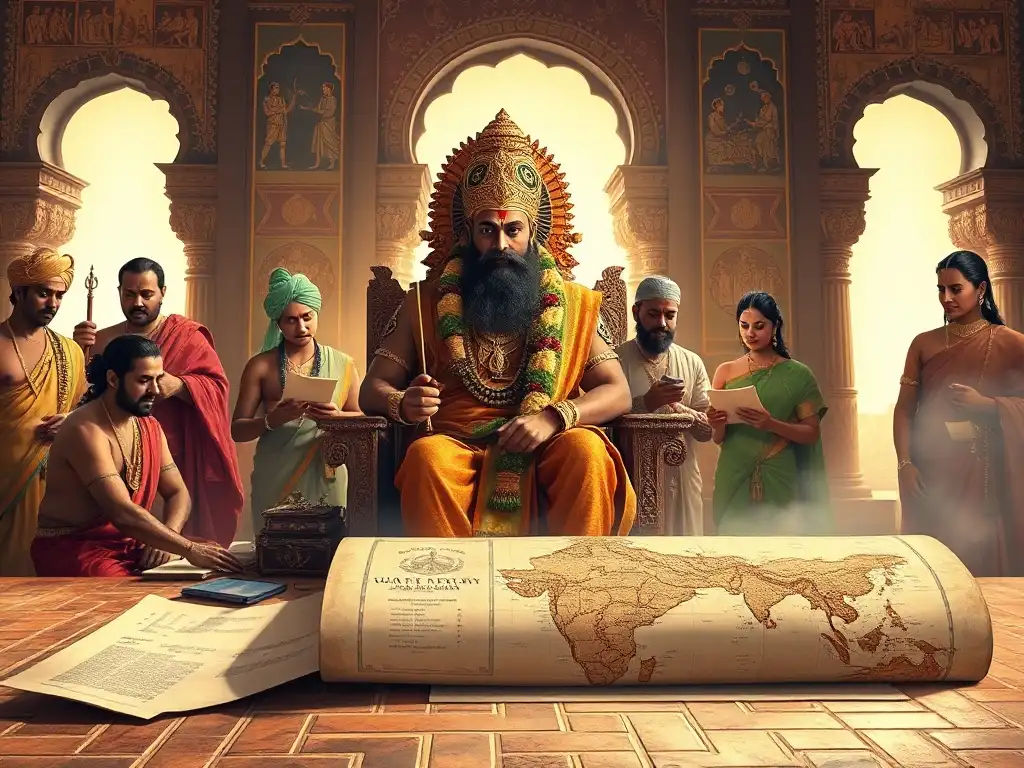
The establishment of a bureaucratic system by Chandragupta Maurya marked a significant turning point in the governance of ancient India. His approach to administration was systematic and innovative, laying the groundwork for the Mauryan Empire's longevity and stability. The implementation of this bureaucratic system was characterized by several strategies and key policies that ensured effective governance across vast territories.
Strategies Employed by Chandragupta Maurya
Chandragupta Maurya, with the guidance of his advisor Chanakya (also known as Kautilya), employed a range of strategies to create a robust bureaucratic framework:
- Centralized Authority:
- Chandragupta established a centralized form of governance, reducing the power of local rulers and integrating them into a unified administrative structure. This helped in ensuring loyalty and reducing regional dissent.
- Divisional Administration:
- The empire was divided into provinces (Janapadas), each managed by appointed governors (Uparikas). This division allowed for more localized governance and made it easier to implement policies and collect taxes.
- Use of Spies:
- A network of spies was established to gather intelligence on various aspects of society, including the sentiments of the populace and the activities of officials. This not only aided in maintaining law and order but also helped in preempting any potential uprisings.
- Standardized Procedures:
- Standardization of administrative procedures, such as land revenue collection and law enforcement, was crucial in streamlining governance. Clear protocols reduced confusion and corruption among officials.
- Legal Framework:
- Chandragupta implemented a legal code that governed the actions of both officials and citizens. This code was instrumental in providing a sense of justice and order within the empire.
Key Policies to Ensure Efficient Governance
To ensure that his bureaucratic system functioned efficiently, Chandragupta Maurya introduced several key policies:
- Land Revenue System:
- A well-defined land revenue system was established, which involved assessing land productivity and collecting taxes accordingly. This system ensured a steady income for the state and minimized disputes over land ownership.
- Merit-Based Appointments:
- Officials were appointed based on merit rather than familial connections. This policy promoted competence and efficiency in governance, as capable individuals were placed in charge of critical administrative roles.
- Public Works and Infrastructure:
- Chandragupta invested in infrastructure projects, such as roads, irrigation systems, and trade routes. This not only facilitated trade and communication but also demonstrated the state’s commitment to the welfare of its citizens.
- Promotion of Trade:
- Policies that encouraged trade, such as reducing tariffs and ensuring the safety of merchants, were implemented. A thriving economy contributed to the stability of the state and allowed for more resources to be allocated to governance.
- Judicial System:
- A structured judicial system was set up, with courts at various levels to handle disputes and administer justice. This helped in maintaining social order and instilling faith in the government among the populace.
Through these strategies and policies, Chandragupta Maurya not only established a bureaucratic system that was effective in governance but also created a legacy that would influence future empires in India. His innovations in administration were pivotal in the success and sustainability of the Mauryan Empire.
The Role of Chanakya in Shaping the Bureaucratic System
Chanakya's Philosophy on Governance
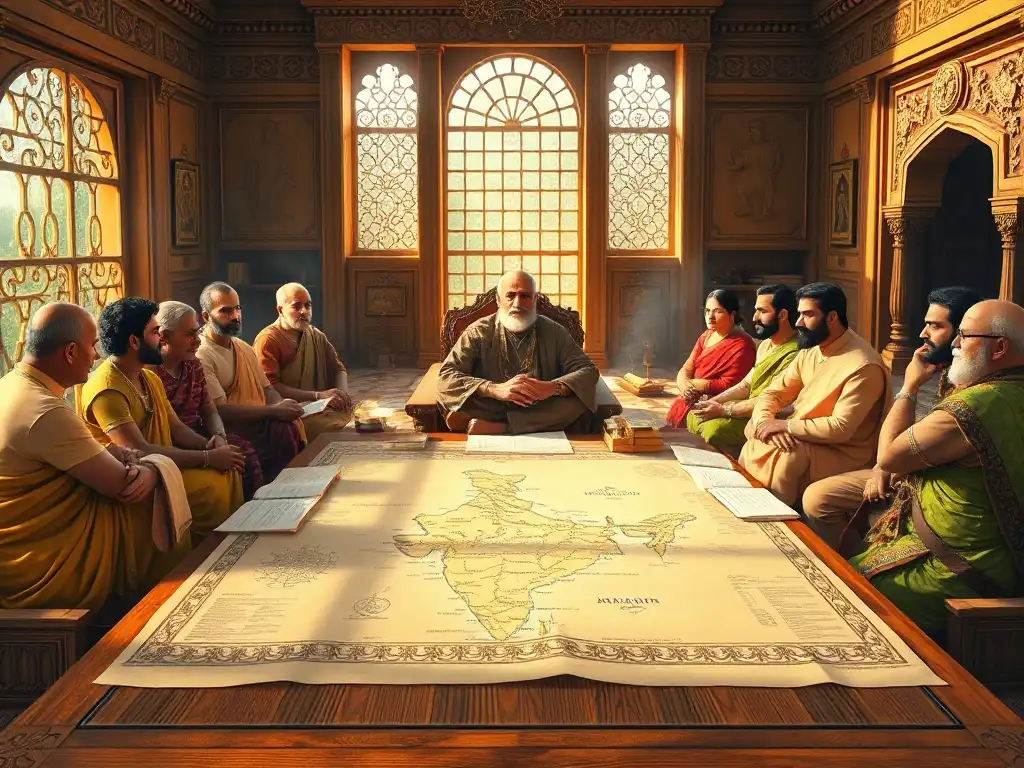
Chanakya, also known as Kautilya, was not only a philosopher and teacher but also a pivotal figure in the establishment of the bureaucratic system under Chandragupta Maurya. His philosophy on governance was rooted in pragmatic realism and strategic statecraft, which he elaborated in his seminal work, the Arthashastra. This ancient text serves as a guide to political administration, focusing on the effective management of the state and its resources.
-
The Importance of a Strong Governance Structure
Chanakya believed that a strong and centralized governance structure was essential for maintaining order and stability in the realm. He emphasized the need for a well-defined hierarchy within the administration, where each official had clearly delineated responsibilities.
-
Meritocracy Over Birthright
Unlike many of his contemporaries who favored aristocratic lineage, Chanakya championed a meritocratic system. He posited that individuals appointed to government positions should be chosen based on their skills and capabilities rather than their social status. This approach ensured that competent individuals were in charge of key administrative roles, thus enhancing efficiency.
-
Surveillance and Intelligence
A notable aspect of Chanakya's governance philosophy was the emphasis on intelligence and surveillance. He advocated for a network of spies and informants to gather information on both the administration and the citizenry. This intelligence system was crucial for preempting dissent and ensuring that the rulers were well-informed of the sentiments of their subjects.
Contributions of Chanakya to Administrative Reforms
Chanakya's contributions to administrative reforms were profound and multifaceted, laying the groundwork for a bureaucratic system that would govern the Mauryan Empire effectively. His strategic insights not only facilitated the rise of Chandragupta Maurya but also established principles that would guide governance in India for centuries.
-
Establishment of a Bureaucratic Framework
Chanakya played a crucial role in designing a bureaucratic framework that included various departments responsible for different aspects of governance, such as taxation, agriculture, and law enforcement. This division of labor allowed for more specialized and efficient administration.
-
Development of Legal and Administrative Codes
He instituted legal codes that outlined the rights and duties of citizens and officials. These codes served to regulate the conduct of both the governed and the governors, promoting accountability within the administration.
-
Promotion of Economic Management
Recognizing the importance of economic prosperity in statecraft, Chanakya implemented reforms that enhanced trade and agriculture. He advised Chandragupta on establishing a robust taxation system that would fund the state while remaining fair to the populace. This balance was critical in sustaining the Mauryan Empire's growth.
-
Training and Education of Officials
Chanakya believed in the continuous training of bureaucrats to adapt to changing circumstances. He established educational institutions to train future administrators in the principles of governance, economics, and military strategy, ensuring a knowledgeable and capable bureaucratic body.
Chanakya's philosophical insights and administrative reforms were instrumental in shaping the bureaucratic system under Chandragupta Maurya. His emphasis on meritocracy, intelligence gathering, and structured governance not only contributed to the stability of the Mauryan Empire but also set a precedent for future administrations in ancient India.
Impact of Chandragupta Maurya's Bureaucratic System
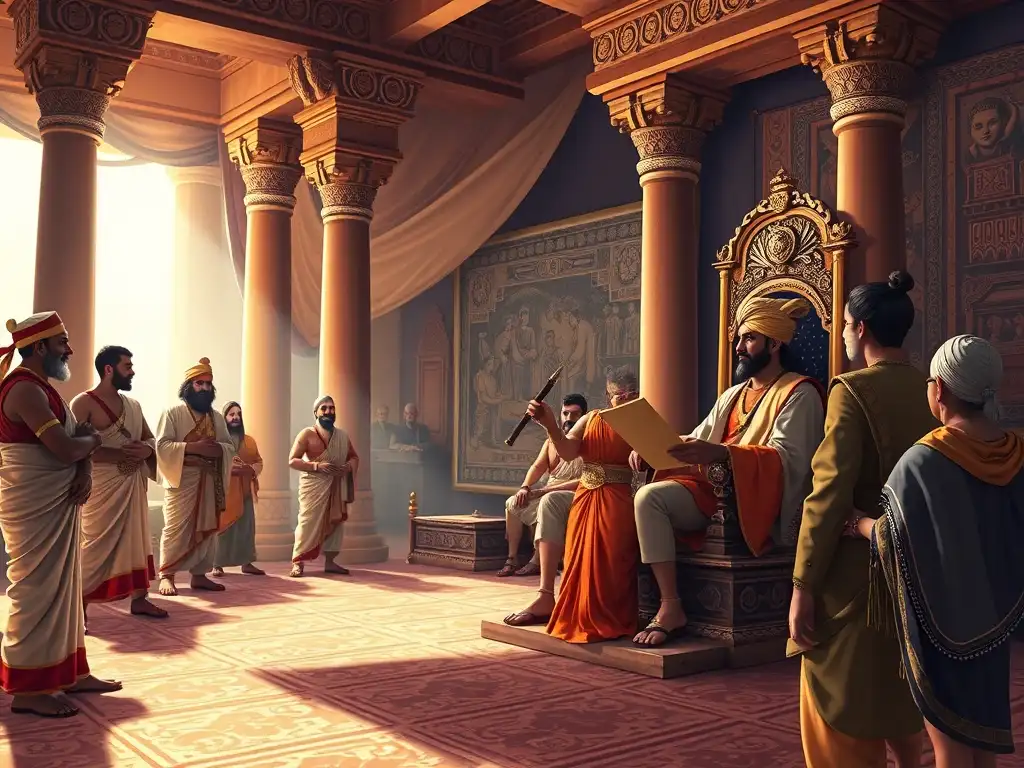
Chandragupta Maurya's establishment of a bureaucratic system was revolutionary for ancient India, laying the foundation for effective governance and administration. His approach to governance not only streamlined the functioning of the state but also enhanced the lives of his subjects. The bureaucratic structure he implemented was characterized by a hierarchy of officials, each responsible for specific functions, which enabled more efficient administration across his vast empire.
Benefits to Society and Governance
The bureaucratic system introduced by Chandragupta Maurya brought several benefits that positively impacted both society and governance:
- Efficient Resource Management:
- Taxation: The introduction of a standardized taxation system allowed for better revenue collection, which financed public works and military campaigns. Citizens were taxed based on their economic status, promoting fairness.
- Agricultural Support: The government provided resources to farmers, ensuring agricultural productivity. This included irrigation systems and granaries, which mitigated famine risks.
- Law and Order:
- Judicial System: A structured legal framework was established to enforce laws, which helped maintain peace and order within society. Officials were assigned to oversee disputes, which reduced the burden on rulers and provided citizens with accessible justice.
- Police Force: The creation of a police force helped in maintaining law and order, curbing crime, and ensuring the safety of citizens. This fostered a sense of security among the populace.
- Public Welfare:
- Infrastructure Development: The Mauryan empire saw significant infrastructure improvements, including the construction of roads, hospitals, and rest houses. This facilitated trade and communication, enhancing the overall quality of life.
- Education and Culture: Chandragupta encouraged the establishment of centers of learning, which promoted education and cultural exchange. This not only uplifted societal standards but also fostered a sense of unity among diverse groups.
- Centralized Governance:
- Clear Hierarchical Structure: The bureaucratic model created a clear chain of command, which ensured that orders from the emperor were effectively communicated and implemented throughout the empire.
- Decentralization of Power: While maintaining central authority, local governors were empowered to manage regional affairs, allowing for greater responsiveness to local needs.
Long-term Effects on Subsequent Indian Empires
The bureaucratic system established by Chandragupta Maurya had profound long-term effects on subsequent Indian empires, shaping the trajectory of governance in the region:
- Influence on Successor Dynasties:
- Maurya Legacy: The administrative practices refined under Chandragupta were adopted and further developed by subsequent dynasties, including the Shungas and the Guptas. This continuity ensured stable governance in the Indian subcontinent for centuries.
- Standardization: Many elements of the Mauryan bureaucracy, such as taxation and law enforcement, became standardized practices in later empires, facilitating smoother transitions between different ruling powers.
- Foundation for Governance Reforms:
- Innovative Administrative Practices: The Mauryan model inspired innovations in governance, including the codification of laws and the establishment of civil services, which were critical for managing large and diverse populations.
- Political Theory: Chandragupta’s governance theories influenced later political thinkers, such as Kautilya (Chanakya), whose works on statecraft and military strategy remain relevant in discussions of governance and administration.
- Cultural Integration and Unity:
- Promotion of a Unified Identity: The bureaucratic system contributed to a sense of unity among the diverse peoples of the empire, fostering a shared cultural identity that persisted beyond the Mauryan period.
- Civic Engagement: The emphasis on local governance encouraged civic participation among the populace, an aspect that would continue to evolve in subsequent political systems.
Chandragupta Maurya's bureaucratic system was not merely an administrative framework; it was a transformative force that shaped the governance landscape of ancient India and influenced future generations. The principles established during his reign continue to resonate in the study of administrative practices and governance in the Indian context today.
Conclusion
Summary of Chandragupta Maurya's Contributions to Bureaucracy
Chandragupta Maurya, the founder of the Maurya Empire, is often recognized for his strategic acumen and military prowess. However, his most enduring legacy lies in the establishment of a sophisticated bureaucratic system that laid the foundation for governance in ancient India.
Under Chandragupta's reign, a clear administrative structure emerged, which included:
- Centralized Authority: The emperor was at the apex of the administrative hierarchy, wielding significant power. This centralization allowed for uniform policies and regulations across the vast empire.
- Provincial Administration: The empire was divided into several provinces (Mahajanapadas), each overseen by a governor or Uparika. This system facilitated local governance while ensuring loyalty to the central authority.
- Specialized Departments: Chandragupta instituted various administrative departments that focused on key areas such as revenue collection, law enforcement, public works, and trade regulation. This specialization increased efficiency and accountability within the government.
- Use of Spies: To maintain control and gather intelligence, a network of spies was employed. This not only helped in internal security but also in managing dissent and ensuring the emperor’s decisions were well-informed.
Chandragupta's efforts in establishing this bureaucratic framework were further detailed in the Arthashastra, attributed to his chief advisor, Kautilya (Chanakya). The text outlines various strategies and principles necessary for effective governance, emphasizing the importance of a strong bureaucratic system in maintaining state stability.
Reflection on the Legacy of His Administrative Innovations
The bureaucratic system established by Chandragupta Maurya had profound implications for future Indian empires. His innovations can be seen as a precursor to the administrative practices that would be adopted by succeeding dynasties, including the Gupta Empire.
- Influence on Future Governance: The principles of centralized authority and provincial administration became hallmarks of Indian governance in subsequent centuries. Many rulers looked to Chandragupta's model as a framework for their own administrations.
- Sustainability of the Empire: The efficiency of the bureaucratic system allowed the Maurya Empire to sustain its vast territories over extended periods, demonstrating the importance of a capable administration in empire-building.
- Cultural Integration: By employing a bureaucratic system that included diverse regions and peoples, Chandragupta promoted a sense of unity and integration among various cultural groups within his empire. This helped in fostering a shared identity that was crucial for the longevity of the Mauryan rule.
Chandragupta Maurya's establishment of a bureaucratic system not only defined his reign but also set a benchmark for governance in ancient India. His legacy continues to be a significant area of study for understanding the evolution of administrative practices in the Indian subcontinent, highlighting the intricate relationship between governance, culture, and history.
Frequently Asked Questions
What was the significance of Chandragupta Maurya's bureaucratic system?
Chandragupta Maurya's bureaucratic system laid the foundation for administrative organization in ancient India, enhancing governance efficiency and maintaining order across his empire.
How did Chandragupta Maurya implement his bureaucratic system?
Chandragupta Maurya utilized strategic appointments and regional governance, establishing a network of administrators to oversee various aspects of his empire, ensuring effective control and communication.
What were the main features of the bureaucratic system established by Chandragupta Maurya?
The bureaucratic system featured a hierarchical structure, with ministers and local officials, emphasizing tax collection, law enforcement, and public welfare measures throughout the empire.
How did Chandragupta Maurya's system influence later Indian empires?
The bureaucratic framework established by Chandragupta Maurya influenced subsequent empires like the Gupta Empire, promoting centralized administration and a structured governance model that persisted for centuries.
What role did Kautilya play in Chandragupta Maurya's bureaucratic system?
Kautilya, also known as Chanakya, was a key advisor who outlined the principles of administration and statecraft, significantly shaping the bureaucratic practices and policies of Chandragupta Maurya's regime.
Final Reflection: The Enduring Legacy of Chandragupta Maurya's Bureaucratic System
The establishment of a bureaucratic system by Chandragupta Maurya was not merely a historical event; it laid the groundwork for governance that resonates in modern administrative practices. Today, as nations grapple with the complexities of governance and public administration, the principles that guided Chandragupta's approach remain remarkably relevant. His ability to create a structured and efficient administration exemplifies the timeless need for order and accountability in leadership.
The influence of Chandragupta Maurya's bureaucratic system extends far beyond the confines of ancient India, shaping the very fabric of governance in various cultures throughout history. The principles of organization, hierarchy, and responsibility that he implemented have become foundational elements in the development of modern bureaucracies worldwide. As Mahatma Gandhi once said, “The best way to find yourself is to lose yourself in the service of others.” This sentiment echoes the essence of Chandragupta's legacy, emphasizing the importance of service and structured governance in fostering societal progress.
As we reflect on the lessons from Chandragupta Maurya's bureaucratic system, let us consider how we can apply these principles in our own lives and communities. Are we fostering a sense of responsibility and accountability in our actions? I invite you to think about how you can contribute to a more organized and effective environment, whether in your workplace, community, or personal relationships. By embracing the values of structured governance and service, we can honor the legacy of Chandragupta Maurya and work towards a future that values order, efficiency, and the greater good.
Unleash the Power of Ancient Governance Today!
Thank you for taking the time to explore the fascinating journey of **Chandragupta Maurya** and the establishment of a bureaucratic system in **ancient India**. Your interest in this pivotal moment in history equips you with insights into how effective governance can shape nations.
Now, it’s time to put that knowledge into action! Here are some steps you can take to further your understanding and appreciation of ancient governance:
- Dive Deeper: Explore more about the Mauryan Empire. Check out books or documentaries that delve into the intricacies of **Chandragupta’s administration** and his lasting influence on modern governance.
- Engage with Community: Join an online forum or local history group. Share your thoughts on how ancient systems of governance continue to impact us today and learn from others' perspectives.
- Spread the Knowledge: Share this article with friends and followers. Encourage discussions about the significance of bureaucratic systems throughout history and their relevance in contemporary society.
As you reflect on these actions, consider this: How do you think the bureaucratic strategies of ancient India can inform our approaches to governance in the modern world? Your thoughts could spark rich conversations!