
Chandragupta Maurya: A Study of His Military Campaigns and Battles

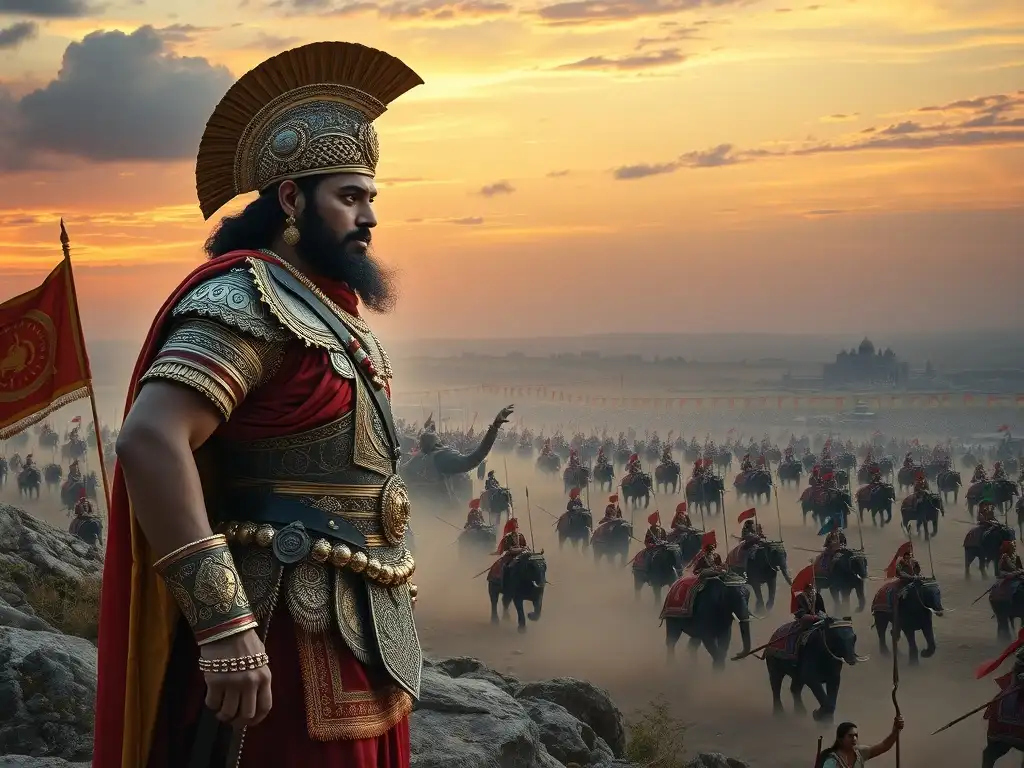
Welcome to Ancient India History, where we embark on a fascinating journey through the rich tapestry of India’s past. In this exploration, we shine a spotlight on Chandragupta Maurya, a pivotal figure whose military campaigns forged the foundation of one of the most powerful empires in ancient history. Discover the strategies and battles that defined his reign, and uncover the profound impacts of his conquests that still resonate today. Ready to delve into the epic saga of Chandragupta Maurya’s military exploits? Your adventure into the heart of ancient Indian civilization awaits!
- Introduction to Chandragupta Maurya and His Military Campaigns
- The Early Military Campaigns of Chandragupta Maurya
- Major Military Campaigns of Chandragupta Maurya
- The Tactics and Innovations of Chandragupta Maurya's Military
- The Legacy of Chandragupta Maurya's Military Campaigns
- Conclusion
- References and Further Reading
-
Frequently Asked Questions
- What were Chandragupta Maurya's primary military campaigns?
- How did Chandragupta Maurya achieve his military success?
- What role did Chanakya play in Chandragupta's military endeavors?
- How did Chandragupta Maurya's military campaigns impact ancient India?
- What legacy did Chandragupta Maurya leave in terms of military tactics?
- Final Reflection: The Enduring Legacy of Chandragupta Maurya's Military Campaigns
- Unleash Your Inner Strategist: Dive Deeper into Chandragupta’s Legacy!
Introduction to Chandragupta Maurya and His Military Campaigns
Chandragupta Maurya stands as a pivotal figure in the annals of ancient Indian history, marking the genesis of the Maurya Empire, which would become one of the largest and most influential empires of its time. His military campaigns were not merely battles for territory; they were strategic endeavors that laid the foundation for a unified Indian subcontinent.
As we delve into the life of Chandragupta Maurya, we will explore the intricacies of his military strategies, the challenges he faced, and the lasting impact of his conquests. Understanding his military campaigns is crucial for comprehending how he transformed a fragmented landscape into a centralized empire that thrived under his leadership.
Overview of Chandragupta Maurya's Historical Significance
Chandragupta Maurya emerged in the 4th century BCE, a time when India was divided into numerous small kingdoms and tribal states. His rise to power was marked by astute alliances and innovative military tactics. He is best known for overthrowing the Nanda Dynasty, which had ruled the region of Magadha, and establishing the Maurya Empire around 322 BCE. His significance extends beyond mere conquest; he is credited with unifying much of northern India, which had been politically fragmented for centuries.
Chandragupta's reign heralded a new era of administration, culture, and economy, laying the groundwork for subsequent rulers, including his grandson, Ashoka the Great. His ability to harness the military prowess of his time, combined with strategic diplomacy, made him a formidable leader. A deeper understanding of his military campaigns reveals not only his tactical genius but also the socio-political context of ancient India.
The Role of Military Campaigns in Establishing the Maurya Empire
The military campaigns of Chandragupta Maurya were instrumental in the establishment and expansion of the Maurya Empire. These campaigns were characterized by a combination of direct confrontation and clever maneuvering. Chandragupta utilized various strategies, ranging from guerrilla tactics to traditional warfare, adapting to the unique challenges posed by different regions and adversaries.
- Conquest of Magadha: Chandragupta's initial military objective was the formidable Nanda Dynasty, which controlled Magadha. His successful overthrow of the Nandas was a watershed moment, showcasing his military acumen and ambition.
- Territorial Expansion: Following the conquest of Magadha, Chandragupta turned his attention to neighboring territories. His campaigns included conflicts with the Greek satraps established after Alexander the Great's incursion into India, showcasing his ability to engage with foreign powers.
- Strategic Alliances: Chandragupta often forged alliances with local rulers, which not only bolstered his military strength but also facilitated smoother governance over newly acquired territories.
Chandragupta's military campaigns were not merely about expansion; they were a means to unify diverse cultures and populations under a single banner, fostering a sense of identity and shared purpose that contributed to the empire's longevity. His legacy as a military strategist continues to be studied and admired, reflecting the complexity and richness of ancient Indian history.
The Early Military Campaigns of Chandragupta Maurya
Background and Initial Challenges
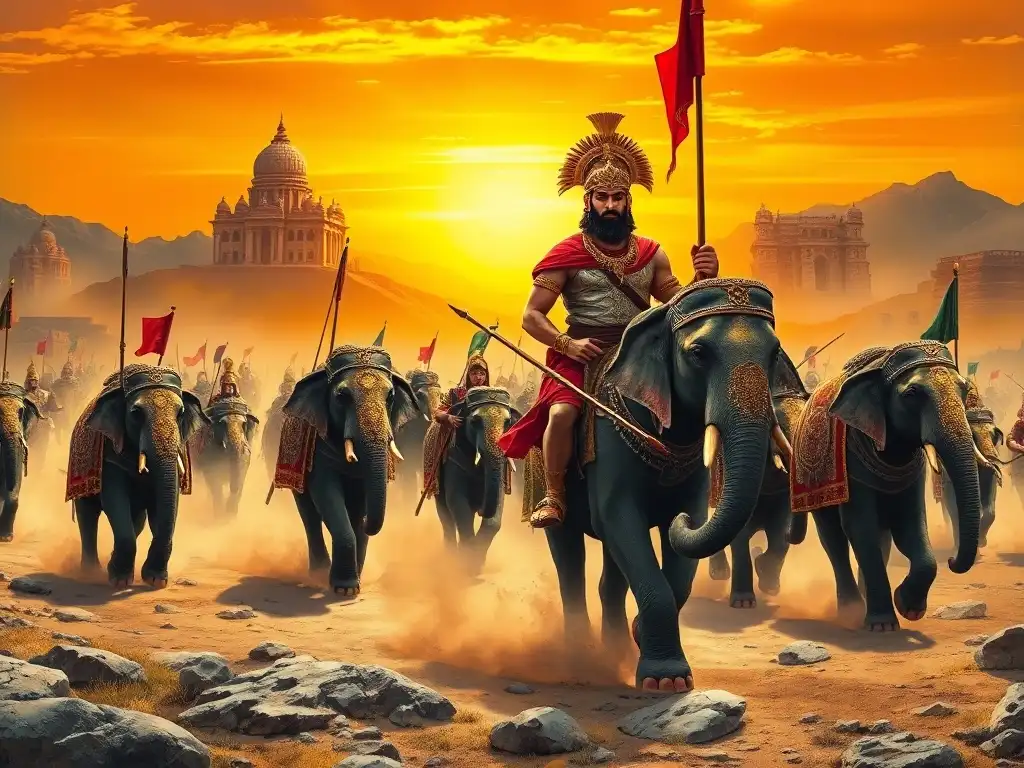
Chandragupta Maurya's rise to power was marked by a series of strategic military campaigns that laid the foundation for the Maurya Empire. Born into a humble family around 340 BCE, Chandragupta faced significant challenges in his quest for supremacy. The political landscape of ancient India was fragmented, with numerous kingdoms vying for control. The most formidable of these was the Nanda dynasty, which ruled over a vast territory, including the wealthy regions of Magadha.
Chandragupta's initial challenges included securing resources, gathering troops, and devising a plan to confront the Nandas. His early military campaigns were not just about brute force; they required astute diplomacy and the ability to inspire loyalty among his followers. The geopolitical situation was precarious, as local rulers were often hesitant to support an uprising against the established power of the Nandas. Nevertheless, Chandragupta's determination and strategic mindset allowed him to navigate these complexities.
Key Battles in Chandragupta's Early Campaigns
Chandragupta's military campaigns can be characterized by several key battles that showcased his tactical prowess and ability to mobilize forces effectively.
- Battle of the Narmada: This battle marked one of Chandragupta's first significant confrontations against the Nandas. Utilizing the element of surprise, he launched a swift attack on Nanda forces, exploiting their underestimation of his capabilities.
- Siege of Pataliputra: The capital of the Nanda Empire, Pataliputra, was a strategic target for Chandragupta. He laid siege to the city, employing a combination of direct assaults and psychological warfare to weaken the resolve of Nanda defenders.
- Engagement with Local Rulers: Throughout his campaigns, Chandragupta engaged with various local rulers, sometimes through conflict and other times through negotiations. These engagements were critical in destabilizing Nanda control and garnering support for his cause.
Battle Strategies Employed by Chandragupta
Chandragupta Maurya's success in his military campaigns can be attributed to several innovative strategies:
- Guerrilla Warfare: Chandragupta often employed guerrilla tactics, utilizing the element of surprise and mobility to outmaneuver larger Nanda forces. This approach allowed his smaller army to inflict damage while minimizing casualties.
- Intelligence and Espionage: He effectively gathered intelligence about Nanda troop movements and weaknesses. Spies played a crucial role in his strategy, providing timely information that informed his battle plans.
- Use of Local Geography: Chandragupta capitalized on the diverse terrain of northern India, using forests, rivers, and hills to execute ambushes and defensive maneuvers. This knowledge of the land gave him a tactical advantage over his enemies.
Alliances and Support from Local Kingdoms
Chandragupta's military campaigns were not fought in isolation; he recognized the importance of forming alliances with local kingdoms to strengthen his position. Some key aspects of his alliances include:
- Diplomatic Marriages: Chandragupta strategically allied himself with local rulers through marriages, which not only secured political connections but also solidified military support.
- Coalitions Against the Nandas: By forming coalitions with discontented local rulers and those who opposed Nanda domination, Chandragupta was able to create a united front that challenged the Nanda forces more effectively.
- Support from Chanakya: The influence of Chanakya, his mentor and strategist, was instrumental in securing alliances. Chanakya's political acumen and connections facilitated negotiations that brought additional troops and resources to Chandragupta's side.
Through these early military campaigns, Chandragupta Maurya not only established his reputation as a formidable leader but also set the stage for the eventual formation of the Maurya Empire, which would become one of the largest and most influential empires in ancient India.
Major Military Campaigns of Chandragupta Maurya
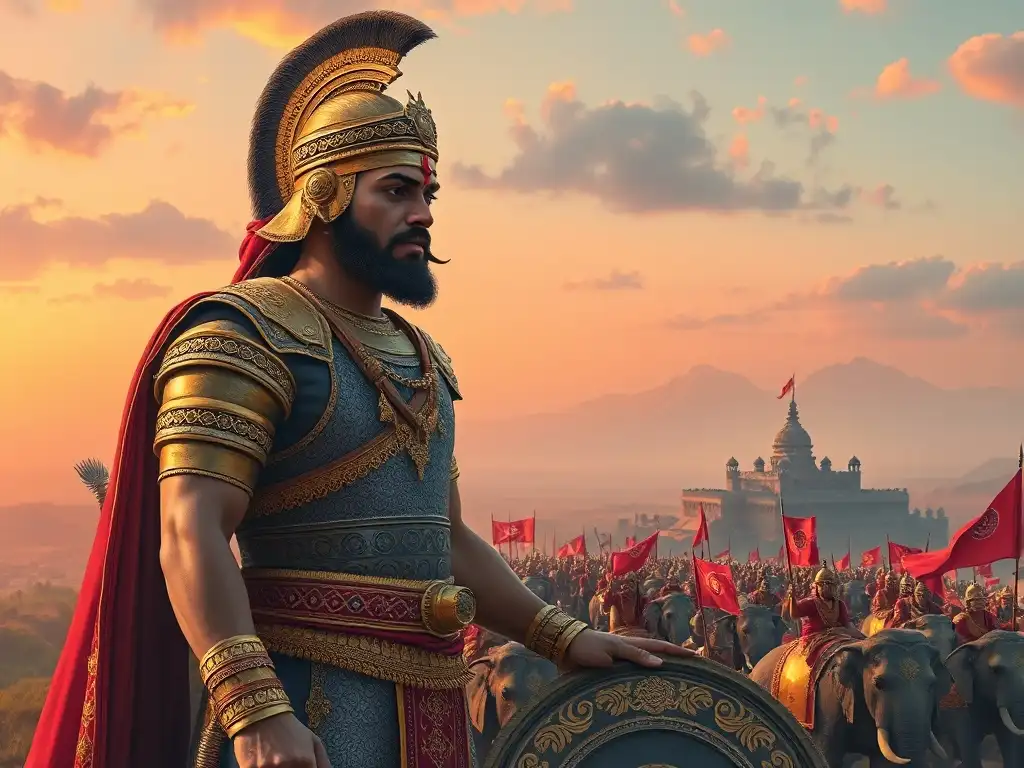
Chandragupta Maurya is renowned for his strategic prowess and ambitious military campaigns that laid the foundation of the Maurya Empire. His military endeavors were pivotal in uniting India and establishing one of its largest empires. Here, we will delve into his major military campaigns, focusing particularly on his conquest of the Nanda Empire and his engagements against the western territories.
Conquest of the Nanda Empire
Chandragupta's most significant military achievement was the overthrow of the Nanda Empire, which was then the dominant power in northern India. The Nandas were known for their wealth and military strength, making this conquest particularly challenging.
Strategies Used for Overthrowing the Nandas
Chandragupta employed a combination of guerrilla warfare, strategic alliances, and psychological tactics to dismantle the Nanda regime. Key strategies included:
- Guerrilla Tactics: His forces often utilized hit-and-run tactics to disrupt Nanda supply lines and weaken their forces.
- Alliances: Chandragupta formed crucial alliances with local rulers discontented with Nanda rule, leveraging their resources and manpower.
- Intelligence Gathering: He relied heavily on spies to gather intelligence about Nanda troop movements and vulnerabilities, allowing him to plan surprise attacks.
- Siege Warfare: Chandragupta laid siege to key fortresses, cutting off supplies and forcing the Nandas to surrender.
These strategies culminated in a series of tactical victories that eventually led to the fall of the Nanda Empire around 321 BCE.
Impact of the Nanda Conquest on the Maurya Empire
The conquest of the Nanda Empire had far-reaching implications for the Maurya Empire:
- Territorial Expansion: Chandragupta's victory expanded his territory significantly, providing resources and strategic locations.
- Political Legitimacy: The overthrow of the Nandas bolstered Chandragupta’s credibility among the Indian populace, establishing him as a formidable ruler.
- Cultural Synthesis: The integration of diverse cultures and peoples under the Maurya Empire facilitated cultural and economic exchanges, enriching Indian civilization.
- Foundation for Future Rule: This conquest laid the groundwork for Chandragupta's successors, most notably his grandson Ashoka, who would further expand and consolidate the empire.
Campaigns Against the Western Territories
Following his success against the Nandas, Chandragupta turned his attention westward, confronting the remnants of Alexander the Great's empire and engaging in significant military campaigns.
The Conflict with Alexander the Great's Successors
After Alexander's death in 323 BCE, his generals, known as the Diadochi, vied for control over the territories he had conquered, including regions in northwestern India. Chandragupta seized this opportunity to expand his influence and territory.
- Initial Encounters: Chandragupta initially faced the satraps established by Alexander. His forces engaged in skirmishes that tested their mettle against the well-trained Macedonian troops.
- Diplomatic Maneuvers: Recognizing the strength of his opponents, Chandragupta also engaged in diplomacy, negotiating treaties that allowed him to consolidate power without continuous military conflict.
Key Battles and Outcomes
Several key battles marked Chandragupta's campaigns against the western territories:
- Battle of the Hydaspes: This strategic encounter against a satrap resulted in a decisive victory for Chandragupta, allowing him to exert control over Punjab.
- Siege of the Citadel of Taxila: The Mauryan forces successfully besieged this important city, further destabilizing Alexander's successors and securing vital trade routes.
- Battle of the Indus River: A series of confrontations along the river showcased Chandragupta's military ingenuity, leading to the defeat of the remaining satraps and the extension of Maurya influence into modern-day Afghanistan.
The outcomes of these battles not only secured Chandragupta's position but also expanded the Maurya Empire's reach, contributing to its status as one of the largest empires of the ancient world. These military campaigns were instrumental in shaping the political landscape of ancient India and solidifying Chandragupta Maurya’s legacy as a paramount military leader.
The Tactics and Innovations of Chandragupta Maurya's Military
Military Organization and Structure of the Mauryan Army
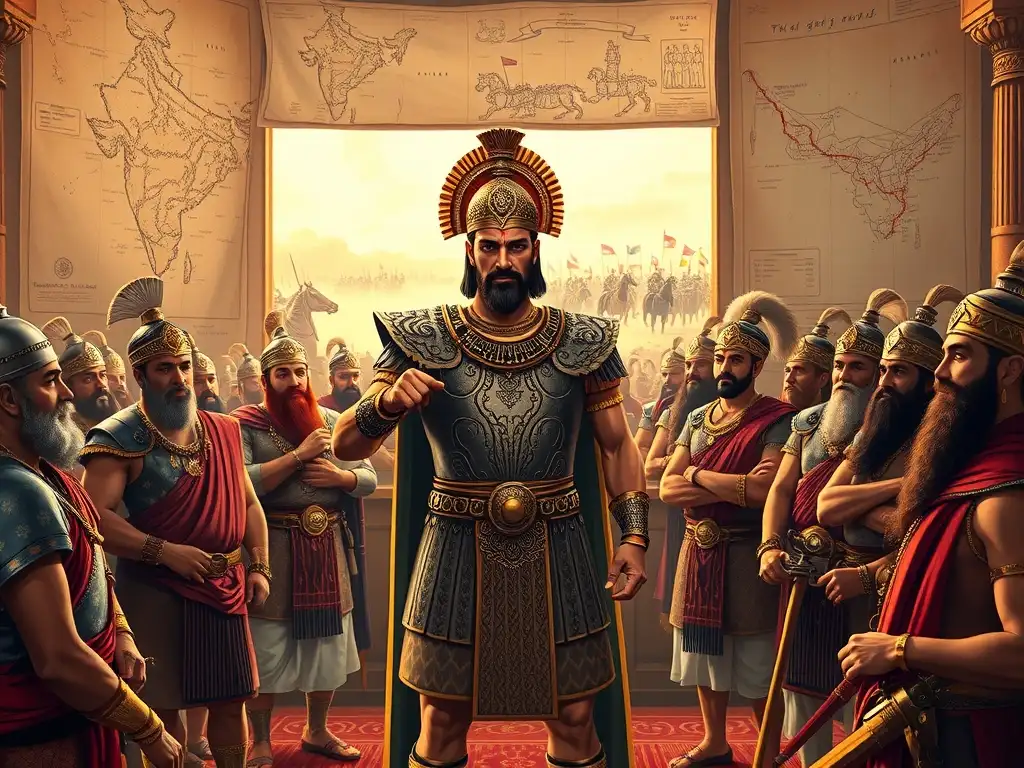
Chandragupta Maurya's military campaigns were significantly bolstered by the highly organized structure of the Mauryan army. This army was a complex system that combined various branches, each specializing in different aspects of warfare. The organization can be categorized into several key divisions:
- Infantry: The backbone of the Mauryan military, the infantry was composed of foot soldiers who were equipped with a range of weapons, including swords, spears, and bows. They were trained in various combat techniques to engage the enemy effectively in close quarters.
- Cavalry: This division played a crucial role in mobility and reconnaissance. The cavalrymen were trained horse riders who could swiftly maneuver around the battlefield, allowing for rapid strikes and flanking maneuvers against enemy formations.
- War Elephants: The use of elephants was a distinctive feature of the Mauryan army. These massive creatures were not only used as a means of transportation but also served as a psychological weapon, instilling fear in the enemy ranks. Elephants were often armored and could carry archers and officers into battle.
- Chariots: Although less prominent than infantry and cavalry, chariots were used for transporting generals and providing a platform for archers to shoot from a higher vantage point.
The Mauryan army's hierarchy was well-defined, with experienced generals and commanders overseeing the various divisions. This organization allowed for efficient communication and coordination during campaigns, contributing to the overall success of Chandragupta's military efforts.
Use of Elephants and Cavalry in Warfare
The incorporation of war elephants and cavalry into the Mauryan military strategy exemplified Chandragupta Maurya's innovative approach to warfare.
War Elephants
War elephants served multiple roles in battle:
- Psychological Warfare: Their sheer size and strength could intimidate enemy troops, often causing panic and disarray in their ranks.
- Tactical Advantage: Elephants could trample infantry and cavalry alike, creating chaos on the battlefield. They were used to break enemy formations and create openings for infantry to exploit.
- Mobile Platforms: Armed with archers and spearmen, elephants provided a mobile platform for ranged attacks, allowing for a dual assault strategy that combined melee and ranged combat.
Cavalry
The cavalry units were equally essential:
- Mobility and Speed: The cavalry could quickly respond to threats or exploit weaknesses in the enemy lines. Their speed allowed them to cut off retreating foes and chase down stragglers.
- Flanking Maneuvers: Skilled horsemen could maneuver around enemy flanks, attacking from unexpected angles and causing confusion among the ranks.
- Support Role: Cavalry often supported infantry during engagements, providing critical reinforcement at decisive moments.
Chandragupta’s military campaigns, particularly during his conquests of the northwestern territories, showcased the effective integration of elephants and cavalry, leading to significant victories against formidable opponents.
Innovations in Warfare Techniques and Strategies
Chandragupta Maurya's military ingenuity extended beyond mere organization and troop composition. His innovations in warfare techniques and strategies laid the groundwork for future Indian military practices.
- Guerrilla Tactics: Understanding the terrain and utilizing guerrilla warfare tactics allowed Chandragupta to effectively engage larger armies. His forces would often launch surprise attacks and ambushes, taking advantage of the element of surprise.
- Siege Warfare: The Mauryan army excelled in siege tactics, enabling them to capture fortified cities. They employed various techniques, including blockade and the use of siege engines, to breach walls and overcome defenses.
- Intelligence and Espionage: Chandragupta recognized the importance of intelligence in warfare. He employed spies to gather information about enemy movements and weaknesses, allowing for informed strategic decisions.
- Political Alliances: Forming alliances with local rulers and tribes played a crucial role in his campaigns. By securing local support, Chandragupta was able to strengthen his forces and gain valuable resources.
These innovations not only facilitated Chandragupta's immediate military successes but also influenced the evolution of military strategies in subsequent Indian empires. His legacy in military tactics continues to be studied as a significant chapter in ancient Indian warfare.
The Legacy of Chandragupta Maurya's Military Campaigns
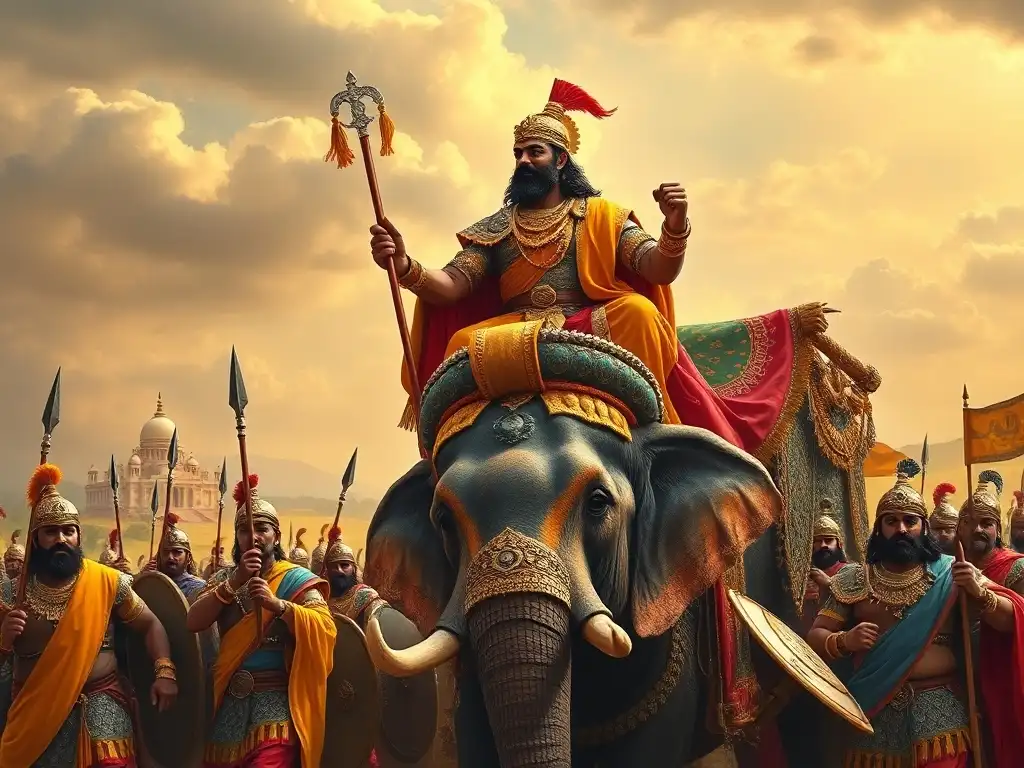
Chandragupta Maurya's military campaigns laid the foundation for one of the greatest empires in ancient India, the Maurya Empire. His strategic acumen and innovative military tactics not only contributed to the unification of the Indian subcontinent but also set a precedent for future empires. The legacy of his campaigns is evident in the way subsequent rulers approached warfare, governance, and territorial expansion.
Influence on Future Indian Empires and Warfare
Chandragupta's military strategies had a profound impact on the structure and organization of future Indian empires, notably the Gupta Empire. His ability to mobilize diverse troops, including infantry, cavalry, and war elephants, was emulated by later rulers. The Mauryan army was characterized by its disciplined formations and tactics, which emphasized both offensive maneuvers and strategic retreats.
The concept of centralized command that Chandragupta established became a model for the administration of military campaigns in subsequent dynasties. His successful use of espionage and intelligence gathering to assess enemy strengths and weaknesses was adopted by later kings, enhancing the effectiveness of military operations.
Moreover, the Mauryan Empire's military campaigns contributed to the spread of political ideas and governance models across the subcontinent, influencing regional powers and their military strategies. For instance, the use of fortification and strategic alliances became common practices in Indian warfare, directly tracing back to Chandragupta’s campaigns.
Historical Accounts of Chandragupta's Campaigns
The historical narratives surrounding Chandragupta Maurya's military campaigns are rich and varied, with numerous accounts detailing his conquests and the establishment of the Maurya Empire. These accounts provide insights into the military tactics, political strategies, and the socio-economic conditions of the time.
Primary Sources Documenting His Military Achievements
Several ancient texts serve as primary sources documenting the military achievements of Chandragupta Maurya:
- Arthashastra: Written by Chanakya (Kautilya), this treatise on statecraft and military strategy outlines the principles that guided Chandragupta’s campaigns. It emphasizes the importance of intelligence, diplomacy, and the strategic use of military force.
- Indica: Authored by the Greek ambassador Megasthenes, this work provides a contemporary account of the Mauryan Empire, including descriptions of its military organization and campaigns against regional powers such as the Nanda dynasty.
- Puranas: These ancient texts contain legends and narratives about Chandragupta, often highlighting his battles and conquests, although they blend historical facts with mythology.
These sources are invaluable for understanding not only the military aspects of his reign but also the socio-political landscape of ancient India.
Interpretations by Historians
Historians have interpreted Chandragupta’s military campaigns through various lenses, providing a multifaceted view of his legacy. Some key interpretations include:
- Military Innovator: Historians like Romila Thapar view Chandragupta as a military innovator whose tactics transformed warfare in ancient India. His effective use of war elephants and cavalry, along with well-coordinated infantry, is often highlighted as a turning point in military history.
- Political Strategist: Other scholars, such as R. S. Sharma, emphasize his political acumen, arguing that his military successes were as much about strategic alliances and political maneuvering as they were about battlefield prowess.
- Cultural Unifier: Chandragupta’s campaigns are also seen as a means of cultural unification across diverse regions of India, where he integrated various local customs and governance models into the Mauryan administration.
The interpretations of Chandragupta's military campaigns continue to evolve as new archaeological findings and texts are discovered, enriching our understanding of his role in shaping ancient Indian history.
The legacy of Chandragupta Maurya's military campaigns is profound, influencing not just his contemporaries but also future generations of rulers and military leaders across the Indian subcontinent. His strategic innovations and the establishment of a powerful empire resonate throughout the annals of Indian history.
Conclusion
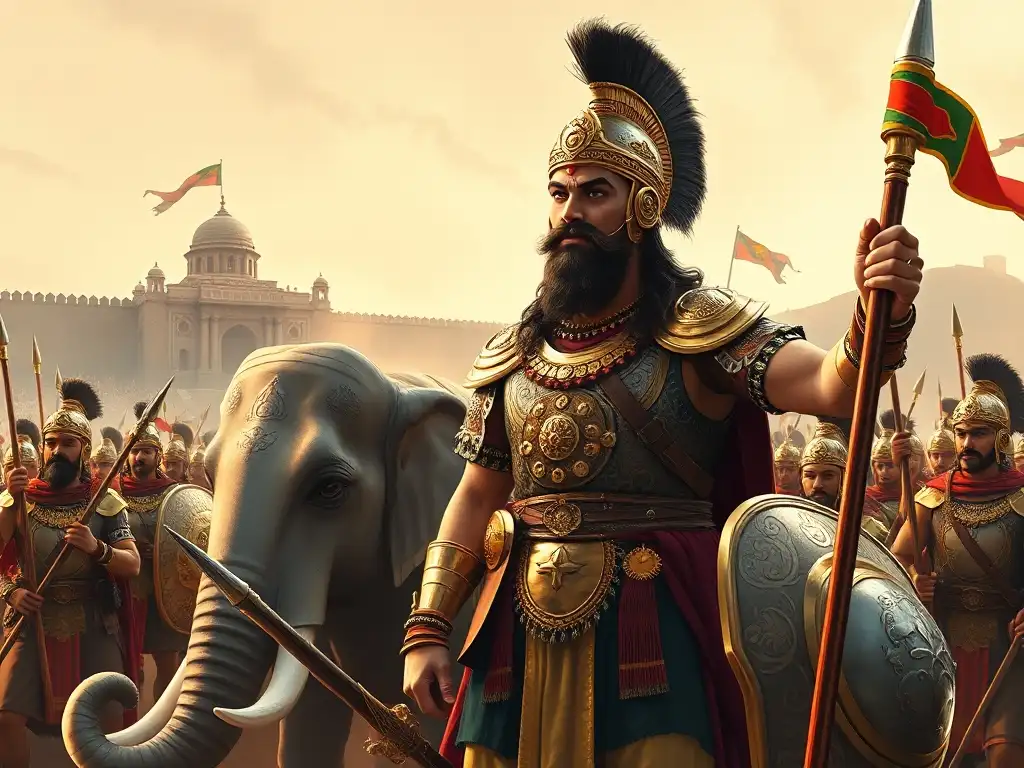
Summary of Chandragupta Maurya's Military Contributions
Chandragupta Maurya stands as a pivotal figure in ancient Indian history, particularly noted for his formidable military campaigns that laid the groundwork for the Mauryan Empire. His ascension to power was marked by a series of strategic battles and alliances that showcased his military acumen and leadership skills.
- Consolidation of Power: Chandragupta began his military journey by overthrowing the Nanda Dynasty, a feat that required not only strength but also cunning strategies. His alliances with local chieftains and the support of his mentor, Chanakya, were crucial in this endeavor.
- Key Battles: Among his notable campaigns, the conflict against Alexander’s successors in the northwest was significant. Chandragupta adeptly utilized guerrilla tactics, leveraging the terrain and local support to his advantage. This led to the establishment of his rule over the territories once held by the Greeks.
- Expansion of Territory: His military campaigns were not limited to mere defense; he actively sought to expand his empire. Through a combination of warfare and diplomacy, he successfully annexed vast regions, creating a vast empire that stretched across northern India.
- Organizational Innovations: Chandragupta’s military prowess was complemented by his innovative organizational strategies. He established a well-structured administrative system that supported his military campaigns, ensuring a steady supply of resources and efficient communication.
The Lasting Impact of His Campaigns on Ancient India
The military campaigns of Chandragupta Maurya had profound and lasting effects on the subcontinent, influencing both political structures and cultural developments.
- Foundation of the Mauryan Empire: His successful conquests directly led to the establishment of one of the largest empires in ancient India. The Mauryan Empire became a model of governance and military organization, inspiring future rulers.
- Cultural Synthesis: The integration of diverse regions under Chandragupta’s rule fostered cultural exchanges. The contact between various ethnic groups catalyzed a synthesis of traditions, languages, and customs, which enriched Indian culture.
- Military Doctrine: The strategies employed by Chandragupta laid the groundwork for future military doctrines in India. His focus on mobility, intelligence gathering, and strategic alliances became essential tenets for subsequent rulers.
- Legacy of Leadership: Chandragupta’s leadership style and military strategies were documented by historians and became essential study material for future generations. His legacy influenced not only military tactics but also the art of governance in ancient India.
The military campaigns of Chandragupta Maurya were not merely a series of battles; they were instrumental in shaping the political landscape of ancient India and establishing a legacy that resonates through history.
References and Further Reading
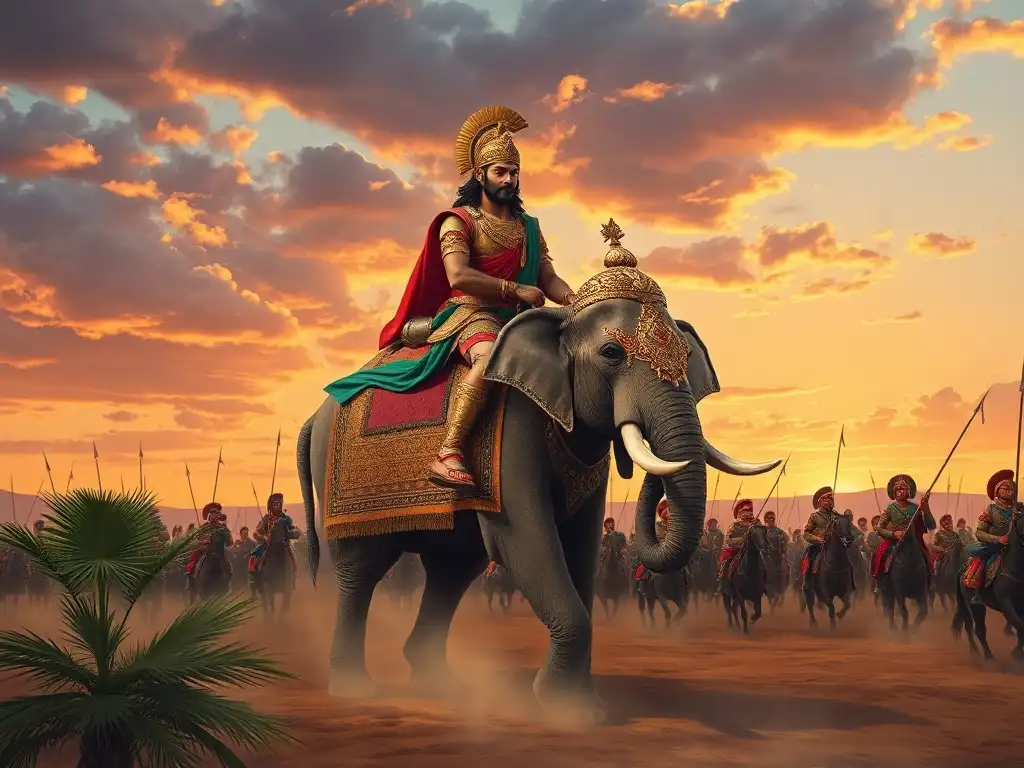
Suggested Books on Chandragupta Maurya and Ancient Indian Warfare
- "Chandragupta Maurya: The Founder of the Maurya Empire" by R. C. Majumdar
- This comprehensive biography delves into the life of Chandragupta Maurya, emphasizing his military strategies and the establishment of the Maurya Empire. The author provides detailed analyses of battles and political maneuvers that were pivotal in unifying ancient India.
- "The Maurya Empire: A Historical Study" by P. V. Kane
- A scholarly examination of the Mauryan Empire, this book covers the military campaigns of Chandragupta Maurya and his successors. It discusses the political and military aspects of the empire, including insights into warfare tactics and logistics.
- "Ancient Indian Warfare: History and Historiography" by R. S. Sharma
- Sharma's work offers a broad perspective on warfare in ancient India, focusing on the military innovations of the time. The book includes sections specifically detailing the conflicts led by Chandragupta Maurya and the evolution of military tactics.
- "History of Ancient India" by D. N. Jha
- This book provides an overview of ancient Indian history, including an in-depth look at the Mauryan period. It highlights Chandragupta’s military campaigns within the context of socio-political developments during his reign.
- "The Art of War in Ancient India" by K. M. Shrimali
- Focusing on military strategies and philosophies, this book discusses the principles of warfare as practiced during Chandragupta Maurya’s time, providing a deeper understanding of his military campaigns.
Articles and Journals on Mauryan Military History
-
"The Military Strategies of Chandragupta Maurya" - Journal of Ancient Indian History, Volume 15
This article analyzes the tactical approaches employed by Chandragupta during his conquests, including the significance of his alliances and the use of espionage in warfare.
-
"Chandragupta Maurya: A Military Genius" - Historical Studies Quarterly, Issue 4
This paper reviews the key battles fought by Chandragupta, discussing his innovative approaches to military organization and battlefield tactics, which contributed to his success against rival kingdoms.
-
"The Role of Elephants in Mauryan Warfare" - Indian Military History Review, Volume 8
This journal article explores the strategic use of war elephants in Chandragupta’s campaigns, highlighting how they influenced the outcomes of various battles.
-
"The Impact of Chandragupta Maurya's Campaigns on Ancient Indian Politics" - South Asian Historical Journal, Volume 22
This scholarly work examines the political ramifications of Chandragupta's military actions, including the unification of Indian territories and the establishment of a centralized administration.
-
"Military Innovations of the Mauryan Empire" - Archaeological and Historical Review, Volume 10
This article provides insights into the advancements in military technology and strategies during the Mauryan era, with a focus on Chandragupta's contributions to military practices.
These resources provide a robust foundation for understanding the military campaigns of Chandragupta Maurya and their significance in the broader context of ancient Indian history.
Frequently Asked Questions
What were Chandragupta Maurya's primary military campaigns?
Chandragupta Maurya is best known for his campaigns against the Nanda Empire and his efforts to expand the Maurya Empire across northern India.
How did Chandragupta Maurya achieve his military success?
His success can be attributed to his strategic alliances, effective use of cavalry and infantry, and the guidance of his mentor, Chanakya, who provided crucial political and military insights.
What role did Chanakya play in Chandragupta's military endeavors?
Chanakya, also known as Kautilya, was instrumental in formulating strategies and providing intelligence that helped Chandragupta secure victories against formidable foes, laying the foundation for the Maurya Empire.
How did Chandragupta Maurya's military campaigns impact ancient India?
His campaigns significantly unified the region, leading to a strong centralized state that fostered trade, culture, and administrative reforms, marking a pivotal moment in ancient Indian history.
What legacy did Chandragupta Maurya leave in terms of military tactics?
Chandragupta's military tactics, including guerrilla warfare and the integration of various forces, influenced later Indian rulers and contributed to the evolution of military strategies in the subcontinent.
Final Reflection: The Enduring Legacy of Chandragupta Maurya's Military Campaigns
Chandragupta Maurya's military campaigns not only shaped the course of Indian history but also resonate with the complexities of leadership and strategy in today's world. In an era where the lessons of the past can inform our present and future, understanding the tactical brilliance and political acumen of Chandragupta Maurya offers invaluable insights into the art of governance and conflict resolution. His ability to unify a fragmented subcontinent through strategic warfare and diplomacy serves as a powerful reminder of the impact that decisive leadership can have on a nation's destiny.
The influence of Chandragupta's military strategies extends beyond historical analysis; it permeates our cultural narratives and societal values. His campaigns exemplify the delicate balance between power and responsibility, a theme that remains relevant in contemporary discussions about leadership in various spheres, from politics to business. As we reflect on his legacy, we can draw inspiration from his quote, In the midst of chaos, there is also opportunity,
which encourages us to seek clarity and purpose even in turbulent times.
As we conclude this exploration of Chandragupta Maurya's military campaigns, I invite you to reflect on how the principles of strategy, resilience, and unity can be applied in your own life. Consider how you can harness the lessons from his era to navigate your challenges, whether personal or professional. Embrace the spirit of inquiry and leadership that Chandragupta embodied, and let it inspire you to forge your own path toward success and harmony in a world that often feels divided.
Unleash Your Inner Strategist: Dive Deeper into Chandragupta’s Legacy!
Thank you for taking the time to explore the fascinating military campaigns of Chandragupta Maurya! You've unlocked key insights into his strategic brilliance and the profound impact he had on ancient India’s history. Now, let’s take the next steps to further deepen your understanding and appreciation of this remarkable figure.
Here are a few engaging actions you can take:
- Explore further: Read additional resources about Chandragupta’s key battles and his rise to power in ancient India.
- Join the conversation: Share your thoughts and insights about his strategies in our discussion forum dedicated to Ancient Indian History.
- Discover related leaders: Research other influential figures from this era to understand how they shaped history alongside Chandragupta.
As we delve into the complexities of historical warfare and leadership, consider what aspect of Chandragupta’s strategies you find most intriguing and how they might inspire modern tactics today.