
The Role of Northern India in the Development of Trade Networks: An Economic History

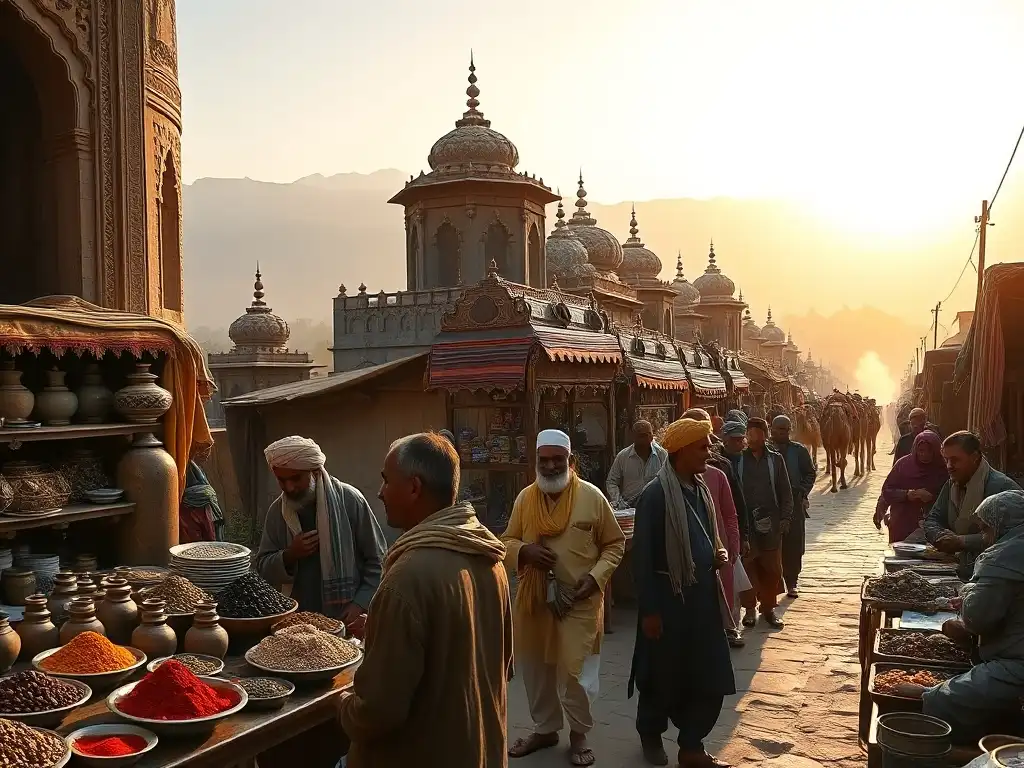
Welcome to Ancient India History, where we embark on a fascinating journey through the vibrant tapestry of India's rich past. In this exploration, we delve into the Ancient Indian trade networks history, uncovering the intricate connections that shaped commerce and culture from the Indus Valley to the Gupta Empire. Discover how Northern India's pivotal role in these networks not only influenced economic growth but also fostered cultural exchanges that resonated through centuries.
Prepare to ignite your curiosity as we unveil the secrets of how trade transformed ancient civilizations and laid the groundwork for a thriving society. Join us as you turn the pages of time and reveal the stories that shaped an era!
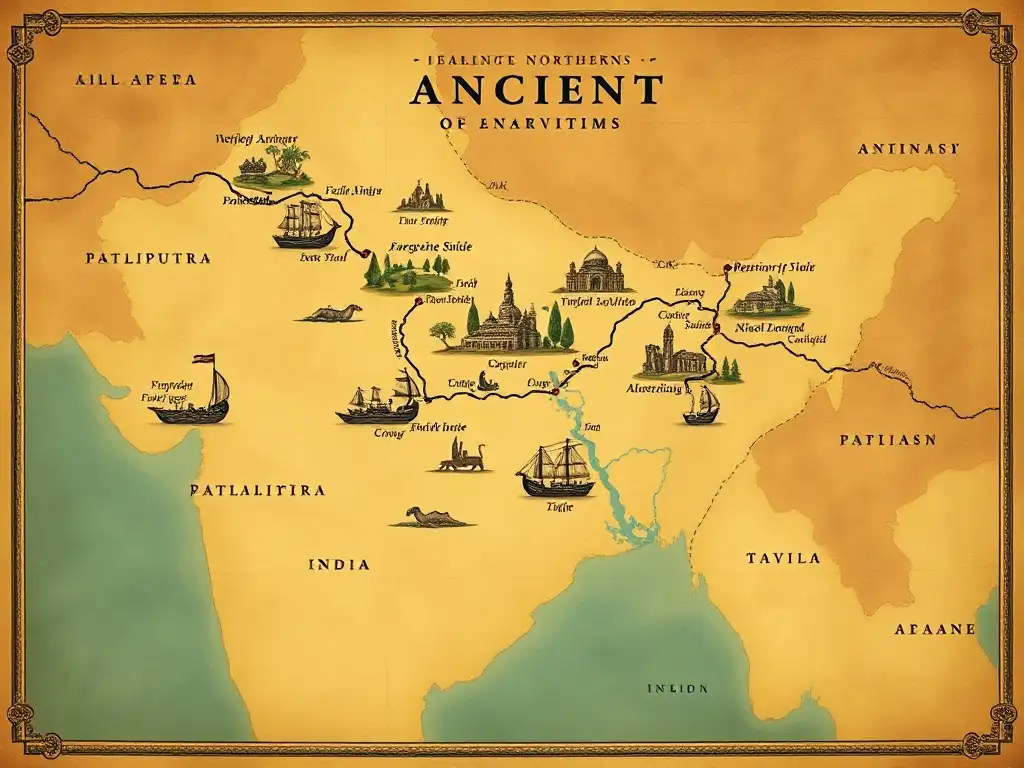
Introduction to Ancient Indian Trade Networks History
The history of trade in ancient India is a fascinating chronicle that not only highlights the economic dynamics but also reflects the cultural exchanges and societal developments of its time. Northern India, with its strategic geographical position and rich resources, played a pivotal role in shaping the trade networks that connected various parts of the subcontinent and beyond. These trade networks were instrumental in facilitating not only the exchange of goods but also ideas, technologies, and cultural practices.
Understanding the ancient Indian trade networks history offers insights into how trade influenced the development of civilizations and the socio-economic fabric of the region. This article delves into the intricate tapestry of trade in Northern India, exploring its historical context, key players, and the lasting impacts of these trade routes on Indian society.
Overview of Trade in Ancient India
Trade in ancient India was a complex and multifaceted endeavor that evolved over centuries. It encompassed various forms of commerce, from local bartering to extensive long-distance trade. The major features of trade during this era included:
- Diverse Goods: Ancient Indian traders dealt in a variety of products, including spices, textiles, precious stones, and metals. The export of high-quality cotton textiles, for instance, was a significant aspect of Indian trade.
- Cultural Exchange: Trade routes facilitated not only the movement of goods but also the exchange of cultural practices, languages, and religions. This interaction enriched the cultural landscape of Indian civilization.
- Economic Impact: Trade contributed significantly to the economic prosperity of ancient Indian states, allowing for the accumulation of wealth and the funding of public works, such as temples and roads.
Importance of Northern India in Trade Development
Northern India served as a crucial hub in the ancient trade networks for several reasons:
- Geographical Advantage: Its location at the crossroads of major trade routes connecting the East and West made it a strategic point for traders.
- Rich Resources: The fertile plains of the Ganges and the mineral wealth of the region attracted traders and facilitated various industries.
- Political Stability: The rise of powerful empires, such as the Maurya and Gupta, provided security and stability that encouraged trade activities.
Historical Context of Trade Networks in Northern India
The Indus Valley Civilization and Early Trade
The roots of trade in Northern India can be traced back to the Indus Valley Civilization (circa 3300–1300 BCE), one of the world's earliest urban cultures. Key elements of trade during this period included:
- Trade with Neighbors: Archaeological evidence indicates that the Indus people engaged in trade with contemporary civilizations, such as Mesopotamia, exchanging goods like cotton and pottery for silver and textiles.
- Urban Centers: Cities such as Harappa and Mohenjo-Daro were not only trade centers but also hubs of craftsmanship, which attracted traders from afar.
The Maurya and Gupta Empires: Trade Expansion
With the advent of the Maurya Empire (322–185 BCE) and later the Gupta Empire (circa 240–550 CE), trade in Northern India witnessed significant expansion:
- State Support: Both empires provided robust support for trade through the establishment of a network of roads and safe passage for traders.
- Cultural Flourishing: The prosperity from trade allowed these empires to flourish culturally, leading to advancements in arts, science, and philosophy.
Key Trade Routes Connecting Northern India
The trade networks in Northern India were characterized by several key routes that facilitated commerce:
- Silk Road: Northern India was a critical segment of the Silk Road, connecting traders from China to the Mediterranean, fostering the exchange of silk, spices, and other luxury goods.
- Grand Trunk Road: This ancient highway linked the eastern and western parts of India, enhancing trade connectivity within the region.
The development of trade networks in Northern India was not only a testament to its economic prowess but also a reflection of its rich cultural history. The influence of these networks continues to be felt in modern Indian society, making the study of ancient Indian trade networks history vital to understanding the region's past.
Major Economic Centers in Northern India
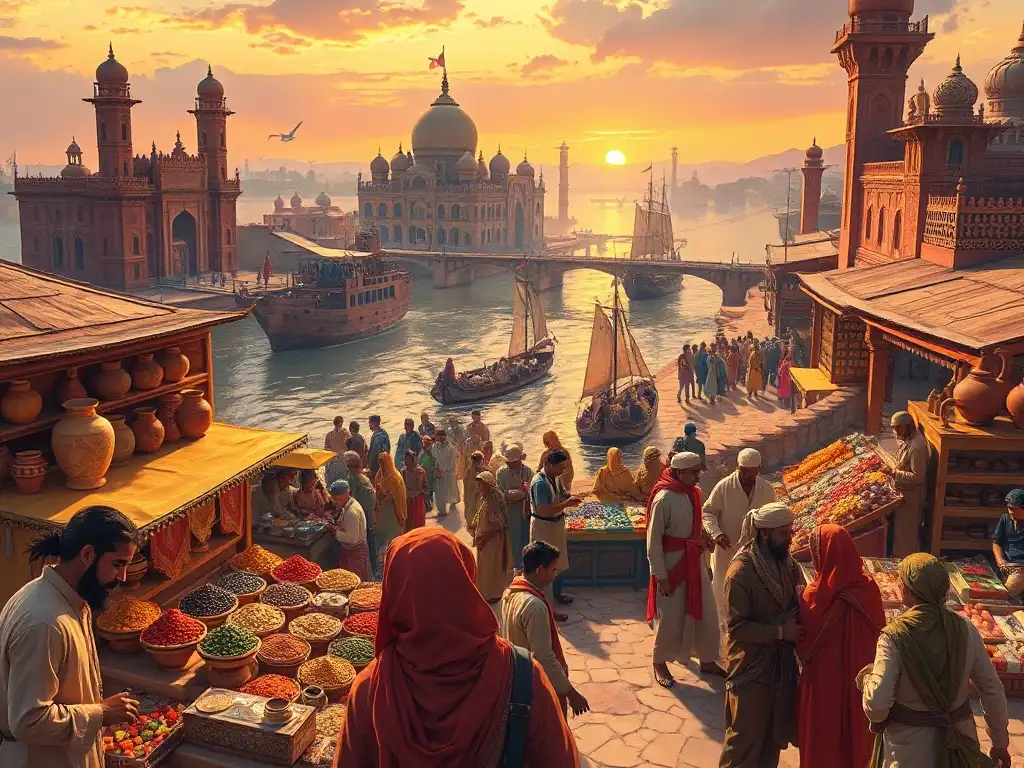
Northern India has been pivotal in the development of trade networks since ancient times, serving as a vital economic hub that connected various civilizations. Cities such as Pataliputra, Taxila, and Varanasi emerged as major economic centers, facilitating commerce both locally and internationally. These cities were strategically located along important trade routes, enabling the exchange of goods, culture, and ideas.
- Pataliputra: As the capital of the Mauryan Empire, Pataliputra was a bustling metropolis known for its vibrant markets and diverse population. It was a center for trade in textiles, spices, and precious metals, attracting merchants from far and wide.
- Taxila: Renowned as a center of learning and commerce, Taxila was strategically positioned at the crossroads of several trade routes. It specialized in the production of high-quality crafts, including jewelry and textiles, and became a melting pot of cultural exchanges.
- Varanasi: One of the oldest cities in the world, Varanasi was not only a religious hub but also a significant trade center for silk, spices, and other luxury goods. The Ganges River facilitated transport and trade, solidifying its status in the ancient economy.
These centers exemplified the vitality of trade in Northern India, reflecting its diverse economic contributions and the interconnectivity of ancient civilizations.
Overview of Key Cities and Their Roles in Trade
The key cities of Northern India played distinct roles in shaping the trade landscape. Each city contributed unique resources and cultural exchanges that enriched the trade networks:
- Delhi: A significant center for the exchange of goods and political power, Delhi served as a crucial trading hub during various empires, including the Delhi Sultanate and the Mughal Empire. Its markets offered a wide range of products, from textiles to spices.
- Ajanta and Ellora: While primarily known for their rock-cut caves and Buddhist architecture, these sites also served as trade centers. They attracted pilgrims and traders alike, facilitating the exchange of religious artifacts and goods.
- Jaipur: Known for its gemstone and textile trade, Jaipur became an important economic center in the later centuries, attracting merchants from different regions who sought high-quality goods.
These cities not only contributed to the economy but also fostered cultural exchanges that shaped the social fabric of Northern India.
The Influence of Geography on Trade Networks
Geography played a crucial role in the establishment and expansion of trade networks in Northern India. Its diverse landscapes, including mountains, rivers, and plains, influenced the routes and modalities of trade.
The Role of the Himalayan Region
The Himalayan region acted as both a barrier and a facilitator in trade. While the mountains posed challenges for overland trade, they also provided unique opportunities:
- Cultural Exchange: The Himalayas served as a conduit for trade between India and Tibet, facilitating the exchange of goods such as spices, textiles, and medicinal herbs. The Silk Road, which passed through these mountains, connected India with Central Asia and beyond.
- Natural Resources: The region was rich in natural resources, including timber and precious stones, which were highly sought after in trade markets. This encouraged trade networks to develop in and around the foothills.
The Himalayan region thus played a dual role in shaping trade dynamics, fostering both local and international exchanges.
River Systems and Their Impact on Trade
The river systems of Northern India, particularly the Ganges, Yamuna, and Indus, have historically been the lifeblood of trade and commerce:
- Transportation: Rivers provided natural highways for transporting goods, enabling easier and more efficient movement of merchandise. Boats and rafts were commonly used to navigate these waterways, facilitating trade between cities and regions.
- Agricultural Fertility: The fertile plains along these rivers supported agriculture, creating surplus goods that were essential for trade. This agricultural abundance attracted traders and merchants, enhancing local economies.
These river systems were instrumental in developing trade networks, allowing for the flow of goods and ideas across vast distances.
Trade Routes: Land and Sea Connections
The trade routes of Northern India were diverse, encompassing both land and maritime connections:
- Land Routes: The Grand Trunk Road and the Silk Road were significant land routes that connected Northern India to Central Asia and beyond. These routes not only facilitated the movement of goods but also cultural exchanges between different civilizations.
- Maritime Trade: Northern India’s proximity to the Arabian Sea and the Bay of Bengal allowed for maritime trade, connecting it with distant lands such as Africa and Southeast Asia. Ports like Lothal and Sopara played crucial roles in this maritime network, exporting goods like textiles and spices.
The combination of land and sea routes established Northern India as a central player in ancient trade networks, contributing significantly to its economic history and cultural exchanges.
Cultural Exchange Through Trade
The trade networks of ancient Northern India served as a vital conduit for cultural exchange, facilitating the movement of not just goods but also ideas, beliefs, and traditions. Merchants, travelers, and emissaries traversed these trade routes, bringing with them a rich tapestry of cultural influences that shaped the societies they encountered. This cultural interchange was particularly evident in cities along trade routes, which became melting pots of diverse ethnicities and cultures.
The interaction between traders from different regions resulted in the blending of languages, art forms, and culinary practices. For example, the influence of Persian art on Indian sculpture and architecture can be traced back to trade interactions. Additionally, the spread of Indian philosophical concepts and religious practices, such as Buddhism and Hinduism, through trade links significantly influenced neighboring regions, including Central Asia and Southeast Asia.
The Impact of Trade on Culture and Society
Trade not only facilitated the exchange of material goods but also played a crucial role in shaping the social fabric of ancient Northern Indian societies. The wealth generated from trade led to the emergence of affluent merchant classes, which transformed the traditional social hierarchy. This newfound wealth allowed merchants to sponsor public works, patronize the arts, and establish educational institutions, thereby fostering a culture of learning and innovation.
Moreover, trade networks contributed to the spread of cultural practices, such as festivals, music, and dance, as traders shared their customs with local populations. The establishment of trade guilds created a sense of community among merchants, leading to the development of shared cultural identities that transcended regional boundaries.
Exchange of Goods: Spices, Textiles, and More
Northern India was a hub for the exchange of a diverse array of goods, which were highly sought after in international markets. Spices, such as black pepper, cardamom, and cloves, were among the most valuable commodities traded, known for their culinary and preservative qualities. The region's textile industry, particularly its fine cotton and silk fabrics, also played a significant role in trade, with Indian textiles becoming highly coveted in markets across Asia and Europe.
Other notable goods included precious stones, metals, and agricultural products. The trade of these items not only bolstered the economy but also established Northern India as a key player in global trade networks. As goods flowed in and out, they brought with them cultural significance, influencing local craftsmanship and production techniques, which further enriched the region's cultural heritage.
The Role of Religion and Philosophy in Trade Relations
Religion and philosophy significantly influenced trade relations in ancient Northern India. Many traders were also pilgrims, and their journeys often intertwined commercial activities with spiritual pursuits. This dual purpose of travel fostered an environment of mutual respect and understanding among diverse religious communities.
Buddhism, for instance, played an essential role in promoting trade, as Buddhist monks traveled extensively along trade routes, establishing monasteries that served as rest stops for traders. These monasteries became centers of learning, where philosophical ideas were exchanged along with goods. The interactions between Hindu and Buddhist traders also contributed to a rich dialogue, fostering a sense of cultural unity despite doctrinal differences.
The Decline of Trade Networks in Northern India

The decline of trade networks in Northern India can be attributed to a combination of internal and external factors that destabilized the region's economic structure and trade dynamics. As the ancient trade routes began to diminish, the once-thriving marketplaces that dotted the landscape fell into disuse, leading to economic stagnation.
Factors Leading to the Decline of Trade
Several internal factors contributed to the decline of trade networks in Northern India. Political instability, characterized by the fragmentation of empires and the rise of regional powers, disrupted established trade routes. Additionally, the rise of local trade practices and self-sufficient economies reduced dependency on long-distance trade. Agricultural failures and economic mismanagement further exacerbated the situation, diminishing the wealth that had once fueled trade.
Impact of External Invasions on Trade Routes
External invasions played a significant role in the decline of trade networks. The arrival of foreign powers, including the Huns and later the Turks, led to widespread destruction and instability. These invasions disrupted trade routes, making them perilous for merchants. The collapse of established trade networks forced traders to seek alternative routes, often leading to the reorientation of trade towards safer regions, such as the south.
The Shift in Economic Power: From North to South
As trade networks in Northern India waned, economic power began to shift southward. The rise of the Chola and Pandya dynasties in Southern India marked a new era of maritime trade, allowing these kingdoms to establish themselves as dominant players in regional commerce. The south became known for its lucrative trade in spices, textiles, and precious stones, drawing traders from across the globe.
This shift not only transformed the economic landscape but also led to the emergence of new cultural and political identities centered around these thriving trade hubs. As a result, Northern India faced a significant decline in its once-preeminent position in the ancient trade networks, reshaping the region's historical trajectory.
Conclusion: Legacy of Northern Indian Trade Networks
The legacy of northern Indian trade networks is profound, shaping not only the economic landscape of ancient India but also influencing cultural and social dynamics across the region and beyond. These trade networks facilitated the exchange of goods, ideas, and technologies, resulting in a rich tapestry of interactions that would leave an indelible mark on subsequent generations. The routes established through trade fostered connections between various civilizations, such as the Greeks, Persians, and later the Chinese, creating a vibrant cultural dialogue that enriched the Indian subcontinent.
Moreover, the prosperity generated by these trade networks contributed to the development of urban centers, with cities like Pataliputra and Taxila thriving as hubs of commerce and culture. These centers became melting pots where diverse communities coexisted, leading to advancements in art, science, and philosophy. The impact of these trade networks is evident in the enduring cultural heritage of India, including the spread of religions such as Buddhism and Jainism, which traveled along these trade routes.
The Long-term Impact on Indian Economy and Culture
The long-term impact of ancient Indian trade networks is multifaceted, influencing both the economy and cultural practices in significant ways. Economically, these networks laid the foundation for a market-based economy, where the exchange of goods and services became a pivotal aspect of daily life. The integration of various regions through trade facilitated the movement of not just commodities, but also labor, capital, and innovation. This economic dynamism contributed to the rise of a merchant class, which played a crucial role in the socio-economic fabric of northern India.
Culturally, the trade routes acted as conduits for the dissemination of knowledge and artistic expressions. Craftsmen and artists were able to share techniques and styles across regions, leading to the development of distinctive art forms and architectural styles that reflected a blend of influences. Additionally, the interactions among different cultures facilitated the spread of languages, literature, and philosophical ideas, enriching the cultural landscape of ancient India. The enduring influence of these networks can still be seen today in the diverse cultural practices and economic structures that define modern India.
Lessons from Ancient Indian Trade Networks History
The history of ancient Indian trade networks offers valuable lessons that remain relevant in today's globalized economy. Firstly, the importance of connectivity cannot be overstated; trade thrives on the establishment of reliable routes and relationships, echoing modern supply chain dynamics. The way ancient traders navigated complexities, such as diverse political landscapes and cultural differences, provides insights into conflict resolution and diplomacy that are essential for contemporary trade relations.
Secondly, the adaptability of ancient trade practices highlights the need for innovation in response to changing market conditions. Traders in ancient India were known for their ability to diversify their goods and services to meet the demands of various markets. This adaptability is key for businesses today, as it encourages flexibility and responsiveness to consumer needs.
Finally, the emphasis on mutual benefit and partnership in trade underscores the importance of collaboration in achieving sustainable economic growth. The cooperative spirit that characterized ancient trade networks serves as a reminder of the potential for collective success when diverse stakeholders work together towards common goals.
References and Further Reading on Ancient Trade in India
Suggested Books and Articles on Ancient Trade Networks
-
"Trade and Trade Routes in Ancient India" by D. K. Chakrabarti
This comprehensive book explores the various trade routes in ancient India, their organization, and their economic significance.
-
"The Economic History of India in the Victorian Age" by Romesh Chunder Dutt
Although focused on a later period, this book provides insights into the historical context of trade in India, tracing its evolution from ancient times.
-
"India's Economic Relations with the Ancient World" by R. S. Sharma
This article discusses the various economic interactions between India and other ancient civilizations, highlighting trade networks.
-
"The Silk Roads: A New History of the World" by Peter Frankopan
While not solely about India, this book examines the global trade networks that included India as a significant player.
Online Resources for Ancient Indian Economic History
- The Indian Council of Historical Research (ICHR): A treasure trove of resources, including articles and papers on ancient Indian economic history and trade networks.
- The Archaeological Survey of India (ASI): Offers insights into archaeological findings related to ancient trade routes and urban settlements.
- Digital South Asia Library: A comprehensive digital resource that includes historical texts, maps, and images related to ancient Indian trade networks.
- Project Gutenberg: A collection of free eBooks, including historical texts and primary sources on ancient Indian trade and economic practices.
By exploring these resources, readers can deepen their understanding of the intricate web of trade that shaped ancient India and its enduring legacy in the modern world.
- Introduction to Ancient Indian Trade Networks History
- Overview of Trade in Ancient India
- Importance of Northern India in Trade Development
- Historical Context of Trade Networks in Northern India
- Major Economic Centers in Northern India
- The Influence of Geography on Trade Networks
- Cultural Exchange Through Trade
- The Decline of Trade Networks in Northern India
- Conclusion: Legacy of Northern Indian Trade Networks
- References and Further Reading on Ancient Trade in India
Frequently Asked Questions
What were the main trade networks in ancient India?
Ancient India had extensive trade networks connecting it to regions like Central Asia, the Middle East, and Southeast Asia, facilitating the exchange of goods, culture, and ideas.
How did northern India contribute to these trade networks?
Northern India served as a crucial hub for trade due to its strategic location, fostering the exchange of silks, spices, and precious stones with various civilizations.
What were some key commodities traded in ancient Indian markets?
Key commodities included spices, textiles, gemstones, and metals, which were highly sought after in both domestic and international markets.
How did these trade networks impact ancient Indian society?
The development of trade networks led to economic prosperity, cultural exchange, and the growth of urban centers, significantly shaping social structures and lifestyles in ancient India.
What role did the Gupta Empire play in trade?
The Gupta Empire enhanced trade by establishing stable governance, promoting commerce, and facilitating cultural exchanges through trade routes, which thrived during this period.
Final Reflection: The Enduring Legacy of Ancient Indian Trade Networks
The intricate tapestry of ancient Indian trade networks continues to resonate in today's global economy. As we explore the historical significance of Northern India's role in shaping these trade routes, we uncover not only the economic exchanges of the past but also the cultural and social connections that have influenced civilizations across continents. The legacy of these networks serves as a powerful reminder of how interconnected our world has always been, and how the lessons from history can guide our present and future.
The impact of these ancient trade networks extends far beyond mere commerce; they have woven a rich cultural fabric that still influences our societies today. The exchanges of goods, ideas, and traditions fostered a spirit of collaboration and innovation that remains relevant in our increasingly globalized world. As Mahatma Gandhi once said, The best way to find yourself is to lose yourself in the service of others.
This sentiment echoes the essence of trade networks, where mutual benefit and shared growth were paramount, encouraging us to reflect on our roles within our communities and the global marketplace.
As we conclude our exploration of ancient Indian trade networks, I invite you to consider how these historical lessons can inspire your own journey. Reflect on the ways in which you can contribute to the interconnectedness of our modern world, fostering collaboration and understanding in your personal and professional relationships. By embracing the spirit of trade—sharing knowledge, resources, and goodwill—we can honor the legacy of our ancestors and build a more prosperous and harmonious future for all.
Unveil New Paths: Engage with India's Rich Trade Legacy!
Thank you for diving into this exploration of Northern India’s pivotal role in shaping ancient trade networks! You’ve uncovered valuable insights into how commerce forged connections, influenced economies, and transformed cultures. Now, it's time to take your newfound knowledge a step further!
Here’s how you can actively engage with this fascinating history:
- Join a local historical society or book club dedicated to the study of ancient economies, where you can discuss and delve deeper into trade topics with like-minded enthusiasts.
- Visit a historical site or museum that showcases significant trade routes and economic history; experiencing these stories first-hand can enhance your passion for the subject!
- Share this article with friends and spark a conversation about how trade has shaped modern economic systems; your insights could lead to inspiring discussions!
What aspect of Northern India's trade networks do you find most surprising or intriguing? We’d love to hear your thoughts below!