
The Influence of the Historical Buddha on Subsequent Buddhist Leaders


Welcome to Ancient India History, where we delve into the rich tapestry of India's past, exploring the profound impact of its ancient civilizations. Our featured article, "The Influence of the Historical Buddha on Subsequent Buddhist Leaders," invites you to uncover the transformative legacy of the Historical Buddha and how his teachings shaped the evolution of Buddhism.
Join us on this enlightening journey through time, as we examine the intricate connections between history, culture, and spirituality that continue to resonate today. Let curiosity guide you as you explore the depths of ancient Indian religions and their enduring influence on the world.
Introduction to the Historical Buddha
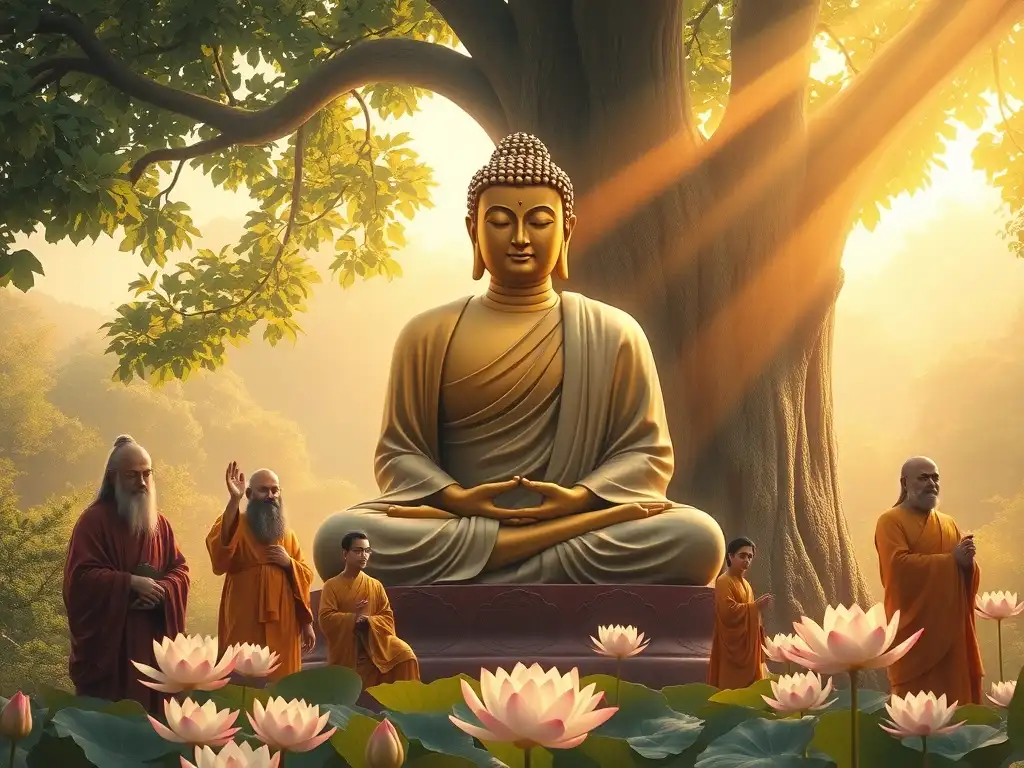
The Historical Buddha, known as Siddhartha Gautama, represents a pivotal figure in the evolution of Buddhism, profoundly shaping its doctrines and practices. His teachings laid the foundation for a religious and philosophical movement that has influenced millions over centuries. Understanding the Historical Buddha's impact is crucial not only for grasping the essence of Buddhism but also for appreciating how his insights continue to resonate with contemporary leaders within the tradition. This article delves into the significant ways in which the Historical Buddha influenced subsequent Buddhist leaders, guiding their interpretations and adaptations of his teachings into various cultural contexts.
Definition of the Historical Buddha
The term "Historical Buddha" refers specifically to Siddhartha Gautama, who lived in the 5th to 4th century BCE in the region that is now modern-day Nepal and India. He is recognized not just as a religious leader but as a teacher whose insights into suffering, enlightenment, and the human condition form the core of Buddhist philosophy. His journey from princely life to ascetic renunciation and ultimately to enlightenment under the Bodhi tree in Bodh Gaya marks a transformative moment in spiritual history.
Importance of the Historical Buddha in Buddhism
The Historical Buddha's significance in Buddhism is manifold:
- Foundational Teachings: He established the core beliefs that define Buddhism, including concepts of suffering, impermanence, and the path to enlightenment.
- Cultural Integration: Through his teachings, he provided a framework that could adapt to various cultures and societies, allowing Buddhism to flourish across Asia and beyond.
- Inspirational Leader: His life story serves as a model of compassion, wisdom, and dedication, inspiring countless followers and leaders throughout history.
The Teachings of the Historical Buddha
Core Principles of Buddhism Established by the Historical Buddha
The teachings of the Historical Buddha can be distilled into several core principles that continue to guide Buddhist leaders today:
- Suffering (Dukkha): Recognizing that suffering is an inherent part of life is fundamental to Buddhist thought.
- Impermanence (Anicca): Understanding that everything is transient encourages a detachment from material possessions and desires.
- No-Self (Anatta): The concept that there is no permanent self challenges the ego and fosters compassion for others.
These principles create a foundation for ethical conduct, meditation, and wisdom, which are essential for Buddhist practice and leadership.
The Four Noble Truths and Their Impact on Buddhist Leaders
The Four Noble Truths, introduced by the Historical Buddha, are central to Buddhist doctrine:
- The Truth of Suffering: Acknowledges the presence of suffering in life.
- The Cause of Suffering: Identifies desire and attachment as the root causes.
- The Cessation of Suffering: Proposes that it is possible to end suffering.
- The Path to the Cessation of Suffering: Outlines the Eightfold Path as a means to achieve enlightenment.
These truths not only serve as a guide for individual practice but also profoundly influence the frameworks used by Buddhist leaders to teach and spread the religion.
The Eightfold Path: A Guiding Framework for Future Leaders
The Eightfold Path, as articulated by the Historical Buddha, provides a practical guide for ethical and mental development leading to enlightenment. It consists of:
- Right Understanding: Comprehending the nature of reality and the path of transformation.
- Right Intent: Cultivating thoughts of love and non-violence.
- Right Speech: Engaging in truthful and harmonious communication.
- Right Action: Acting in ways that do not harm others.
- Right Livelihood: Choosing a profession that is ethical and harmless.
- Right Effort: Fostering positive states of mind.
- Right Mindfulness: Developing awareness of the body, feelings, and thoughts.
- Right Concentration: Cultivating deep states of mental focus.
This framework has been instrumental for subsequent Buddhist leaders, providing a comprehensive approach to spiritual development that remains relevant across various Buddhist traditions and cultures.
Historical Context of Buddhism's Development
Buddhism emerged in the 5th century BCE in the Indian subcontinent during a period characterized by significant socio-political changes and religious transformation. The historical Buddha, Siddhartha Gautama, known as the Buddha, sought to address the existential questions of human suffering and the nature of existence. This was a time when the Vedic traditions were dominant, but there was growing disillusionment with ritualistic practices and the rigid caste system.
The Buddha's teachings introduced a more personal approach to spiritual practice, emphasizing individual experience and enlightenment over inherited authority. His message resonated with a diverse audience, from the urban merchant class to the lower strata of society, leading to the formation of various early Buddhist communities. These communities would eventually play a crucial role in the dissemination and evolution of Buddhist thought, adapting and integrating local beliefs as they spread across Asia.
The Formation of Early Buddhist Communities
The early Buddhist communities, known as the Sangha, were pivotal in preserving and propagating the teachings of the Buddha. Initially composed of monastic followers who renounced worldly life, these communities provided a structured environment for spiritual practice and study. The Sangha was open not only to monks but also to laypeople who supported the monastic lifestyle through alms and donations, thereby creating a symbiotic relationship.
As Buddhism spread, various sects emerged, each interpreting the Buddha's teachings in unique ways while maintaining the core principles of the Four Noble Truths and the Eightfold Path. This formation of communities allowed for the exchange of ideas and practices, leading to a rich diversity within Buddhism that would influence future generations and leaders.
Influence of the Historical Buddha on Early Buddhist Monasticism
The Historical Buddha's teachings laid the foundation for early Buddhist monasticism, which emphasized a disciplined lifestyle aimed at achieving enlightenment. The Buddha established rules and guidelines, known as the Vinaya, which governed the conduct of monastic life. This framework was essential in maintaining the integrity of the Sangha and ensuring the adherence to the Buddha's teachings.
Monasticism became a key feature of Buddhism, attracting individuals who sought to escape the cycles of samsara (rebirth) and attain nirvana (liberation from suffering). The influence of the Historical Buddha on monastic practices was profound; his emphasis on meditation, ethical conduct, and communal living became hallmarks of Buddhist monastic life. As a result, these practices were not only essential for personal spiritual attainment but also for the preservation and transmission of the Buddha's teachings across generations.
Key Figures Influenced by the Historical Buddha
The legacy of the Historical Buddha can be seen in a multitude of key figures in Buddhist history who shaped the development of Buddhist thought and practice. Each of these leaders drew inspiration from the Buddha's teachings, adapting them to their cultural contexts and challenges. Their contributions were vital in expanding Buddhism beyond its Indian roots and into various regions of Asia.
Major Buddhist Leaders and Their Contributions
-
Ashoka the Great (c. 268–232 BCE)
Ashoka, the Mauryan emperor, played a crucial role in the propagation of Buddhism throughout India and beyond. After embracing Buddhism following a transformative experience in battle, he promoted the Dharma (Buddhist teachings) through edicts and missions. His support led to the establishment of monasteries, stupas, and the spread of Buddhism to regions such as Sri Lanka and Central Asia.
-
Nagarjuna (c. 150–250 CE)
A philosopher and key figure in the development of Mahayana Buddhism, Nagarjuna is credited with articulating the concept of emptiness and the Middle Way. His works, particularly the Madhyamaka school of thought, built upon the foundational teachings of the Historical Buddha, emphasizing the importance of understanding the nature of reality and the interdependence of all phenomena.
-
Bodhidharma (c. 5th-6th century CE)
Traditionally regarded as the founder of Zen Buddhism, Bodhidharma traveled from India to China, where he introduced meditation practices that distill the essence of the Buddha's teachings. His influence persists in the emphasis on direct experience and the non-verbal transmission of wisdom in Zen practices.
-
Atisha (c. 982–1054 CE)
A pivotal figure in the revival of Buddhism in Tibet, Atisha integrated the teachings of the Historical Buddha with indigenous Tibetan practices. His emphasis on compassion and the bodhisattva ideal laid the groundwork for Tibetan Buddhism, embodying the adaptability of Buddhist teachings to different cultures.
These leaders, among many others, exemplified the enduring influence of the Historical Buddha on Buddhism, ensuring that his teachings would continue to inspire and guide countless practitioners across the ages.
The Historical Buddha's Influence on Buddhist Philosophy
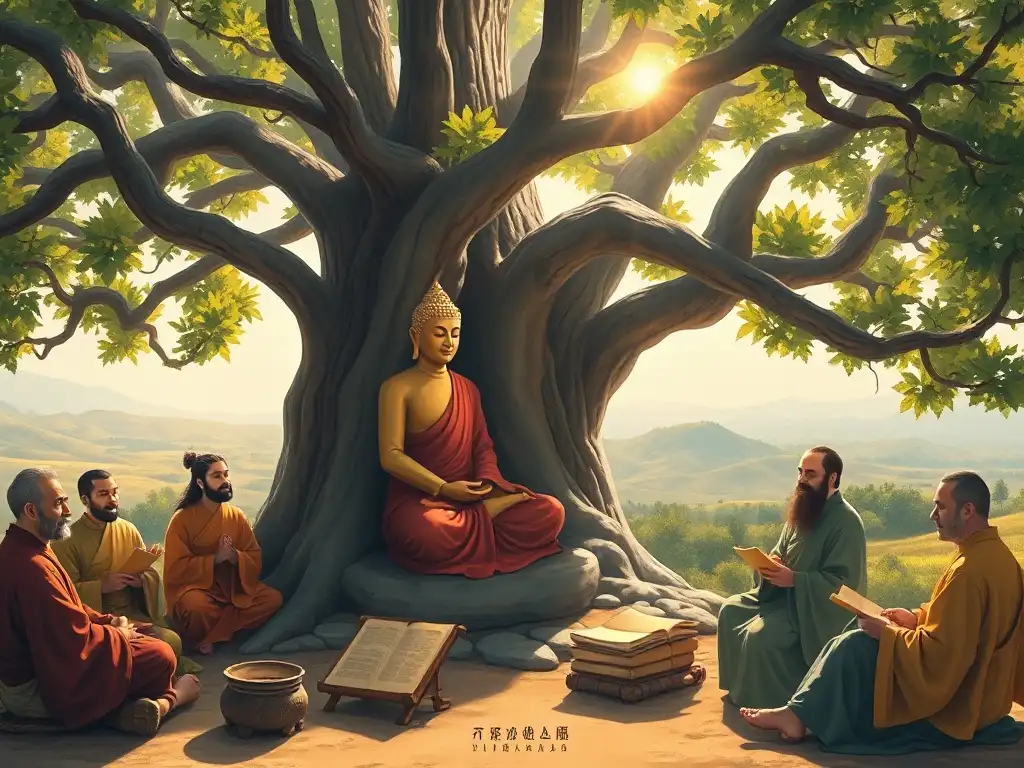
The Historical Buddha, Siddhartha Gautama, laid the foundational principles of Buddhism that continue to influence the religion today. His teachings emphasized the Four Noble Truths, which address the existence of suffering, its origins, the possibility of cessation, and the path leading to liberation. These core tenets established a philosophical framework that later Buddhist leaders interpreted and expanded upon in various ways. The Historical Buddha's insistence on personal experience and empirical validation of teachings encouraged a rational approach to spirituality, which resonated with many thinkers and practitioners.
Moreover, the Buddha's concept of dependent origination (pratītyasamutpāda) introduced a profound understanding of causality and interconnectedness. This idea became a central theme in later philosophical discussions, allowing subsequent Buddhist leaders to explore the nature of reality and the self. The Historical Buddha's influence is further reflected in the development of various schools of thought, such as Mahayana and Theravada, each interpreting his teachings through different philosophical lenses.
The Evolution of Buddhist Thought Post-Buddha
Following the Historical Buddha's passing, Buddhist thought underwent significant evolution. Early followers began to compile the Buddha's teachings, leading to the establishment of the Pali Canon, which serves as a primary scriptural source for Theravada Buddhism. As Buddhism spread beyond India, it encountered diverse cultures and philosophical systems, prompting reinterpretations of core concepts.
The emergence of Mahayana Buddhism marked a pivotal shift in Buddhist thought, emphasizing the Bodhisattva ideal and the notion of universal compassion. This evolution reflected a broader interpretation of the Buddha's teachings, focusing on the collective liberation of all beings rather than individual enlightenment. Additionally, various Buddhist leaders, such as Nagarjuna and Asanga, expanded upon the original teachings, integrating them with other philosophical ideas and promoting concepts like emptiness and the nature of mind.
How the Historical Buddha Shaped Later Interpretations of Dharma
The Historical Buddha's teachings on Dharma, or the universal law of nature and moral order, have profoundly shaped subsequent interpretations. His emphasis on ethical conduct, mental discipline, and wisdom laid the groundwork for the moral and ethical frameworks that later Buddhist leaders would adapt.
Over time, different cultures interpreted Dharma in ways that aligned with their local customs and beliefs. For instance, in Tibetan Buddhism, the concept of Dharma incorporates elements of indigenous Bon practices, creating a unique synthesis of ideas. In Zen Buddhism, the focus shifted toward direct experience and meditation practices, emphasizing the personal realization of Dharma over textual study. Thus, the Historical Buddha's teachings served as a flexible foundation that allowed diverse interpretations and practices to flourish.
The Global Spread of Buddhism and the Historical Buddha's Legacy
Buddhism's journey across Asia and beyond has been significantly influenced by the legacy of the Historical Buddha. His teachings provided a rich philosophical and ethical framework that appealed to diverse populations. As Buddhism spread along trade routes, it encountered various cultures, prompting adaptations of its core principles while preserving the essence of the Buddha's message.
The establishment of Buddhist monastic orders facilitated the proliferation of teachings, creating networks of scholars and practitioners who disseminated the Historical Buddha's ideas throughout Asia. Notably, the Silk Road served as a vital conduit for the exchange of Buddhist texts, art, and practices, leading to the establishment of significant Buddhist centers in China, Japan, and Korea.
The Role of Subsequent Leaders in Spreading Buddha's Teachings
After the Historical Buddha, numerous leaders emerged, playing pivotal roles in spreading his teachings. Figures like Ashoka the Great, a Mauryan emperor, actively promoted Buddhism through edicts that encouraged the practice of Dharma and established monastic communities. His efforts not only consolidated Buddhism's presence in India but also facilitated its spread to other regions, such as Sri Lanka.
In China, leaders like Bodhidharma introduced Zen Buddhism, adapting the teachings to resonate with Chinese philosophical traditions. Similarly, figures like Tsongkhapa in Tibet synthesized various strands of Buddhist thought, establishing the Gelug school and promoting the study of the Buddha's teachings. These subsequent leaders were crucial in interpreting and disseminating the Historical Buddha's teachings, ensuring their relevance across different cultural contexts.
Adaptations of the Historical Buddha’s Teachings Across Cultures
The Historical Buddha's teachings have undergone various adaptations as Buddhism spread to different cultures. In each new environment, local beliefs and practices influenced how the Buddha's message was received and interpreted. For example, in Japan, Buddhism blended with Shinto traditions, leading to unique practices such as Zen gardens and rituals that reflect both Buddhist and indigenous elements.
In Southeast Asia, Theravada Buddhism emerged as the dominant form, emphasizing the original teachings of the Historical Buddha and focusing on monastic life and meditation practices. Conversely, Tibetan Buddhism incorporated elements of Bon and various local beliefs, resulting in a rich tapestry of rituals, art, and philosophy that reflects the Historical Buddha's core teachings while embracing regional nuances.
This adaptability has allowed Buddhism to thrive in diverse cultural landscapes, demonstrating the enduring relevance of the Historical Buddha's influence on Buddhism. The capacity for reinterpretation and integration has ensured that his teachings continue to inspire millions around the globe, maintaining their significance across centuries and cultures.
Conclusion
The influence of the Historical Buddha, Siddhartha Gautama, extends far beyond his lifetime, shaping the very core of Buddhism and its subsequent leaders. His teachings laid the foundation for a philosophy that emphasizes compassion, mindfulness, and the pursuit of enlightenment. Through his life and doctrines, the Historical Buddha provided a framework that has guided countless practitioners and leaders throughout the centuries, fostering a rich tradition that continues to evolve and adapt to the needs of followers in contemporary society.
Summary of the Historical Buddha's Influence on Buddhism
The Historical Buddha's influence on Buddhism can be summarized through several key aspects:
- Foundational Teachings: The Four Noble Truths and the Eightfold Path serve as the cornerstone of Buddhist philosophy. These teachings establish the principles of suffering, the cause of suffering, the cessation of suffering, and the path leading to the cessation, guiding practitioners toward enlightenment.
- Monastic Community: The establishment of the Sangha, or monastic community, was a direct result of the Buddha's teachings. This community not only preserved the teachings but also became a model for future Buddhist leaders and institutions, emphasizing the importance of communal life and shared practice.
- Adaptation and Interpretation: The Historical Buddha's teachings have been interpreted in various ways by different schools of thought, allowing for a rich diversity within Buddhism. Leaders such as Ashoka the Great and later figures like Nagarjuna and Dogen have drawn on the Buddha’s teachings to address the needs of their times, thereby ensuring the relevance of Buddhism across centuries.
- Cultural Integration: The Historical Buddha's influence facilitated the integration of Buddhist principles into various cultures, which led to the development of distinct traditions and practices. This adaptability has been pivotal in Buddhism’s spread across Asia and, more recently, to the Western world.
The Lasting Legacy of the Historical Buddha in Modern Buddhist Practices
The legacy of the Historical Buddha continues to resonate in modern Buddhist practices in several significant ways:
- Mindfulness and Meditation: The emphasis on mindfulness and meditation, central to the Buddha’s teachings, has gained prominence in contemporary society, influencing not only spiritual practices but also therapeutic approaches in psychology and wellness.
- Social Engagement: Modern Buddhist leaders often draw upon the Buddha’s teachings to address social issues, advocating for peace, environmental stewardship, and social justice. Movements such as Engaged Buddhism illustrate how the principles of compassion and non-attachment can be applied to activism and community service.
- Interfaith Dialogue: The Historical Buddha's teachings promote understanding and compassion, making Buddhism a key player in interfaith dialogue. Contemporary Buddhist leaders often engage with other religious traditions, fostering cooperation and mutual respect in an increasingly pluralistic world.
- Preservation of Teachings: Modern technology has facilitated the preservation and dissemination of the Buddha’s teachings through digital platforms, making them accessible to a global audience. This has allowed new generations to explore and engage with Buddhism in ways that were previously unimaginable.
The Historical Buddha's influence on Buddhism is profound and enduring, shaping the practices, philosophies, and social applications of Buddhism as it continues to adapt to the changing dynamics of the modern world.
- Introduction to the Historical Buddha
- The Teachings of the Historical Buddha
- Historical Context of Buddhism's Development
- Key Figures Influenced by the Historical Buddha
- The Historical Buddha's Influence on Buddhist Philosophy
- The Global Spread of Buddhism and the Historical Buddha's Legacy
- Conclusion
- What is the significance of the Historical Buddha in Buddhism?
- How did the Historical Buddha shape Buddhist leadership?
- What are some key contributions of the Historical Buddha?
- How did the Historical Buddha's influence extend beyond his lifetime?
- What role did the Historical Buddha play in the development of Buddhist texts?
Frequently Asked Questions
What is the significance of the Historical Buddha in Buddhism?
The Historical Buddha, known as Siddhartha Gautama, is foundational to Buddhism as he established its teachings and principles, which continue to influence millions worldwide.
How did the Historical Buddha shape Buddhist leadership?
His teachings provided a guiding framework for subsequent leaders, emphasizing values like compassion, wisdom, and ethical conduct that became essential for Buddhist communities.
What are some key contributions of the Historical Buddha?
The Historical Buddha introduced concepts such as the Four Noble Truths and the Eightfold Path, which are central to Buddhist practice and philosophy, influencing various schools of thought.
How did the Historical Buddha's influence extend beyond his lifetime?
His teachings were preserved and interpreted by subsequent leaders, leading to the establishment of various Buddhist traditions and practices that spread across Asia and beyond.
What role did the Historical Buddha play in the development of Buddhist texts?
The Historical Buddha's teachings were recorded in sacred texts, such as the Tripitaka, which serve as fundamental resources for understanding Buddhist doctrine and ethics.
Final Reflection: The Enduring Legacy of the Historical Buddha
The teachings and life of the Historical Buddha continue to resonate profoundly in today's world, shaping not only the practice of Buddhism but also influencing broader philosophical and ethical discussions. As we navigate the complexities of modern life, the principles of compassion, mindfulness, and understanding that the Buddha embodied serve as a guiding light, reminding us of the power of inner peace and the importance of community.
The relevance of the Historical Buddha's influence on Buddhism is not just a relic of the past; it is a living, breathing force that encourages us to seek deeper connections with ourselves and others.
Clearly, the Historical Buddha's impact extends far beyond the confines of religious practice, permeating cultural and social landscapes across the globe. The teachings have inspired countless leaders and movements, fostering a sense of unity and compassion in diverse communities. As the Dalai Lama once said, My religion is very simple. My religion is kindness.
This sentiment encapsulates the essence of the Buddha's influence, illustrating how his teachings have transcended time and space, encouraging individuals to cultivate kindness and understanding in their daily lives.
As we reflect on the teachings of the Historical Buddha and their profound influence on Buddhism and beyond, I invite you to consider how these principles can be integrated into your own life. Take a moment to explore the ways in which compassion, mindfulness, and self-awareness can shape your interactions and decisions.
By embodying these values, you not only honor the legacy of the Historical Buddha but also contribute to a more harmonious and understanding world. Let us carry forward this timeless wisdom, allowing it to inspire our actions and foster a deeper connection with ourselves and those around us.
Embrace the Wisdom of the Buddha: Take Action Today!
Thank you for exploring the profound legacy of the Historical Buddha and his impact on Buddhist leadership. Your engagement with this rich history is the first step toward fostering a deeper understanding of these timeless teachings. Now, let’s translate that knowledge into meaningful actions!
- Explore further: Dive into additional resources on Buddhist teachings and philosophies to enhance your insight. Discover more articles on the history of Ancient India for a deeper understanding!
- Share your thoughts: Discuss what you’ve learned with friends or online communities. Initiate a conversation by sharing this article on social media using #BuddhaLegacy.
- Engage with your community: Consider attending a local meditation or philosophy group to connect with individuals who are also exploring the teachings of the Buddha.
In what ways has the wisdom of the Historical Buddha shaped your views on leadership and compassion in today’s world?